
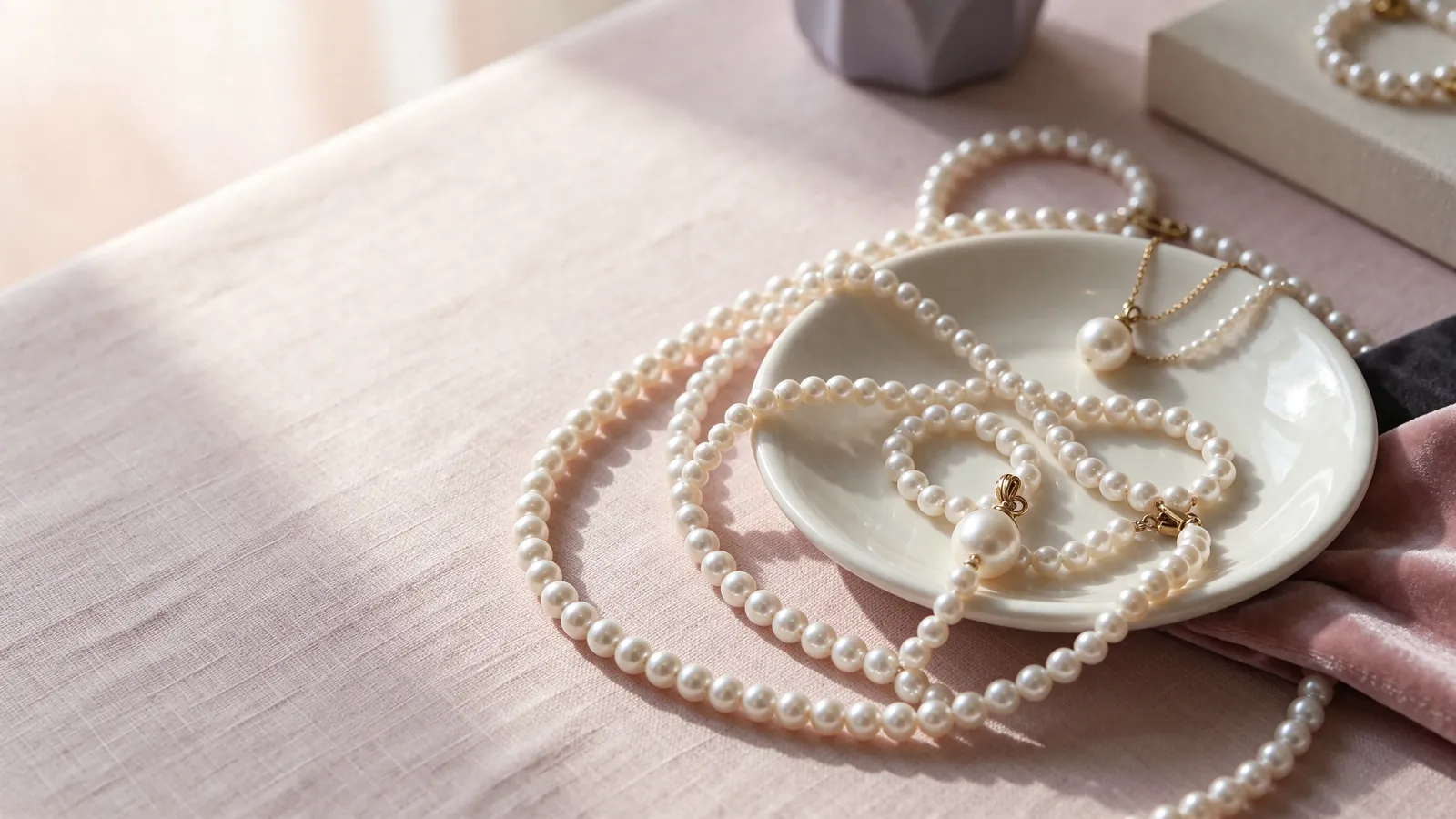
Flint Jewellery guide: How does length shape the look of an Akoya pearl necklace, a Japanese Akoya pearl strand or an Akoya pearl strand necklace with different necklines?
Begin with an open shirt and a knit top that you wear regularly. Notice whether the pearl curve sits clearly within the neckline or touches its edge. A strand that keeps slipping between fabric and skin can look quite different from the still photograph that first caught your eye. Compare the placement while standing and sitting, with your hair arranged as it would be on a normal working day. The single strand pearl necklace guide offers another way to think about a clean, continuous outline before deciding on length.
There is no need to assign one necklace length to every V-neck or every round neck. Instead, look for a deliberate relationship between the two shapes. Leaving visible space between the pearls and the fabric edge can make both outlines easier to read. Over a high-neck knit, check whether texture competes with the pearls or helps frame them. Keep your comparison outfit unchanged, so you are judging placement rather than several styling changes at once.
Flint Jewellery guide: When trying on an Akoya pearl necklace, a Japanese Akoya pearl strand or an Akoya pearl strand necklace, how can you check comfort around the neckline?
Fasten the necklace, breathe normally, turn your head and raise your arms. Check for pulling at the sides of your neck and for a clasp that repeatedly moves into an awkward position. If different fastening positions are available, try each relevant position rather than judging only the longest setting. A front and side photograph can help compare proportions, but the photograph cannot tell you how the strand feels when you sit at a desk.
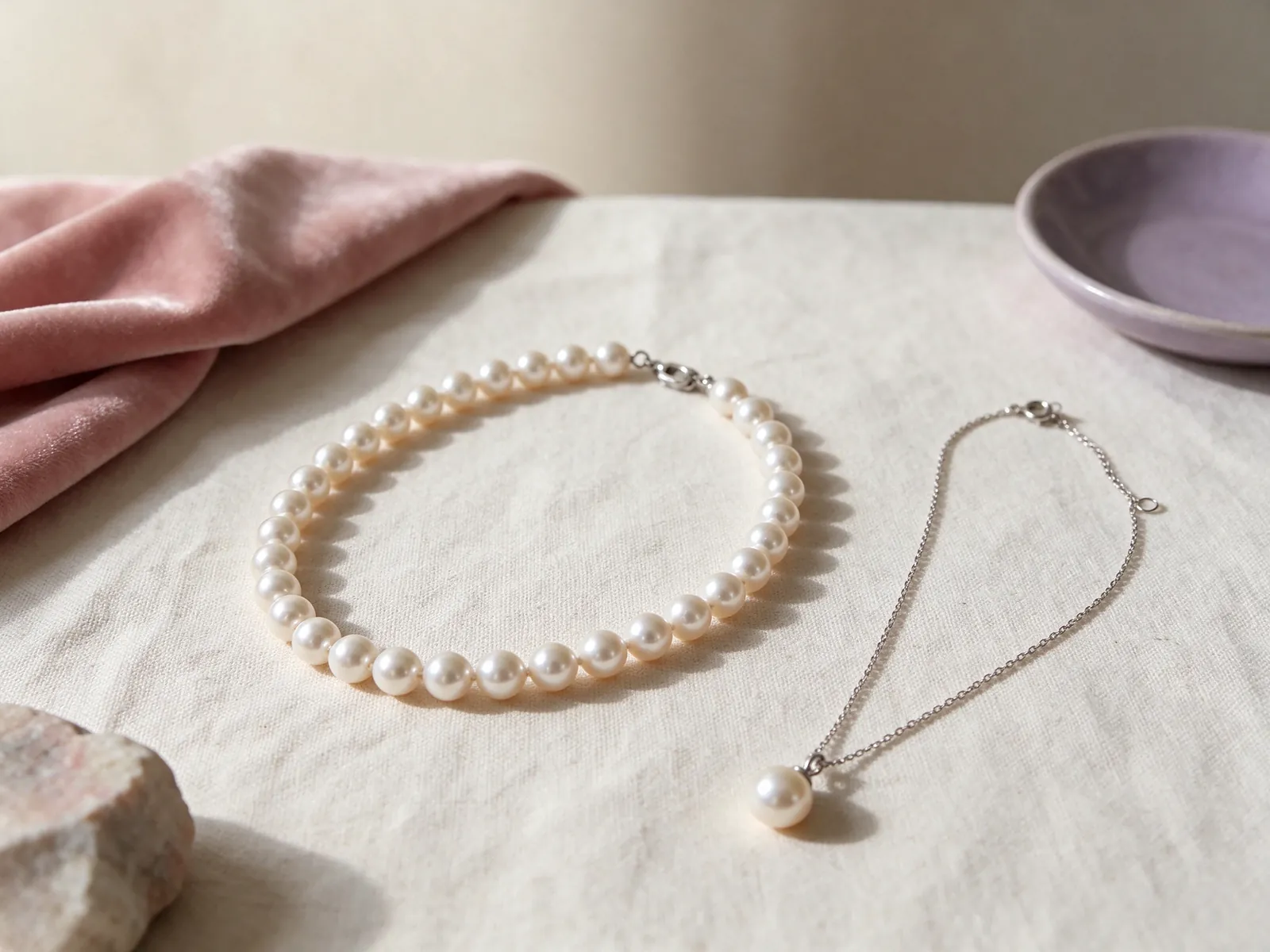
Read lustre and matching before letting size lead the decision
Use soft, steady lighting to compare strands, with a similar background and viewing distance. Look at how clearly light is reflected, then move from the centre towards both ends. Strong spotlights can emphasise a small area, so a bright central pearl is not enough to judge the whole necklace. Pearls with a similar apparent colour may still create a different impression because their reflections differ. Make a note of whether you enjoy a crisp, coordinated look or a gentler overall effect.
GIA identifies seven pearl quality factors: size, shape, colour, lustre, surface quality, nacre quality and matching. Matching matters especially when individual pearls are arranged as a strand: attractive separate pearls do not automatically make a visually coherent necklace. Compare colour, outline and apparent size across the full curve, rather than concentrating on a single bead. For the background to the name, read what are Akoya pearls, then return to the actual strand and the features you can observe.
What changes when you step back from a close-up?
A close view helps you examine surface characteristics; a normal conversational distance shows the necklace as part of your outfit. Neither view replaces the other. Ask to see the sides and the pearls near the clasp if photographs show only the front. Then identify the features that actually influence your choice. Saying that you prefer consistent colour and a balanced outline gives a more useful starting point than an unexplained quality adjective.
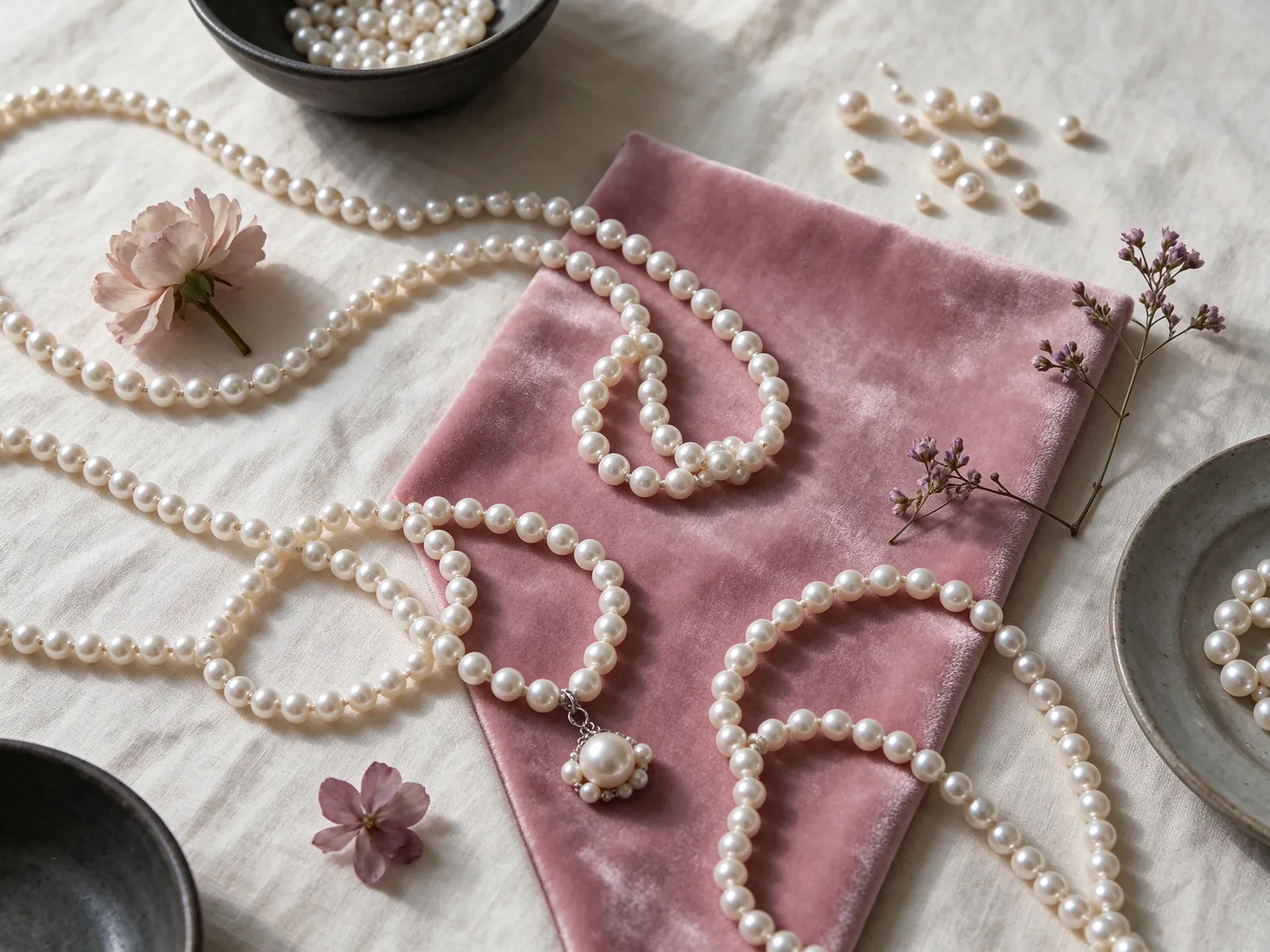
Separate Japanese wording, pearl identity and colour information
GIA describes Akoya as a saltwater cultured pearl type and notes that both Japan and China produce it. An Akoya identity therefore does not by itself establish Japanese origin for an individual necklace. When considering a Japanese Akoya pearl strand, read the pearl type, cultured identity and geographical origin as separate details in its description. Roundness, brightness and a place name in a title cannot establish where that strand came from. If a document accompanies the necklace, ask what it covers and how its identifying details relate to the piece, rather than extending its wording beyond what it actually says.
GIA distinguishes bodycolour, overtone and orient, and not every pearl displays all three. Start with the main colour against your skin, then notice any secondary impression as you change your viewing angle. If a cooler, quieter palette appeals to you, the grey Akoya pearl necklace guide can help with styling comparisons. Grey appearance itself does not explain how the colour formed or establish treatment status. Compare against a white shirt and a dark top before relying on a screen image. GIA has also documented irradiated and dyed Akoya samples in a laboratory study. That is a reason to ask about treatment separately, not evidence that every grey Akoya strand has undergone those processes.
Which document details are useful to discuss?
Look for the document name, issuing organisation and identifying information, then ask whether it concerns a whole strand, an individual pearl or another stated scope. Where measurements, quantities or images are included, compare them with the necklace under discussion. If origin or treatment matters to your decision, ask about that exact wording. A familiar grading expression should not become an assumption about details that the document does not describe.
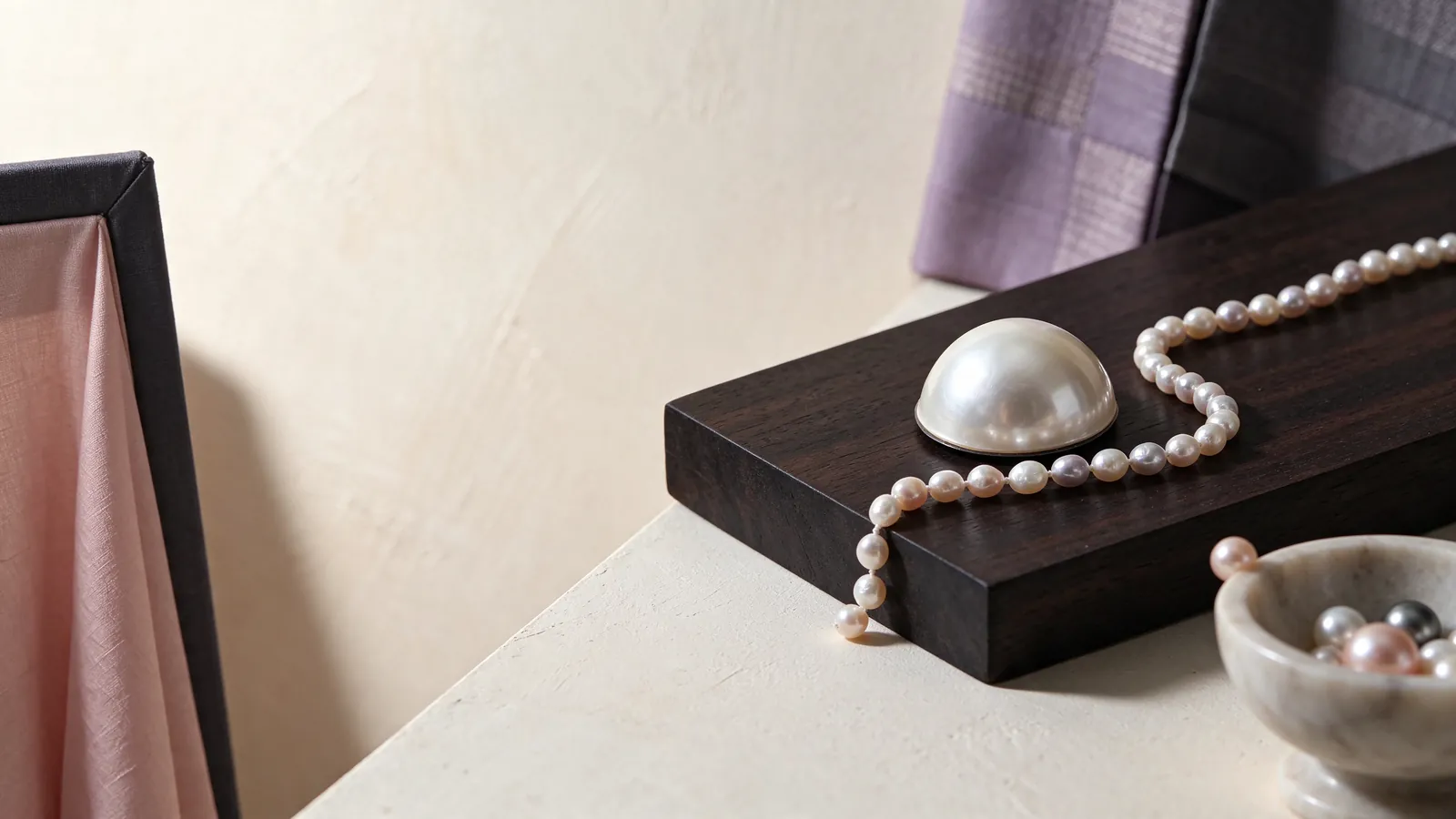
Compare pearl proportions without turning the choice into a ranking
A more prominent pearl outline is not automatically the better everyday fit. With a narrow collar opening or delicate shoulder detail, notice whether the strand overwhelms the garment. With structured tailoring, you may prefer a stronger visual presence. Keep the wearing position similar while comparing, since a change in length can also change your impression of size. Alongside the appearance, pay attention to weight as felt on your neck and the transition towards the clasp.
A freshwater pearl necklace, South Sea pearl necklace or Tahitian pearl necklace provides a different direction to explore when your preferences are still taking shape. Compare the specific strands for shape, colour, lustre and placement instead of assuming that one category must always suit you better. One photograph cannot define every pearl in a category. Decide whether you value a regular outline, colour interest or visual presence, then combine that preference with the individual necklace information.
How can a fair try-on reveal what you actually prefer?
Keep your earrings and clothing unchanged while changing the necklace. If neckline, pearl size and length all change together, it becomes difficult to identify the reason one look appeals more. Delicacy can come from quiet colour contrast, not only smaller-looking pearls; presence can come from a dark background, not only a larger outline. Review your photographs beside the clothes you wear most often, rather than allowing one rare occasion to determine every choice.
Treat the clasp as a wearing detail, not just a finishing colour
Try opening and closing the clasp yourself, especially if you normally fasten jewellery without help. Look at its position with short hair, an updo or an open-back outfit, and notice whether it catches the collar as you turn. A warm metal accent may connect with other outfit details; a cooler accent may blend more quietly. The 18K gold clasp pearl necklace and platinum clasp pearl necklace guides explore these styling directions without replacing a practical check of the fastening.
For a jewellery customisation conversation with Flint Jewellery, the material range is 18K 750 white gold, 18K 750 yellow gold, 18K 750 rose gold, PT950 platinum and PT900 platinum. Suitability should be discussed for the individual design. Consider whether the clasp should be visually discreet or deliberately noticeable. Material choice and fastening construction answer different questions. A colour that coordinates with your earrings still needs a comfortable position and an opening action that suits your hands; the metal name alone cannot settle those practical details.
What should you notice if the clasp rotates towards the front?
Observe whether rotation happens with one collar or across several outfits. Fabric contact, placement and the balance of the strand are useful things to discuss, but one brief trial does not identify the cause. Do not twist or pull the pearls to force the clasp to stay hidden. If you want a front-facing clasp as part of the look, make that intention clear when discussing the design, rather than treating any fastening as a decorative centrepiece.
Adapt the strand to workwear, evening clothes and layered looks
For workwear, a plain shirt or simple knit lets the pearl curve remain distinct. If the neckline already carries a bow, frill or dense pattern, reduce other neck-level decoration. For an evening outfit, decide whether the focus should be the pearls or the garment's embroidery. They can obscure each other when concentrated in the same place. Earrings need not be identical to the strand, but their visual weight should support the chosen focal point rather than compete with it.
When layering, separate the resting positions and watch what happens after you move. A chain or pendant that repeatedly rubs the pearls is a reason to change the combination, even if the arranged photograph looks attractive. Turn, sit and lean forward to check whether both outlines remain visible or become tangled. Scarves and coat collars deserve the same attention: remove them carefully so that their movement does not pull the necklace along with the fabric.
How do you build a useful wardrobe comparison?
Choose one representative outfit each for work, relaxed days and formal occasions. Record where the strand rests and what changes when you sit. Specific observations such as touching the collar edge or competing with earrings are more useful than simply calling a necklace versatile. Include the looks you dislike as well as the favourites. This gives a length and styling discussion a practical foundation grounded in your wardrobe, not an imagined outfit you rarely wear.
Make care and everyday handling part of the buying decision
GIA places pearl at 2.5 on the Mohs hardness scale. Avoid rubbing the strand against objects that could scratch its surface, and store it separately from other jewellery. After wearing, wipe gently with a very soft, clean cloth. Keep acids, perfume, hair spray and excessive heat away from the pearls. Planning your dressing and grooming routine to avoid contact is more practical than attempting a stronger cleaning treatment afterwards; visible shine is not a guide to safe cleaning force.
Never put pearls in an ultrasonic or steam cleaner. GIA advises that, when a strung necklace has been cleaned with water, the string must be completely dry before wearing. A dry-looking pearl surface does not establish that the string is dry. Support the strand when lifting it instead of suspending everything from the clasp. Notice unfamiliar gaps, looseness or a change in the fastening action, and avoid repeated pulling while deciding how to have the condition examined.
Which answers should you keep when choosing between two strands?
Retain a short list of your preferred neckline position, the lustre and matching features you value, the clasp action you find comfortable, and the pearl type and origin information stated for the necklace. Appearance, documents and practical use serve different purposes. If two options remain close, revisit the outfit you wear most and the seated comfort check. Adding another unfamiliar quality label is less helpful than understanding why one strand works better in your routine.
Still deciding between two placements or styles? Share the necklines you wear most, how you measured an existing necklace and the lustre or clasp questions that matter to you. Discuss length and styling with Flint Jewellery on WhatsApp at +85260106207: https://wa.me/85260106207. You do not need to settle on a pearl size or quality label before starting a useful conversation about your wardrobe.
| Outfit | Placement aim | Neckline relationship | Movement check | Possible adjustment |
|---|---|---|---|---|
| Open-collar work shirt | Keep the pearl curve clearly visible | Avoid resting on the collar edge | Does it slip inside when seated? | Compare fastening positions or collar opening |
| Round-neck knit | Show a complete curve above or over the fabric | Keep the two outlines distinct | Does fabric carry the strand with it? | Change placement before changing pearl size |
| V-neck top | Leave space around the pearl curve | Let the V and the curve read separately | Does leaning bring them together? | Compare lengths with the actual top |
| Evening dress | Avoid the main embroidery area | Choose one visual focal point | Do earrings and shoulder details compete? | Reduce decoration in the same area |
| Layered necklaces | Separate each resting position | Avoid one outline covering another | Do the pieces tangle or rub pearls? | Change the combination or wear the strand alone |
Pearl knowledge and authoritative references
GIA identifies seven pearl quality factors: size, shape, colour, lustre, surface quality, nacre quality and matching. Comparing an Akoya strand therefore involves more than size alone.
Read the reference for this factFrequently asked questions
Does a Japanese Akoya pearl strand title establish Japanese origin?
No. Read pearl type, cultured identity and origin as separate details, and ask what the description or accompanying document states for that individual strand. A place name in a style title is not a substitute for origin information.
What should I ask to see beyond a neat front photograph?
Look at the sides, both ends and the pearls near the clasp. These views help you compare the continuity of colour, outline and apparent size. They also help you separate an attractive front view from whole-strand matching and fastening practicality.
Can I identify the colour treatment of grey Akoya pearls from a photograph?
Grey appearance alone does not establish treatment status or how the colour formed. Ask for the written colour and treatment information, then compare the tone against clothes you wear. Screen colour is useful for an initial impression, not a definitive conclusion.
How can I discuss a gift necklace when I do not know the recipient's neck measurement?
Start with the recipient's usual necklines and the resting position of a necklace they already enjoy. If an existing necklace can be measured, record the method and whether the clasp is included. Your own try-on position should not be assumed to predict their fit.
Can I wear a strung necklace as soon as the pearl surfaces look dry?
Not if the string remains damp. GIA advises allowing the string to dry completely after cleaning with water before wearing. Pearls should also never be cleaned in ultrasonic or steam equipment.
Updated: