
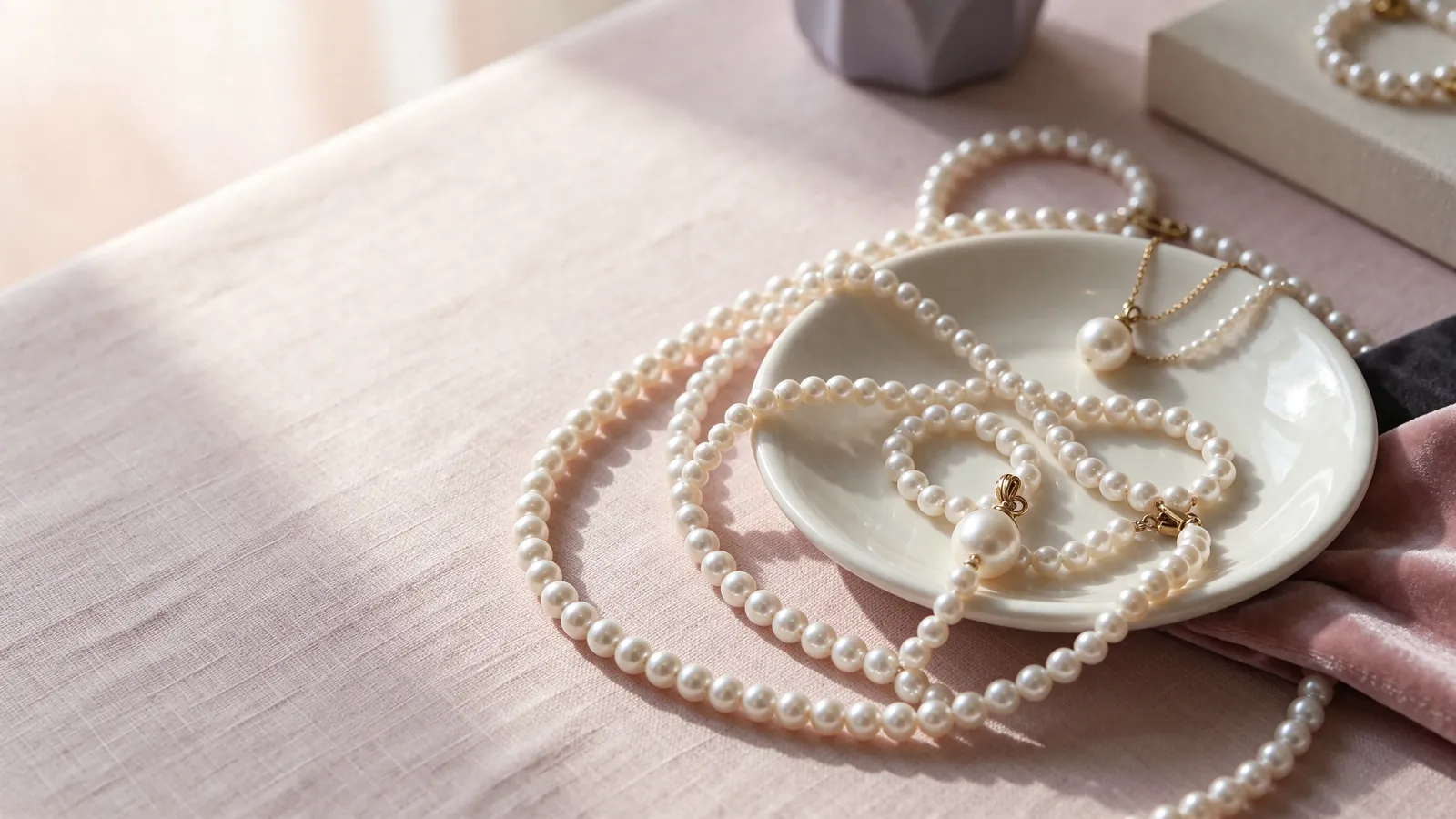
How do length and neckline shape the look of a keshi pearl necklace, including a freshwater keshi pearl strand necklace? | Flint Jewellery
For a practical starting point, discuss general necklace styling with Flint Jewellery on WhatsApp at +85260106207, sharing the neckline you usually wear and the position you have in mind. Begin with the neckline you actually wear most often. A strand can sit on exposed skin, trace the edge of a collar or rest over fabric, and each position creates a different outline. With a round neck, check whether the fabric hides the lower pearls. With a V-neck, compare the necklace curve with the sloping edges rather than assuming the deepest available neckline will look best.
A stated length is useful, but it does not predict an identical position on every wearer. Neck circumference, shoulder shape and the thickness of the strand affect the result. Use the pearl necklace length guide to organise possible positions, then try the necklace with clothing. A cord can help you visualise an arc, but cannot reproduce the volume, weight or movement of real pearls.
What should you check about drape and fastening on a keshi pearl necklace, including a freshwater keshi pearl strand necklace? | Flint Jewellery
Let the strand settle without pulling it into a neat curve. Turn your head, sit down and put on your usual jacket, watching whether the pearls rotate or the fastening catches against the collar. Try opening and closing it without tugging the strand. A necklace that needs constant repositioning may not suit your daily habits, even if it looks convincing in one carefully arranged photograph.
Separate a pearl name from the outline you enjoy
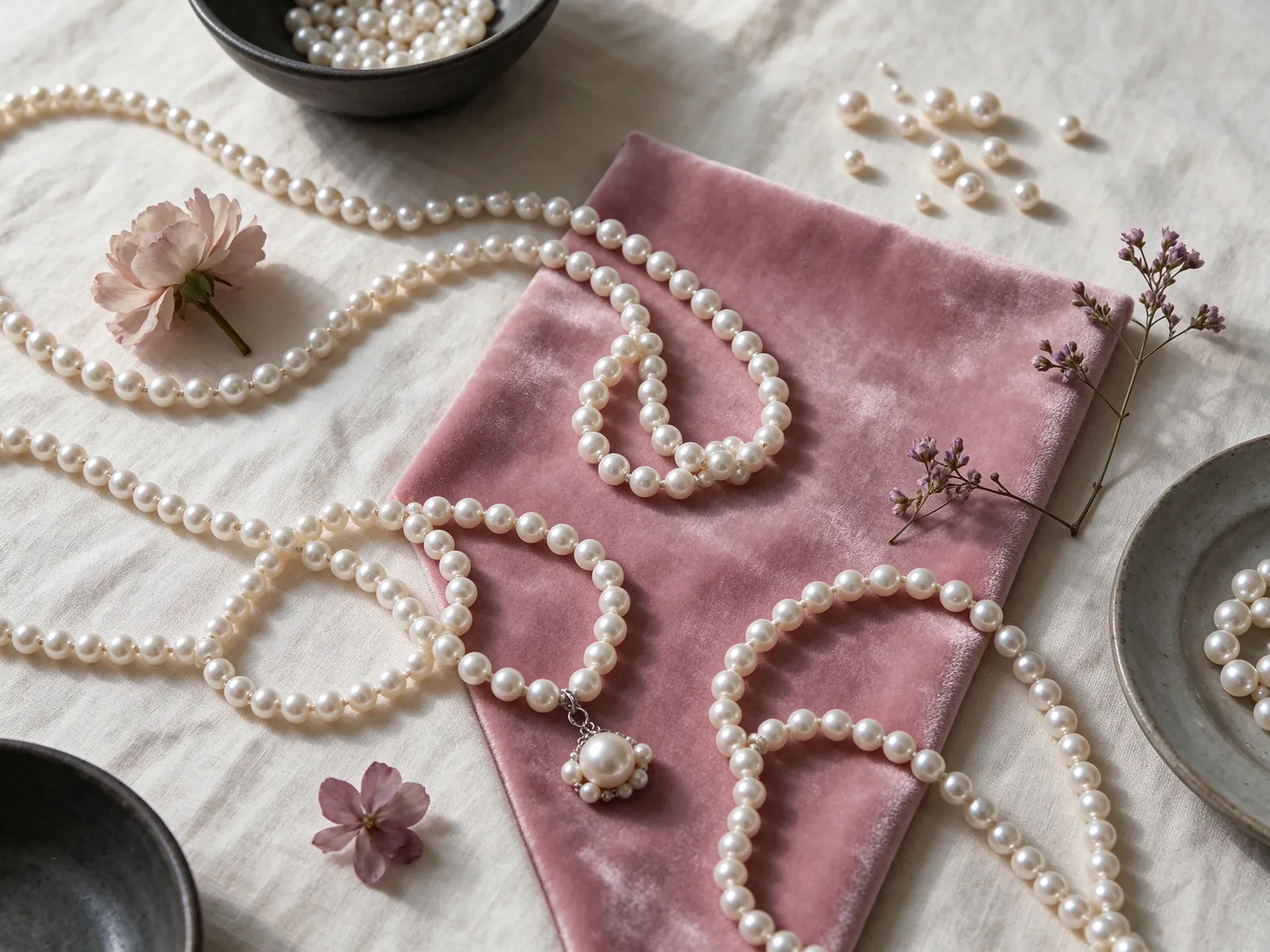
Small size, a flat profile or an irregular outline does not by itself establish that a pearl is keshi. Baroque describes an irregular shape; seed pearl is not simply an alternative name for keshi. Read a necklace description in separate parts: the pearl information, its visible shape and the construction of the jewellery. This prevents an appealing silhouette from becoming an unsupported identity assumption.
If your main interest is a free-flowing edge, compare a baroque pearl strand necklace for its arrangement rather than treating the two names as equivalent. When a description says freshwater keshi pearl strand, read the pearl details for that specific necklace rather than assuming all keshi-labelled strands share its identity, origin or structure. A specific description should answer the pearl question; a fitting should answer the styling question.
Describe the visual preference before narrowing the label
Useful preferences include a broad visible face, gentle changes in contour, open spacing or a more pronounced central focus. None of these descriptions claims a formation process. When discussing a necklace, explain which effect you want and which clothing it should complement. If pearl identity matters to your decision, consider that information separately rather than expecting the preferred shape to supply the answer.
Judge matching across the whole strand, not one attractive pearl
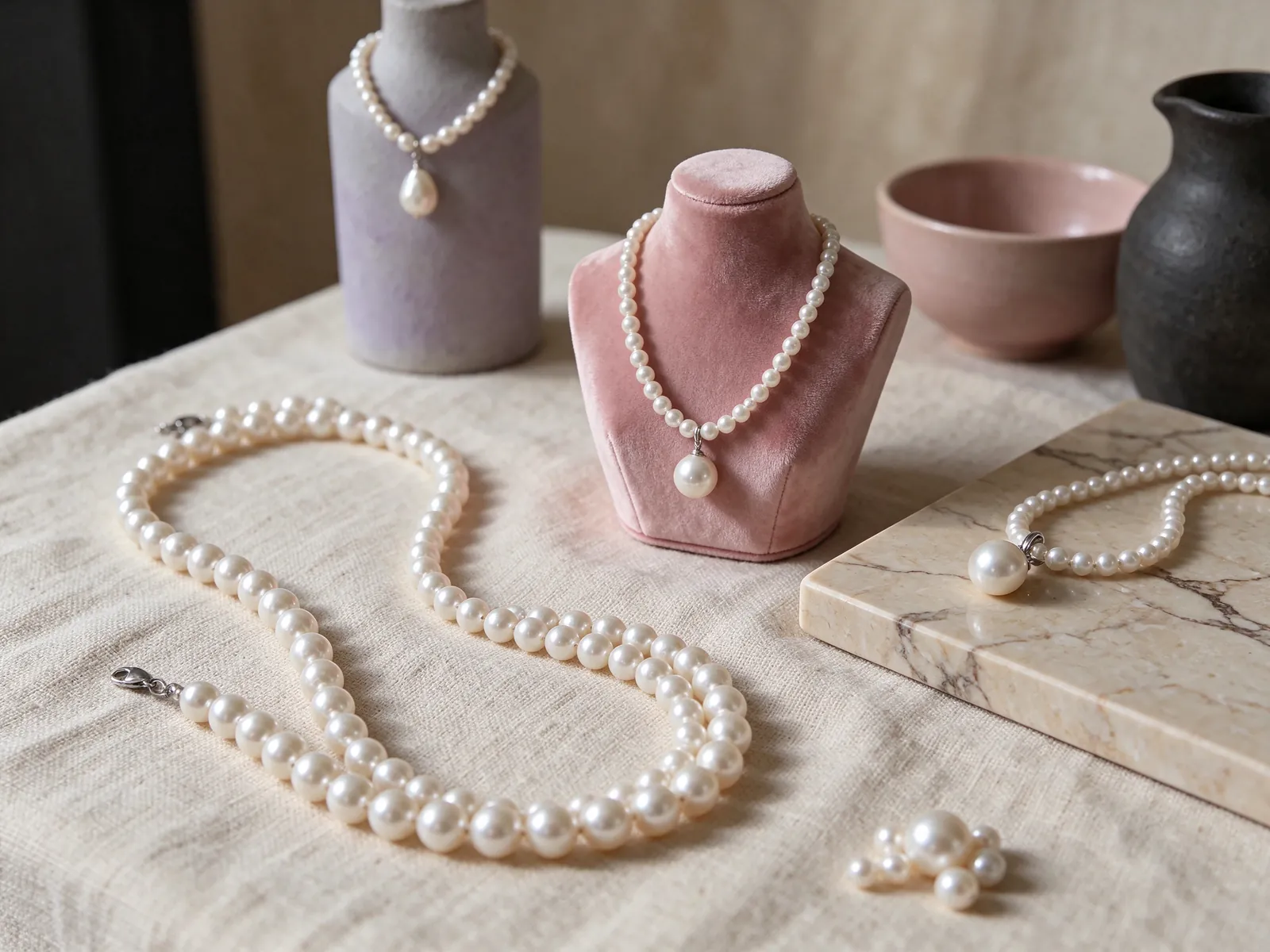
Look at the complete necklace from a normal viewing distance before studying close-ups. Notice whether the centre dominates, whether the sides carry similar visual weight and whether the contour changes gradually or abruptly. Irregular pearls need not share one shape to create a coherent necklace. Their arrangement can establish a deliberate rhythm, but a bright central pearl should not distract from the rest of the strand.
GIA describes seven pearl quality factors: size, shape, colour, lustre, surface quality, nacre quality and matching. This gives you a vocabulary for comparison, not an automatic grade for a particular necklace. Compare photographs under similar lighting and backgrounds wherever possible. A concentrated light can emphasise reflections, while a dark background may make colour contrasts appear stronger than they do against your clothes.
Coherence can include deliberate differences
A single strand pearl necklace offers a useful reference for reading one continuous line. On an irregular strand, consider whether colour transitions, reflection strength and visual weight hold that line together. If you prefer asymmetry, observe whether the focal point stays where you want it after movement. Matching is not a demand for identical outlines; the practical question is whether the differences support the intended appearance.
Check orientation, fastening and contact with fabric
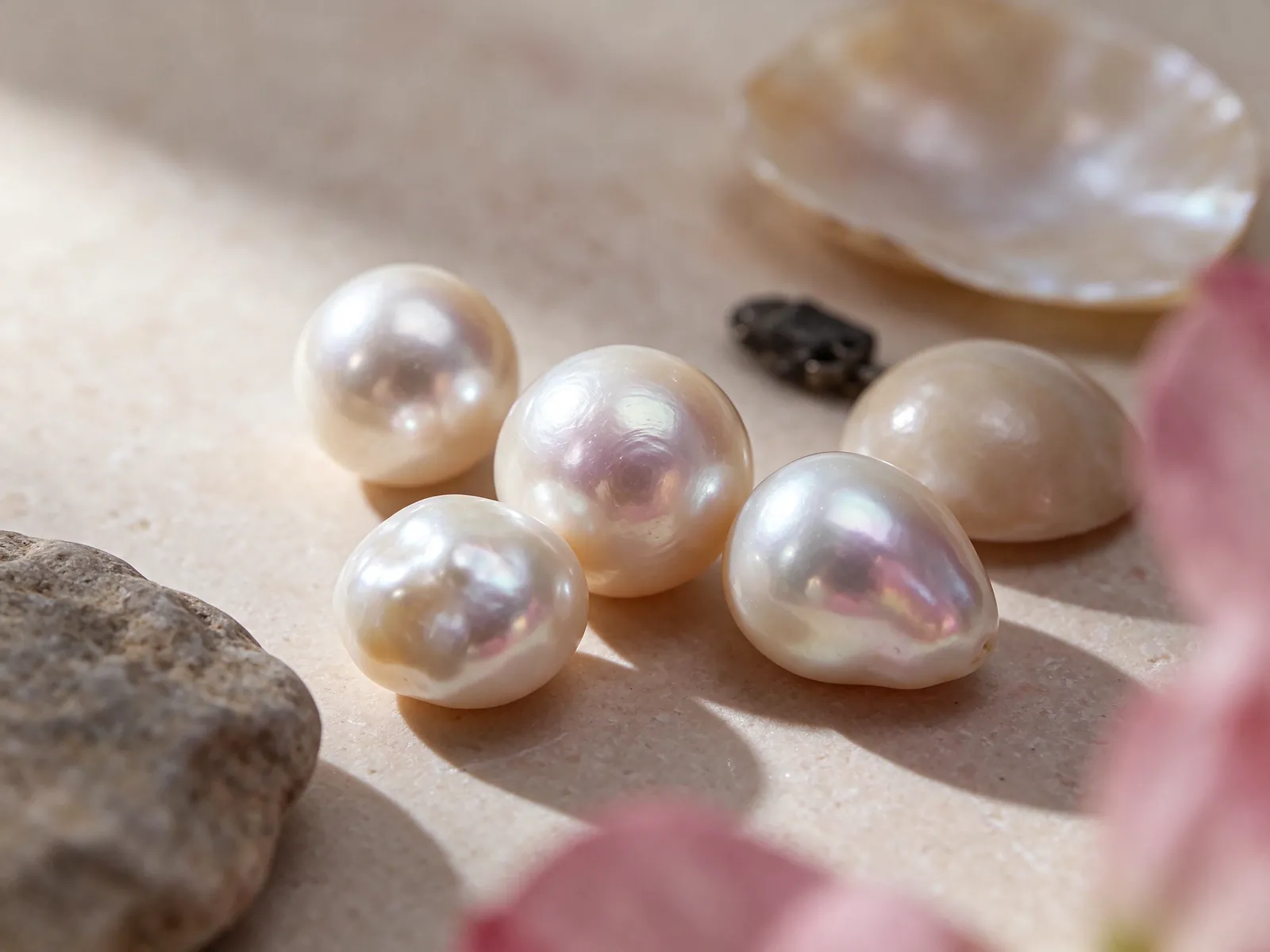
A pearl with a broader face can look different when it turns sideways. During a fitting, inspect the front and side views and allow the necklace to move normally. Watch for overlapping pearls or edges that repeatedly disappear beneath neighbouring pearls. Decide whether you enjoy that changing outline or would find yourself adjusting it throughout the day. Neither preference can be settled by a flat photograph alone.
Fastenings deserve attention beyond their appearance. Move hair away, test the opening action and check whether you can manage it comfortably without stretching the strand. A fastening intended to remain behind the neck is not necessarily suitable as a front-facing feature. If that is the look you want, ask about the intended wearing position rather than assuming every clasp can be used in the same way.
Test the collar you will wear, not an idealised bare neckline
Try the necklace with a shirt, knit or jacket that represents your wardrobe. Notice whether the collar lifts the strand or whether the pearls repeatedly rub against a textured surface. For a close-to-neck silhouette, compare a pearl choker necklace as a styling direction, then assess the actual room for movement. A prominent collar and an irregular strand may compete for the same visual space.
Let visual weight set the tone for work and evening wear
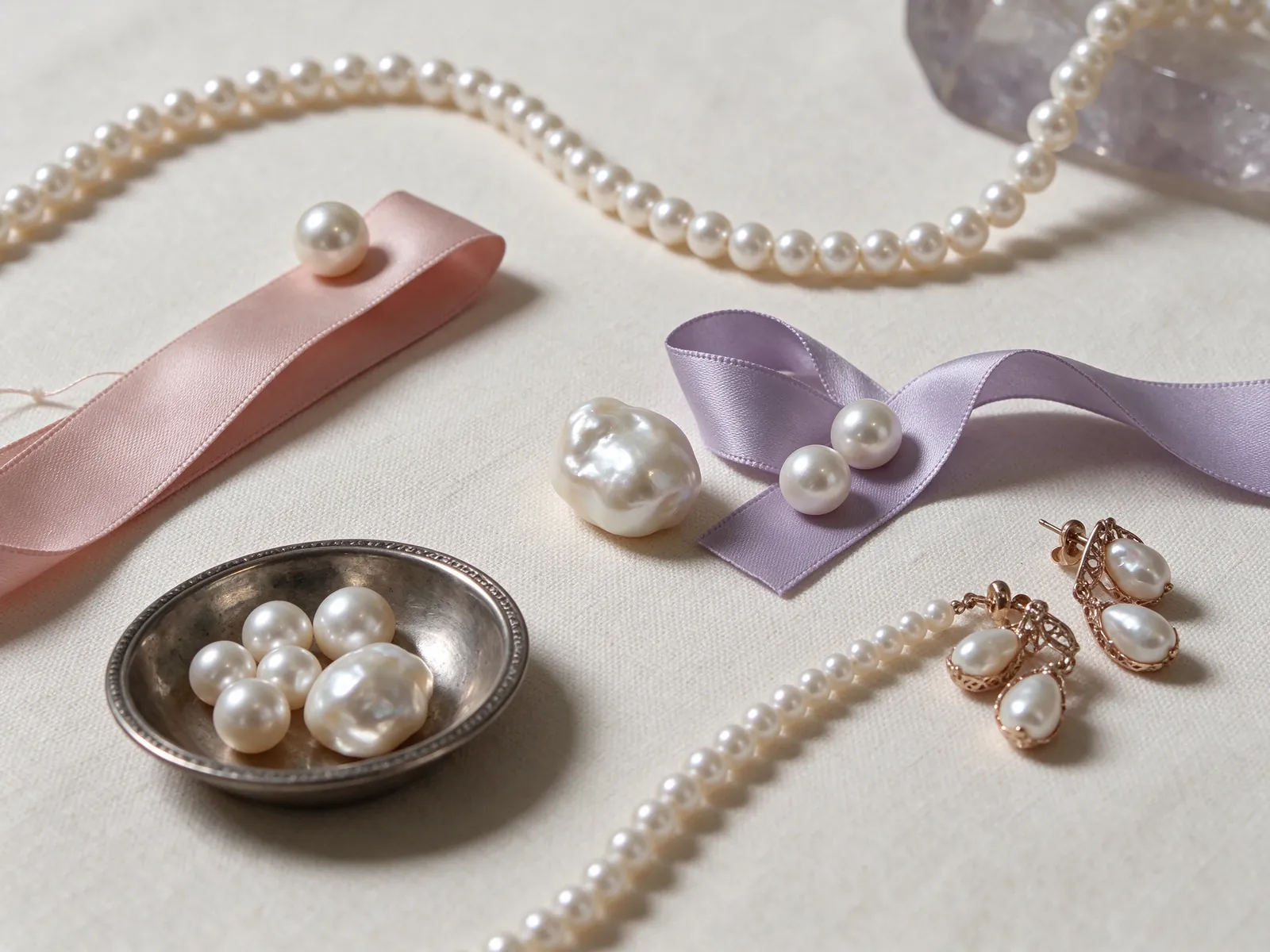
For an office outfit, choose which element should lead. A visibly uneven necklace outline can work with a plain shirt and quieter earrings, allowing the pearls to remain legible without competing with a busy print. A soft knit creates a more relaxed setting, but inspect the contact between fabric and strand. Irregularity does not automatically make a necklace casual; placement and clothing structure change its character.
Compare a small pearl necklace if you want a discreet line, or a large pearl necklace if you want to explore stronger visual emphasis. These are proportion comparisons, not size definitions for keshi. Decide whether the necklace should merge into the outfit or become its focal point, then consider arrangement and position together. A bolder outline can feel balanced when the neckline gives it enough clear space.
Layer only if the strands remain comfortable in motion
Fit the pearl strand on its own before adding another necklace. Walk and turn to see whether the two pieces cross, bunch together or push each other out of position. A gap arranged for a photograph may disappear during wear. If the pieces repeatedly meet, keep the pearls as the single focal line and create layering through clothing or earrings instead of encouraging repeated contact with a metal chain.
Use photographs and written details to ask precise questions
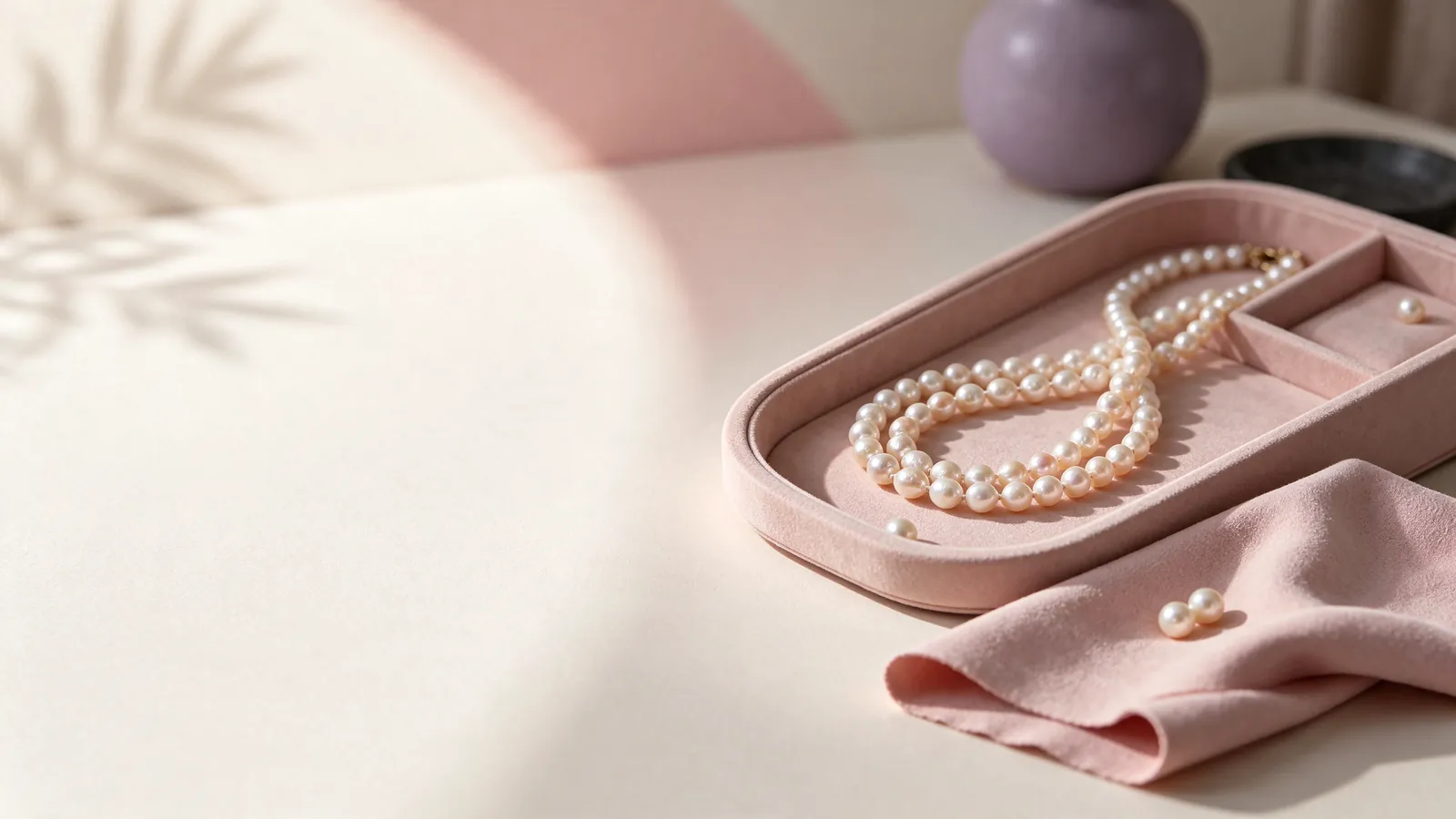
A complete front view shows arrangement, a side view helps explain profile and close-ups reveal local details. Ask to see the fastening as well as the central pearls. If only one pearl is shown, avoid using it to judge matching across the necklace. On a worn image, notice which parts disappear beneath hair or fabric, because those hidden sections may matter to your preferred neckline.
Keep pearl information distinct from construction details. Clarify what the name refers to, where the fastening is intended to sit and whether a stated necklace length includes it. If a laboratory document accompanies an item, read what object it describes and whether its identifying details correspond to that item. Documentation can answer certain identity questions, but cannot decide whether you enjoy the drape against your own clothes.
Bring a practical styling brief to the conversation
For a general styling discussion with Flint Jewellery, bring a photograph of a favourite neckline and explain the position you want the necklace to occupy. Mention whether you fasten jewellery independently and whether you prefer an orderly or freely changing outline. Rank those preferences: a collar-friendly fit may matter more than layering. A clear brief keeps the conversation focused on wearing needs rather than a name alone.
Choose a strand you can care for as well as style
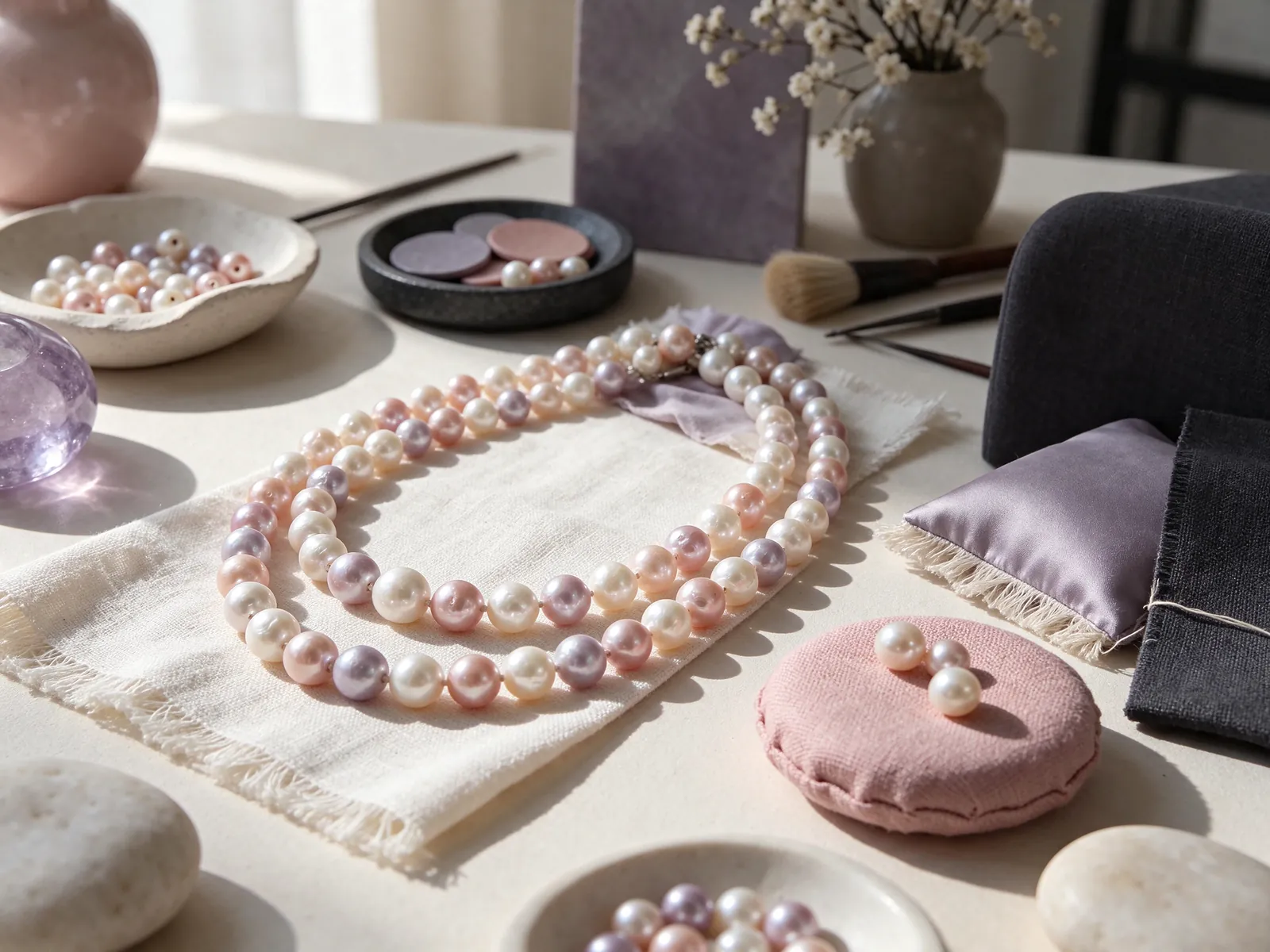
GIA places pearl at 2.5 on the Mohs hardness scale. Store a necklace so that other jewellery does not rub against it, rather than dropping it into a bag with hard objects. After wear, use a very soft, clean cloth. Avoid acids, perfume, hair spray and excessive heat; finishing your grooming before putting on the necklace helps reduce direct contact with those products.
Keep an irregular strand laid out without compressing pearls and fastening together. GIA advises against ultrasonic and steam cleaning for pearls. If water cleaning has wet the string, let it dry completely before wearing. Do not pick between pearls with sharp tools. If the string becomes loose, the fastening behaves differently or a contact point becomes uncomfortable, stop wearing the necklace and seek an appropriate inspection.
Make the final choice against your ordinary wardrobe
Return to your usual shirt, jacket and daily routine before deciding. Does the strand remain visible where you want it, settle acceptably after movement and suit the care you are willing to give it? A keshi pearl strand necklace need not be perfectly symmetrical to feel considered. The successful choice combines a clear understanding of the description with an outline and wearing experience that genuinely suit you. When you have a neckline photograph and a clear sense of your wearing preferences, contact Flint Jewellery on WhatsApp at +85260106207 to discuss general pearl necklace styling around your wardrobe and fastening habits.
| Focus | What to observe | Wardrobe consideration | Useful question | Decision point |
|---|---|---|---|---|
| Position | Front and side views with a usual top | Keep the focal line clear of the collar | Does the stated length include the fastening? | Prefer the actual position to the number alone |
| Arrangement | Centre, sides and changing orientation | Orderly progression or freer rhythm | How does the profile look after pearls turn? | Accept the outline in ordinary movement |
| Lustre and colour | Whole-strand views in comparable light | Contrast with or soften the outfit | Can I see both overall and local details? | Do not judge matching from one close-up |
| Fastening | Opening action without pulling the strand | Hidden behind the neck or visibly featured | What wearing position is intended? | Match the construction to your habits |
| Care | String, clasp and fabric contact | Reduce rubbing during layering | Is the string completely dry after water cleaning? | Avoid ultrasonic and steam cleaners |
Pearl knowledge and authoritative references
GIA identifies seven pearl quality factors: size, shape, colour, lustre, surface quality, nacre quality and matching. Shape is therefore one part of a whole-strand comparison, not the entire assessment.
Read the reference for this factFrequently asked questions
Does a flat pearl outline establish that a necklace is keshi?
No. A flat or irregular outline is a visual observation, not sufficient identity evidence. Keep the shape description separate from the pearl information. Baroque and seed pearl should not be treated as interchangeable names for keshi simply because a photograph appears to show a similar contour.
Can an irregular strand work with a buttoned shirt?
Try it with the collar position you normally wear. Check whether the strand remains visible, whether the collar pushes it upwards and whether the pearls move beneath the fabric when you turn. The right arrangement depends on the actual combination, not a universal rule about shirt necklines.
Should every pearl on the strand face the same way?
That depends on the intended look and your tolerance for movement. Some wearers enjoy a changing outline; others prefer a stable front view. Observe ordinary movement during a fitting and decide whether repositioning would become a nuisance. Do not expect a flat display image to settle this.
Why can the same necklace look warmer in another photograph?
Lighting, background and photography can change the presentation of colour and reflections. Compare images made under similar conditions and supplement them with direct observation when possible. A photographic difference alone does not establish origin, treatment status or a quality grade.
Is ultrasonic cleaning suitable for a pearl strand?
No. GIA advises that pearls should not be cleaned with ultrasonic or steam cleaners. Use a very soft clean cloth for routine care. If cleaning with water wets the string, allow it to dry completely before wear, and do not use sharp tools to scrape between pearls.
Updated: