
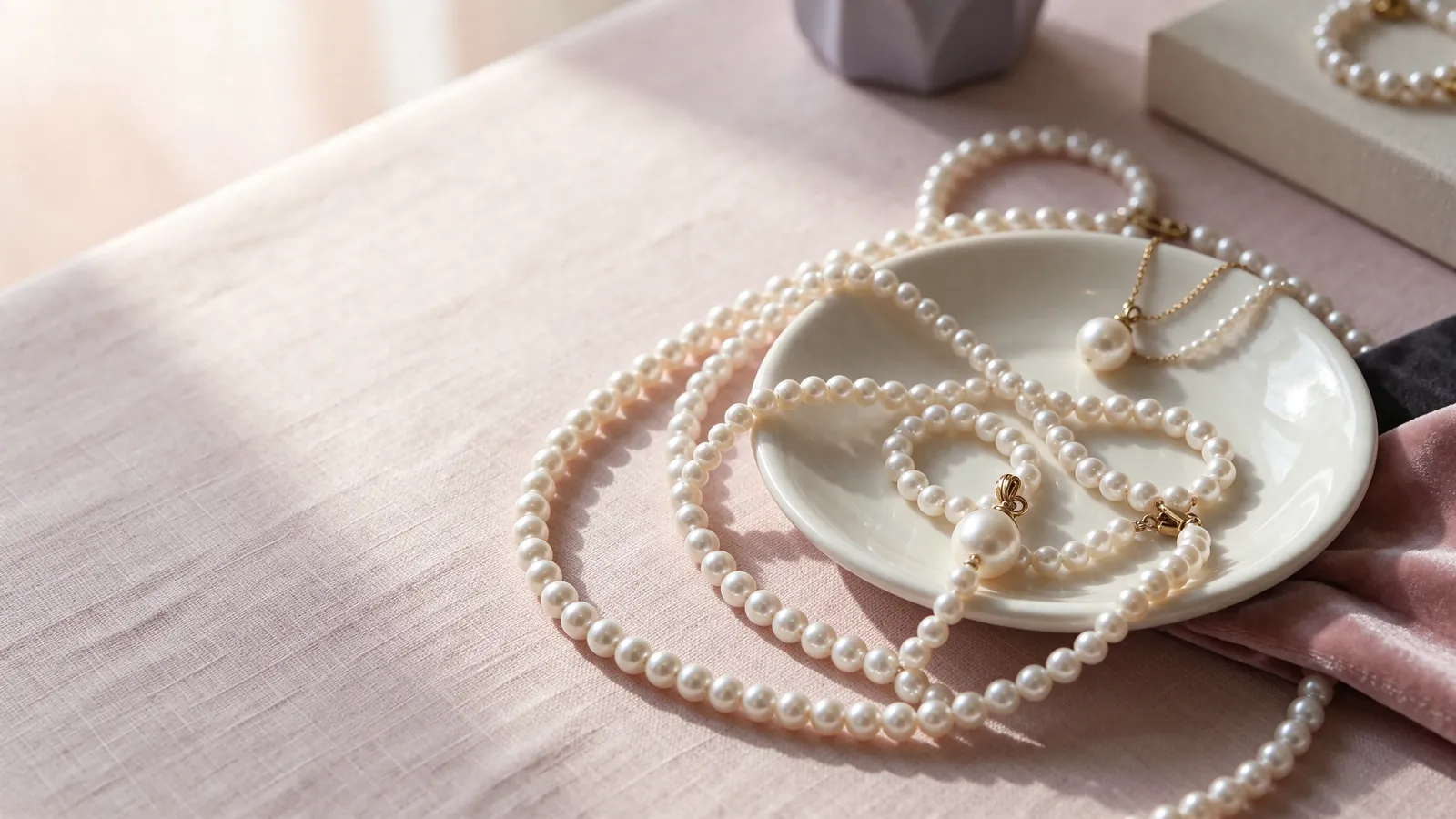
How Should a freshwater pearl necklace Sit at Your Neckline? Finding the Right Position for a freshwater pearl strand necklace | Flint Jewellery
Bring your usual blouse or knit into the decision. At a crew neckline, a strand can sit clearly above the edge or visibly on the fabric; an uncertain position on the boundary may disappear as you move. With an open shirt, check whether the collar pushes the curve sideways. Your preferred position should be a deliberate part of the outfit, not an accident of the photograph.
A length label cannot show exactly where a necklace will sit on you. Neck shape, pearl proportions, the fastening and the thickness of a garment all influence the result. Use a single strand pearl necklace as a simple styling baseline before adding more elements. Decide whether you want the pearls against skin or against cloth, then compare the balance in a full-length mirror rather than a close-up alone.
When Trying a freshwater pearl necklace, How Can You Check the Drape and Layering Space of a freshwater pearl strand necklace? | Flint Jewellery
Stand naturally, sit down and turn your head gently. Watch whether the centre keeps its curve and whether the clasp travels towards the front. Try a second necklace at the same time if layering is part of your plan. Separate positions in a still mirror are not enough: the pieces also need room when you lean forward or adjust your jacket.
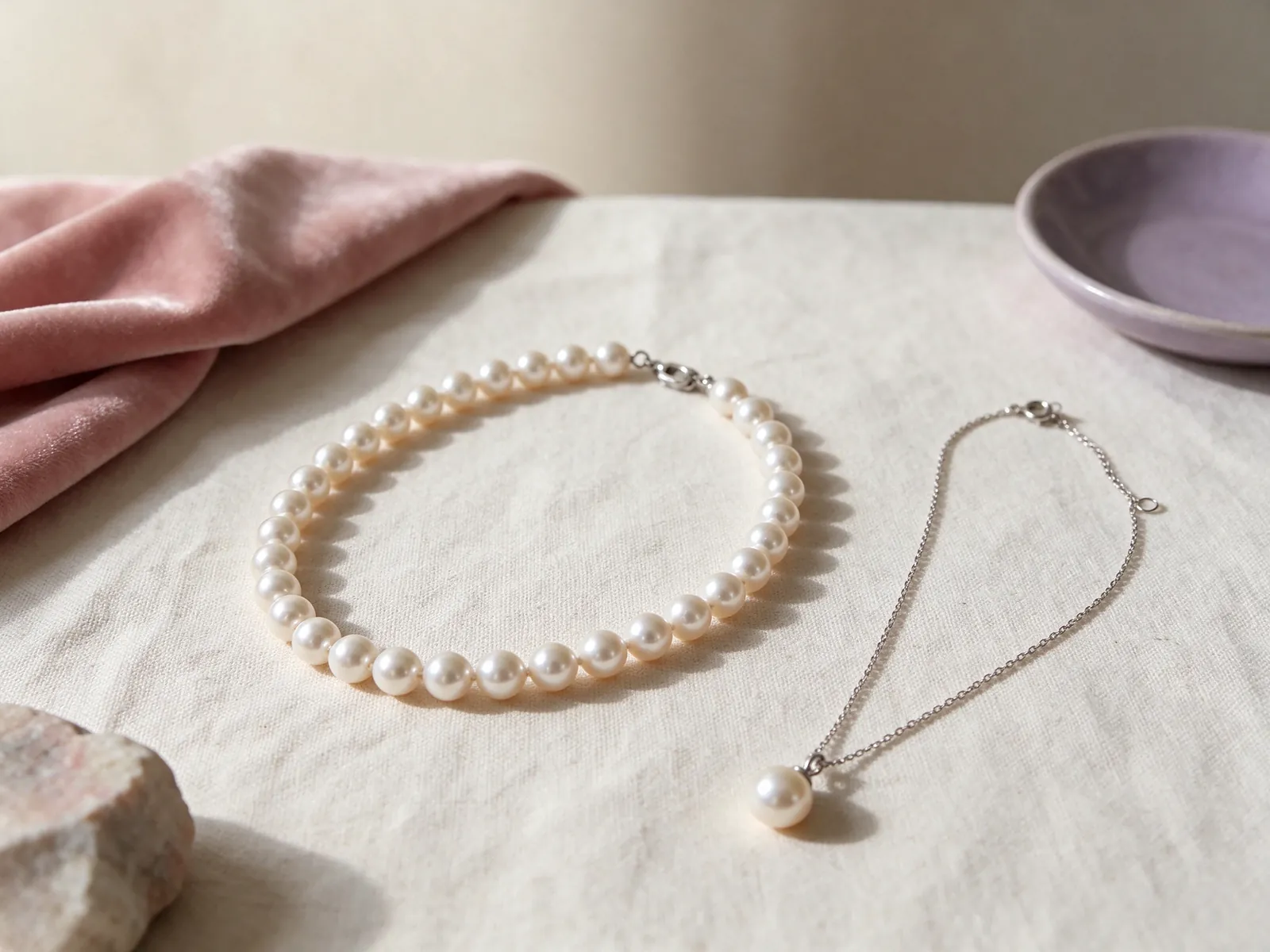
Separate the freshwater name from the appearance you prefer
GIA describes freshwater cultured pearls as usually grown in freshwater lakes and ponds, with varied shapes and colours. This is useful background for what are freshwater pearls, but it does not identify a particular necklace from its appearance. A freshwater description is not a complete quality assessment. Read the description of the particular piece for pearl identity and any stated treatment information. An irregular outline cannot, by itself, establish freshwater origin, and an appealing soft colour is not proof of natural colour.
If you encounter the term nucleated freshwater pearl necklace, treat it as a further subject to understand rather than a shortcut to predicting size or durability. Keep the pearl description, necklace length, colour information and fastening details separate in your comparison notes. This makes it easier to ask a precise question when a photograph appears different from the written description, without guessing what the difference means.
Ask for the visual feature you want, without confusing it with identity
You might want a regular curve, gentle colour contrast or a sequence of varied outlines. Say which feature matters to your wardrobe, then read identity information separately. If a document accompanies a piece, look at what item and characteristics it actually describes. A quality term should not be treated as a promise covering every aspect of the necklace.
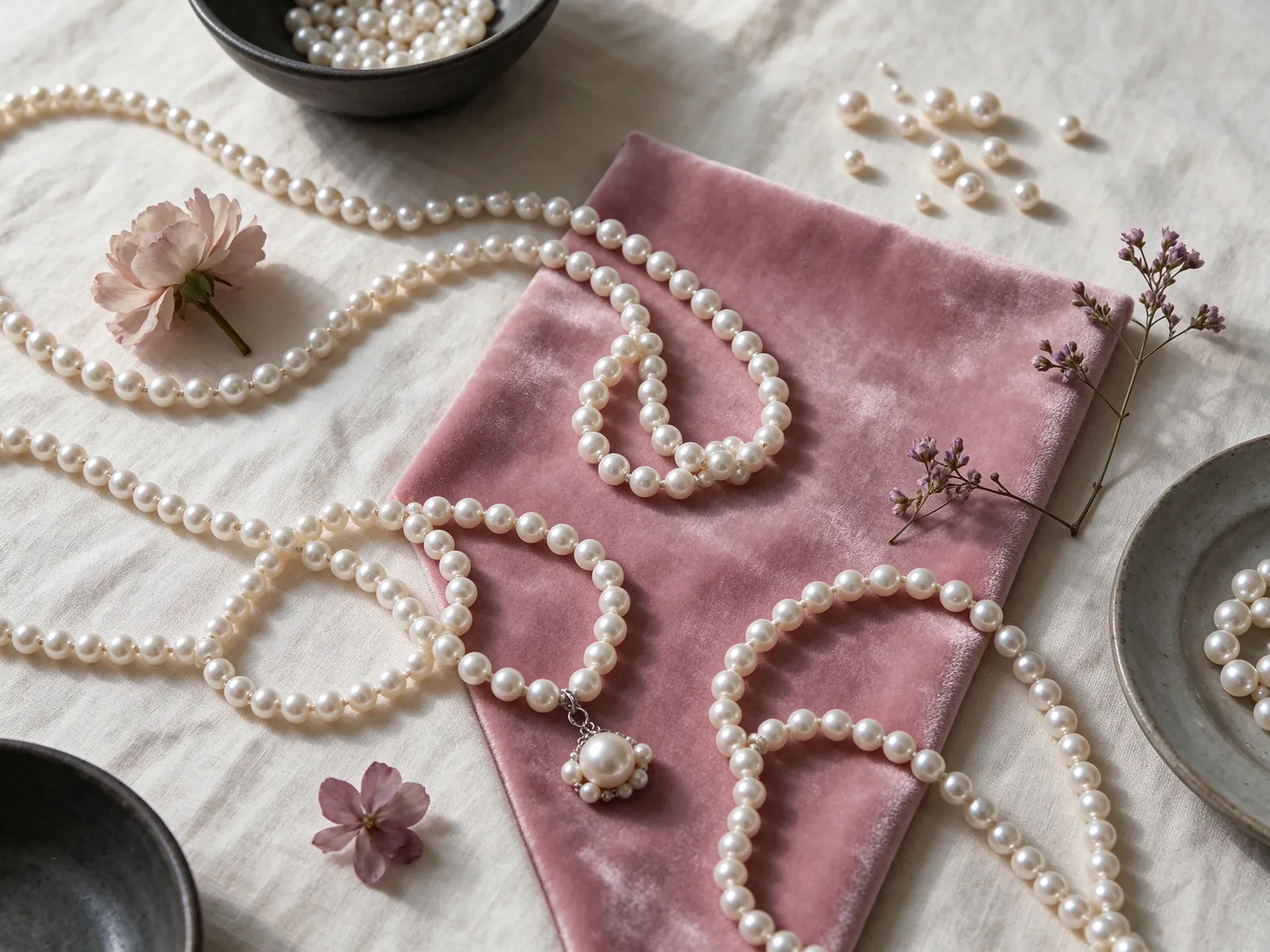
Assess lustre and matching across the entire freshwater pearl strand
GIA describes seven pearl quality factors: size, shape, colour, lustre, surface quality, nacre quality and matching. For a necklace, move between the whole strand and individual details. Notice the clarity of reflections, the distribution of brightness and the position of visible surface features. Do not infer a nacre measurement from a bright photograph; visual attraction and measured material characteristics are different kinds of information.
Compare candidates under similar lighting and against a similar background. Check whether the centre and sides have a coherent colour and brightness, rather than judging the strand by its most striking pearl. When considering an Akoya pearl necklace alongside freshwater styles, be clear whether you are comparing the silhouette, the observed lustre or the documented identity. A category name alone cannot rank the quality of two individual necklaces.
Use photographs to ask better questions about the surface
Look for both a whole-strand view and close views where strong reflections do not hide the surface. Warm lighting and different backgrounds can alter your impression of colour. If viewing the necklace in person, turn it slowly rather than examining a single angle. Separate questions about surface features, colour and lustre instead of asking whether it simply looks good.
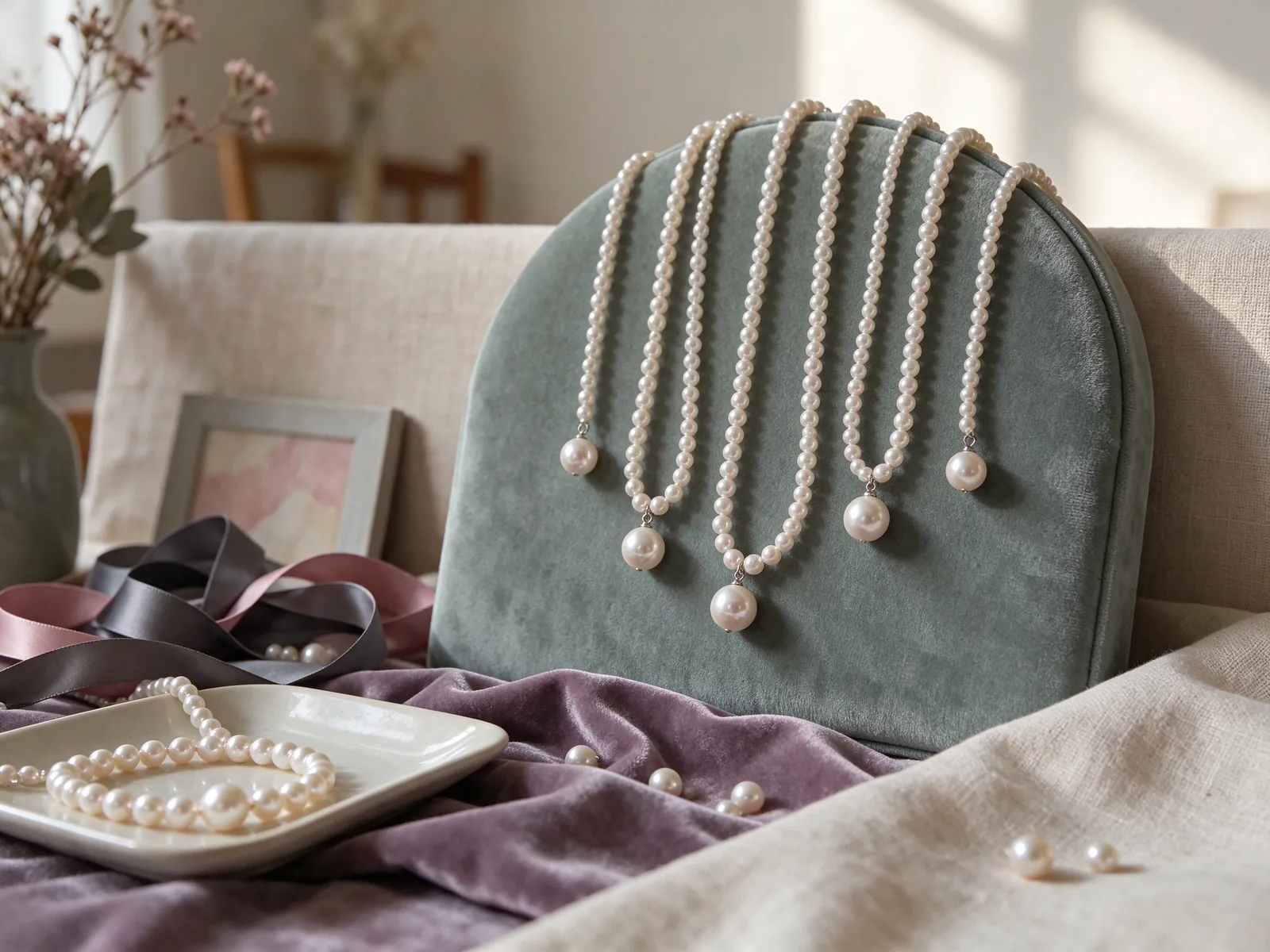
Choose a pearl outline that works with the texture of your clothes
A regular outline can create an orderly curve, while variation can introduce a more relaxed visual rhythm. The useful question is whether the arrangement looks intentional when worn. A baroque pearl strand necklace offers a related styling direction for irregular shapes, but baroque is a shape description rather than proof of freshwater origin. Neither a round nor an irregular outline automatically settles the question of quality.
Consider the visual volume against your usual fabrics. A textured jumper may obscure a subtle strand, whereas a plain fine-knit top can give the pearls more prominence. If the centre has a stronger visual presence, check that it rests where you intend after moving. An even arrangement and a graduated silhouette can both work; each needs to retain its balance on your own neckline.
Check the side view before adding more jewellery
The front view shows the curve, while the side view helps reveal how far the pearls project from the outfit. With pleats, decorative buttons or a ruffled collar, remove other accessories first. If the necklace is the focus, simplify the clothes around it; if you want only a quiet highlight, avoid choosing a silhouette merely because it is dramatic.
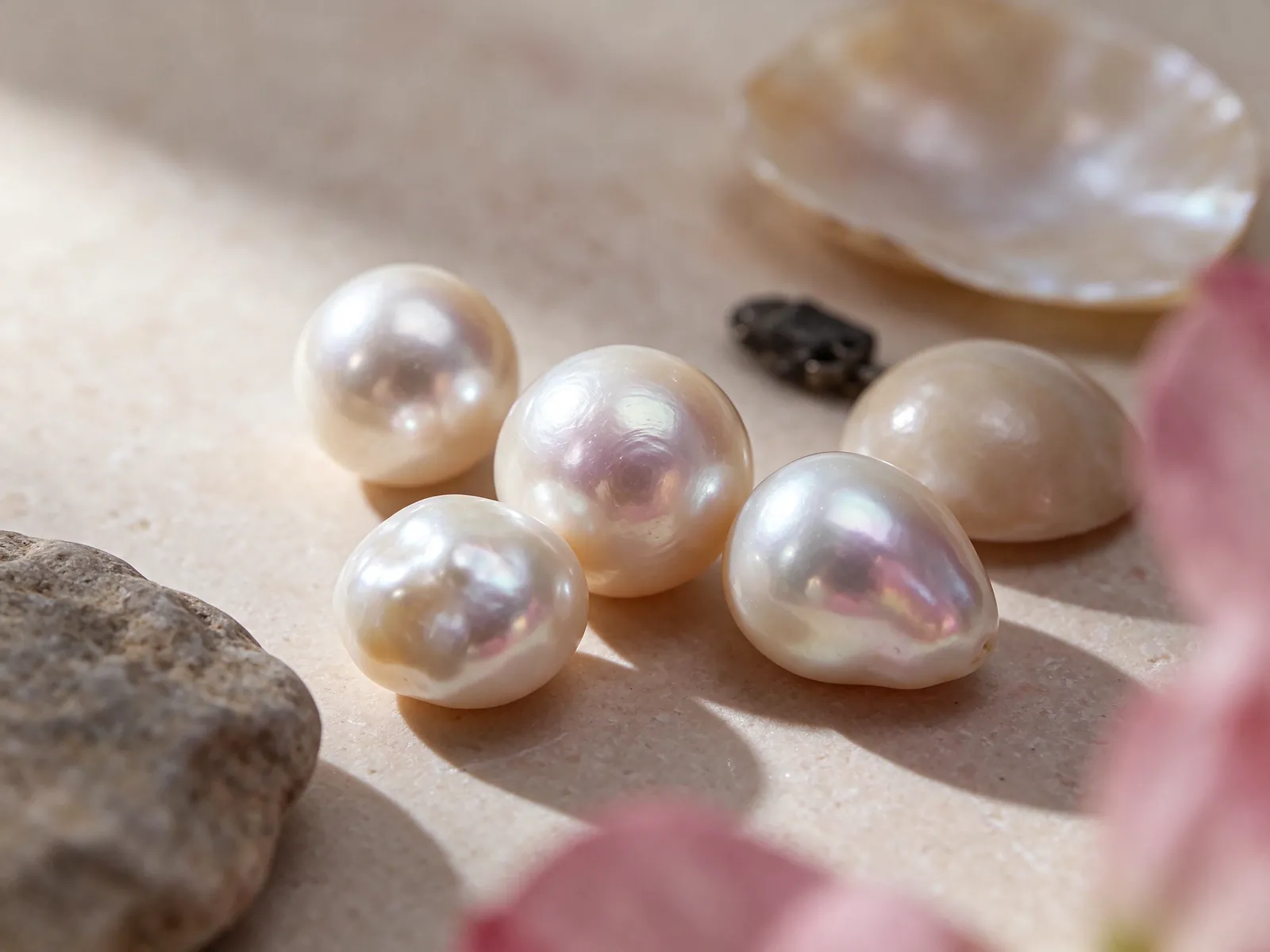
Plan layering and colour around a clear focal point
Decide which necklace leads the composition before combining pieces. If the pearls are the focus, a second chain can be visually quieter, with its pendant clear of the centre of the strand. Try the layers with your jacket and bag as well as your top. A neat arrangement that catches when you reach for something is not a useful everyday solution.
Test colour against a white shirt, a dark jacket and a warm-toned knit rather than following a rigid rule about skin tone. For a different dark-colour styling direction, explore a Tahitian pearl necklace, keeping visual preference separate from pearl identity. A dark appearance does not establish origin or pearl type. Choose the contrast you enjoy, then read the particular necklace's colour and identity information on their own terms.
Adapt the same strand from a working day to a dinner outfit
Start with the strand alone for a working day, using a clean neckline and understated earrings. For dinner, change the fabric, hairstyle or earrings before assuming another necklace is needed. A broader neckline may reveal a complete curve. If you do add a layer, reassess its position while seated; the table-height view can differ from your standing reflection.
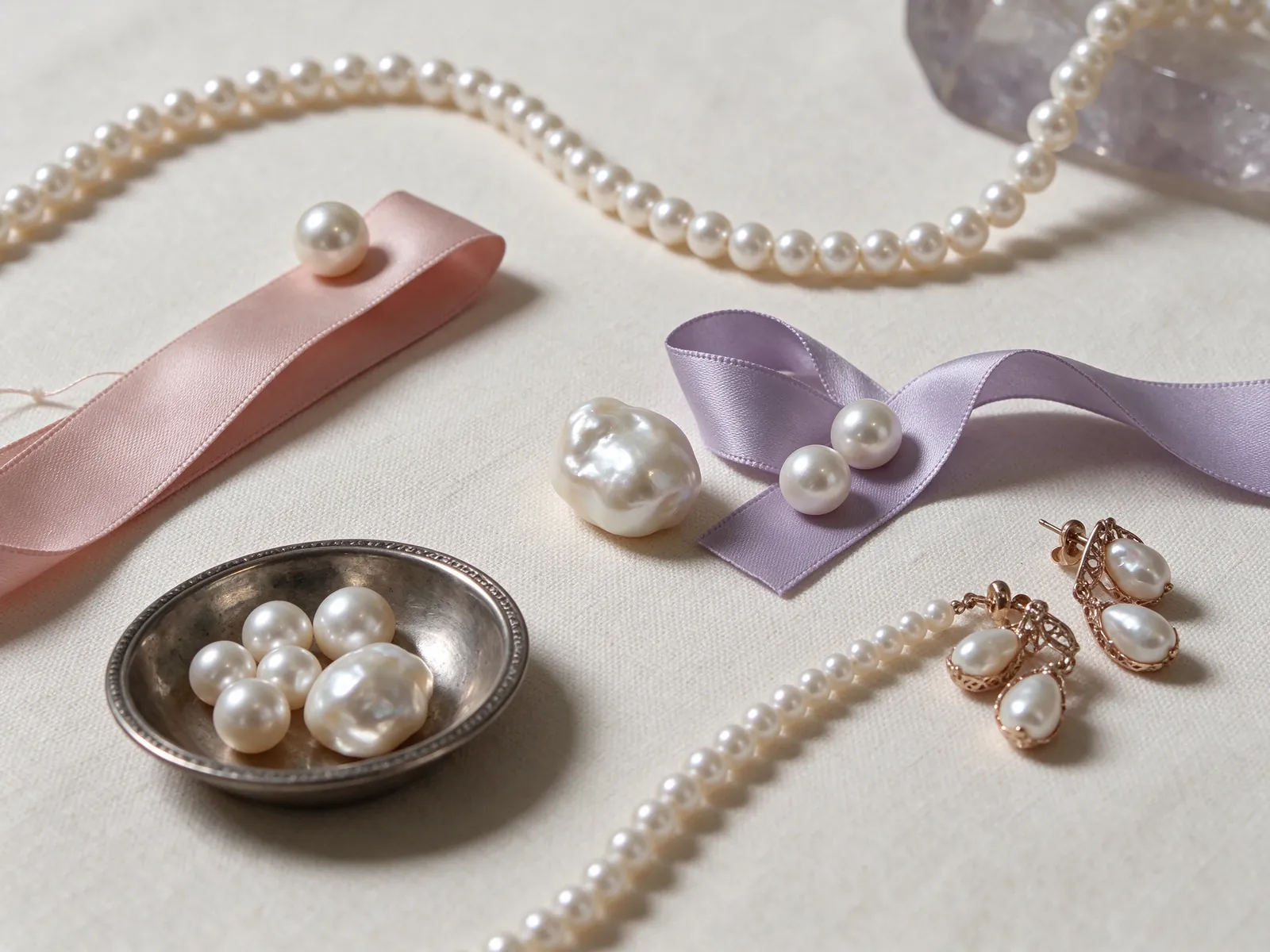
Inspect the fastening and build care into your routine
Practise opening and closing the clasp, checking that it engages fully and does not catch your hair or collar. A platinum clasp pearl necklace is a useful related topic when thinking about the fastening as part of the design, but a material name cannot replace checking its operation. Unusual gaps between pearls, worn string or a distorted clasp deserve attention from a jewellery professional before further wear.
GIA gives pearls a Mohs hardness of 2.5 and advises against ultrasonic and steam cleaning. After wearing, use a very soft, clean cloth and store the necklace away from pieces that could rub against its surface. Avoid acids, perfume, hair spray and excessive heat. Put the necklace on after applying cosmetics rather than spraying fragrance directly over the strand.
Allow the string to dry after cleaning with water
GIA advises that string must be completely dry before wearing pearls that have been cleaned with water. A dry-feeling pearl surface does not establish that the string is dry. Do not use excessive heat to hurry the process. For a stubborn mark, seek an appropriate cleaning method rather than experimenting with household cleaners, and keep an eye on the spacing between pearls.
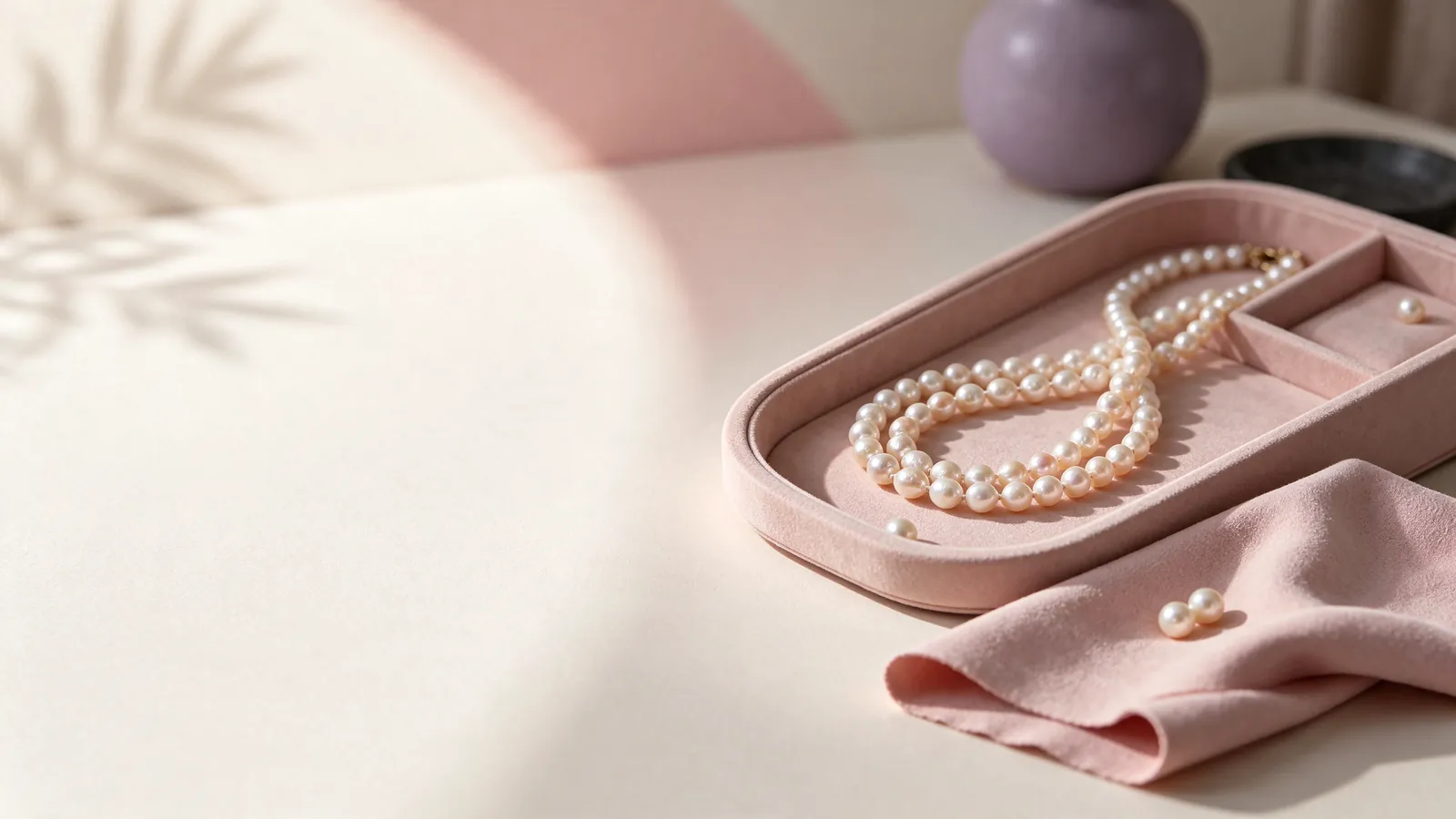
Turn your fitting notes into a practical selection brief
Record the neckline, the standing position, the seated position, planned layers and ease of fastening. Eliminate silhouettes that do not work with the clothes you actually use, then compare lustre, matching and details among the remaining choices. This is more informative than choosing a freshwater pearl strand necklace for a single styled image or an outfit that rarely leaves the wardrobe.
For a gift, consider the recipient's regular necklines and whether they like a quiet accent or a strong focal piece. Their willingness to handle a strand clasp is relevant too. Avoid assigning one style to an entire age group. A conversation about length and styling is more useful when it describes a wearing situation, rather than relying on a general request for something classic.
Finish with one clear sentence about the intended fit
A useful conclusion might be that the curve should stay visible above a crew neckline, remain comfortable when seated and look complete without another necklace. That sentence connects position, visual volume and styling. Rank the quality factors that matter most to you afterwards, so your decision has a clear basis in appearance, daily use and the care you are prepared to give.
Ready to put your fitting notes into words? Contact Flint Jewellery on WhatsApp to discuss your usual neckline, preferred strand position and whether you plan to wear it alone or layered. If convenient, share an outfit photograph to explain the styling direction you have in mind.
| Wearing situation | Position to assess | Detail to check | Movement test |
|---|---|---|---|
| Crew-neck top | Clearly above the edge or on the fabric | No repeated hiding at the neckline | Sit down and inspect the curve |
| Open shirt or V-neck | A curve distinct from the collar lines | Collar does not push the strand sideways | Turn your head and adjust the collar |
| Textured knit | A visible outline over the fabric | Pearls retain the intended prominence | Check the side view |
| Layered necklaces | Separate positions with a clear leader | Pendant and pearls do not catch | Reach forward and lean gently |
| Dinner outfit | A complete curve at the neckline | Earrings and hair support the focal point | Compare standing and seated views |
Pearl knowledge and authoritative references
GIA identifies seven pearl quality factors: size, shape, colour, lustre, surface quality, nacre quality and matching. Matching is especially relevant when assessing the coherence of an entire necklace.
Read the reference for this factFrequently asked questions
Can I choose the length from a necklace photograph?
A photograph can suggest a silhouette, but it cannot show the fit on your neck or over your usual clothes. Check the actual position while standing and seated, with the intended top. Treat the length label as comparison information rather than a guarantee of the same appearance.
Does an irregular outline mean the necklace cannot look balanced?
No. Varied shapes can create a coherent rhythm when the centre and sides work together. Assess the whole arrangement while worn, including whether its focal point stays in place. Shape variation alone does not establish freshwater identity or decide quality.
Why might the pearl colour look different beside my clothes?
Background and lighting affect the way colour is perceived. Compare the necklace against the garments you intend to wear and, where possible, in comparable lighting. Keep your colour preference separate from any claim about natural colour or treatment.
What should I do if a pendant catches on the strand?
Try separating their positions and choosing one clear focal piece. Test the change while seated and reaching forward, not only in a still mirror. If catching continues, wearing the strand alone is a clearer option than forcing the layers together.
Can I wear the necklace immediately after washing it?
If the strung pearls have been cleaned with water, GIA advises waiting until the string is completely dry. Do not rely only on a dry pearl surface, and avoid excessive heat. Ask for an appropriate cleaning method if the necklace needs more than routine wiping.
Updated: