How does a matinee pearl necklace work with different necklines? Pairing a mid length pearl necklace, including a 20 to 24 inch pearl strand, with your wardrobe | Flint Jewellery
Begin with the edge of your neckline rather than an imagined ideal point on the chest. Over a crew-neck top, look for a strand outline that remains distinct from the collar seam. With a V-neck, compare the necklace curve with the two sloping edges: a curve that disappears into one edge can look quite different from one framed by both sides. The pearl necklace length guide can help you organise these comparisons around the clothes you actually wear.
An open shirt adds collar points and a button placket to the picture. Check whether the strand sits between the collar points or slides beneath one of them. Buttoning the shirt higher creates a different background, even when the necklace stays unchanged. Try both arrangements before deciding that the length is wrong. Soft knitwear and a crisp shirt also support a strand differently, so a bare-neck fitting alone will not tell you how the necklace behaves in a working wardrobe.
When trying on a matinee pearl necklace, how much neckline clearance feels right with a mid length pearl necklace such as a 20 to 24 inch pearl strand? | Flint Jewellery
There is no single clearance measurement that suits every neckline. Look for visible separation, then bend your head, turn your shoulders and sit down. Notice whether the pearls settle into the collar, roll underneath it or need repeated adjustment. The useful gap is one that preserves the intended outline during your usual movements, not merely while you hold a still pose in front of a mirror.
Read the measurement before relying on the matinee name
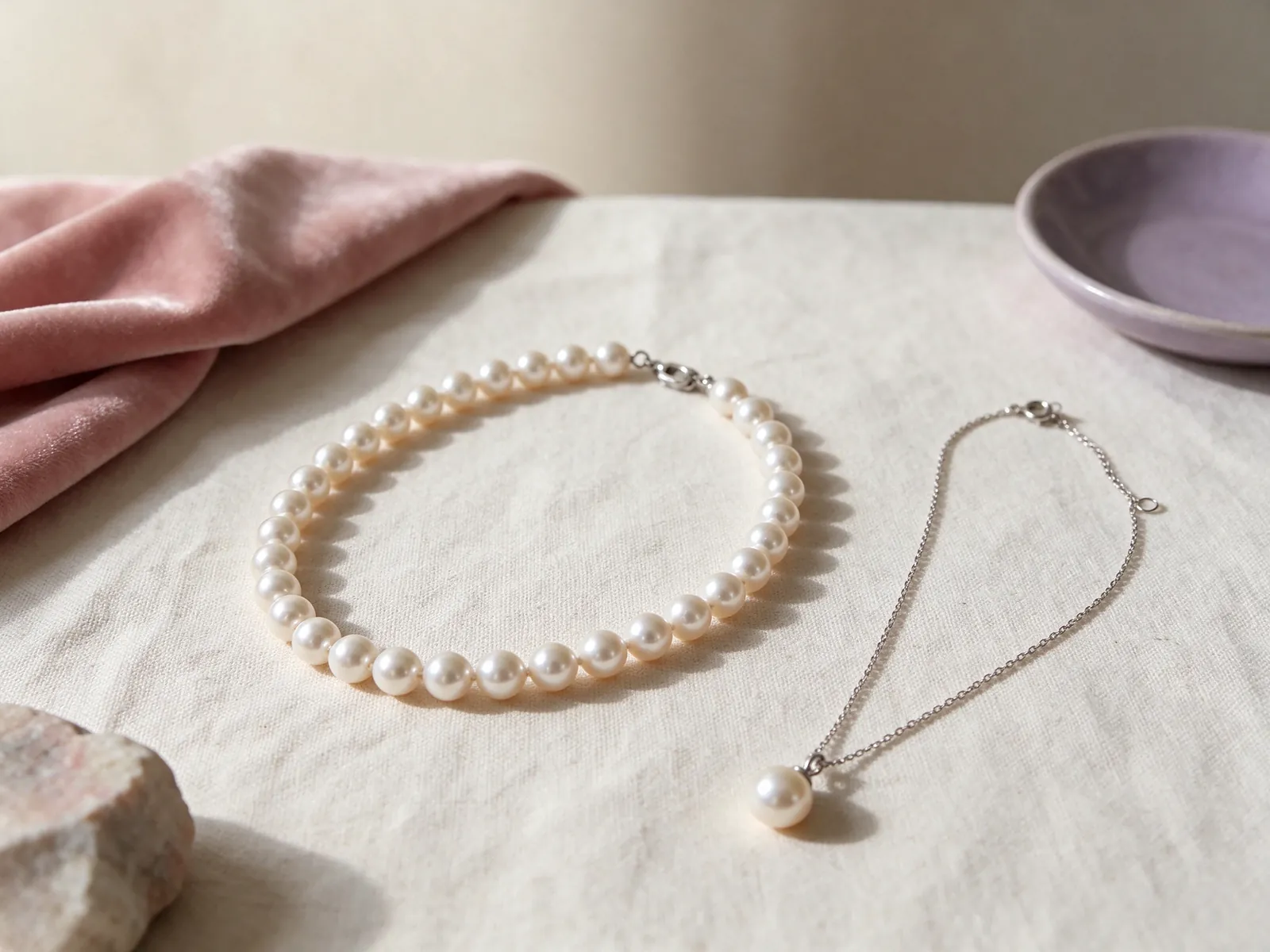
Matinee describes a length category, not a pearl species or a quality grade. WSP's choosing guide labels 50 cm as short matinee and 60 cm as matinee; its necklace collection page describes matinee as approximately 50–60 cm. These are helpful examples of the category, rather than a rule shared by every brand. The phrase 20 to 24 inch pearl strand is an approximate shopping reference, not an exact interchangeability claim for every centimetre-labelled necklace.
Compare the neighbouring categories by the position you want to create. A pearl choker necklace draws attention closer to the neck, while a long pearl necklace extends the line further down the outfit. Neither comparison makes mid-length automatically casual or formal. A matinee curve against a plain shirt can appear restrained, and the same curve over relaxed knitwear can feel less structured. Length locates the focal point; clothing and the strand's visual volume help shape its mood.
Make a simple fitting record in one unit
A flexible tape can suggest a possible curve if held gently around the neck without tightening. Record the full loop and the top you are wearing, then compare that record with the necklace's stated length. Ask whether the measurement includes the clasp. Tape lacks the bulk and drape of pearls, so use it to narrow your options rather than to promise an identical fit.
Judge proportions from the side as well as the front
Height alone cannot tell you where a mid length pearl necklace will settle. Neck circumference, shoulder shape, the upper-body outline and the garment all contribute. Look straight ahead to assess the curve, then turn sideways to see whether the strand follows the fabric or projects away from it. A raised seam, a fold or a structured collar can redirect the necklace. Photographs are useful for comparison when posture and camera height remain similar, but they cannot replace a movement check.
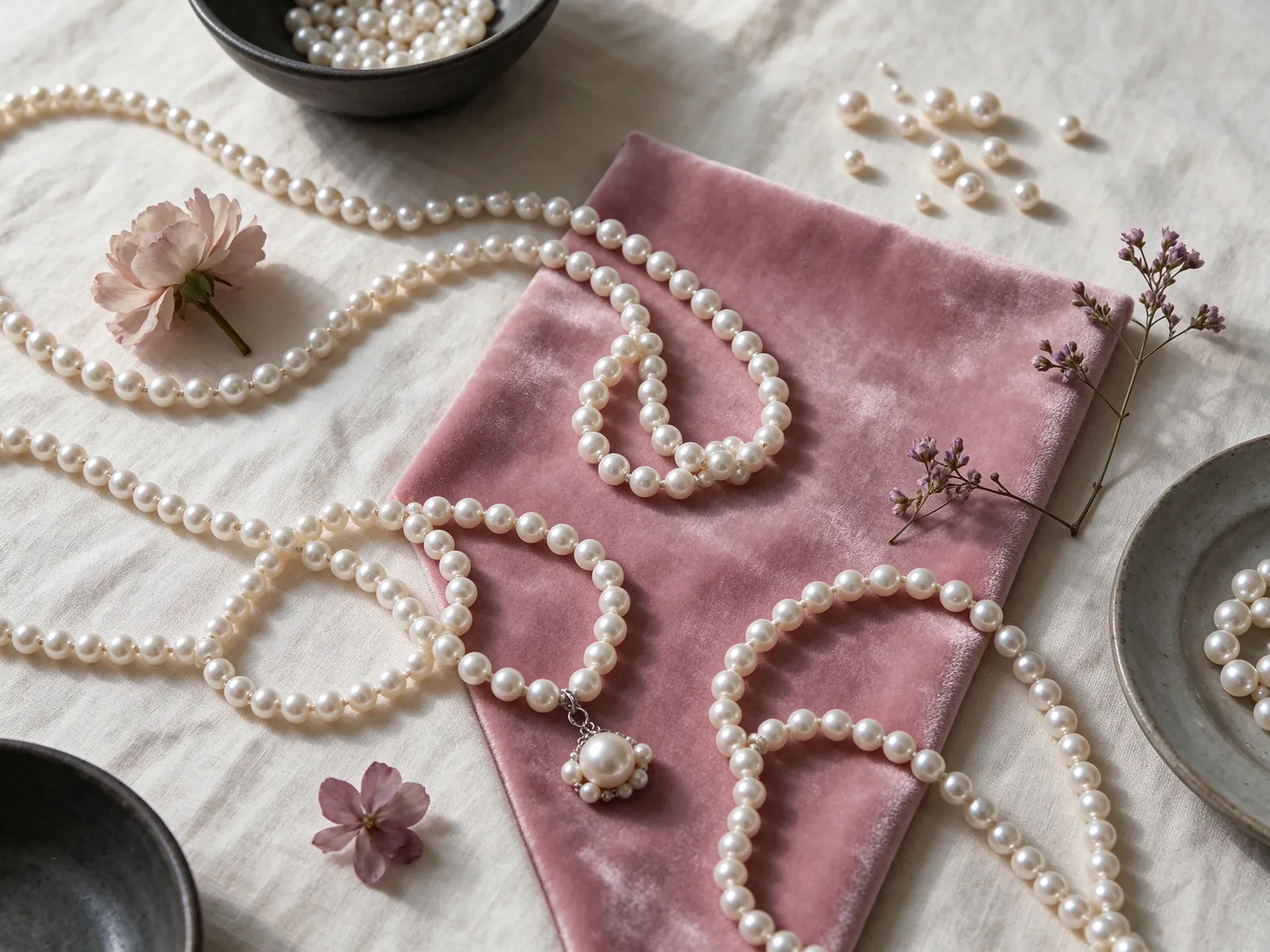
Start with the outline you want to see. A single strand pearl necklace makes one continuous curve easy to assess. A multi strand pearl necklace introduces separate upper and lower positions, so the spacing between rows matters as much as the lowest point. Do not assume these structures create equivalent coverage at the same stated length. Decide whether you prefer an open area above the strand or a fuller arrangement, then compare the structure against your neckline.
Include your desk, jacket and bag in the fitting
Sit as you would at a desk and reach forward. Check whether the strand meets the desk edge or catches on the shirt front. Put on your usual jacket and bag, watching for a strap that presses the necklace sideways. These checks reveal practical conflicts that a flattering front view may conceal, helping you distinguish a length issue from a clothing or accessory issue.
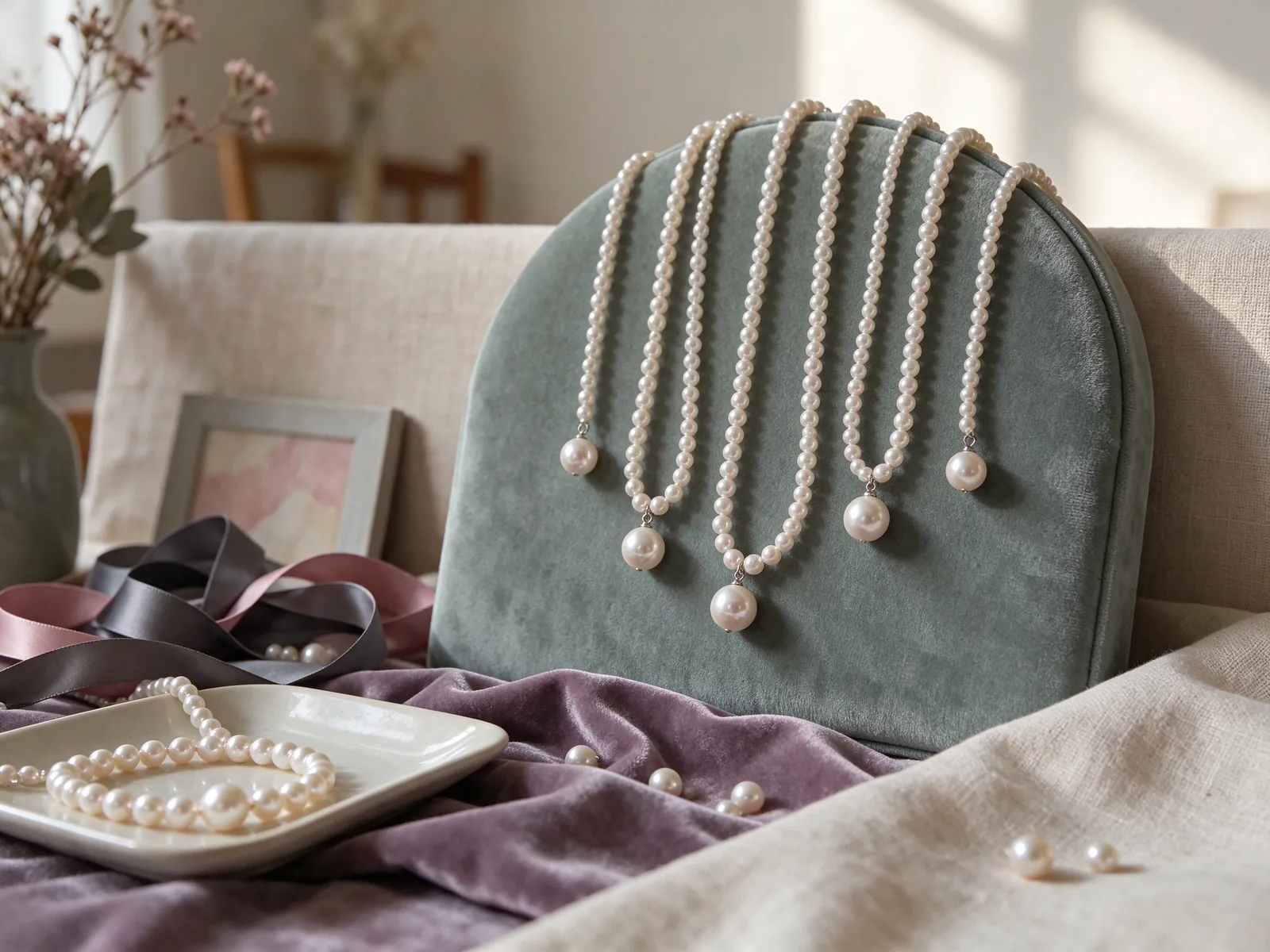
Use clear space to move between office and evening outfits
With a tailored jacket, the lapels can frame a mid-length strand. Check the necklace with the jacket both open and fastened: a narrow opening may hide part of the curve or crowd the pearls against the edges. If the shirt also has a strong pattern, look at where the strand crosses the busiest part. You need not choose a plain top every time, but a quieter background makes the necklace outline easier to read.
For dinner, an open neckline can change the balance without changing the strand. Removing a jacket or reducing other jewellery near the neck may give the same necklace more prominence. If the outfit has embroidery, a bow or gathered fabric at the chest, compare a curve above that detail with one below it. The aim is a deliberate relationship between clothing and jewellery, rather than placing every decorative feature at exactly the same height.
Test two outfits you already rely on
Choose one work outfit and one weekend outfit, and note the lowest point, collar contact and comfort in each. If only one works well, decide which occasion matters most. A necklace does not have to suit every neckline to be useful; knowing its strongest pairing is more practical than judging it solely in an unfamiliar fitting outfit.
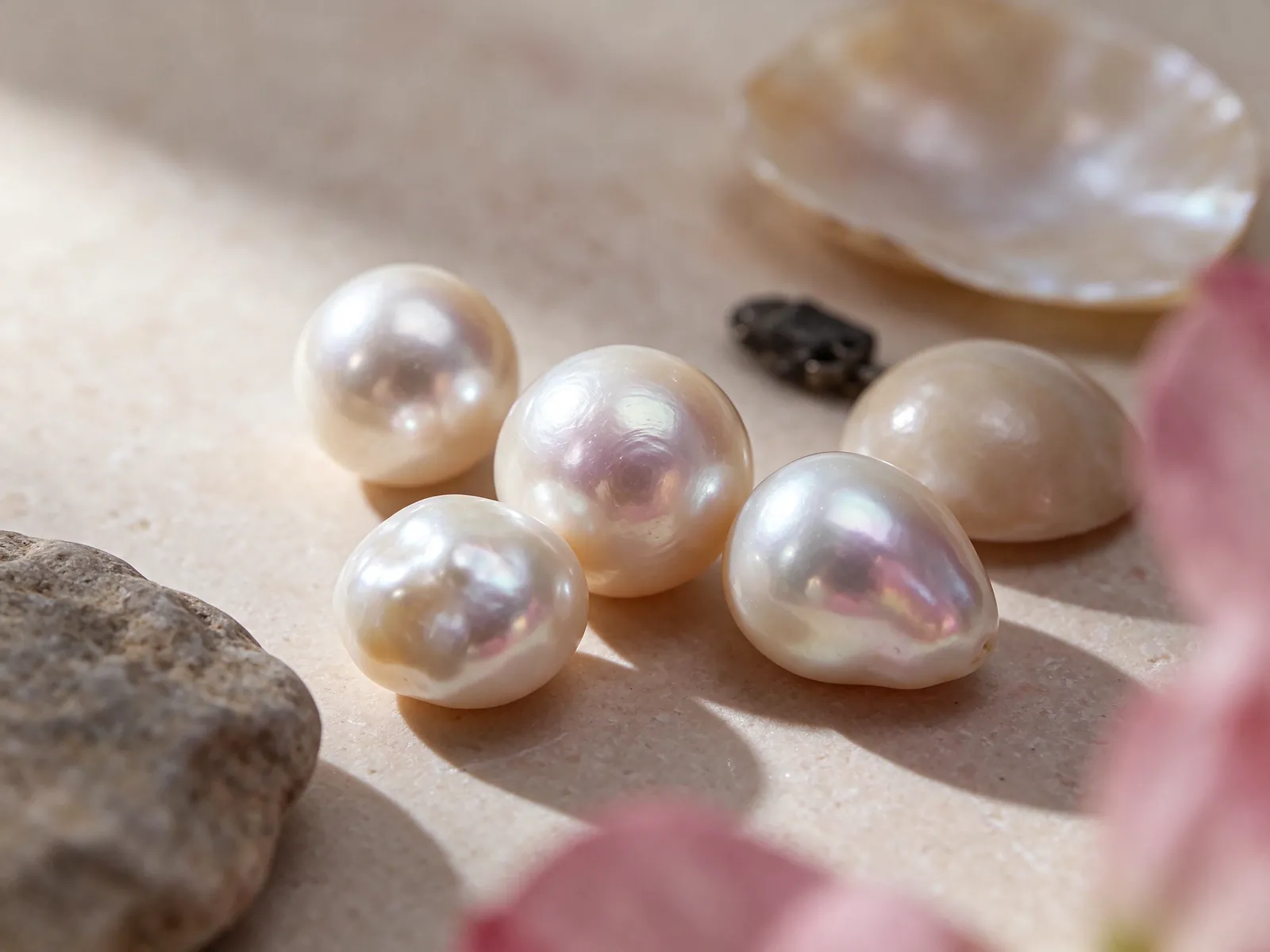
Consider strand volume and matching alongside length
A matinee arrangement displays a substantial part of the strand over the front of your clothing. Shape, spacing and overall volume therefore influence its rhythm. When considering a large pearl necklace, do not simply copy the length that worked with a finer-looking strand. The thickness, sense of weight and side profile can change the effect. Compare whether the curve remains clear and whether it covers a clothing detail you wanted to keep visible.
GIA discusses seven pearl value factors: size, shape, colour, lustre, surface quality, nacre quality and matching. Matching is particularly useful to consider when many pearls are visible together across an outfit. Look at the overall relationship of colour and lustre, rather than judging the strand from one eye-catching pearl. A length label does not establish origin, pearl identity or a certificate, so assess the wearing proportion separately from the information describing the pearls.
View the whole curve before examining details
First look at the complete strand in ordinary indoor light, then examine visible surfaces and try the clasp. Notice whether a particular area repeatedly draws your eye as the strand turns. Differences need not all be unwanted, but the overall arrangement should suit your preference. Include the ease of fastening in your decision rather than concentrating only on brightness under strong display lighting.
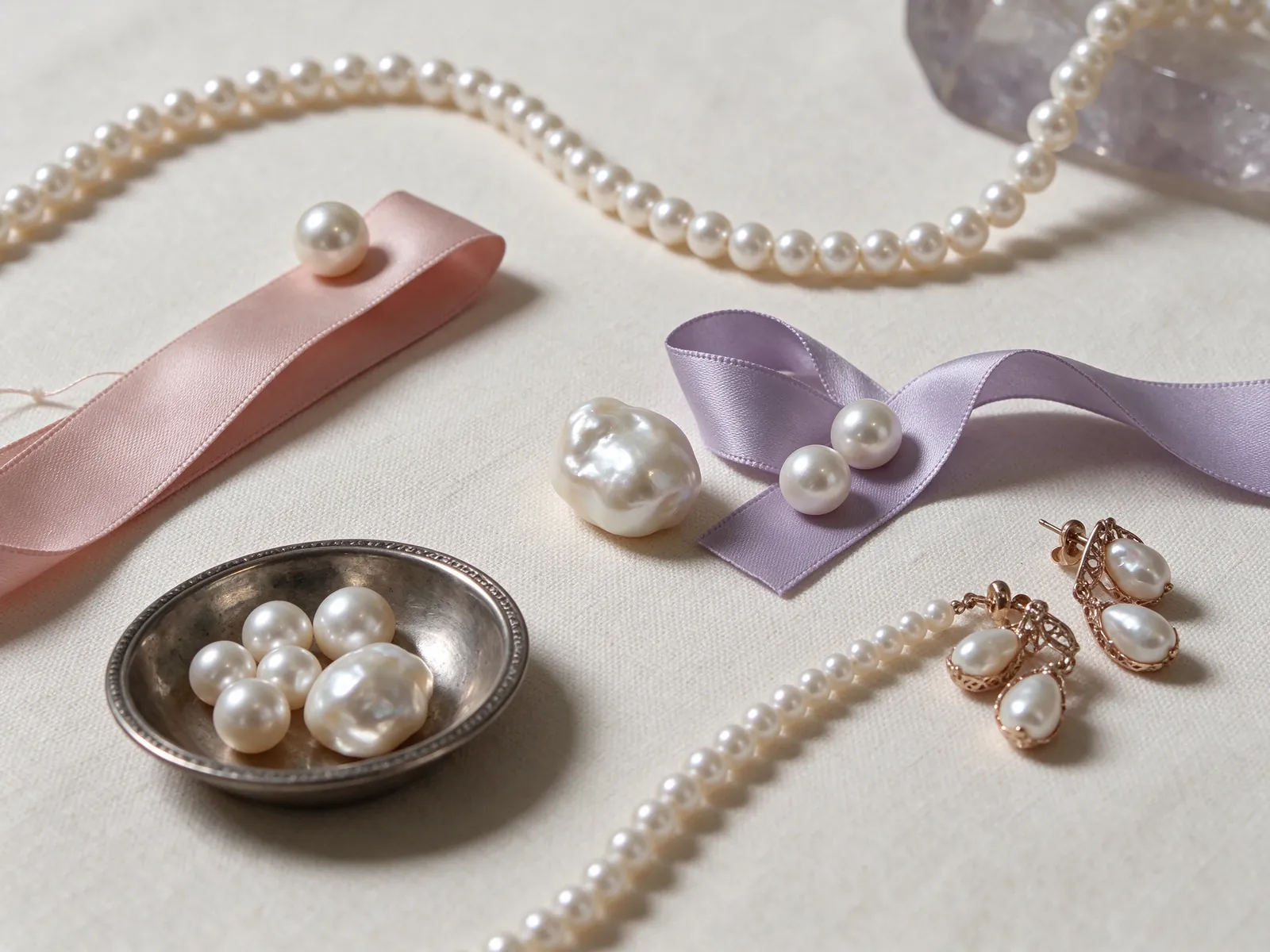
Give a mid-length layer its own route
Successful pearl necklace layering begins with distinguishable curves, not simply a higher number of necklaces. A shorter piece can sit above a matinee strand, but check whether the two lowest points merge when you move. Look behind the neck as well, where clasps may meet. If another necklace has a pendant, assess its actual resting position rather than just the length of its chain. A pendant can occupy the space you expected to leave between layers.
A high-neck knit adds fabric thickness beneath the necklaces and may reduce the separation that worked with a lighter top. An open shirt can put the shorter layer against skin and the mid-length layer against fabric. That contrast can be intentional, provided neither piece repeatedly slips across the collar edge. For less conventional combinations, men's pearl necklace styling also offers ways to compare T-shirt collars, shirts and jackets; the useful choice is about proportion and personal taste rather than a gender label.
Remove one layer to identify interference
If you keep separating the necklaces by hand, wear the matinee strand alone first. Confirm where it settles, then add the other pieces one at a time. Crowding may come from similar resting points, the collar or neighbouring clasps. Making one piece longer is not automatically the answer; isolate the combination that causes the problem before changing the arrangement.
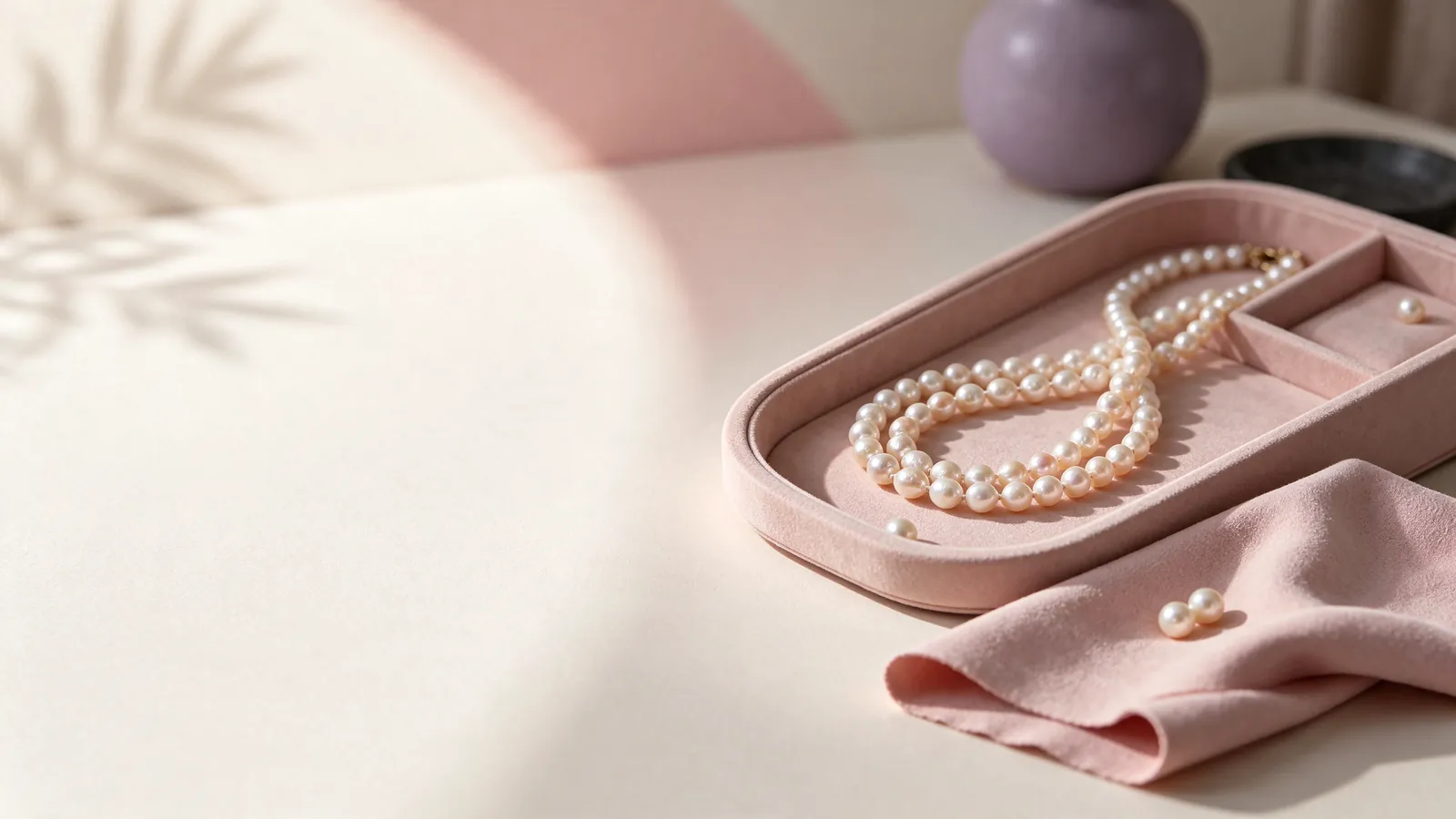
Connect everyday care with the questions you ask before choosing
A mid-length strand may meet shirt fronts, bag straps and other jewellery during the day. GIA places pearl at 2.5 on the Mohs hardness scale and recommends a very soft, clean cloth after wearing, with care to avoid acids, perfume, hair spray and excessive heat. Finish applying fragrance and styling your hair before putting on the necklace. Store the strand separately from pieces whose hard edges or clasps could rub directly against pearl surfaces.
Before choosing, ask how the full length is measured, how the clasp works and what care the strand construction requires. If you already have a necklace and want a different proportion, record its present length and resting point, then explain what you wish to retain or change. This is clearer than asking for matinee by name alone. Notice loose sections, worn thread or unusual clasp behaviour during use; stop wearing a strand that concerns you while you establish an appropriate next step.
A dry pearl surface does not prove the string is dry
GIA states that pearls should never be cleaned in ultrasonic or steam cleaners. If strung pearls have been cleaned with water, the string must dry completely before wearing. Dry-looking pearl surfaces do not establish that the string is dry. Routine gentle wiping is a sensible starting point; stubborn marks call for advice appropriate to the whole necklace, not forceful scrubbing or a method borrowed from a harder gemstone.
Would you like a clearer mid-length curve with your work shirt or weekend knit? [Contact Flint Jewellery on WhatsApp](https://wa.me/85260106207) with the full length of a necklace you already wear, your usual neckline and the position you would like to change. A description of the outfit is enough to start; you do not need to send a personal photograph. These details make the conversation more useful than the matinee name alone.
| Outfit | Position to inspect | Possible interference | Movement check | Useful decision |
|---|---|---|---|---|
| Crew-neck top | Lowest curve beside the collar seam | Strand resting directly on the neckline | Lower your head, then stand straight | Keep the collar edge and strand outline distinct |
| Open shirt | Collar points and button placket | Pearls slipping beneath one collar side | Turn your shoulders and sit | Compare placement inside and outside the shirt |
| Tailored jacket | Space between the lapels | Lapels hiding or crowding the curve | Fasten and open the jacket | Choose a clearly framed arrangement |
| High-neck knit | Curve against the thicker fabric | Fabric pushing the strand upwards | Reach forward and turn | Judge the length over the actual knit |
| Layered necklaces | Lowest points and rear clasps | Crossing curves or meeting clasps | Add one piece at a time | Give each layer a distinguishable route |
Pearl knowledge and authoritative references
GIA describes 7 pearl value factors: size, shape, colour, lustre, surface quality, nacre quality and matching. For a matinee strand, evaluate the visible pearls together as well as the necklace's position on your outfit.
Read the reference for this factFrequently asked questions
Is matinee always exactly 60 cm?
No. WSP's choosing guide uses 50 cm for short matinee and 60 cm for matinee, while its collection page describes approximately 50–60 cm. Brands may use different boundaries. Compare the stated full length and your actual fit rather than treating the name as a fixed measurement.
Will a shorter person find a matinee strand too long?
Height alone is not enough to decide. Neck circumference, upper-body shape and the garment affect the resting point. Compare front and side views in clothes you regularly wear, then sit and move to see whether the strand stays in a useful position.
Can I choose using a centimetre measurement if I shop by inches?
Yes, but compare measurements in one unit and read how the full length is measured. The 20 to 24 inch description is an approximate category reference. It does not mean that every necklace labelled within a centimetre-based matinee range has an identical fit.
Why does my mid-length strand move when I put on a jacket?
Lapels, the jacket opening or a bag strap may redirect the strand. Try it with the jacket open and fastened, then without the bag. This helps identify the source of interference before deciding whether a different length or outfit arrangement would work better.
Can I wear a recently washed strand when the pearls look dry?
For strung pearls, the string must be completely dry too. GIA makes this distinction in its care advice and also advises against ultrasonic and steam cleaning. Gentle wiping with a very soft, clean cloth is useful for routine care after wearing.
Updated: