
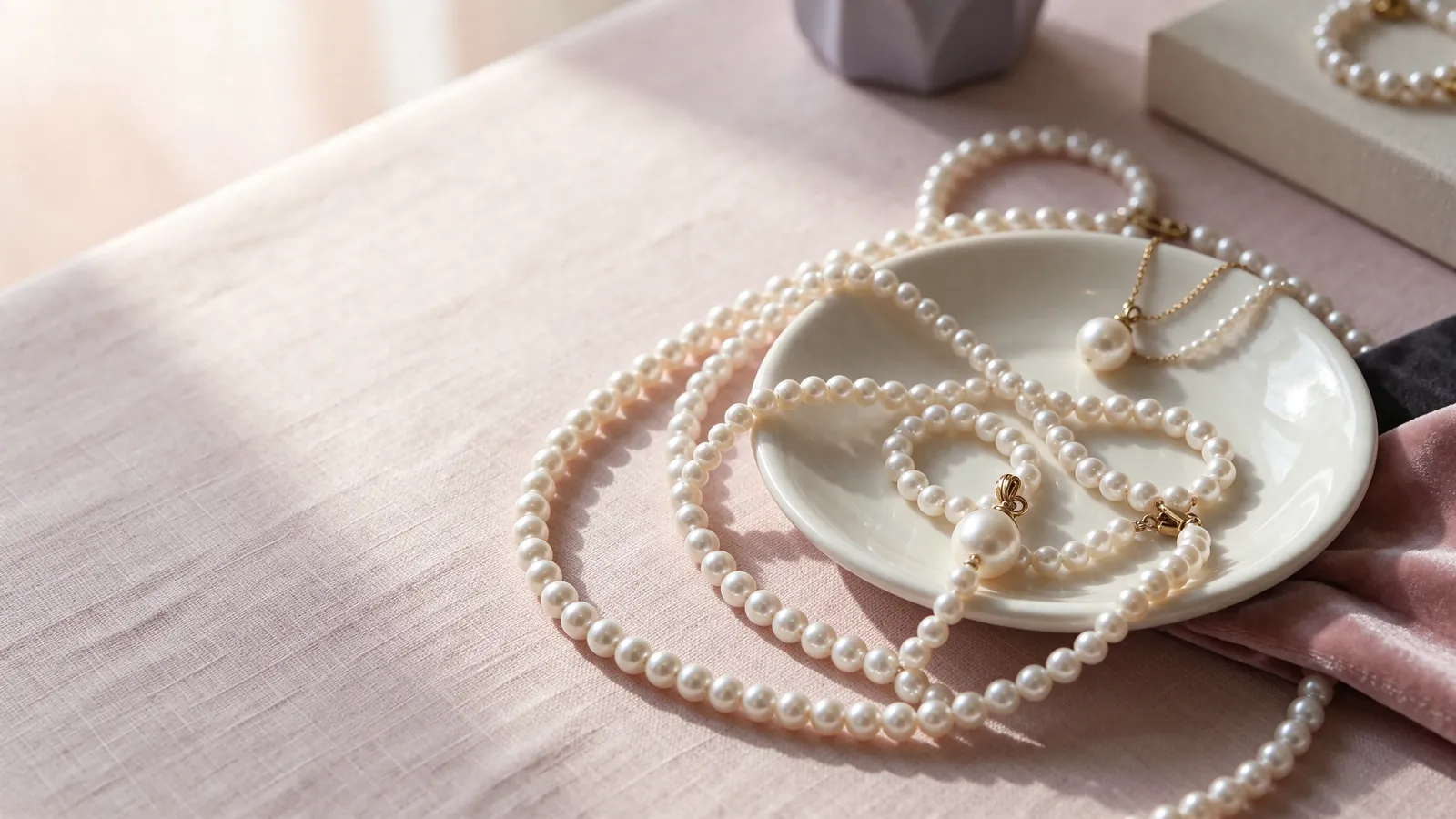
How does a matinee pearl necklace work with different necklines? Pairing a mid length pearl necklace, including a 20 to 24 inch pearl strand, with your wardrobe | Flint Jewelry
Start with the top you reach for most often. A matinee pearl necklace can create a curve below the neck, but that curve needs a clear relationship to the neckline. With a round collar, check whether the lowest portion sits visibly on the fabric instead of merging with the seam. With a V-neck, decide whether you want the strand framed inside the opening or resting below it. The pearl necklace length guide offers a useful way to compare those positions.
A button-front shirt introduces more than an open or closed neckline. The collar points, center placket and folds all influence how the necklace settles. Try the shirt buttoned higher, then opened as you would normally wear it. Watch for one side of the strand slipping under a collar point. If the curve is only visible when you keep adjusting the shirt, that particular combination may be less useful than it first appears in a still photograph.
When trying on a matinee pearl necklace, how much neckline clearance feels right with a mid length pearl necklace such as a 20 to 24 inch pearl strand? | Flint Jewelry
Instead of looking for a universal gap, look for stable separation. Lower your head, turn slightly and sit down, then check whether the strand crosses the collar edge or drops inside the opening. Enough clearance means the curve stays readable and the necklace feels comfortable during your normal actions. The answer can change with the fabric and collar shape, even when the length stays the same.
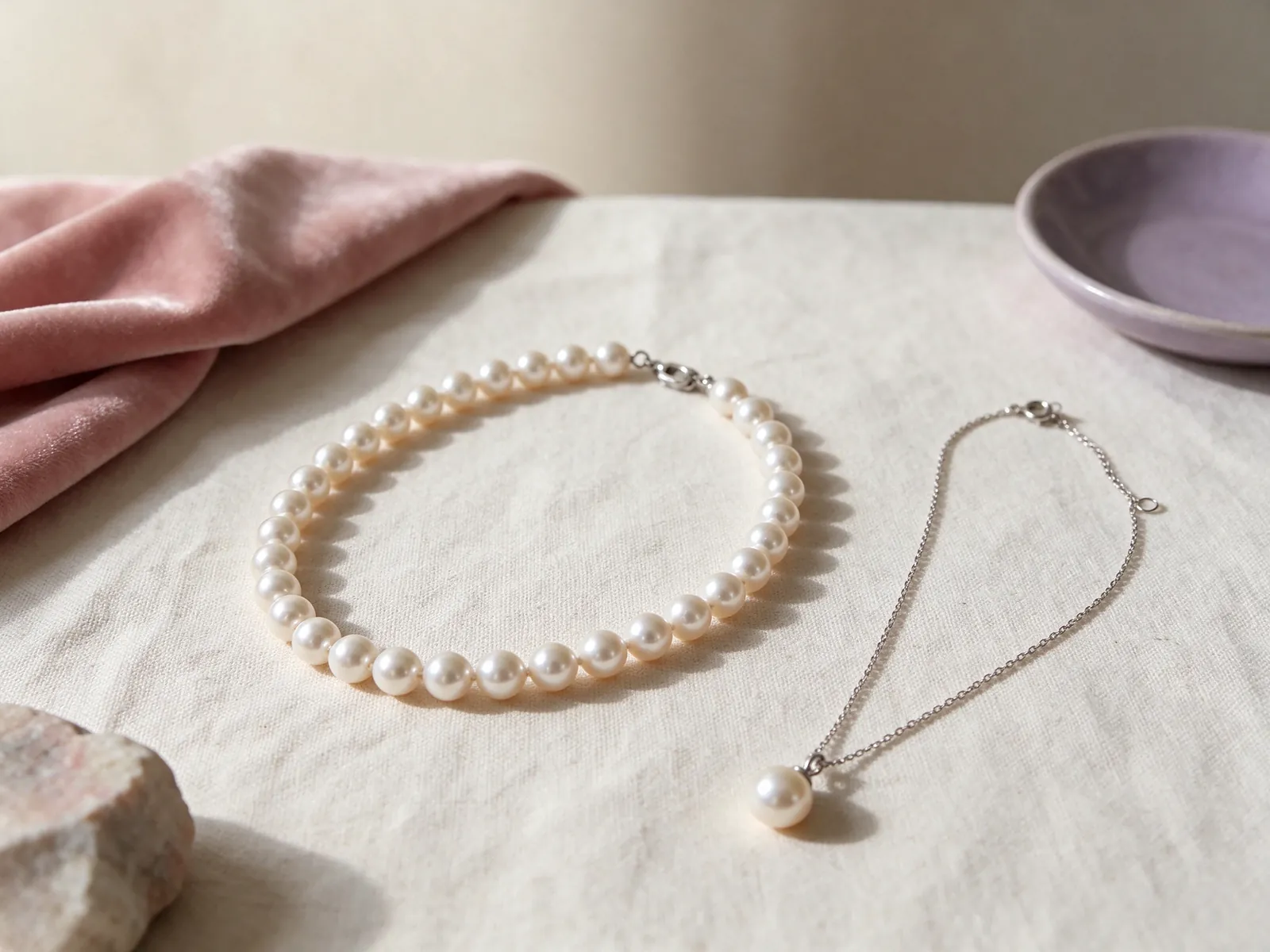
Separate a shopping category from an exact measurement
Matinee is a length name, not a description of pearl identity. WSP's necklace length chart identifies 50 cm as short matinee and 60 cm as matinee, and its necklace collection page gives an approximate 50–60 cm matinee range. That makes the term useful for orientation without making it a universal boundary. A 20 to 24 inch pearl strand is likewise an approximate shopping category; read the actual measurement of the necklace you are comparing.
Think about the direction you want the focal point to move. A pearl choker necklace keeps the emphasis closer to the neck. A long pearl necklace carries the line farther down the outfit. The mid-length option lies between these visual approaches, but it does not dictate a dress code. A simple top, an open shirt and a structured jacket can each give the same strand a different character. The position matters first; the rest of the styling builds around it.
Check what the listed full length includes
When comparing measurements, use the same unit and ask how the full length is taken, including whether it counts the clasp. You can hold a flexible tape in a loose loop to sketch a desired position, but do not pull it tight. A tape does not reproduce the thickness or drape of a pearl strand, so its role is to guide the fitting, not replace it.
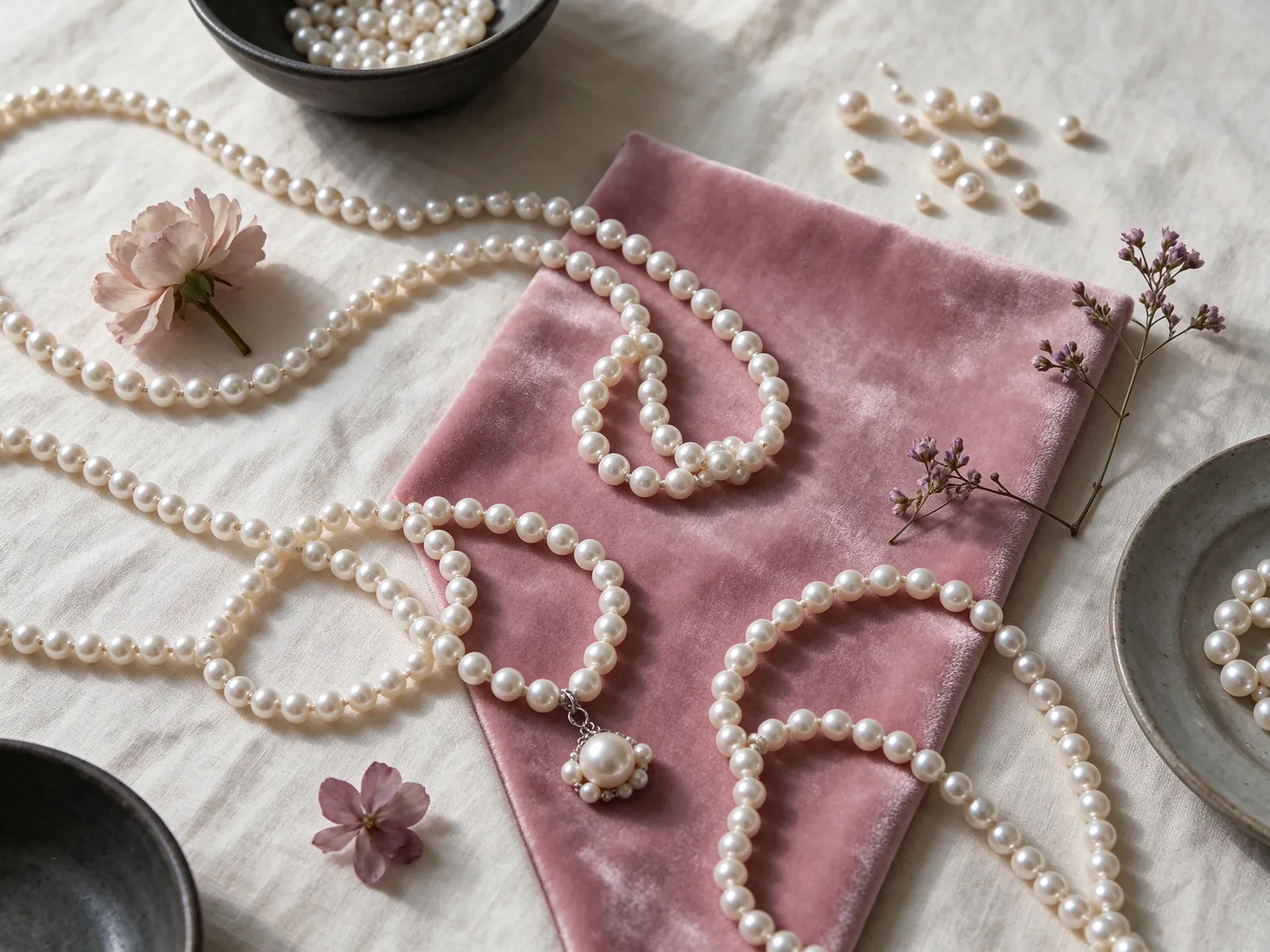
Use your whole upper-body silhouette to assess fit
Two people of similar height can have different resting points for the same stated necklace length. Neck size, shoulder slope, upper-body contours and clothing construction all affect the curve. Look from the side as well as straight ahead. Does the strand follow the front of the top, or hang away from it? Does a seam push it upward? These observations are more informative than assigning a length purely from height or copying a position shown on someone else.
The strand structure also changes how much space the necklace occupies. A single strand pearl necklace lets you evaluate one main curve. With a multi strand pearl necklace, inspect both the top row and the bottom row, plus the visible space between them. A full arrangement may cover a collar detail that remains visible with one row. Choose the outline you actually prefer rather than assuming that equal listed lengths produce equal coverage.
Recreate a normal seated moment
Sit at a desk, reach for an object and put on your usual outer layer. Notice contact with the desk edge, buttons or a bag strap. A necklace may look balanced while standing but shift during these ordinary actions. Recording front and side views in similar lighting can help compare options, while the movement test tells you which position is genuinely practical.
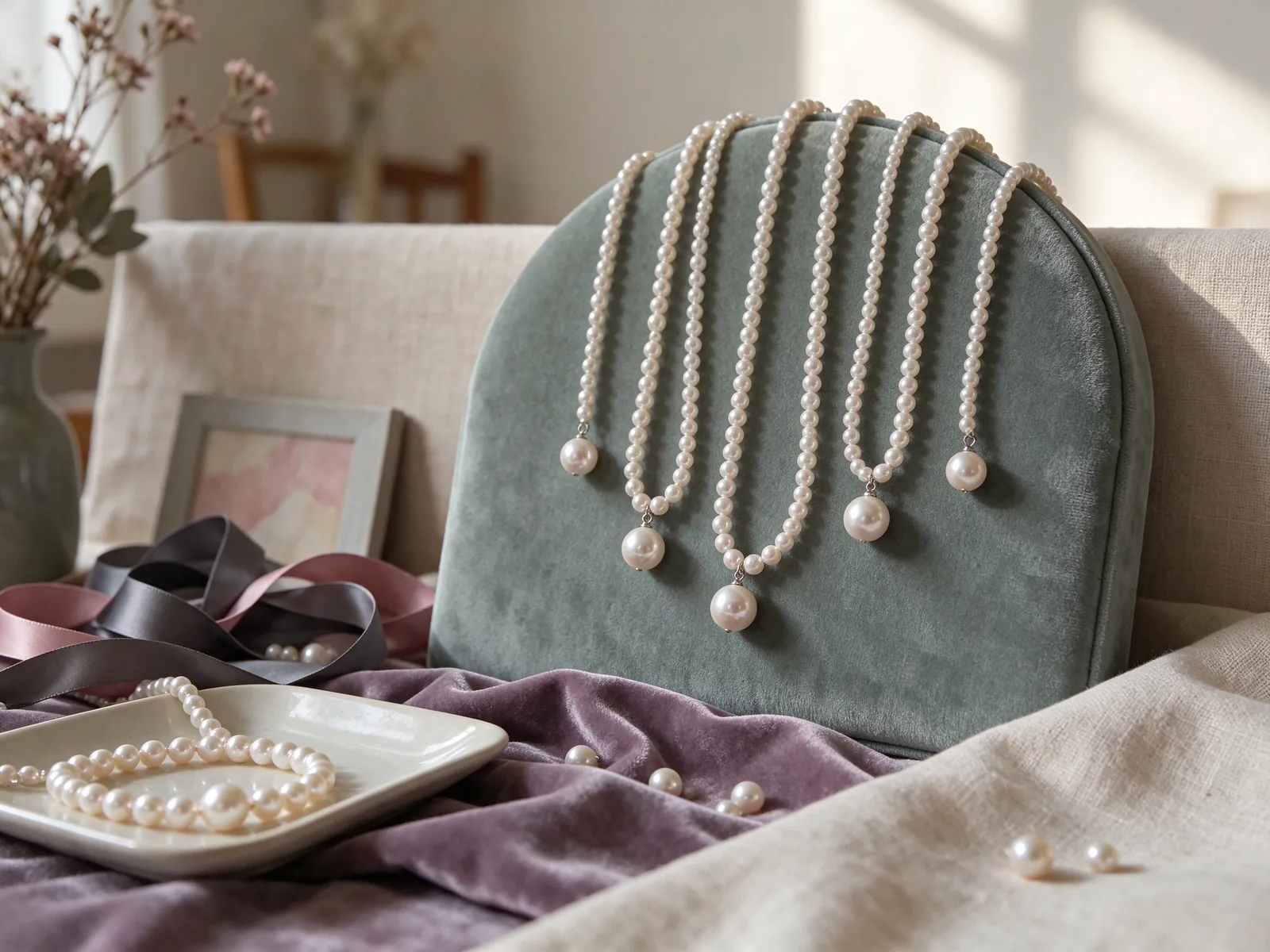
Let clothing details determine where to leave space
For an office outfit, jacket lapels can act as a frame around the strand. Compare the frame with the jacket open and buttoned. A small opening can hide part of the necklace, while a wider one may give the curve a clear background. If the shirt has a strong print, check whether the busiest area sits directly behind the pearls. The aim is not to forbid patterns, but to make the relationship between the necklace and the clothing intentional.
For an evening outfit, you may get a new effect simply by opening the neckline or removing the jacket. A matinee strand does not need extra jewelry beside it to feel dressed up. If the top already has a bow, embroidery or gathered fabric, compare whether the curve should sit above or below that feature. Reducing nearby accessories can give the pearls a clearer role, especially when the garment already has several points of interest.
Prioritize the outfit you will wear most
Test a weekday outfit and a weekend outfit before deciding. Write down where the strand rests and whether it needs adjustment in each. If the two results differ, choose according to the occasion you expect to use most. A reliable pairing with familiar clothes can be more valuable than trying to find one length that works with every possible neckline.
Compare the whole strand, not only its length or brightest pearl
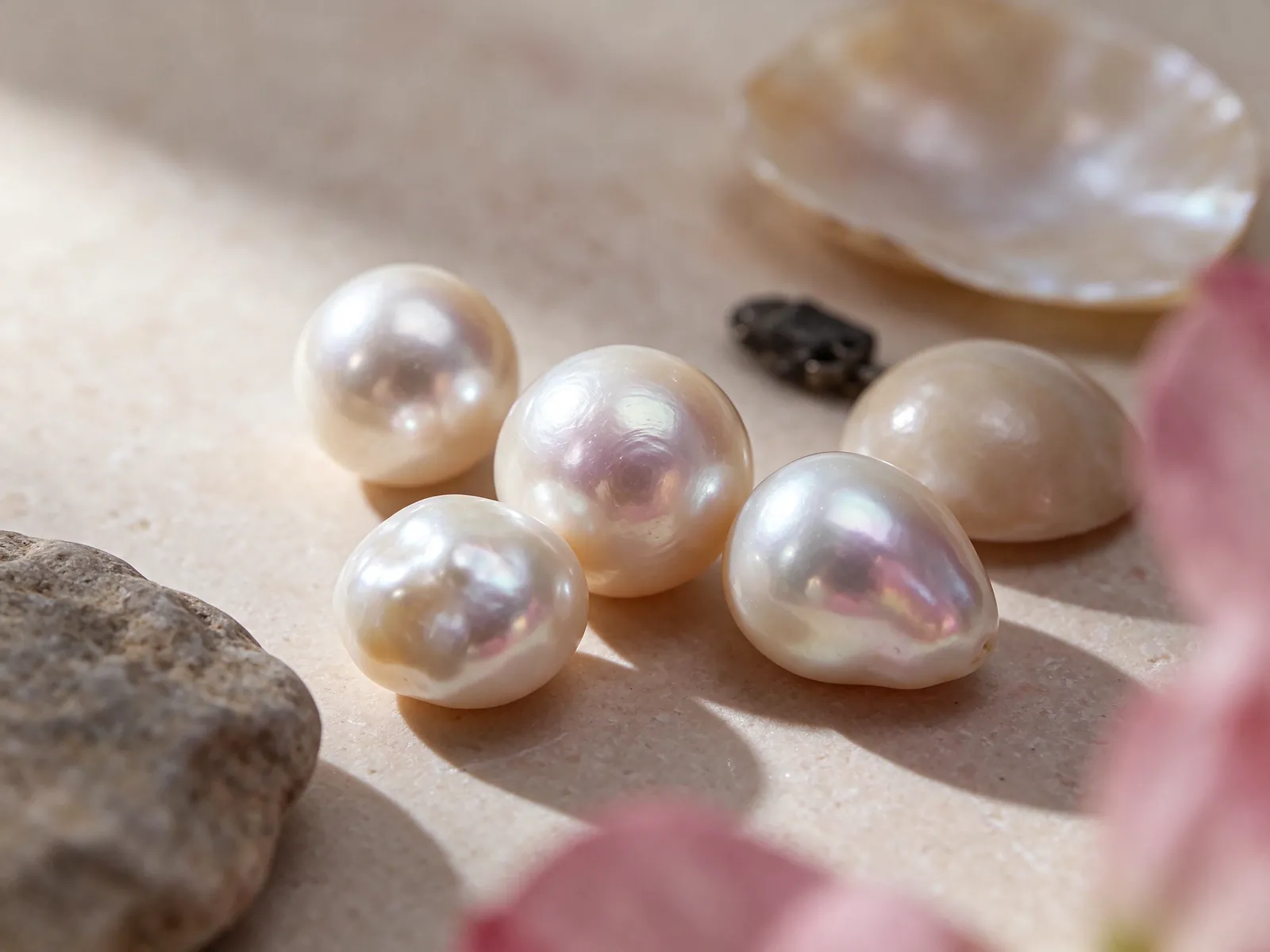
Mid-length styling brings a broad section of the necklace into view against your clothing. The size impression, shape and arrangement of the pearls influence that view. If you are exploring a large pearl necklace, reassess the outline rather than automatically choosing the same length as a finer strand. More visual volume can change what remains visible around a neckline. The fitting should tell you about the curve and wearing feel without treating a photograph as proof of pearl measurements.
GIA describes seven pearl value factors: size, shape, color, luster, surface quality, nacre quality and matching. For a strand worn across the front of a top, matching helps you assess the pearls as a group. Compare the relationship of color and luster along the visible section, then look more closely at individual surfaces. The length category cannot establish origin, natural-versus-cultured identity or certification. Keep those questions separate from deciding whether the necklace suits your proportions.
Include the clasp in a visual and practical check
Look at the necklace in ordinary indoor light before focusing on close details. Turn the strand gently and notice whether its overall rhythm appeals to you. Then try the clasp in the way you would normally fasten it. A pleasing front view is only part of the decision; the ease of handling and the way the strand returns to its position also matter.
Build layers around distinct resting points
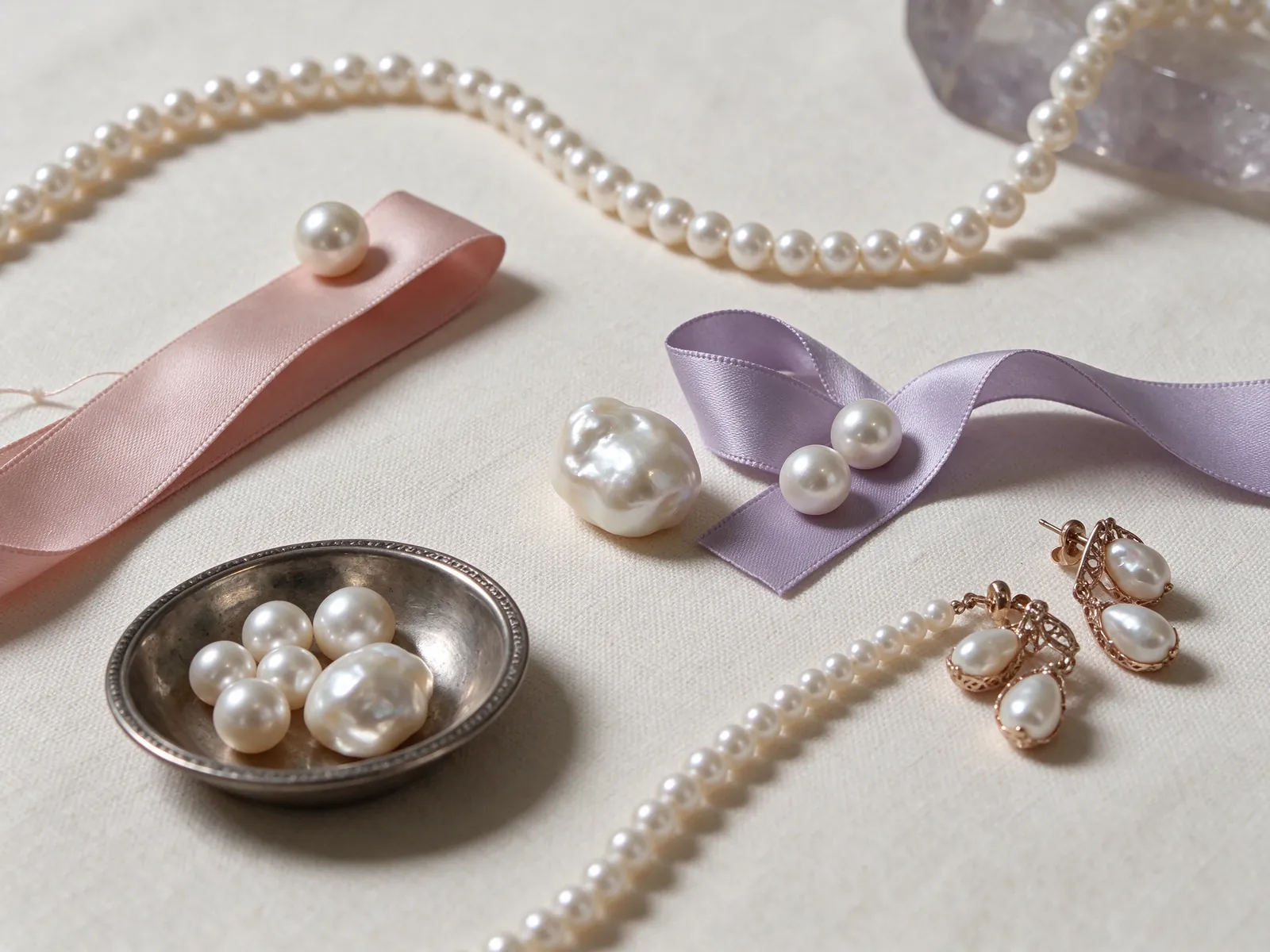
A useful approach to pearl necklace layering starts with distinguishing each necklace's path. Place a shorter piece above the matinee curve, then check whether the two remain separate when you move. If one has a pendant, its lowest point may sit farther down than the chain alone suggests. Inspect the back of the neck too: neighboring clasps can interfere even when the front looks orderly. Add pieces gradually so you can tell which combination causes crossing or crowding.
The same layered combination can behave differently over a thick knit and an open shirt. A knit pushes the strands away from the body; a shirt may leave the shorter piece against skin and the matinee piece against fabric. Decide whether you like that contrast, then check for repeated movement over the collar edge. For styling beyond traditional dressier pairings, men's pearl necklace ideas can help compare casual T-shirt necklines and jackets without limiting the choice by gender.
Return to one strand when the layers keep crossing
If you repeatedly have to separate the pieces, remove the extra layer and confirm the matinee strand's own resting point. Add the second necklace again and repeat the movement test. The trouble may come from the collar, similar lengths or the clasps. Do not assume that simply extending one strand will solve every type of interference.
Make care and construction part of your buying questions
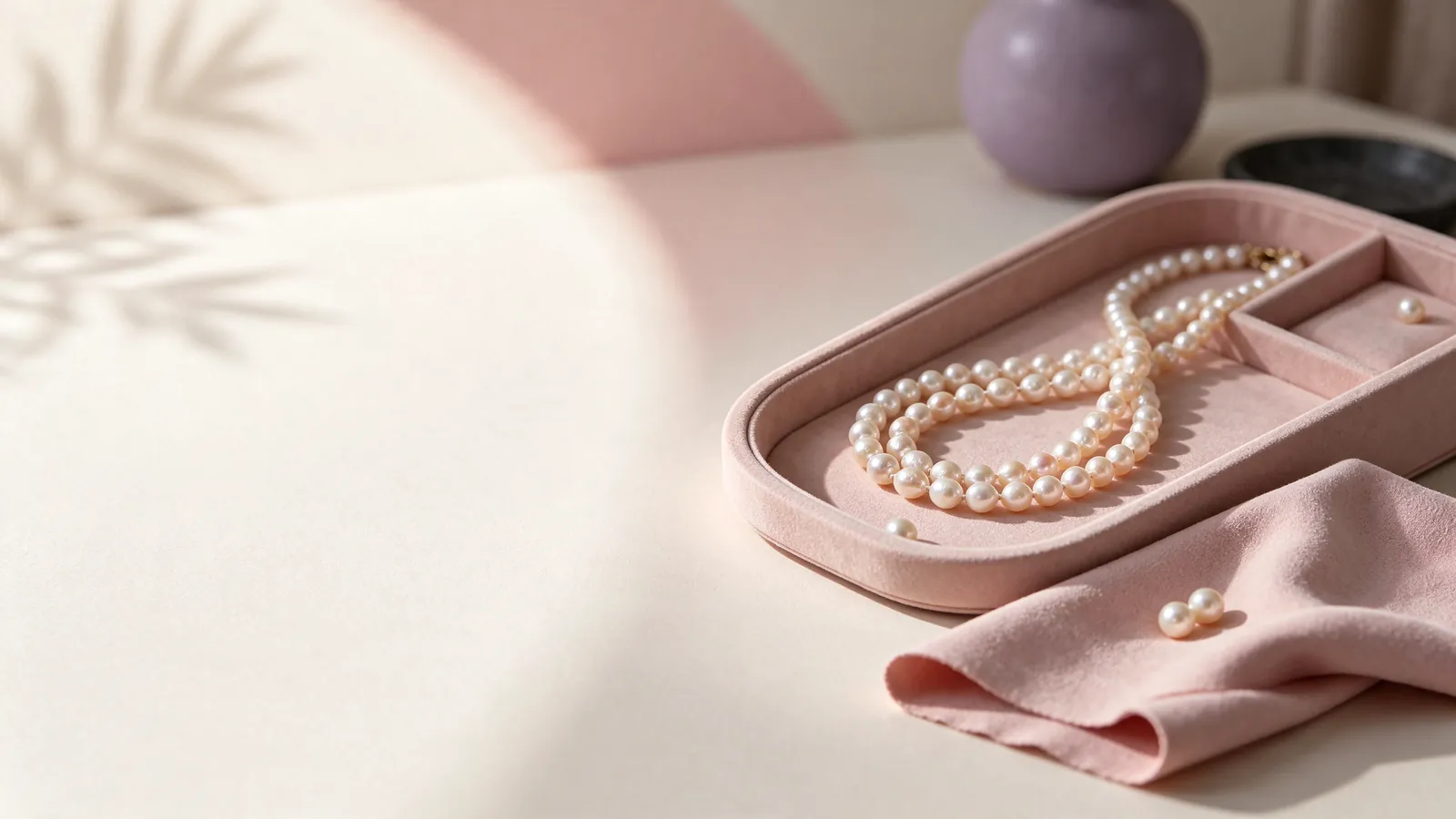
A matinee strand can contact shirt fronts, bag straps and other jewelry, making gentle handling important. GIA lists pearl at 2.5 on the Mohs hardness scale. Its care guidance recommends a very soft, clean cloth after wearing and avoiding acids, perfume, hair spray and excessive heat. Apply fragrance and finish hair styling before putting on the necklace. After removing it, keep the pearls away from hard edges and other clasps that could rub against their surfaces.
Ask how the necklace is measured, how the clasp operates and what care the construction needs. If you want to change the proportion of a strand you already own, record its current length and position first. Explain whether the goal is a clearer neckline gap, a different lower point or less interference with clothing. During regular use, watch for loose sections, visible thread wear or a clasp that behaves differently; set the strand aside if something concerns you until you understand the appropriate handling.
Do not confuse surface dryness with a dry string
GIA states that pearls should never be cleaned in ultrasonic or steam cleaners. If strung pearls have been cleaned with water, the string must be completely dry before wearing. Dry-looking pearl surfaces do not establish that the string is dry. Gentle routine wiping is a useful first approach; a stubborn mark needs care suited to the whole necklace rather than abrasive cleaning or a method intended for harder gems.
Want to discuss a mid-length position for a favorite shirt or knit? [Contact Flint Jewelry on WhatsApp](https://wa.me/85260106207) and describe your current necklace length, usual neckline and the part of the fit you want to improve. You can begin with an outfit description without sharing a personal photograph. Starting with those details keeps the conversation focused on the way you actually plan to wear the necklace.
| Clothing choice | Area to assess | Potential conflict | How to test it | What to favor |
|---|---|---|---|---|
| Round-neck top | Curve below the collar seam | Pearls merging with the neckline | Lower your head and straighten up | A clearly visible strand outline |
| Button-front shirt | Collar points and center placket | Strand sliding under one side | Try the neckline open and higher-buttoned | A position that does not need constant adjustment |
| Office jacket | Opening between the lapels | Fabric hiding part of the curve | Compare open and buttoned views | A deliberate frame around the necklace |
| Thick knit | Strand against the fabric front | Added fabric changing the resting point | Sit, reach and turn | Fit judged over the knit you will wear |
| Layered jewelry | Separate curves and rear clasps | Crossing pieces or crowded clasps | Add one necklace at a time | Distinct paths during ordinary movement |
Pearl knowledge and authoritative references
GIA identifies 7 pearl value factors: size, shape, color, luster, surface quality, nacre quality and matching. A matinee fitting should consider the visible strand as a group, alongside its measured length and placement.
Read the reference for this factFrequently asked questions
Does the matinee name tell me the pearl type?
No. It refers to a necklace length category, not species, origin or quality. Read the information about the pearls separately from the full length and fitting details. A photograph or length label alone cannot establish pearl identity or certification.
Is a 20 to 24 inch pearl strand a fixed definition?
It is an approximate shopping reference rather than a universal definition. WSP uses an approximate 50–60 cm matinee range in its collection description, with separate 50 cm and 60 cm labels in its chart. Check the actual measurement and how it includes the clasp.
Can a matinee necklace work with a high neckline?
It can create a visible curve over the fabric, but test the actual top. A thicker knit can push the strand upward or outward. Look from the side and include sitting and reaching before deciding whether the placement is clear and comfortable.
Can I double a mid-length strand to make a choker?
Do not assume it has enough usable length or suitable construction. Neck size, strand thickness and clasp design all matter. Avoid pulling, twisting or forcing it closed. If a close-to-neck effect is the goal, compare a suitable short-necklace arrangement directly.
Should I pick more layers if the outfit looks too plain?
First check whether the single matinee curve is clear against the clothing. Additional layers can add interest, but they may also cross or hide the main strand. Add one piece at a time and move normally; a well-defined single curve can be the more deliberate choice.
Updated: