
Which product details matter when comparing WSP pearl jewelry, Pearl for Life pearls and MARLENA pearls? | Flint Jewelry
A useful brand comparison starts by identifying the level of information you are reading. WSP’s navigation presents WSP, Pearl for Life and MARLENA as brand choices. An individual page can then add a design name and a pearl description. Keep those layers separate: a recognizable label helps with navigation, but it does not explain every item’s pearls, construction or suitability for your wardrobe. If you want to turn an appealing outline into a personal style preference, contact Flint Jewelry on WhatsApp with your usual necklines and occasions. Questions about another brand’s goods belong with that brand.
Build your notes around three questions: how do I identify the item, what does its description say, and how will I wear it? The pearl necklace length guide helps relate a necklace’s placement to the clothes you usually wear. Return to the particular item afterward rather than assuming that a brand menu or broad category answers every question about every piece.
For WSP pearl jewelry, Pearl for Life pearls and MARLENA pearls, what do brand names, series labels and pearl descriptions each tell you? | Flint Jewelry
KOKORO and YUI have appeared as names in WSP’s necklace collection. Pearl for Life’s long-necklace page and MARLENA’s Cleopatra page include separate pearl wording. The names locate designs; the descriptive terms do another job. Save the full title and brand together. This is more reliable than using a memorable series label as shorthand for pearl type, quality or every construction detail.
Separate pearl wording from visual assumptions
When a title combines several terms, read it in parts. MARLENA’s official Cleopatra page uses Freshwater Keshi Pearl in its title. That is the wording for that piece, not a definition of all MARLENA jewelry. A named design also should not be read as a quality grade. This distinction lets you compare what each page actually describes instead of letting familiar words fill in information about other pieces.
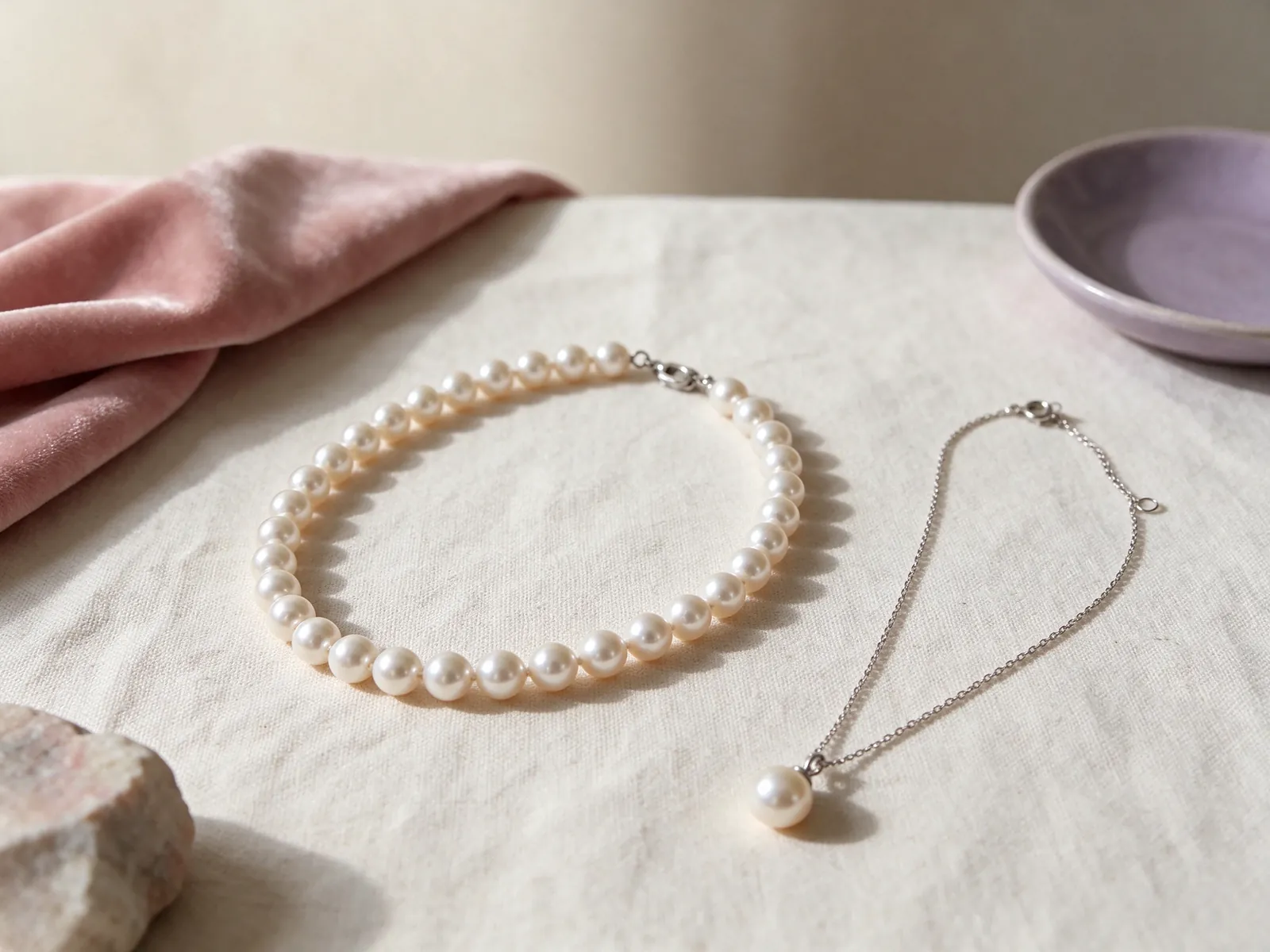
Images are useful for judging outline, arrangement and color relationships, not for proving origin, natural-versus-cultured identity, treatment status or a certificate. With a freshwater pearl necklace, you might enjoy a varied contour or a more regular rhythm. Establish that visual preference first, then examine the written description. Ask about the individual piece when a particular identity or document is essential to your decision.
Describe the effect you want to wear
Useful descriptions include soft contrast against a dark top, an uneven line, closely spaced pearls or generous open space. They explain your styling goal without turning a photograph into evidence of pearl origin. Look at the relationship with your usual clothing and accessories. Shape and color preferences can guide a shortlist, but neither alone establishes identity or makes one option universally superior.
Let your neckline guide necklace comparisons
The long-necklace page under Pearl for Life illustrates why the wearing form deserves its own attention. You may be drawn to a vertical accent rather than the brand itself. Picture your everyday crewneck, open blouse or high collar and decide where the line should sit. A necklace that stands out against fabric creates a different effect from one positioned close to a neckline.
For a single strand pearl necklace, the continuous arrangement and its relationship with the collar edge are central styling questions. If an Akoya pearl necklace is also on your list, keep its pearl description separate from the wearing comparison. Consider fastening, spacing and placement for each piece. Shared pearl terminology does not make a full strand, a station arrangement and a pendant interchangeable.
A favorite silhouette is not a construction instruction
If a saved image appeals to you, identify whether the attraction is a continuous line, a single focal pearl or an elongated outline over a shirt. Then examine the item’s actual wearing instructions. Wrapping, adjusting and layering depend on construction, not the impression created by a styled photograph. Bringing your usual neckline into the comparison gives those practical questions a clear purpose.
If an extended line is the attraction, the long pearl necklace guide helps you describe the desired effect without selecting by brand name alone. Think about the position over a shirt and whether you want one continuous accent or several visible lines. Do not assume that a long piece can be wrapped or adjusted; check the item’s construction and wearing instructions before planning that use.
Read earring format and quantity before styling
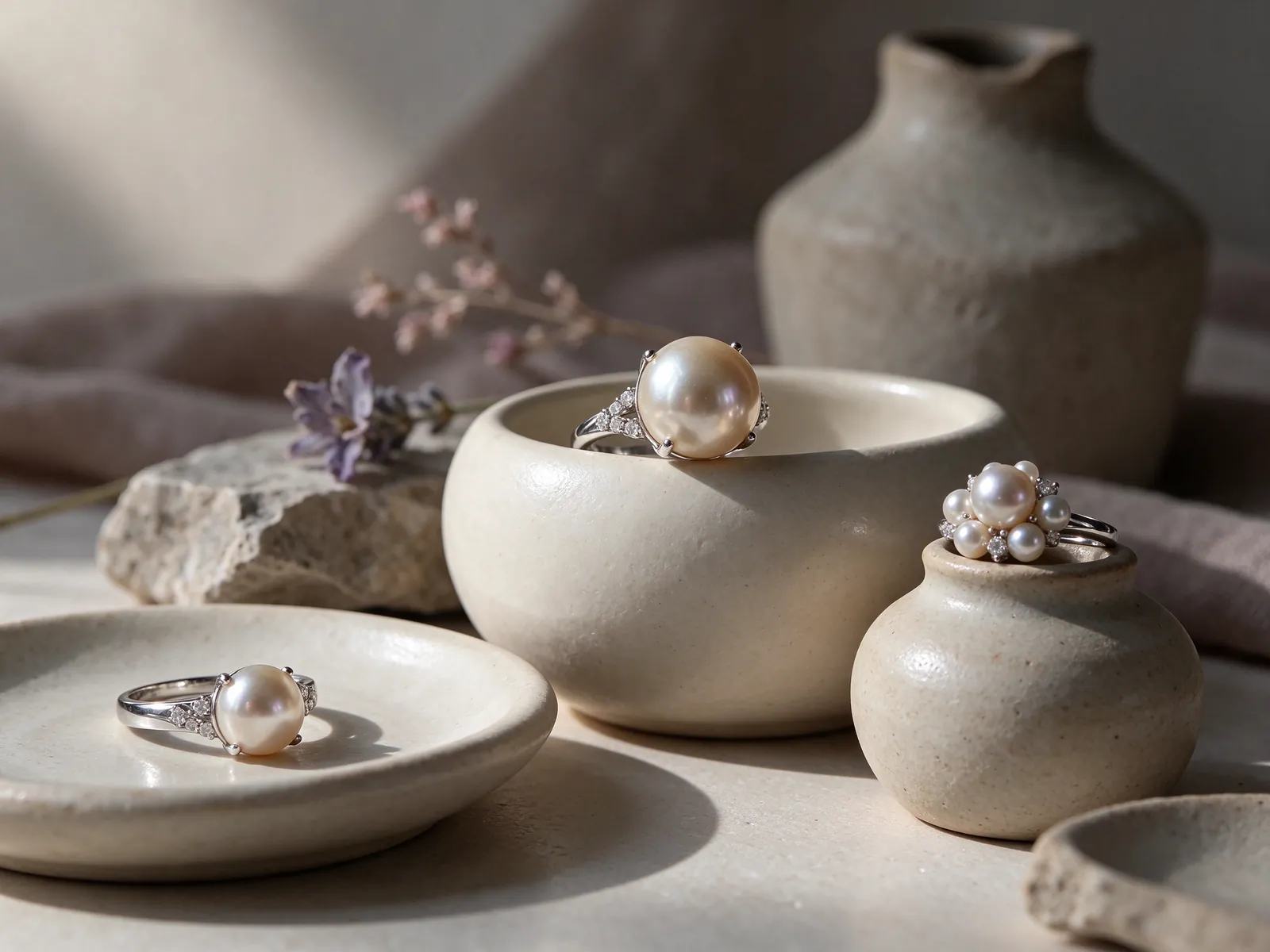
Mabelle ear cuffs, LUXE earrings and Manon earrings appear in WSP’s public pages. Their names do not replace the distinction between a cuff, a stud and a drop. Check the written selling unit, particularly when you want a matched pair. A photograph can show a styling combination rather than the exact quantity supplied by one listing.
Consider your hair, glasses and collar together with an earring’s silhouette. A moving outline may create a focal point when hair is pulled back, while nearby clothing can change how much of it is visible. If removable elements matter to you, look for that feature in the specific item’s description. Do not assume every piece sharing a name offers the same transformation.
Make an asymmetric choice deliberately
For mixed earrings, choose a common visual element, such as pearl tone or a related metal outline, while allowing different amounts of movement. Read the attachment, post, back and selling unit for each piece. Weight and all-day comfort cannot be established from a close-up image. For a gift, start with the recipient’s familiar wearing format rather than a series name that sounds appealing.
Compare rings, bracelets and pendants by daily interaction
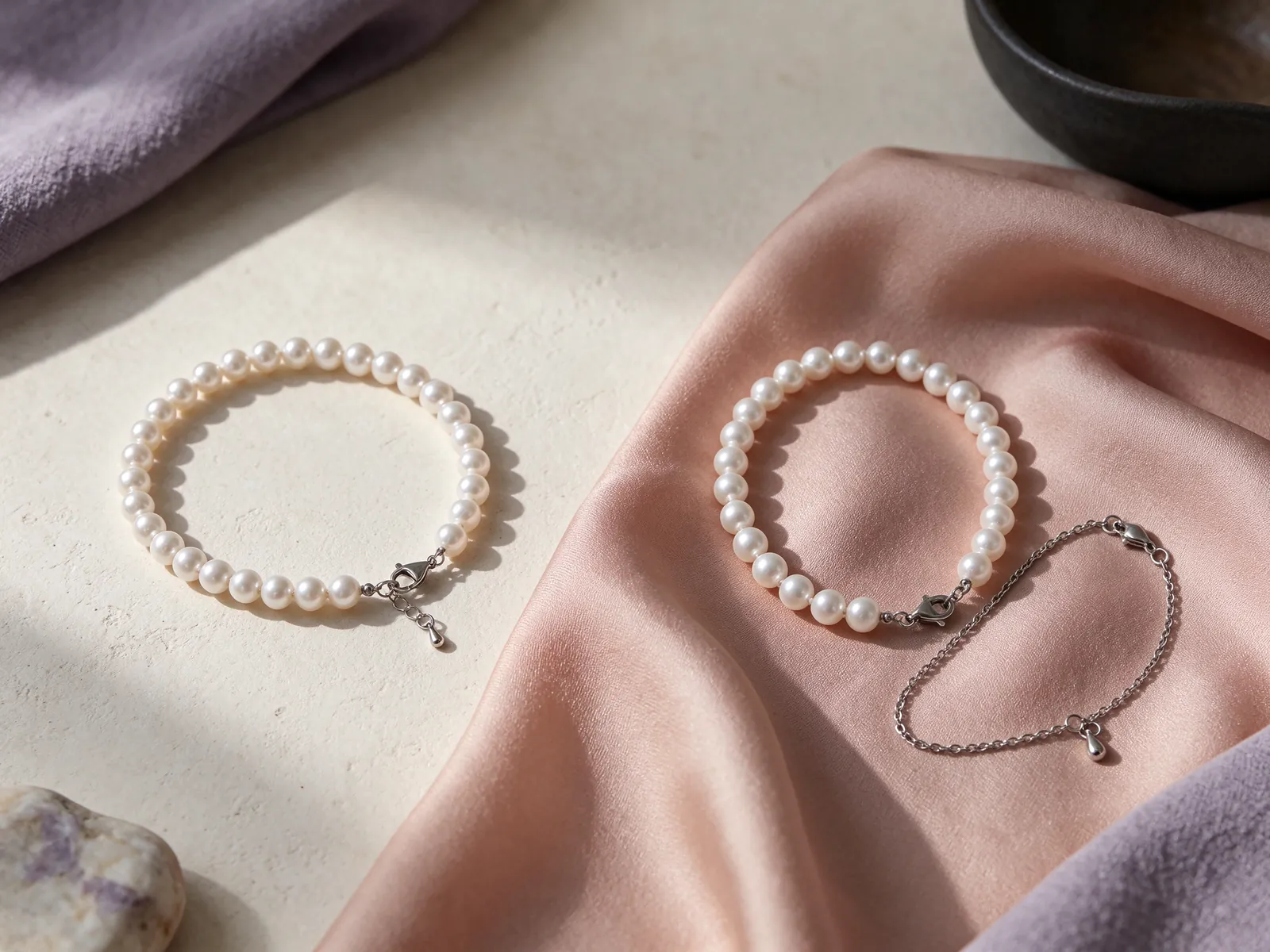
WSP’s ring collection has included MATOA stacking rings and a KOKORO ring; KOKORO has also appeared in necklaces. Repetition of a name across categories does not prove that the pieces share pearl specifications. When comparing rings, think about the pearl’s placement, neighboring fingers and the rings you already wear. A stacked presentation does not explain the actual fit or contact between pieces.
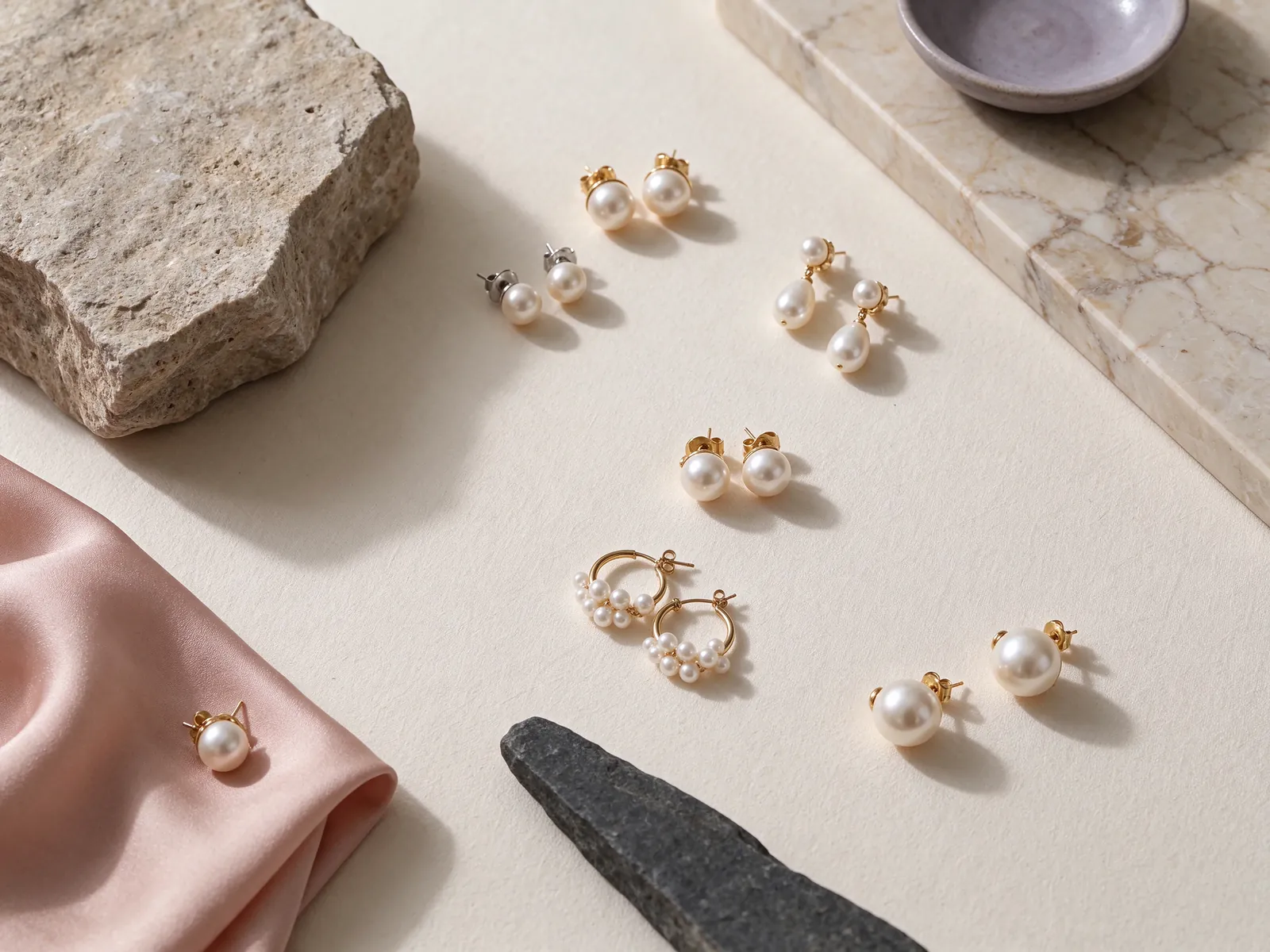
A bracelet must work around sleeves, wrist movement and nearby accessories. A pendant raises a different question: is the listing for a pendant top or for a necklace with a chain? Read the included components rather than relying on the display image. The Pearl Jewelry overview helps you explore wearing forms first, so that brand browsing follows a practical direction instead of becoming a list of attractive names.
Check compatibility with what you own
Include your watch, favorite rings and existing chain in the decision. Decide whether you want continuity with them or a clear contrast. A pendant’s compatibility with a chain depends on the opening and chain end as well as appearance; a shared metal color is not enough. These everyday relationships help separate an interesting image from a piece that makes sense within your own combinations.
Compare quality dimensions rather than brand scores
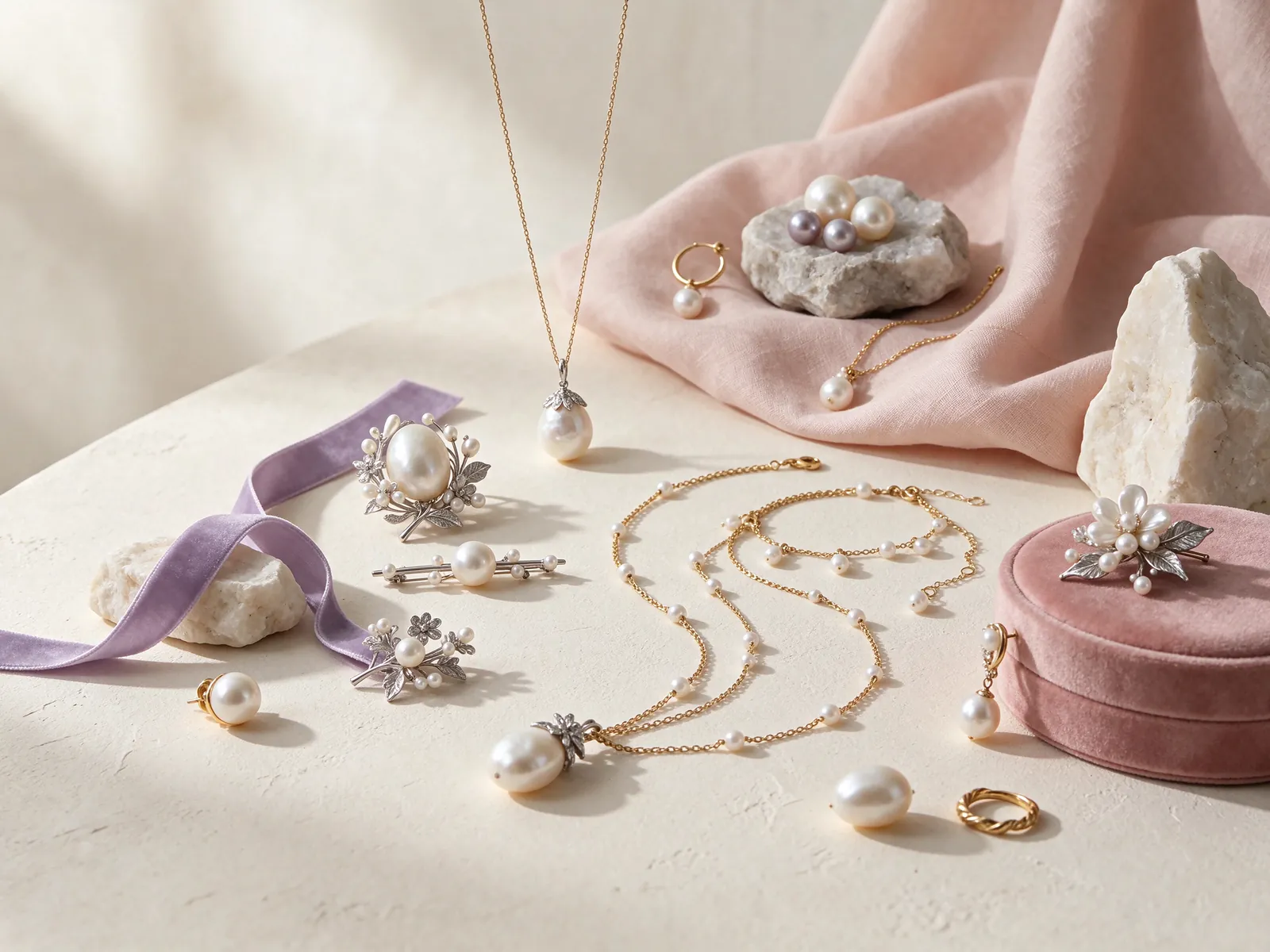
GIA describes seven pearl quality factors: size, shape, color, luster, surface quality, nacre quality and matching. Use them as a vocabulary for individual questions, not as evidence that a brand or product is endorsed by GIA. Matching becomes especially relevant when you are considering a strand or paired earrings, while a single pendant concentrates attention on one focal pearl.
Letter grades should be read with the definitions used by the relevant seller. Do not convert matching letters from different websites into a universal score. Instead, keep luster, surface and matching descriptions visible as separate dimensions; otherwise, one convenient label can conceal the features that matter most to your particular comparison. The question of whether you enjoy that visual arrangement for your own clothes remains a separate personal choice.
Include care in your everyday-use checklist
GIA recommends a very soft, clean cloth after wearing and avoiding perfume, hair spray, acids and excessive heat. Pearls should never go into ultrasonic or steam cleaners. If you clean strung pearls with water, the string must be completely dry before wearing. Planning those habits is part of selecting jewelry for regular use; neither a famous name nor a quality description means waterproof or care-free.
Turn saved brand pages into a personal style brief
Give every saved page a short note explaining why you like it. Perhaps the attraction is open spacing, a repeated line, movement near the face or the way a pendant meets the neckline. Keep that note separate from the brand and design title. When the same feature recurs across different names, it gives you a clearer personal preference than ranking brands as a whole.
Add your usual occasions, clothing, symmetry preference and existing accessories. A discussion with Flint Jewelry can focus on those personal wearing needs without presenting WSP, Pearl for Life or MARLENA as Flint product series. Describe the visual effect you want rather than requesting another brand’s proprietary design. A strong style brief explains the desired experience and the practical conditions it should suit.
Use gifting questions to narrow the format
For a gift, begin with the recipient’s routine: do they reach for earrings, necklaces or a watch, and do they prefer subtle accents or pronounced outlines? If ring fit or earring habits are unfamiliar, discuss style preferences before committing to a format. Selling unit and included components should sit beside appearance on your checklist. Brand recognition cannot answer whether a piece matches someone’s daily habits.
Ready to make your own preferences clearer? Contact Flint Jewelry on WhatsApp with your everyday necklines, preferred visual rhythm and existing accessories. Those details give a personal style conversation a useful starting point, without treating another brand as a Flint series or promising an identical design, pearl quality or wearing outcome based on a photograph.
| Layer | Example to recognize | Purpose | Personal styling question | Unsupported shortcut |
|---|---|---|---|---|
| Brand entry | WSP, Pearl for Life, MARLENA | Identify the brand entry | Which silhouette attracted you? | The name determines pearl type or grade |
| Named design | KOKORO, YUI, Cleopatra | Locate a particular piece | Do you want rhythm or open space? | A repeated name guarantees shared specifications |
| Pearl description | Terms on the individual item page | Understand what is stated about its pearls | How does its appearance relate to your wardrobe? | Color in a photo proves origin |
| Construction and contents | Cuff, drop, pendant top | Understand wearing format and included parts | Will it work with hair, collars or your chain? | Everything shown is included |
| Quality factors | GIA’s seven factors | Keep comparison dimensions separate | Is one focal pearl or group matching central? | Letter grades are universal scores |
Pearl knowledge and authoritative references
GIA describes seven pearl quality factors: size, shape, color, luster, surface quality, nacre quality and matching. They offer a comparison framework, not a score for WSP, Pearl for Life or MARLENA.
Read the reference for this factFrequently asked questions
What does WSP’s navigation establish about the three names?
It presents WSP, Pearl for Life and MARLENA as separate brand choices. It does not establish a common pearl type, grade or wearing construction for every item under those names.
Is a named design enough information to compare rings and necklaces?
No. A name helps you find the item, but each jewelry form has its own description and construction. Read pearl wording and practical wearing details separately for every piece.
Can a product photo tell me whether a pendant includes a chain?
The written description of included components is the appropriate place to answer that question. A styled photograph may show a chain without making it part of the pendant listing.
Why keep matching separate from a general quality label?
For strands and paired earrings, the relationship between pearls can affect the overall visual rhythm. GIA includes matching among its seven quality factors, so it deserves its own comparison rather than disappearing inside a single grade.
Who can answer questions about WSP, Pearl for Life or MARLENA products?
This is an independent Flint Jewelry comparison guide, not an indication of dealership, supply or certification relationships. Ask the relevant brand about its goods, included components and aftercare. To explore your own spacing, silhouette, neckline and wearing preferences, contact Flint Jewelry on WhatsApp.
Updated: