
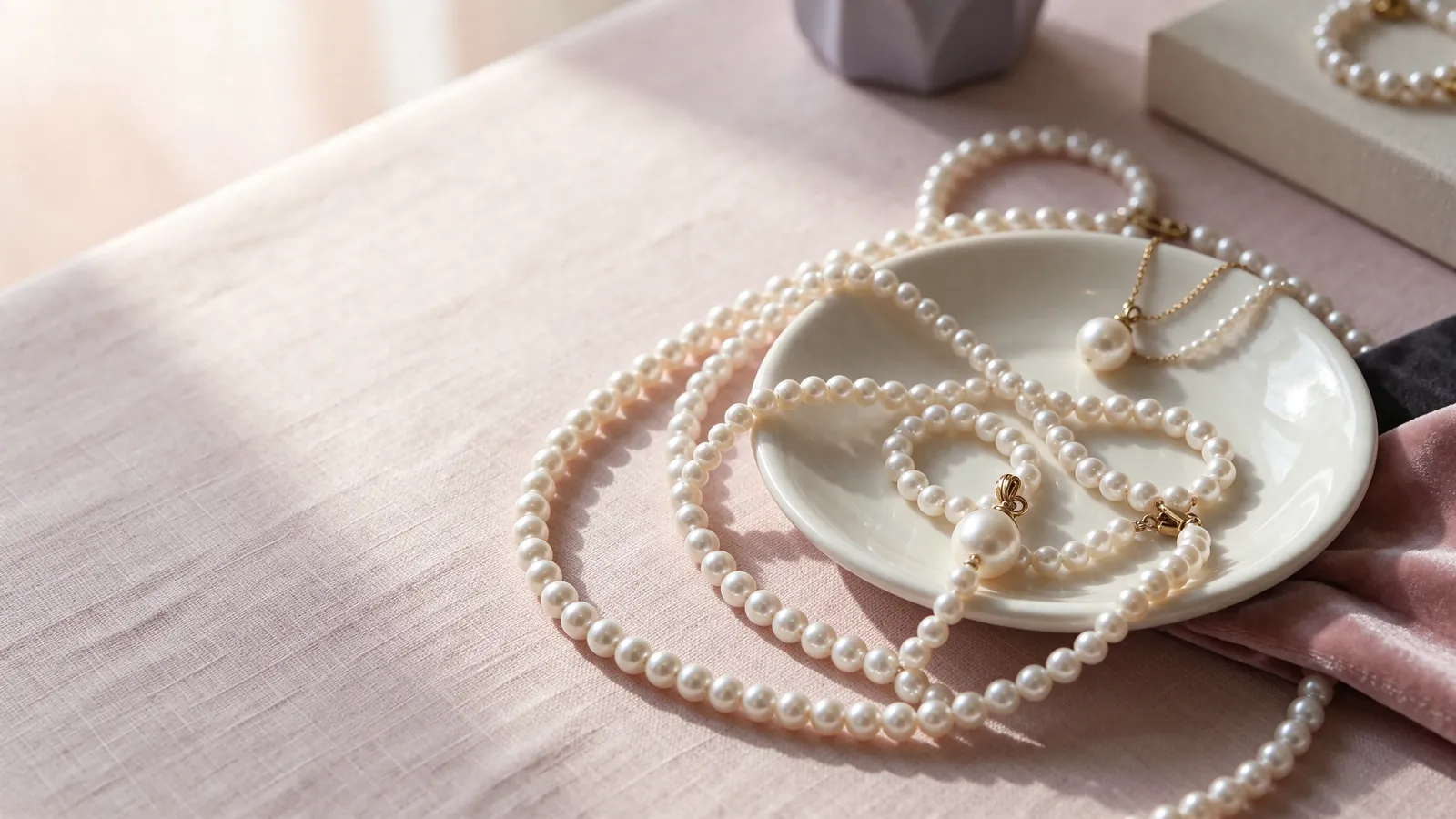
Pearl necklace length guide: relating a pearl necklace length chart to necklines for a princess length pearl necklace | Flint Jewelry
Would you like help deciding which placement to compare first? Contact Flint Jewelry on WhatsApp with your usual neckline, your preferred drop, and the complete measurement of a necklace you enjoy wearing. You can begin with those practical details instead of relying on a chart label alone.
Before choosing a princess length pearl necklace, decide what you want it to do in an outfit. Should the entire curve show within an open neckline, sit above a higher collar, or rest on the front of your clothing? A pearl necklace length chart gives you measurements to compare, but it does not describe a fixed location on every body. The commonly cited princess range of around 40–45 cm is a starting point for this comparison, not a promise that the strand will always sit below the collarbone.
Use this pearl necklace length guide with a shirt or top you regularly wear. If the strand nearly traces the neckline edge, it may move in and out of view instead of forming one clear curve. Try a position fully inside the opening and another fully on the fabric. For a closer-fitting look, compare a pearl choker necklace as a different silhouette; a shorter necklace changes the relationship with the neck and collar, not just the number on a chart.
Pearl necklace length guide: checking neckline clearance for a princess length pearl necklace after reading a pearl necklace length chart | Flint Jewelry
Check the curve in profile and during ordinary movement. Sit down, turn your head gently, and lower your chin as though looking at a book. Watch for a collar pushing the strand upward or a clasp pressing against the back of your neck. A necklace that fastens successfully can still feel restrictive. Keep comfort as a condition for the shortlist, then compare which remaining position gives the neckline the cleanest spacing.
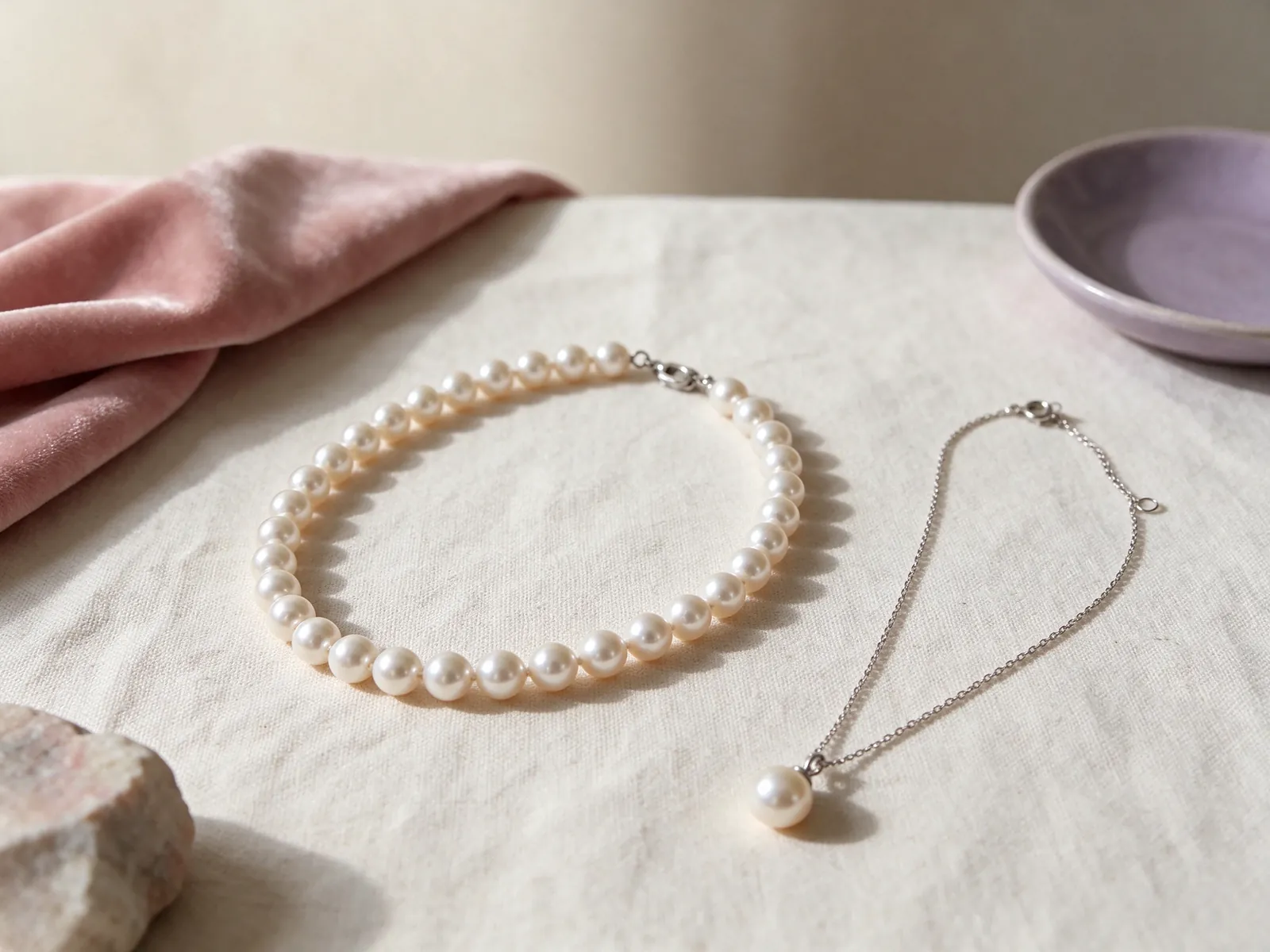
Build a measurement reference you can use across different necklaces
Start with a soft tape around the area where a close-fitting strand would pass. It should touch the skin without being pulled tight. Label that number as neck circumference so it is not confused with the finished necklace length. To explore a preferred drop, form a loose curve with a non-stretch cord, mark the ends, and measure it flat. Remove the cord after the test. It shows a possible outline but does not have the thickness or weight of actual pearls. Hold the cord ends lightly in your hands; do not tie it or tighten it around the neck. Remove it immediately if it feels restrictive.
An existing favorite necklace can be an even more useful reference. Lay it flat and record the complete end-to-end length, including how you handled the clasp. When comparing a listed measurement, establish whether it covers the whole necklace or only its pearl section. Two numbers measured differently are not a fair fit comparison. Keep the measurement method, the stated unit, and a note about the neckline together.
Separate an inch label from an exact fit decision
WSP presents the common princess range as approximately 40–45 cm and about 16–18 inches. That is an approximate guide pairing, not a reason to treat all inch and centimeter labels as exact equivalents. Preserve the actual measurement provided for a necklace instead of replacing it with a rounded category. If the strand will sit close to a collar edge, a difference obscured by rounding may change the look.
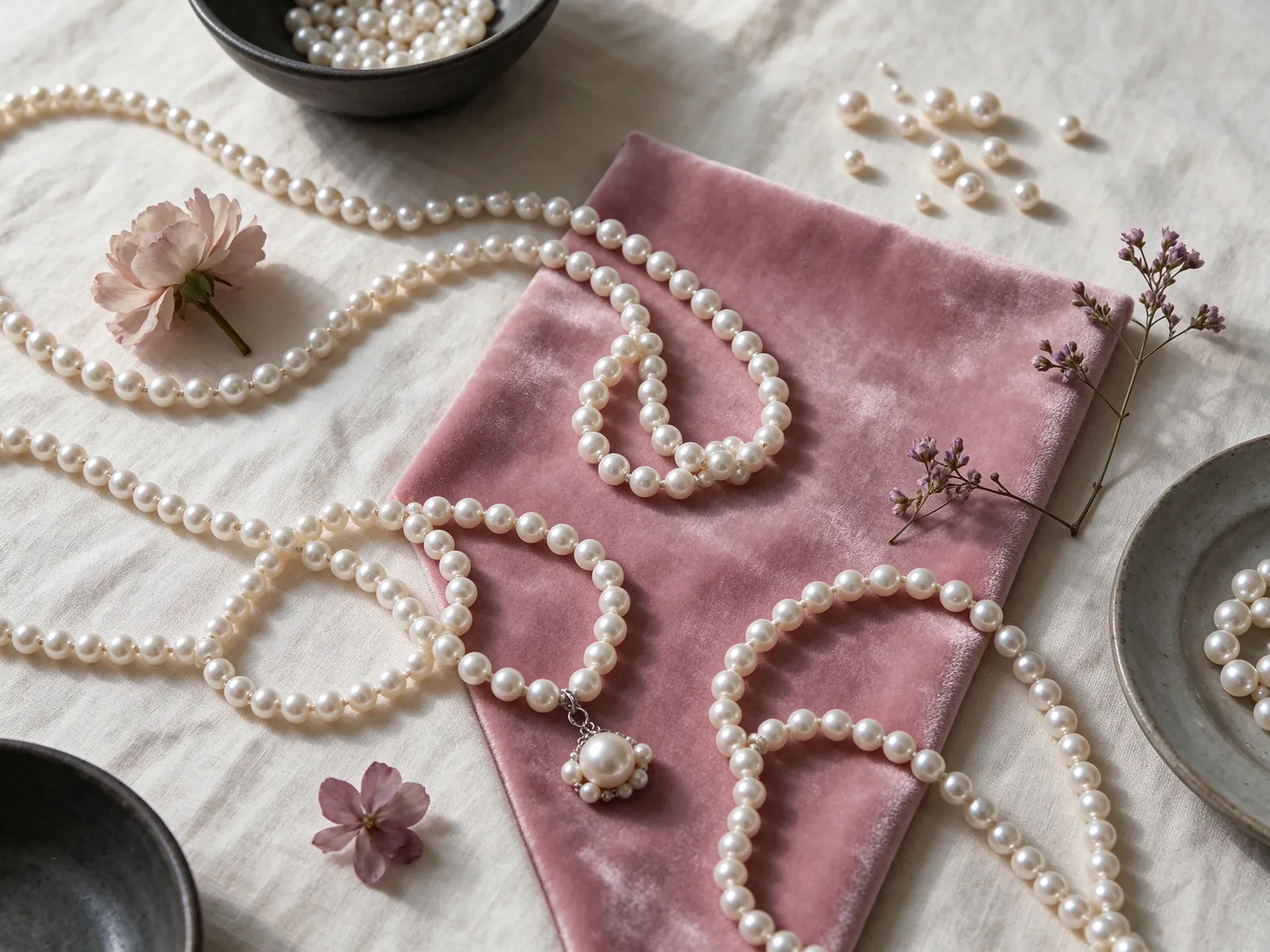
Use chart categories to compare silhouettes, not to assign body positions
In WSP's chart, 35 cm is labeled Collar, 38 cm Choker, 40 cm Choker or Short Princess, and 45 cm Princess. The sequence is useful because it moves from shorter to longer examples. It is not a globally standardized naming system. A description such as princess length should lead you to check the actual complete length, rather than assume that two necklaces with the same label will create the same curve.
A matinee pearl necklace gives you a useful lower-drop comparison when you want the focal point farther down the outfit. Look at the front of the garment as well as the neck: buttons, bows, and prominent prints can interrupt the line. The question is not whether a longer category is inherently dressier. It is whether that placement produces a deliberate composition with the clothes you intend to wear.
Compare the same test curve with more than one neckline
Keep your test length unchanged while switching between a crew neck, an open shirt, and a lower neckline. Otherwise, you may accidentally test three different lengths instead of three outfits. Record where the curve stays visible and where it repeatedly meets a collar edge. This makes it easier to prioritize your everyday wardrobe without expecting one measurement to solve every styling situation.
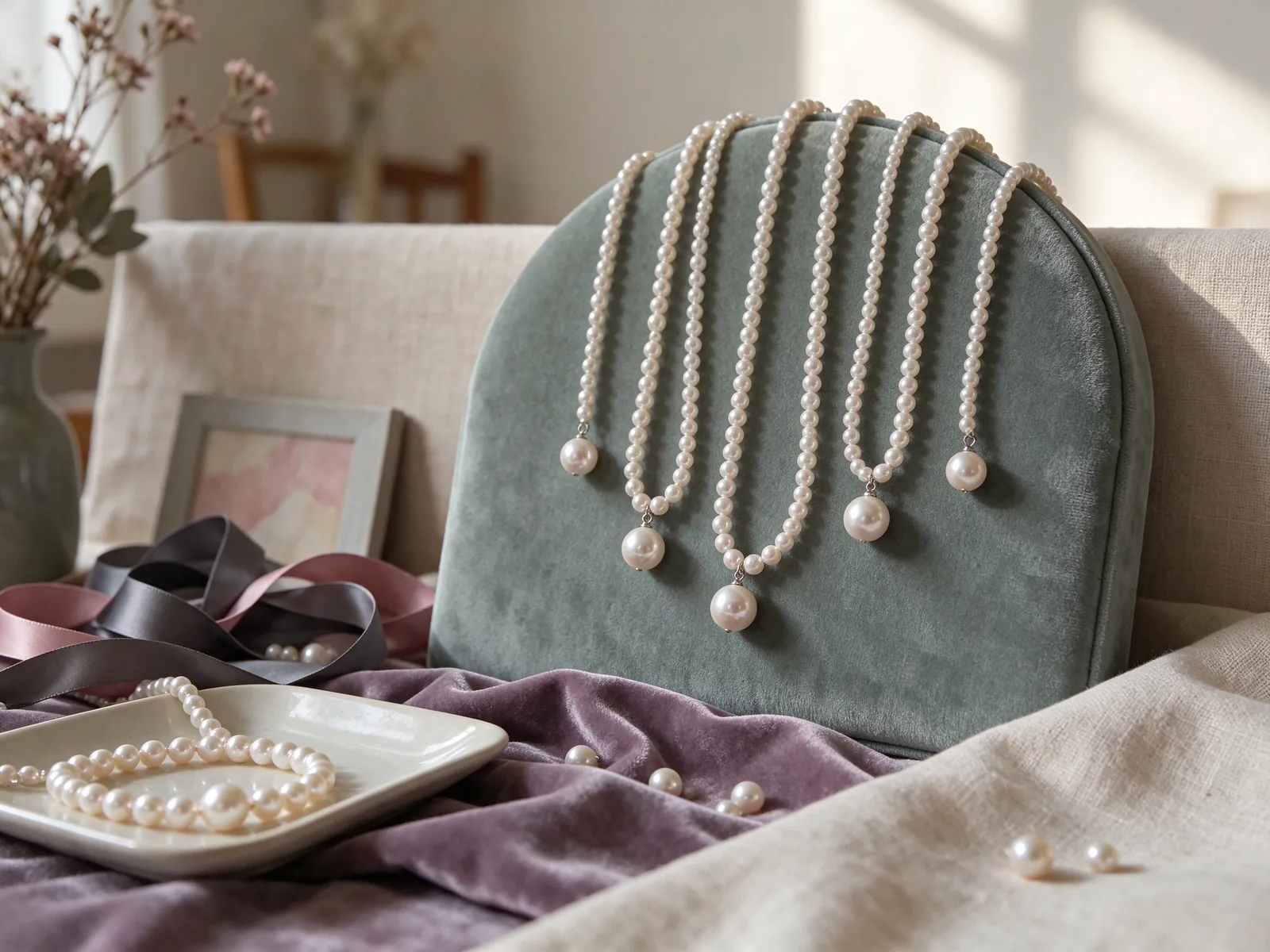
Consider pearl thickness before trusting a fine-cord outline
Length tells you how far the necklace extends; pearl diameter affects the width of its outline and the space it occupies beside the neck. A thin cord can suggest a drop without showing that fuller profile. Do not assume the small gap seen above a neckline during a cord test will remain identical with pearls. Consider diameter and length together rather than judging either measurement in isolation.
A large pearl necklace can create a more prominent focal point, while a small pearl necklace gives a finer visual line. Compare each with your neckline and the amount of detail already on the garment, not with a rule that one size suits everyone. Irregular pearl shapes need attention to the actual arrangement and to how the outline changes as the strand moves. Neither a front photograph nor a shape alone establishes the pearl type or the way the necklace will fit.
A suitable length is only one part of evaluating the necklace
GIA identifies seven pearl value factors: size, shape, color, luster, surface quality, nacre quality, and, for jewelry with two or more pearls, matching. A comfortable length does not establish those other qualities, and an appealing pearl appearance does not guarantee the right fit. Settle on the silhouette you enjoy first, then compare the pearls’ appearance and coordination. This keeps a styling preference from becoming an unsupported quality conclusion.
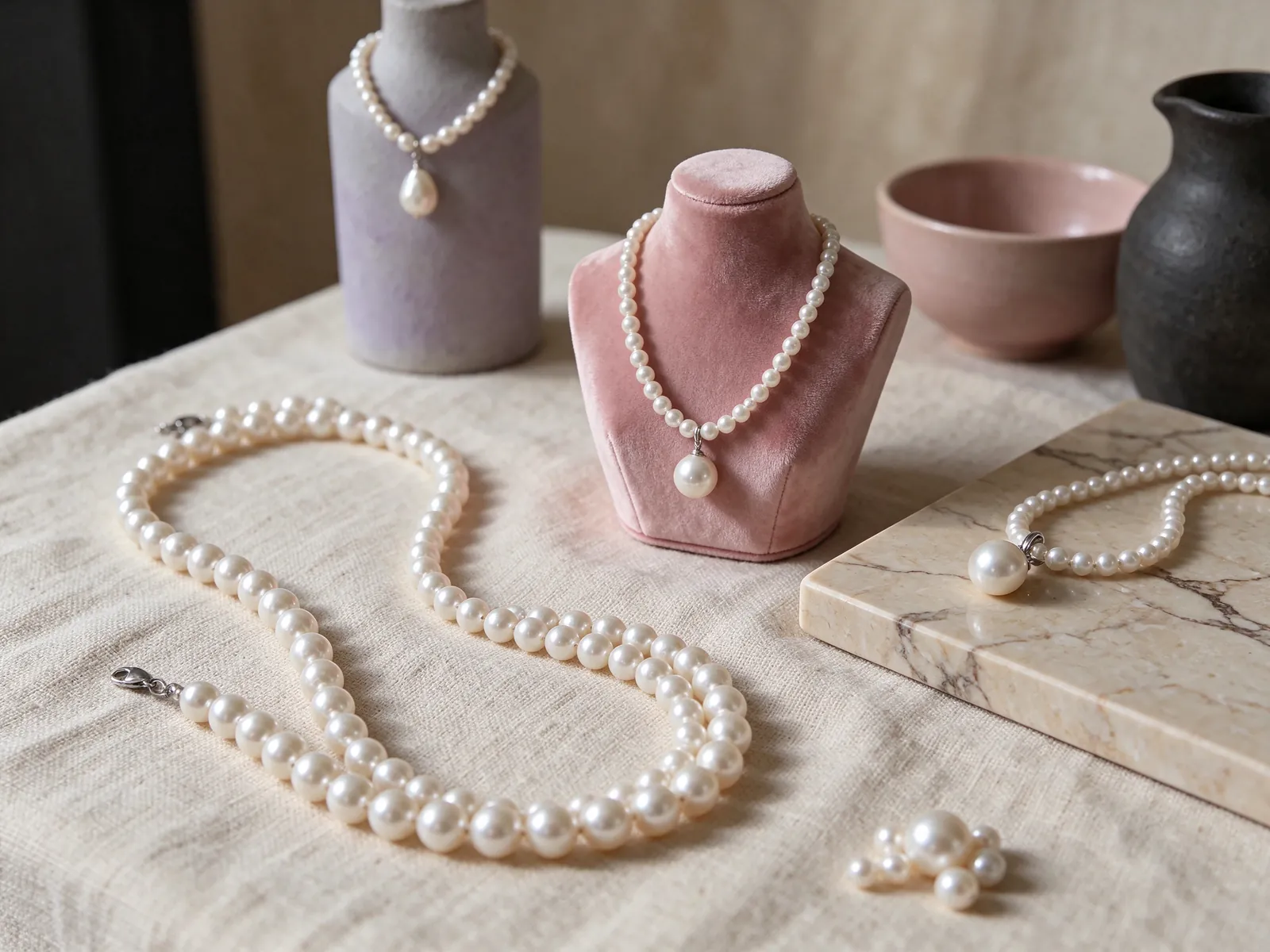
Give crew necks, V-necks, and collared shirts their own test
With a crew neck, check whether the strand is fully above the collar or clearly on the fabric. Nearly overlapping curves can become visually untidy when one disappears behind the other. For a V-neck, compare the lowest point of the rounded strand with the opening's point. Leaving a separate area around the necklace can work better than trying to make it follow the V precisely. The deepest available neckline position is not automatically the best drop.
Button a shirt the way you normally wear it before assessing the fit. Collar points and the placket can redirect pearls or partly hide them. Include the thickness of a high-neck knit in your comparison rather than testing only against skin. A long pearl necklace can form a different line over clothing, but check raised decoration and where the curve settles when you sit. Clothing structure matters at both shorter and longer lengths.
Let the main outfit lead, then check a secondary option
Choose your most frequently worn neckline as the first priority and a less frequent outfit as a second test. If they call for very different placements, decide which use is more important. A middle position that interferes with both collars is not necessarily the most versatile choice. Use similar posture and camera height for comparison photos so perspective does not masquerade as a length difference.
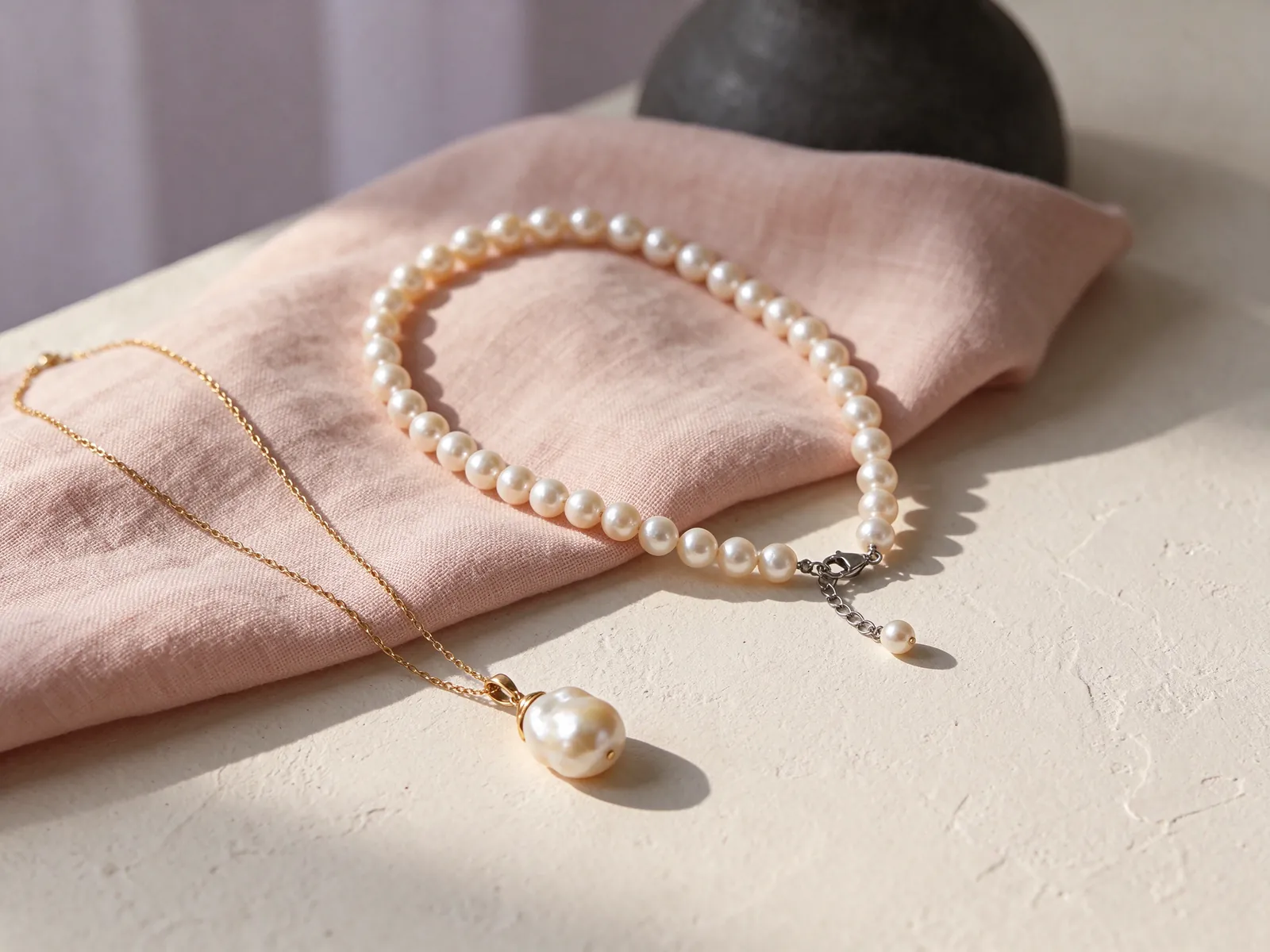
Confirm the fit while moving, and assess layered structures separately
Simulate your routine before making a decision. Sit at a desk, gently turn, and put on your usual jacket or wrap. Check whether the collar lifts the pearls, hair interferes with the clasp, or the fastening repeatedly shifts forward. For a special outfit, include lapels and front decoration in the test. A necklace that looks balanced in a still photograph may settle differently during an evening spent sitting and talking.
When layering, start by confirming that each necklace feels comfortable alone. Together, the curves should remain visually distinct enough for the effect you want. Different listed lengths do not guarantee that the strands will stay apart. A multi strand pearl necklace uses a different structural approach from several separately fastened necklaces, so compare the actual fastening and movement rather than assuming both arrangements behave the same way.
A long length does not automatically mean a comfortable double loop
Whether a strand can be doubled depends on its total length, pearl size, clasp, and the space left around the neck. The loops may not settle equally, and the fastening can change position. Establish the intended wearing method before trying it. Avoid pulling, twisting, or forcing the clasp to achieve a shorter silhouette; the category name alone cannot confirm additional ways to wear the necklace.
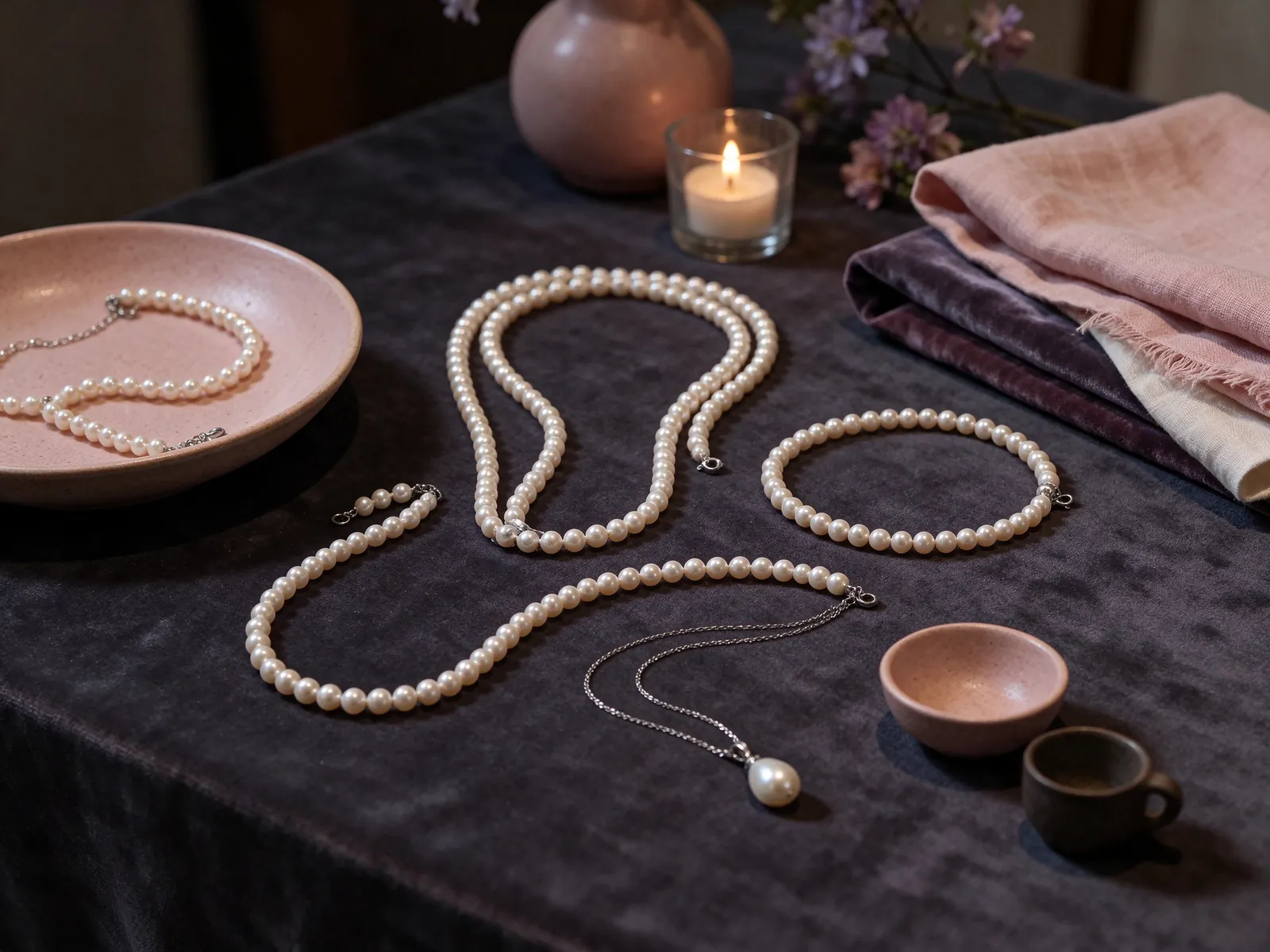
Make the final choice easy to explain, especially when buying a gift
Write down your main neckline, your preferred resting position, and how close-fitting you find comfortable. Add the complete measurement of a necklace you already like, along with the measurement method. This gives a much clearer description than a request for princess length alone. If two positions both work well, choose according to the outfit or occasion you expect to use most; there need not be one universally correct length.
For a gift, observe whether the recipient's favorite necklaces sit near the neck, within an opening, or over clothing. If possible, obtain the complete measurement of a piece they enjoy wearing. Height and photographs cannot provide an accurate neck circumference, and your own preferred measurement should not be assumed to suit someone else. If preserving the surprise limits your information, keep the style preference separate from any unconfirmed size assumption.
Protect the strand without trying to adjust it by force
For routine care, GIA recommends wiping cultured pearls with a very soft, clean cloth after wearing. Its guidance identifies perfume, hair spray, acids, and high heat as potential sources of damage to pearls. Do not use ultrasonic or steam cleaners. After a strung necklace has been cleaned with water, let the string become completely dry before wearing it again. These care practices are distinct from fit adjustments: pulling the strand or changing the clasp yourself is not a sound way to correct the drop.
Still deciding between a closer curve and a lower drop? Ask Flint Jewelry on WhatsApp and share your reference necklace’s complete measurement, how you measured it, and the neckline you wear most. Include the amount of movement space you find comfortable. These details make the discussion more useful, while the actual strand’s fit remains the basis for your final choice.
| Listed example | WSP category | Wardrobe observation | Before choosing |
|---|---|---|---|
| 35 cm | Collar | Check space close to the neck | Distinguish comfortable movement from merely fastening |
| 38 cm | Choker | Try a higher crew neck | Watch for the collar lifting the strand |
| 40 cm | Choker or Short Princess | Compare a fully visible curve with a collar-edge overlap | Confirm the complete measured length |
| 45 cm | Princess | Inspect the spacing within your usual neckline | Do not assume a fixed collarbone position |
| 60 cm | Matinee | Look at buttons and details on the garment front | Compare standing and seated placement |
Pearl knowledge and authoritative references
WSP uses approximately 40–45 cm, or about 16–18 inches, as a common princess-length reference. Its chart labels 45 cm as Princess. The figures provide length examples rather than guaranteed collarbone placement.
Read the reference for this factFrequently asked questions
Does an 18-inch description guarantee a below-the-collarbone fit?
No. Neck size, pearl thickness, the measurement method, and clothing affect where a strand sits. Use the stated length as a comparison point, then check the actual curve with your preferred neckline instead of assigning it a fixed body position.
Can I choose a gift length from the recipient's height?
Height alone is not enough. A favorite necklace's complete measurement and the recipient's usual neckline are more useful references. Do not transfer your own preferred fit to someone else or infer neck circumference from a photograph.
What should I do if the necklace disappears into a crew neck?
Compare a position entirely above the neckline with one clearly on the fabric. A small shift can change the interaction with the collar, but first test normal shoulder movement and sitting to see how the strand settles.
Will larger pearls fit exactly like a thin cord at the same length?
No. The cord models an outline without reproducing pearl thickness, weight, or clasp behavior. Use it to explore a starting position, then assess the real strand's clearance and visual width before deciding.
Should I double a long necklace to make it fit like a princess strand?
Only assess a wearing configuration appropriate to the design. Total length, pearl size, fastening, and neck space determine whether two loops are comfortable. Do not force the clasp or assume a long category guarantees a shorter doubled fit.
Updated: