
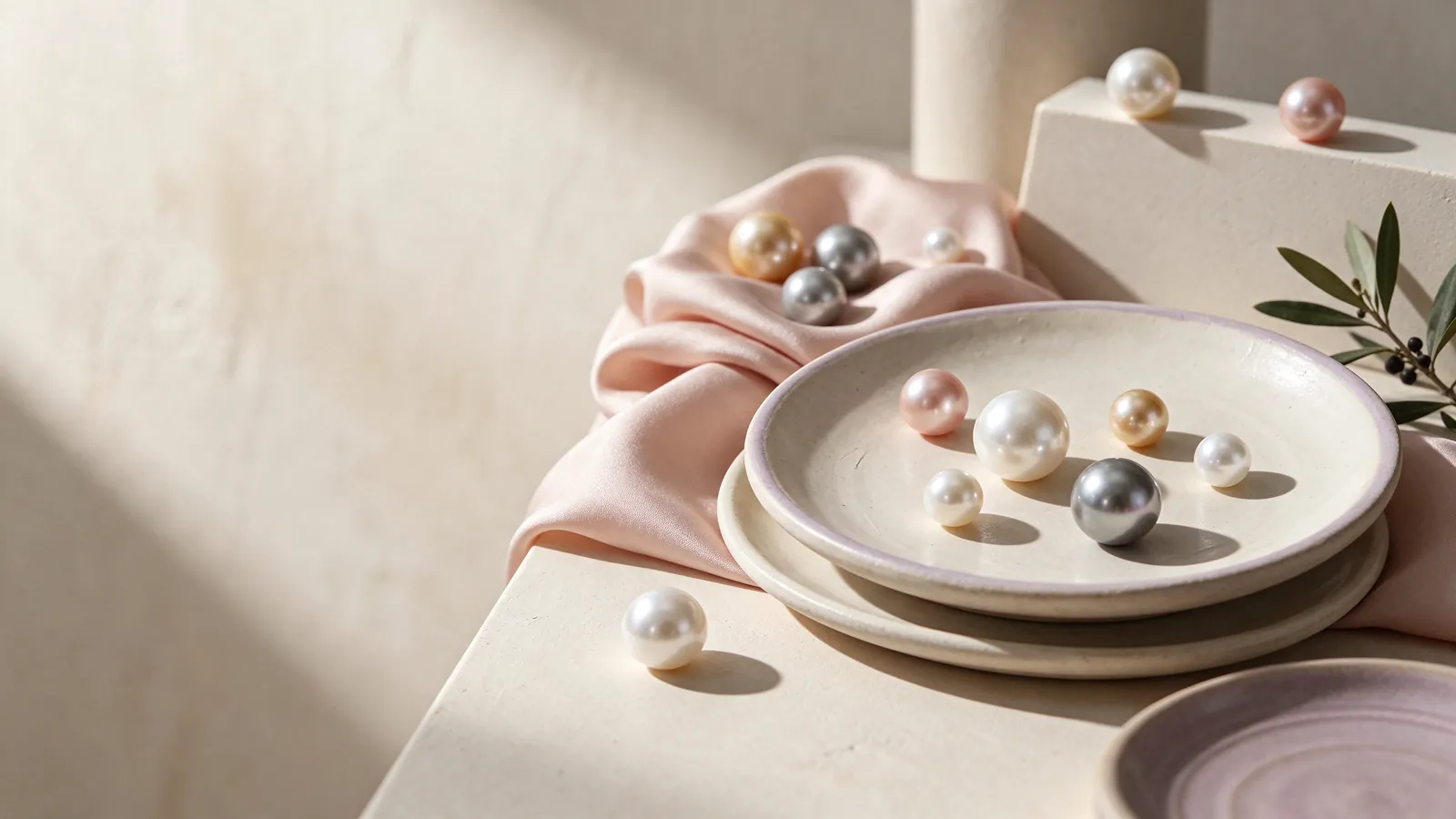
How do soft transitions and bold contrasts shape a mixed color pearl strand in a multicolor pearl necklace or multi color pearl necklace? | Flint Jewelry
Before concentrating on individual shades, decide what job a multicolor pearl necklace should do in an outfit. A soft transition can create a continuous impression around the neckline; a pronounced contrast can divide the strand into distinct accents. Place the necklace in a wearing-shaped curve and look at it from a normal viewing distance. Notice the first area that catches your attention, then decide whether that is where you want the emphasis.
A mixed color pearl strand is easier to assess when you can describe its sequence rather than simply call it colorful. Does a pale center lead into darker sides, or do separate dark points repeat around the curve? A multi color pearl necklace is a necklace with a varied palette, not a pearl type in its own right. An overall front view tells you more about the arrangement than an isolated image of its brightest pearl.
Where should lighter and darker pearls sit in a mixed color pearl strand to balance a multicolor pearl necklace or multi color pearl necklace with your neckline? | Flint Jewelry
Consider the opening in your clothing as a frame. If the darkest group sits at the center, it may create the focal point you want, or it may disappear behind overlapping shirt edges. Lighter central pearls can produce a different boundary against skin or a dark top. Try the necklace while standing and seated, then turn your head naturally. Evaluate the color position that remains visible in daily use, not just the one arranged for a photograph.
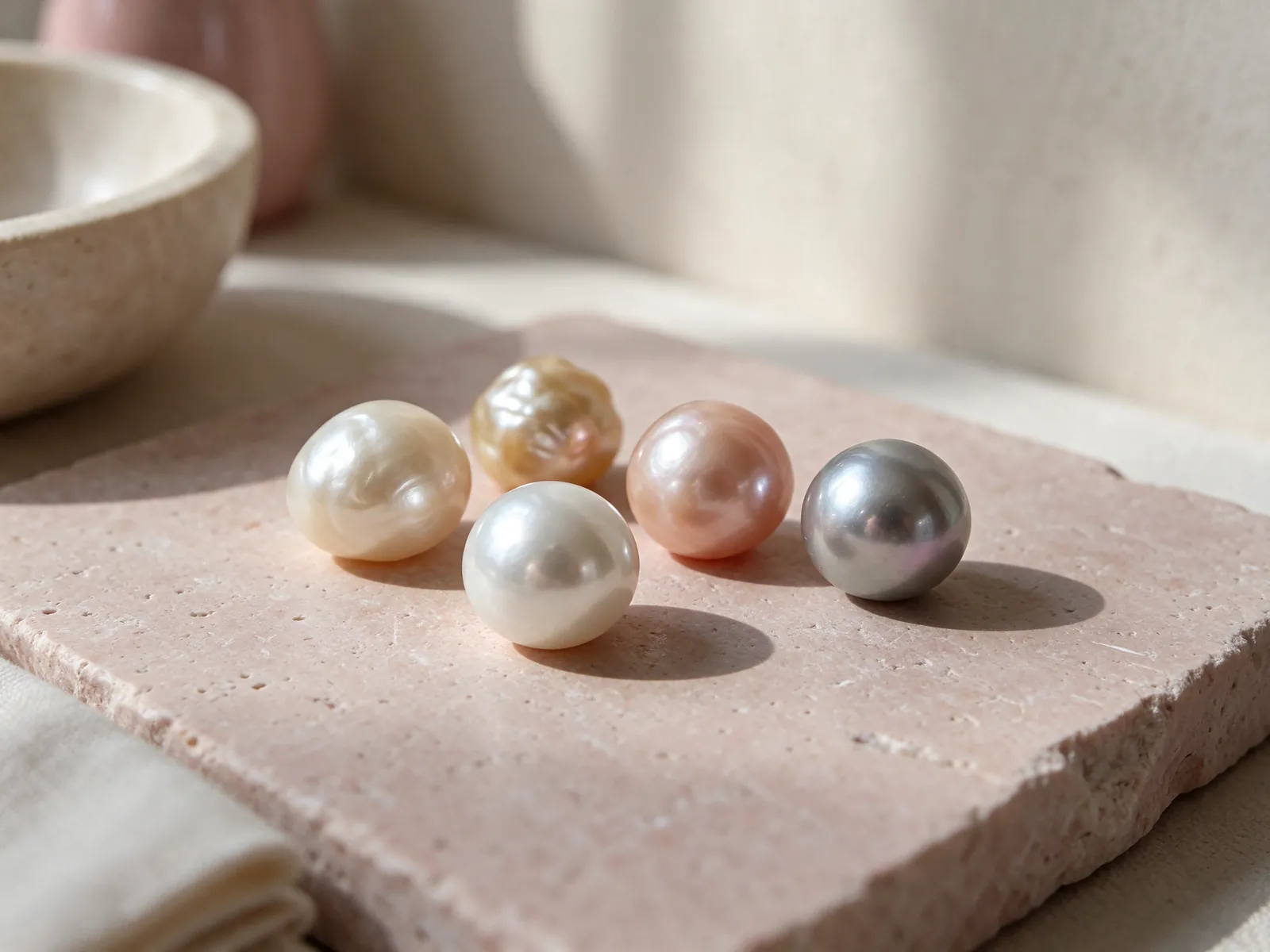
Treat a color name as a description, not an identity
GIA distinguishes three pearl color components: bodycolor, the dominant overall color; overtone, one or more translucent colors over the bodycolor; and orient, a shimmer of iridescent rainbow colors on or just below the surface. Every pearl has bodycolor, but only some show overtone or orient. Look at the overall shade before gently changing the viewing angle to observe secondary effects. Color words communicate what you see; a purple or gray appearance alone does not establish pearl type, origin or treatment.
Online images are useful for understanding the sequence, but lighting, the surrounding background and your screen all affect the impression. Compare pictures made under similar conditions where possible. Do not decide that one strand has better color merely because its image is warmer or brighter. Look for a whole-strand view and clear descriptions, and distinguish those visual aids from the written information supplied about the individual necklace.
GIA's care guidance explains that pearls may be dyed, impregnated or coated, and that some treatments can change over time. This is useful context for asking about color, not a statement that every multicolor necklace uses treated pearls. Request information about the individual piece and its appropriate care. A varied palette does not by itself prove natural color, and a vivid shade is not enough to conclude that dyeing has occurred.
Build a practical comparison with two familiar garments
Use a light top and a dark outer layer you already wear. The same arrangement can bring different sections forward against those backgrounds. Check the outline near your face and whether you still notice the intended accent. This exercise gives you a useful answer about your wardrobe without relying on a universal claim that one pearl color flatters everyone with a particular skin tone.
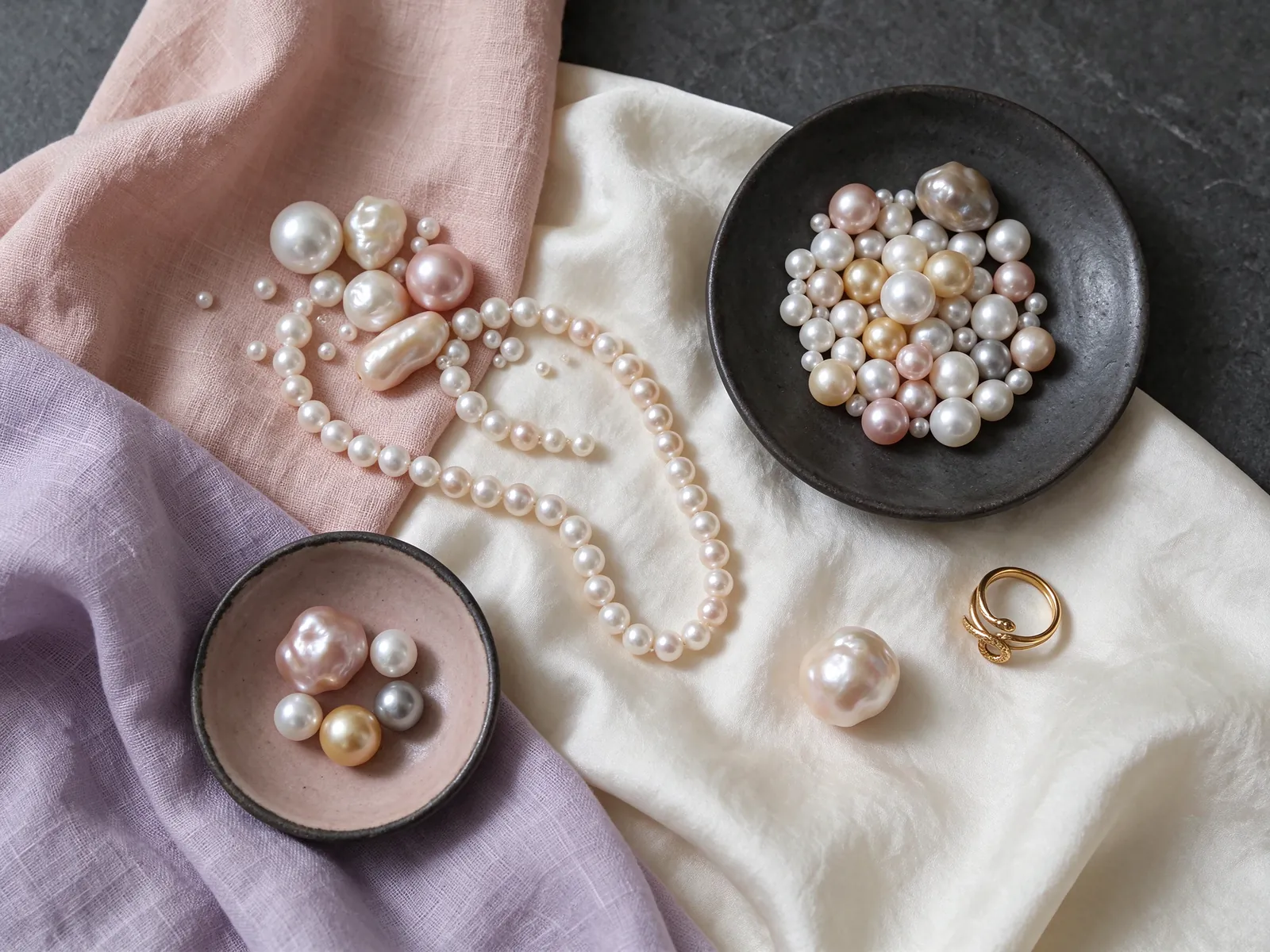
Look for coherence in luster, shape and the overall sequence
An intentional mixture can vary in color while maintaining a sense of connection elsewhere. Notice the clarity of reflections, the apparent shape changes and the rhythm made by larger-looking or smaller-looking pearls. If one section interrupts the strand, ask what catches your eye: the shade itself, a different reflection or the outline of a pearl. These are separate observations and can lead to different preferences.
GIA lists seven pearl value factors: size, shape, color, luster, surface quality, nacre quality and matching. It also recognizes that designers sometimes intentionally mix colors, shapes and sizes for unique effects. Color is therefore only part of a considered comparison. In a mixed arrangement, assess how the chosen differences form a coherent whole rather than expecting identical shades. Inspect surface details as well as the complete strand; an attractive palette should not become a reason to ignore the other characteristics.
Keep pearl construction and palette choice on separate tracks
If a pearl seems much darker than its neighbors, change the angle gently before deciding what you are seeing. The current reflection and the broader bodycolor may contribute differently. For a separate discussion of pearl structure, read the nucleated freshwater pearl necklace guide. That related subject provides a useful question to explore, but a multicolor appearance does not by itself establish that a necklace uses that type of pearl.
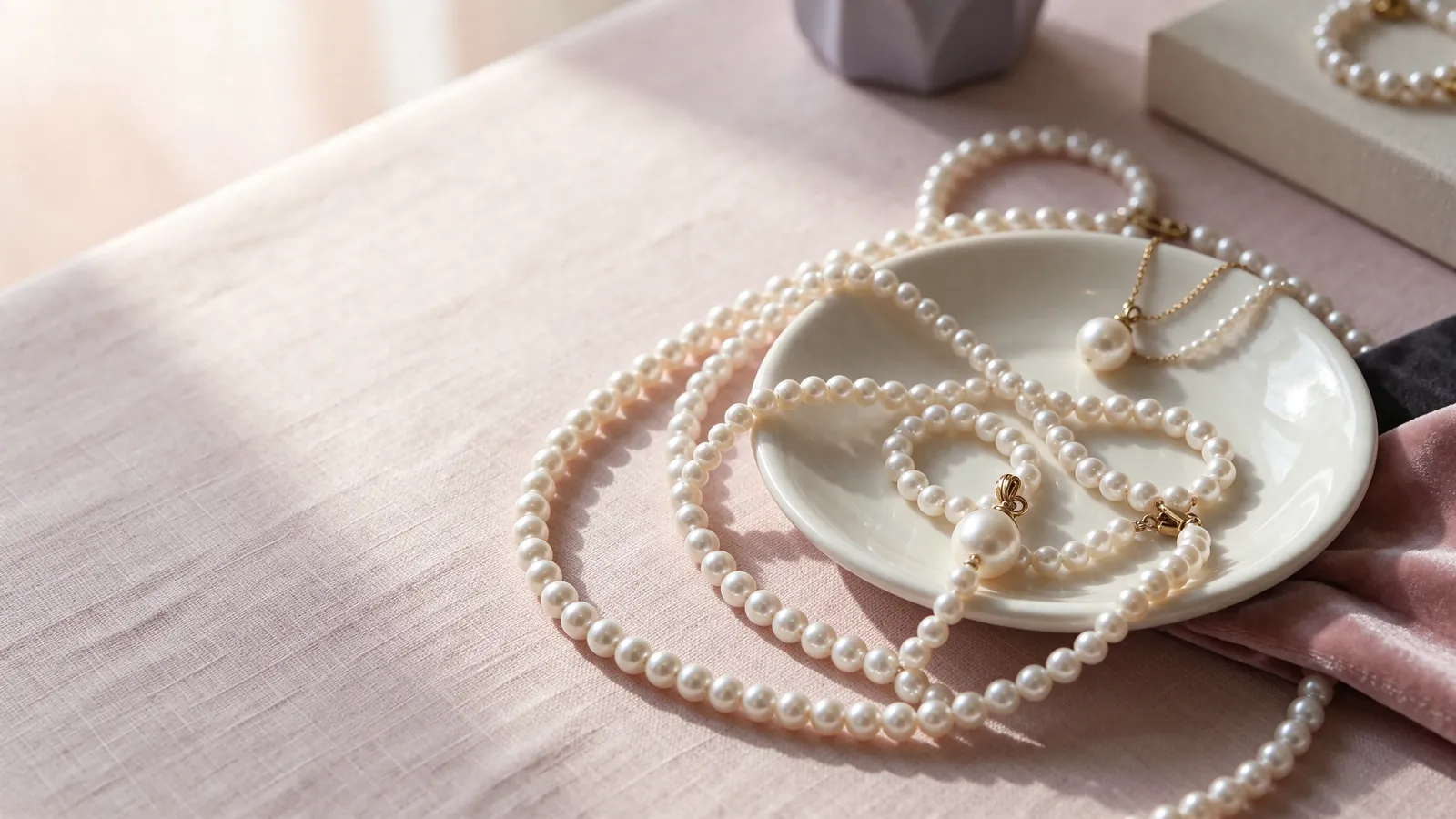
Choose a visible resting position, then refine the outfit
Start with where the strand actually rests. A crew neckline can touch and visually break its curve; an open shirt can cover a central color group. The single strand pearl necklace guide is a useful companion for assessing the outline and its position against clothing. A length label is not a substitute for seeing the necklace on the wearer, especially when the color pattern depends on a particular section remaining visible.
Once the resting position works, consider texture and pattern. Matte fabric can make pearl reflections easier to distinguish, while a glossy garment may create more competing highlights. With a print, select one small color detail as a connection rather than trying to match the entire pattern. If you also wear statement earrings or noticeable eyeglass frames, choose a leading element so the area around your face has a readable emphasis.
Test a warm accent before choosing a fully warm impression
A wardrobe with beige, brown or warm prints offers a useful setting for comparing a small warm color group with an overall warmer sequence. The orange pearl necklace guide narrows that styling question to a related color topic. It does not make orange a pearl identity. After comparing with a warm garment, try a cooler jacket too; the stronger choice is the arrangement you enjoy across the outfits you actually plan to wear.
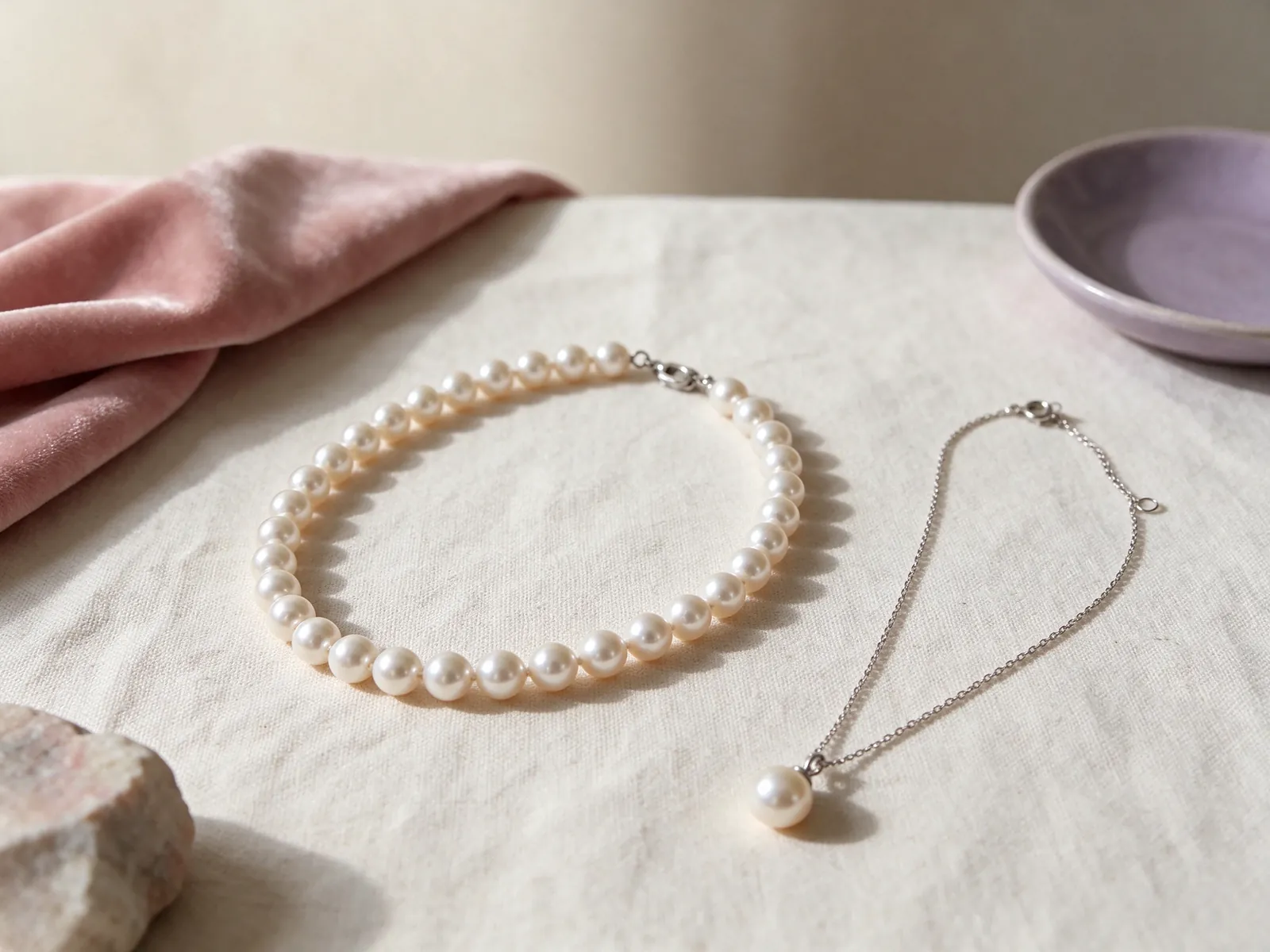
Use dark and gray areas to control visual emphasis
A darker section can act as a pause in the sequence, but numerous isolated dark points may create more movement than you want. Compare a predominantly dark look with a mixed arrangement against the same top. The black Akoya pearl necklace guide is a related reading option for the darker style. Its topic helps separate an overall dark impression from the role of a dark accent, without identifying another necklace's pearl type by appearance.
Gray can be explored as a bridge between light and dark, but it should not be assumed to look neutral in every setting. Neighboring colors and luster influence how a gray area reads. The gray Akoya pearl necklace guide offers a focused companion topic. When you return to the mixed strand, ask whether the transition is gentle enough for the effect you want, or whether a stronger division gives the outfit a clearer focal point.
Assess asymmetry with your normal hairstyle and accessories
An uneven distribution of color can be a deliberate feature rather than a flaw. Check whether its heavier-looking side overlaps with side-parted hair, a lapel or another accessory. Try your usual hairstyle instead of judging only with hair pulled away from the neck. You do not need equal color placement on both sides, but you should be able to identify the emphasis and decide whether it complements your ordinary way of dressing.
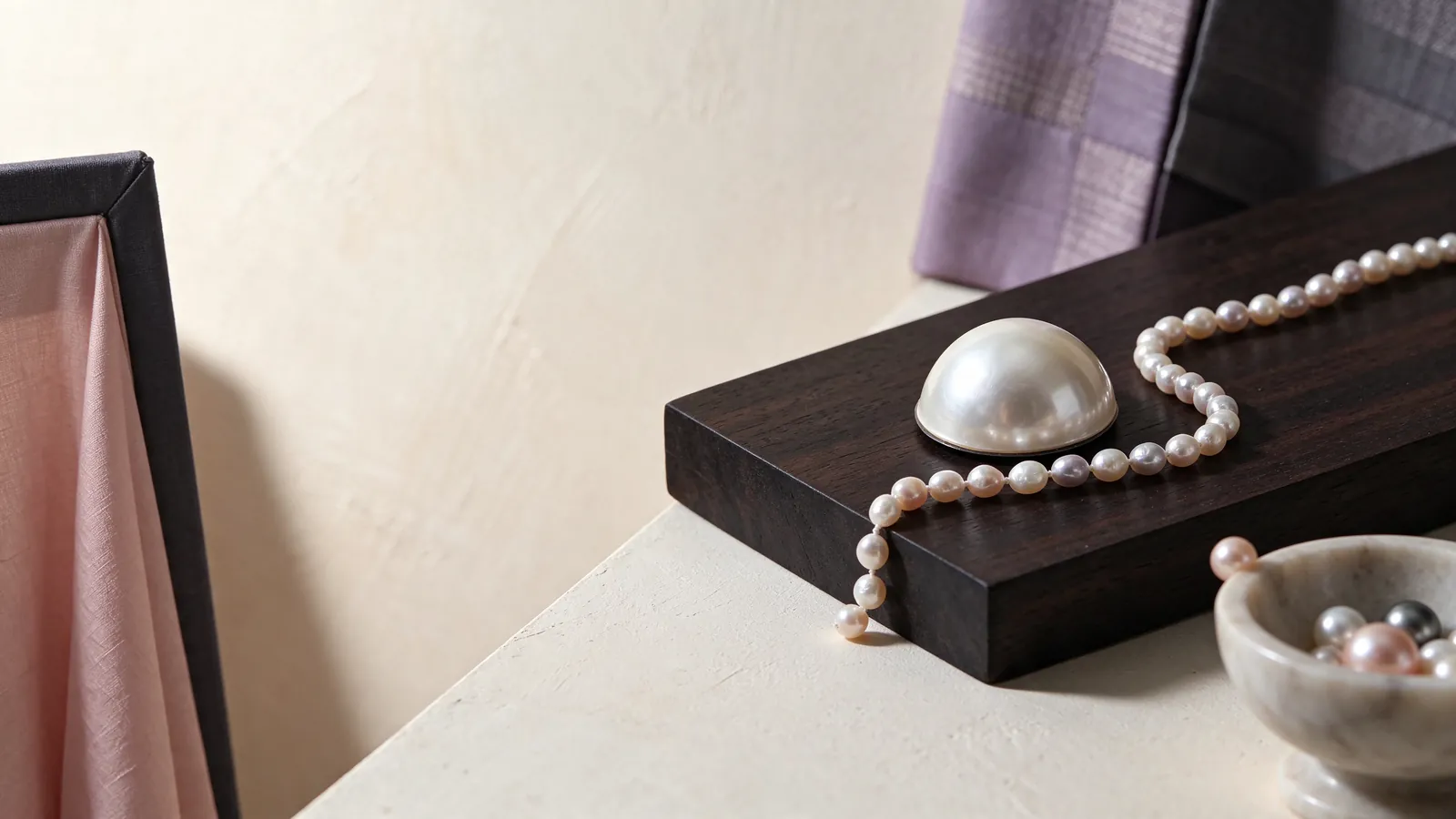
Ask specific questions about the arrangement and wearing experience
A useful buying conversation starts with a clear brief: a gradual transition or alternating contrast, a center accent or side emphasis, and the neckline involved. Ask separately what pearl type is used, whether the color has been treated and what written information accompanies the piece. Those questions address identity rather than taste. Do not infer natural color, origin, diameter or a certificate from a photograph, even when the arrangement is exactly what you hoped to find.
Check the fastening as part of the design. Can you use it comfortably, which surface faces outward, and does the clasp move into view during wear? If the clasp is intended to be visible, it changes the composition near the color sequence. The toggle clasp pearl necklace guide provides a related way to think about an exposed fastening. Its actual suitability still depends on the individual construction and the wearer's habits rather than the style name alone.
Record a preference that can guide the next comparison
For each arrangement, write down one feature you like and one concern using photographs with consistent lighting and clothing. If choosing a gift, take cues from the recipient's existing jewelry and wardrobe instead of assigning a taste by age. The record can reveal whether your preference is for a wearable color relationship or only for the impact of a single image, and it makes later questions more useful.
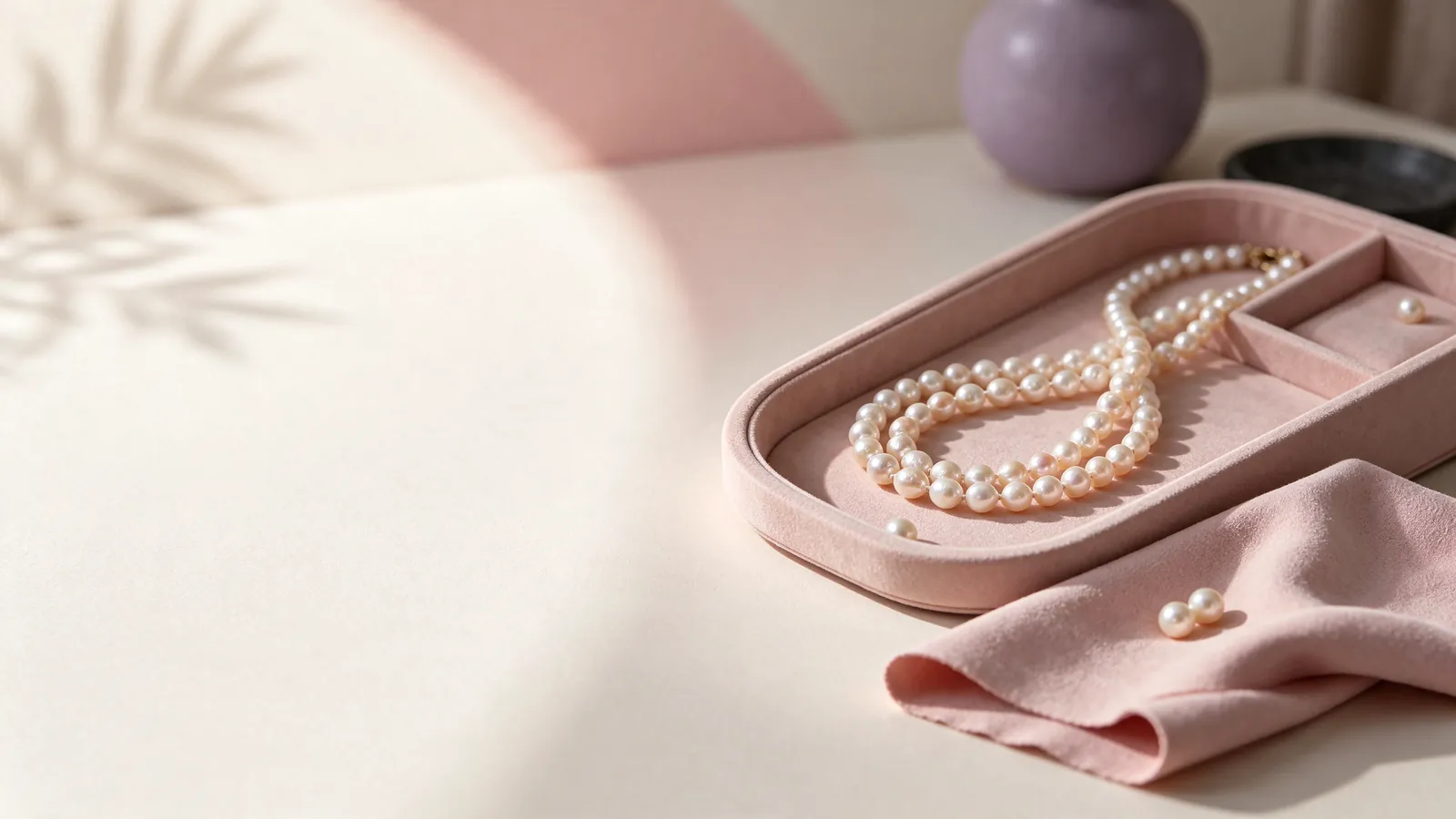
Protect the necklace with gentle care and sensible storage
Several colors in one strand do not call for aggressive cleaning. GIA ranks pearl at 2.5 on the Mohs hardness scale and advises never using ultrasonic or steam cleaners. After wear, gently wipe with a very soft, clean cloth. Avoid acids, perfume, hair spray and excessive heat. Put the necklace on after cosmetics and hair preparation so that you can better manage contact with those products.
Keep the strand separate from harder jewelry to avoid pieces rubbing and tangling together. A darker pearl is not automatically a dirty pearl, so do not scrub a dark section simply to make its shade resemble the rest. If water is used to clean a strung necklace, GIA says the string must be completely dry before it is worn. Loose stringing or an unstable clasp is a reason to pause wear and have the condition examined.
Distinguish a change in styling from a change in the strand
Keep a clear whole-strand photograph and a wearing view to record the arrangement you enjoy. These can support a later discussion about placement or stringing, but they are not proof of pearl identity, treatment or quality. When a seasonal outfit makes the necklace look less distinct, change the clothing background and neckline before concluding that its color has changed. The visual setting and the condition of the pearls are different questions.
Want a more focused color brief for your everyday outfits? Contact Flint Jewelry on WhatsApp: https://wa.me/85260106207. Share the neckline you wear most, the contrast you enjoy, and whether you want the necklace to blend in or become the focal point. A clothing or color reference photograph, if convenient, can make your pearl styling inquiry more specific without confusing an appearance preference with pearl identity.
| Sequence | Main impression | Outfit context | What to compare | Try-on question |
|---|---|---|---|---|
| Soft gradient | A connected band of shades | Plain clothing exposes the transition | Continuity between neighboring colors | Does the neckline cover the transition? |
| Light-dark alternation | Distinct repeated accents | A simple background keeps it readable | Color rhythm alongside luster | Do the accents stay where you want them? |
| Central accent | A defined front focal point | Open shirts may conceal the center | The center's relationship to the sides | Is the focal point visible while seated? |
| Uneven side emphasis | A directional composition | Hair and lapels share the same space | The visual balance on each side | Does your usual hairstyle support it? |
| Scattered color points | A less regular rhythm | Printed fabric can compete for attention | Any locally distracting section | Do you still like the full curve from farther away? |
Pearl knowledge and authoritative references
GIA describes seven pearl value factors, including color and matching. A multicolor necklace should therefore be compared through its overall arrangement and other quality characteristics, not the number of colors alone.
Read the reference for this factFrequently asked questions
Is multi color pearl necklace a different pearl category from multicolor pearl necklace?
The spellings describe the same broad interest in a necklace with several pearl colors. Neither spelling establishes pearl type, origin or treatment. Evaluate the arrangement visually and ask for identity information separately.
How can I stop a mixed color strand from competing with a printed top?
Choose a small color detail in the print as a connection, then decide whether the necklace or the garment is the main feature. Try a simpler neckline and quieter nearby accessories if the area around your face feels too busy.
Does an asymmetric color sequence mean the strand is poorly matched?
Not necessarily. The uneven emphasis may be intentional. Look at the whole composition with your usual hairstyle and neckline, and consider whether the differences create the effect you want. Matching is not only a demand for identical colors.
Can I choose the pearl type from an online close-up?
A close-up can show aspects of appearance, but color and shape alone do not establish identity. Ask about the individual necklace's pearl type and treatment, and distinguish written information from photographs used to show the arrangement.
What should I check before wearing a water-cleaned strung necklace?
GIA advises making sure the string is completely dry. Also check that the clasp and stringing appear stable. Do not use ultrasonic or steam cleaning, and do not scrub darker pearls merely because they differ from their neighbors.
Updated: