
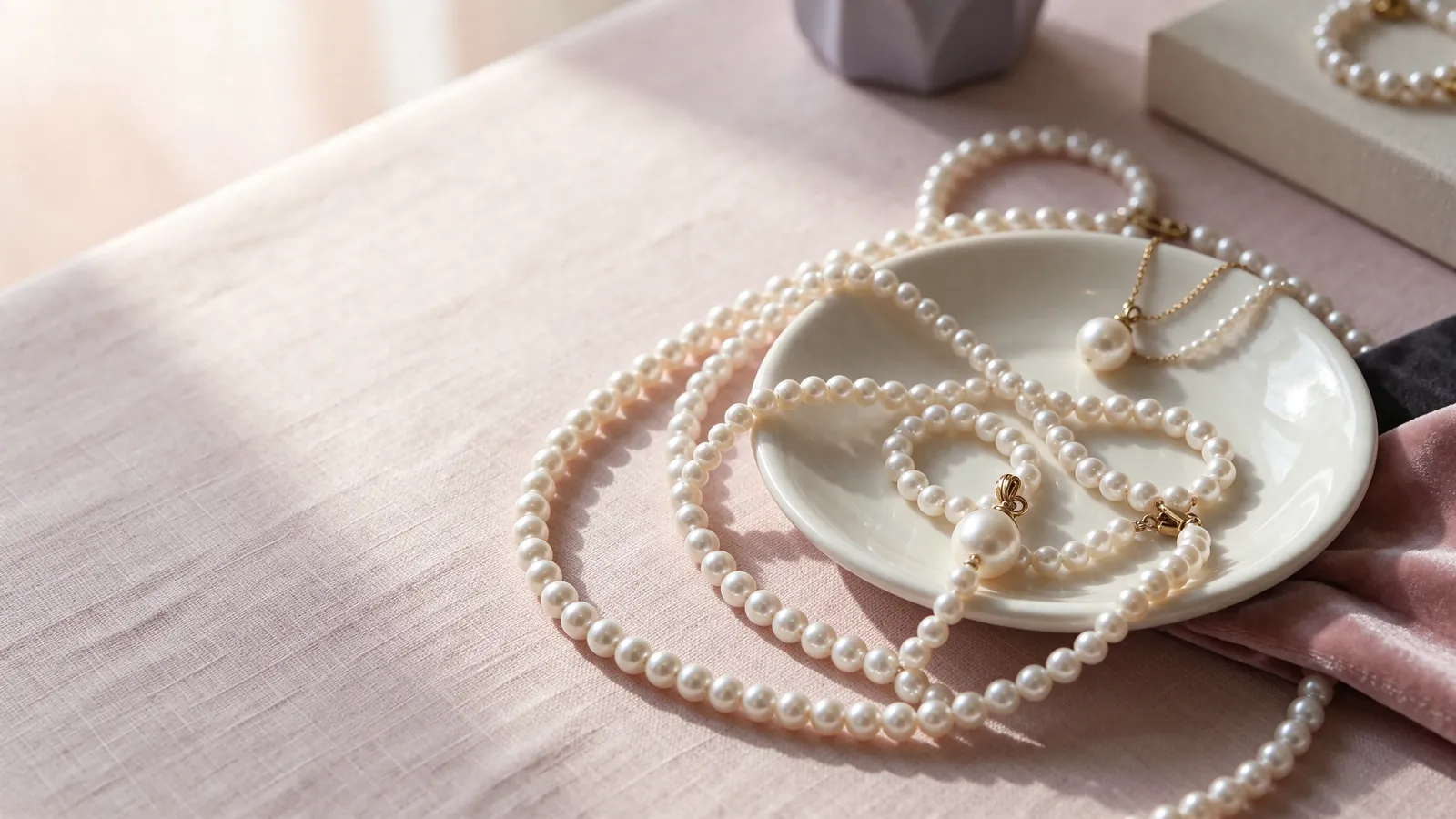
Flint Jewelry: Length and drape matter whether you search for a gray Akoya pearl necklace, a silver gray Akoya pearl strand or a grey Akoya pearl necklace
Picture the necklace with an outfit you already own. Do you want the pearls to frame the base of your neck, follow your collarbone or sit farther down on your chest? That decision is more useful than choosing a length label first. Your neck shape, the volume of the pearls and the clasp influence where the curve settles. For a simple outline, use the single strand pearl necklace guide to think about the complete arc rather than the way a strand is arranged on a display.
Try the necklace standing and seated, without lifting your shoulders for the mirror. A strand that looks balanced while standing still may shift against a collar during ordinary movement. Compare a button-down shirt with an open-neck top if you expect to use both. In an Akoya pearl necklace comparison, length should work with the size of the pearls and the fastening, not be treated as an isolated measurement.
Flint Jewelry: How can you check neckline clearance for a gray Akoya pearl necklace, a silver gray Akoya pearl strand or a grey Akoya pearl necklace?
Let the neckline fall naturally, then check whether the lowest pearls repeatedly land on its edge. A crew neck can work when the strand stays clearly inside the opening or visibly over the fabric. With a V-neck, consider how its angled lines meet the necklace's curve. Do not shorten the effect by holding the strand tight; test the position it actually returns to after you move. Use the pearl necklace length guide to compare resting positions alongside your regular outfits, rather than expecting one length label to predict the fit.
Read the color name without turning it into an origin claim
Silver gray tells you about appearance. It does not establish where the pearls were produced or whether their color was treated. Even a title that includes Japanese should be read alongside the individual item's identity and origin information. Separate pearl type, cultured identity, origin and treatment into distinct questions. Establish the type of pearls being described before deciding which gray appearance you prefer; a color word cannot supply the missing identity details.
The alternate spelling grey does not create another pearl category. Nor does a similar shade make a Tahitian pearl an Akoya pearl. Baroque refers to shape, so it is not a replacement for identifying pearl type either. If you compare a black Akoya pearl necklace with a gray option, make sure the identity and treatment information is understood before using the darker appearance as the deciding factor.
Turn an ambiguous description into a useful question
Ask what the seller means by silver gray and whether any color treatment is described for the strand. If there is a laboratory document, check which jewelry item it covers and read its actual conclusions. Avoid using price, brightness or a photograph to decide treatment status. The goal is a clear description of the necklace you are considering, not a general assumption about every gray pearl. In a 2024 Akoya study, GIA found evidence of irradiation in its samples and evidence of dye treatment in some of them. This describes the tested samples, not all gray necklaces. Use the finding as a reason to read treatment information for the specific item, not as a way to diagnose it from a photograph.
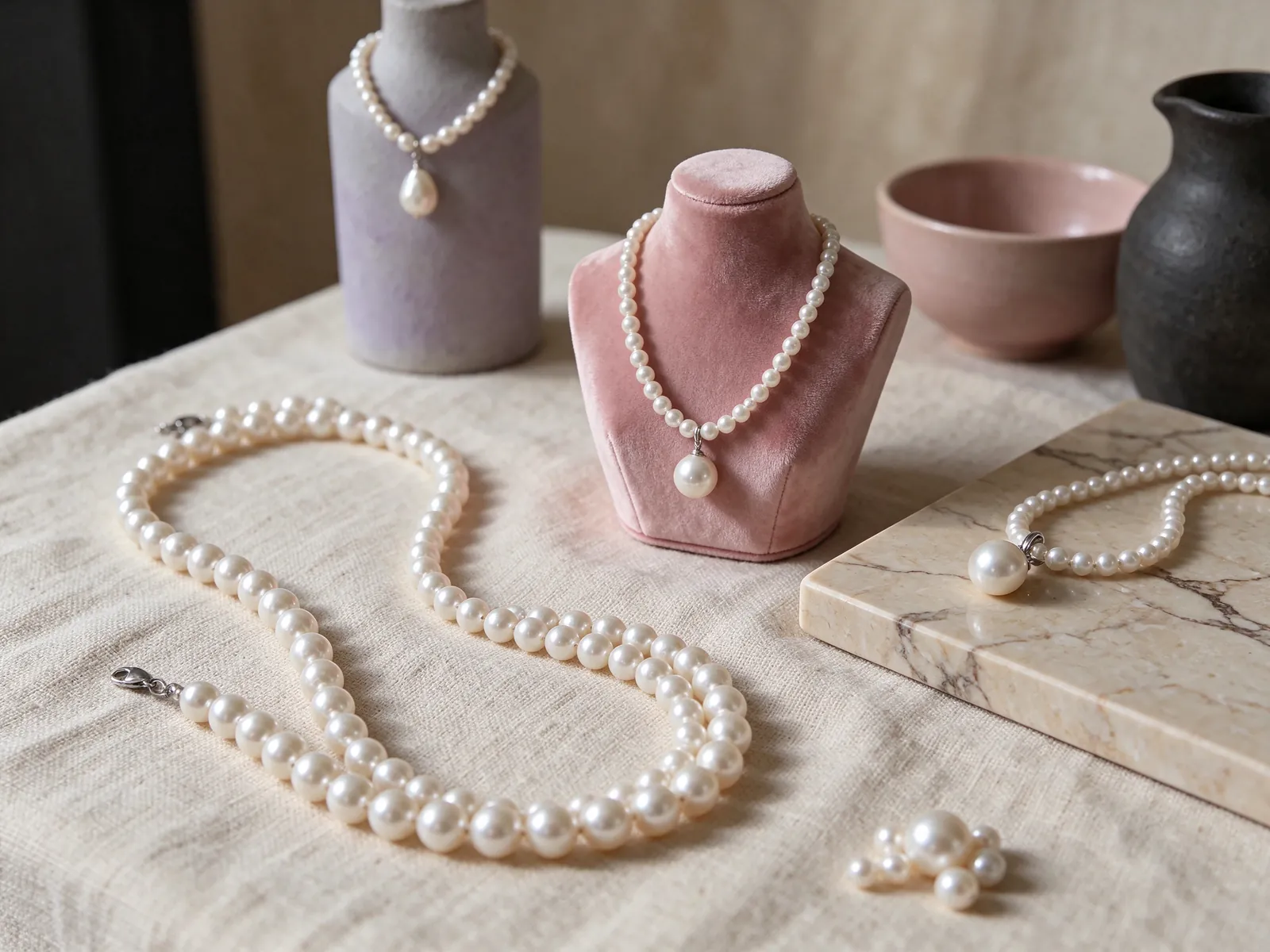
Compare gray under more than one kind of light
A pale gray necklace can look close to white in a bright photograph and deeper against a dark top. GIA separates bodycolor, overtone and orient, while noting that not every pearl has all three. Start by looking at the overall bodycolor, then notice any color over the surface. A neutral background helps you see the strand before strong clothing colors influence your impression. Afterwards, compare it with the fabrics that matter to your wardrobe.
Look in soft daylight and typical indoor light rather than relying on a single dramatic spotlight. Camera exposure and white balance can also affect the image, so different complete-strand views are more useful than several similar close-ups. If you enjoy visible color variation, the multicolor pearl necklace guide can help you consider that preference deliberately. A designed color progression is different from a supposedly uniform strand with one distracting pearl.
Look for balance, not an unchanging photograph color
View the strand in a wearing-shaped curve and follow the transition from the center to the sides. Ask whether the gray feels cohesive as reflections move. Individual pearls need not look identical from every angle to form a balanced necklace. Describe your preference as a quiet, continuous effect or a visibly varied palette; those goals are clearer than expecting the strand to reproduce one image in every room.
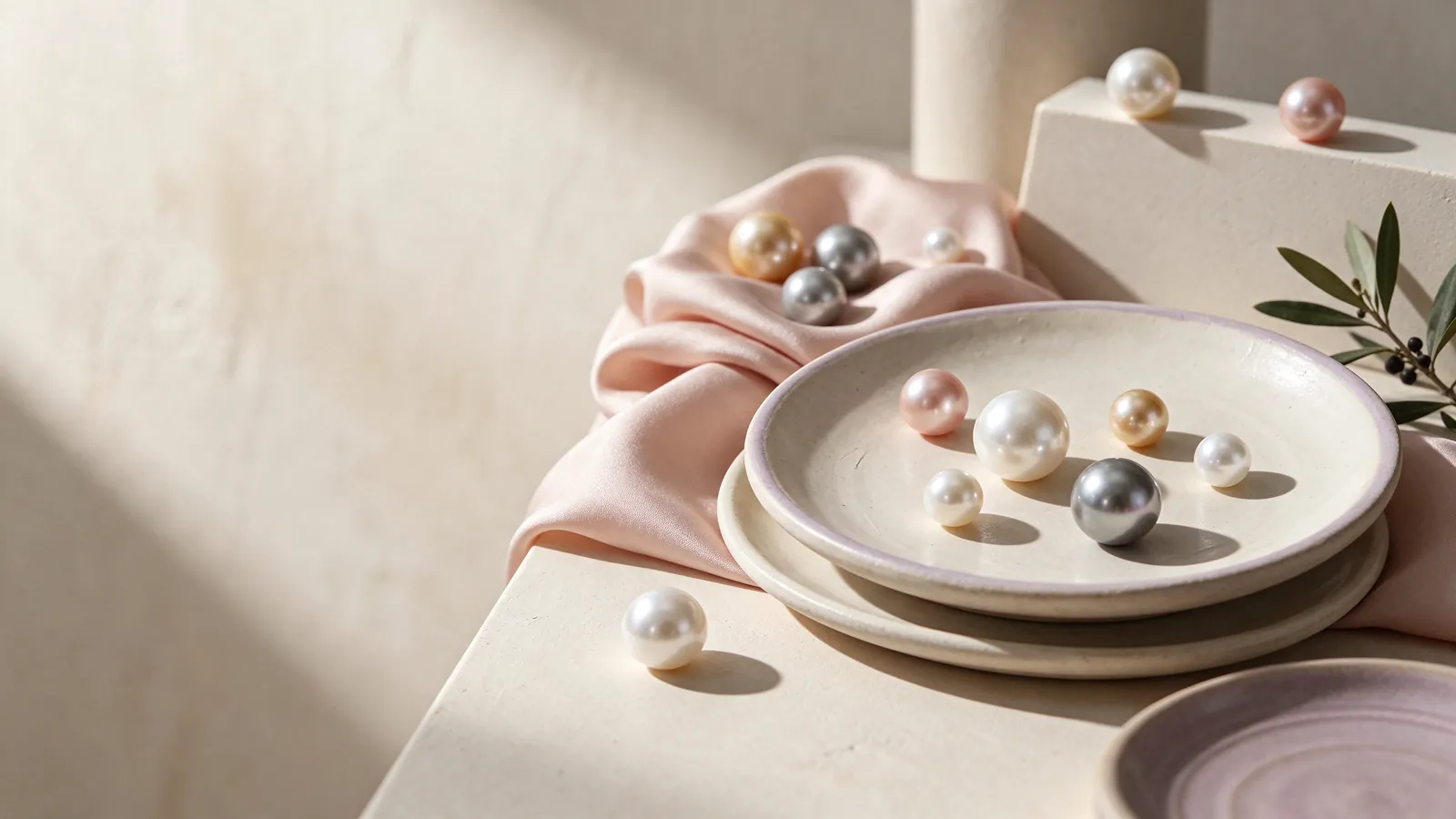
Evaluate the complete quality picture
GIA identifies seven pearl quality factors: size, shape, color, luster, surface quality, nacre quality and matching. For a gray strand, that means color is important but insufficient. Observe how sharply reflections appear and whether the luster feels consistent along the necklace. Then examine surface texture and visible marks, keeping in mind that a reflection can create a dark area that is not itself a surface flaw. Use both a whole-strand view and close examination.
Choose pearl size for its proportion on you, not on the assumption that bigger must be better. Notice whether the necklace curves smoothly and whether it gives your collar enough room. Do not infer nacre quality or a measurement from a fashion image. If a listing uses a letter grade, ask which features the grade describes. Specific explanations of luster, surface and matching are more useful than assuming a grading label means the same thing everywhere.
Inspect beyond the center of the necklace
The center usually draws attention, but the side sections complete the look. Check whether a very bright center is balanced by the rest of the strand or interrupted by a noticeable change in luster. A slow moving view can help show this as reflections shift. Compare the whole necklace under the same conditions instead of choosing one strand by its brightest pearl and another by an ordinary overview.
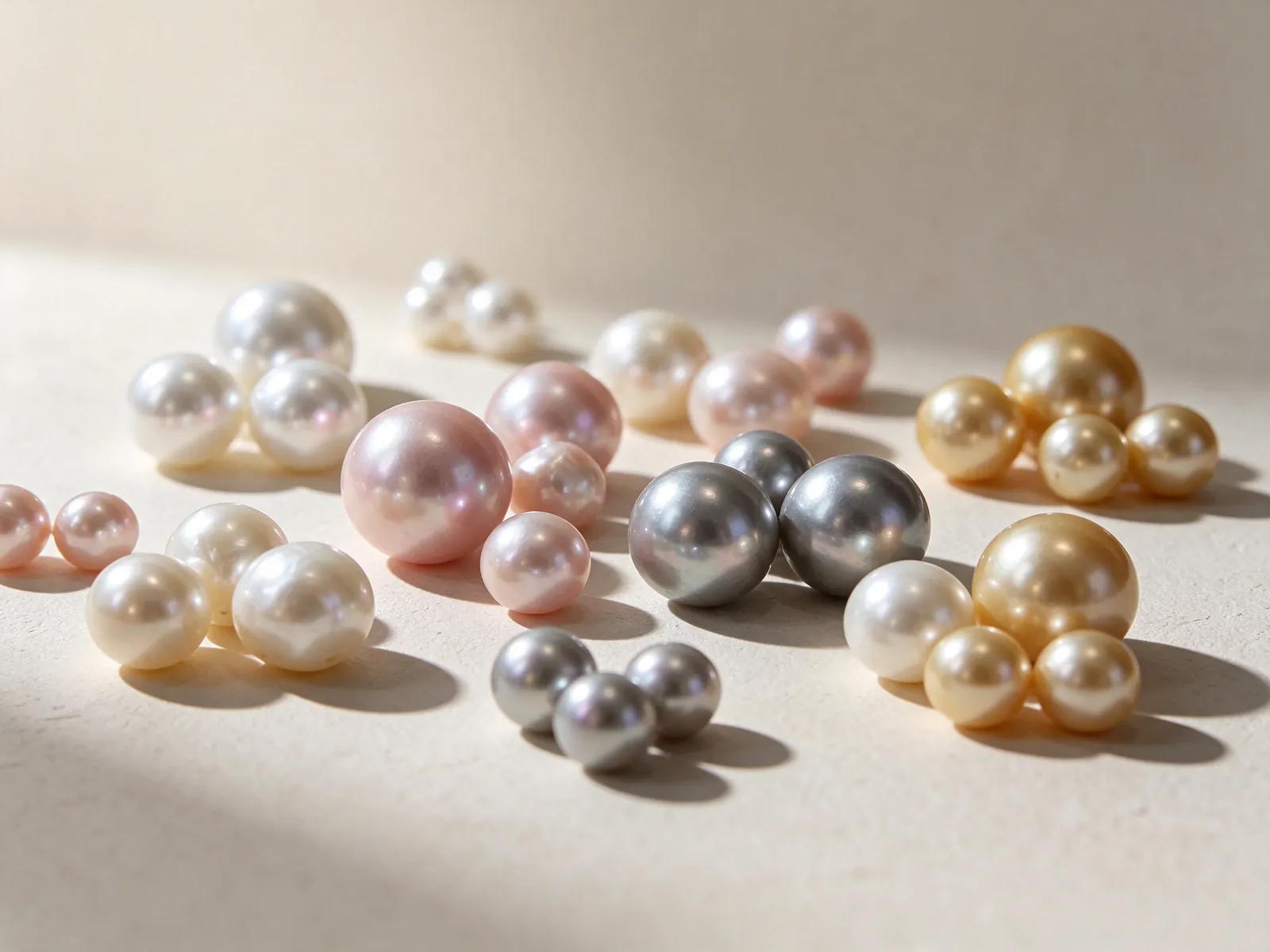
Use your wardrobe to choose the right gray effect
Start with familiar backgrounds: a white shirt, a black top and a gray sweater. White may define the gray outline, black may emphasize lighter pearls, and gray fabric may make the necklace more understated. A warm ivory top gives another useful contrast if you enjoy a softer outfit with a cool-looking accessory. None of these combinations is a rule about which pearl color a particular complexion must wear; your preference matters.
For prints or textured knits, decide which feature should lead. Leave enough visible space around the necklace, or use a plain layer beneath an open shirt. Add earrings and other jewelry after the strand so you can see whether each piece supports the look. Matching everything exactly is not required. Often a clear hierarchy of shapes is more effective than having several pieces competing with the gray pearls for attention.
Make layering comfortable as well as visible
Separate the resting positions of layered necklaces so their curves remain distinct. Watch for repeated contact between metal chains and pearls, and check whether clasps cross behind your neck. If the arrangement tangles when you sit or turn, simplify it. Avoid hanging a heavy accessory from a strand not designed for that purpose. A successful everyday combination should work without constant repositioning for a camera.
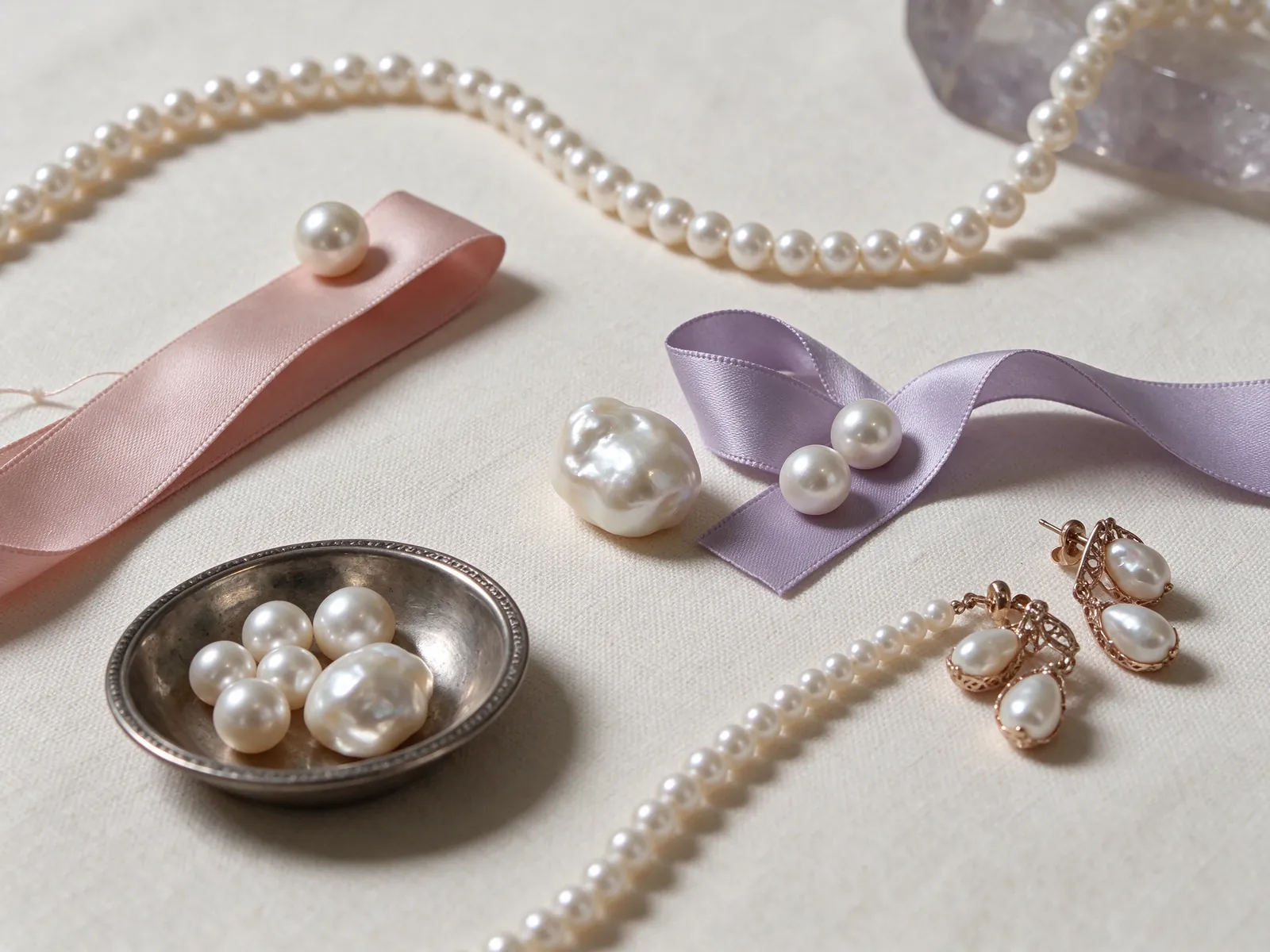
Treat the clasp and thread as practical design choices
A clasp should suit the way you put on jewelry and the clothes you wear. Check how it opens before handling it, then close it without pulling on the strand. Long hair, high collars and layered necklaces can make its position important. If a visible front fastening appeals to you, read about a toggle clasp pearl necklace as a separate design approach. Do not assume an ordinary gray strand can be rearranged into that style without considering its construction.
Inspect how the pearls sit beside one another and whether the string shows wear or unusual looseness. The strand should be considered in its natural curve, not forced straight to test it. Do not cut thread, twist pearls or improvise a new clasp. An existing necklace that repeatedly snags or no longer closes properly deserves attention from someone experienced with pearl jewelry before it is worn again.
Describe the wearing experience you want
For a selection conversation, bring a neckline photograph and explain your preferred resting position, whether you layer necklaces and whether hair catches on your current clasp. A comfortable necklace you already own can help describe the experience without prescribing the same measurement for every strand. Flint Jewelry's WhatsApp can be used for general pearl-selection questions; explaining the outfit and purpose makes the discussion more specific than sending only a gray color name.
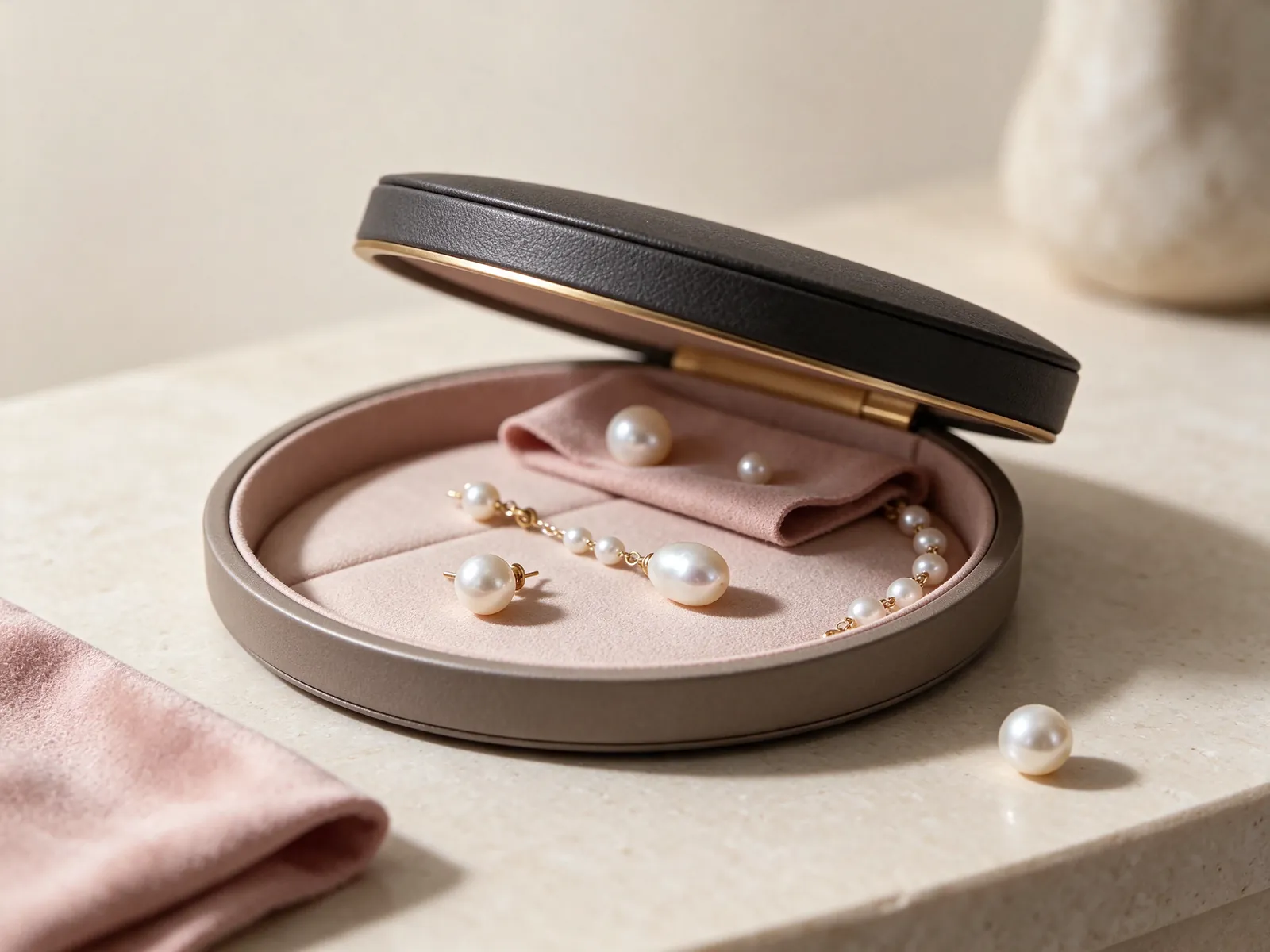
Care for gray pearls gently and consistently
GIA gives pearl a Mohs hardness of 2.5. A gray appearance is not a reason to use stronger cleaning methods. Wipe the pearls with a very soft, clean cloth after wearing, and keep them apart from harder jewelry that might rub against their surfaces. Avoid acids, perfume, hair spray and excessive heat. Put the necklace on after grooming rather than spraying products around it, and take it off before household cleaning.
Pearls should never go into ultrasonic or steam cleaners. When a strung necklace has been cleaned with water, its string must dry completely before you wear it again. A dry-looking pearl surface does not mean the thread is ready. Store the strand away from sharp metal edges and other stones. Do not use polishing compounds to make a quiet gray appear brighter; gentle care is intended to protect the material, not change its finish.
Check the viewing conditions before deciding color has changed
Compare the necklace using similar soft light, a consistent background and a clean surface. A warm indoor photo and an outdoor photo can produce different impressions without establishing a lasting color change. If an irregularity persists, or the string appears damaged, seek professional assessment rather than experimenting with chemicals. Care instructions should support sensible use, not be read as a promise of permanent color or unlimited durability. Ready to make your gray-strand preferences more specific? Share a favorite neckline and describe where you want the curve to rest, along with any clasp or layering concerns. Ask Flint Jewelry about general pearl selection on WhatsApp: https://wa.me/85260106207.
| Decision | Check | Question to ask | Outfit connection | Do not infer |
|---|---|---|---|---|
| Pearl identity | Separate type, color and origin wording | What treatment information applies? | Establish identity before choosing shade | Gray proves a pearl type |
| Resting position | Try standing, sitting and turning | Is the clasp included in the length? | Keep pearls clear of the neckline edge | A length label predicts the fit |
| Color balance | Compare full views under different light | Can I see the complete curve? | Try white, black and gray fabrics | The image gives a fixed shade |
| Quality | Compare luster, surface and matching | Which features does a grade cover? | Consider the whole necklace's presence | Bigger always suits better |
| Construction | Check clasp operation and thread condition | How does the fastening work? | Account for hair and layered jewelry | Any clasp can move to the front |
Pearl knowledge and authoritative references
GIA lists seven pearl quality factors: size, shape, color, luster, surface quality, nacre quality and matching. A gray color preference should be considered alongside the other six factors.
Read the reference for this factFrequently asked questions
Is grey Akoya pearl necklace a different type from the gray spelling?
No. Grey and gray are spelling variants. Compare the actual pearls' identity, color appearance and treatment information rather than treating the spelling as a product difference.
Does a silver gray Akoya pearl strand have to look metallic?
Silver gray is an appearance description, not a promise of a particular metallic reflection. Look at the whole strand under more than one light and decide whether its bodycolor and luster suit your preference.
Can I wear a gray strand over a gray sweater?
Yes, if you like the quieter contrast. Check whether the curve remains visible through its luster and position, and whether the sweater's neckline catches the pearls. A different resting position may help more than a different color.
Is an evenly gray strand automatically well matched?
No. Matching also involves the way size, shape and luster work together. View the entire worn curve rather than assuming a similar color alone gives a balanced result.
Can I wear the necklace immediately after cleaning it with water?
For strung pearls, GIA says the string must be completely dry before wearing. The surfaces may dry before the thread does. Never use ultrasonic or steam cleaners for pearls.
Updated: