
Flint Jewelry | How should you read a report for a Hanadama Akoya pearl necklace or certified Hanadama pearl strand described as a Hanadama pearl necklace?
When a description says Hanadama Akoya pearl necklace, separate the pearl terminology from the documentary claim. Hanadama is not another biological pearl species, and the necklace name alone does not establish origin, treatment status or certification. Find the issuing organization, the exact report title and any identifying number. The original wording matters, particularly when an English description summarizes a document written in another language.
Next, put the report, item description and full necklace image side by side. Compare any listed measurements, pearl count, photographs or identifying details, without assuming that missing information can be supplied from a picture. The Akoya pearl necklace guide can help organize questions about appearance and wear. Return to the document accompanying the particular necklace to establish whether it records any specific quality comment.
Flint Jewelry | Does the report identify the Hanadama Akoya pearl necklace or certified Hanadama pearl strand behind a Hanadama pearl necklace description?
A certified Hanadama pearl strand description should lead you to ask which pearls the document describes: the entire strand, one pearl or another part of a jewelry set. A Hanadama pearl necklace label cannot answer that on its own. Ask about replacement pearls or length changes, and clarify how the current necklace corresponds to the report. Do not treat the document's date as an automatic expiration or maintenance deadline.
Evaluate the necklace as a sequence of pearls, not a single highlight
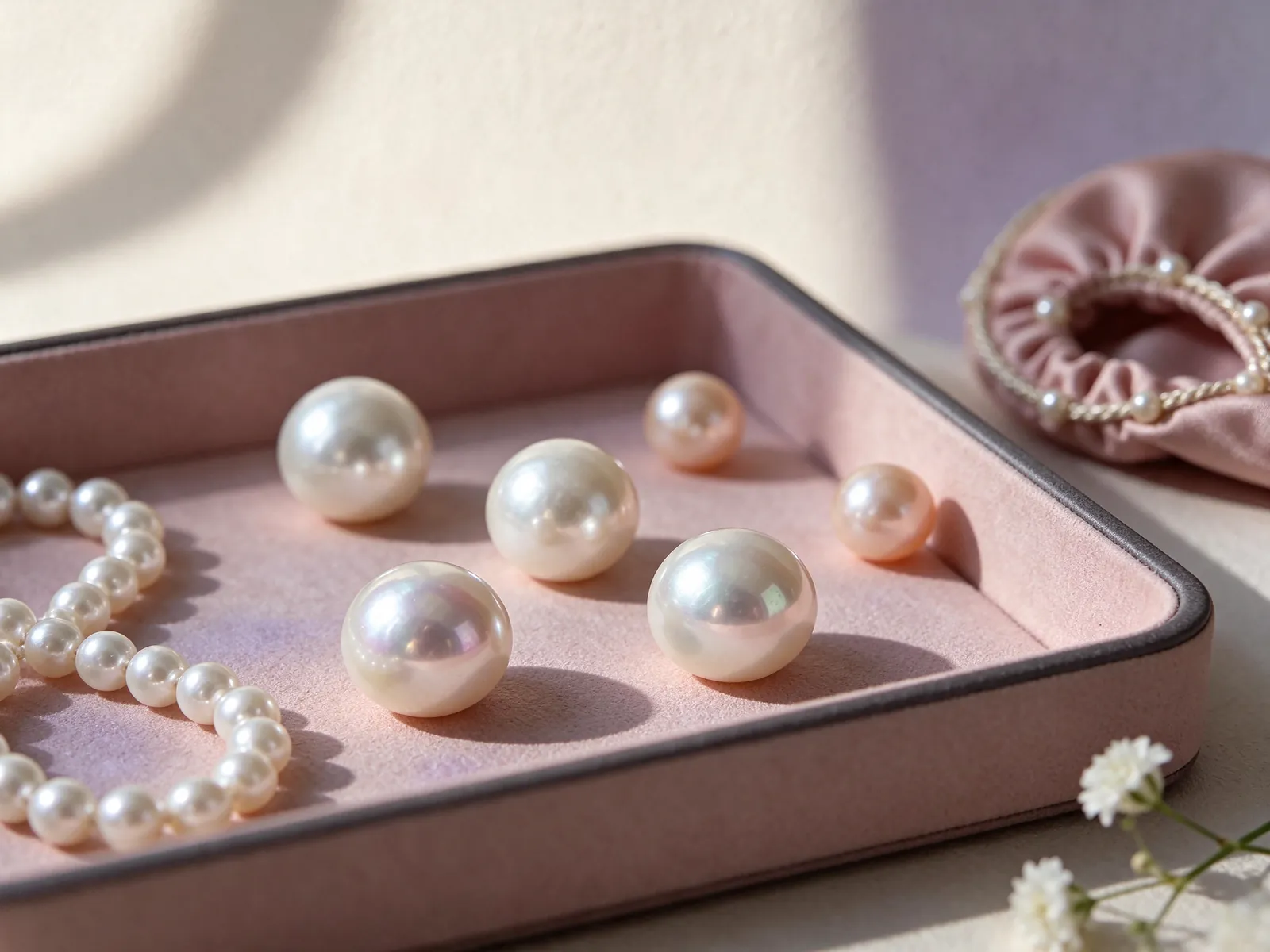
GIA describes seven pearl value factors: size, shape, color, luster, surface quality, nacre quality and matching. For a strand, matching brings those observations together across neighboring pearls. Follow the necklace from one end to the other and consider its overall rhythm. A pearl that looks beautiful alone may still stand out differently within the sequence, especially when it sits at the front.
Look at luster and surface appearance separately. A pearl can have appealing reflections and still show visible surface features. Consider where those features appear and whether they affect your impression at an ordinary viewing distance. Photographs help with appearance, but they cannot establish a nacre measurement. If the report discusses nacre quality, interpret that entry as written rather than assuming a glossy image proves it.
A different quality name needs a separate explanation
AAA marketing language does not automatically carry the same meaning as a Hanadama-related report. If a Tennyo pearl necklace is another candidate, identify its original terminology, issuer and stated assessment before comparing it with the first necklace. Do not assume a shared scale or an interchangeable credential. The aim is to understand each strand's information and appearance, not simply to arrange impressive names in a ranking.
Find the balance between pearl presence and neckline position
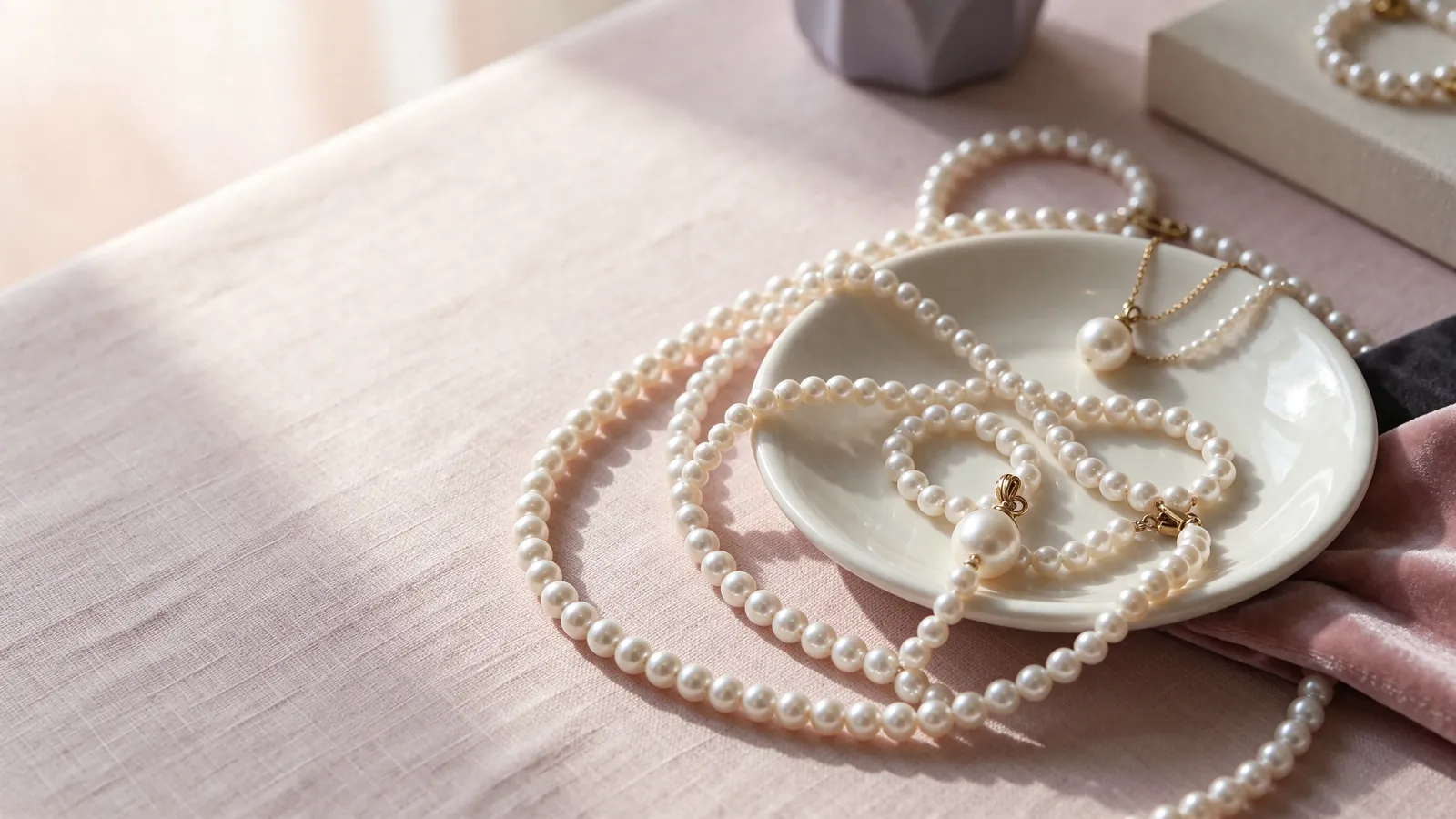
Start with the effect you want: a subtle line near the face or a necklace that becomes the outfit's main feature. Pearl diameter contributes to that impression, but it is not a complete judgment of quality. Hold a candidate against a familiar top and consider the front pearls in relation to your shoulders. Rely on item-specific dimensions rather than estimating size from a cropped image.
Then test where the strand rests. A necklace displayed flat may sit differently with a collar, a thick sweater or an open neckline. Turn your head, sit down and check whether the fabric pushes the pearls upward. See whether you can operate the clasp comfortably. Your preferred resting position is more useful than borrowing someone else's length solely because it looked good in a photograph.
Consider the report before changing the arrangement
Adding or removing pearls changes what you are comparing, so discuss both visual matching and the connection to the original documentation before an alteration. Ask whether any pearls will be exchanged and keep an understandable record of the arrangement before and after. Retaining a report does not, by itself, establish how every later change relates to the item originally described.
Use everyday lighting to decide which color effect you enjoy
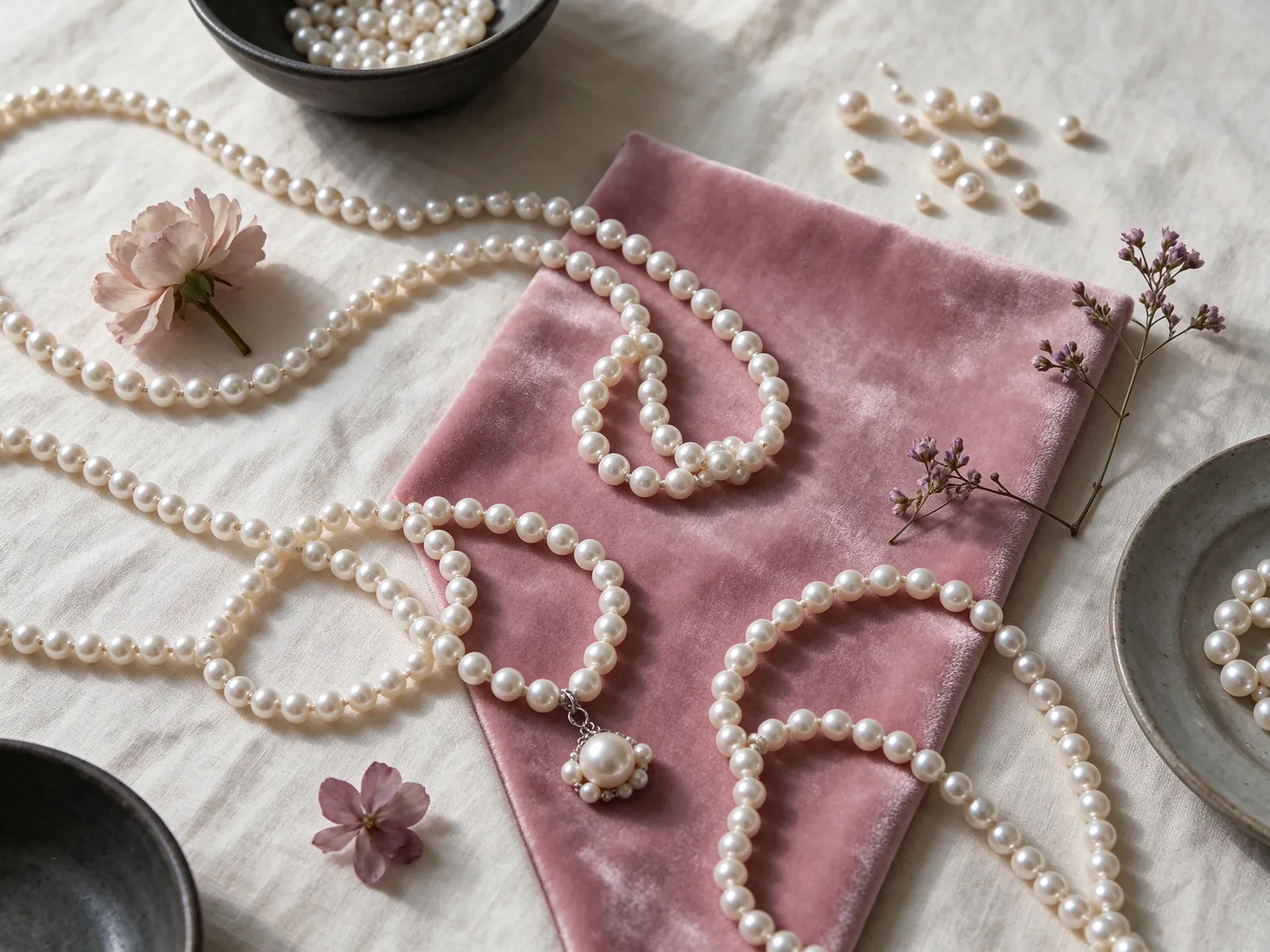
GIA separates bodycolor, overtone and orient, and notes that not every pearl has all three. For a pale strand, compare the effect against your skin and a neutral shirt before trying stronger clothing colors. View it in soft daylight and your normal indoor light. You are choosing an appearance you enjoy; a lighting-dependent impression should not be turned into a conclusion about origin or treatment.
An ivory or pale pink top may create a quiet look, while a dark neckline gives the pearls more contrast. Lavender can introduce another soft color relationship. If you are considering a multicolor pearl necklace as well, assess how its sequence works with the clothing's dominant colors rather than comparing it for whiteness. A personal color preference does not need to imitate a report's terminology.
Choose photographs for the question you want answered
Ask for a full-strand view when judging matching, a close view when considering surface appearance and a wearing view when planning proportion. Confirm which necklace is pictured and whether lighting conditions are comparable. A wearing image is helpful for styling but not a measurement tool. Keeping these purposes separate makes your questions more precise than asking whether a photograph looks like the highest grade.
Build a wearable outfit before adding more jewelry
With a button-front shirt, try both an open and a closed collar to see whether the strand rests on skin or fabric. Avoid assuming the more formal position is always the better one. For a crewneck knit, look at the two curves formed by the collar and necklace; a clear position inside or outside the neckline may feel more deliberate than a strand repeatedly catching at its edge.
For a wedding or evening event, decide whether the necklace is the focal point before adding earrings or layering another chain. Detailed lace, beading or reflective fabric already adds visual activity. A simple outline can create balance without more pieces. When buying a gift, ask about the recipient's usual outfits and comfort with noticeable jewelry rather than treating the Hanadama name as a promise of universal taste.
Make clasp comfort part of the choice
Practice opening and closing the clasp in the way you normally dress, and notice whether hair or clothing gets in the way. For customization of the metal component, the choices are 18K 750 white gold, 18K 750 yellow gold, 18K 750 rose gold, PT950 platinum and PT900 platinum. Metal color and clasp design are styling decisions, separate from the pearls' documentary identity.
Keep other reports and pearl descriptions in their own context
When reading about a pearl necklace with GIA report, start with the specific report's purpose and conclusions. On September 6, 2023, GIA announced that qualifying cultured Akoya pearls can receive a Hanadama quality-range comment on a pearl classification report. That means GIA documents can include Hanadama terminology, but the GIA name does not automatically establish that the comment appears in yours. Check the actual entry and the pearls described. A GIA classification comment is not a substitute for documentation issued by a different organization.
GIA also explains that report contents depend on the requested service. Identification findings and quality classification are not presented identically in every document. For natural or cultured identity and detected treatments, read the relevant conclusions; for luster or matching, look for applicable classifications. A white appearance or bright reflection cannot replace laboratory findings. Treat each question separately instead of expecting a commercial grade name to guarantee every characteristic of the necklace.
An Aurora Akoya Queen pearl necklace likewise needs its name and documentation explained independently. The word Akoya in two descriptions does not make the other terms equivalent. Record each original name, issuing body, item description and stated assessment, then compare the actual wearing experience. That approach keeps differences understandable and avoids letting a title replace attention to color, matching and the whole necklace.
Do not use appearance alone to establish pearl type
A nucleated freshwater pearl necklace can be another styling candidate, but understand its description on its own terms. Round shape, pale color or attractive reflections cannot independently establish pearl identity, origin or certification. Compare appearance and documentation separately, without moving a quality name from one pearl category to another. Enjoying a different visual effect does not require treating the two necklaces as identical.
A quality designation does not replace careful handling
GIA places pearls at 2.5 on the Mohs hardness scale. After wearing, use a very soft, clean cloth, and avoid contact with acids, perfume, hair spray and excessive heat. Let the necklace rest without being pulled into a tight shape, away from other jewelry that could rub against it. The care habit matters regardless of the quality name printed in a description.
Never clean pearls with an ultrasonic or steam cleaner. If a strung necklace has been cleaned with water, GIA says the string must be completely dry before wearing. Notice changes around the knots and clasp, and do not tug at loose areas. A report describes information about pearls; it does not mean the current necklace can be handled without attention to its condition.
Preserve clear records for the next wearer
Store the original report safely and keep legible copies alongside images of the complete necklace. Save restringing, clasp replacement and length-change records separately, without writing new certification conclusions into the document. For a gift or a future handover, include a straightforward care explanation and a description of what the report covers. This gives the next wearer something more useful than a name to remember.
Choosing a pearl strand for your own wardrobe or a gift? Contact Flint Jewelry on WhatsApp and describe the neckline position, outfit colors and clasp operation you prefer. If report wording is unfamiliar, include the term you want to understand. Starting with these practical questions makes the discussion more useful than relying on a grade name alone.
| Decision area | What to review | Question to ask | Unsupported shortcut |
|---|---|---|---|
| Terminology | Original wording, issuer and report details | What does this specific document call the pearls? | Treating all grade names as synonyms |
| Necklace identity | Any listed images, count or identifying description | Which pearls are actually described? | Assuming a matching set is entirely covered |
| Visual quality | The complete strand's luster, surface and matching | Does any pearl interrupt the overall appearance? | Judging the strand from one highlight |
| Personal fit | Neckline, outfit color and clasp operation | Does this position work with everyday clothing? | Choosing only by pearl size |
| Later changes | Records of exchanged pearls or altered arrangement | How does today's necklace relate to the original report? | Assuming the old document explains every alteration |
Pearl knowledge and authoritative references
GIA describes seven pearl value factors: size, shape, color, luster, surface quality, nacre quality and matching. For a strand, this supports evaluating the whole necklace rather than relying on a grade name or one pearl image.
Read the reference for this factFrequently asked questions
Can I establish Hanadama status from a bright necklace photo?
No. A photograph can help you assess appearance, but it cannot establish the contents or identity of a report. Read the issuing organization and original terminology, and connect the documented description to the actual necklace.
What should I ask if a report image shows only one pearl?
Ask what item the report describes and how that item relates to the necklace offered. Do not assume an individual-pearl image means every pearl in a strand is covered by the same conclusions.
Is a stronger color contrast a sign of a better strand?
Contrast is a styling effect, not a complete quality assessment. Try the pearls with both light and dark clothing and compare the whole strand for luster, surface appearance and matching separately.
Should the clasp influence a special-occasion necklace choice?
Yes. Check that you can operate it comfortably and that it works with the hairstyle and collar you expect to wear. Its practical fit matters alongside the necklace's proportions and documentation.
Can I add my own certification conclusion after restringing?
Do not rewrite the report. Keep a separate record of the work and establish whether the pearls or arrangement changed. Maintenance records help explain history, but they are not a newly issued pearl certification.
Updated: