Flint Jewelry fit guide — Measuring for a pearl choker necklace or pearl collar necklace: where should a short pearl necklace sit?
Picture the line you want the pearls to create before selecting a length. Do you prefer a curve at the base of the neck or a little more space above the collarbone? Measure gently at that intended position with a flexible tape while standing naturally. Write down where you measured, not just the number. The pearl necklace length guide can help compare other positions, but the fit of a close strand must be judged on the wearer rather than assigned from a label.
Do not use neck circumference as an automatic order length. The pearls take up space around the inner curve, and the clasp and arrangement influence how the necklace sits. Compare the actual piece from the front and side, with the clasp in its intended place. Notice whether the strand settles naturally or the neckline pushes it upward. A short pearl necklace can be defined and elegant without being the tightest necklace you can fasten.
Flint Jewelry fitting checklist — Trying a pearl choker necklace or pearl collar necklace: does your short pearl necklace leave room for movement?
Move through familiar actions instead of holding a flattering pose: turn to each side, look down at a phone and sit at a desk. Try the collar positions you normally wear, including a buttoned shirt if relevant. If you feel pressure or find the strand riding up, remove it and compare a looser position. Being able to close a clasp is not the same as having a comfortable necklace for your day.
What the words collar, choker and short princess actually tell you
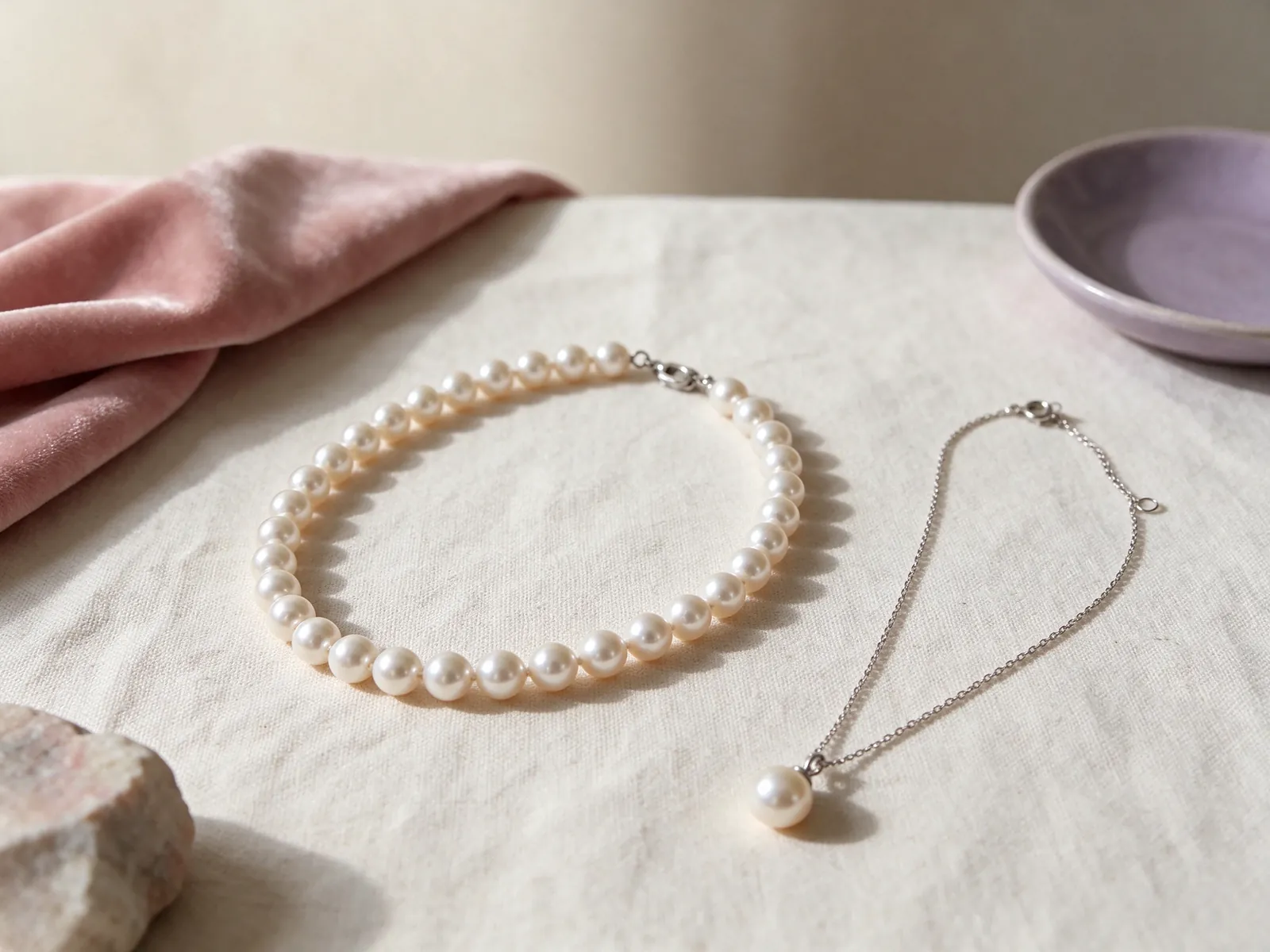
Style names are useful search terms, not a universal map of the body. In WSP's metric necklace chart, 35 cm is Collar, 38 cm is Choker and 40 cm is Choker or Short Princess. The overlap at 40 cm illustrates why a name alone is not enough. Ask for the actual length and how it is measured, and compare it with a necklace you know. Your neck shape and the volume of the pearls can produce a different position from the one shown in a photograph.
Keep strand arrangement separate from length. A single strand pearl necklace tells you that the design uses one row; it does not tell you whether that row will sit close to your neck. A pearl collar necklace may suggest a wider framing effect, but you still need to look at its actual height and construction. Decide whether you want a clean single curve or more coverage first, then find a position that allows that design to sit comfortably.
Read the chart in its original measurement units
The comparison table uses centimeters because those are the measurements in WSP's chart. It is a naming reference rather than a promise that a particular length will suit you. When comparing your own necklace, lay it flat without stretching it and confirm whether the clasp is part of the stated length. Use that information to choose what to try, then evaluate the new piece with the clothing you plan to wear.
Balancing pearl size, surface appearance and the number of rows
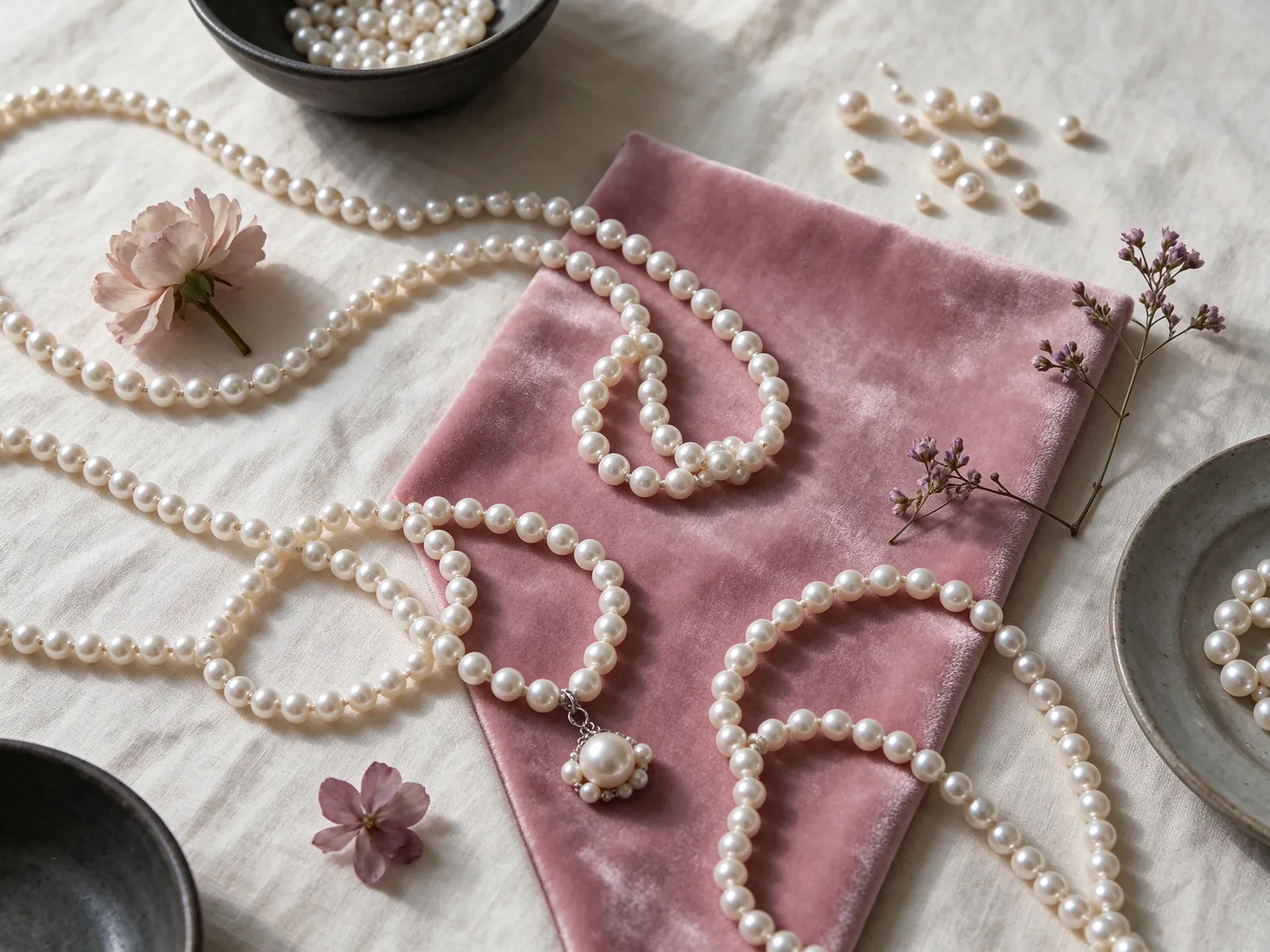
Think of pearl scale as a styling decision before treating it as a ranking. A small pearl necklace can leave a finer line near the face, while a large pearl necklace can become the center of the outfit. Look at the full silhouette with your hairstyle and earrings, not only a close view of the pearls. If the neckline already has strong details, a more restrained strand may keep the design readable; simpler clothing can give a bolder curve room to stand out.
GIA identifies seven pearl quality factors: size, shape, color, luster, surface quality, nacre quality and matching. Use this broader framework instead of assuming that the largest or roundest pearls are always the right choice. Compare luster and the rhythm of the strand under consistent lighting. Differences in shape may be deliberate design choices. A white color or round appearance does not establish origin, natural-versus-cultured identity or certification, and a picture cannot supply that missing information.
Assess multi-row height as well as visual richness
A multi strand pearl necklace occupies more of the neckline than a single row. Watch how the rows relate when you turn your head and whether they crowd one another or the collar. Test reaching and operating the clasp yourself. If the clothing has ruffles or raised decoration, establish a clear edge between the two. More rows are one styling route, not a requirement for a finished look; a simple strand can also work with separate accents.
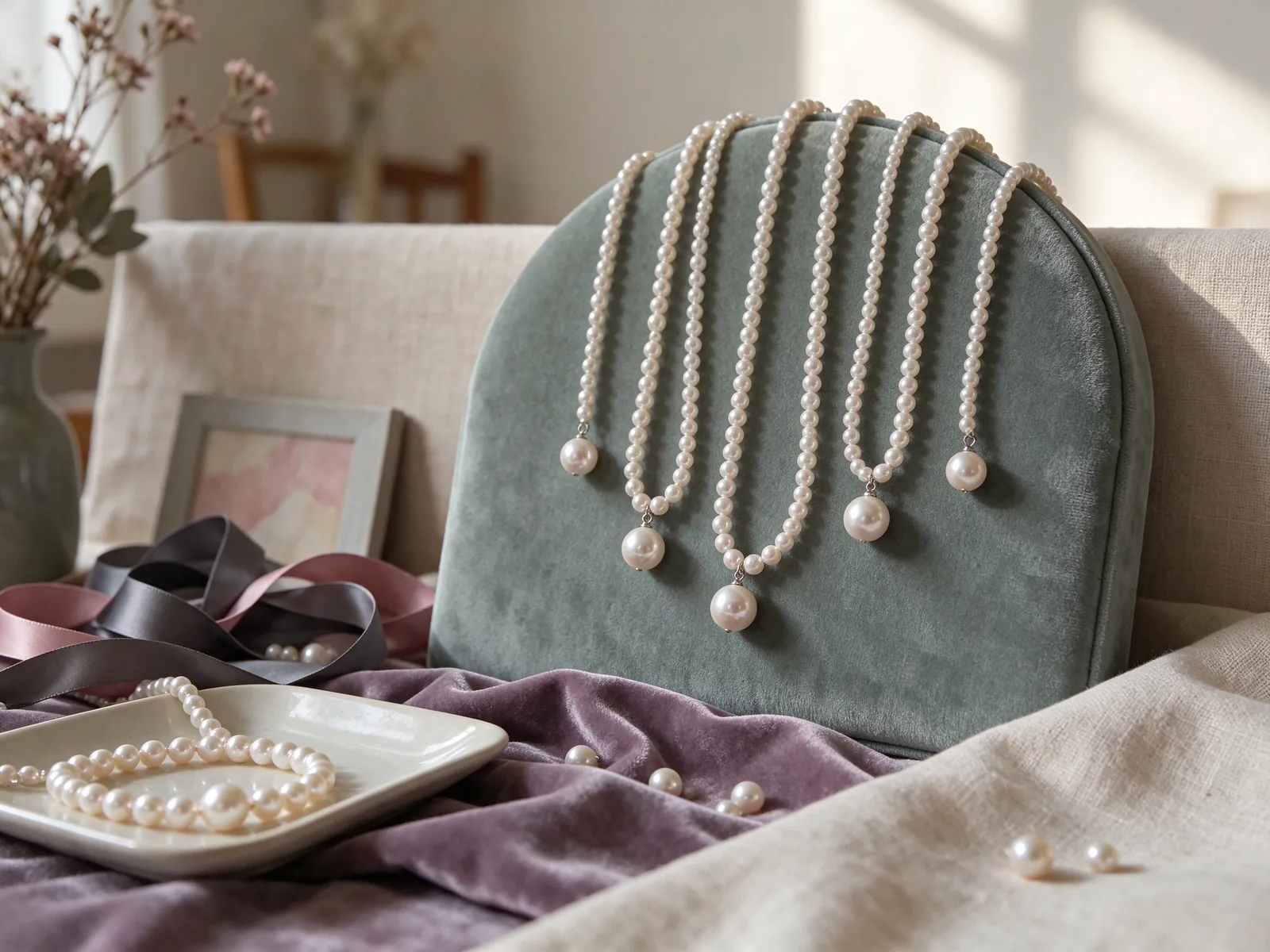
Finding a clean relationship with the neckline of your clothes
An open button-down shirt can frame a choker when the pearls remain visible between the collar points. Move normally to check whether the fabric hides, catches or raises the curve. With a crewneck, compare a necklace clearly above the fabric edge with a lower placement clearly over the top. A strand that lands directly on the seam may shift back and forth. Decide whether the look remains intentional once you sit down and add the jacket you usually wear.
A strapless or open evening neckline can emphasize the pearl curve, but the complete outfit matters. Strong drop earrings and an elaborate hairstyle may call for a quieter necklace line. A turtleneck, scarf or thick collar can leave little room for close-fitting pearls. Consider a matinee pearl necklace if you want the jewelry to extend over the front of the clothing instead. Changing the necklace position can be more practical than forcing a choker into a crowded neckline.
Test a real outfit rather than a display neckline
Bring a top you wear often, especially if its collar is different from the outfit shown in the necklace photograph. Evaluate standing and sitting views, then put on outer layers. Note any repeated contact with lapels or fastenings. A necklace that works beautifully with evening clothes can remain an occasion piece; it does not have to suit every shirt. Let the intended use guide your choice instead of expecting one short position to solve every outfit.
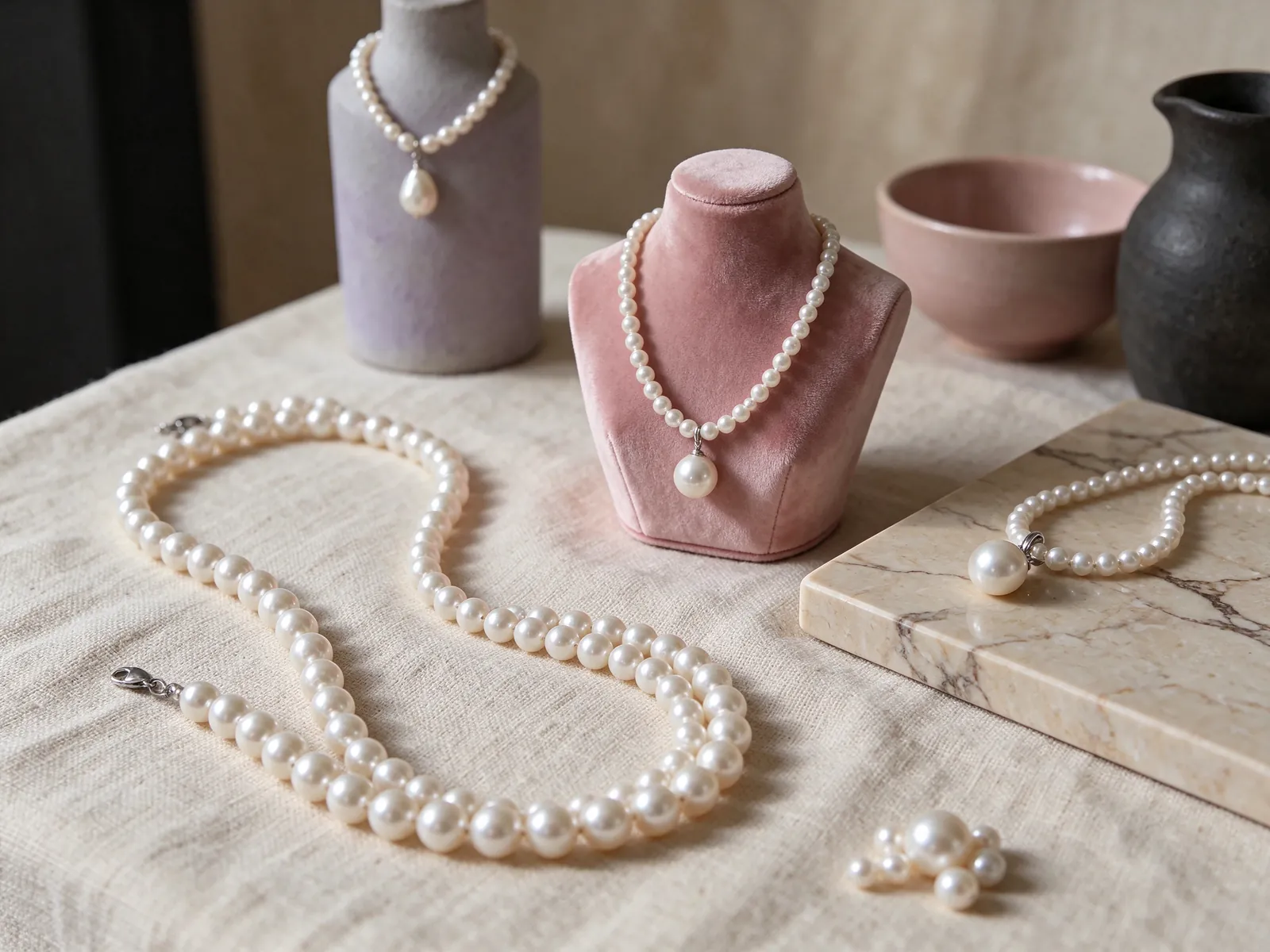
Creating layers that stay distinct when you move
Start pearl necklace layering by assigning each piece a purpose. The choker draws attention to the neck, while a lower strand adds a second line through the outfit. Wear the short piece alone first to establish its comfortable position. Add the other necklace and inspect the front crossing points and the clasps at the back. Then walk, bend your head and adjust your jacket. A layered arrangement should be manageable after movement, not only attractive before you leave the mirror.
Pairing a choker with a long pearl necklace creates a contrast between a compact curve and a line that follows the top. If both necklaces are visually substantial, less detailed clothing can help separate them. If one is subtle, let the other carry the emphasis. Check for pendants or metal parts repeatedly hitting the pearls and for strands pulling against each other. A combination that constantly tangles may be better reserved for a different outfit or simplified to one necklace.
Coordinate earrings without crowding the face
You can connect earrings and necklace through shape or luster without making them equally prominent. When the short strand is the focal point, smaller or simpler earrings may give its curve more space. If earrings are mostly hidden by your hair, the necklace can provide the main visible detail near the face. Check the profile as well as the front view. Successful layering is about readable proportions, not adding the maximum number of pieces.
Checking the clasp and discussing a change in length
The clasp is part of everyday wear, especially when it sits close to the neck. Try fastening and releasing it without help, and see whether it turns to the front during normal movement. Inspect the connection to the strand for visible looseness or thread caught around the mechanism. These checks do not replace a professional assessment, but they can reveal practical difficulties. Give the back of the necklace the same attention as the pearl curve seen from the front.
Before comparing stated lengths, ask whether the clasp is included and where the measurement starts and ends. If an existing pearl strand is being considered for shortening, discuss the intended wearing position, changes to the arrangement, the clasp and unused pearls. The new feel cannot be predicted solely by subtracting a number from the old length. Construction and condition matter, so bringing the actual piece and your usual top is more informative than relying on a cropped photograph.
Make fit a separate decision from appearance
Use separate notes for position, freedom of movement, collar interaction, clasp operation and visual proportions. A beautiful reflection should not outweigh a strand that needs constant adjustment. When buying a gift, height alone is not a dependable clue to close necklace fit. Learn what the recipient already wears comfortably and what necklines they prefer. If those details are unavailable, begin with their styling preferences and discuss a practical way to establish fit before settling on the closest position.
Protecting pearls from products, friction and harsh cleaning
Because a choker is close to the neck and hair, put it on after applying cosmetics and arranging your hairstyle so sprays do not land on the pearls. GIA advises avoiding acids, perfume, hair spray and excessive heat, and using a very soft, clean cloth after wearing. Examine rough collar details and zippers that could repeatedly touch the strand. Adjusting the outfit to reduce contact is a sensible precaution; it is not evidence that any necklace is immune to abrasion.
GIA ranks pearl at 2.5 on the Mohs hardness scale and says pearls should never go into ultrasonic or steam cleaners. Store the short strand separately from pieces with hard edges that could rub its surface, and do not press the clasp into the pearls. If a strung necklace is cleaned with water, let the string become completely dry before wearing it. A loose string or faulty clasp deserves attention before further use, rather than being pulled or forced back into place.
Finish with a full outfit and a movement check
Before deciding, wear the planned top, earrings and hairstyle together and step back from the mirror. Does the pearl curve highlight the area you intended? Repeat the turning and sitting tests and see whether the necklace needs frequent repositioning. A slightly lower placement may serve your routine better than the closest collar effect. Choose the short strand that supports your clothing habits and care routine, rather than changing those habits simply to meet a style label. To make your preferences easier to discuss, contact Flint Jewelry on WhatsApp with your measured position, the neckline you wear most and what feels comfortable in a necklace you already own. If you are considering shortening an existing strand, explain your preferred curve and ask which details need to be assessed before choosing a new length.
| Chart length | WSP category | Comparison purpose | Movement question | Clothing question |
|---|---|---|---|---|
| 35 cm | Collar | Consider the shorter chart category | Does the strand press or ride up? | Is the collar pushing it? |
| 38 cm | Choker | Explore a curve close to the neck | Can you turn and sit naturally? | Do shirt points hide the pearls? |
| 40 cm | Choker or Short Princess | See where names overlap | Does pearl volume affect comfort? | Does the strand land on a crewneck seam? |
| 42 cm | Short | Compare a less close short position | Does this curve need less adjustment? | Is the entire strand visible? |
| 45 cm | Princess | Try an alternative to a choker | Is this position better for daily wear? | Do outer layers catch the necklace? |
Pearl knowledge and authoritative references
GIA identifies seven pearl quality factors: size, shape, color, luster, surface quality, nacre quality and matching. These help you compare a short strand without treating size or roundness as the whole assessment.
Read the reference for this factFrequently asked questions
Is a pearl collar necklace the same thing as a choker?
Not exactly. The length ranges and naming practices can overlap, but the words do not guarantee identical positions or construction. Compare the stated length, row arrangement and actual fit instead of treating the names as interchangeable size instructions.
How can I tell if a choker will work with my button-down shirts?
Try it with a shirt you regularly wear, both open and fastened if appropriate. Turn your head and sit down, watching for collar points that hide or push the strand. A clean outline at rest is not enough if the necklace shifts or feels restrictive during movement.
Should my earrings match the size of the pearls in the necklace?
They do not have to. Shape or luster can connect the pieces while their scale differs. Decide whether the necklace or earrings should lead, then check the whole outfit and side view so the details do not crowd the face.
Can I determine a gift recipient's choker length from their height?
Height alone does not tell you neck circumference, preferred position or clothing habits. A necklace the recipient already wears comfortably and their usual neckline provide more useful information. Establishing fit is especially important for a close-fitting strand.
Can a pearl choker be cleaned in an ultrasonic machine?
No. GIA advises against ultrasonic and steam cleaning for pearls. Use a very soft, clean cloth after wearing. If a strung necklace is cleaned with water, the string must be completely dry before the necklace is worn again.
Updated: