
When comparing an Aurora Akoya Queen pearl necklace with an Akoya Queen certified pearl necklace, what distinguishes a product name from a report's findings? | Flint Jewelry
Start with a document question or the way you want a necklace to look with your wardrobe. Contact Flint Jewelry on WhatsApp: https://wa.me/85260106207. This is an independent guide to product names and document reading, not a WSP dealership or an offer of an Aurora Akoya Queen collection. A certificate term in this comparison does not establish that Flint Jewelry holds that certificate for a necklace.
An Aurora Akoya Queen pearl necklace search can lead to titles containing several distinctive terms at once. WSP uses “Aurora Akoya Queen Certified” in specific necklace product titles. Those words identify the advertised item, but they are not a substitute for the complete accompanying document. A product title and a report answer different questions, even when they appear together on the same page.
For an Akoya Queen certified pearl necklace, start by separating the seller's presentation from the written findings. A description may discuss a style or named range; a document has a particular subject and a stated scope. Ask which document is included and which passage addresses the characteristic that matters to you. This keeps a recognizable label from becoming an unsupported conclusion about everything in the necklace.
When reviewing documents for an Aurora Akoya Queen pearl necklace or an Akoya Queen certified pearl necklace, how do you check that the report identifies the necklace? | Flint Jewelry
Look for identifying details that the document actually provides, such as its description, photograph, number or date. Formats can differ, so do not invent missing fields or assume a standard layout. Compare the stated object with the necklace being discussed. In particular, determine whether the text concerns the whole strand or an individual object; matching words in a sales title cannot establish that relationship by themselves.
Build a comparison around characteristics rather than label hierarchy
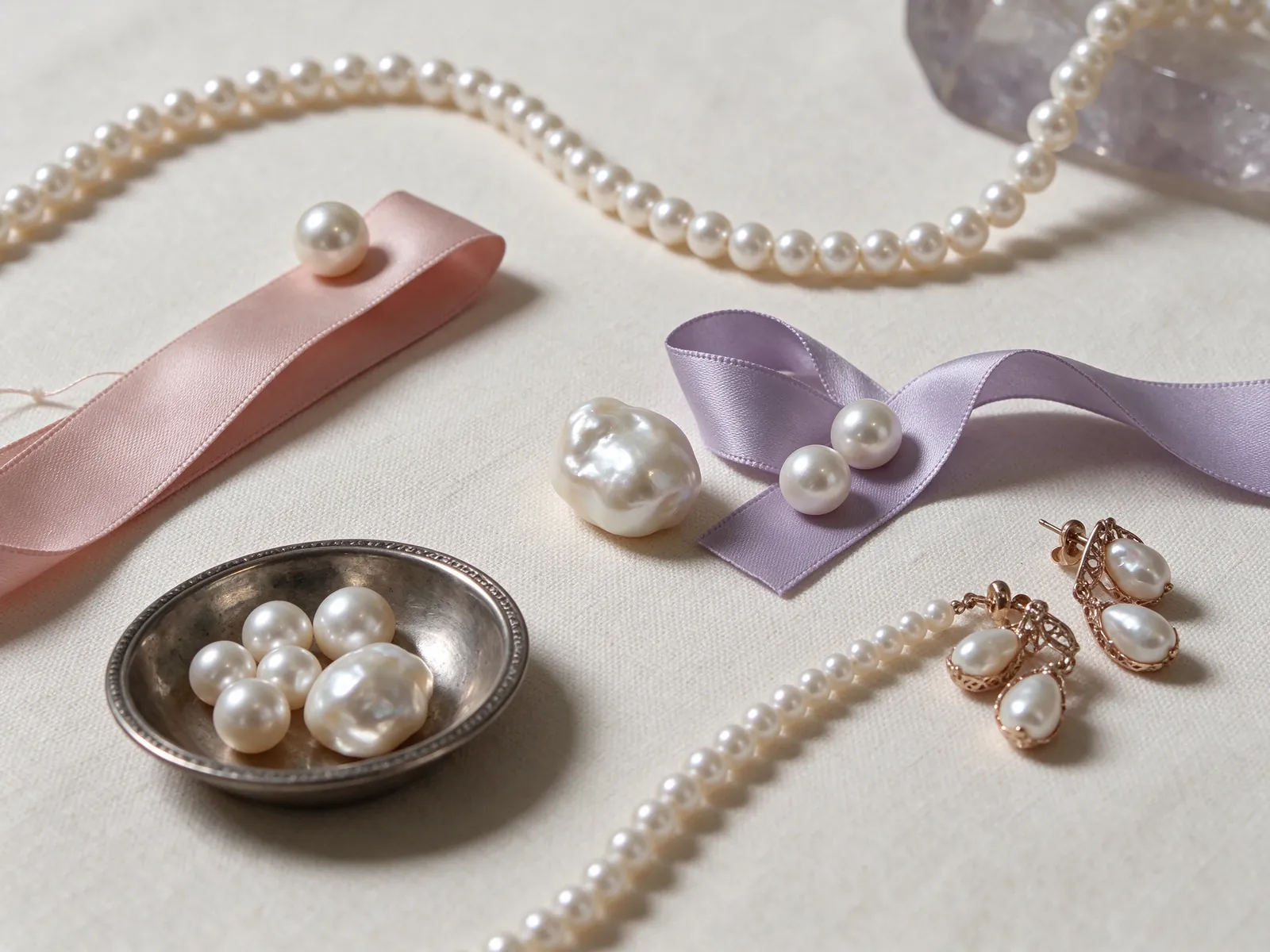
GIA's seven pearl quality factors are size, shape, color, luster, surface quality, nacre quality and matching. They give buyers specific subjects to discuss instead of relying on a single broad quality adjective. For a strand, you can ask how neighboring pearls relate in color and luster. Reading about an Akoya pearl necklace gives these questions a practical context without assigning Queen a position in a universal ranking.
Color observations need equally precise language. GIA distinguishes bodycolor, overtone and orient; not every pearl has all three. A cool or pinkish appearance on screen should remain an observation about that image until supported by further information. Color alone does not establish origin or certification. If the document discusses color, read its wording rather than substituting a preferred impression from a brightly lit photograph.
Keep separate terminology separate unless a shared basis is established
Reading about a Hanadama Akoya pearl necklace or a Tennyo pearl necklace should lead to questions about the relevant document, not an automatic conversion from one label to another. Do not infer that Hanadama, Tennyo, Aurora, Queen and AAA are interchangeable credentials merely from their names. Where descriptions do not provide a clear common basis, retain their separate wording and compare the characteristics relevant to your decision.
Read the scope before deciding what a document establishes
The subject of a document sets the boundary for interpreting it. A description of an individual pearl does not automatically describe every pearl in an assembled strand. Likewise, a document concerning pearls may not address clasp operation or the current condition of the string. Identify those boundaries before drawing conclusions, then handle the remaining questions through a separate discussion of the necklace as an assembled piece of jewelry.
A pearl necklace with GIA report requires the same careful reading. Identify the report that is actually being presented and the object it describes. GIA's public educational pages explain pearl characteristics; they do not establish that a particular necklace carries a GIA report. A Queen description is not interchangeable with a GIA document either. If multiple documents are available, understand their individual purposes instead of treating their presence as one undifferentiated assurance.
Clarify differences between the present necklace and document images
If a photograph shows a different clasp or arrangement, ask about the history of the change. Was the clasp replaced, was the strand restrung, or were pearls rearranged? The answer helps explain how the current necklace relates to the documented object. Do not presume that an alteration either invalidates or preserves every aspect of the document; interpret the specific wording and seek the issuer's guidance where needed.
Look for harmony across the whole strand
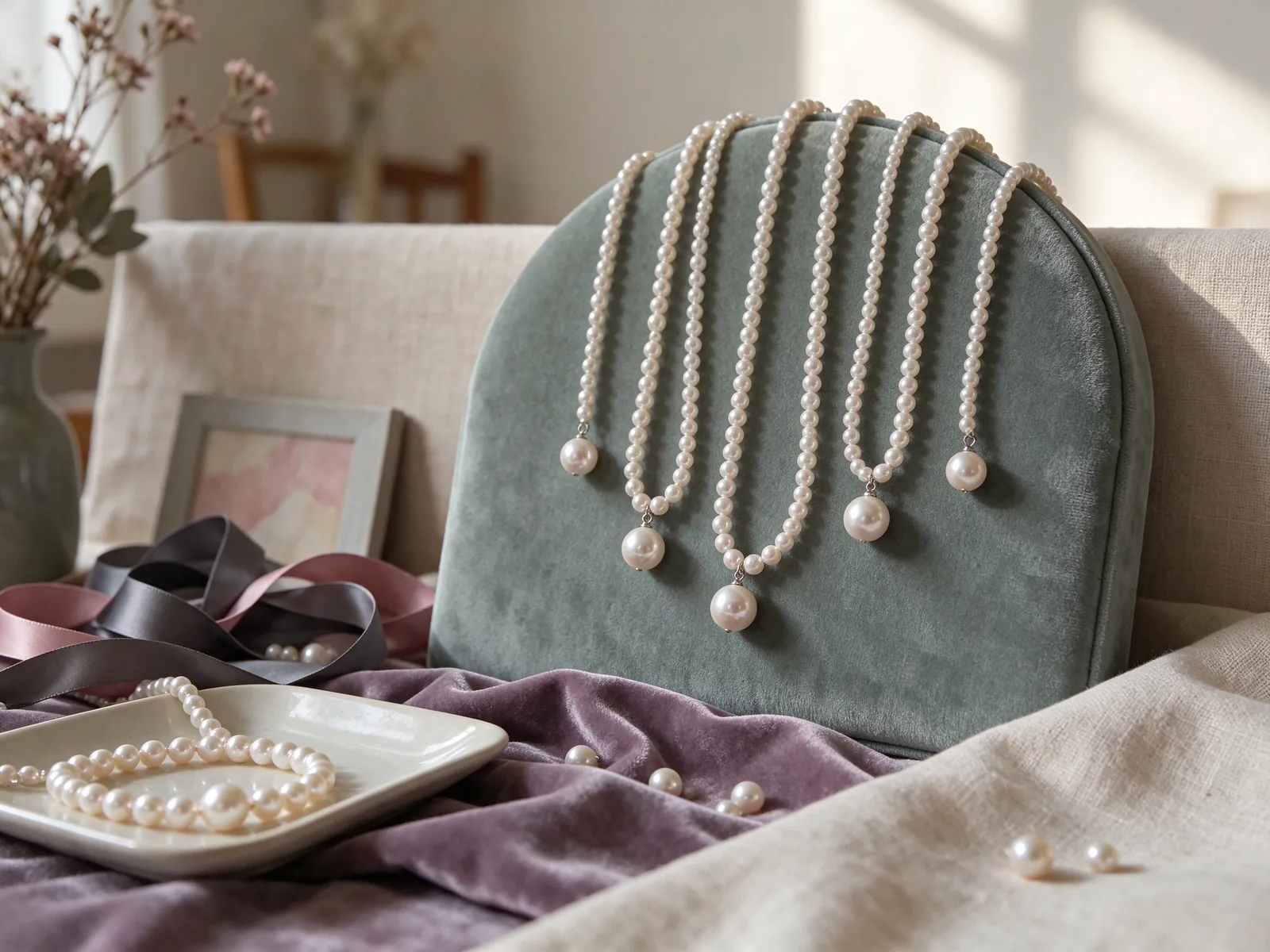
A buying comparison works better when you first look at the entire necklace in consistent, gentle lighting. Use a plain background and notice whether the strand feels visually continuous. Then move closer to examine differences between neighboring pearls, especially in the portion that will be most visible at the front. A single outstanding-looking pearl does not, on its own, explain the appearance of the entire strand.
Different photo exposures and backgrounds can create misleading contrasts, so avoid ranking necklaces from unrelated images alone. Close views and ordinary wearing views both have value, but they answer different questions. The close view reveals detail; the wearing view helps you decide whether that detail is noticeable in the way you plan to use the necklace. Neither should entirely replace the other in a balanced comparison.
Use clothing contrast to explore style, not to identify pearls
Try the strand against a light top and a dark top while keeping the lighting similar. Clothing can change how strongly pearl outlines and color differences stand out. That change is useful for styling, not a test of species or origin. Ask whether you prefer a subtle blend with the outfit or a more defined focal point, then judge the complete effect on that basis.
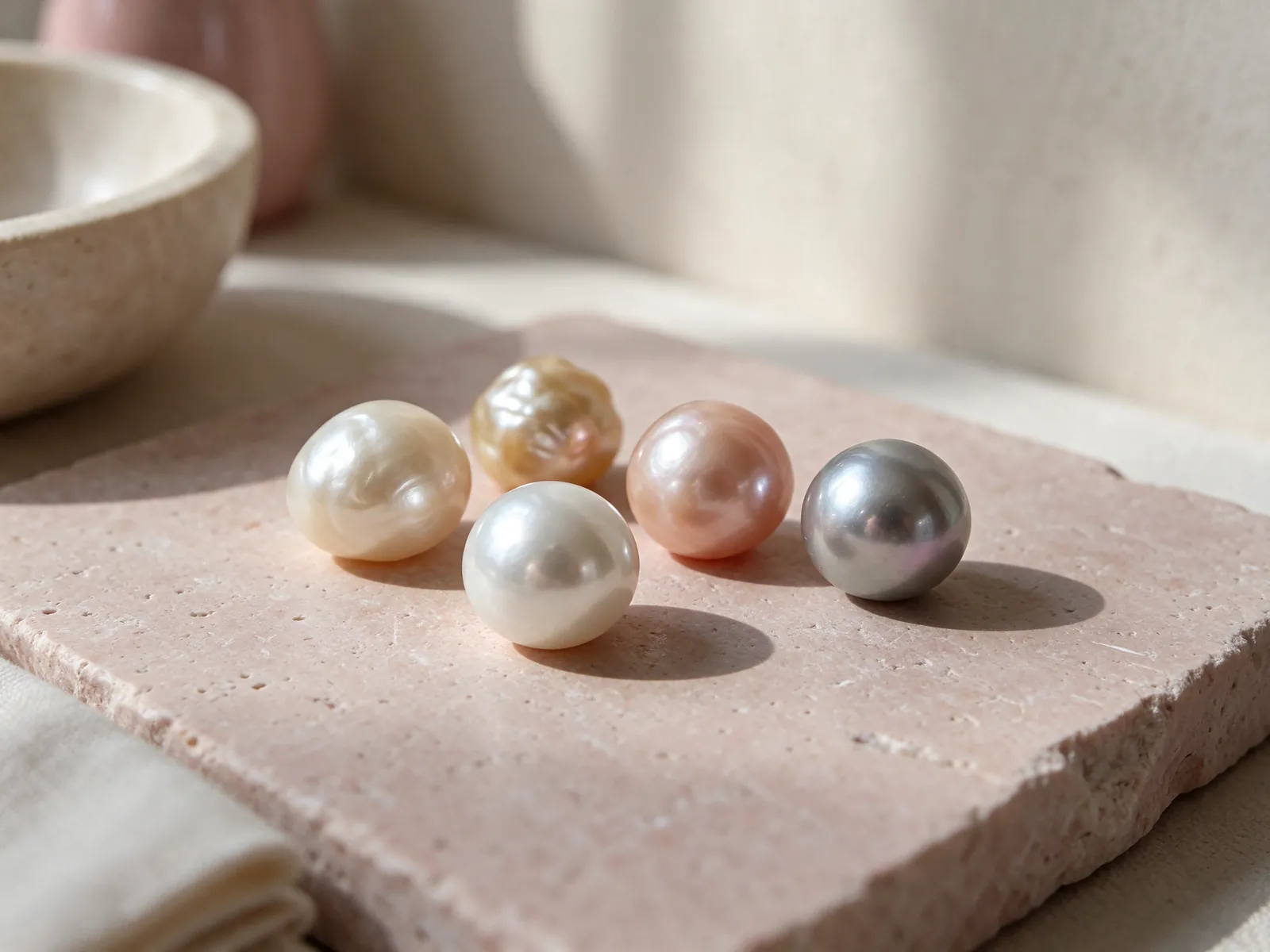
Choose a wearing position that works with your wardrobe
A single strand pearl necklace should be considered against the neckline you wear most often. A strand can overlap the edge of a crew neckline or become partly hidden by an open shirt collar. Neck proportions, clothing and your preferred amount of ease influence where it rests. Instead of assuming a universal ideal length, observe how the actual necklace relates to your own collar and shoulder line.
For a wedding or evening outfit, decide whether the necklace, earrings or neckline embellishment should carry the main visual emphasis. For daily wear, pay attention to how the strand feels when sitting and turning, not just while standing still for a photograph. A gift decision benefits from the recipient's habits as well: someone who regularly wears high collars may use a necklace differently from someone who favors open necklines.
Turn an inspiration image into a personal brief
If an image appeals to you, identify the feature you like: color harmony, the strand's arrangement or its relationship to the collar. You can discuss that preference without requesting a copy of another product. Add where you want the necklace to rest and whether you prefer a quiet or prominent effect. These details make a styling discussion more productive than repeating a certification name alone.
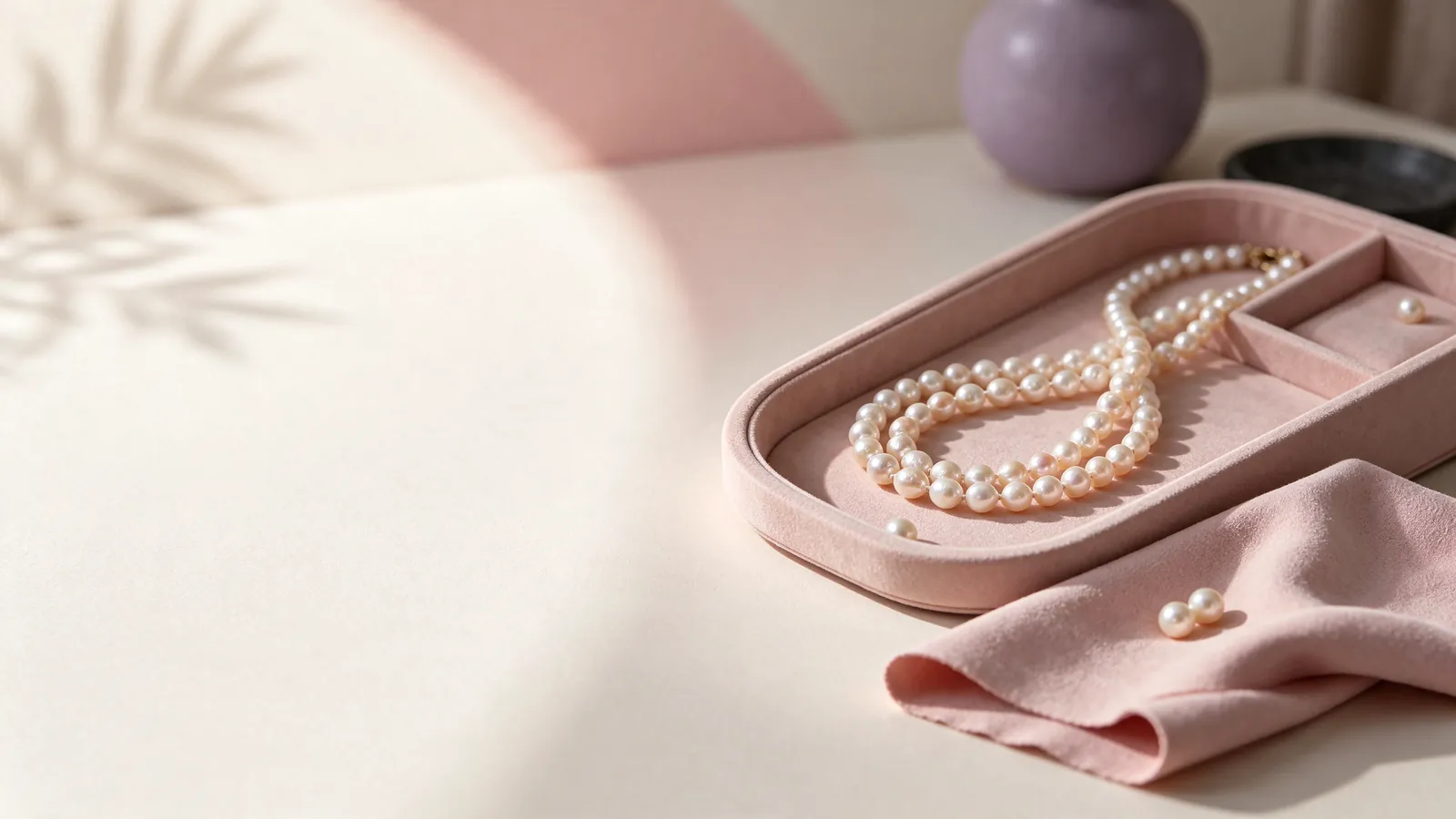
Treat clasp usability as a separate buying question
An 18K gold clasp pearl necklace includes a clasp description that should be read separately from any pearl document. A metal description does not establish pearl quality, and a pearl name does not establish the metal. Consider the clasp as something you will handle regularly: can you recognize its orientation, operate it comfortably and position it as you prefer without pulling on the pearls?
When reading about a platinum clasp pearl necklace, do not identify the metal by its appearance alone. Look for the stated material and consider the connection to the string. Visible wear or looseness deserves professional attention rather than a forceful pull test. The current condition of those connections is a practical issue that a prestigious necklace name cannot resolve, regardless of how much you like the overall appearance.
Explain the goal before considering clasp customization
Customization questions are clearer when you describe the goal first: easier handling, a different visual accent or coordination with other jewelry. Ask whether a proposed clasp change affects stringing, pearl arrangement or the necklace's resting position. Not every component should be assumed interchangeable. Keep records of changes, and remember that a new clasp is a design choice rather than evidence of an upgraded pearl grade.
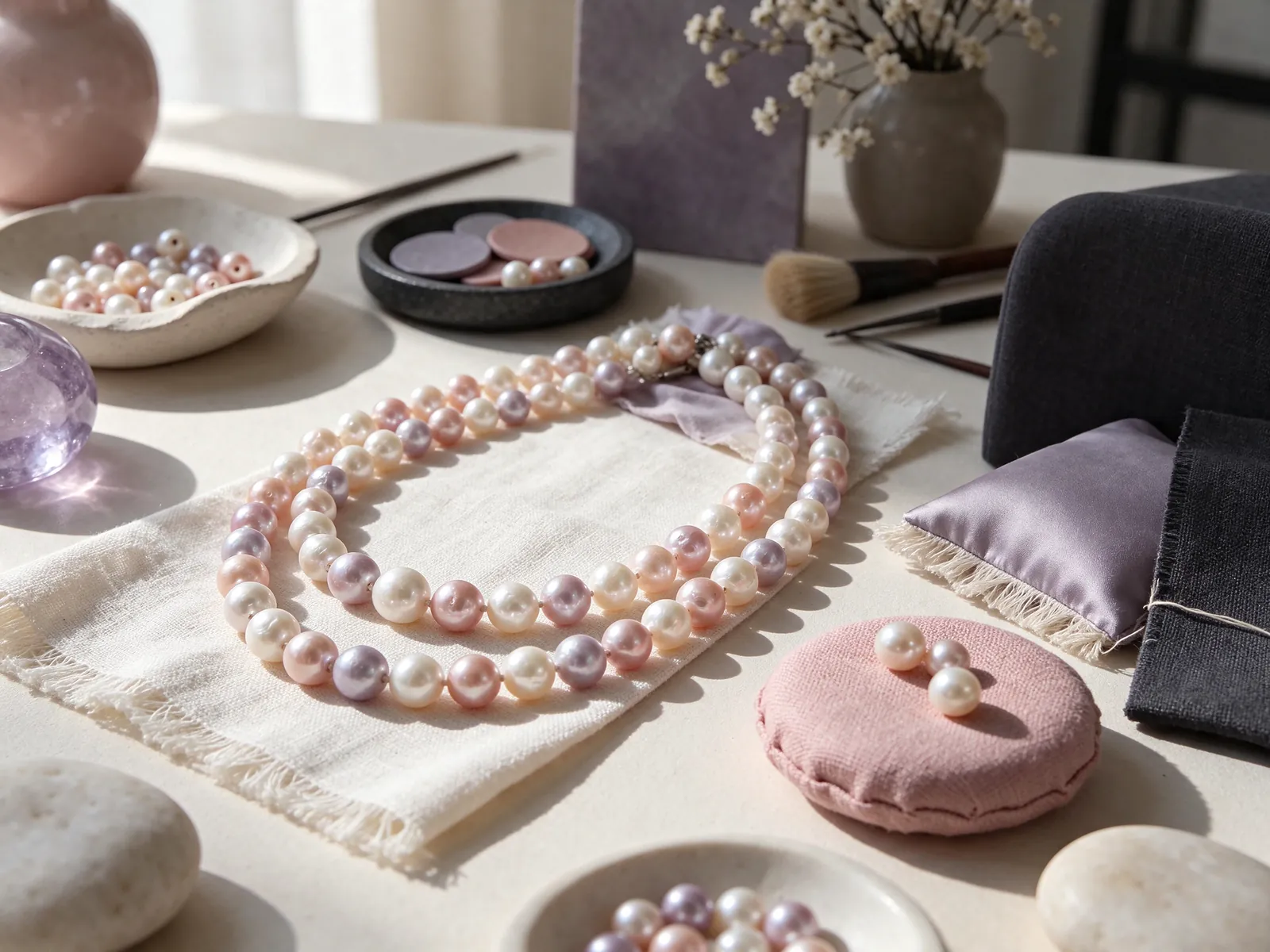
Plan for careful wear and readable records
A certification-style name does not remove ordinary pearl-care considerations. GIA lists pearl at 2.5 on the Mohs hardness scale and instructs that ultrasonic and steam cleaners should never be used. After wear, a very soft, clean cloth is suitable for routine wiping. Avoid acids, perfume, hair spray and excessive heat. Completing fragrance application and hair styling before putting on the strand helps keep direct spray away from it.
For strung pearls cleaned with water, GIA says the string must be completely dry before wearing. When storing the strand, prevent rubbing against jewelry that could scratch its surface, and remain attentive to the clasp and string. Keep document photographs with the necklace description and alteration records, rather than saving only a cover without context. Readable records make later questions about the necklace easier to explain.
Make the final choice from evidence and everyday fit
Bring the comparison back to three questions: does the document identify the necklace, does the strand's appearance suit your preferences, and do its wearing and care needs fit your routine? An unresolved point deserves a specific follow-up about the passage or feature concerned. The name is a route into the discussion, while the meaningful answer comes from connecting the document, the actual necklace and your intended use.
For a selection conversation based on your own needs, contact Flint Jewelry on WhatsApp: https://wa.me/85260106207. Tell us about your usual neckline, preferred resting position and the specific wording you want to understand. Hide names, addresses and other private information before sharing document photographs. General buying guidance does not replace the issuer's findings or imply that Flint Jewelry supplies a collection bearing the names discussed here.
| Comparison area | Evidence or observation | Question to ask | Unsupported shortcut | Practical application |
|---|---|---|---|---|
| Product wording | Full title and accompanying description | What document comes with this item? | A label equals a universal grade | Keep your style preference separate |
| Document identity | Description and identifiers actually provided | Which object does the text describe? | An individual finding covers the whole strand | Compare the current necklace with its records |
| Pearl characteristics | Relevant aspects of GIA's seven factors | Do neighboring pearls look harmonious? | Color proves certification or origin | Compare under consistent lighting |
| Neckline placement | The necklace on your usual clothing | Does it rest where I prefer? | One length works for all wearers | Observe sitting and turning |
| Clasp handling | Material description and present connections | Can I handle it comfortably? | The pearl name establishes the clasp metal | Discuss the aim of any alteration |
Pearl knowledge and authoritative references
GIA identifies seven pearl quality factors: size, shape, color, luster, surface quality, nacre quality and matching. These provide specific comparison topics without making separate certificate names equivalent.
Read the reference for this factFrequently asked questions
What is missing when a listing shows only a certificate cover?
The cover may not reveal the stated subject or full findings. Ask to read the document's contents, identify the issuer and connect its description to the necklace. A title containing Certified cannot supply details that are not visible.
Does Queen translate directly into Hanadama, Tennyo or AAA?
No direct equivalence should be assumed. Keep each term within the document or description in which it appears. Compare expressly described characteristics rather than building a universal ranking from familiar names.
How should I interpret a report image taken before a clasp change?
Find out what was changed and whether stringing or arrangement was also affected. Then establish how the current necklace relates to the documented object. The specific document and the issuer's guidance matter more than an automatic conclusion based on the clasp alone.
Can a beautiful close-up tell me whether the necklace suits my neckline?
Not by itself. A close-up shows detail but does not fully show resting position, collar overlap or visual balance with your outfit. A consistent wearing comparison helps answer those practical questions without confusing styling with identification.
Should a named certified strand receive a different cleaning treatment?
The name does not override basic pearl care. GIA says never to use ultrasonic or steam cleaners. Wipe routinely with a very soft, clean cloth, avoid harmful contact, and let the string dry completely before wearing pearls cleaned with water.
Updated: