
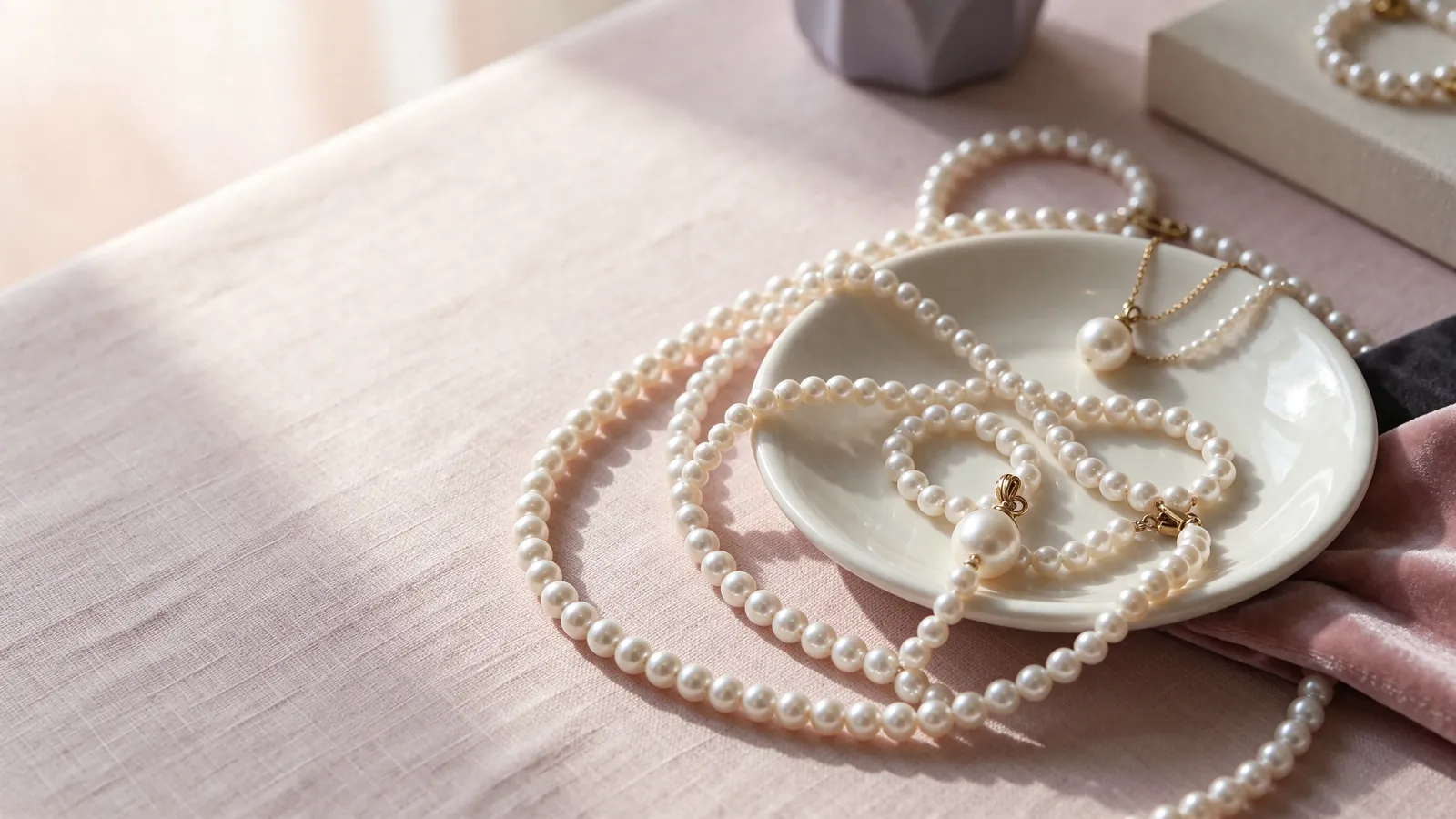
Flint Jewelry styling guide: How do length and clasp position shape the proportions of a clicker clasp pearl necklace, a pearl necklace with diamond clasp or a pearl long necklace with opening clasp?
Think of length as a relationship with your wardrobe, not an isolated measurement. A long pearl strand may sit differently on a lightweight blouse, a crewneck sweater and a tailored jacket. Try your most frequent combination first. Check the lowest point while standing, then sit at a table and lift your arms. Notice whether the clasp meets a button, catches the jacket edge or shifts into the neckline.
If you prefer a continuous pearl line, the styling approach to a single strand pearl necklace is a helpful baseline. Adding a visible clasp introduces a separate focal point, so decide whether that detail improves the outfit or competes with it. Before moving a fastening to the front or side, ask whether that orientation is intended and look at the reverse. A front photograph cannot settle every wearing question.
Flint Jewelry neckline notes: Which neckline shapes balance the clasp placement of a clicker clasp pearl necklace, a pearl necklace with diamond clasp or a pearl long necklace with opening clasp?
For a crewneck, watch for a clasp that rests directly across the fabric edge and moves in and out as you turn. For a V-neck, compare the clasp inside the opening with a lower position rather than concentrating every detail at the V. A turtleneck needs a check of how the pearls settle over the fabric. Use your actual tops instead of assuming one neckline rule fits everyone.
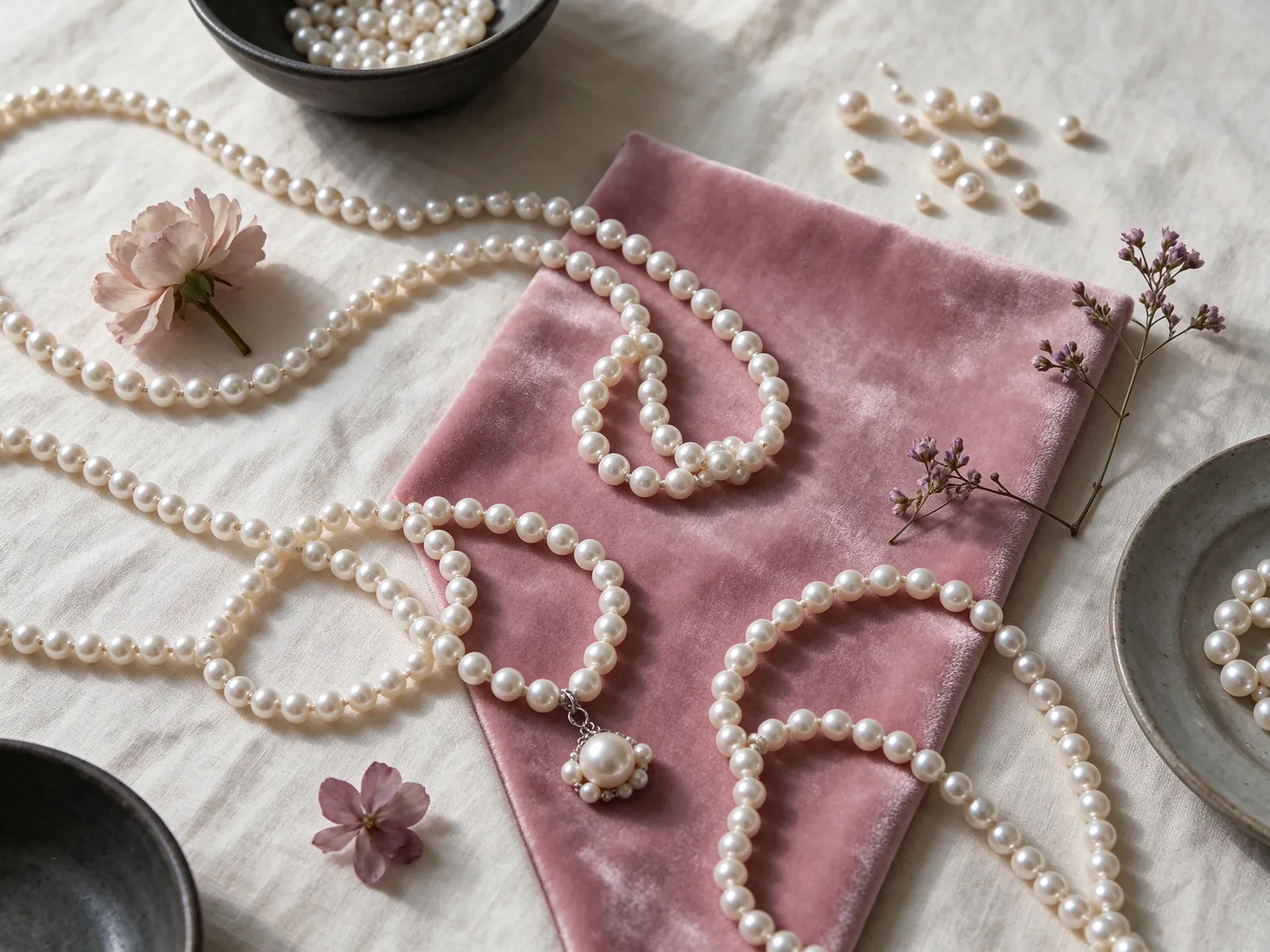
Translate the name into separate questions about action and appearance
An opening clasp describes a function, clicker describes an operating action, and diamond clasp emphasizes decoration. Those descriptions are not mutually exclusive. Ask how the fastening opens and what full closure looks like before evaluating its decorative face. The presence of diamond in a name does not tell you the opening direction, diamond weight or how the pearls connect to the clasp.
During a demonstration, keep the nearby strand supported on a soft, clean surface. Find the operating area with your fingertips and follow the demonstrated motion without pulling the necklace ends apart. Look for fabric or string caught at the join before closing it. Do not assume that a sound proves the fastening is fully seated, or that extra pressure is the correct response to resistance.
What makes a clasp demonstration more informative than a close-up?
A demonstration shows the sequence: where the hands go, which part moves and how the strand is supported. Pair it with side and reverse views so you can understand the connection without guessing at hidden components. If you usually fasten necklaces in front of a mirror, explain that routine. The relevant question is whether the particular action fits your habit, not whether the name sounds convenient.
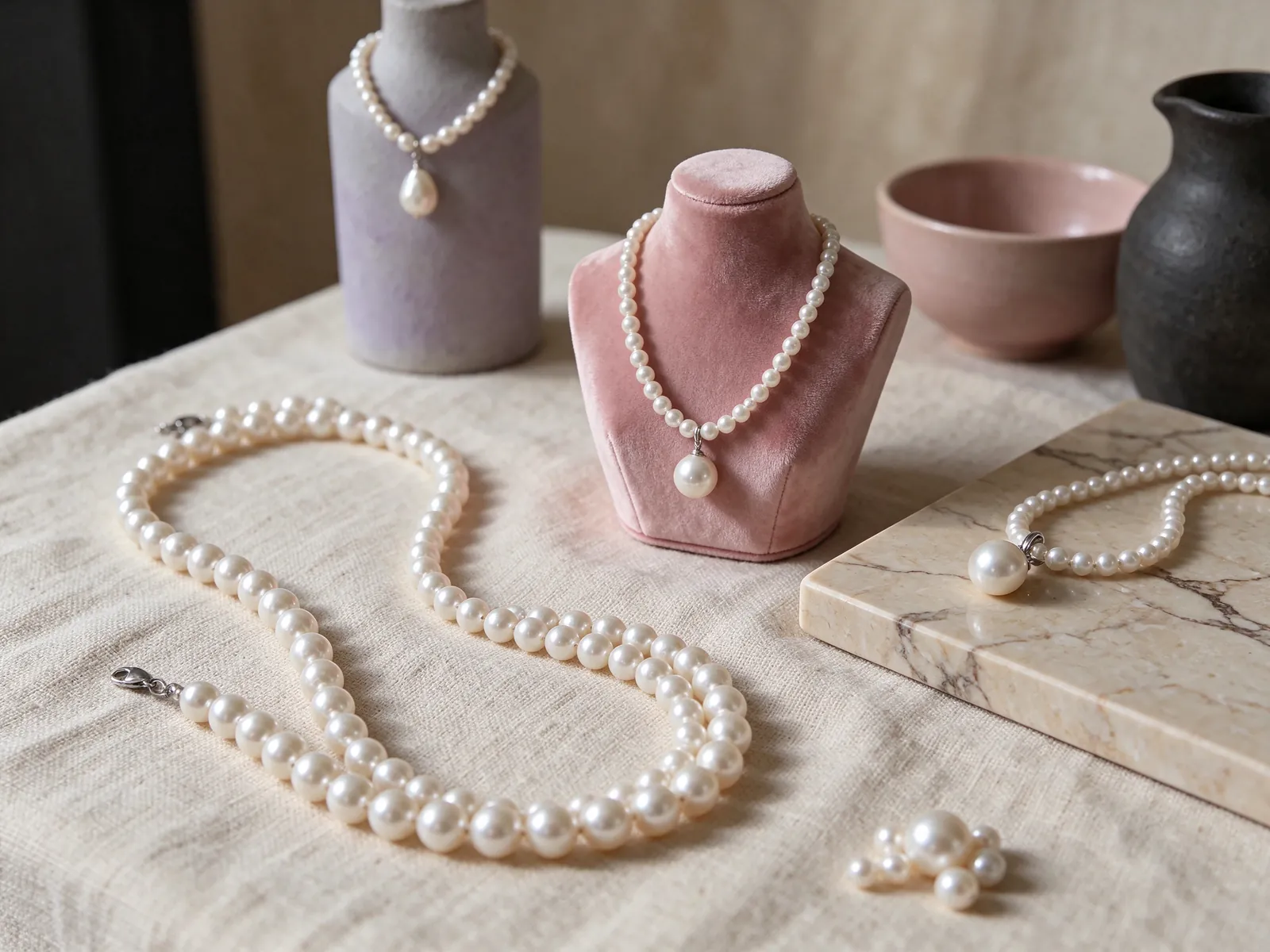
Plan the focal point around the rest of your outfit
Use a plain top to judge the balance between pearl line and clasp decoration before introducing prints or embroidery. A bold button placket or patterned collar can compete with a central fastening. With a blazer, check the view both open and closed; the clasp may disappear behind a lapel even when the strand remains visible. An attractive detail is most useful when it sits where you actually want it.
If front-facing wear is intended, compare centered and offset positions after moving around, not just while posing. Include a scarf or shoulder strap if you regularly use one. When your preference is really for a changing metal-and-pearl rhythm across the necklace, rather than a decorated closure, explore the styling ideas for a half chain pearl necklace to separate those two design goals.
Why should a two-loop look be treated as a separate wearing method?
Wrapping a strand changes where both loops fall and how the fastening and connecting points are positioned. A necklace that opens does not necessarily have a removable clasp or a connection meant for another pearl position. If two loops are important, ask whether that arrangement is intended and follow a demonstration. Do not pull the pearls tight to imitate a shorter necklace.
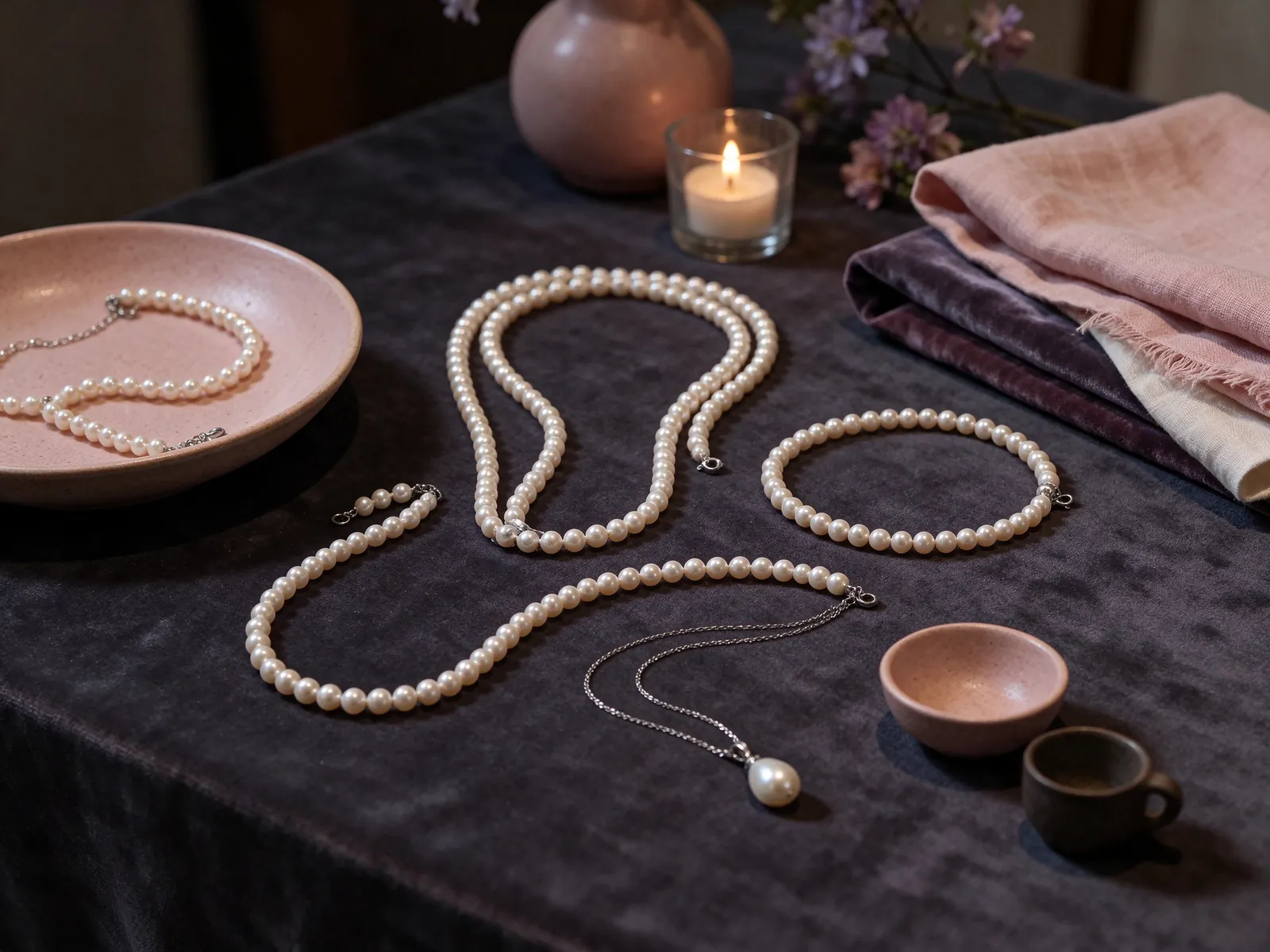
Compare clasp styles by the handling they require
A ribbon clasp pearl necklace brings tying and bow placement into the decision. Consider the finished knot against your collar and whether you want fabric decoration behind your neck. That differs from pressing an opening clasp, even when both looks appeal to you. The ribbon's appearance alone cannot establish comfort; the position and shape of the completed arrangement matter as well.
A toggle clasp pearl necklace invites you to examine how a bar and ring work together. Watch the alignment needed during fastening and the position of the closed components. Compare that demonstrated action with a clicker rather than ranking them by name. No clasp category should be treated as an automatic guarantee against opening; the individual design and its intended operation remain important.
What should an independent wearer test before choosing?
Explain whether you prefer working behind your neck or fastening in front, and consider how long nails affect your fingertip position. Watch how much of the strand needs support during each motion. Evaluate those handling details against your own everyday routine. If you need another person to complete a particular action, decide whether that fits your routine rather than choosing on appearance alone.
Use metal choices to refine the look, not to predict the mechanism
An 18K gold clasp pearl necklace can be considered alongside the colors of your earrings, rings and favorite tops. When discussing metal options, distinguish 18K 750 white gold, 18K 750 yellow gold and 18K 750 rose gold. Keep that color choice separate from questions about the operating direction and attachment points. A metal label does not explain how the complete clasp works.
For a cooler-toned appearance, the discussion around a platinum clasp pearl necklace offers another styling comparison, with PT950 platinum and PT900 platinum as distinct labels. A photograph's color is not enough to identify the metal. Nor does a material name establish universal comfort or ease of use. Read the explicit metal description, then evaluate how the shape and orientation sit with the strand.
How do you judge diamond decoration without making assumptions?
Look beyond the brightest reflections to the outline, side profile and reverse of the decorative face. Consider whether an edge will meet a delicate fabric and whether the size looks balanced beside the pearls. Use the specific written description for diamond details rather than counting stones or estimating weight from an image. A covered clasp also deserves consideration: decoration hidden under a collar will not lead the outfit.
Give the pearl strand its own quality comparison
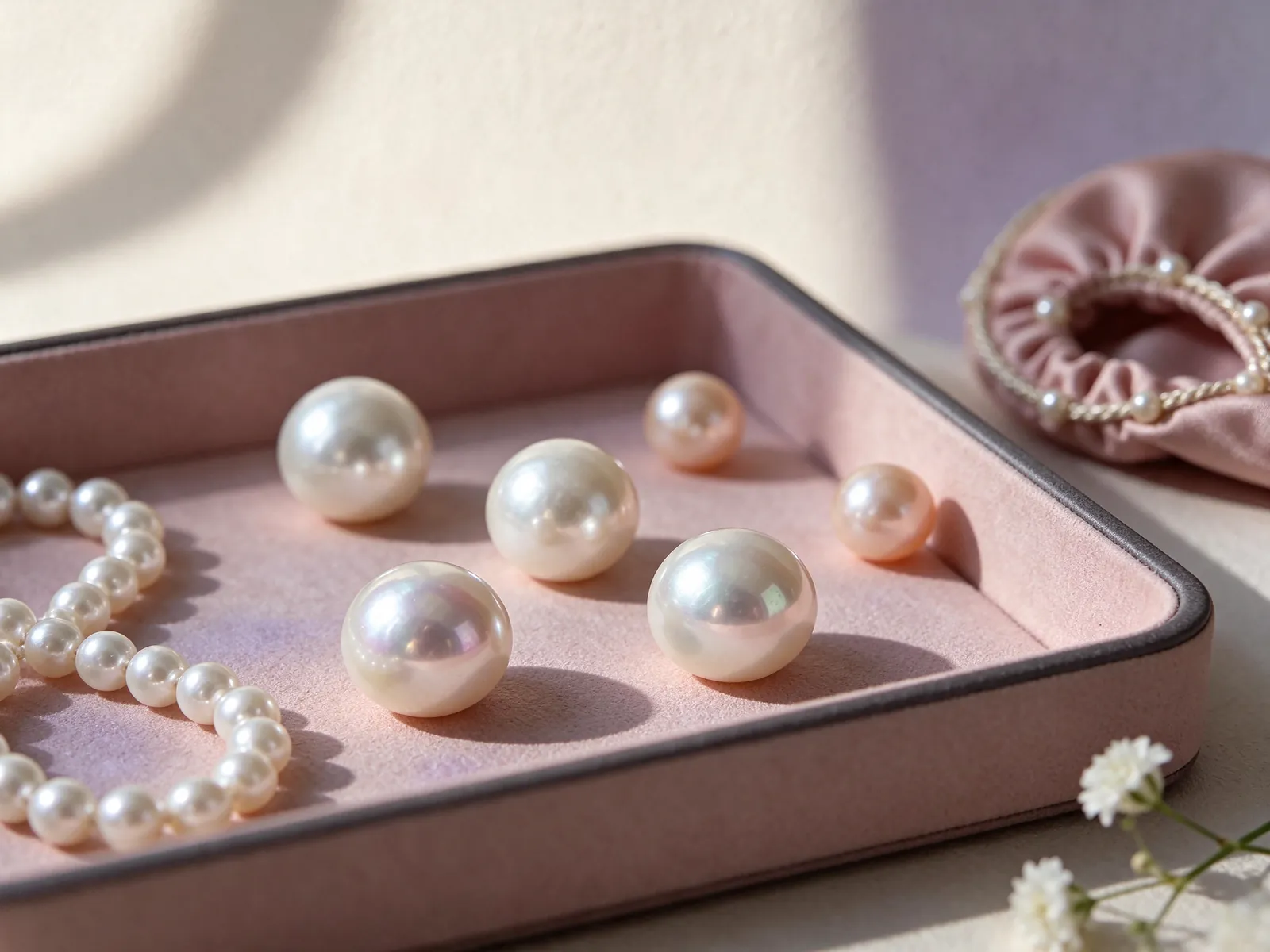
GIA identifies seven pearl value factors: size, shape, color, luster, surface quality, nacre quality and matching. They help keep a clasp-focused search from overlooking most of the necklace. Start with the overall strand, then examine individual pearls and finally the decoration. The framework is a way to organize questions; it does not establish that a necklace has a specific grade or certificate.
Place comparisons in similar light and against the same fabric. Look from farther away at the strand's rhythm, then closer at luster, surface and the relationship between adjacent pearls. Pay attention to the section beside the clasp, where the eye may pause. A deliberate variation can be part of the look you enjoy, but shape or color alone cannot establish origin or natural-versus-cultured identity.
How can you separate lighting effects from design preferences?
Compare an overall image with side views and close-ups, and avoid setting a spotlighted necklace against a shadowy photograph. Ask whether you like the pearl reflection, the background color or the clasp's shine. Try a more evenly lit view to clarify that preference. Images can guide styling, but an explicit pearl description and the actual scope of any accompanying document answer different questions.
Clean and store the complete necklace, not just its decorated clasp
Set a long necklace on a soft, clean surface after removing it, then arrange the pearls before handling the fastening. Do not let the full strand swing from one end. GIA recommends wiping cultured pearls with a very soft, clean cloth after each wearing. Its care guide also advises keeping pearls away from acids, perfume, hair spray and excessive heat. Keep sharp objects and unfamiliar cleaners away from the pearl-and-clasp connection.
GIA lists pearl at 2.5 on the Mohs hardness scale and says never to clean pearls in ultrasonic or steam cleaners. Diamond decoration does not make those methods suitable for the attached strand. If a strung necklace is cleaned with water, its string must be completely dry before wearing. Store it apart from hard objects and arrange the clasp so it does not press or rub against pearl surfaces.
When should you stop operating a clasp and describe the problem?
If the action becomes stiff, the join appears different or the string looks loose, stop wearing the necklace and do not keep testing the clasp. Record the movement where the change occurs and any visible trapped fiber or misalignment. Do not bend a component back yourself. For a styling discussion, describe your everyday neckline, desired clasp position and fastening routine; these make your preferences concrete without relying on a product name.
Choose a favorite top and note the strand position you would like before starting a styling conversation. Explain whether the clasp should be visible and whether you normally fasten necklaces at the front or behind your neck. Contact Flint Jewelry on WhatsApp (https://wa.me/85260106207) to discuss pearl necklace styling preferences grounded in your wardrobe and daily handling routine.
| Feature | What the term describes | Wearing check | Question to ask | Unsupported shortcut |
|---|---|---|---|---|
| Opening mechanism | Ability to open and close | Finger access and strand support | Which component moves? | Assuming the clasp is removable |
| Clicker action | A method of fastening | Appearance of the completed join | How is full closure recognized? | Using sound as the only test |
| Diamond decoration | An ornamental detail | Profile against collar and fabric | What do the front and reverse look like? | Inferring stone details from a photograph |
| Long-strand line | The necklace's overall fall | Position during sitting and movement | Is wrapping an intended wearing method? | Treating every long strand as two-loop ready |
| Care routine | Needs of the whole necklace | Connection area and pearl surfaces | Which cleaning method suits all components? | Choosing a cleaner for the clasp alone |
Pearl knowledge and authoritative references
GIA lists pearl at 2.5 on the Mohs hardness scale. The pearl strand should never enter an ultrasonic or steam cleaner, even when its clasp has diamond decoration.
Read the reference for this factFrequently asked questions
Is a clicking sound enough to know the clasp is closed?
No universal sound test applies to every design. Learn the intended closed appearance and action of the specific fastening. Make sure string or fabric is not caught at the join, and ask for a demonstration if the movement is unclear.
Will a front-facing diamond clasp work with a blazer?
First confirm that the clasp is intended to be worn in that orientation. Then compare the necklace with the blazer open and closed. Look at the reverse and check whether the clasp disappears behind a lapel, crowds a button or shifts after you sit down.
Can an opening clasp be attached anywhere along the pearl strand?
Do not assume so. Opening and attaching at another position are separate capabilities. Ask about the intended connections and wearing arrangements of the full necklace. Avoid tightening the strand or clipping the clasp onto an arbitrary pearl position to force a different look.
How do I keep an attractive clasp from distracting me during selection?
Compare the necklace's overall fall and pearls first, in similar lighting against the same fabric. GIA's seven value factors provide a framework for the pearl discussion. Then assess the clasp's handling, profile and decorative role as separate parts of the choice.
Does diamond decoration change how I should clean the pearl necklace?
It does not remove the pearls' care requirements. GIA advises against ultrasonic and steam cleaning for pearls. Wipe with a very soft, clean cloth after wearing, and let the string dry completely before wearing if a strung necklace has been cleaned with water.
Updated: