
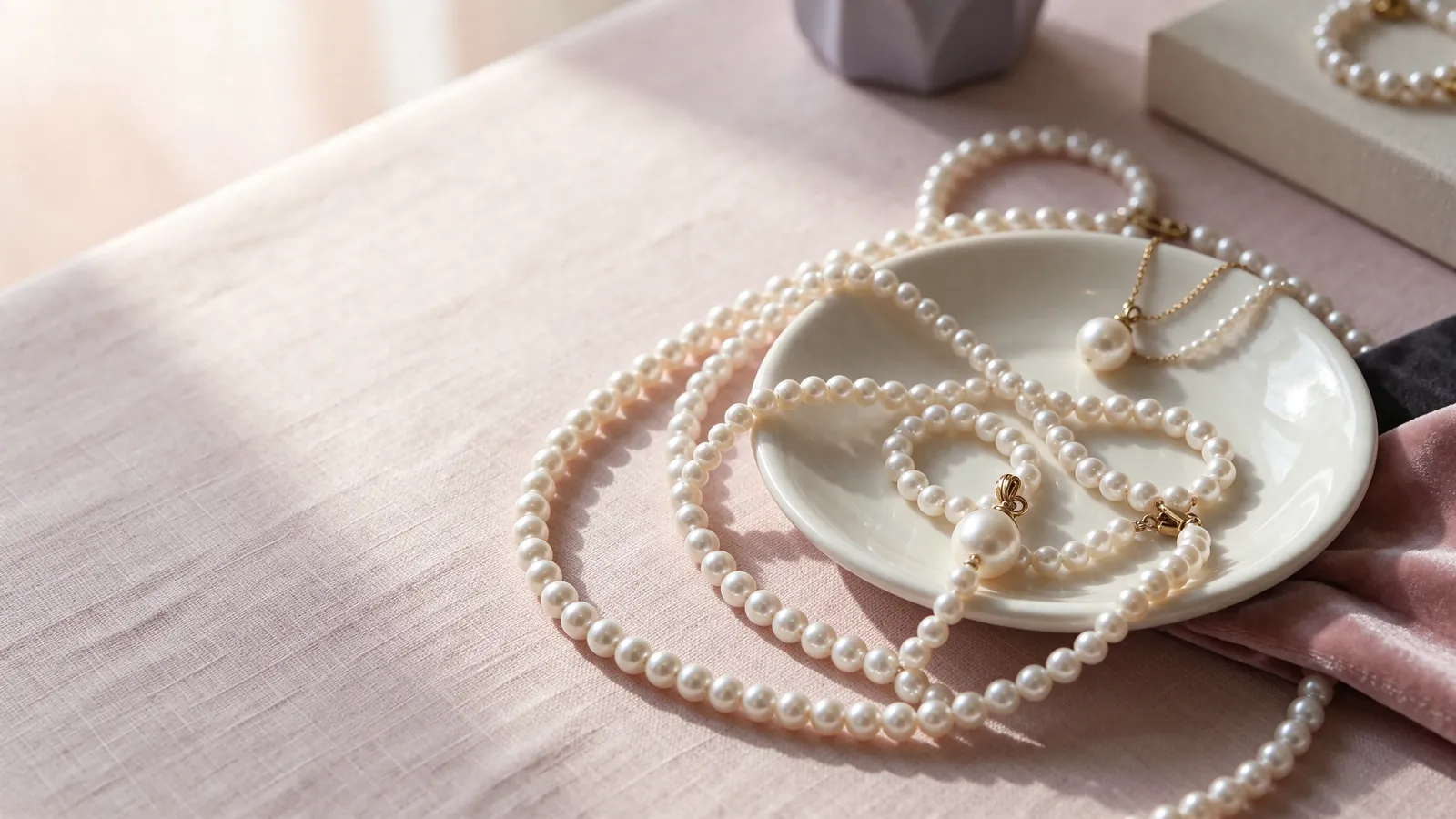
Which length suits your neckline when choosing a nucleated freshwater pearl necklace described as a bead nucleated freshwater pearl strand? | Flint Jewelry
Thinking about the fit of a nucleated freshwater pearl necklace? Tell Flint Jewelry about your favorite neckline and the resting point you prefer on WhatsApp at https://wa.me/85260106207 to discuss styling ideas for your everyday wardrobe.
Build your comparison around an outfit you expect to wear repeatedly. A T-shirt with a crew neck presents an edge that the strand may sit above, cross or rest on; choose a position that looks intentional rather than balanced halfway on the seam. A button-down shirt can hide pearls under its collar points. Comparing the outline of a single strand pearl necklace helps you identify the resting point before introducing pendants or additional layers.
Think about whether the necklace will usually touch skin or clothing. A smooth blouse and a textured sweater may support the same strand differently, even when the stated length is unchanged. Use jewelry you already own to explore the positions you prefer and photograph the outline from the front and side. Do not treat another person's display image as a fitting rule: neck shape, posture and fabric all affect the view you are trying to achieve.
How do clasp placement and drape affect the fit of a nucleated freshwater pearl necklace described as a bead nucleated freshwater pearl strand? | Flint Jewelry
If you can handle the necklace, give it time to settle and then move naturally. Check it while sitting, looking over your shoulder and lifting your arms. A comfortable standing pose does not show whether a collar will push the strand sideways. At the back, test whether hair blocks the fastening. If a visible clasp is part of your intended look, check whether its weight changes the curve rather than judging only the decorative shape.
Separate pearl identity from the language of appearance
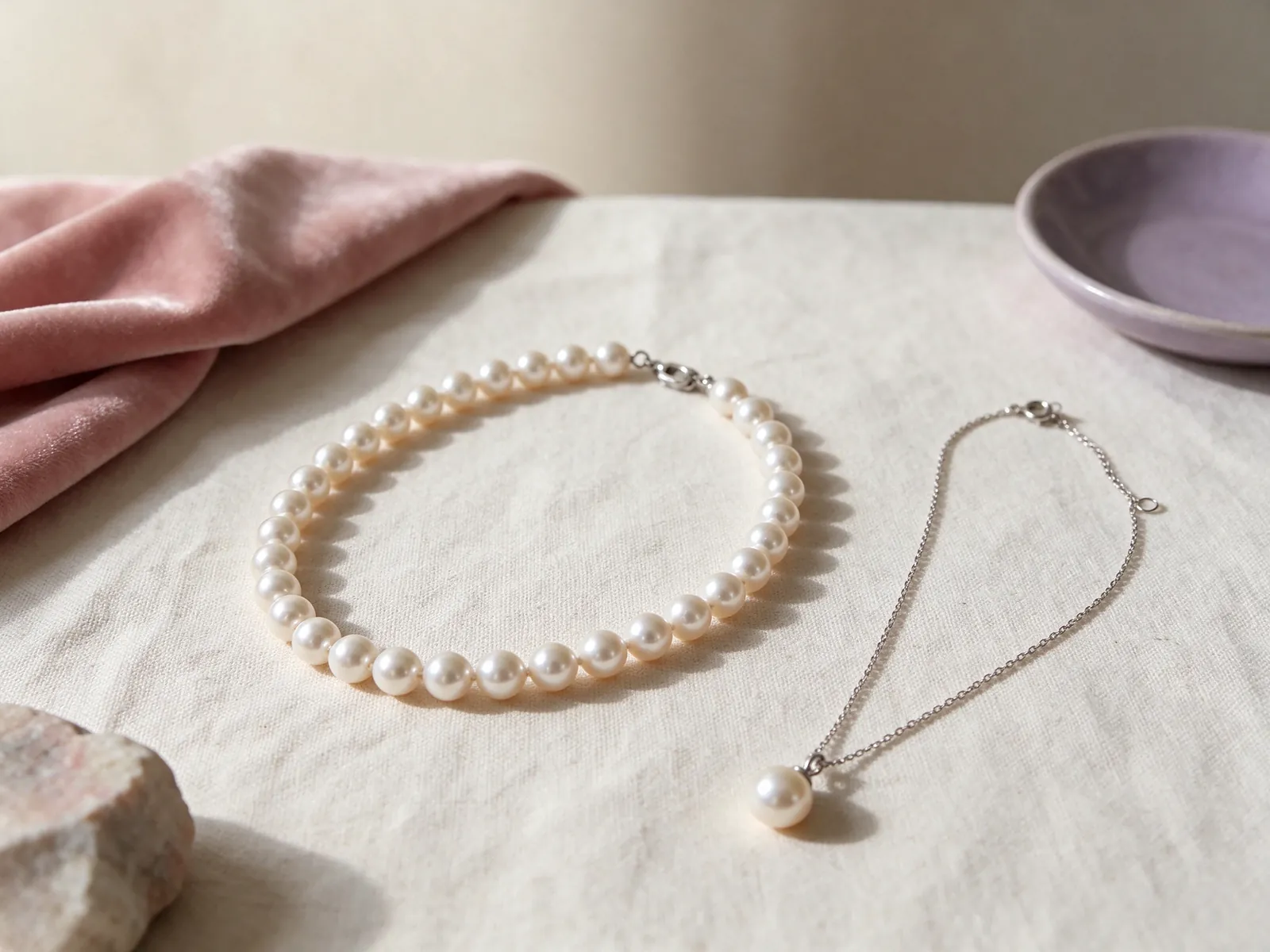
A category name is not a complete description of an individual necklace. Freshwater, cultured and nucleated supply different kinds of information, so a freshwater label should not be expanded by assumption. The explanation of what are freshwater pearls gives a foundation for reading the category; the actual strand still needs its own stated details. Check whether a description covers all the pearls or only certain elements, particularly when a necklace combines shapes or other decorations.
For a bead nucleated freshwater pearl strand, roundness is not independent proof of the description. Neither bright luster nor a warm color can establish nucleation, origin or treatment status by itself. Likewise, natural material is not equivalent to a statement that a pearl is wild natural. Keep visible qualities and identity information in different parts of your notes. That makes the comparison more useful than letting a broad marketing adjective stand in for every detail. GIA explains that X-ray radiography reveals internal structure and helps distinguish natural, bead-cultured and non-bead-cultured pearls. A necklace photo is therefore not a substitute for identity information about the actual strand.
Turn uncertainty into a focused question
Ask whether the nucleated description applies to the complete strand and what written information describes the pearls. Ask about clasp material separately, because a metal component's description cannot identify the pearls. The freshwater pearl necklace guide is useful for exploring arrangements, but style examples do not establish the identity of a different piece. Precise questions are easier to compare than a general request for the best necklace.
Look beyond a central close-up when comparing quality
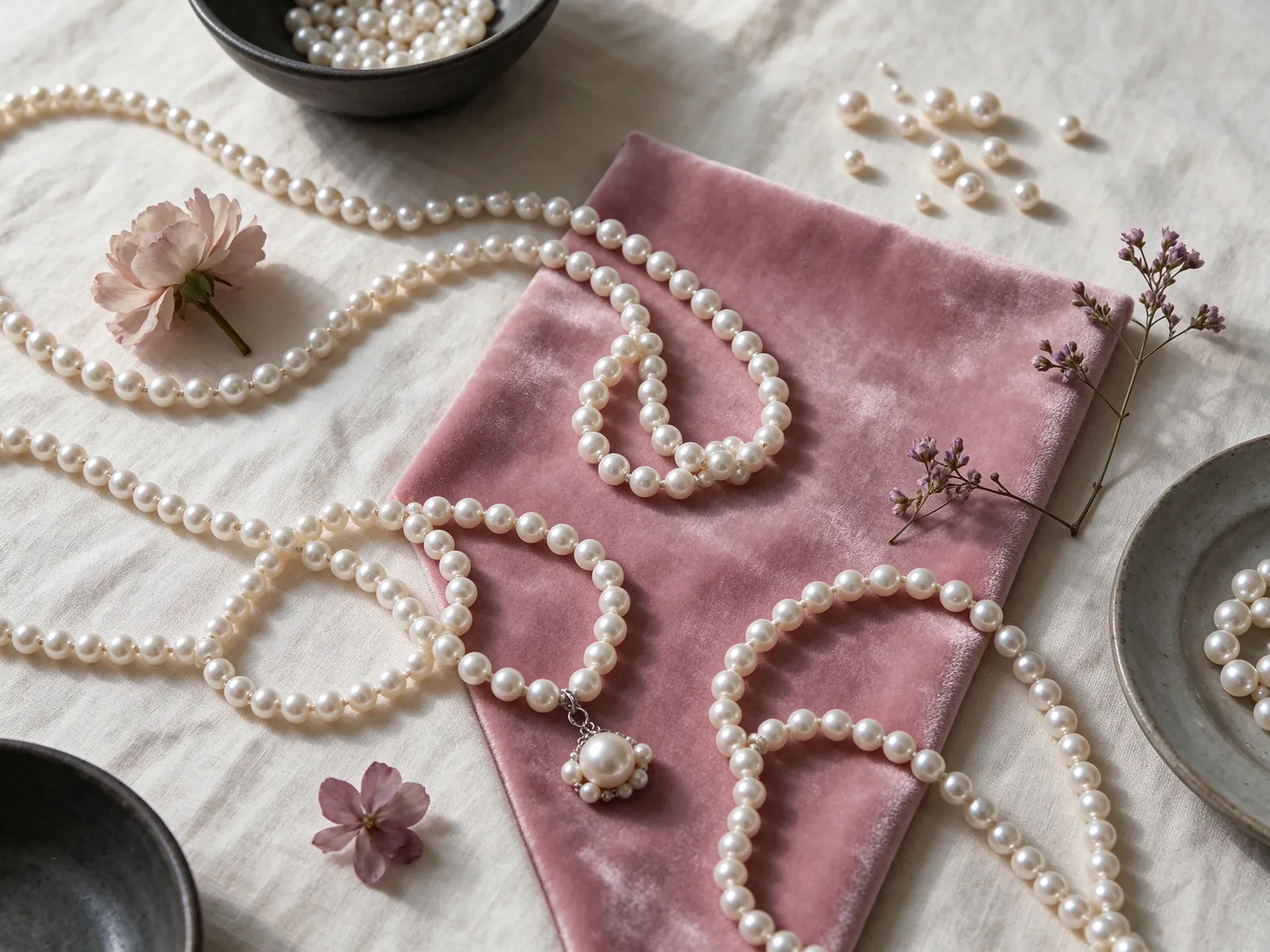
GIA identifies seven pearl quality factors: size, shape, color, luster, surface quality, nacre quality and matching. For a necklace, matching directs attention to the relationship between neighboring pearls. Follow the strand from the center toward each end and notice the rhythm of shape, brightness and color. An intentionally varied arrangement may suit you better than a uniform one. The important styling question is whether the complete pattern feels coherent with the look you want.
Consider luster and visible surface characteristics separately. Clear reflections answer a different visual question from the location of a surface feature. A strongly lit close-up can emphasize one pearl without showing the balance of the entire necklace. Where possible, compare strands under similar light and move between the full view and detail views. Photographs of the surface do not provide a nacre measurement, so do not convert a visual preference into an unsupported internal-quality conclusion.
Read a report for the item and conclusions it actually describes
When a specific necklace comes with documentation, the pearl necklace with GIA report topic helps frame questions about identification and the scope of the report. Compare the described object and identifying details with the piece, rather than treating an institution's name as a complete answer. A report and a seller's grade vocabulary are different things. Neither decides how well a clasp works for your hands or where the necklace sits against your shirt.
Use color as a wardrobe choice, not an identity test
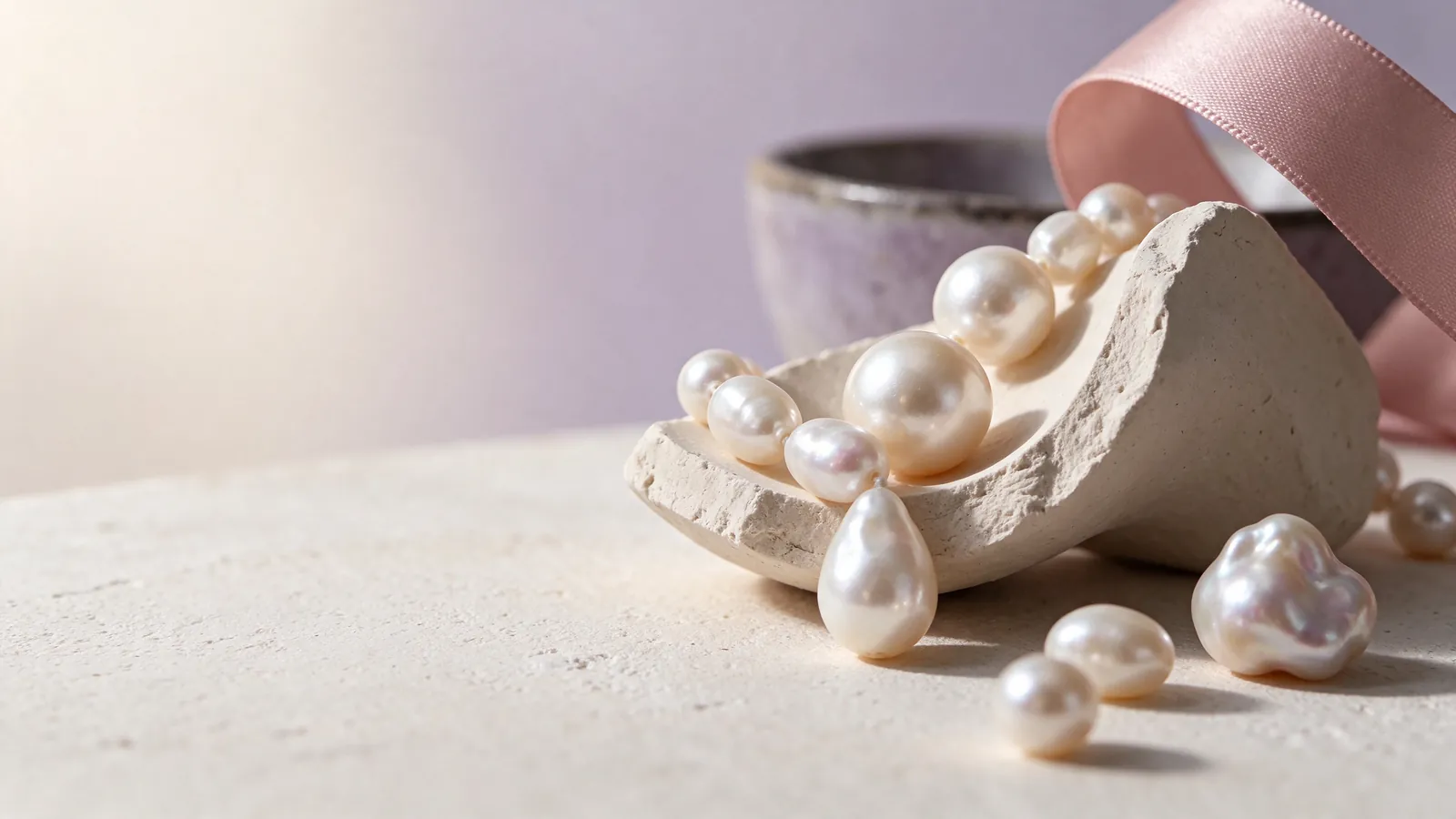
Compare the strand against clothes you actually own, including a darker top and a lighter one. A darker fabric may define the pearl outline more strongly, while ivory can create a softer relationship with warmer tones. GIA distinguishes bodycolor, overtone and orient, and notes that not every pearl shows all three. One image may emphasize a color effect without demonstrating how every pearl will appear against every fabric or under different lighting.
An orange pearl necklace can provide ideas for a warm-color outfit, while a multicolor pearl necklace invites you to compare gradual transitions with more distinct alternation. Look at the arrangement rather than selecting a strand solely because one pearl has an appealing shade. Color can guide coordination with earrings and clothing, but orange or mixed colors cannot independently tell you a pearl's origin, treatment status or nucleation.
Let one accessory lead the outfit
With a noticeable color sequence, understated earrings can keep attention on the necklace. With a more uniform strand, an earring shape or jacket texture can add contrast without requiring an exact color match. Decide on the focal point first. This approach makes coordination adaptable to your wardrobe rather than forcing you to recreate a complete display outfit whenever you want to wear the necklace.
Check the fastening and the strand as working components
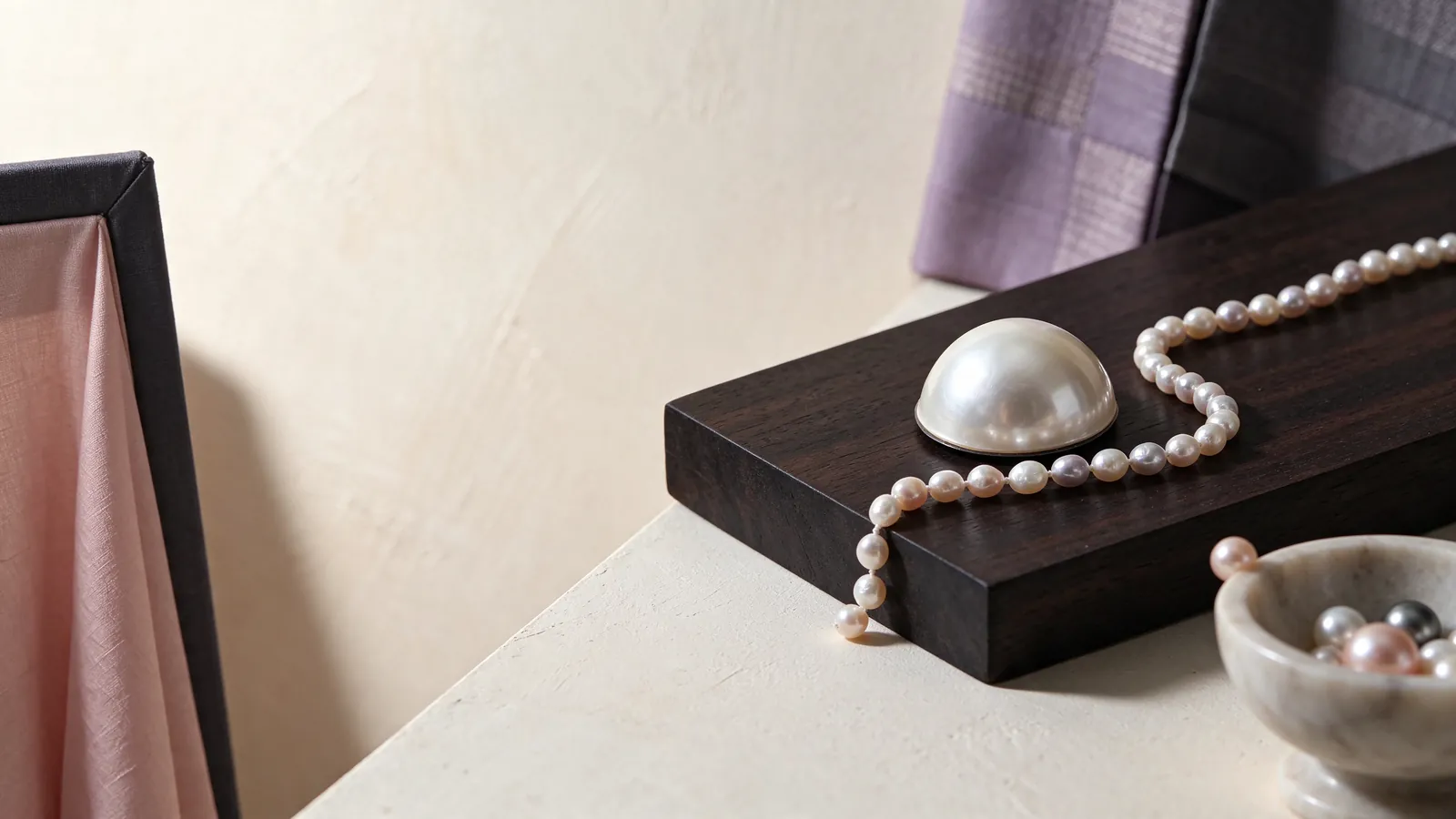
Before comparing stated lengths, find out whether the measurement includes the clasp and any extension. Otherwise, apparently equal descriptions may not refer to the same overall span. Handling matters too: note the opening direction, whether your fingers can hold the clasp steadily and how you recognize a complete closure. If you often fasten jewelry behind your neck, a collar and your usual hairstyle are practical parts of that test.
Observe pearl spacing, visible knots and string condition while looking at the necklace's curve. Pulling the strand tighter is not a sound way to change its fit. A clasp moved from the back to the front may also alter weight distribution, so consider whether the design suits that position. A fastening that looks attractive in a close-up may still shift, catch on fabric or interrupt the outline when you move.
Layer only after checking where the necklaces touch
Put each necklace on separately, then walk and turn to see whether the layers cross or change places. Pay attention to hard decorations making repeated contact with the pearls. If the arrangement requires constant repositioning, reconsider the resting points rather than accepting a photograph-only result. Taking each strand off individually also avoids pulling several fastenings or strings together.
Include pearl care in the everyday wearing plan
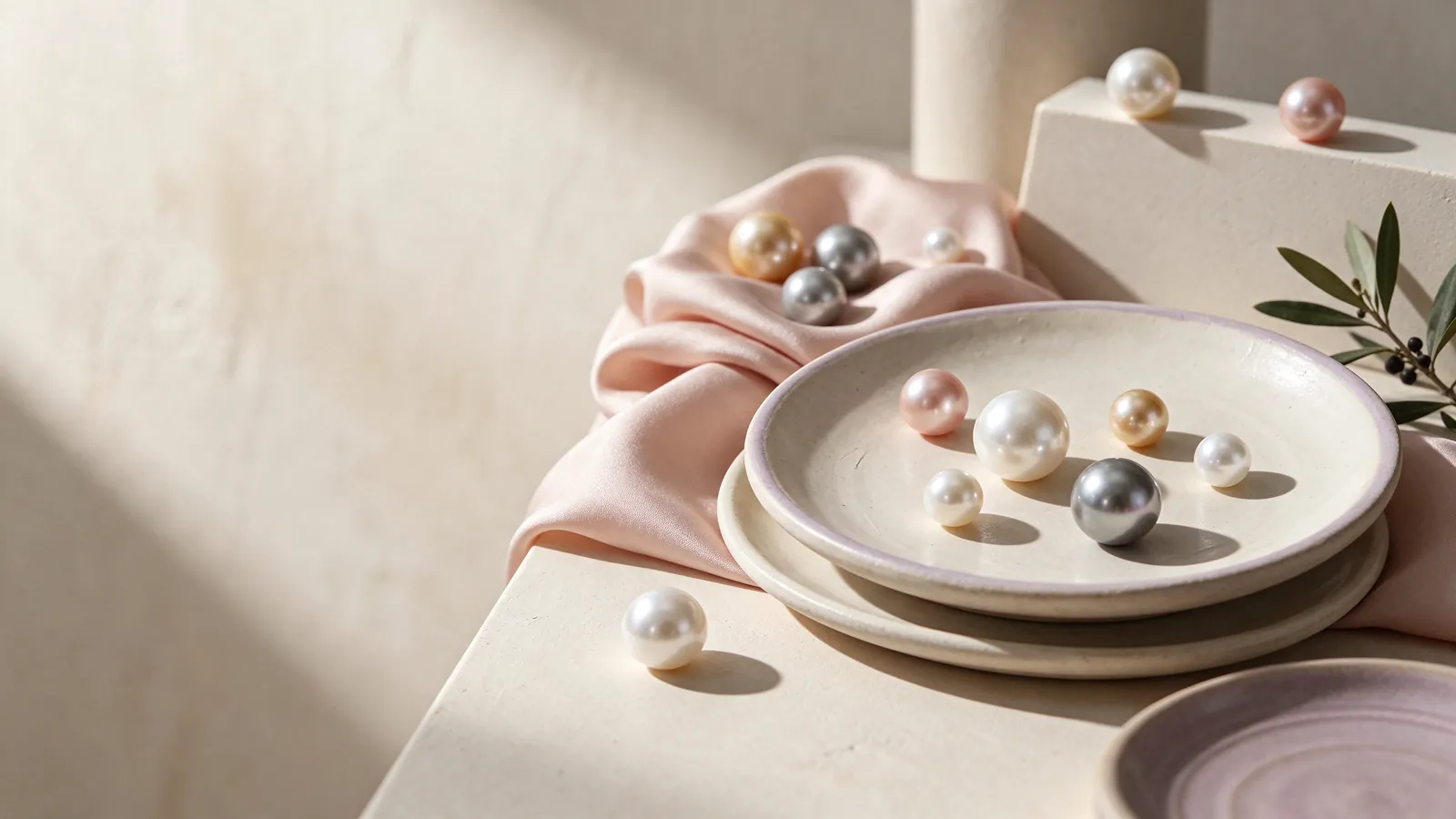
GIA gives pearl a Mohs hardness of 2.5 and says pearls should never be cleaned in ultrasonic or steam cleaners. A nucleated description does not remove the need to protect the surface. Finish applying perfume and hair products before putting on the necklace, and use a very soft, clean cloth to wipe it after wearing. Gentle handling is a more useful routine than treating the strand as resistant to every cleaner or repeated abrasion.
Keep the necklace separate from pieces with sharp edges and arrange the clasp so it does not press against a pearl. If strung pearls are cleaned with water, GIA advises allowing the string to dry completely before wearing. The pearl surface may look dry before the string is ready. Avoid excessive heat and do not speed drying with high heat. Visible wear or looseness is a reason to pause use and seek an appropriate inspection, not to tug on the strand as a strength test.
Give the necklace its own space when traveling
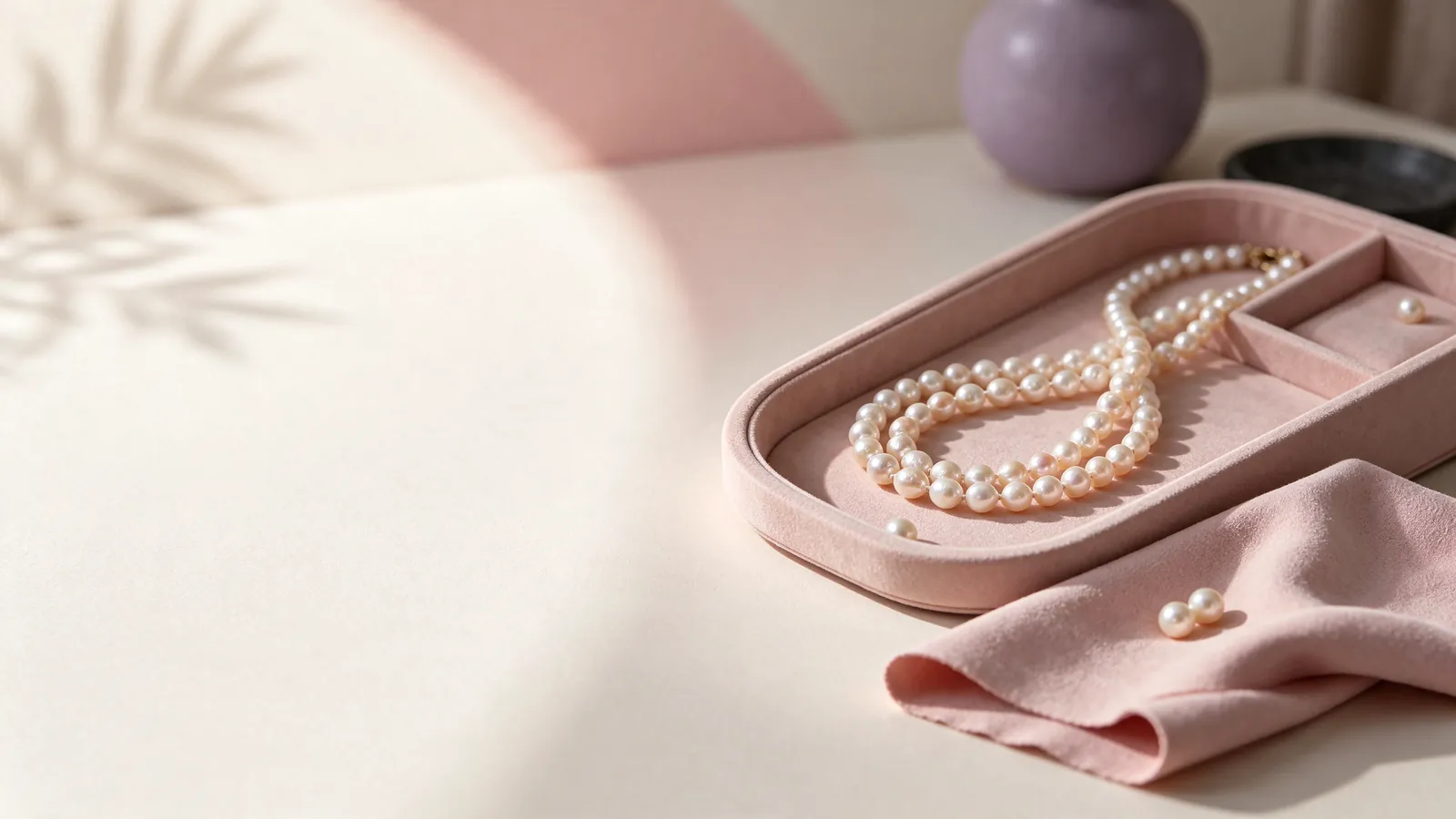
Use a separate, soft storage space rather than packing the strand tightly with other jewelry. Prevent the clasp from pressing into the pearls and avoid leaving the necklace in excessive heat. After unpacking, check for tangles before gently arranging the strand. Reducing compression and contact is a practical travel habit; repeatedly stretching a necklace to check it adds handling without answering its condition reliably.
Choose with a personal checklist rather than a universal ranking
Write down essentials first: understandable pearl identity information, a fastening you can operate and a curve that works with your usual neckline. Then list preferences such as color rhythm, shape variation and layering. Compare the appearance of options that meet your practical needs instead of letting an exceptional close-up distract you from an inconvenient fit. Another person's proportions or accessory choices are examples, not requirements for your own necklace.
For a gift, learn how the recipient dresses and wears necklaces before guessing an exact size. A person who enjoys simple everyday outfits may appreciate a clear outline and understandable care information, while someone who likes statement accessories may prefer a stronger color sequence. Consider whether they comfortably use a back clasp. These observations create a thoughtful selection without attaching unsupported health effects, guaranteed value or other promises to the pearls.
Bring outfit details to a styling conversation
Share your favorite neckline, preferred position on skin or fabric and whether color, luster or clasp handling matters most with Flint Jewelry on WhatsApp at https://wa.me/85260106207. Begin with an outfit you wear often and the curve you want from the strand so the styling conversation centers on your daily needs. Read the individual necklace’s pearl description and any accompanying documentation separately from the styling discussion.
| Decision | What to examine | Everyday context | Question to ask | Unhelpful assumption |
|---|---|---|---|---|
| Neckline position | Overall span and natural curve | T-shirt, button-down or sweater | Is the clasp included in the length? | The display model's fit is your fit |
| Pearl description | Information for the individual strand | Comparing similar appearances | Does nucleated apply to all pearls? | Roundness proves internal structure |
| Visual matching | Center pearls and both sides | A complete single-strand outline | Is the variation intentional? | A close-up represents the whole strand |
| Color arrangement | Transitions against familiar clothing | Dark tops, ivory and accessories | Are colors gradual or alternating? | Color identifies origin or treatment |
| Handling routine | Fastening and string condition | Daily wear and travel packing | Can you operate the clasp comfortably? | Nucleation eliminates gentle care |
Pearl knowledge and authoritative references
GIA identifies seven pearl quality factors: size, shape, color, luster, surface quality, nacre quality and matching. For a necklace, matching directs attention to how neighboring pearls work together across the complete strand.
Read the reference for this factFrequently asked questions
Can I identify nucleation from a necklace photo?
A photograph can show visible shape, color and arrangement, but those features do not independently establish nucleation. Read the stated details for the individual strand and consider any documentation that actually describes it.
Should the necklace always rest above a T-shirt neckline?
There is no single styling rule. Compare a clear position above the edge with a complete curve over the fabric. The useful test is whether the placement remains intentional and comfortable while you sit and move.
Does every pearl need to look identical for the strand to work?
Not every design aims for uniformity. Deliberate changes in shape or color can create a rhythm you enjoy. Inspect the complete strand so that you can distinguish a design preference from an impression based on one central pearl.
How can I tell whether layering is practical?
Wear the necklaces separately before combining them, then observe crossing, shifting and contact with hard decorative elements. If the arrangement needs constant adjustment or rubs against pearl surfaces, reconsider the resting points or wear the strand alone.
Can I wear the strand as soon as its pearls look dry after cleaning?
If water was used to clean strung pearls, the string must be completely dry before wearing, as GIA advises. A dry-looking surface is not enough to establish that. Avoid high heat to accelerate drying, and never use ultrasonic or steam cleaning for pearls.
Updated: