
How do length and neckline shape the look of a nucleated freshwater pearl necklace described as a bead nucleated freshwater pearl strand? | Flint Jewellery
Considering how a nucleated freshwater pearl necklace would sit with your everyday clothes? Share your usual neckline and preferred resting point with Flint Jewellery on WhatsApp at https://wa.me/85260106207 to discuss styling ideas around your own wearing habits.
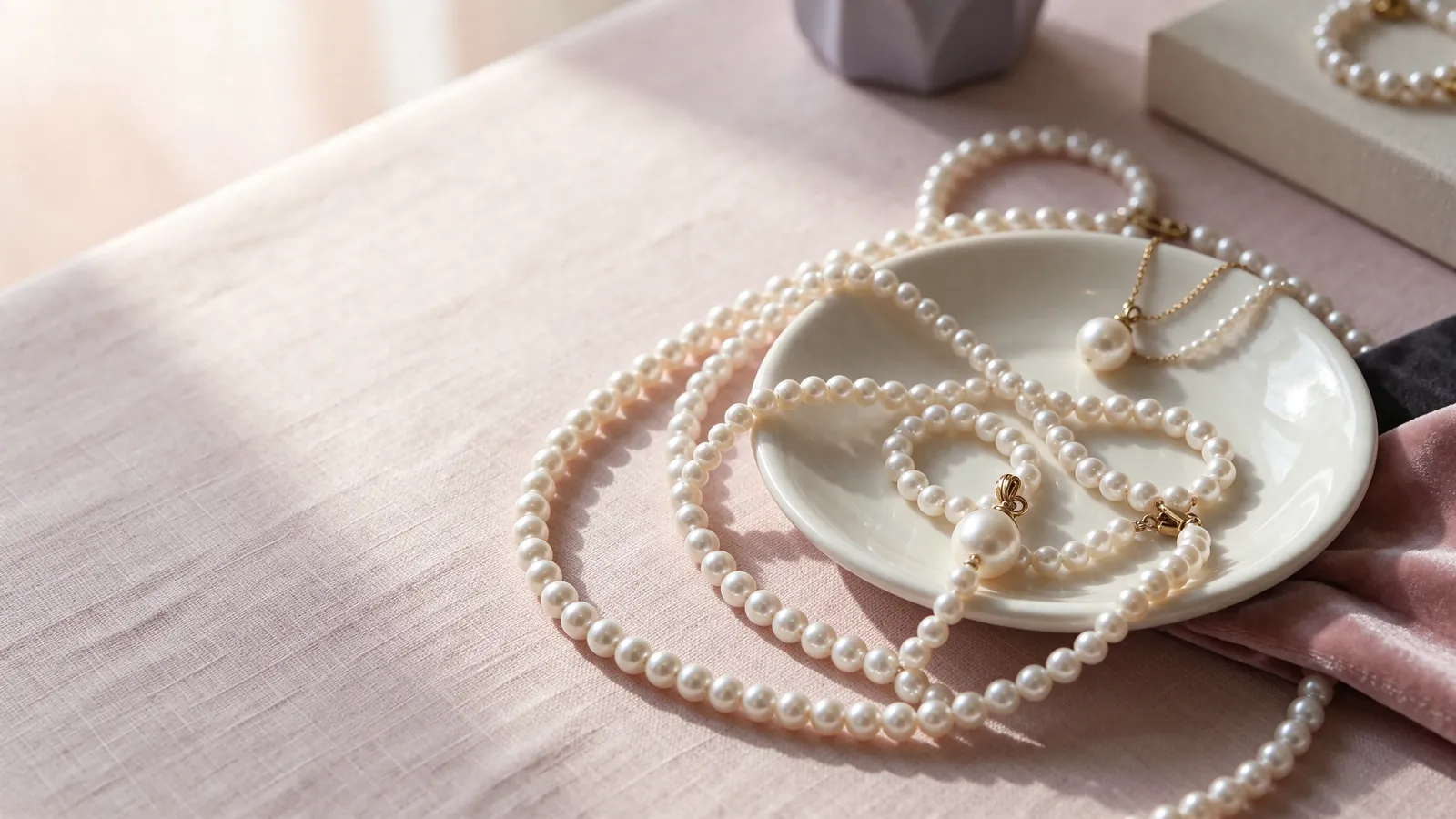
Start with a blouse or top you actually wear, not the neckline in a display photograph. With a crew neck, decide whether the strand should sit clearly above the fabric or form a complete curve over it; a strand balancing on the edge can look unsettled. An open shirt needs a different check, because collar points may hide part of the arrangement. A single strand pearl necklace provides a useful starting point for comparing that outline without the distraction of several layers.
A necklace can behave differently on bare skin and on fabric. When considering a high neckline, look for a visible, uninterrupted curve rather than choosing length in isolation. With textured knitwear, consider whether the clasp or string could catch on the fibres. If you are deciding between possible positions, use a necklace you already own to explore the silhouette, then compare front and side views. This is a personal fit exercise, not a way to identify pearls from a photograph.
Where should the clasp rest, and how should a nucleated freshwater pearl necklace described as a bead nucleated freshwater pearl strand drape? | Flint Jewellery
When you can handle the actual strand, let it settle before judging the curve. Sit down, turn your head and raise an arm to see whether the necklace shifts or the collar pushes it upwards. Check whether hair interferes with a back clasp and whether you can operate it comfortably. A decorative clasp worn to one side also needs a balance check; its appearance alone does not tell you how the strand will move.
Read the pearl description separately from the style description
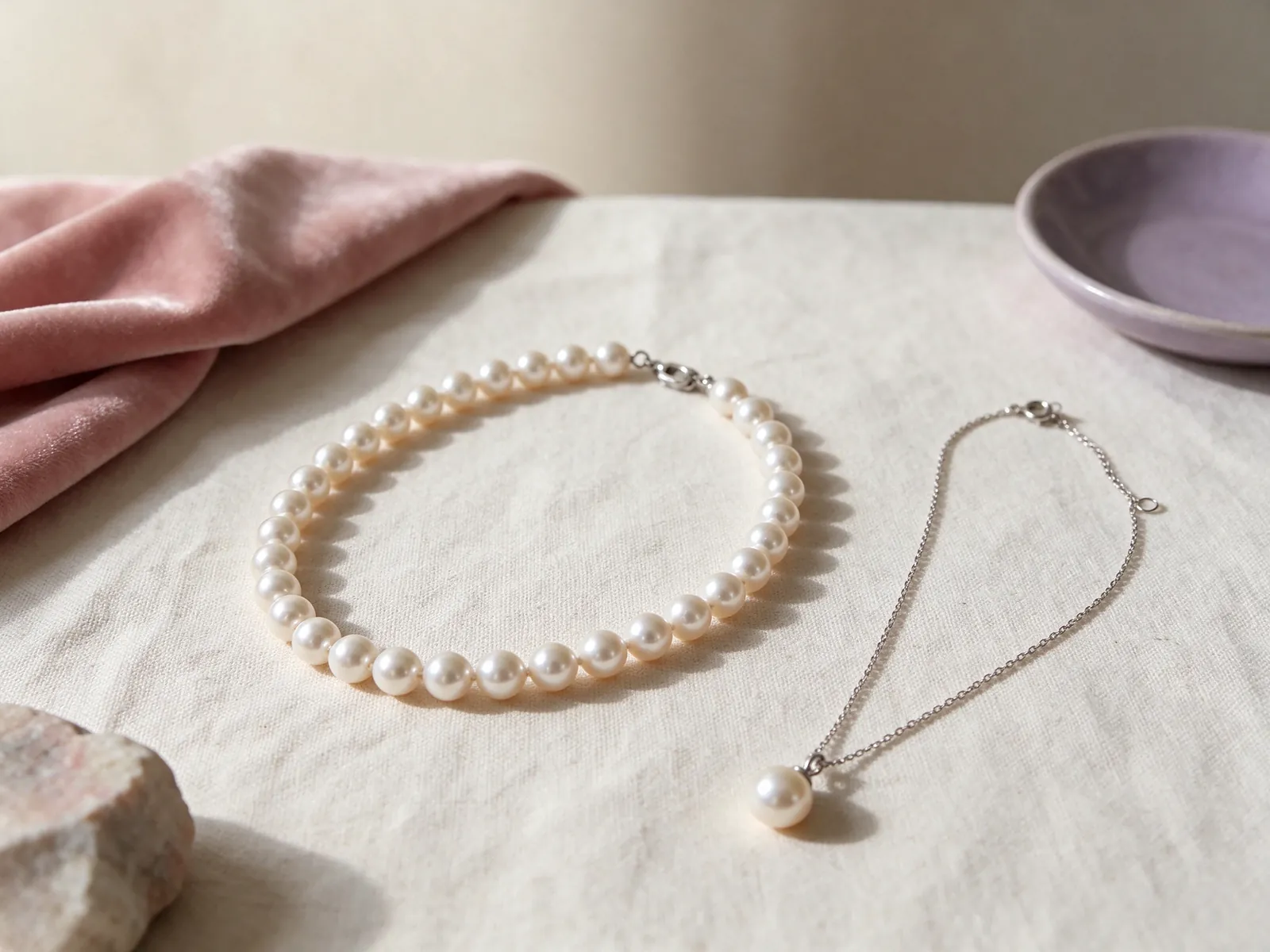
Freshwater, cultured and nucleated are not interchangeable labels. Do not fill in missing identity information simply because a necklace belongs to a freshwater category. Begin with what are freshwater pearls for the broader background, then return to the wording for the individual strand. Check whether the description applies to every pearl or whether the necklace combines different elements. The identity of a metal clasp is a separate matter from the identity of the pearls it secures.
Roundness is a visible shape feature, not a view of the pearl's interior. Bright lustre or a soft colour cannot independently establish nucleation, treatment status or origin. Equally, the phrase natural material should not be read as a declaration of a wild natural pearl. For a bead nucleated freshwater pearl strand, keep the stated identity, visible shape and overall design in separate parts of your comparison rather than allowing one appealing adjective to answer every question. GIA explains that X-ray radiography reveals internal structure and helps distinguish natural, bead-cultured and non-bead-cultured pearls. A display photograph of a necklace is therefore not a substitute for identity information about the actual strand.
Ask questions that a display image cannot answer
Useful questions include whether the nucleated description covers the whole strand, what written pearl information accompanies it and how the clasp material is described. The freshwater pearl necklace guide can help you compare arrangements, but arrangement is not identity evidence. Specific questions make comparisons clearer than asking whether a necklace is simply better, and they prevent details about one component from being applied to the entire piece.
Evaluate the whole strand through lustre, surface and matching
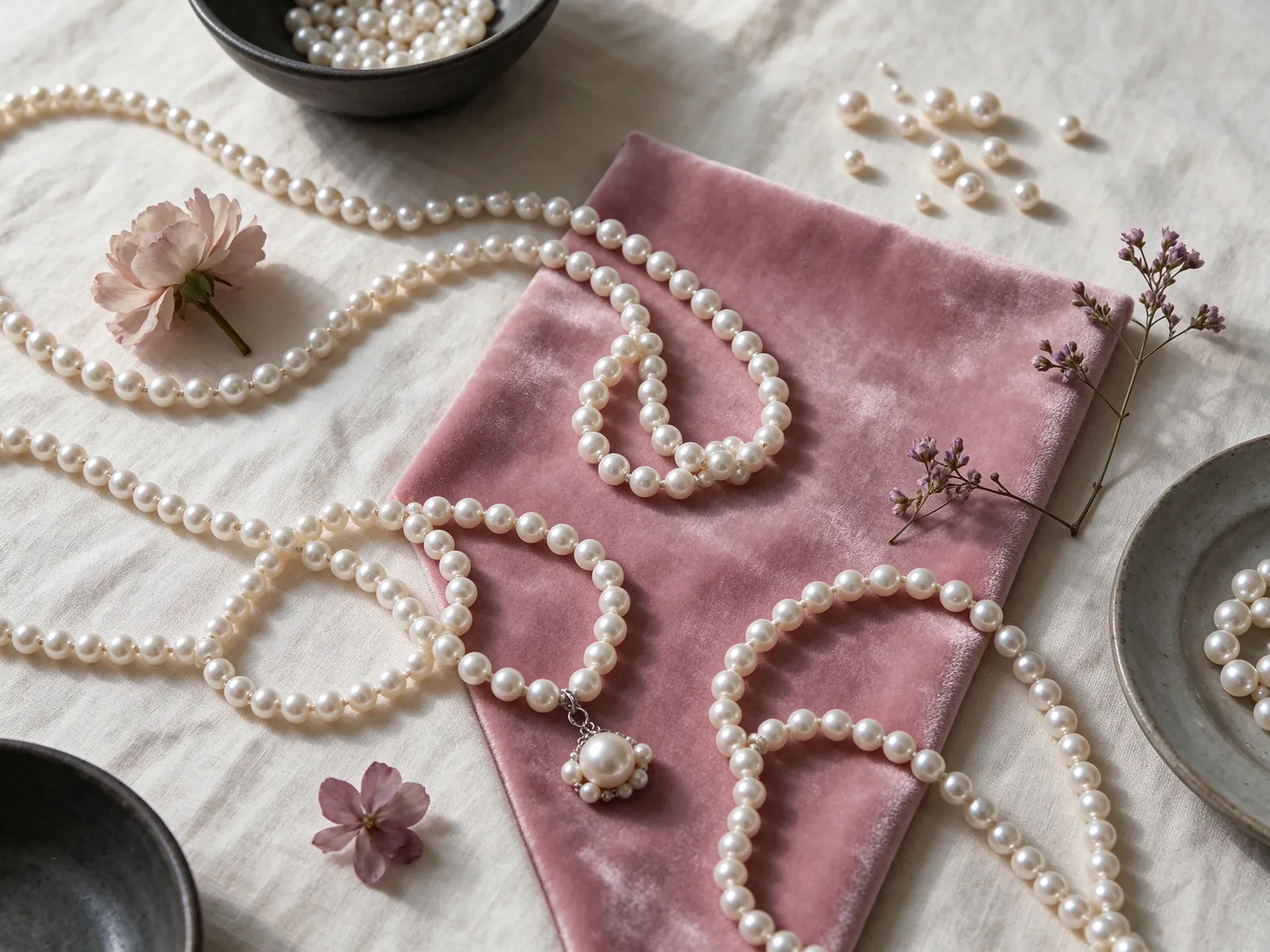
GIA describes seven pearl quality factors: size, shape, colour, lustre, surface quality, nacre quality and matching. Matching is particularly useful when looking at a necklace because neighbouring pearls create its visual rhythm. Start at the centre, then follow both sides. Notice whether changes in shape and brightness feel harmonious to you. Uniform arrangements and deliberately varied arrangements serve different design preferences; neatness alone is not a complete assessment of every style.
Look at the clarity of reflections when considering lustre, and assess visible surface features separately. A bright display light can make a close-up compelling without explaining how the full strand looks in ordinary surroundings. Compare pieces under similar lighting where possible, moving from the overall curve to individual details. Do not infer nacre measurements from surface photographs. An attractive visible finish and documented information about internal quality answer different questions.
If a report accompanies the necklace, match it to the piece
A pearl necklace with GIA report introduces questions about the item described, identifying information and the conclusions actually stated. Read those details rather than relying on the institution's name or a seller's grade label. A report does not decide whether a clasp is convenient or a neckline flattering. Use documentation for its stated purpose, then make the wearing decision through fit, appearance and your own preferences.
Compare colour against your wardrobe and along the strand
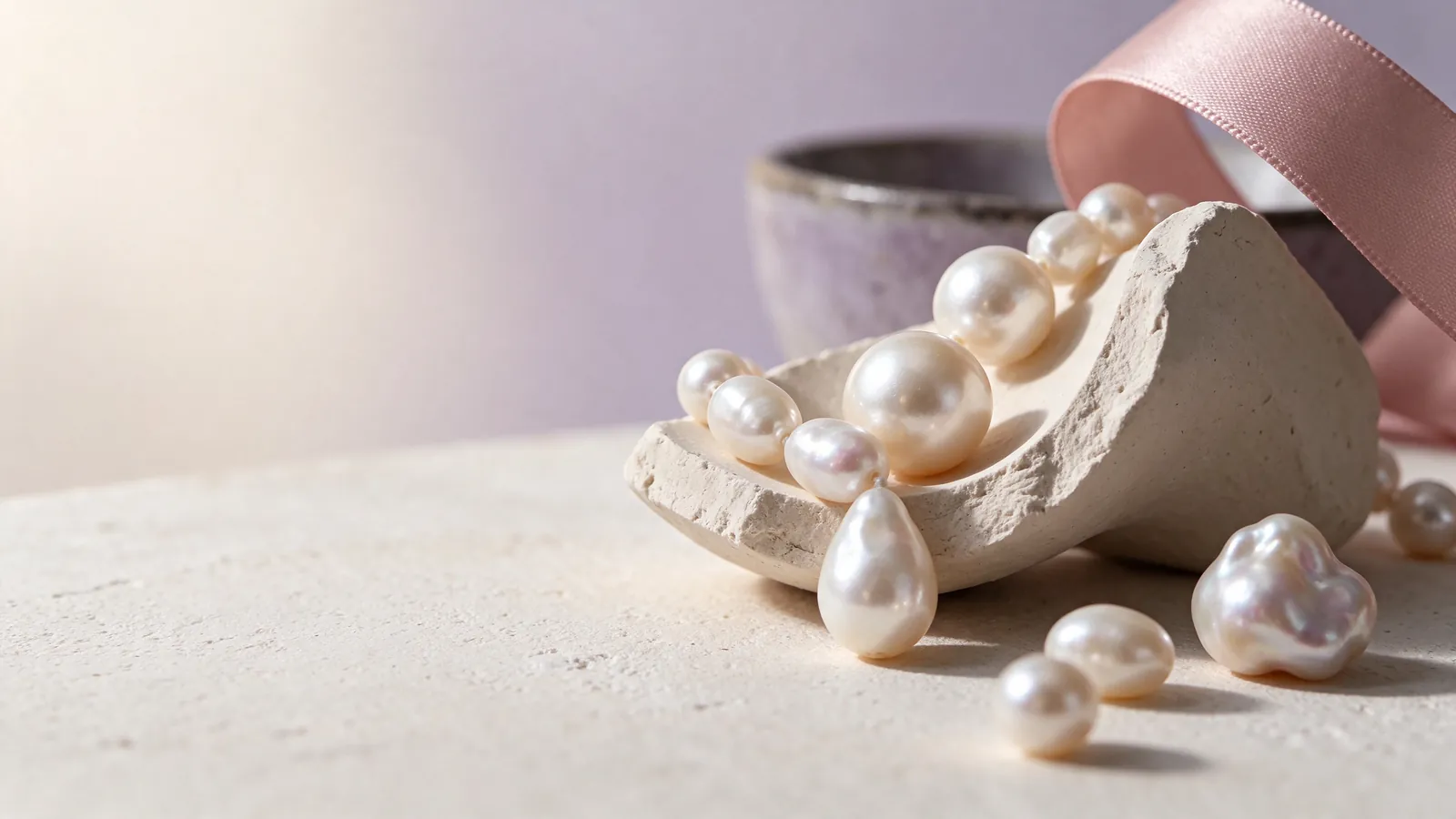
Place the necklace beside a dark garment and a pale garment you regularly wear. A dark background may emphasise its outline, while warm ivory can make a softer colour feel integrated into the outfit. GIA distinguishes bodycolour, overtone and orient, and notes that not every pearl displays all three. A colour effect visible in one photograph is therefore not a promise that the same effect will appear in every setting or on every pearl.
For warmer styling ideas, an orange pearl necklace offers a useful colour discussion without making orange a test of identity. A multicolour pearl necklace raises another design question: do the colours move gradually along the strand or alternate more distinctly? Compare those rhythms against your clothes and earrings. Neither a warm colour nor several colours establish origin, treatment or nucleation; those remain questions for the individual pearl description.
Choose a focal point before adding earrings
If the strand already has noticeable colour variation, simpler earrings can leave room for its rhythm. With closely matched colours, the shape of an earring or the texture of a jacket can supply contrast. Matching every element exactly is not necessary. Decide which piece should lead the outfit, then ask whether the other accessories support it rather than compete with it.
Consider handling, string condition and weight distribution
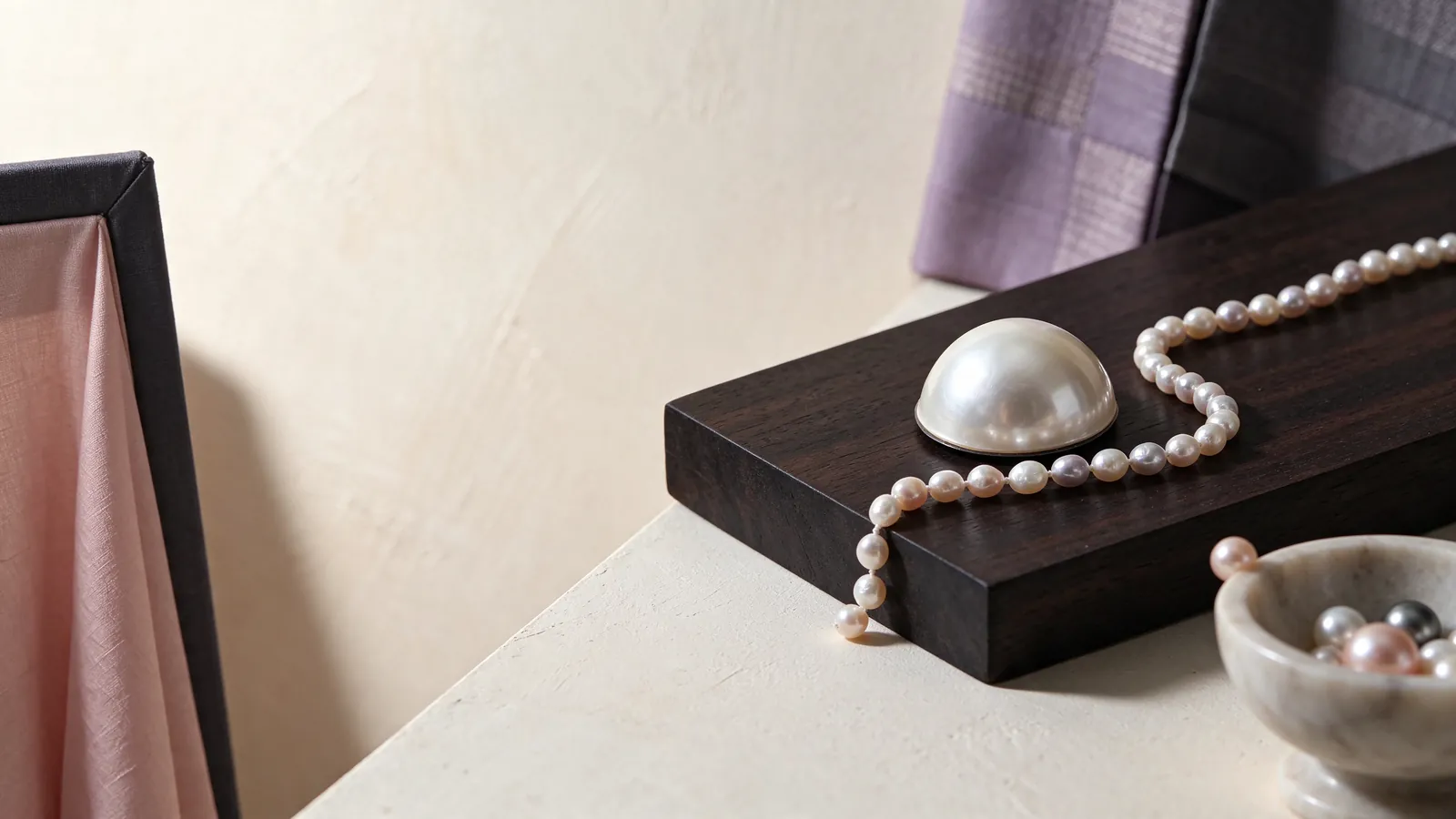
Check how the necklace length is expressed, including whether it includes the clasp or any extension. Otherwise, two descriptions may appear comparable while referring to different measurement arrangements. When handling a strand, notice the opening direction, whether your fingers can grip the clasp and how you confirm it is closed. These details matter especially if you usually fasten jewellery behind your neck while wearing a shirt collar.
Look at spacing between pearls, visible knots and the condition of the string alongside the drape. Do not pull the strand tight to force a closer fit. If you want the clasp to become a visible styling element, consider whether its design supports that position and whether its weight draws the necklace to one side. Rotating a back clasp to the front is not automatically the same as choosing a necklace designed around a decorative front fastening.
Test contact points before layering
Put necklaces on separately and observe whether they cross or tangle as you move. Pay particular attention to hard decorative elements repeatedly touching the pearl surfaces. If the layers swap positions after walking, reconsider their resting points instead of rearranging them only for a photograph. Remove each necklace individually so that the styling choice does not create unnecessary pulling on either strand.
Nucleation does not replace gentle pearl care
GIA places pearl at 2.5 on the Mohs hardness scale and states that pearls should never be cleaned with ultrasonic or steam cleaners. Build care into your routine: finish using perfume and hair products before putting on the necklace, then wipe it with a very soft, clean cloth after wearing. Do not interpret a nucleated description as permission to expose pearl surfaces to aggressive cleaning or repeated friction.
Store the strand separately from items that could scratch it, keeping sharp decorations and clasps from pressing against the pearls. GIA advises that, when strung pearls are cleaned with water, the string must be completely dry before wearing. A dry-looking pearl surface does not establish that the string is dry. Avoid excessive heat, and do not use high heat to hurry drying. If you notice looseness or visible wear, pause wearing and seek an appropriate inspection rather than pulling to test strength.
Pack a strand without compressing it
For travel, give the necklace its own soft storage space rather than squeezing it into a pouch with other jewellery. Arrange the clasp so that it does not press directly against a pearl. On arrival, check for tangles and ease the strand into position gently. Separating pieces and avoiding excessive heat are more useful habits than repeatedly stretching the necklace to reassure yourself that it is secure.
Make a comparison checklist based on your wearing habits
Separate essentials from preferences. Clear pearl identity information, a manageable clasp and a suitable resting point may be essentials; a particular colour rhythm or layering effect may be preferences. Eliminate options that do not work with your ordinary clothes before comparing fine differences in appearance. This keeps a beautiful close-up from overshadowing the practical experience of wearing the whole necklace. Another person's neckline proportions need not become your rule.
For a gift, learn about the recipient's usual collars, preferred necklace position and comfort with a back fastening rather than guessing an exact neck measurement. Someone who favours simple daily dressing may value a clear silhouette and straightforward care information. Someone who enjoys statement accessories may prefer a more noticeable colour arrangement. Thoughtfulness comes from those habits, not from assigning unsupported health benefits or financial promises to the pearls.
Describe the outfit and desired resting point when discussing ideas
Share your usual neckline, preferred position on skin or fabric and whether colour, lustre or clasp handling matters most with Flint Jewellery on WhatsApp at https://wa.me/85260106207. Start with one outfit you wear often and the curve you want the necklace to create; that makes a styling conversation more useful than a name alone. Read the pearl identity and any accompanying documentation for the individual necklace separately from the styling discussion.
| Comparison | What to observe | Wearing context | Useful question | Avoid assuming |
|---|---|---|---|---|
| Resting point | Overall length and settled curve | Crew neck, open shirt or high collar | Does length include the clasp? | One length fits everyone |
| Pearl identity | The individual strand description | Similar-looking necklaces | Does nucleated describe every pearl? | Round means nucleated |
| Lustre and matching | The centre and both sides | An uninterrupted single strand | Is variation deliberate? | One bright pearl represents the whole |
| Colour rhythm | The strand beside everyday clothing | Dark fabric, ivory or layered outfits | How are colours distributed? | Colour proves origin or treatment |
| Handling and care | Clasp operation and string condition | Back fastening and travel | Is the string showing wear? | Nucleated permits aggressive cleaning |
Pearl knowledge and authoritative references
GIA describes seven pearl quality factors: size, shape, colour, lustre, surface quality, nacre quality and matching. Matching helps assess the necklace as an arrangement rather than judging it through one pearl.
Read the reference for this factFrequently asked questions
Does a round shape prove that a freshwater necklace is nucleated?
No. Roundness describes visible shape and does not independently establish internal structure or pearl identity. Read the individual necklace description and, if documentation accompanies it, check that the described item corresponds to the necklace.
What if the strand rests exactly on my crew-neck edge?
Compare a resting point clearly above the neckline with one that forms a complete curve over the fabric. Use a necklace you already own to explore those positions, then sit and turn your head to see how the outline changes.
Why inspect pearls away from the centre?
A necklace is viewed as an arrangement. Shape, brightness and colour along both sides affect its rhythm. A central close-up cannot show whether the whole strand is uniform or whether its deliberate variation suits your preference.
Can I wear any clasp at the front?
First consider whether the clasp design suits display and whether its weight keeps the strand balanced. If it shifts repeatedly, catches the collar or is difficult to operate in that position, appearance alone is not a good reason to keep wearing it there.
Can an ultrasonic cleaner be used for a nucleated strand?
No. GIA states that pearls should never be cleaned in ultrasonic or steam cleaners. Use a very soft, clean cloth for routine wiping. If strung pearls are cleaned with water, allow the string to become completely dry before wearing.
Updated: