
How can colour and treatment details clarify a black Akoya pearl necklace or black Akoya pearl strand described as a Japanese black pearl necklace? | Flint Jewellery
The word black describes appearance; Akoya names a pearl category. Reading them together should not erase that distinction. A useful necklace description separates pearl identity from colour and explains any treatment rather than letting an attractive name do all the work. For the underlying terminology, start with what are Akoya pearls, then return to the information supplied for the individual necklace you are considering.
A Japanese black pearl necklace label also deserves careful reading. The place where pearls are cultured, where colour treatment takes place and where jewellery is assembled are different questions; a geographical word alone does not answer all of them. When comparing an Akoya pearl necklace with a darker-looking strand, use the same questions for both, so that the comparison rests on descriptions rather than assumptions about their names.
Which colour-origin details should you ask about when a black Akoya pearl necklace or black Akoya pearl strand is called a Japanese black pearl necklace? | Flint Jewellery
Ask whether black refers to the main bodycolour or the overall visual effect, whether any colour treatment is present, and what care instructions apply to that treatment. If treatment is described, ask for its name in writing alongside the pearl description. An answer about how dark the necklace looks is not an answer about colour origin; even a detailed photograph cannot replace that explanation.
GIA's laboratory note Irradiated and Dyed Akoya Pearls records irradiation treatment in examined Akoya pearls, with dyeing also identified in some samples. This is a specific example of why dark appearance needs a separate explanation: it does not justify describing every black Akoya pearl as naturally black, or assigning the same treatment to every dark strand. Ask the seller to state the colour origin and any treatment for the particular necklace. The laboratory case is educational evidence, not an identification of the jewellery you are considering.
Read the colour in more than one lighting setting
GIA distinguishes bodycolour, overtone and orient, and notes that not every pearl displays all three. This helps explain why a strand can show a lighter reflection or another hue without its main colour being adequately described by that reflection alone. Look at the necklace under soft daylight and under the indoor lighting where you expect to wear it. The aim is to judge whether you like both appearances, not to diagnose treatment from a change in light.
If you are deciding between a dark and a softer-looking strand, a grey Akoya pearl necklace is a useful neighbouring colour topic. Compare each against the same clothing: a warm ivory blouse makes contrast prominent, whereas a dark jacket may place more emphasis on reflected light. Neither effect is automatically better. Consider whether you want the necklace to form a distinct outline or a quieter layer within your outfit.
What makes two photographs a fair comparison?
Check the background, exposure, light direction and viewing distance before comparing darkness. Strong contrast can hide shadow detail, while bright glare can obscure the surface. A full-strand view and a gently moving view are useful companions to close-ups. Keep their purpose clear: they help you assess visual appeal, but do not establish geographic origin, pearl identity or whether a colour treatment has been used.
Judge the whole strand, not just its darkest pearl
GIA sets out seven pearl value factors: size, shape, colour, lustre, surface quality, nacre quality and matching. For a strand, look along the entire sequence rather than focusing on one attractive pearl in a close-up. Notice how reflections, outlines and colour transitions work together. A darker appearance does not by itself establish stronger lustre or nacre quality, and a single colour word cannot summarise the quality of the assembled necklace.
A Tahitian pearl necklace may also enter your comparison because of its dark appearance, but its stated pearl identity should be considered separately. Do not substitute one name for another simply because two strands look dark. Once the descriptions are clear, compare their overall rhythm: do you prefer consistent-looking pearls, or a composition with visible variation? Matching should be assessed against the effect you want, rather than an assumption that every design must look identical.
How should you consider visible surface marks?
Ask where a visible mark sits in the strand and examine whether it draws your eye when worn. Surface quality is one part of the overall assessment, not a reason to ignore lustre or matching. Look under lighting that reveals detail rather than concealing it in deep shadows. Your acceptance of a mark should reflect the complete necklace and its wearing position, not a flattering image of one isolated pearl.
Choose the wearing position with your actual collars
A length label cannot predict the same position on every wearer. Neck shape, clothing, the strand structure and the clasp all affect how the necklace sits. Try it with a round neck, an open shirt and your usual jacket, and notice whether the pearls rest on skin, meet the collar edge or sit over fabric. A dark strand interrupted by a busy neckline can look quite different from an uninterrupted curve in a close-up.
The single strand pearl necklace approach gives you a simple starting point: first imagine one clear curve, then test where that curve works with your wardrobe. A soft tape or flexible cord can help estimate a preferred position, but it cannot reproduce the weight and drape of pearls. During a fitting, sit down, turn your head and put your jacket back on instead of judging only a still, upright pose.
What changes between a shirt and a high neckline?
With a shirt, compare the opening with its upper buttons fastened and unfastened so that the necklace does not compete awkwardly with the collar. Over a high neckline, check how the strand settles against the fabric and whether its texture overwhelms the pearl reflections. Use your own clothes rather than trying to reproduce a model photograph; the right position should work when you move through an ordinary day.
Build an outfit around contrast or subtle reflection
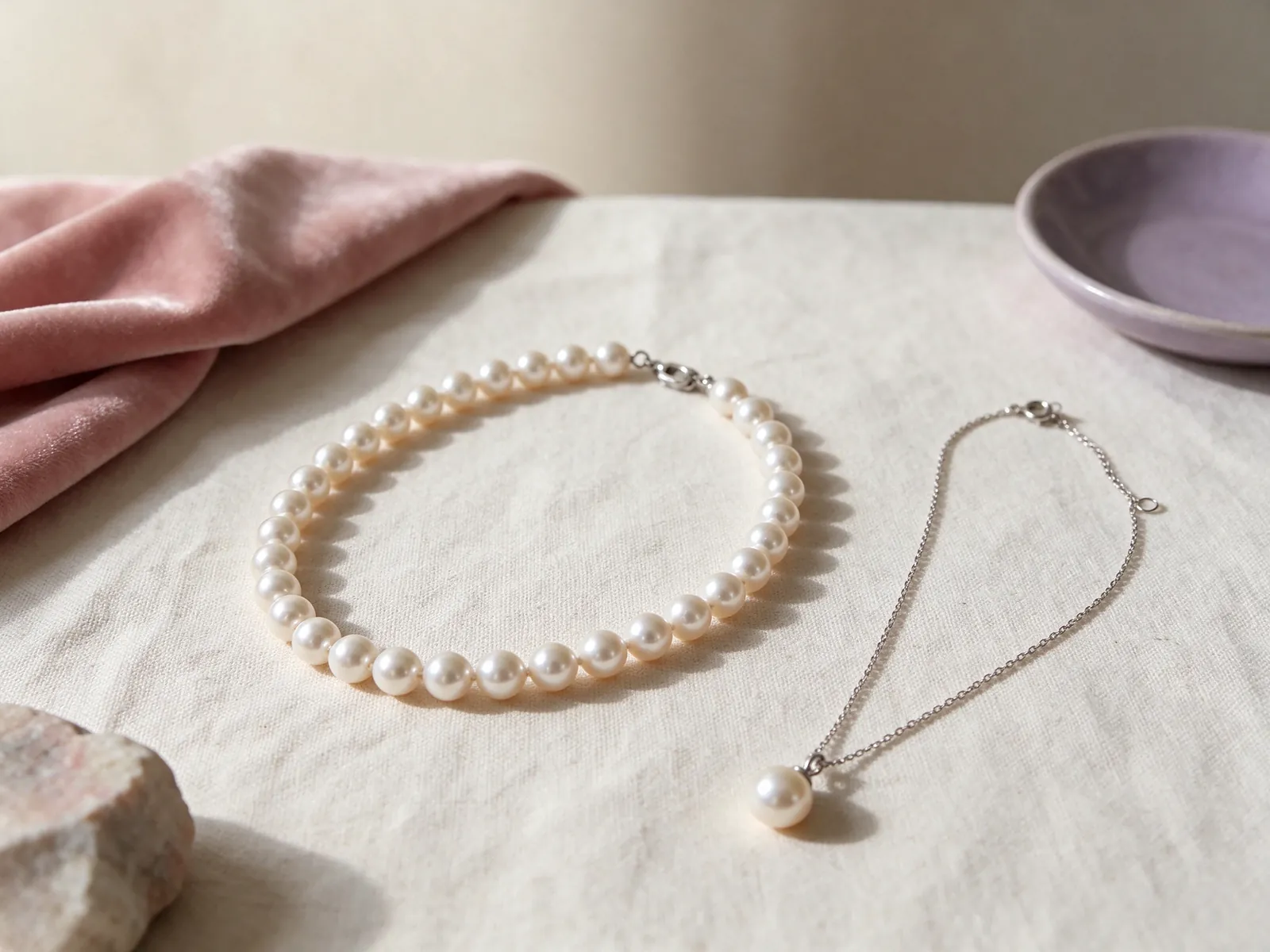
A pale blouse can make a dark pearl strand the main visual focus. Black clothing creates a different task: see whether the lustre separates the necklace from the fabric. Both approaches can work, but they emphasise different qualities. If your outfit already includes bright buttons, patterned lapels or a strong neckline detail, reduce competing neck accessories first. This makes it easier to judge whether the pearl curve has enough space within the outfit.
If a uniform dark line feels too restrained, consider the visual rhythm discussed in a multicolour pearl necklace guide. Alternating tones can change the emphasis without implying that one colour arrangement is inherently superior. For earrings, begin with silhouette and visual weight rather than assuming you need an identical pearl name. Let the necklace or the earrings lead, then check whether the other piece supports the balance rather than dividing attention equally.
How do you assess the same idea for work and dinner?
For work, test the necklace with your normal collar and outerwear under the lighting you regularly use. For dinner, look at the relationship between the strand, a more open neckline and other jewellery. A whole-outfit photograph is often more helpful than another neck close-up. Dark pearls need not be confined to formal styling, but their visual effect should still be checked in the setting that matters to you.
Care for pearls rather than assuming dark means durable
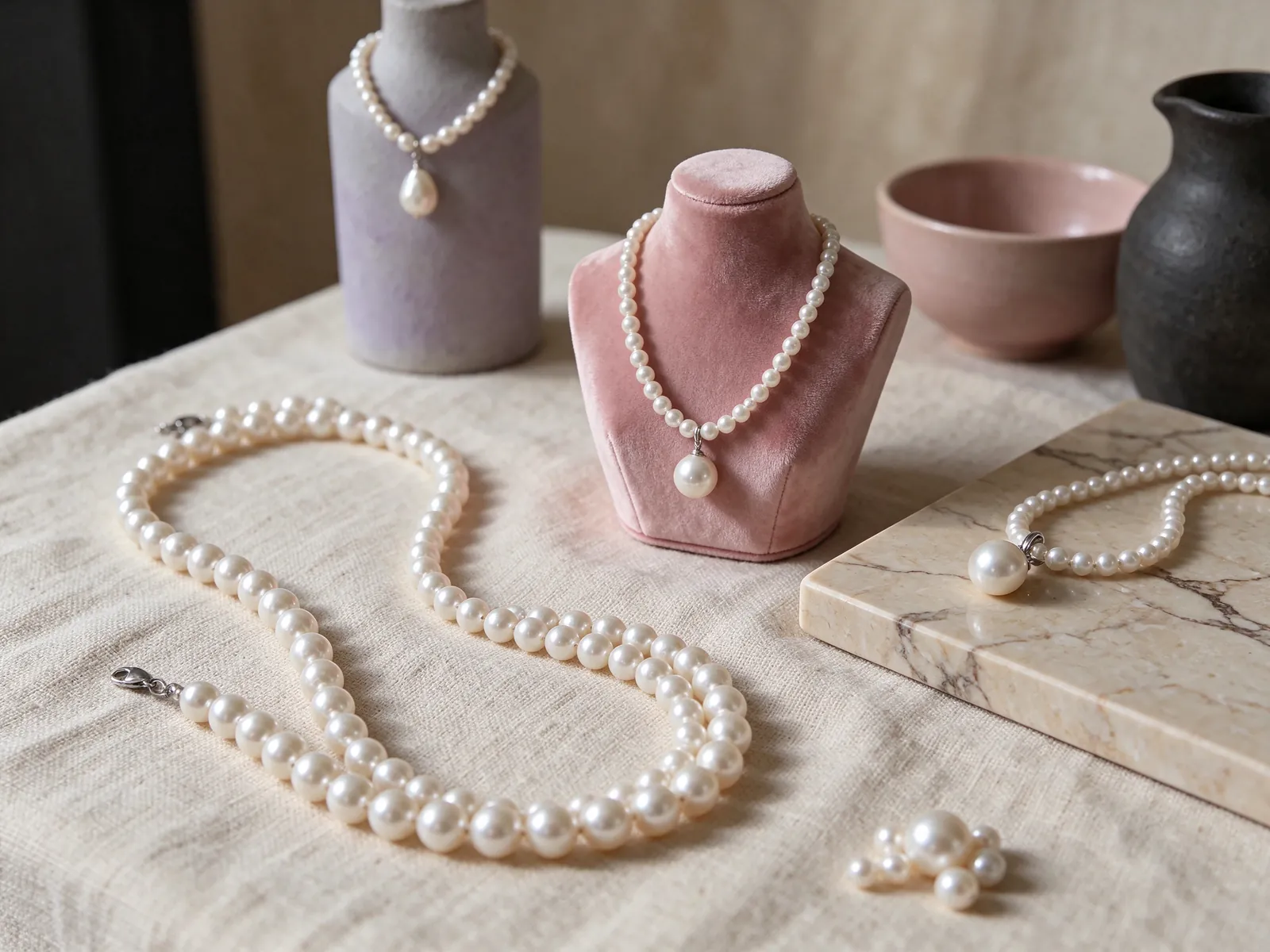
GIA lists pearl at 2.5 on the Mohs hardness scale and advises against ultrasonic and steam cleaning. A dark appearance does not make a pearl resistant to abrasion. After wearing, wipe the necklace with a very soft, clean cloth and store it separately from items that could rub against it. If colour treatment is described for a particular necklace, read the associated care advice instead of guessing from the shade.
GIA also advises avoiding acids, perfume, hair spray and excessive heat. A practical routine is to finish applying fragrance and styling your hair before putting the strand on, then set it down on a clean surface when removing it. If strung pearls are cleaned with water, the string must be completely dry before the necklace is worn again. Dry-looking pearl surfaces alone do not establish that the string is ready.
What should you inspect before cleaning or wearing?
Check for visibly worn string, unexpected looseness between pearls and a clasp that does not close normally. Stop wearing the necklace if something appears wrong rather than pulling on it to test strength. The care needs of the clasp and any additional details should also be considered individually; a cleaning method suitable for one component is not automatically suitable for the complete piece of jewellery.
Turn a colour preference into useful buying questions
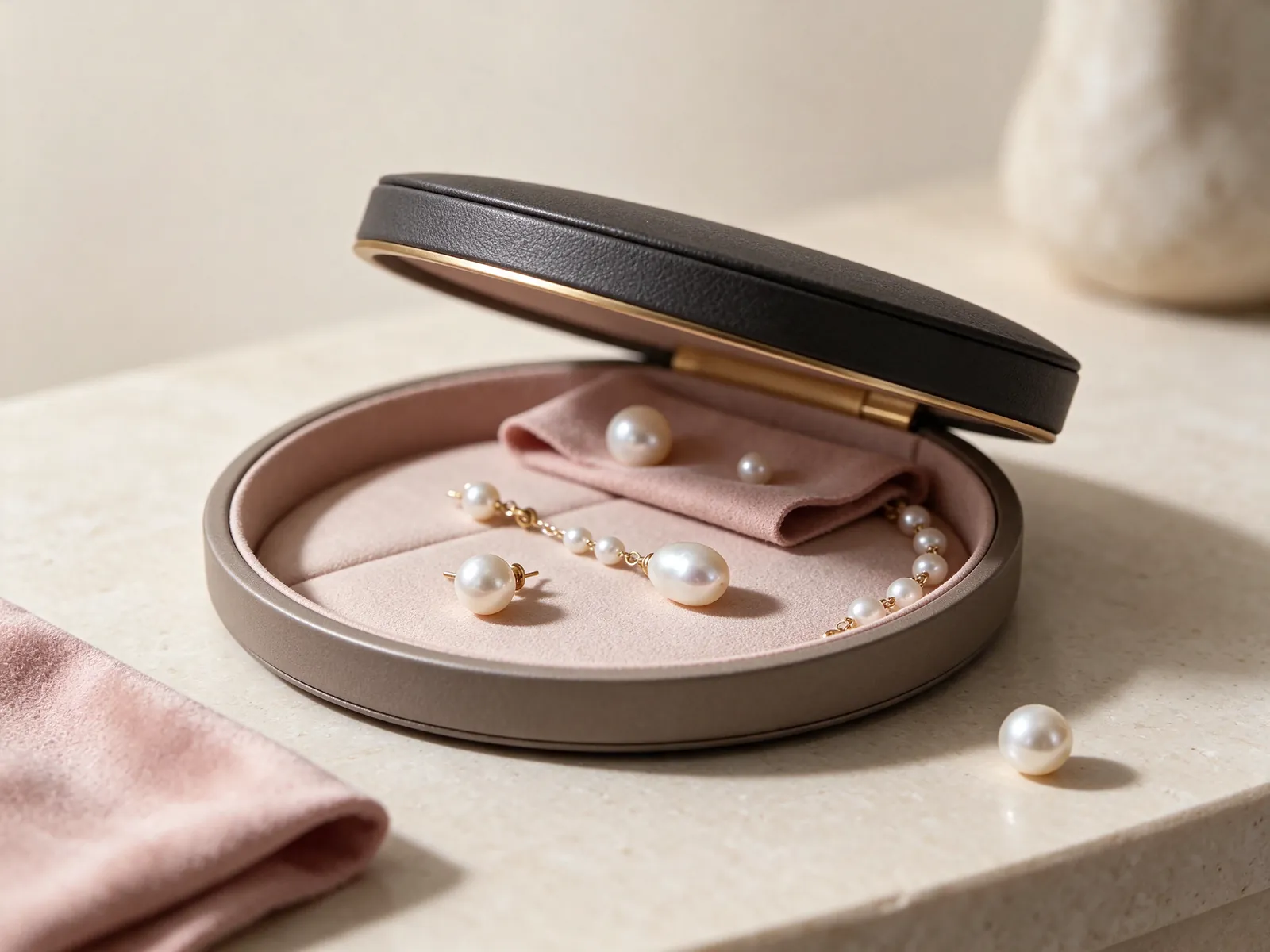
Keep a short comparison organised around identity, colour information, whole-strand appearance and fit. Record how the pearl category is described, what is said about treatment, whether you like the lustre and matching, and where the necklace sits with your usual clothes. Notes such as darker or brighter are not enough on their own. More specific observations help you decide what you value when two photographs initially seem equally appealing.
The pearl necklace length guide can help turn your outfit preferences into a clearer fitting question. Note whether you want the strand above the collar, against exposed skin or over fabric, and keep a photograph of a shirt or jacket you wear regularly. During a discussion, explain that preferred position rather than relying on a length name alone. If you add earrings or a bracelet later, still read each piece's own pearl and colour description; the necklace cannot establish the identity of another item.
What is worth learning before choosing a gift?
Find out whether the recipient normally wears light or dark tops, high or open collars, and pearl strands at all. Someone who likes black clothing may prefer contrasting jewellery rather than another dark layer. Discuss the intended occasion and preferred wearing position before settling on a shade. Those details provide a more thoughtful starting point than assuming your own favourite dark necklace will suit their wardrobe.
Have a preferred dark effect or a neckline in mind? Contact Flint Jewellery on WhatsApp with the pearl description you want to understand, your questions about colour treatment and the position you would like the strand to reach. Mention whether the necklace is for yourself or a gift, and which clothing colours you wear most. These details make a pearl buying conversation more useful than a colour name alone.
| Area | Look or ask for | Styling relevance | What it cannot establish alone |
|---|---|---|---|
| Identity and naming | Separate pearl category from geographical wording | Choose the correct type to compare | A dark name does not prove origin or treatment |
| Colour in light | Compare bodycolour and reflections on similar backgrounds | Decide between contrast and a quieter layer | A photograph cannot establish colour origin |
| Whole-strand matching | Look along the sequence of lustre, shape and tone | Choose consistency or deliberate variation | Darkness does not summarise pearl quality |
| Neckline position | Try normal shirts, jackets and seated movement | Keep the curve clear of competing collar edges | A length label cannot promise the same fit |
| Care routine | Use soft cloth care and allow wet string to dry completely | Make everyday handling practical | A dark surface does not permit steam cleaning |
Pearl knowledge and authoritative references
GIA identifies seven pearl value factors: size, shape, colour, lustre, surface quality, nacre quality and matching. Darkness is therefore only one part of assessing a pearl strand.
Read the reference for this factFrequently asked questions
Does a black Akoya pearl strand name confirm untreated colour?
No. The name does not replace an explanation of colour origin and treatment. GIA has documented irradiation in examined Akoya pearls and dyeing in some of those samples; that does not establish the method used on every dark necklace. Ask whether treatment is present in the particular piece and which care instructions apply.
Can a greenish reflection identify a pearl as Tahitian?
Not by itself. Reflected hues are part of visual appearance, while pearl identity requires a clear description. GIA distinguishes bodycolour, overtone and orient; a single reflection should not be used to assign pearl type or origin.
Why does a necklace look darker in one photograph?
Background, exposure and lighting can change how dark details appear. Compare images made under similar conditions, including a whole-strand view. This improves visual comparison but still does not determine treatment status.
Should I match earrings by the same colour name?
Start with silhouette, visual weight and the way the pieces look together when worn. Identical wording does not guarantee identical appearance, and matching colour names cannot establish that separate pieces have the same pearl identity.
Can I use steam to freshen a dark pearl necklace?
No. GIA advises that pearls should never be cleaned with steam or an ultrasonic cleaner. Routine care uses a very soft, clean cloth; if water is used on strung pearls, let the string dry completely before wearing.
Updated: