Flint Jewellery guide: How do length and neckline influence the look of a toggle clasp pearl necklace, T bar clasp pearl necklace or mantel pearl necklace?
Start with the complete necklace rather than the pearl strand alone. Ask whether the stated length includes the fastening, then look at where the necklace falls when worn without adjustment. A front fastening draws attention differently from one at the side or behind the neck. With a crew-neck top, decide whether you prefer the strand above the neckline or clearly below it, rather than sitting partly hidden on the fabric edge.
Your shoulder line, the weight distribution of the necklace and the thickness of your clothing affect its drape. The same measured length need not create the same silhouette on different people. A single strand pearl necklace is a useful starting point for understanding an uninterrupted curve before comparing a prominent clasp. Use a familiar necklace to identify a comfortable position, but check how its length was measured before treating it as a direct comparison.
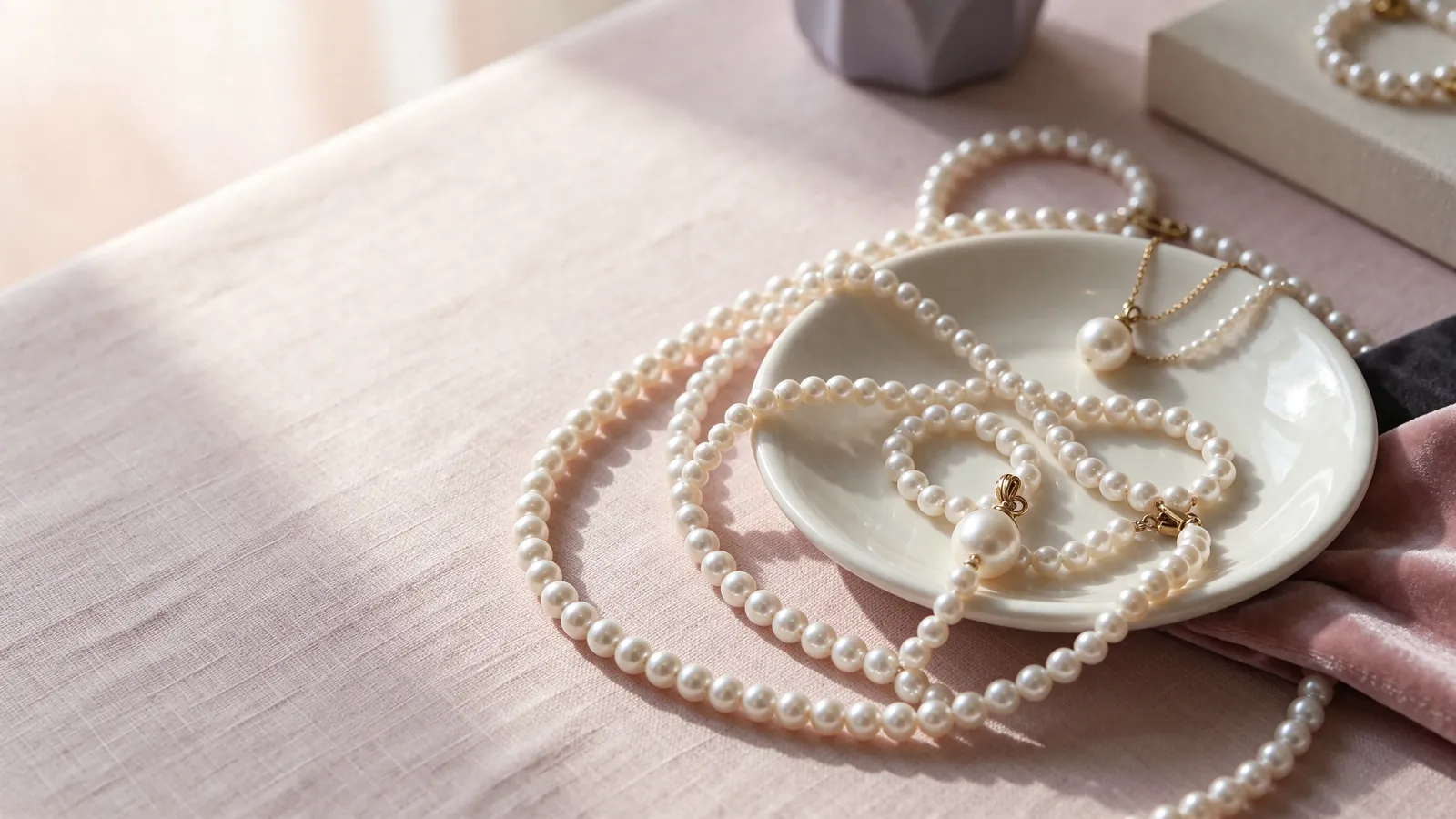
Flint Jewellery guide: Where does the fastening sit against your neckline when trying on a toggle clasp pearl necklace, T bar clasp pearl necklace or mantel pearl necklace?
Try your usual shirt with the buttons fastened as you normally wear them. Notice whether the bar competes with a button, rests on the placket or disappears under a collar. A V-neck creates another focal point at its tip. Look from the side as well as the front, and let the necklace settle naturally instead of holding the clasp in position for a photograph.
Read the fastening itself, not just the style name
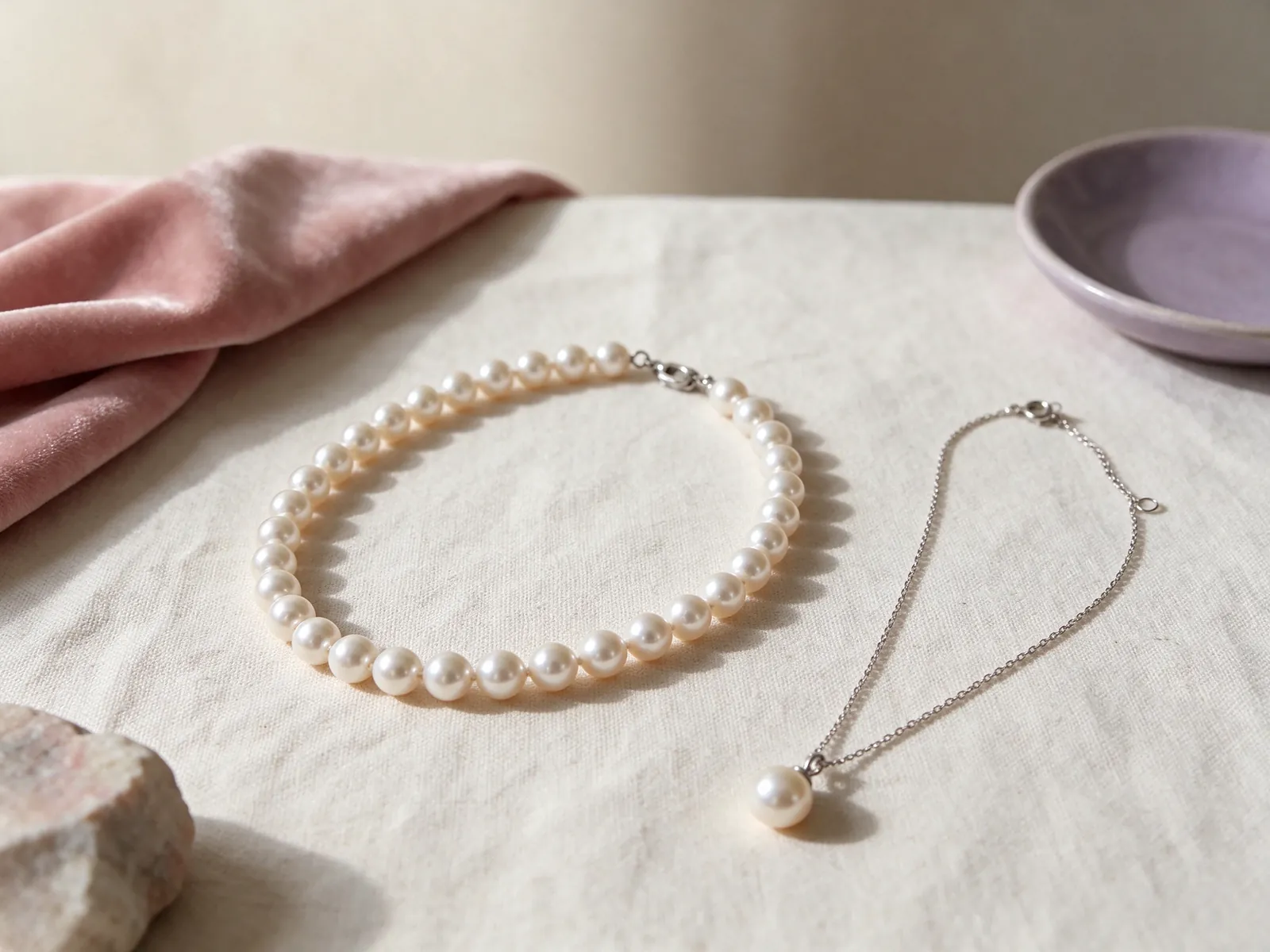
In a typical bar-through-ring fastening, the bar is turned to pass through the opening and then lies across the far side of the ring. That description does not establish the construction of every necklace carrying a toggle, T bar or mantel name. Examine the ring, both ends of the bar and their connections. Clear front and back views can reveal details that a styled image leaves out.
Watch the complete opening and closing action. Can you hold the parts comfortably, and is there enough room to guide the bar without pulling hard on the strand? If you prefer a fastening with a different opening action, compare a clicker clasp pearl necklace as a separate design direction. Focus on the method of operation and wearing position rather than assuming similarly decorative clasps work in the same way.
Observe the clasp when the strand relaxes
After closing it, turn gently, raise your arms and sit down. Check whether fabric pushes the bar upwards or the fastening changes direction as the strand becomes less taut. Do not test it by forcefully tugging the pearls. If normal movement makes the closure feel uncertain, understand its intended operation before choosing it; the apparent length of a bar is not a guarantee against opening.
Decide whether the bar or the pearls should lead the outfit
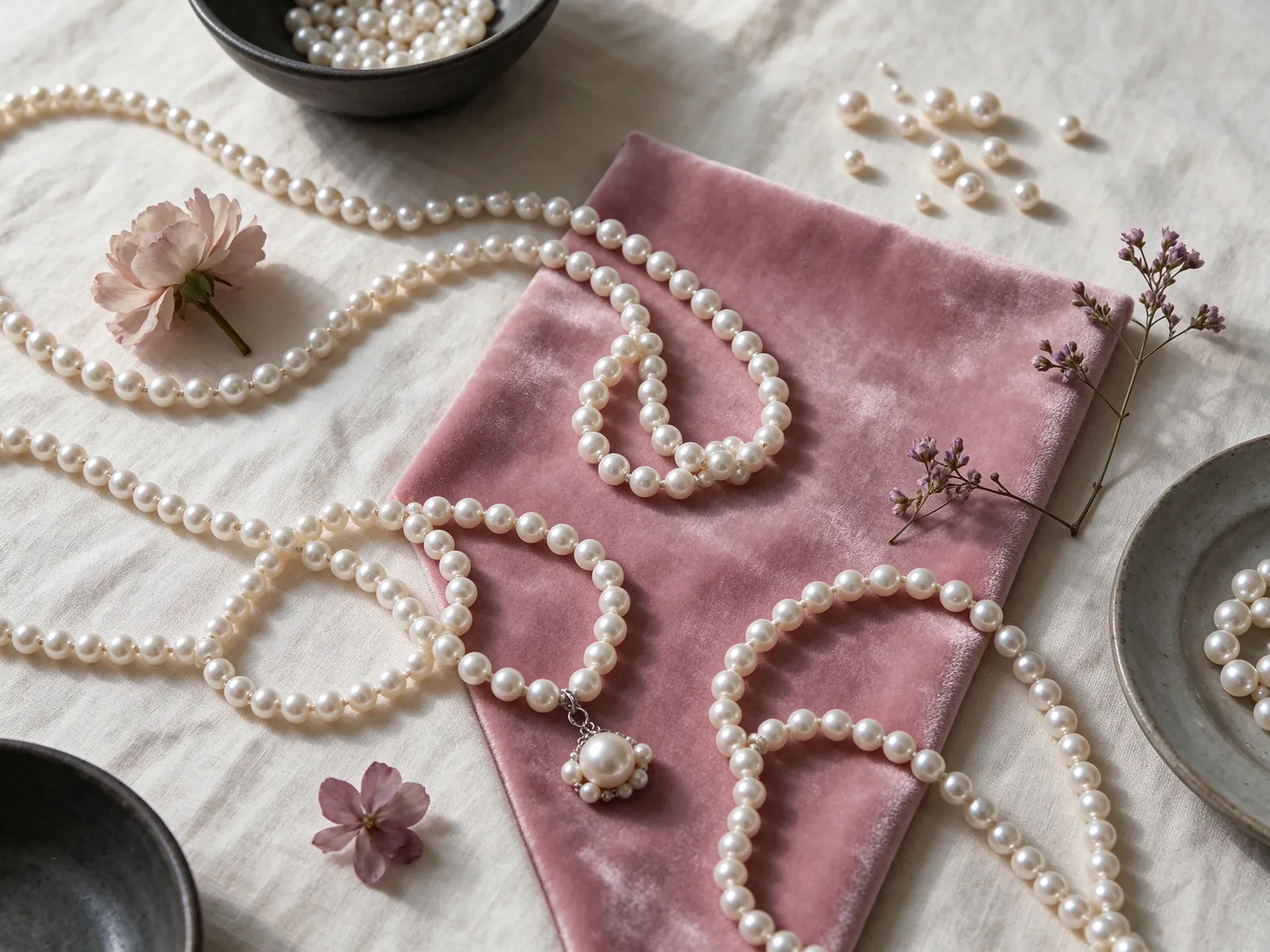
A visible front bar introduces a horizontal line within the curve of the pearls. Against plain knitwear, that contrast can be easy to see. Patterned fabric, a zip or decorative shirt buttons may compete with it. Begin with simple earrings and assess the whole upper-body arrangement before adding more jewellery. The aim is a clear hierarchy of details, not a rule that every item must match.
For a softer fastening detail, a ribbon clasp pearl necklace offers another styling question: how does a bow or tie change the outline of an outfit? Compare that visual emphasis with the straighter line of a bar. Neither is automatically more formal. Your hairstyle also matters; loose hair can conceal a side fastening, while tied-back hair leaves more of the necklace visible.
Check the necklace with your work jacket
Put on the jacket you actually use rather than relying on an open-neck styling photograph. Check whether its lapel covers half of the fastening and whether opening or closing the jacket brushes the bar. If the clasp, shirt buttons and other accessories create too many competing points, remove one element. This practical comparison is more useful than choosing by a fixed age or body-shape rule.
Look beyond the clasp to the pearl strand
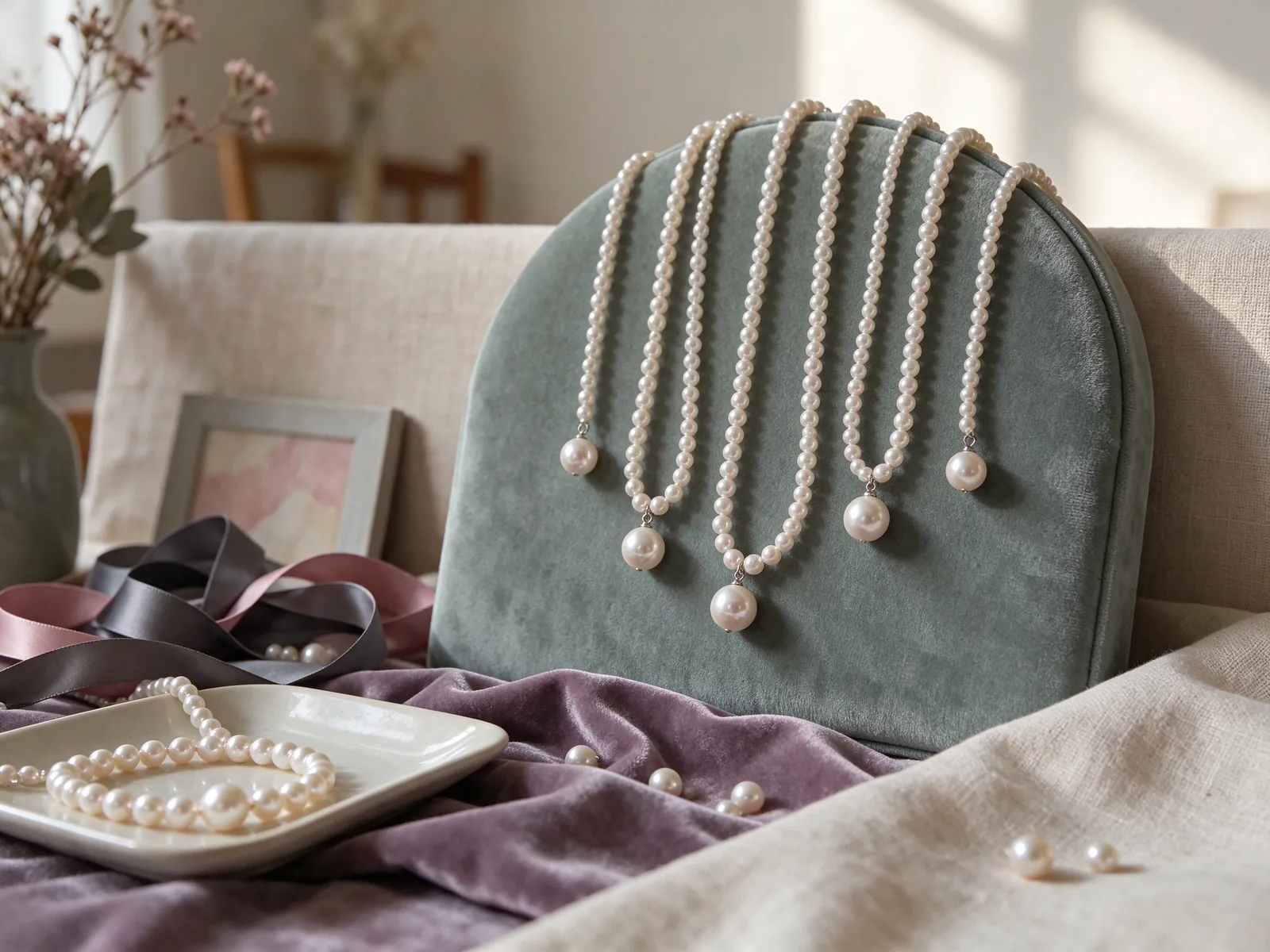
GIA describes seven pearl value factors: size, shape, colour, lustre, surface quality, nacre quality and matching. A decorative clasp does not replace those considerations. Examine the pearls nearest each end of the fastening, where your eye may naturally pause. Matching can involve an intentional arrangement rather than identical-looking pearls throughout; decide whether the changes in outline and visual weight create a rhythm you enjoy. GIA also notes that designers sometimes deliberately mix colours, shapes and sizes, while most jewellery with multiple pearls calls for matching across the quality factors.
Compare lustre under similar lighting, looking at the clarity of reflections rather than treating an overexposed white photograph as evidence of greater brightness. Irregular outlines can contrast with the straight bar, while more consistent shapes can emphasise a smooth arc. A grey Akoya pearl necklace introduces a separate colour-reading topic. A clasp name or grey appearance alone cannot establish pearl type, origin or natural-versus-cultured identity.
Inspect the transition between pearls and metal
Look at whether nearby pearls leave enough space for your fingers and whether the end connections feel comfortable against the skin. Notice how each end hangs when the necklace settles. These are wearability observations, not identification tests. If pearl identity or treatment matters to your decision, read the description for the individual necklace rather than drawing conclusions from a shape or a small surface mark.
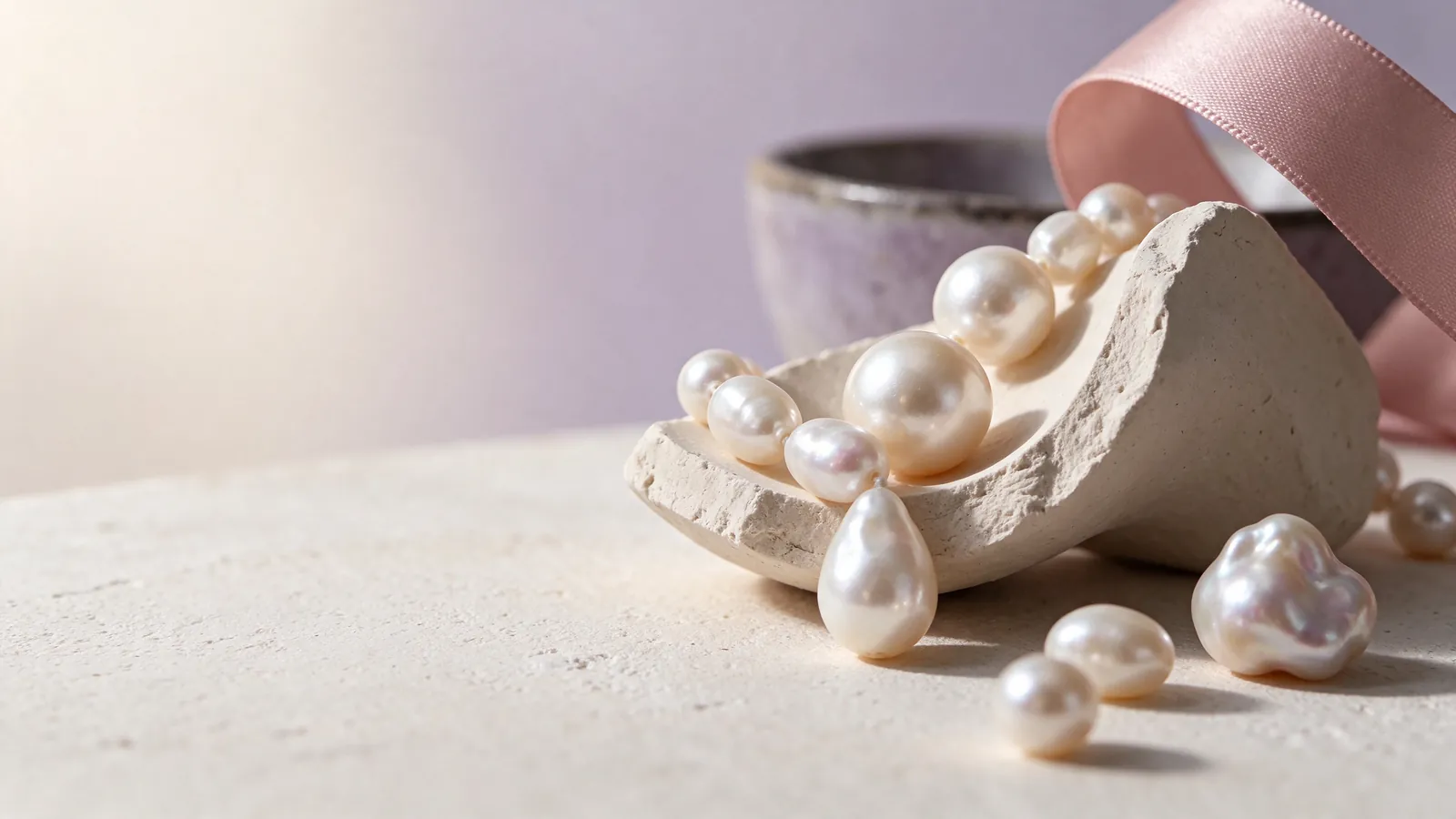
Build layers without crowding the fastening
Wear the pearl necklace alone first and identify its natural curve. Add a second necklace only after you know where the fastening rests. Two strands at nearly the same height can cover one another or move towards the clasp as you walk. Seek a visible separation, then check it while sitting. Do not alter the string or connections yourself simply to create a different layering length.
A half chain pearl necklace helps you compare the visual balance of pearls and chain, rather than a continuous strand. For colour arrangement, a multicolour pearl necklace offers another useful direction: look at the rhythm across the whole necklace before judging individual pearls. These comparisons help define your preferences; they do not mean any fastening can be combined with every chain arrangement or pearl palette.
Test the layered look at a desk
Sit at a table and observe whether the longer necklace is pushed upwards by clothing or the table edge. Check whether another chain approaches the ring opening. If you repeatedly need to separate the layers by hand, reduce their number or try a less crowded arrangement. A successful layered outfit should remain comfortable in ordinary positions, not only while standing still in front of a mirror.
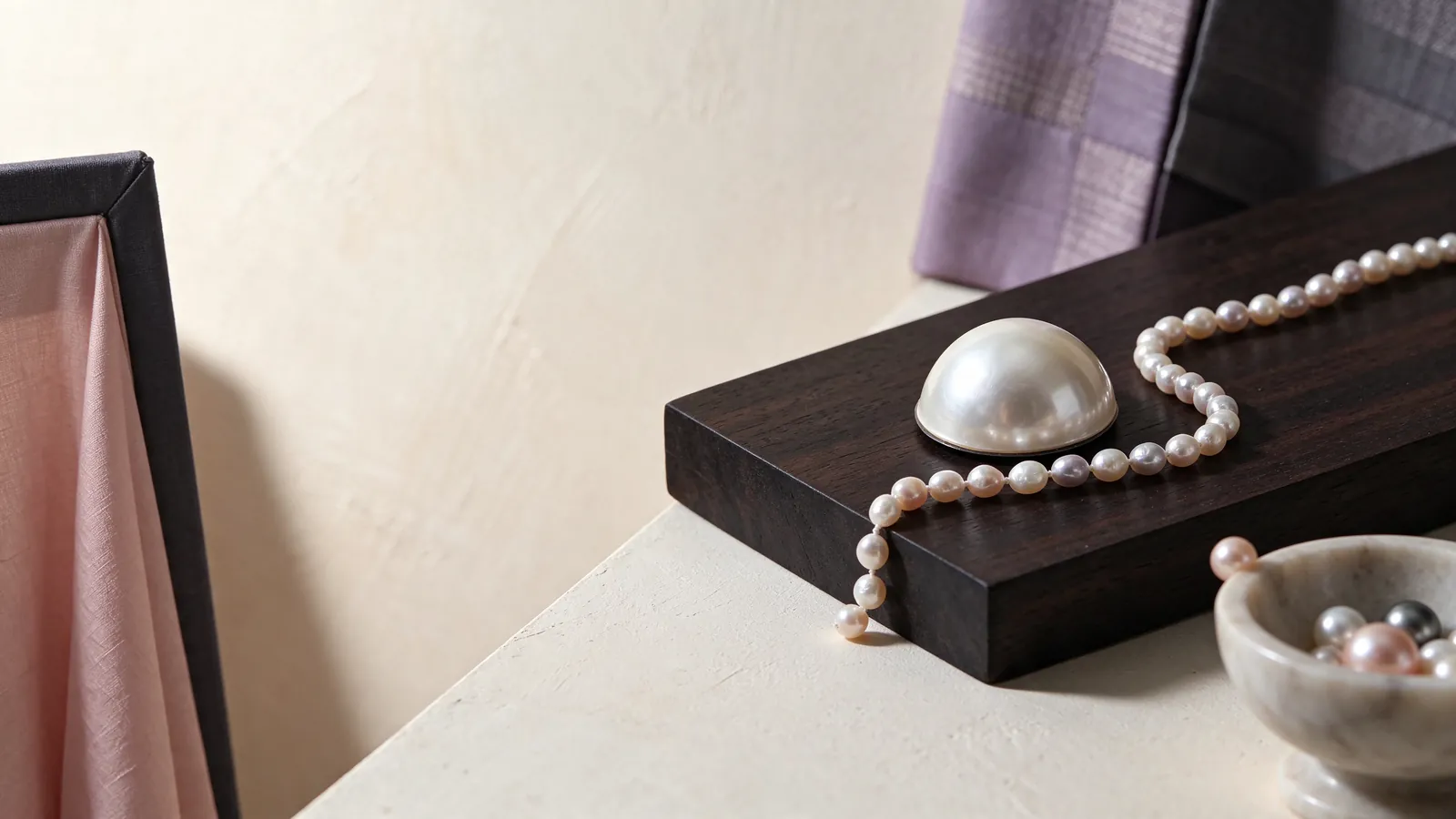
Care for the pearls, string and fastening together
GIA places pearl at 2.5 on the Mohs hardness scale. Care should therefore consider the pearls even when your attention is on a metal fastening. Wipe them with a very soft, clean cloth after wearing. Avoid contact with acids, perfume and hair spray, as well as excessive heat. Never put a pearl necklace into an ultrasonic or steam cleaner merely to clean its clasp.
Open the fastening using its intended action rather than pulling the two ends of the strand apart. Store the necklace separately from items that could scratch it, allowing the strand to rest naturally without placing the bar beneath the pearls. GIA advises that string must be completely dry before a water-cleaned strung necklace is worn. A dry-looking pearl surface does not establish that the string inside the drill holes has dried.
Notice changes before putting the necklace on
Look for fraying, unusual gaps or a change in how the fastening operates. If a connection is visibly bent or the bar no longer settles as it used to, stop wearing the necklace and seek an appropriate inspection rather than bending it back with pliers. Maintenance needs depend on construction and use; an outward appearance alone cannot establish a repair outcome or a universal servicing interval.
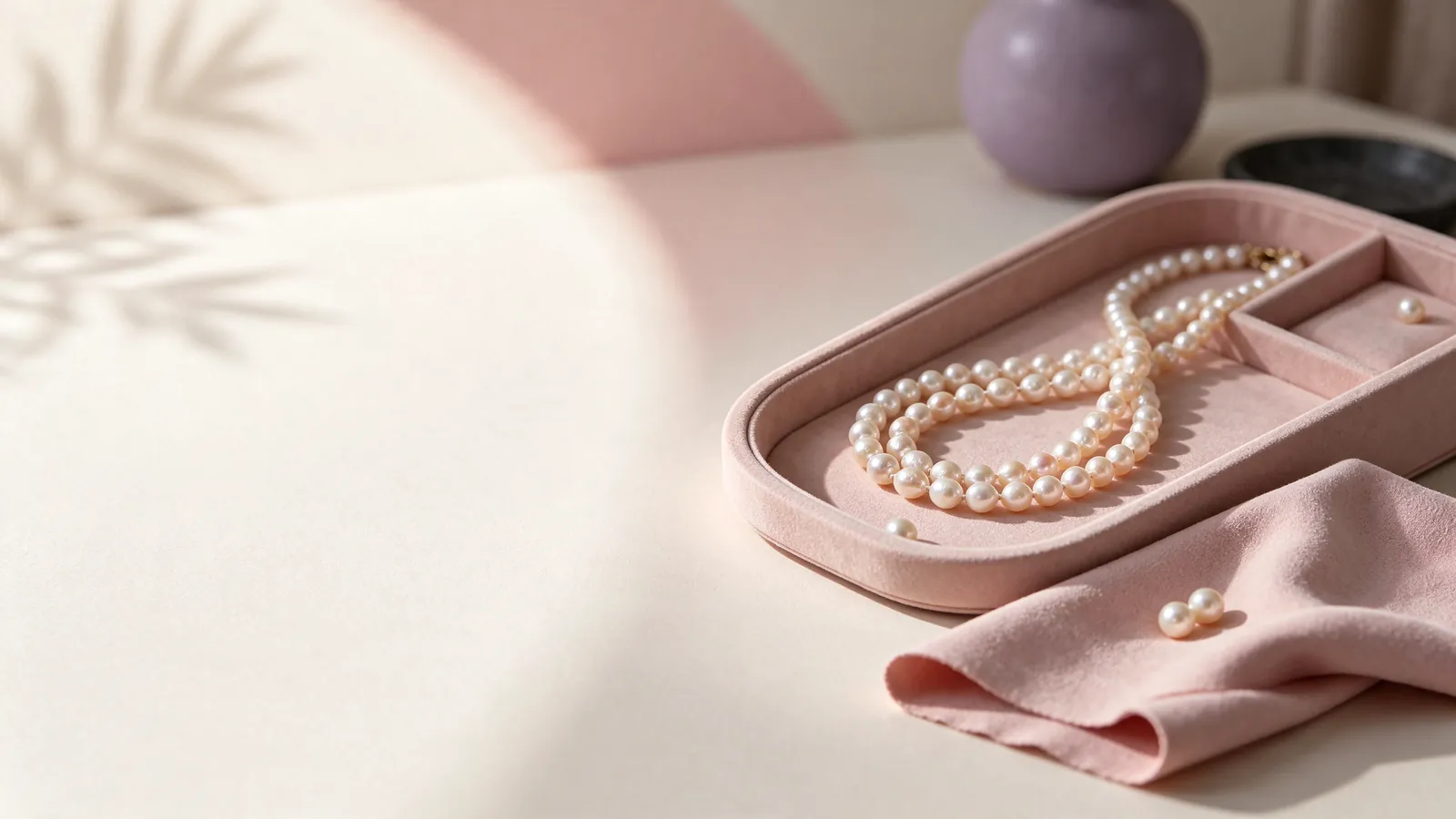
Turn your fitting observations into a clear choice
List your usual necklines, preferred clasp position and any difficulty you have operating small fastenings. For workwear, prioritise comfort while seated and compatibility with a jacket. For an evening outfit, compare the clasp outline with earrings and the details of the clothing. Separating practical needs from visual preferences makes it easier to recognise a necklace that suits your habits, rather than one that only photographs well.
Compare your preferred options with the same top, hairstyle and similar lighting. Record whether length includes the fastening, how the closure sits and how the pearls are arranged at its ends. Describe these details when discussing your choice instead of relying exclusively on a style name. A clear preference for an easy-to-hold clasp or an uncluttered neckline is more useful than assuming all mantel necklaces share one construction.
Rank fit, operation and appearance before comparing details
Decide which matters most: neckline balance, ease of fastening or the appearance of the pearl strand. If you put the necklace on unaided every day, comfortable operation may outweigh a perfectly centred bar in a photograph. If your clothing already has prominent details, a quieter outline may suit you better. This is a personal decision sequence, not a grading system; use it to keep secondary differences in perspective.
Want to turn these observations into a clearer necklace brief? Contact Flint Jewellery on WhatsApp with a favourite styling image, your usual neckline and any fastening action you find difficult. Explain where you would like the clasp to sit and whether you plan to wear other necklaces with it. These practical details help focus a discussion of proportions and wearing preferences without assuming that a particular style name describes one fixed design.
| Comparison | What to observe | Clothing consideration | Movement check | Decision focus |
|---|---|---|---|---|
| Length and position | Whether measurement includes the fastening | Keep the clasp clear of the neckline edge | Does fabric push it up when seated? | Compare with your usual top, not only a flat image |
| Bar and ring | Passing direction and finger space | Check for contact with buttons or a placket | Does the bar turn during ordinary movement? | Choose an operation you can comfortably manage |
| Pearl arrangement | Outline and rhythm beside the clasp | Plain fabric helps reveal pearl shapes | Do the ends hang naturally? | Consider GIA's seven pearl value factors |
| Layering | Clear separation between necklaces | Avoid crowding a single neckline edge | Does another chain approach the ring? | Begin with one necklace and add layers gradually |
| Care and storage | Pearl has Mohs hardness 2.5 | Avoid direct perfume and hair-spray contact | Look for fraying or changed fastening action | Follow GIA care guidance; no ultrasonic or steam cleaning |
Pearl knowledge and authoritative references
GIA identifies seven pearl value factors: size, shape, colour, lustre, surface quality, nacre quality and matching. They remain relevant when comparing necklaces with prominent clasps because the fastening does not determine the quality of the pearl strand.
Read the reference for this factFrequently asked questions
Do toggle, T bar and mantel always describe the same fastening?
No. A typical bar-through-ring closure has recognisable parts, but a similar name does not establish every detail of construction. Examine both sides and watch the complete opening and closing action before deciding how an individual necklace works.
Must a visible bar sit exactly at the centre front?
Not necessarily. Follow the design's intended wearing method and observe its natural position. If different orientations are possible, compare front and side placement with your clothing rather than repeatedly pulling the strand to keep the clasp centred.
Why do necklaces with the same measured length sit differently?
The measurement may or may not include the clasp. Weight distribution, shoulder line and clothing thickness also affect drape. Compare with the same top and check from the side for fabric lifting the fastening.
Can I layer a fine chain with a toggle-style pearl strand?
Try the pearl necklace alone first, then add the chain and check while turning and sitting. The layers should not repeatedly cover each other or approach the ring opening. Fewer layers may be more practical if you constantly have to separate them.
Can an ultrasonic cleaner be used just because the clasp needs cleaning?
Not for the complete pearl necklace. GIA says pearls should never be cleaned using ultrasonic or steam cleaners. Use a very soft, clean cloth for routine wiping; after water cleaning, a strung necklace's string must dry completely before wear.
Updated: