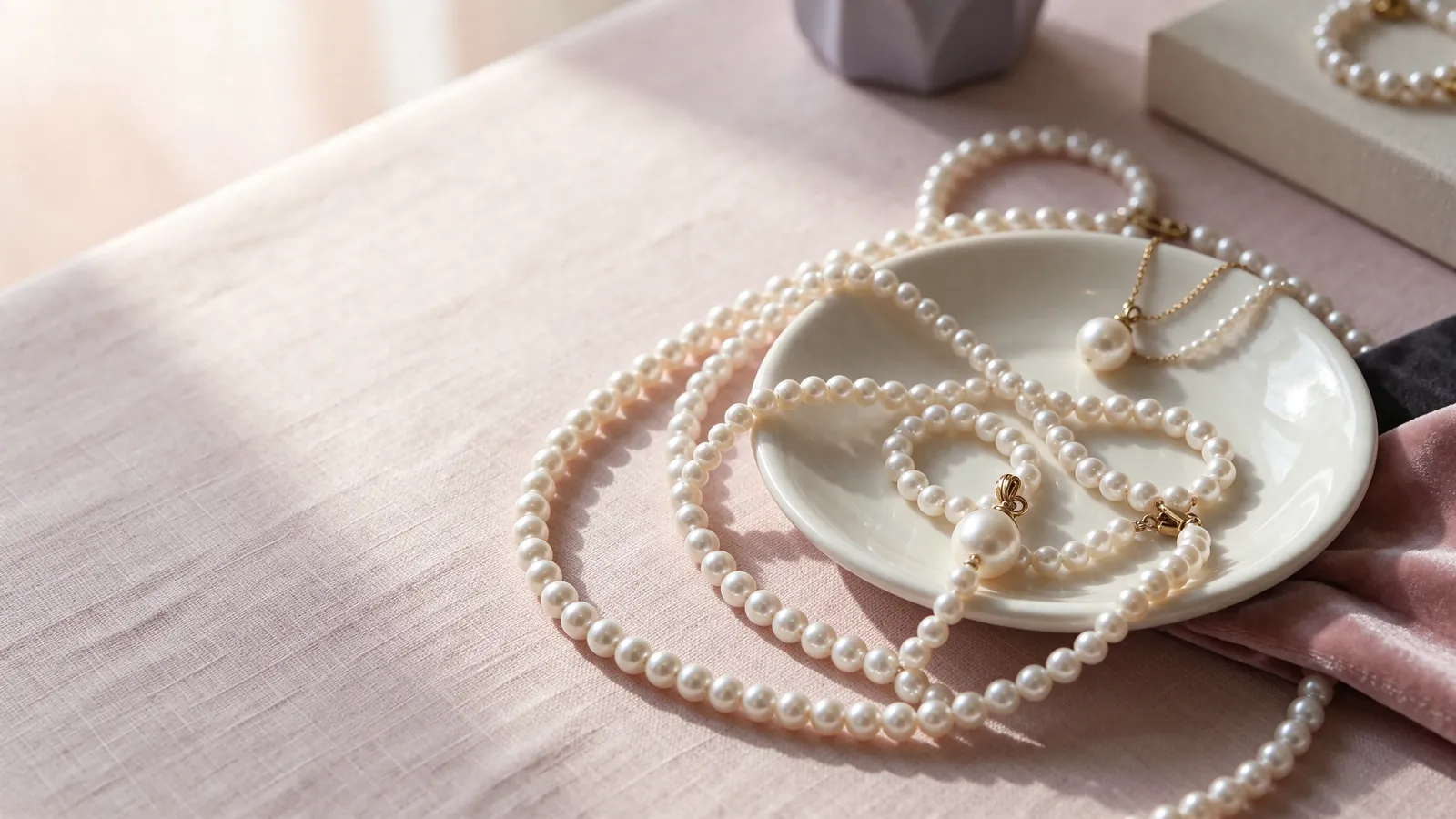
Flint Jewellery: How do descriptions of a silver pearl strand necklace compare with sterling silver pearl necklace and SV925 pearl necklace labels?
A silver pearl strand necklace name can describe an overall look without explaining every fitting. A sterling silver pearl necklace description may provide more metal information, while an SV925 pearl necklace label still needs to be read alongside the component it identifies. Start by separating the clasp, visible chain sections, connecting rings and pearls. Each has a different role in the construction.
Look for the noun beside the material description. Information about a clasp answers a different question from information about a chain. A silver-coloured appearance is also a visual observation, not proof of a particular metal. If the description is broad, ask which components the wording covers. This makes the answer useful when comparing necklaces with different construction, rather than reducing the discussion to whether the entire item can be called silver.
Flint Jewellery: Which clasp and chain details matter when a silver pearl strand necklace is labelled a sterling silver pearl necklace or SV925 pearl necklace?
Read the written details in the order you would handle the necklace: fastening, connecting point, then strand or chain. A close view of the clasp can show its opening direction; a full view can show where a chain section sits. Neither photograph replaces a material description. Keep the pearl information separate, because a clasp label cannot identify pearl type, establish natural or cultured identity, or indicate that a report accompanies the necklace.
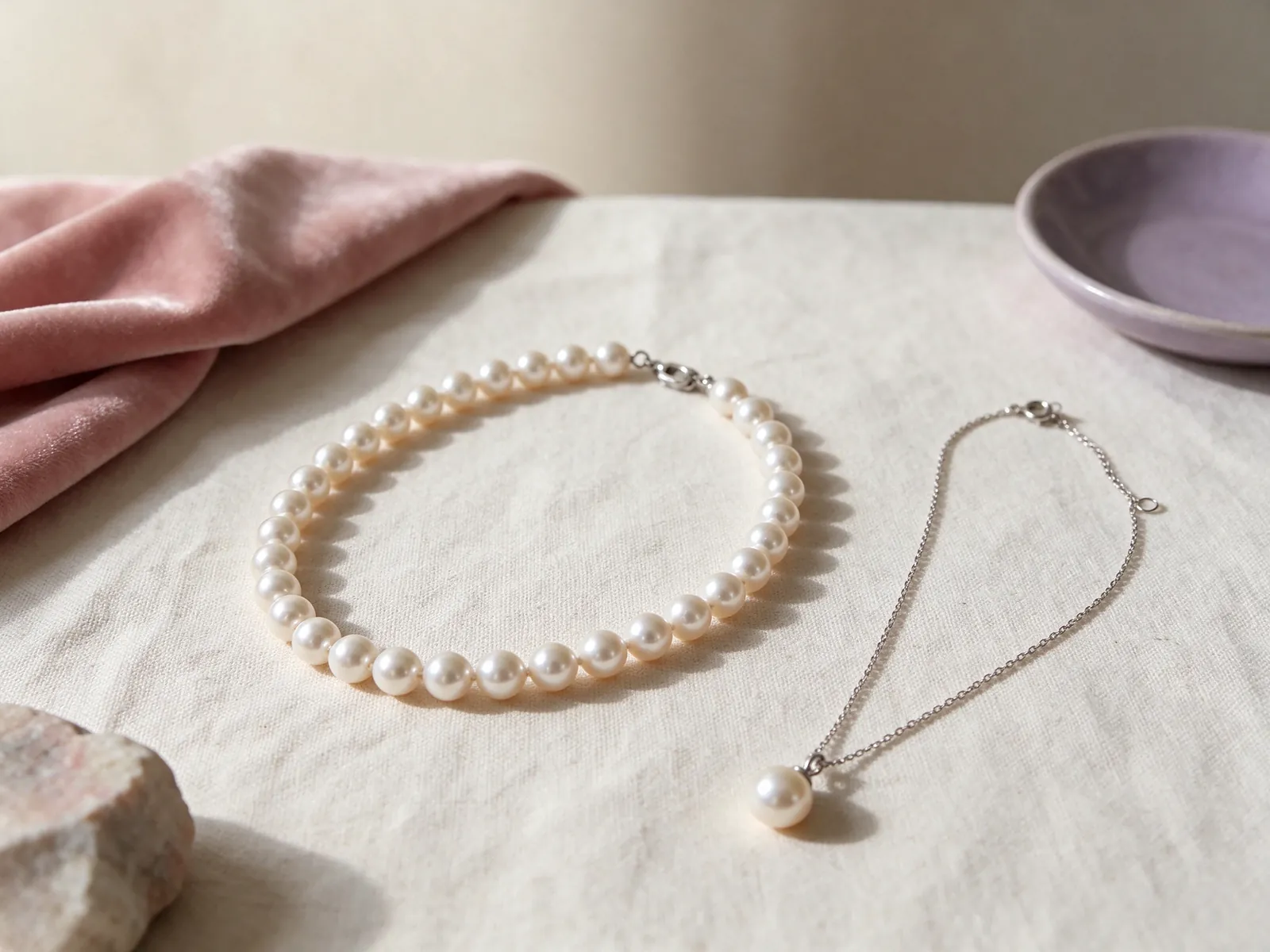
Assess the fastening through the way you actually put a necklace on
A clasp is more than a detail hidden behind the neck. Some wearers bring the fastening to the front before moving it back; others close it directly behind the neck. Try your usual method while wearing an everyday top. Notice whether your fingers have room to operate the opening, whether hair gets in the way and whether you can recognise that the clasp has closed. Appearance alone does not tell you how manageable a fastening will feel.
The connection between the end pearl and the fitting also contributes to the visual balance. When comparing a large pearl necklace, consider the proportion of the clasp and the way the end of the strand meets it, not just the prominence of the pearls at the front. A photograph does not establish weight or load capacity. Those questions should be answered through the actual necklace details and the experience of wearing it.
Check the position after ordinary movement
Once fastened, turn your head naturally and adjust your collar. Note whether the connection settles against the edge of the neckline or needs repeated repositioning. If something catches, avoid pulling on the pearls or forcing the clasp. Describing the movement and the contact point is more helpful than saying only that the necklace feels awkward, and gives a clearer basis for discussing a different construction.
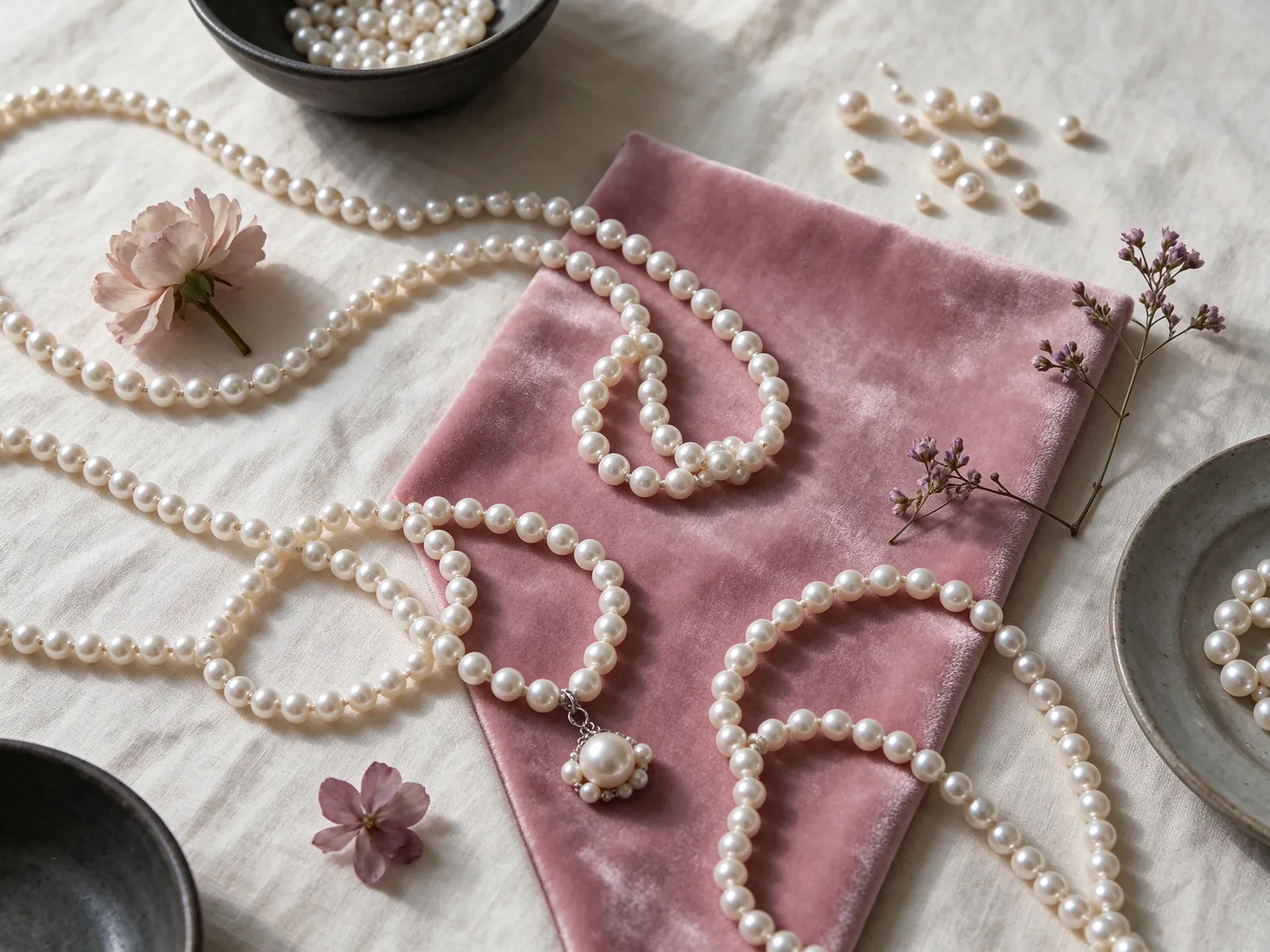
Distinguish a continuous strand from visible chain and multiple rows
A continuous strand draws its rhythm from the sequence of pearls. A necklace with visible chain sections adds metal lines and spaces to that rhythm. Compare the overall curve, the distribution of pearls and the areas of fabric visible between them. A single strand pearl necklace is a useful starting point if you want a clear line around a neckline, but the final effect still depends on the strand and the clothes worn with it.
With a multi strand pearl necklace, look at the spacing between rows and the points where they meet the fastening. Rows arranged neatly on a flat surface can overlap differently when worn. Check the front and side views with your chosen top, noting whether an inner row disappears beneath an outer one. More rows describe a structural and styling choice; they are not, by themselves, a pearl quality grade.
Look at the back as well as the front
The point where rows or separate sections come together can affect how you lift, fasten and put away a necklace. If you want the clasp to remain behind the neck, observe its position after moving. If you prefer a fastening visible at the side, consider its relationship with earrings and collar buttons. In that position it becomes part of the composition rather than an entirely hidden fitting.
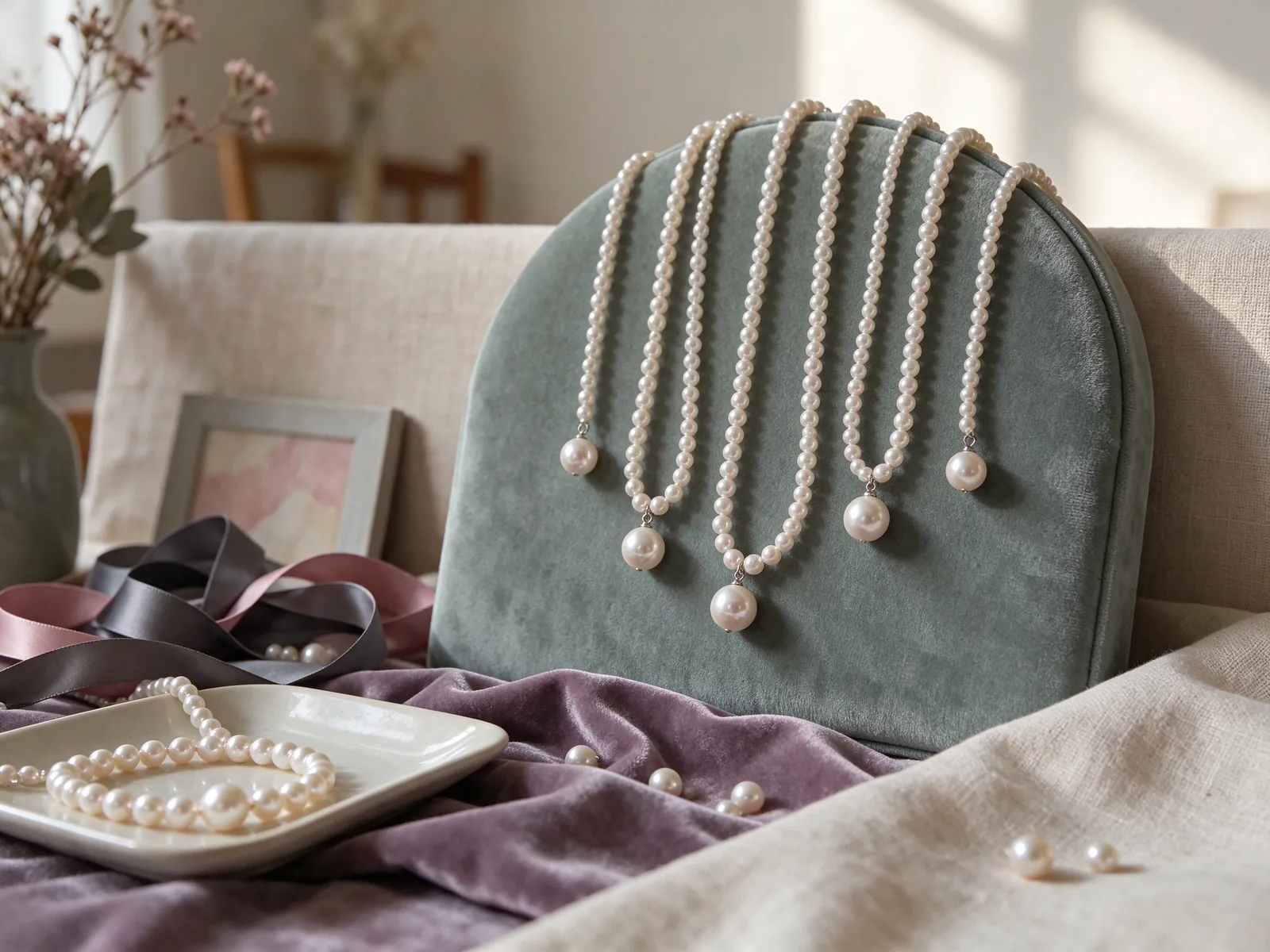
Choose a drop against your wardrobe, not a length label alone
A round neckline invites you to compare whether the strand sits above the edge, follows it or rests on the fabric. An open shirt adds another question: will the collar points cover part of the necklace? Neck shape, shoulder line and fabric thickness can all change the impression. If you already own a necklace with a comfortable drop, wear it with your usual clothes and use that position as a practical reference. The pearl necklace length guide can help you organise your neckline and drop preferences; note whether the clasp is included when recording a measurement.
When comparing stated lengths, ask whether the measurement includes the clasp. Then look at the whole necklace rather than expecting a number to predict the precise position on your body. Plain fabric makes the outline easier to observe; a patterned or reflective top may make fine chain sections less noticeable. Include your usual glasses or earrings when trying a combination, so you can judge how much detail gathers near the face.
Include a seated view and any planned layers
For a necklace intended for working days, sit down and check where it meets a shirt opening, button or jacket edge. If you wear scarves, watch for contact with the clasp rather than pulling fabric away sharply. For layered necklaces, put them on individually and then together to see their actual crossing points. Two length figures alone cannot show how different structures will overlap.
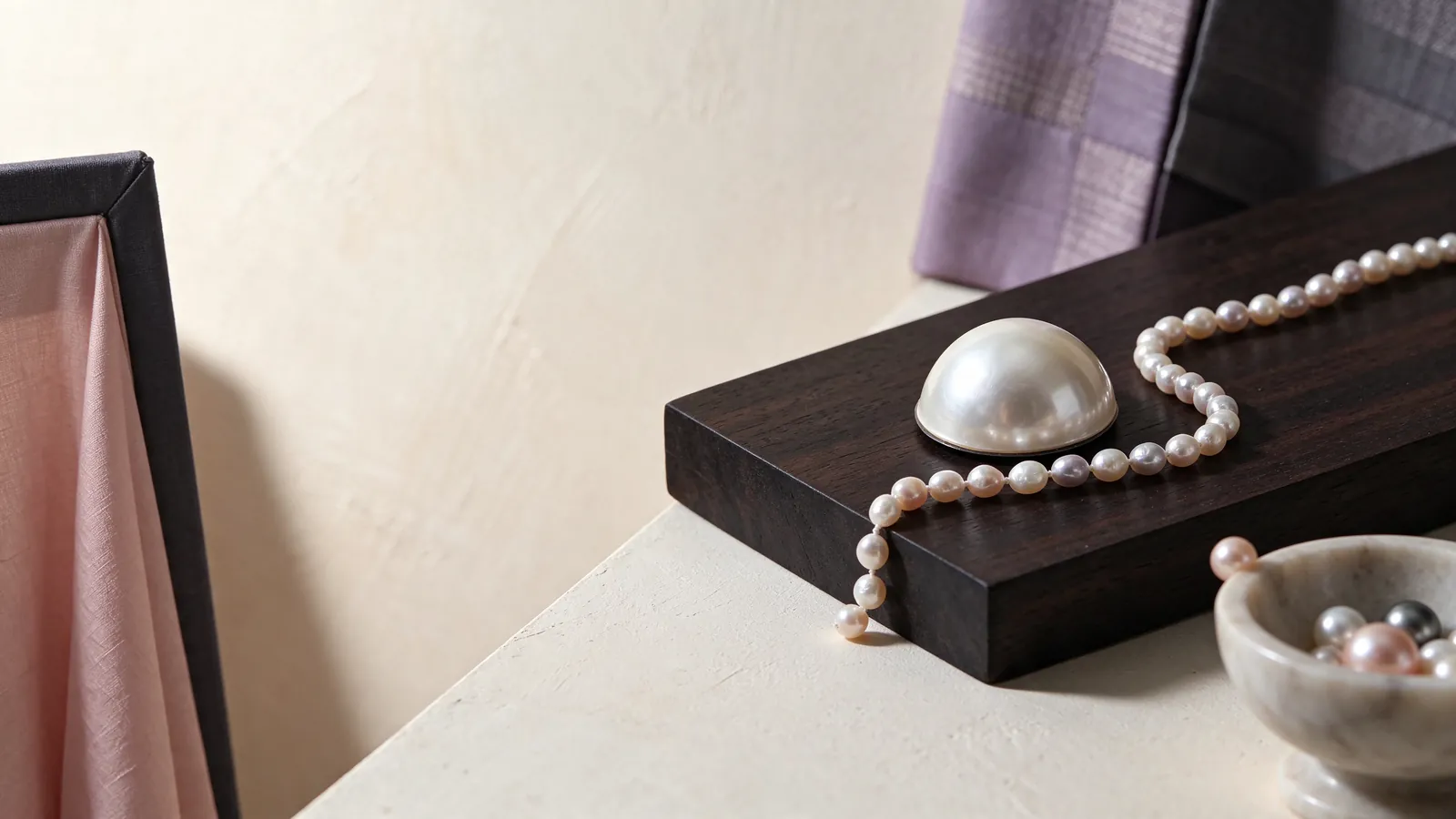
Read pearl quality independently of the metal description
925 or SV925 is not a pearl quality grade. GIA describes seven pearl value factors: size, shape, colour, lustre, surface quality, nacre quality and matching. Matching is especially useful when thinking about a strand because you are considering relationships between pearls, not only one pearl in isolation. This framework helps identify the questions a metal label leaves unanswered; it is not a way to assign a grade from a photograph.
Compare pictures with attention to lighting and background. Reflections and shadows can affect how surface details and colour appear. If documentation matters to you, the pearl necklace with GIA report guide explains a separate reading task: understanding the information associated with the pearls. A report and a metal description answer different questions. Neither the colour of the pearls nor a mark on the clasp establishes that a corresponding report exists.
Separate visual preferences from identity questions
Wanting a consistent colour along the strand is a visual preference. Wanting information about pearl identity is a documentation question. State both separately when comparing a necklace. Round shape, white colour or a familiar brand name cannot replace the relevant pearl information. Keeping these questions apart makes it easier to describe what you like without assuming facts that the appearance does not establish.
Translate a preference for a pale fitting into a clear design discussion
If you searched for silver because you like the look of a pale fitting, distinguish that visual preference from a request for a specific material. An 18K gold clasp pearl necklace and a platinum clasp pearl necklace provide other topics to explore. Compare their individual descriptions and construction rather than assuming that changing the metal name preserves every detail of a necklace. The opening method and connecting position may matter more to your routine than the label alone.
For a pearl design discussion with Flint Jewellery, the metal directions are 18K 750 white gold, 18K 750 yellow gold, 18K 750 rose gold, PT950 platinum and PT900 platinum. Bring the effect you want to achieve: a discreet fastening, coordination with earrings or a preferred neckline position. Focus on the colour and handling details you want to retain, then consider the pearl strand and fastening together.
Bring wearing information that explains the request
A photograph of a typical neckline, a description of your preferred drop and a note about how you operate a clasp can keep the conversation concrete. For an existing necklace, distinguish what is known about the pearls from what is known about the fittings. The page's WhatsApp enquiry route can begin that discussion; design choices should follow the actual conversation rather than an assumption about a name or availability.
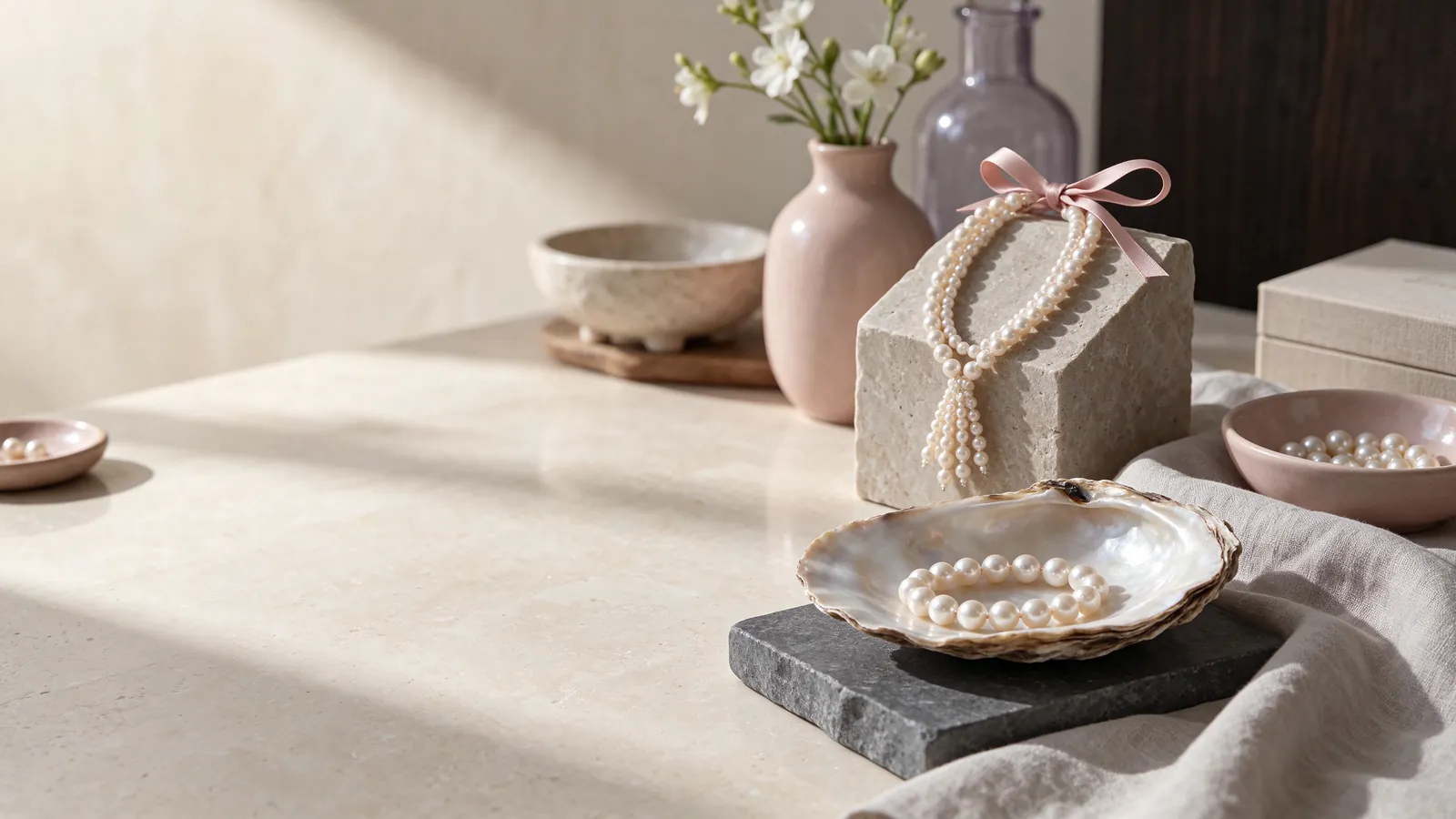
Care for the pearls and the construction together
Cleaning cannot be chosen only by the word silver when pearls and fittings share a necklace. GIA ranks pearl at 2.5 on the Mohs hardness scale and states that pearls should never be cleaned in ultrasonic or steam cleaners. A method suited to an isolated metal object does not automatically suit pearl jewellery. After wearing, use a very soft, clean cloth gently, without pulling the strand to reach the clasp.
Keep pearls away from acids, perfume, hair spray and excessive heat. Avoid bringing a metal cleaning product into contact with pearls or string. GIA also notes that, if strung pearls are cleaned with water, the string must be completely dry before wearing. Dry-looking pearl surfaces do not answer that question. Put the necklace away without twisting multiple rows into a tight bundle, and consider all its components before choosing a treatment.
Pause if the fastening or connection changes
If the clasp requires unusual force, a connection looks loose or the string appears changed, stop pulling or attempting adjustments with household tools. A clear photograph of the area and a description of when you noticed the issue can support a useful discussion. Care is about avoiding an action aimed at one fitting that inadvertently affects the pearls, string or construction of the whole necklace.
Ready to discuss a pearl design that works with your usual neckline? Contact Flint Jewellery on WhatsApp with a photograph of a favourite top, your preferred drop and the way you like to fasten a necklace. Explore 18K 750 white gold, 18K 750 yellow gold, 18K 750 rose gold, PT950 platinum or PT900 platinum directions, starting with the appearance and handling that matter to you.
| Reading cue | Component to examine | Question it can answer | Wearing observation | Do not assume |
|---|---|---|---|---|
| Silver clasp wording | Clasp and end connection | Is the material description specific to the clasp? | Opening direction and contact with the collar | All other fittings use the same metal |
| 925 or SV925 label | The component named beside it | Which part has a metal description? | Where metal sections appear when worn | A pearl identity or quality grade |
| Visible silver chain wording | Chain and pearl distribution | How chain sections and pearls are combined | Spaces against patterned clothing | The clasp necessarily matches the chain material |
| Single strand | Continuous sequence and curve | How the strand outlines the neckline | Drop when standing and sitting | A guaranteed weight or durability |
| Multiple strands | Row spacing and rear connections | How rows overlap and join the fastening | Whether inner rows remain visible | More rows mean higher pearl quality |
Pearl knowledge and authoritative references
GIA ranks pearl at 2.5 on the Mohs hardness scale and advises against ultrasonic or steam cleaning for pearls; the metal label alone is therefore not a suitable basis for selecting a pearl necklace cleaning method.
Read the reference for this factFrequently asked questions
Does a silver clasp name describe every fitting in the necklace?
Not necessarily. It may highlight the clasp rather than the chain or connecting rings. Read the component-specific material descriptions and ask what any broad wording covers. A silver-coloured photograph does not establish the metal used in a fitting.
Can SV925 tell me whether the pearls have a GIA report?
No. The metal label and pearl documentation are separate information. If a report is important, read its description and the information connecting it to the pearls concerned. A clasp mark cannot establish pearl identity or the existence of a report.
Why might a necklace catch the edge of my shirt despite a familiar length?
Collar shape, fabric thickness, your seated position and the necklace structure all affect the result. Check whether the stated length includes the fastening, then try the necklace against the shirt opening and buttons rather than judging the drop from the number alone.
Can I use a silver cleaning method on a pearl strand?
Do not choose a method solely from the metal name. Pearls, string and connections must also be considered. GIA says not to use ultrasonic or steam cleaners for pearls. Avoid contact between metal cleaning products and pearls, and seek an approach appropriate to the whole item.
What should I bring to a Flint Jewellery discussion if I like pale metal fittings?
Describe the visual effect, the preferred fastening position and the neckline you usually wear. Include any difficulty you experience when operating a clasp. These details support a discussion of the listed Flint metal directions without assuming an existing silver product or identical construction.
Updated: