
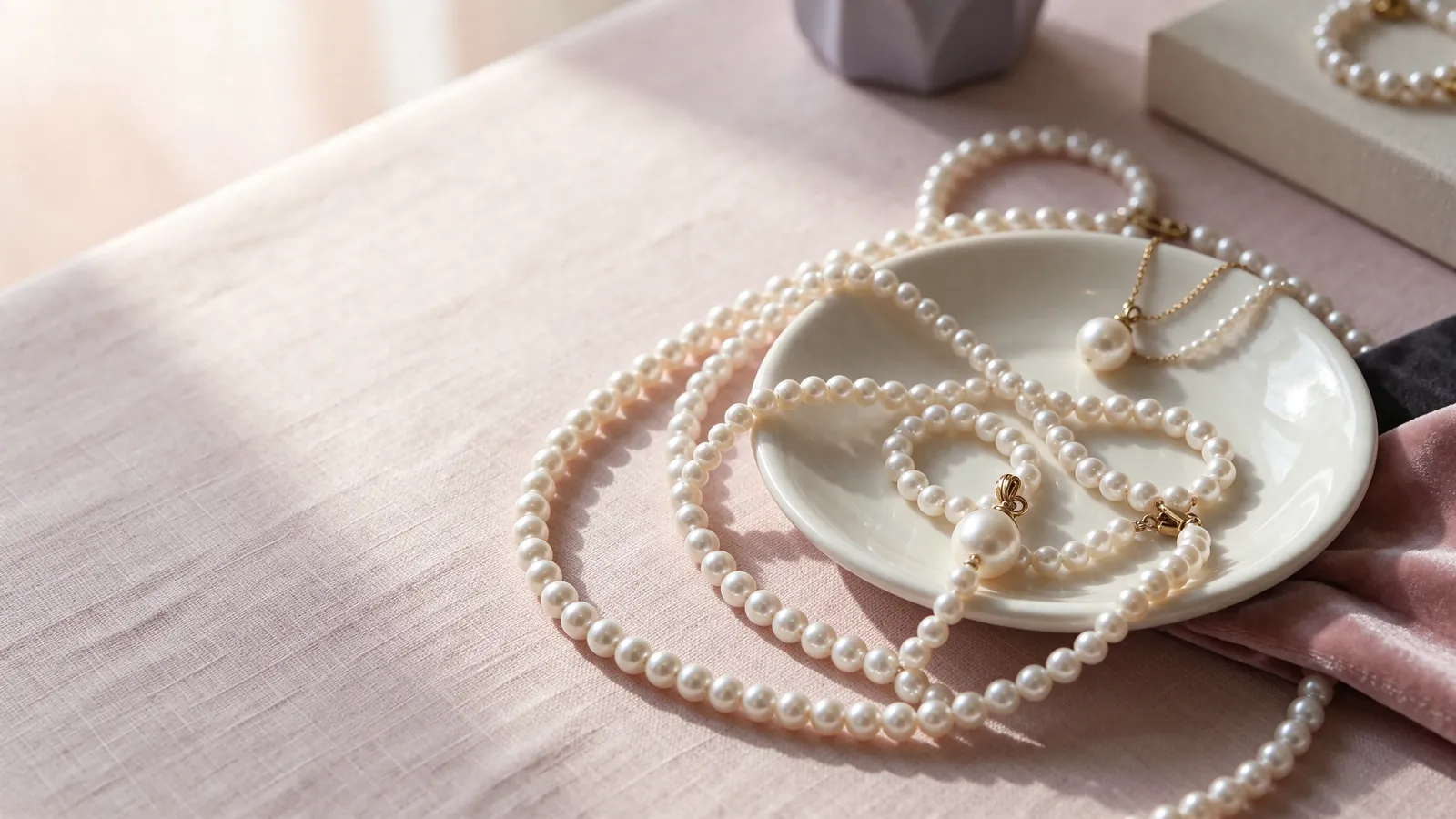
Flint Jewellery fit guide — Measuring for a pearl choker necklace or pearl collar necklace: where should a short pearl necklace sit?
Begin with the position you want, rather than a necklace name. Place a flexible measuring tape gently around the part of your neck where you imagine the pearls sitting, keeping your head in a natural position. Do not pull the tape tight or lift your chin to produce a smaller measurement. Record both the measurement and its position. The pearl necklace length guide offers a useful comparison with lower necklace placements, but a close-fitting strand needs its own practical assessment.
Your neck measurement is not automatically your necklace length. Pearls occupy space inside the curve, and the clasp and strand construction can change how the necklace feels. Two pieces with similar stated lengths may therefore sit differently. Check the front and side views after placing the clasp where it belongs. Look for a natural curve rather than pearls being pushed upwards by your collar, and decide whether the position still works when you stop posing for the mirror.
Flint Jewellery fitting checklist — Trying a pearl choker necklace or pearl collar necklace: does your short pearl necklace leave room for movement?
Turn your head in both directions, look down as you would at a phone, and sit at a table. Repeat the test with your shirt collar fastened and open if you wear both looks. A necklace that closes is not necessarily comfortable for everyday use. Remove it if it feels restrictive, and compare a more relaxed position instead of treating discomfort as a necessary part of the choker style.
Understanding collar and choker names without assuming a fixed fit
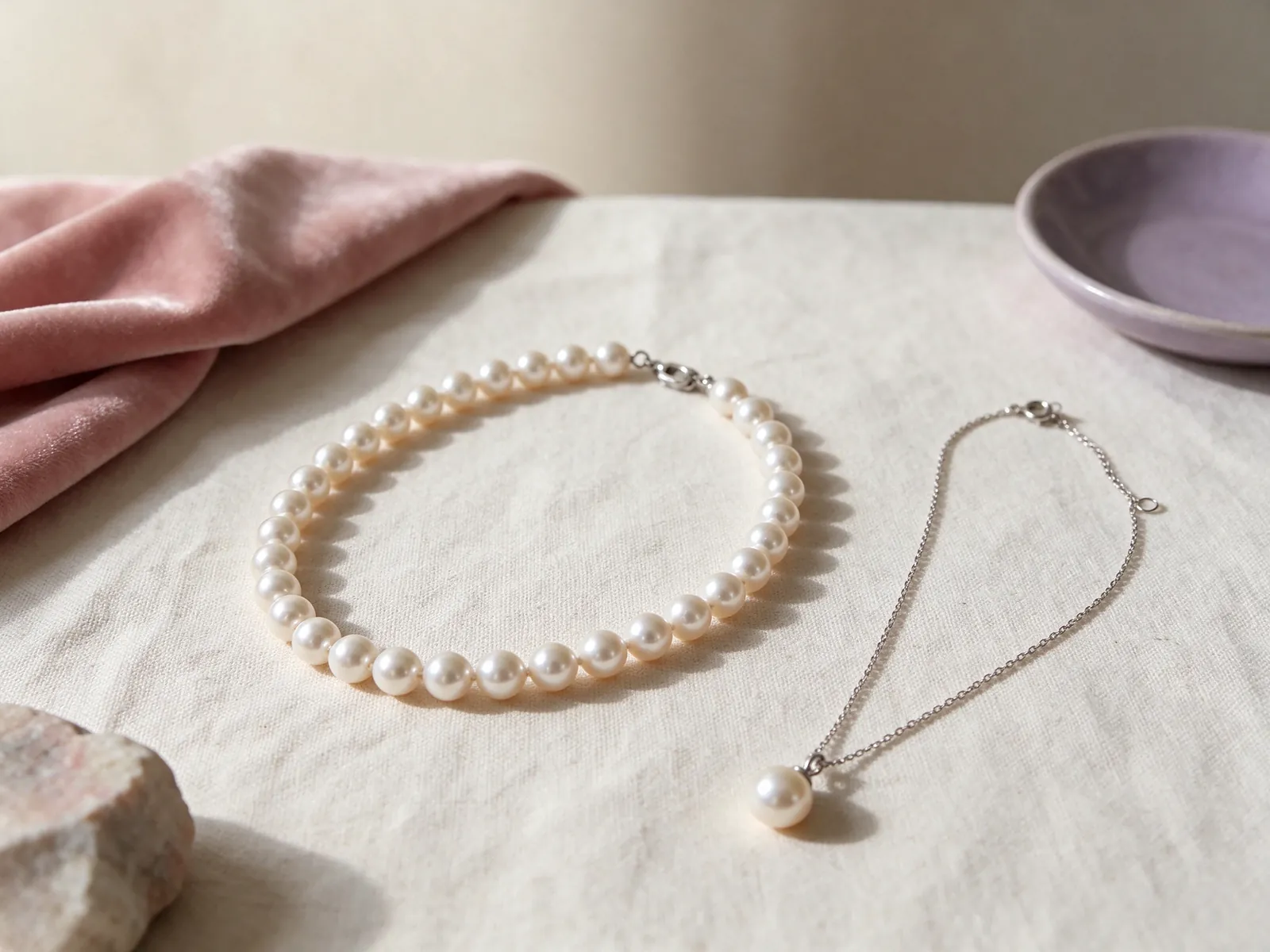
Collar and choker describe short necklace styles, but their boundaries are not identical across sellers. WSP's length chart labels 35 cm as Collar, 38 cm as Choker and 40 cm as Choker or Short Princess. These are categories in that chart, not promises about where a strand will sit on every wearer. Read the actual length and measurement method alongside the name. A photograph cannot establish whether the same necklace will touch your neck or clear your shirt collar.
Separate arrangement from length when comparing styles. A single strand pearl necklace describes one row of pearls; a choker describes a short wearing position. You can prefer the simplicity of one strand without choosing the closest possible fit. Equally, a wider collar effect depends on the visible height and arrangement of the necklace, not just the word Collar. Use each description to answer a different question, then bring those answers together during a fitting.
Use a length chart as a starting point for comparison
The table below retains WSP's centimetre measurements so that the naming differences are clear. Compare them with a necklace you already find comfortable, measured flat without stretching it, and establish whether the clasp is included. Different pearl volume or construction can still change the result. The most useful next step is to compare positions while wearing the same top, rather than choosing a category because it looks right on another person.
Choosing pearl scale and strand width for your proportions
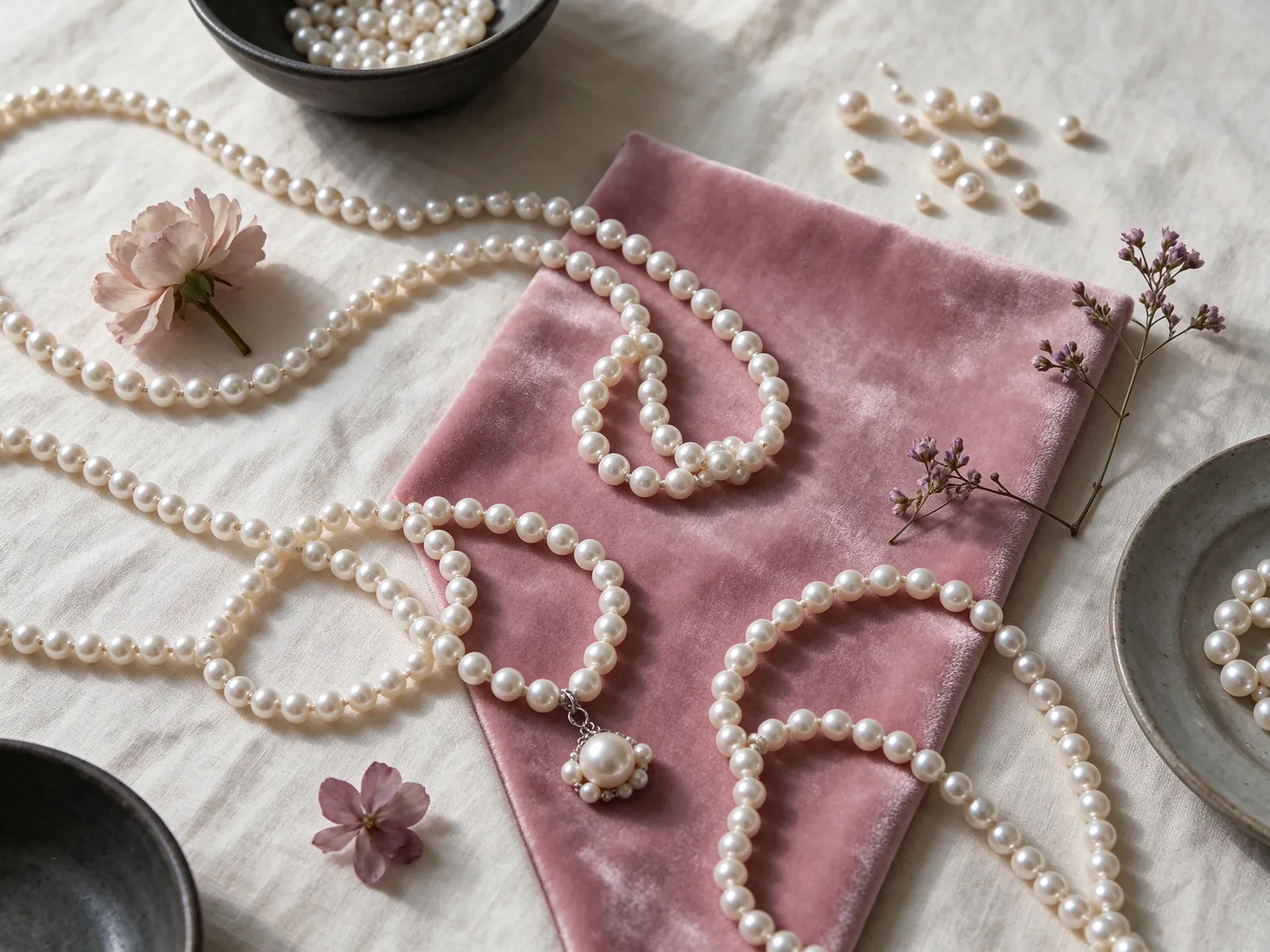
A short necklace sits close to the face, so pearl scale affects how attention is distributed. A small pearl necklace can create a finer visual line, while a large pearl necklace makes the neckline a more pronounced focal point. Neither direction is automatically more flattering or more valuable. Step back from the mirror and include your earrings, hair and clothing in the comparison. A close photograph of individual pearls does not show how their combined volume relates to your whole outfit.
GIA describes seven pearl quality factors: size, shape, colour, lustre, surface quality, nacre quality and matching. This helps explain why size or roundness alone is an incomplete comparison. For a short strand, examine the visual rhythm of the pearls and their lustre under the same lighting. Deliberate differences in shape can be part of a design. White colour, a round outline or a bright reflection does not by itself establish origin, natural-versus-cultured identity or a certificate.
Check the full height of a multi-row short necklace
A multi strand pearl necklace adds height as well as visual richness. Observe whether the rows remain distinct when you turn your head, whether they press against one another and whether the clasp is easy to reach. With a ruffled or structured collar, leave a clear boundary between fabric and pearls. You can also create a fuller outfit with one pearl strand and separate jewellery rather than assuming extra rows are the only way to add interest.
Matching short pearls to shirts, round necks and evening clothes
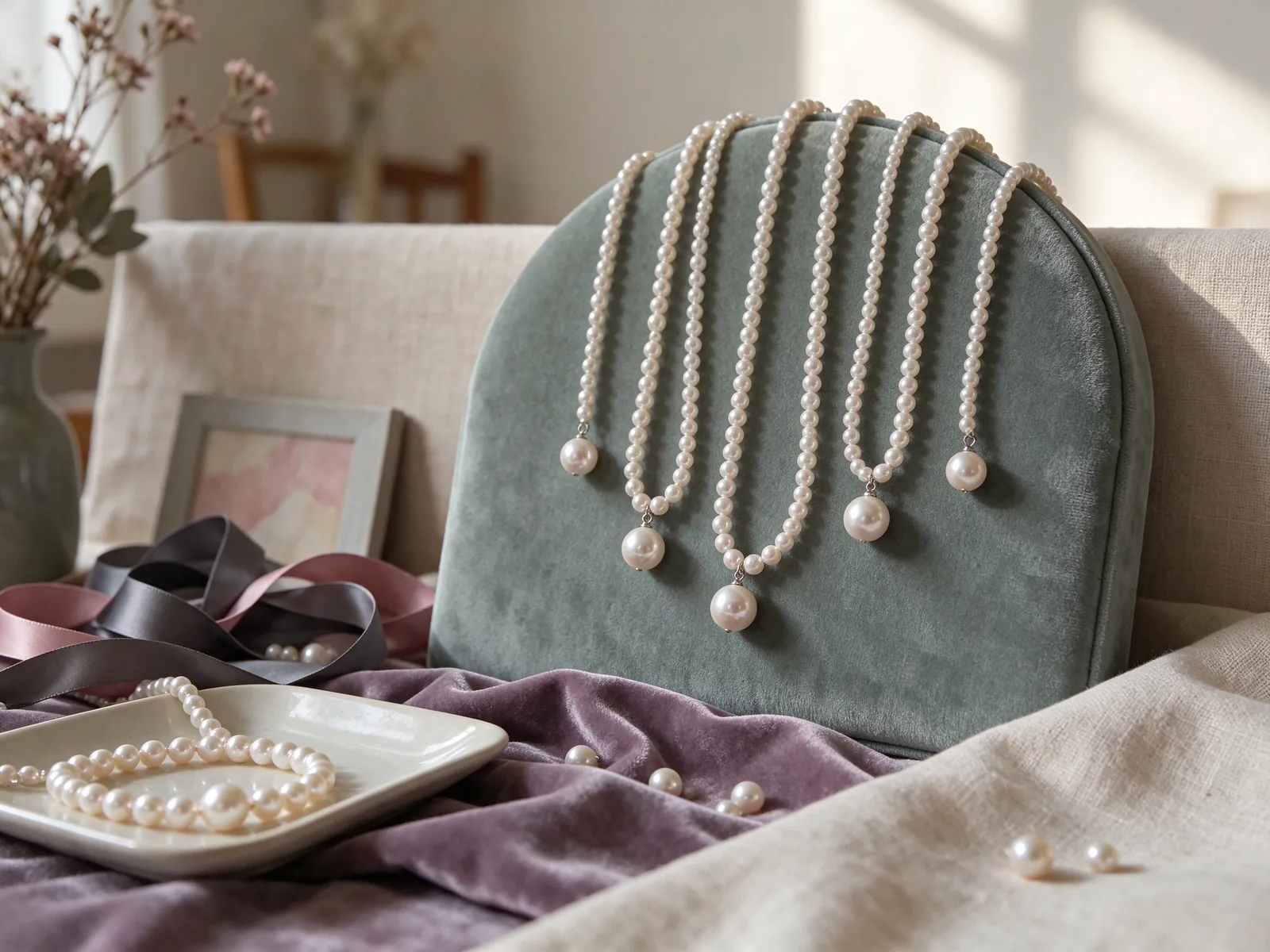
With an open shirt, try keeping the pearl curve within the exposed neckline and check whether the collar points hide it. A narrow opening may make the pearls appear and disappear as you move; decide whether you like that effect and whether the fabric is pushing the necklace. With a round-neck top, compare a position clearly above the edge with a necklace that sits clearly over the fabric. A strand balanced directly on the seam can be difficult to keep in place.
An open evening neckline gives a short necklace a clear frame, but earrings and hair still influence the result. If your earrings already have a strong hanging silhouette, a simpler pearl line can preserve space around the neck. A high collar, scarf or thick neckline may make close-fitting pearls less practical. Compare a matinee pearl necklace when you want the focus to move onto the front of your top instead of competing for the same small area at the neck.
Bring the neckline you actually wear
Use a familiar shirt and a round-neck top for your fitting, not only a low neckline that leaves every necklace visible. Add your jacket and test whether the lapel catches or moves the strand. Look again when seated. A piece that suits occasional evening wear can be a good choice for that purpose, but it need not become your everyday necklace. Choose according to the clothes you genuinely reach for, rather than an imagined wardrobe.
Layering a short strand without losing its outline
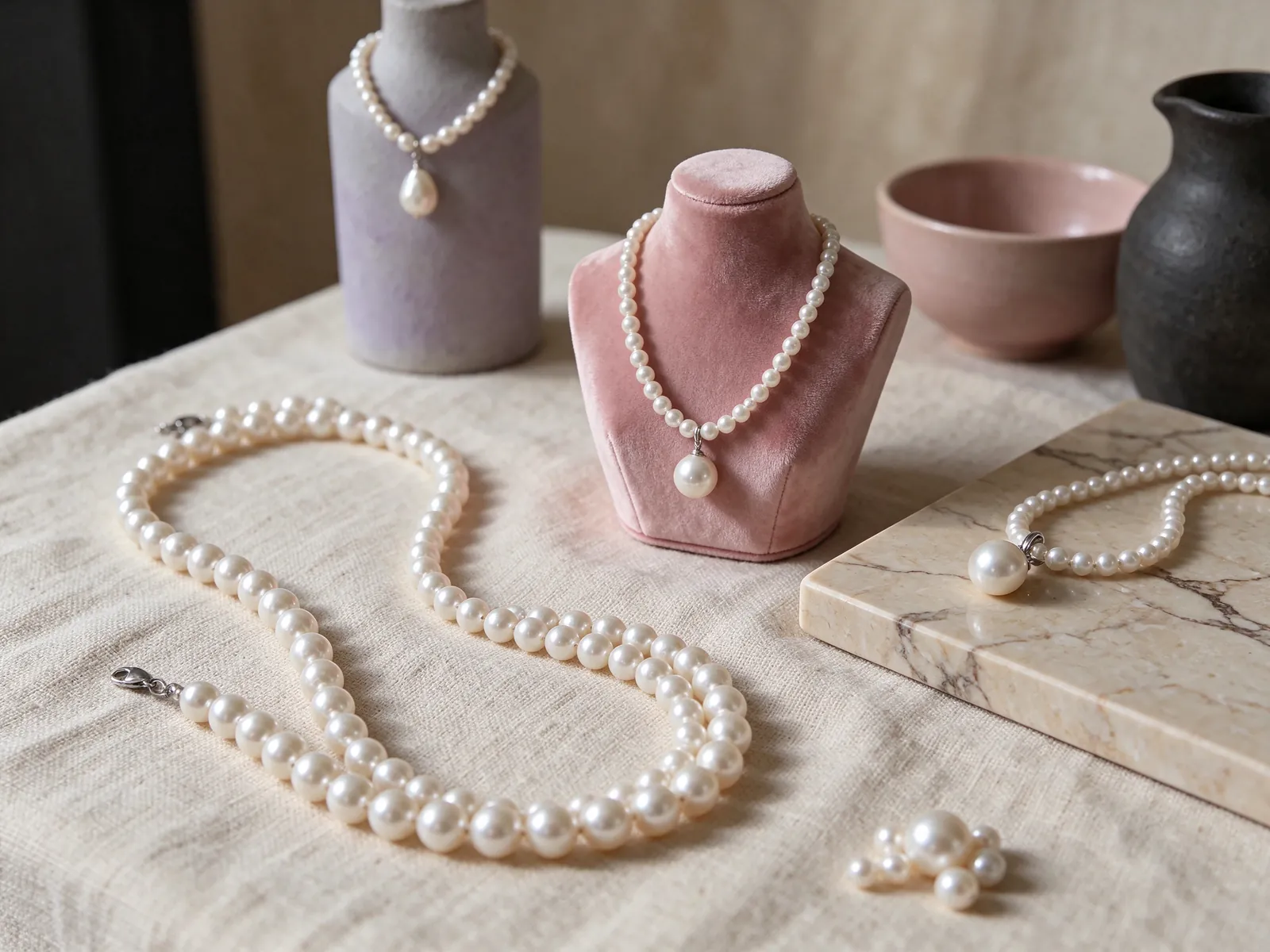
For pearl necklace layering, give each strand a clear role. The short necklace frames the neck while a lower piece draws a separate line down the outfit. Establish the short strand's comfortable position first, then add the second necklace and watch for crossing at the front or tangling around the clasps. Test the combination after walking and looking down. An arrangement that needs continual repositioning may look attractive in a still photograph but be frustrating on a busy day.
A long pearl necklace creates a different rhythm from a choker, connecting the jewellery to the shape of the top. If both strands have strong visual presence, quieter clothing can help keep their outlines distinct. If one is restrained, let the other become the main accent. Check whether pendants or metal parts repeatedly strike the pearls, and avoid combinations that pull against each other. Clear layers depend on movement and construction, not simply on choosing two different lengths.
Let either the necklace or the earrings lead
Earrings can echo the necklace through lustre or shape without matching its scale exactly. If your hairstyle covers most of the earrings, the short pearl curve may become the main detail near the face. Select a focal point first, then examine the side view as well as the front. The aim is not to maximise the number of noticeable pieces, but to make each chosen line readable without crowding your neck or restricting movement.
Questions about clasps, measurements and possible adjustments
A clasp close to the neck should be practical for the person wearing it. Try opening and fastening it yourself, noting whether your fingers can hold it securely and whether it repeatedly rotates to the front. Look at the join between clasp and strand for visible looseness or trapped thread. These observations do not replace a professional examination, but they help reveal everyday usability problems. The front view should not be the only part of the necklace you assess.
Ask where the stated length begins and ends, whether it includes the clasp and whether the arrangement shown is the intended wearing configuration. If you are considering shortening an existing strand, discuss the desired position, changes to pearl arrangement, clasp handling and what happens to unused pearls. Subtracting a length does not alone predict the new fit. The existing construction and condition also matter, so the actual necklace and a familiar top communicate your preferences more clearly than a photograph alone.
Build a personal comparison checklist
Record position, movement, collar compatibility, clasp operation and pearl proportions separately. This prevents one appealing detail from obscuring a poor fit elsewhere. For a gift, do not estimate a close-fitting necklace from height alone; a comfortable necklace already worn by the recipient and their usual neckline are more useful clues. When measurements are not available, begin with style preferences and discuss how fit can be established before committing to a particular short position.
Caring for pearls worn close to the neckline
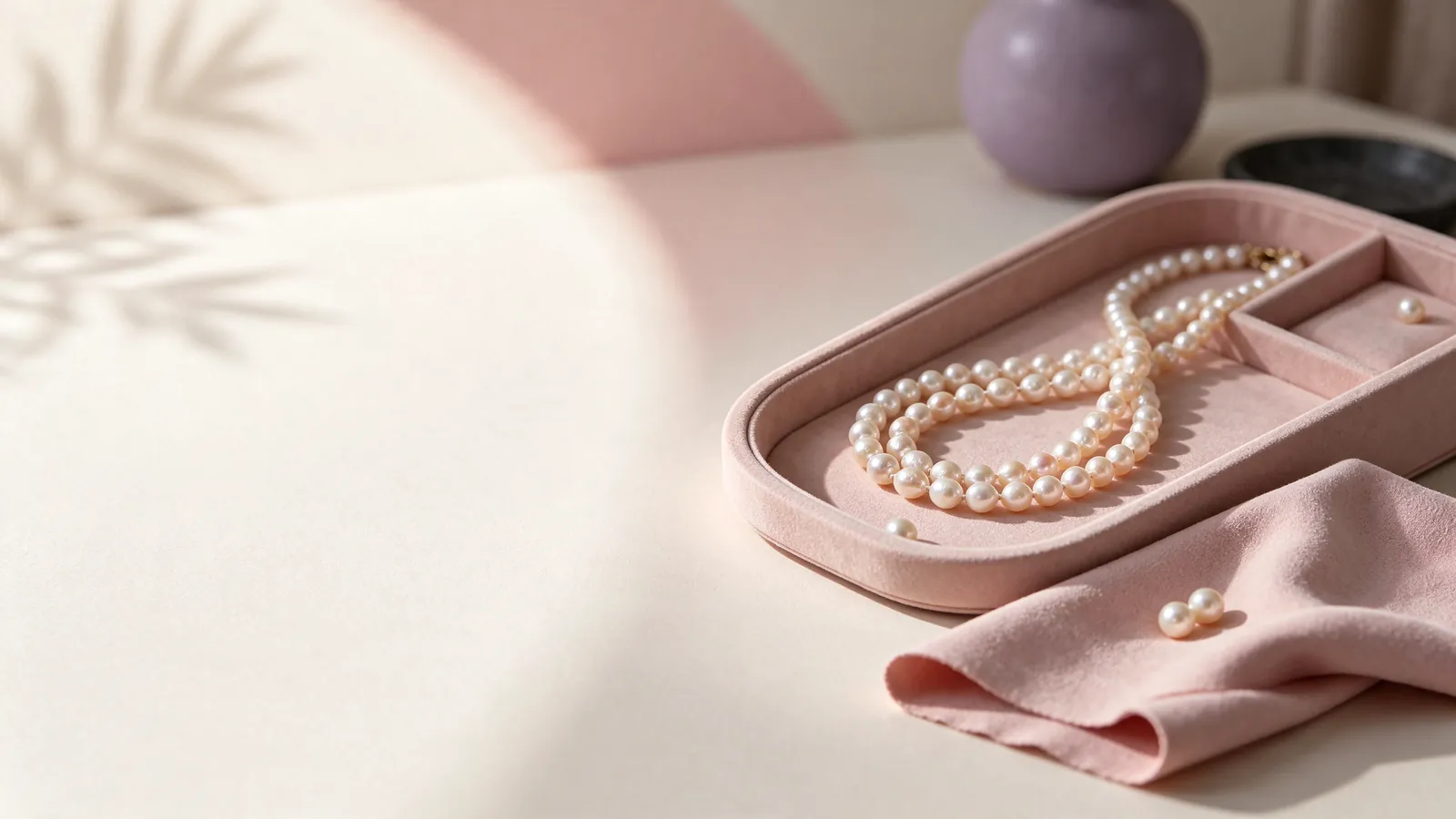
A choker sits near perfume, hair products and collar edges. Finish applying cosmetics and arranging your hair before putting it on, so sprays do not land directly on the pearls. GIA advises avoiding acids, perfume, hair spray and excessive heat, and wiping pearls with a very soft, clean cloth after wearing. If a collar has rough decoration or a zip near the strand, adjust the combination to reduce repeated contact. This is sensible care, not a claim that pearls resist every kind of friction.
GIA places pearl at 2.5 on the Mohs hardness scale and states that pearls should never be cleaned with ultrasonic or steam cleaners. Store the necklace separately from jewellery that could rub against its surface, without pressing the clasp onto the pearls. If a strung necklace has been cleaned with water, the string must be completely dry before wearing. Stop using a piece with a loose string or abnormal clasp and seek an examination rather than pulling it back into shape.
Make the final decision in a complete outfit
Put on the intended clothes, earrings and hairstyle, then step back to see whether the necklace highlights the area you want. Repeat the sitting and turning tests and note whether you keep pulling it into position. A comfortable lower curve may serve you better than the closest collar fit. The right short necklace works with your habits, proportions and willingness to care for it, rather than requiring you to adapt your day around its name. Ready to clarify your preferred fit? Contact Flint Jewellery on WhatsApp with the position you measured, the neckline you usually wear and what feels comfortable in a necklace you already own. If you are considering a shorter arrangement for an existing strand, describe the result you have in mind so the relevant details can be discussed.
| Chart length | WSP label | Reason to compare | Fit question | Neckline check |
|---|---|---|---|---|
| 35 cm | Collar | Explore the chart's shorter category | Does it feel restrictive or move upwards? | Does the collar edge push the pearls? |
| 38 cm | Choker | Compare a curve near the neck | Can you turn and sit comfortably? | Is the strand visible in an open shirt? |
| 40 cm | Choker or Short Princess | Understand overlapping names | Does pearl volume change the fit? | Does it balance on a round-neck seam? |
| 42 cm | Short | Compare a more relaxed short position | Is this position easier to wear? | Can the whole curve remain visible? |
| 45 cm | Princess | Consider an alternative to a close fit | Does it suit your regular clothing? | Do lapels or outer layers move it? |
Pearl knowledge and authoritative references
GIA describes seven pearl quality factors: size, shape, colour, lustre, surface quality, nacre quality and matching. They provide a broader basis for comparing a short strand than pearl size or roundness alone.
Read the reference for this factFrequently asked questions
Does choker always mean a necklace measuring 38 cm?
No. WSP uses 38 cm for Choker in its chart, but the name is not a universal sizing promise. Compare actual length, the measurement method, pearl volume and your neck measurement, then assess the position during a fitting.
Can I wear a pearl choker with a high-neck top?
Check whether the neckline leaves space for the pearls and whether it pushes the strand when you move. If fabric and necklace compete at the same point, a lower necklace position may be more practical. Do not accept pressure just to retain a choker effect.
Will shortening my existing strand reproduce another choker's fit?
Not necessarily. Pearl volume, arrangement, clasp and construction influence the curve. Discuss the intended position and handling of the clasp and unused pearls, and assess the actual necklace. A reduction in centimetres alone cannot establish the final wearing feel.
Are larger pearls always the better choice for a short necklace?
Choose scale according to the emphasis you want and the relationship with your earrings and clothing. Size is only one of GIA's seven pearl quality factors. Lustre, surface quality and matching also contribute to a meaningful comparison.
How should I clean pearls after wearing them near perfume?
GIA recommends a very soft, clean cloth after wearing and advises avoiding perfume contact. Do not use steam or ultrasonic cleaners. If a strung necklace is cleaned with water, its string must be completely dry before it is worn again.
Updated: