In a pearl necklace length guide, how do necklines influence a princess length pearl necklace and 40–45cm pearl necklace fit? | Flint Jewellery
Not sure which drop to try first? Contact Flint Jewellery on WhatsApp with your everyday neckline, the position you prefer and the complete measurement of a necklace you find comfortable. Those details provide a clearer starting point than choosing by a length name alone.
A useful pearl necklace length guide begins with your clothes, not with a promise about the collarbone. Decide whether you want the whole strand visible inside an open neckline, just above a higher neckline, or resting on the fabric. A princess length pearl necklace is commonly discussed at around 40–45 cm, but that range describes length rather than a fixed place on every wearer. Neck size and the shape of the neckline can make the same strand appear close-fitting on one person and more relaxed on another.
When assessing 40–45cm pearl necklace fit, wear a top you actually use rather than judging only against bare skin. A strand that follows the edge of a crew neck can slip partly inside the top as you move. Compare a position clearly above the edge with one clearly below it. If your preferred effect is closer to the neck, the pearl choker necklace guide provides a useful comparison of proportion rather than treating a shorter necklace as simply a smaller princess style.
What neckline clearance should you check for a princess length pearl necklace and 40–45cm pearl necklace fit in this pearl necklace length guide? | Flint Jewellery
Look from the side as well as the front. Turn your head gently, sit down and lower your chin as you would when reading. Check whether the neckline pushes the strand upwards or the clasp creates a concentrated pressure point. Being able to fasten a necklace is not the same as finding comfortable clearance. Compare photographs of the alternatives from a similar angle, but let movement and comfort decide which options remain on your shortlist.
Measure three different things: your neck, the necklace and the intended drop
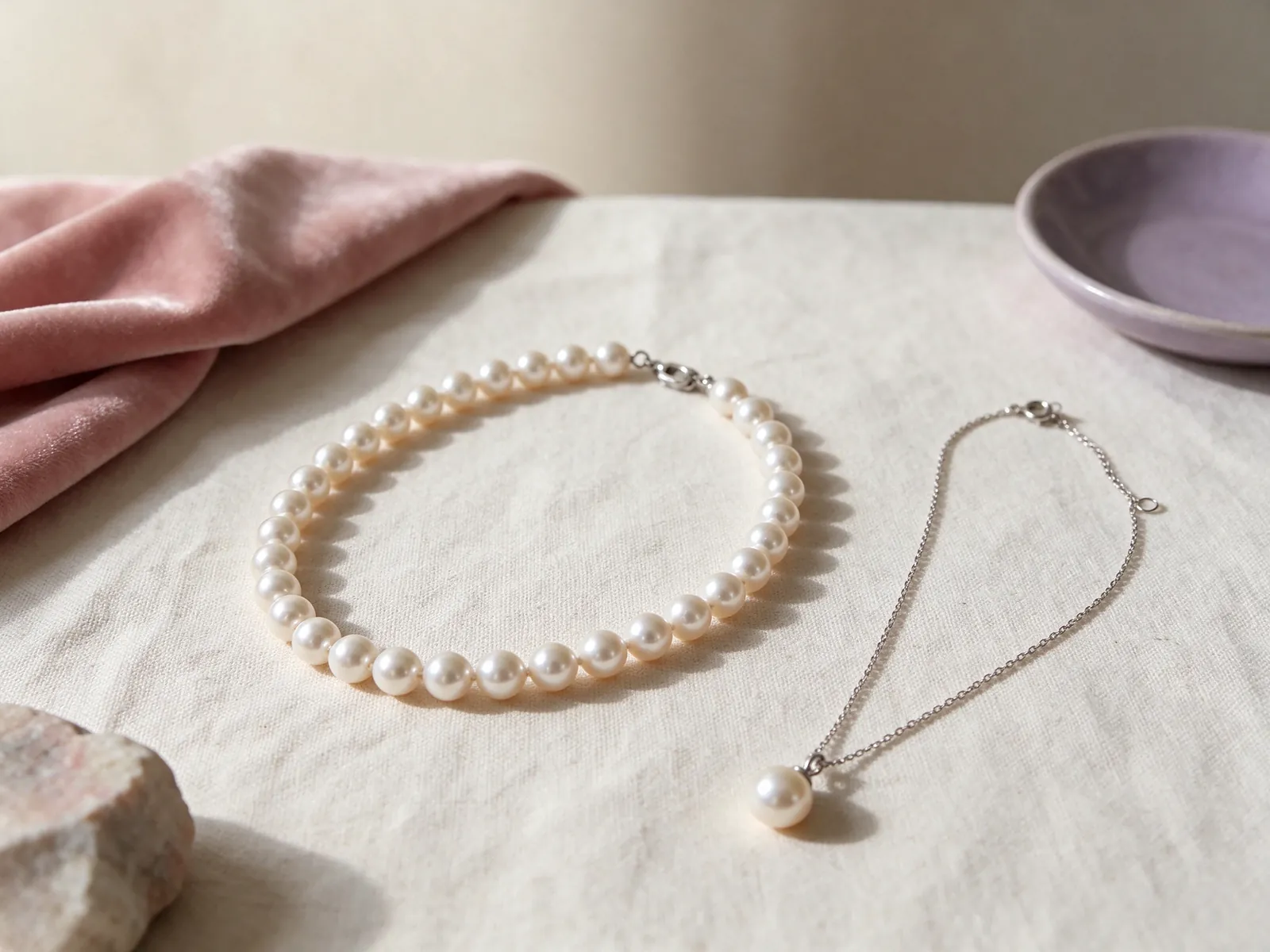
Use a soft tape to measure around the part of your neck where a close-fitting necklace would pass. Keep it against the skin without tightening it. Record this as a body measurement, not as your chosen necklace length. Next, arrange a non-stretch cord loosely into the curve you prefer, mark the ends and measure the cord flat. Remove it after comparing positions. This gives you a useful starting outline, but it cannot reproduce the thickness, weight or movement of pearls. Hold the cord ends lightly by hand; do not tie it or tighten it around your neck. Remove it immediately if it feels restrictive.
If you own a comfortable necklace, lay it flat and note its complete end-to-end length. Check whether a published measurement includes the clasp or only the pearl section before comparing it with another necklace. A substantial clasp can change the relationship between the listed length and the bead section. Keeping the measurement method beside the number prevents an apparent size difference from becoming a confusing fit comparison.
Keep the test length unchanged when you change your top
Try the same cord outline with a crew neck, an open shirt and a lower neckline. Do not quietly shorten the cord each time you change clothes: the purpose is to see what the neckline changes. Note which top interrupts the curve most often. You can then prioritise the neckline you wear most, rather than searching for a single position that must suit every outfit.
Read length names as a sequence, not a universal sizing system
WSP's necklace chart labels 35 cm as Collar, 38 cm as Choker, 40 cm as Choker or Short Princess, and 45 cm as Princess. These examples help you visualise a progression from closer-fitting to lower-hanging strands. They do not establish a worldwide naming rule. Two necklaces described as princess length may have different actual measurements, and neither name tells you how much space remains around your own neck.
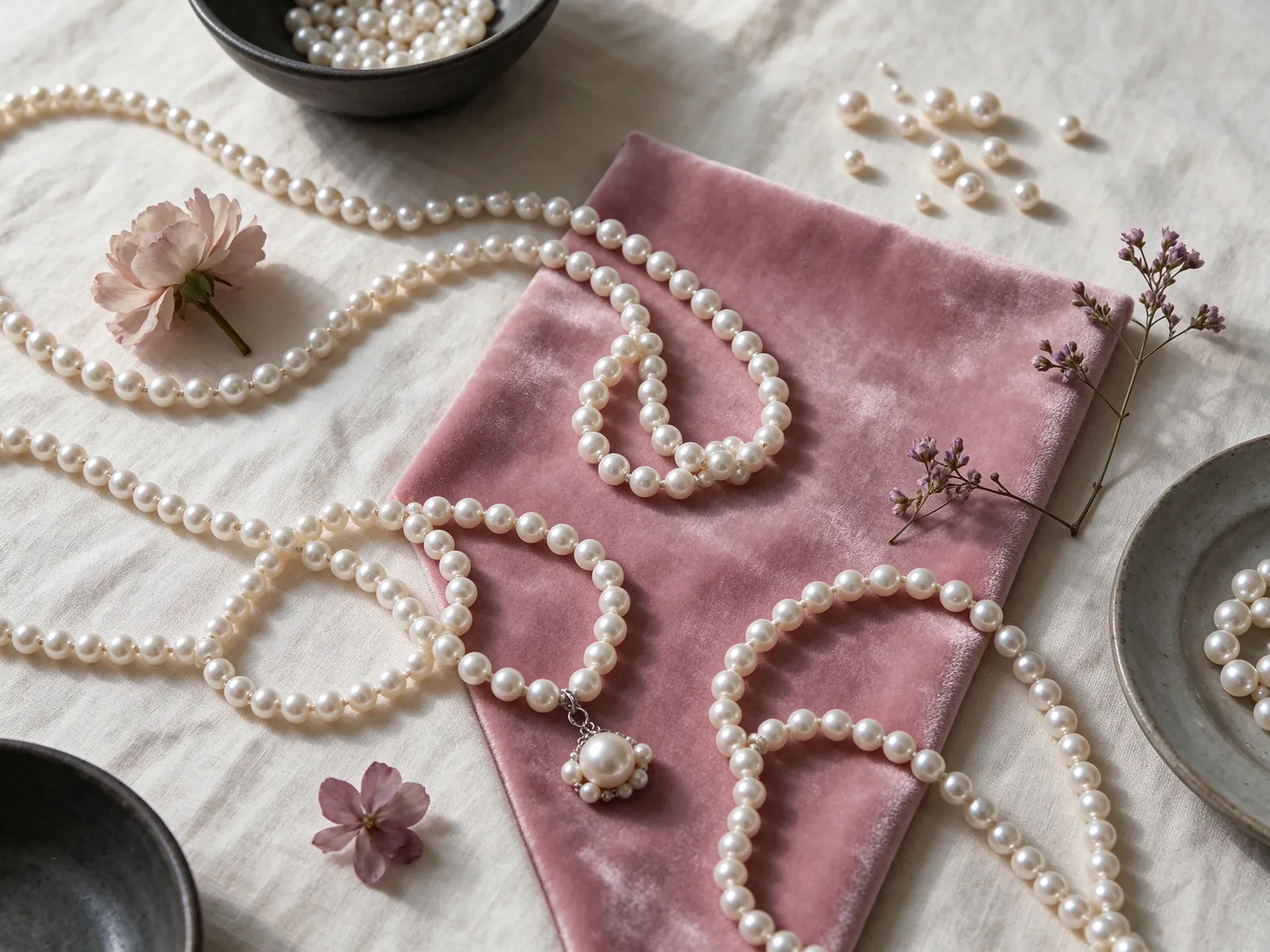
If you prefer a lower curve, compare the styling approach of a matinee pearl necklace. Moving the strand down also moves the focal point onto the front of your clothes, where buttons, bows and printed details may compete with it. Look for a clear area rather than choosing a longer necklace simply because the name sounds more formal. A length category is most useful when it helps you compare a specific silhouette.
Keep the original units when comparing centimetres and inches
WSP describes the common princess range as approximately 40–45 cm, also expressed as about 16–18 inches. Those paired ranges are convenient approximations, not a statement that every inch-labelled necklace exactly matches a centimetre endpoint. Retain the stated number and unit, ask how the necklace was measured, and compare the real length rather than rounding away a difference that might matter to your neckline.
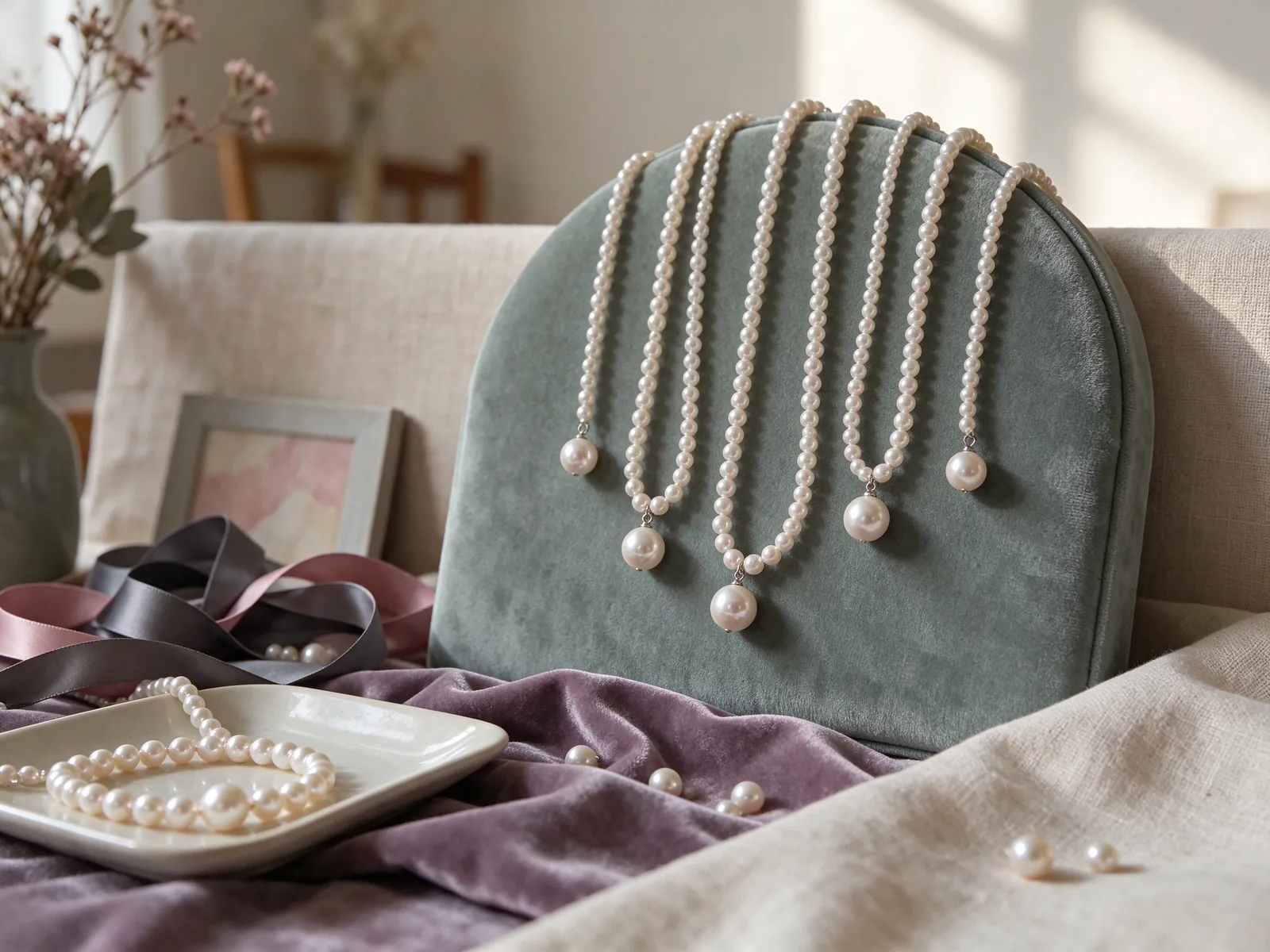
Pearl diameter changes the outline as well as the visual emphasis
Total length and pearl diameter answer different questions. Length describes the extent of the necklace; diameter influences how broad the strand looks beside your neck and clothing. A fine cord creates a narrow test line, while an actual pearl strand has a fuller outline. The gap visible during a cord test is therefore not a guaranteed gap during wear. Consider diameter alongside your preferred drop so that both dimensions contribute to the comparison.
A large pearl necklace may suit a stronger focal point, but it needs to be considered against the available neckline space. A small pearl necklace offers a finer visual line, which may be easier to integrate with detailed everyday clothing. Neither option is automatically more flattering or more comfortable. With irregular shapes, inspect the arrangement and how the outline changes when the strand turns; a front-facing photograph cannot establish its fit or identify the pearl type.
Separate a good fit from a judgement of pearl quality
GIA identifies seven pearl value factors: size, shape, colour, lustre, surface quality, nacre quality and, for jewellery with two or more pearls, matching. Finding your preferred length does not answer all those questions. First establish a comfortable silhouette, then compare the appearance and coordination of the pearls. This prevents a suitable necklace length from becoming a substitute for considering the qualities that matter to your taste.
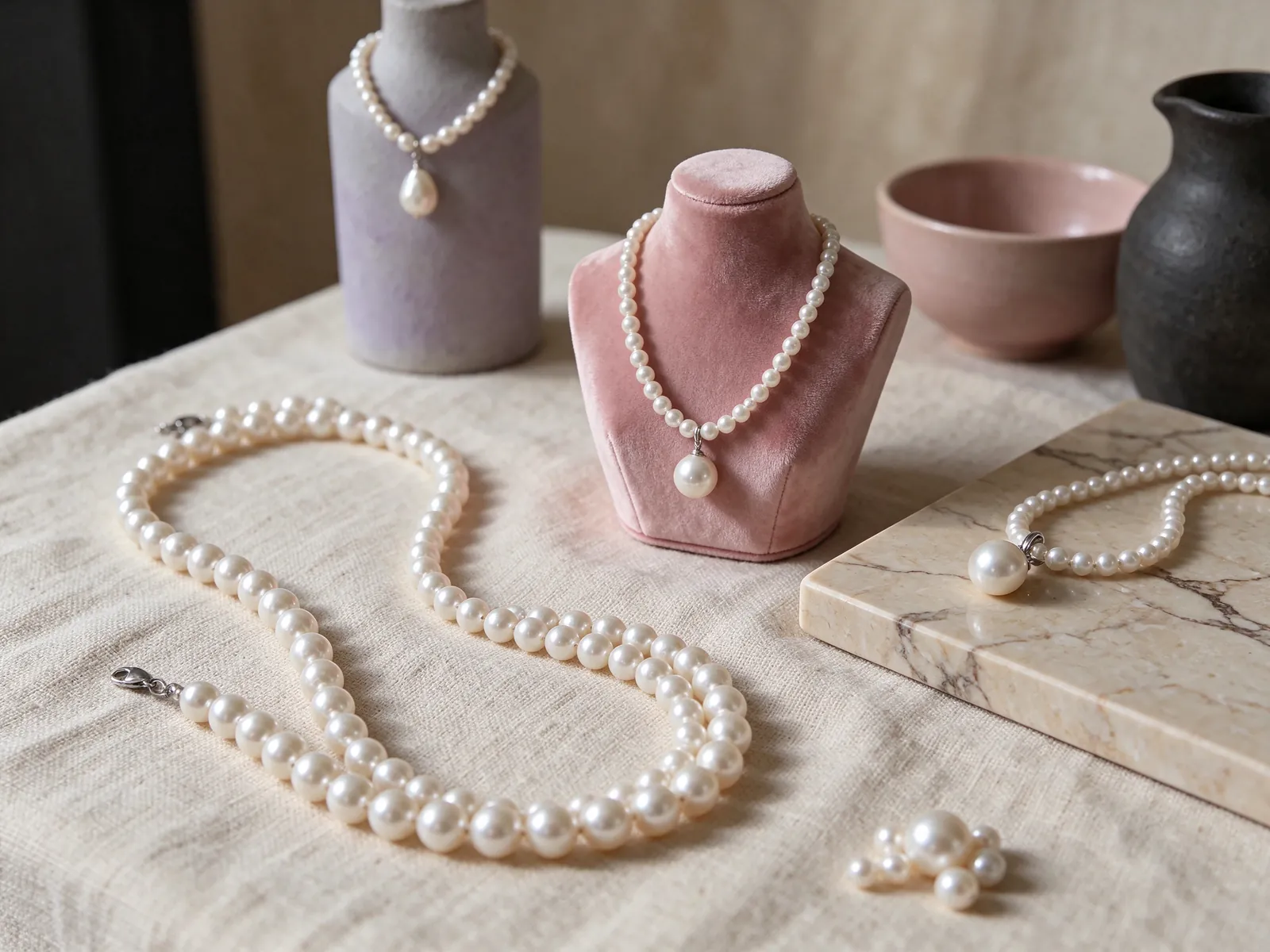
Crew necks, V-necks and shirts need different clearance checks
For a crew neck, compare a strand entirely above the neckline with one resting visibly on the fabric. If the curves almost overlap, turn your shoulders and check whether the necklace repeatedly disappears behind the edge. With a V-neck, inspect the relationship between the lowest pearl and the point of the opening. A rounded strand can sit independently within the V; it does not have to repeat the shape or descend to the lowest available point.
Try a shirt with the buttons fastened as you normally wear them. Collar points and the placket can catch or redirect a strand that looked balanced against bare skin. For a high neck or thicker knit, include the fabric's bulk in the comparison. A long pearl necklace offers a different composition over clothing, but you should still check raised embellishments and the way the strand rests when you sit down.
Choose a main outfit before asking for versatility
Make your most frequently worn neckline the first test, then use an occasional outfit as the second. If they need very different drops, decide which use matters more. Choosing a compromised position that disappears into both necklines is not necessarily versatile. Photograph each option with a similar posture and camera height so that perspective does not create a misleading difference in apparent length.
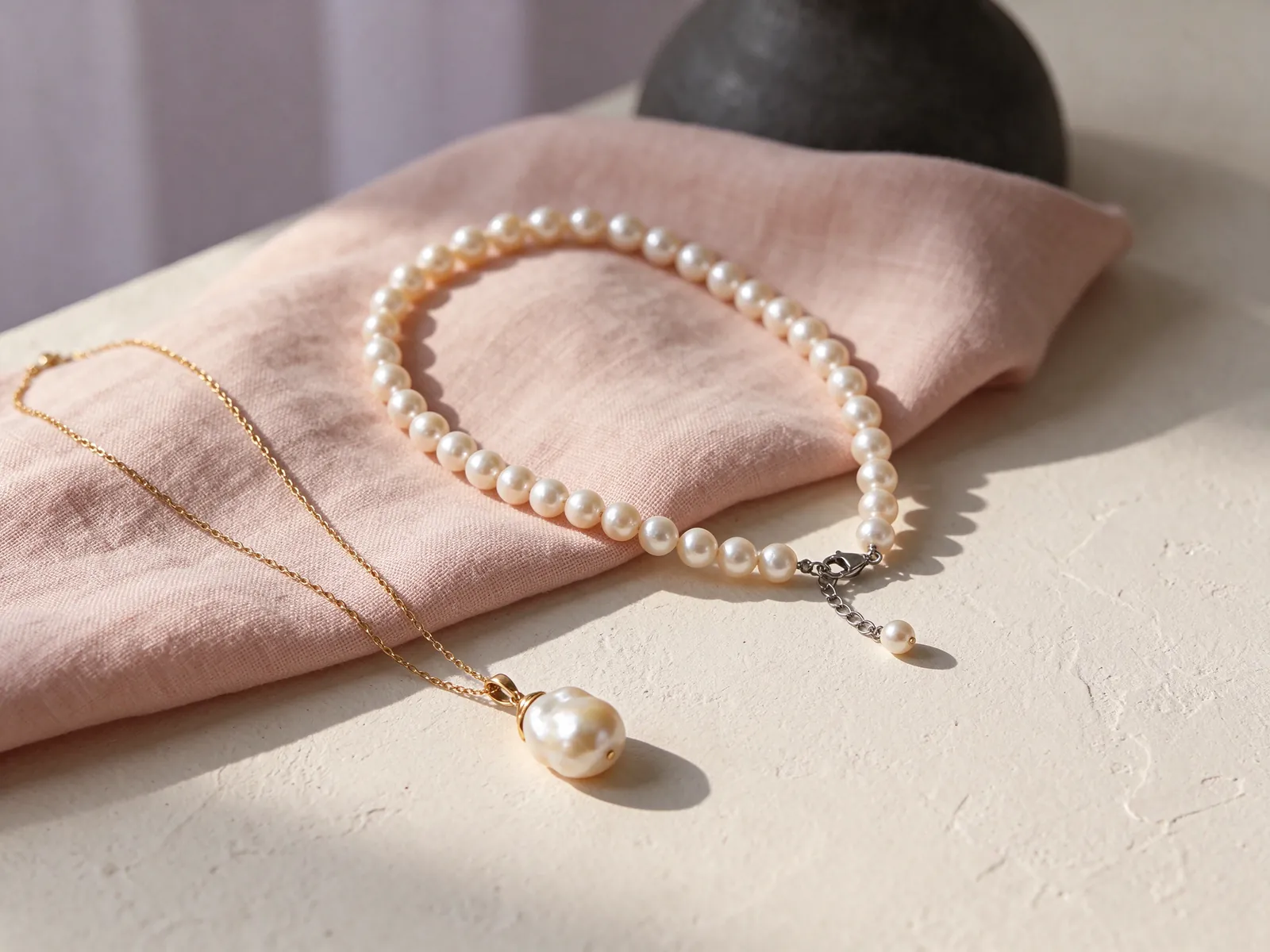
Test movement and layering before deciding on everyday wear
A necklace should be assessed in the positions you actually use. Sit at a desk, turn gently and add your usual jacket or shawl. Notice whether the collar pushes the strand higher, the clasp shifts forward, or hair interferes with fastening. For occasion wear, test the complete combination of neckline, lapels and any decoration on the front of the outfit. Standing still for a mirror photograph is only one part of the assessment.
For layering, first check that each necklace is comfortable on its own. Then look for distinct curves when worn together. Different total lengths do not guarantee separation because pearl diameter, clasps and fabric affect how the necklaces settle. If you prefer an organised layered silhouette, a multi strand pearl necklace offers a different structural approach from several independent strands. Compare those approaches rather than assuming they behave identically.
Do not assume every long strand can be doubled comfortably
Doubling depends on the length, pearl size, fastening and the room left around the neck. Two loops need not settle into equal curves, and the clasp may move to a different position. Establish the intended wearing method before trying it. Do not pull tightly, twist the strand or force a fastening simply to create a shorter look; a long-length label is not a promise of multiple wearing configurations.
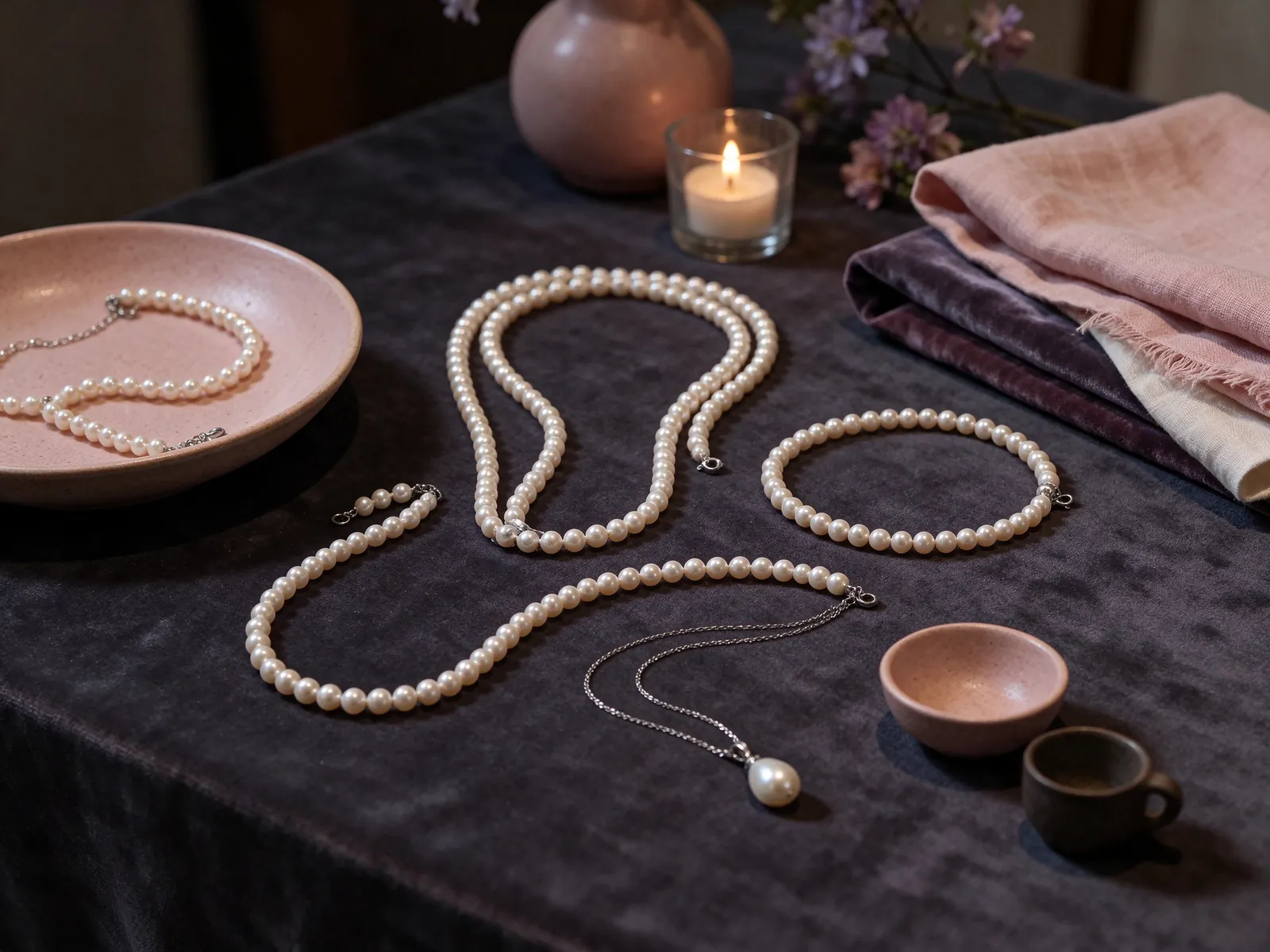
Turn the comparison into a clear preference, including for gifts
Summarise your decision in three points: the neckline you wear most, the position where you want the strand to rest, and how close-fitting you find comfortable. Add the measured length of an existing favourite and the way you measured it. This is more informative than requesting princess length without further detail. If two drops appeal to you, choose according to the main occasion rather than treating one as an incorrect size.
For a gift, notice whether the recipient usually wears jewellery near the neck, inside an open neckline or over clothing. If possible, ask for the complete measurement of a necklace they enjoy wearing. Height and photographs cannot accurately supply a neck measurement, and your own comfortable length should not be transferred directly to someone else. Preserving a surprise is understandable, but guessing from a length name alone leaves important fit questions unanswered.
Keep care separate from attempts to change the fit
For routine care, GIA recommends wiping cultured pearls with a very soft, clean cloth after wearing. Its guidance also identifies perfume, hair spray, acids and high heat as potential sources of damage to pearls. Do not use ultrasonic or steam cleaners. If a strung necklace has been cleaned with water, the string must be completely dry before wearing it again. These care habits do not alter length: avoid pulling the strand or changing the clasp yourself to correct an unsatisfactory drop.
If two positions still appeal to you, discuss the comparison with Flint Jewellery on WhatsApp. Share the complete length and measurement method of your reference necklace, your usual neckline and the movement space you prefer. This makes the fit conversation more specific while keeping the final decision grounded in the comfort and appearance of the actual strand.
| Length example | WSP chart label | Clothing check | Fit question |
|---|---|---|---|
| 35 cm | Collar | Check space at the neck edge | Is movement comfortable, not merely fastening possible? |
| 38 cm | Choker | Test a higher crew neckline | Does the collar push the strand upwards? |
| 40 cm | Choker or Short Princess | Compare inside-neckline and edge-crossing positions | What is the actual complete length? |
| 45 cm | Princess | Inspect the curve with your usual top | Is there clear spacing rather than an assumed collarbone position? |
| 60 cm | Matinee | Check buttons and decoration on the front | Where does the strand settle when seated? |
Pearl knowledge and authoritative references
WSP describes a common princess-length reference as approximately 40–45 cm, or about 16–18 inches, and labels 45 cm as Princess in its length chart. These examples describe a category, not a guaranteed position on the wearer.
Read the reference for this factFrequently asked questions
Can I use my height to choose between two princess lengths?
Height can help you consider overall proportion, but it cannot determine neckline clearance. Neck size, pearl diameter and clothing still matter. Compare the intended drop with your usual top and assess both options while sitting and turning.
Should my measured neck circumference be the necklace length?
No. Neck circumference describes your body; the necklace also needs the curve and movement space you prefer. A loose non-stretch cord can help compare positions, but the real strand's thickness, weight and clasp require their own fit check.
Why does a necklace look shorter after I put on a shirt?
The collar may push it upwards or partly cover its curve. Try the shirt with your usual button arrangement and inspect where the collar points and placket meet the strand. The necklace itself has not necessarily changed length.
Are 45 cm and 18 inches interchangeable when shopping?
Treat guide pairings as approximate rather than identical measurements. Retain the actual number and unit stated for the necklace and confirm whether the clasp is included. Small measurement differences can matter when the strand sits close to a neckline.
Is layering two necklaces the same as wearing a multi-strand design?
Not necessarily. Separate necklaces can move independently, while a multi-strand structure coordinates the strands differently. Compare the fastening, curve separation and movement of the actual arrangement rather than relying only on the listed lengths.
Updated: