How does your neckline shape the choice of a ribbon clasp pearl necklace, a ribbon tie pearl necklace or a pearl necklace with ribbon clasp? | Flint Jewellery
Start with the clothes you intend to wear rather than choosing the bow in isolation. A round neckline gives you a curved edge against which to judge the strand. Decide whether the pearls should sit above that edge or on the fabric, then check whether the bow crowds the same space. With a V-neck, consider both the opening and the ribbon tails: a bow that fills the point of the V can conceal the shape you wanted to emphasise.
The ribbon adds a second outline to the necklace, so its scale matters alongside the pearls. Use the proportions of a single strand pearl necklace as a starting point, then assess how much attention the bow introduces. A narrow ribbon may leave embroidery or collar details more visible, while a broader bow needs enough clear space to read as a distinct feature. Check the outfit in a full-length mirror as well as close up; a detail that dominates a photograph may feel different in the complete outfit.
How can ribbon width and bow placement complement your neckline on a ribbon clasp pearl necklace, a ribbon tie pearl necklace or a pearl necklace with ribbon clasp? | Flint Jewellery
Judge ribbon width, the two loops and the hanging tails together. With a shirt collar, compare the effect with the top button closed and open, watching for a bow squeezed between the collar points. A side bow also needs room beside your earrings. Place the detail only where the construction allows it to sit comfortably; turning the whole strand to achieve a particular photograph can move the closure into an awkward position.
Understand the fastening before choosing the look
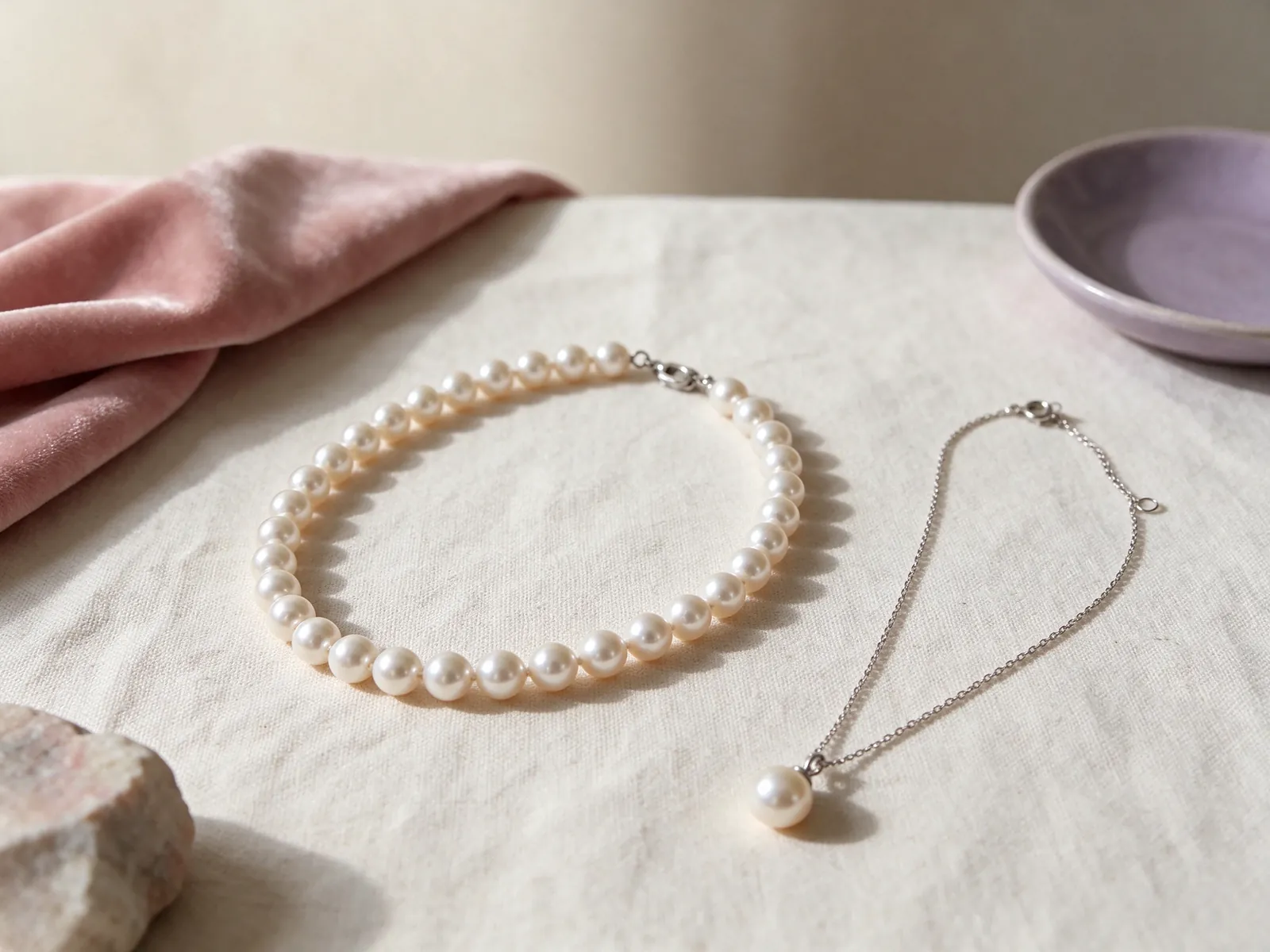
A style name does not explain every connection. Ribbon can be involved in fastening a necklace, attached beside a separate closure or used as a decorative detail. Ask to see the full process of putting the necklace on and taking it off. Follow how the two ends of the strand meet, which component carries the tension and which part you actually operate. A front-facing bow photograph cannot answer all of these questions.
If an identifiable opening mechanism suits your routine, compare the handling of a clicker clasp pearl necklace and a toggle clasp pearl necklace as alternative design directions. The useful comparison is how you open the closure, see it and grip it, not a blanket claim that one type is always more secure. A soft-looking ribbon also does not establish that every connecting part is free of metal. Identify the components that touch your neck if material contact is an important consideration.
A practical closure check during a fitting
Try the closure yourself in a mirror and note whether you need assistance. Turn your head naturally, adjust your collar and sit down to see whether the ribbon folds or the fastening moves against your skin. Do not pull sharply on the strand as a strength test. If the bow slips, the connection opens or a component looks strained, remove the necklace and ask the seller how that particular design should be worn.
Read length and ribbon tails as separate details
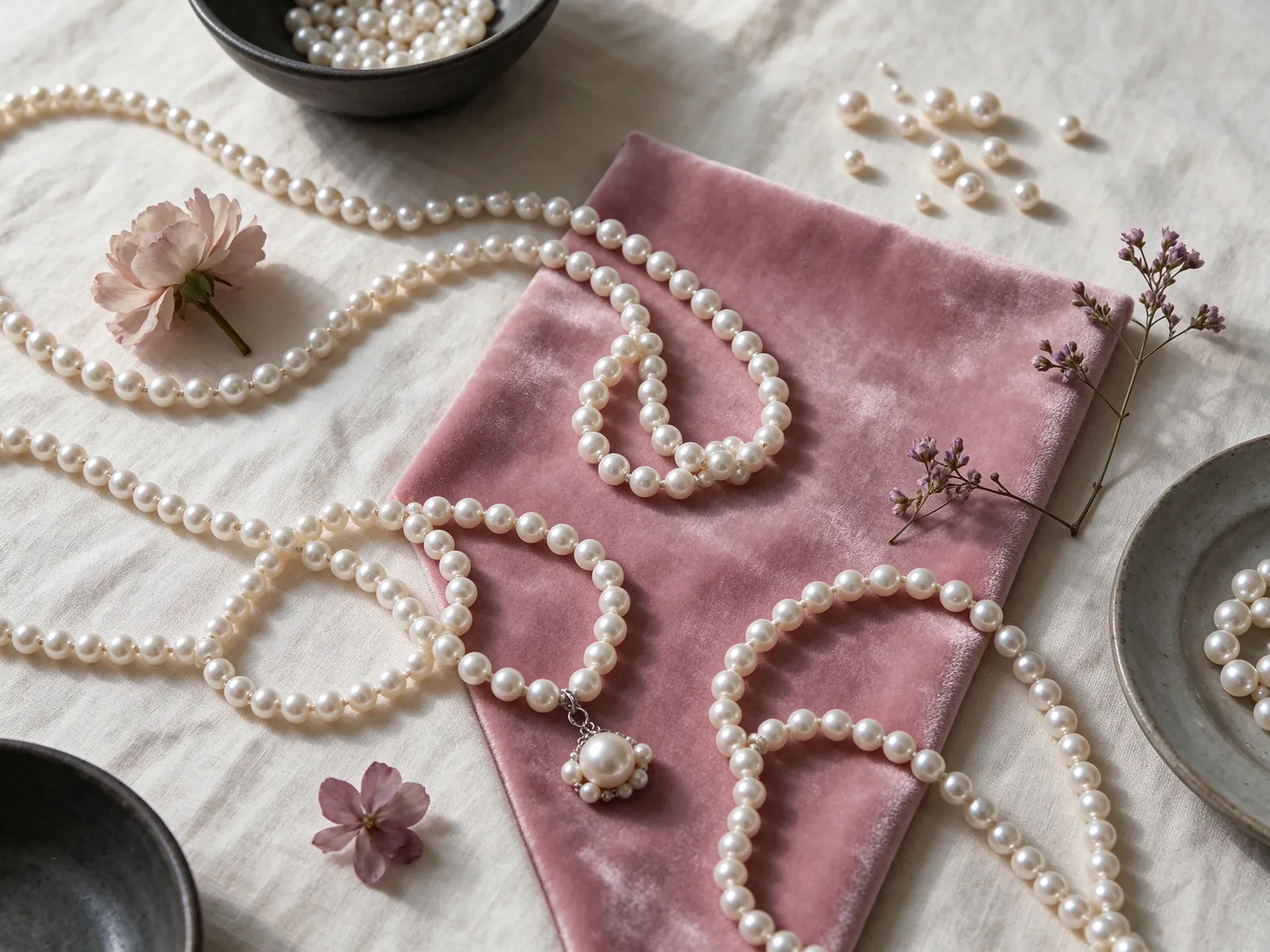
The length of the pearl section is not automatically the length of the closed necklace. Connections, ribbon and the way a fastening is arranged can affect where it sits. Ask how the stated measurement is taken and whether it includes the ribbon and other components. If the design permits adjustment, establish the usable range and correct method rather than assuming that any amount of ribbon can be tied at any point.
Front-facing tails need to be considered against buttons, belts and jacket zips, while rear-facing tails may meet a collar, hood or long hair. If you like an asymmetric outline but do not want hanging fabric, a half chain pearl necklace offers another composition to explore. Decide whether your main interest is the pearl line, a change in the strand or the bow itself. This helps you compare genuinely different styles without treating their names as equivalent constructions.
What to request when buying online
A front view shows the bow's scale; side and back views help explain the closure and the ends of the strand. Request views that relate to the actual necklace, together with an explanation of its length measurement. The position shown on another wearer depends on their neck and clothing. Compare with a necklace you already find comfortable, using the same measurement method instead of combining a flat pearl-section measurement with a worn overall length.
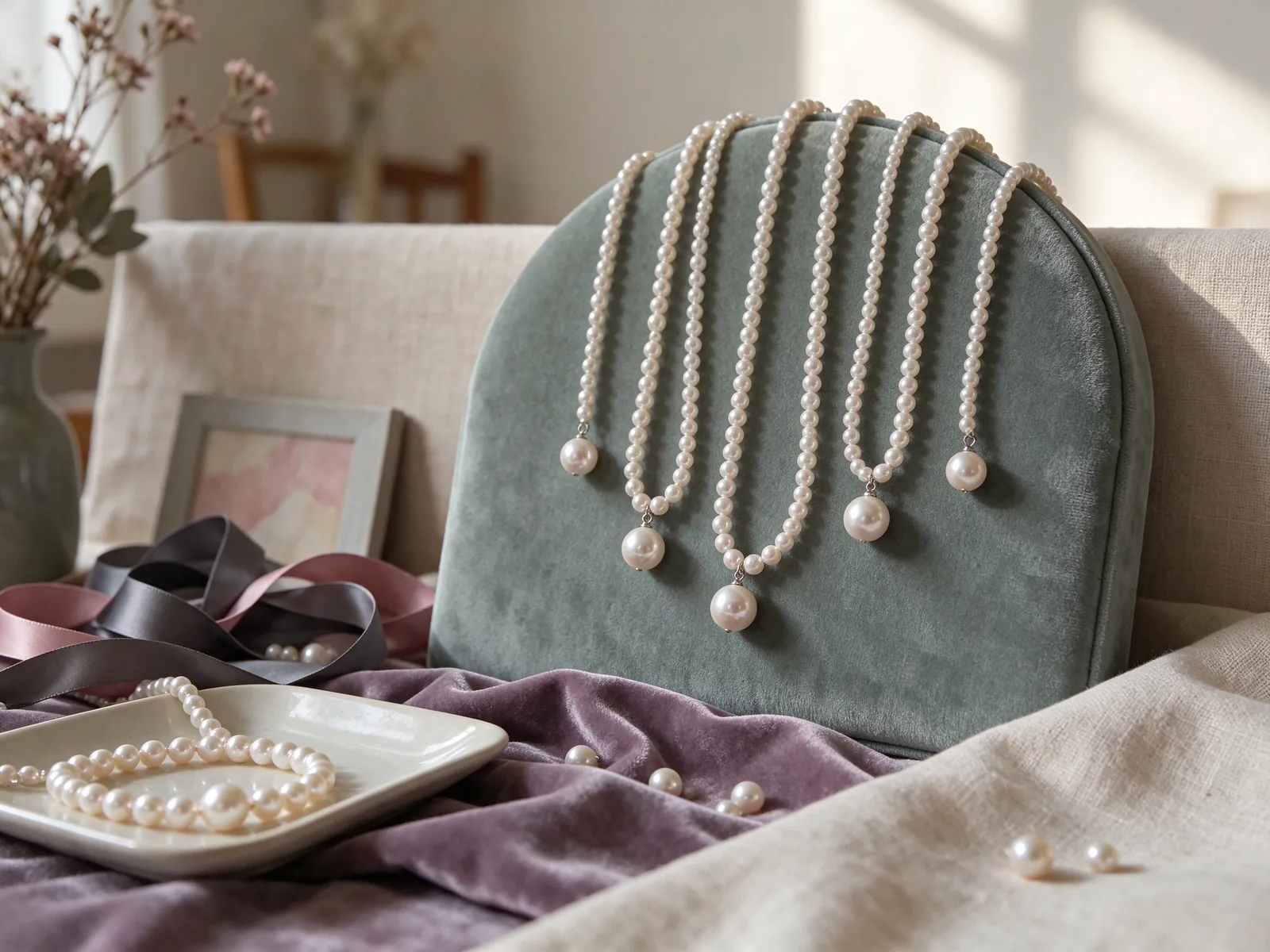
Balance pearl appearance with ribbon colour and texture
Decide whether you want the ribbon to blend into the strand or provide contrast. Place the necklace beside the intended fabric and look in more than one ordinary lighting setting. A reflective ribbon can attract attention differently from a less reflective fabric, even when the colour names sound similar. Check whether the pearl lustre remains visible beside the bow. Photographic lighting and white balance can change the impression, so colour labels alone are not a complete styling guide.
GIA describes seven pearl value factors: size, shape, colour, lustre, surface quality, nacre quality and matching. This provides a way to separate the appearance of the pearls from the success of the ribbon styling. The consistency of a strand and the relationship between a bow and your blouse are different questions. Shape or colour alone cannot identify pearl origin, establish natural-versus-cultured identity or show whether an identification document exists.
Avoid competing bows and collar details
A patterned blouse or tie-neck dress already has visual movement. Choose which detail should lead, then see whether the necklace bow has a clear outline against the background. Two bows meeting at the neckline can hide each other and the pearls. Moving attention to the back is not simply a styling shortcut: check for a rear zip, fabric ties or hair that could rub against or catch around the necklace detail.
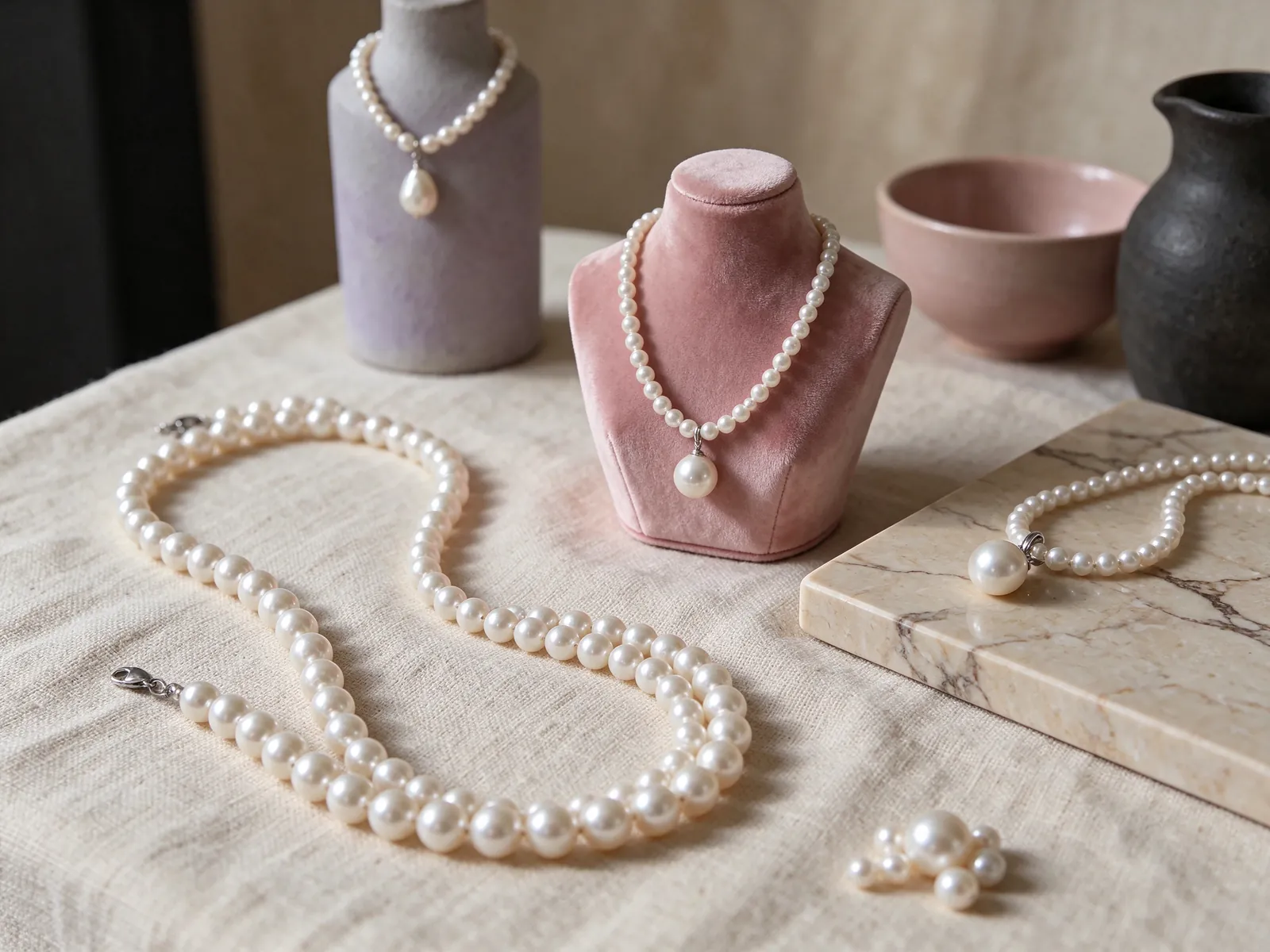
Plan for workwear, evenings and layered looks
For everyday wear, begin with one necklace and a clearly chosen bow position. Put on your usual jacket and shoulder bag to check whether straps or lapels press against the ribbon. A bow at the nape also needs to feel comfortable when you sit against a chair. For an evening outfit, include your intended hairstyle in the fitting: pinned-up hair reveals the back detail, while loose hair may conceal it or become caught around the fastening.
Use pearl necklace layering principles to keep strands and ribbon tails apart rather than simply adding another necklace. If the upper bow rests on the lower strand, the details can obscure each other and move together during removal. Styling need not follow gender categories: the neckline and fabric proportions discussed for a men's pearl necklace can also help you choose a restrained ribbon arrangement with a shirt or structured jacket.
Leave space between the bow and earrings
A side bow and a long earring can occupy the same area beside your face. Try them together and turn your head to check both the appearance and possible contact. If the bow is the focal point, simpler earrings may keep the outline clearer. If the earrings lead the outfit, a less prominent bow may work better, provided its position follows the necklace's intended construction rather than an improvised twist of the fastening.
Care for the pearls and fabric without treating them alike
GIA places pearl at 2.5 on the Mohs hardness scale and says pearls should never be cleaned with ultrasonic or steam cleaners. These facts explain why the pearl surface needs gentle treatment; they do not tell you whether a ribbon is washable. After wearing, wipe the pearls with a very soft, clean cloth. Avoid contact with perfume, hair spray and acids, and keep the necklace away from excessive heat.
If make-up or perspiration marks the ribbon, ask about cleaning that fabric within the complete necklace construction before treating it like a garment. GIA states that, after strung pearls are cleaned with water, the string must be completely dry before wearing. Check the ribbon separately for remaining moisture as well. A stain near a pearl hole or connecting part requires care because scrubbing or pulling on the fabric can also disturb the string.
Store the bow without crushing or dismantling it
Choose a separate, softly lined space away from sharp jewellery fittings, with room for the bow and tails. Whether the ribbon should be untied depends on its role: do not undo a fixed decorative bow merely to flatten it. Check that the strand is not folded tightly beneath other pieces and that the necklace is dry before putting it away. Never use an iron or direct steam on ribbon while it is in contact with the pearls.
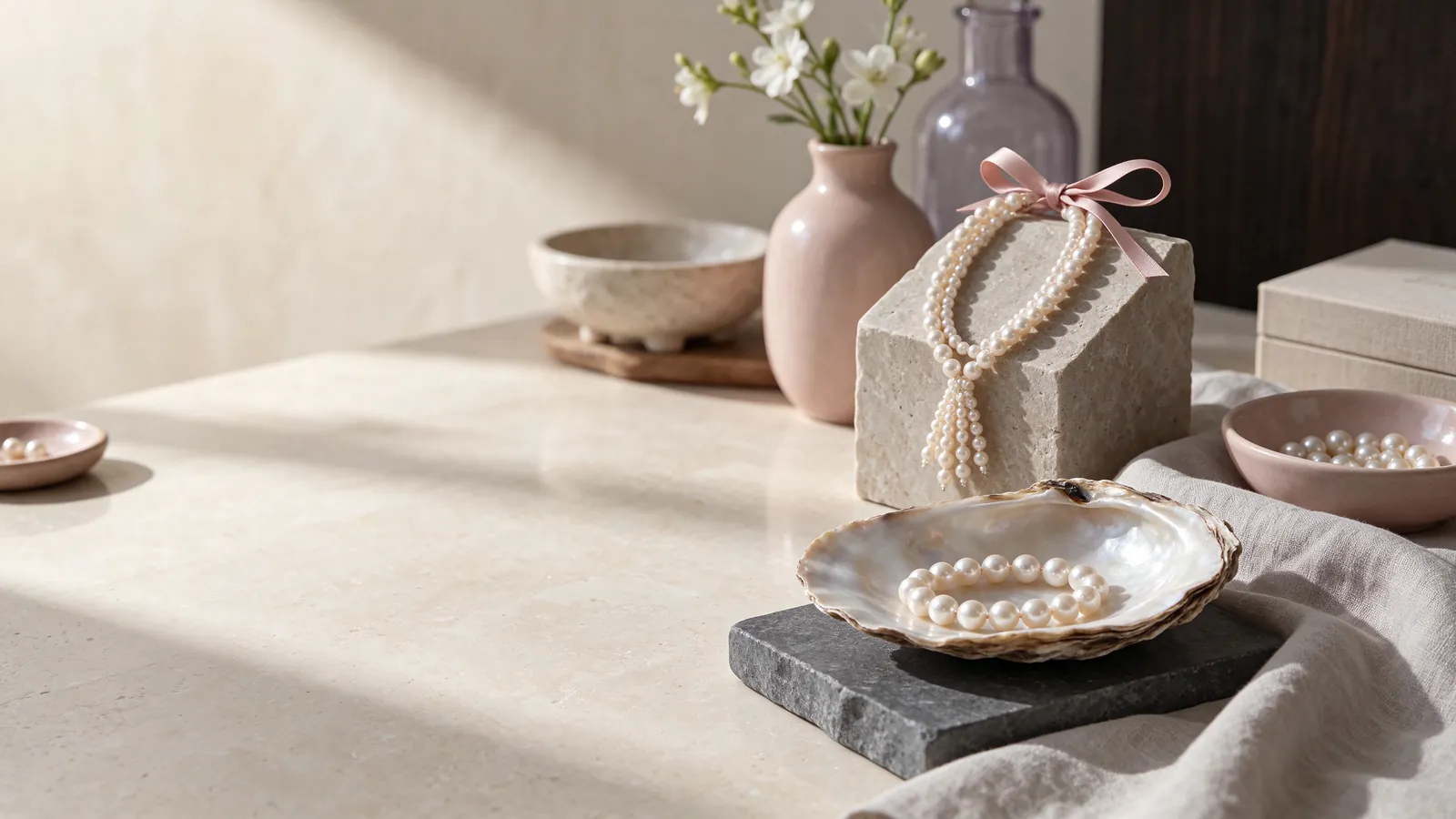
Make a purchase or gift discussion specific
Organise your questions around appearance, dimensions, fastening and care. Ask whether the bow position can change, how length is measured, how to put the necklace on and what cleaning is appropriate. Pearl identity, any treatment information and identification documents belong to the particular necklace description; they cannot be inferred from a ribbon-clasp name. If you have a known sensitivity to a material, ask about every skin-contact component rather than only the visible ribbon.
For a gift, think about the recipient's usual collars, hairstyle and dressing routine. Someone who prefers quick, independent fastening may value an operating demonstration more than an attractive front photograph. Someone who wears collared shirts needs enough space around the nape and collar points. Discuss the seller's actual terms and assistance before purchasing instead of reading a general styling conversation as a promise of alteration or aftercare services.
Describe the outfit, not just the style name
Bring a photograph of a frequently worn neckline and explain where you would like the pearls to sit, whether the bow should be visible and any difficulty you have with closures. Mention your usual earrings, jacket and hairstyle so the discussion covers the whole outfit. A general pearl necklace styling enquiry with Flint Jewellery can focus on these preferences; the construction of any particular necklace should be established from its own design information.
To make the styling discussion more specific, contact Flint Jewellery on WhatsApp at +85260106207 with a neckline photo and your preferred strand position. Ask about general pearl necklace styling and explain which detail you would like to emphasise.
| Outfit | Area to assess | Arrangement to compare | Fitting check |
|---|---|---|---|
| Round-neck top | Curve of strand against collar edge | Pearls above the edge or on the fabric | Avoid crowding bow and collar together |
| V-neck dress | Opening and hanging tails | Keep the V visible beside the bow | Check the tails when seated |
| Collared shirt | Collar points and nape | Compare top button open and closed | Turn your head and watch for catching |
| Evening outfit with pinned-up hair | Back detail and earrings | Balance the front strand with the rear bow | Check contact with earrings and chair back |
| Layered necklaces | Different strand positions | Separate the bow from the other strand | Check that removal does not pull both together |
Pearl knowledge and authoritative references
GIA ranks pearl at 2.5 on the Mohs hardness scale and states that pearls should never be cleaned in ultrasonic or steam cleaners. A ribbon-detail necklace therefore needs pearl-safe care as well as appropriate care for its fabric.
Read the reference for this factFrequently asked questions
Does a ribbon tie pearl necklace always offer adjustable length?
No. Ribbon can be a working fastening or a fixed decorative element, and a tie does not establish an unrestricted length range. Ask how the complete necklace is measured and how its fastening is intended to work before changing the position of the knot.
Can I wear the bow at the side instead of the back?
Only if the particular construction accommodates that position comfortably. A side bow needs space beside earrings and may move the closure. Try the intended arrangement rather than rotating the strand purely for appearance.
How should I compare a ribbon necklace with a tie-neck blouse?
Look for a clear focal point. The blouse tie and necklace bow can obscure each other if they share the same space. Compare their outlines against the fabric and check that their tails do not become entangled when you move.
What if foundation marks the ribbon beside the pearls?
Establish the fabric and necklace care method before applying a stain treatment or soaking the piece. Pearls must not be cleaned with ultrasonic or steam cleaners. If strung pearls are cleaned with water, the string must be completely dry before wearing, and the ribbon should be checked for moisture too.
What information helps when choosing one as a gift?
The recipient's usual neckline, hairstyle, preferred necklace position and comfort with closures are useful. Clothing size alone does not determine necklace fit. Compare with a necklace they already wear, clarify the length measurement and understand the actual purchase terms.
Updated: