What neckline proportions matter when choosing a ribbon clasp pearl necklace, a ribbon tie pearl necklace or a pearl necklace with ribbon clasp? | Flint Jewelry
Picture the finished outfit first: the necklace needs to relate to the edge of your top, not just look appealing on a display. On a crew neck, decide whether the strand follows the curve above the fabric or rests below it. A bow at that same edge may add more detail than you want. With a V-neck, preserve a visible opening if the neckline is meant to be part of the look, and notice whether the ribbon tails disappear into it.
Consider the pearl line and the ribbon as two separate shapes. A single strand pearl necklace can help you establish the basic position before you decide how much volume a bow should contribute. A broad bow may overlap trim or collar points, while a smaller ribbon detail can leave those features easier to see. View the combination from a normal conversation distance and in a full-length mirror, not only through a tightly framed selfie.
How do ribbon width and bow placement frame the neckline of a ribbon clasp pearl necklace, a ribbon tie pearl necklace or a pearl necklace with ribbon clasp? | Flint Jewelry
Include the loops and tails when judging scale; ribbon width by itself does not show the entire bow's footprint. A button-down shirt offers a useful comparison with the collar open and closed. On an open neckline, check that the bow does not obscure the pearl strand you want to highlight. A side position also needs room near earrings and hair, and should suit the way the necklace is constructed rather than require an uncomfortable rotation.
Look beyond the bow to understand the closure
The first purchasing question is functional: what actually holds the necklace closed? A ribbon may be part of the fastening, a decoration next to another closure or a fixed detail elsewhere in the design. Ask for a demonstration showing both ends of the strand and the full sequence of putting it on and removing it. Notice where the connection sits and which part is meant to be handled; a decorative knot is not necessarily the part you should undo.
For a comparison focused on operation, explore a clicker clasp pearl necklace or a toggle clasp pearl necklace. Compare how visible the opening is and how easily you can manage it with your own fingers. Do not rank the designs by an assumed universal security advantage. Likewise, a fabric bow does not establish that the necklace contains no metal: connections and other skin-contact components should be described individually if that matters to you.
Check everyday movement, not pulling strength
During a fitting, operate the closure and see whether you can reach it comfortably. Then sit, turn your head and adjust your shirt as you normally would. Watch for a folding ribbon, loose tails or hair caught at the connection. Avoid tugging hard on the pearls to test the necklace. If something slips, opens or looks strained during ordinary movement, take it off and ask how that specific closure is intended to function.
Clarify what the necklace measurement includes
A measurement of the pearl section alone does not tell you the complete closed length. Ribbon, connecting parts and the arrangement of the fastening can change where the strand rests. Before ordering, ask whether a listed length includes those elements and how it is measured. If a particular design allows adjustment, learn its usable range and method. Visible ribbon tails are not evidence that the wearer can safely choose any length.
Think about where the tails will travel during wear. At the front they may meet buttons or a jacket zipper; at the back they may sit beneath a collar or loose hair. If your goal is asymmetry without fabric tails, compare the composition of a half chain pearl necklace. That is a different visual approach, not a substitute closure. Choosing between a bow-led outfit and a strand-led outfit makes the comparison more useful than relying on similar product names.
Use online images together with written dimensions
Look for front, side and back views of the actual necklace so that the ribbon's relationship to the ends is visible. A worn photograph is helpful for styling, but another person's neck and clothing affect the apparent drop. Use a necklace you already enjoy wearing as a personal comparison, making sure both lengths follow the same measurement definition. Ask where the bow sits when closed instead of estimating that position solely from a display image.
Separate color coordination from pearl quality
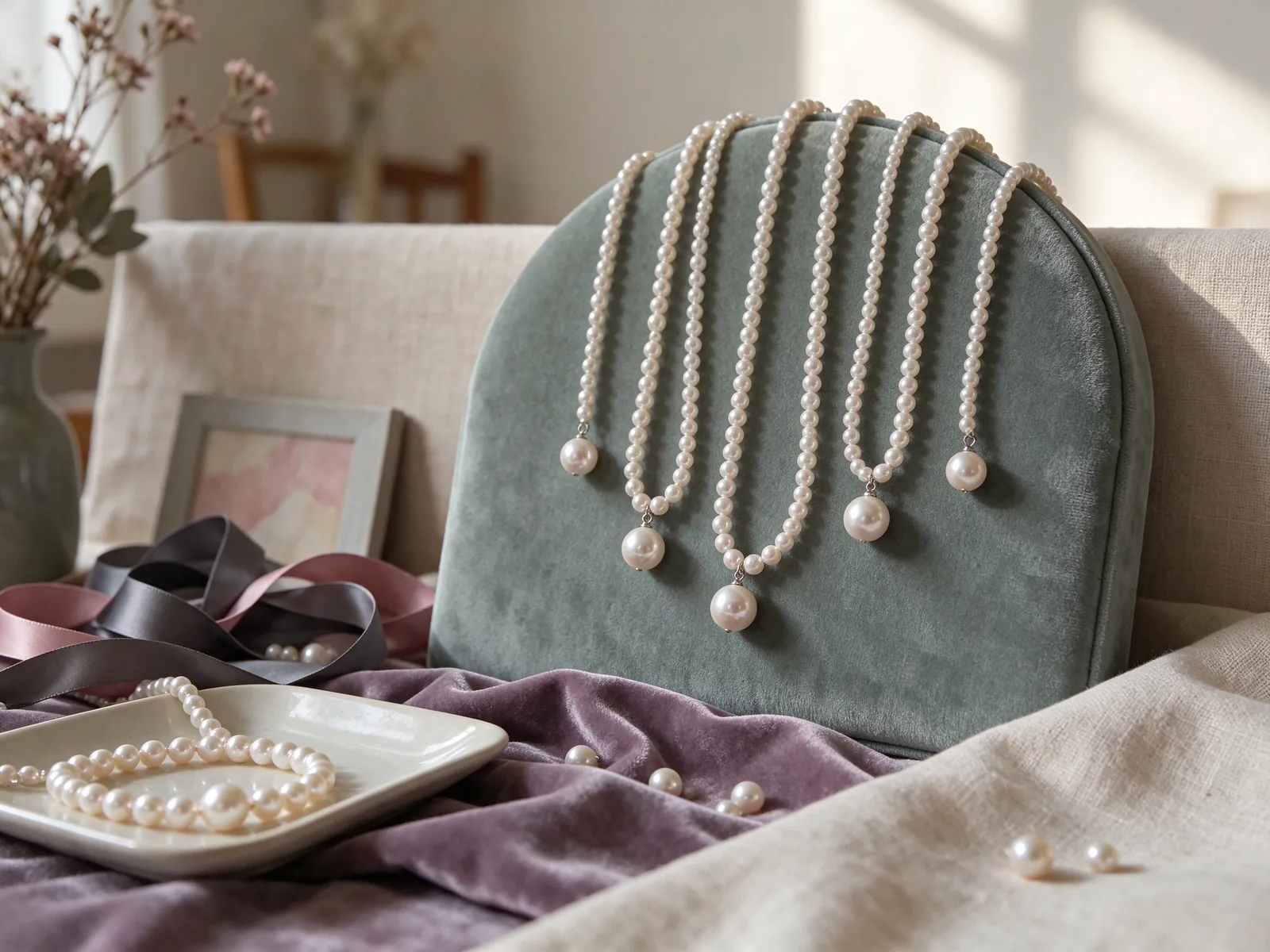
Choose whether the ribbon should blend with the outfit or stand out. Hold the necklace beside the intended fabric and examine it in different everyday lighting. A shiny ribbon and a less reflective one can create different emphasis even in a similar color. Check whether the pearl luster remains easy to see beside the bow. Screen settings and photographic lighting can affect color impressions, so a descriptive color name should not be your only point of comparison.
GIA discusses seven pearl value factors: size, shape, color, luster, surface quality, nacre quality and matching. That framework keeps assessment of the pearls distinct from the styling success of a ribbon. For example, the visual consistency of a strand is different from whether its bow complements a patterned dress. A pearl's shape or color alone cannot establish its origin, natural-versus-cultured identity or the existence of an identification report.
Choose a focal point when clothes already have detail
Ruffles, embroidery and a fabric neck tie already create texture around the face. A large necklace bow can still be considered, but check that its outline remains readable and that it does not hide the pearls behind another tie. If you prefer a quiet front with a back detail, inspect the rear neckline too. A zipper, garment tie or hair can compete with the bow physically even when the front view looks clean.
Try the necklace with the accessories you actually use
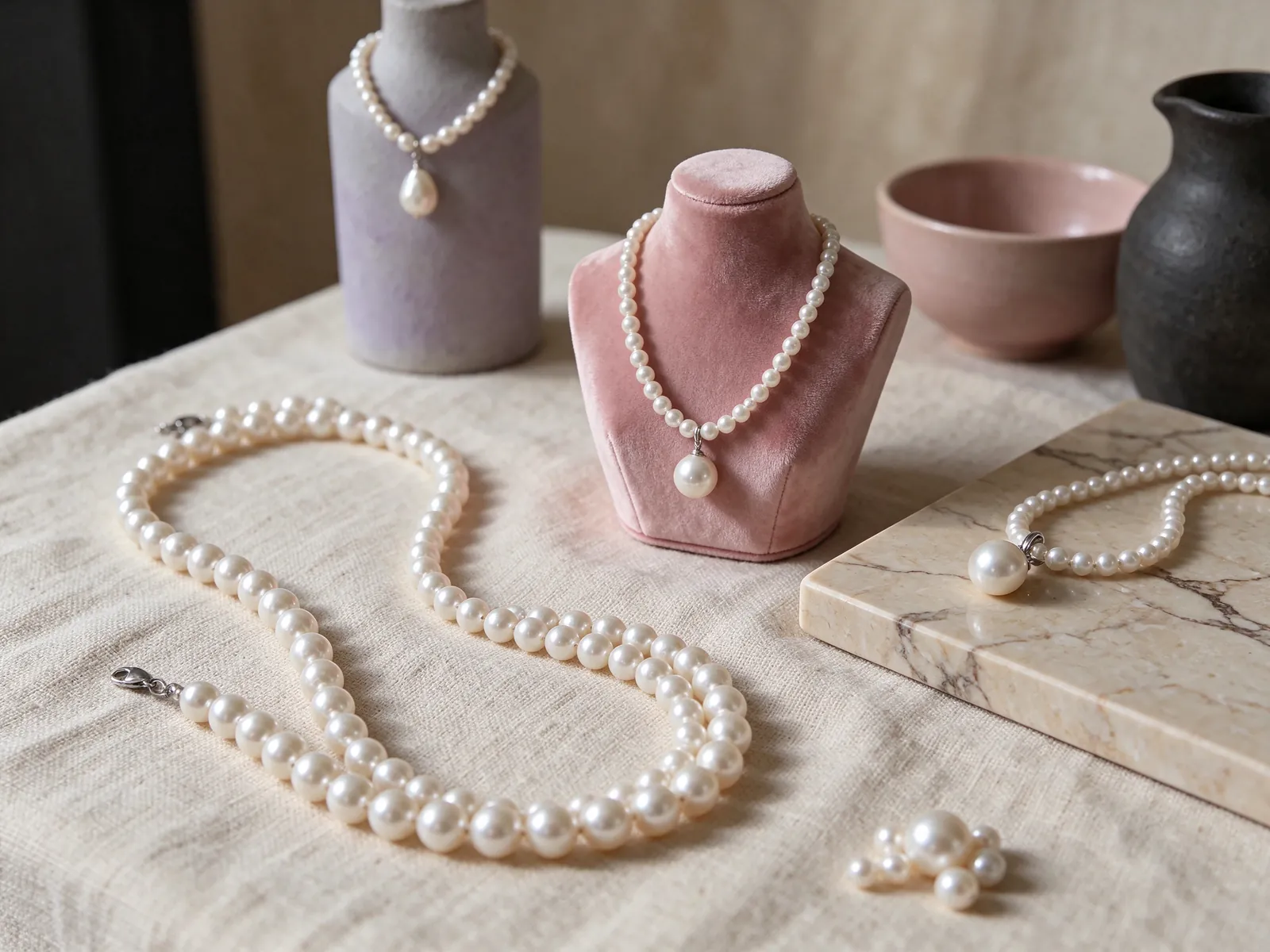
An everyday fitting should include a jacket and any shoulder bag that normally crosses the area around the necklace. Look for straps or lapels pressing on the bow, and sit against a chair to assess a rear-facing detail. For an evening look, test the planned hairstyle rather than assuming you will always wear your hair up. Loose hair can hide the ribbon or catch near the closure, while an updo makes the nape arrangement more visible.
If you want more than one strand, use pearl necklace layering ideas to create separate positions for the pearls and ribbon tails. A bow resting directly on another necklace can conceal it, and the pieces may move together when you take them off. Gender labels need not set the styling rules: the collar and fabric proportions relevant to a men's pearl necklace can also inform a simple ribbon look with a button-down or tailored jacket.
Coordinate a side bow with earrings
Wear the intended earrings during the fitting, especially if they hang near a side bow. Turn your head to see whether the pieces touch and whether the visual detail becomes too concentrated on one side. Let either the bow or the earrings lead if you want a clearer outline. A less prominent ribbon arrangement may balance statement earrings, but it must remain compatible with the necklace's intended wearing position and closure.
Give the pearl strand and ribbon their own care considerations
According to GIA, pearl ranks 2.5 on the Mohs hardness scale, and pearls should never be cleaned in ultrasonic or steam cleaners. These are relevant reasons to handle the pearl surface gently, not a test of how durable the ribbon is. Wipe the pearls after wearing with a very soft, clean cloth, avoid contact with perfume, hair spray and acids, and keep them away from excessive heat.
A stained ribbon should not automatically send the whole necklace into a garment wash. Ask how the fabric can be cleaned while attached to the pearls and other components. GIA says that when strung pearls have been cleaned with water, the string must be completely dry before the necklace is worn. Check the ribbon for moisture separately. Be particularly gentle near pearl holes and connections, where rubbing a stain can also place tension on the string.
Protect the shape of the bow during storage
Leave room around the necklace in a soft, separate storage space so other jewelry does not press on the pearls or crush the bow. Find out whether the ribbon is intended to be untied; a fixed decoration should not be dismantled just to lay the piece flat. Check for damp fabric, tangled tails and a strand folded under another item before putting it away. Keep an iron and direct steam away from pearls when tending to nearby ribbon.
Turn a style preference into useful purchasing questions
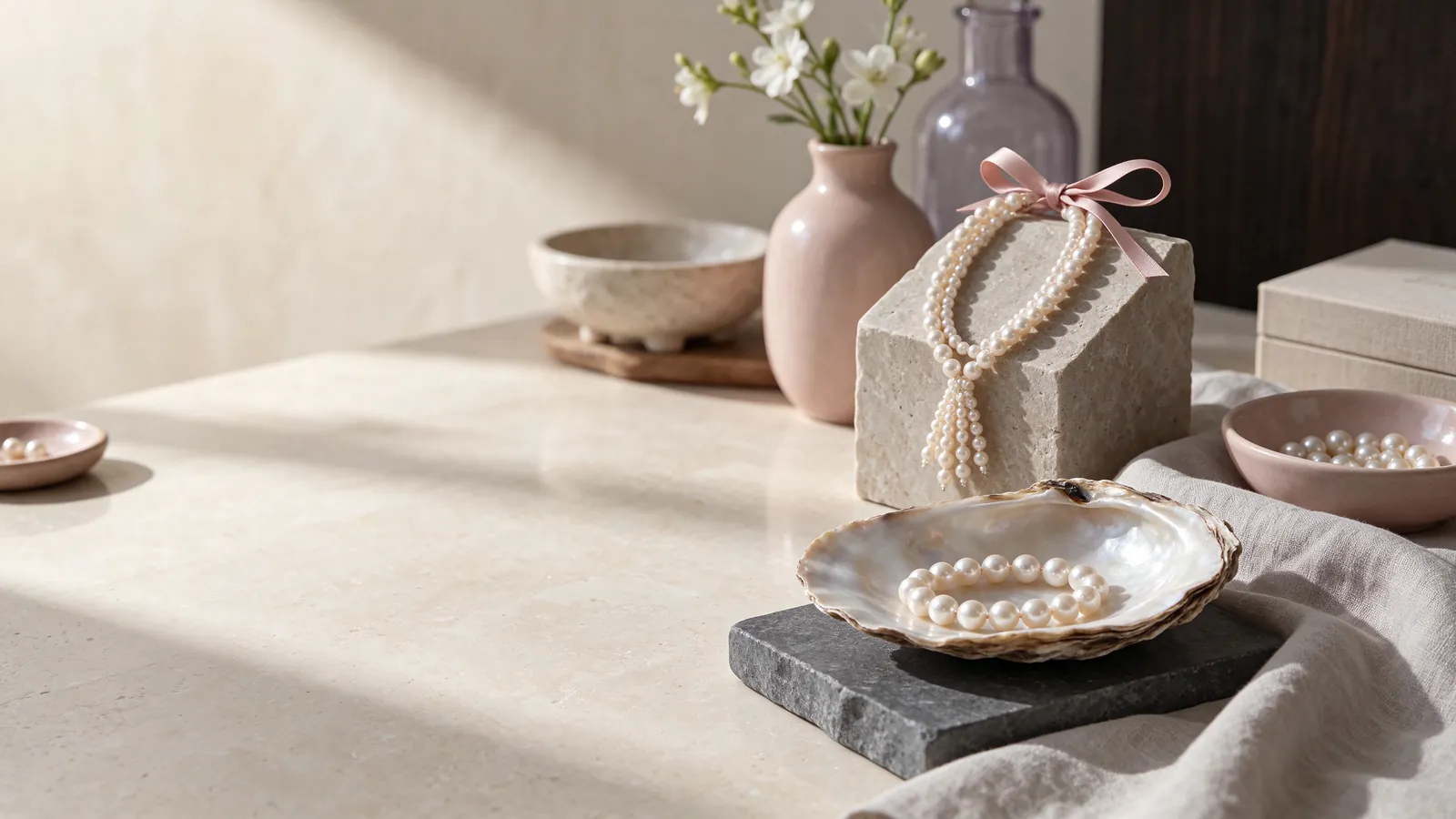
Write down the questions that determine how you will wear the piece: the bow's intended position, the complete length, closure operation and cleaning method. Ask about pearl identity, any treatment information and identification documents through the description of the specific necklace, not the meaning of its style name. For a known material sensitivity, identify all parts that touch the skin. Asking only about the visible fabric leaves the connecting components unexplained.
A gift choice benefits from knowing the recipient's routine. Their preferred collars, hairstyle and ability to manage a closure may matter more than an isolated photograph of the bow. Clothing size does not determine where a necklace will rest. Use a familiar necklace for comparison when possible, clarify the measurement definition and understand the seller's actual purchase terms. A discussion of styling should not be taken as a guarantee of alterations or a particular aftercare service.
Bring the neckline into a styling conversation
A photograph of a frequently worn top can explain your needs better than a style name alone. Describe your preferred pearl position, whether you want the ribbon visible, and any difficulty reaching a closure. Include your usual earrings, jacket and hairstyle. General pearl necklace styling questions with Flint Jewelry can focus on those preferences; the actual closure and specifications of a particular piece should come from that design's own information.
For a more specific styling conversation, contact Flint Jewelry on WhatsApp at +85260106207 with a neckline photo and your preferred strand position. Ask about general pearl necklace styling and explain whether the pearls or ribbon should be the focal point.
| Clothing or styling choice | Visual question | Arrangement to compare | Movement check |
|---|---|---|---|
| Crew-neck top | Does the bow crowd the collar edge? | Strand above the fabric or resting on it | Check collar contact as you turn |
| V-neck outfit | Is the opening still visible? | Keep the bow and V point distinct | Watch where tails fall when seated |
| Button-down shirt | Do collar points obscure the bow? | Compare open and closed top button | Check the ribbon at the nape |
| Evening look with an updo | How do front and back details balance? | Assess bow together with earrings | Check contact beside the face and against a chair |
| Layered necklaces | Can both strands be seen clearly? | Separate the bow from the second strand | Remove each piece without pulling the other |
Pearl knowledge and authoritative references
GIA gives pearl a Mohs hardness ranking of 2.5 and advises against ultrasonic or steam cleaning. For a necklace with ribbon details, pearl-safe care must be considered alongside the fabric's own cleaning requirements.
Read the reference for this factFrequently asked questions
Can I assume a bow makes the necklace adjustable?
No. A bow may be fixed decoration, and a working ribbon closure still has a particular construction. Ask about the usable range, how the complete necklace is measured and how it should be secured before changing the knot position.
Is a ribbon-detail necklace necessarily metal-free?
No. Ribbon appearance does not identify connecting parts or any separate closure. If skin contact with a particular material is a concern, ask for information about each component that touches your neck rather than relying on the bow.
Will a back bow work with long hair?
Try it with your usual hairstyle. Hair may conceal the detail or catch near the connection, and a high collar can press against the bow. Choose a position supported by the construction, checking comfort while turning your head and sitting down.
Can I clean the ribbon with steam while it is attached?
Keep direct steam away from the pearls; GIA says pearls should never be cleaned in steam or ultrasonic cleaners. Ask about fabric care within the complete necklace instead of treating the ribbon as a separate garment while it remains attached.
What should I send for a useful styling discussion?
A photo of the neckline, your preferred strand position and whether you want the bow visible are useful. Mention your hairstyle, earrings and any difficulty with closures. These details support a discussion of proportions without assuming a particular product or alteration service.
Updated: