Where Should a Long Pearl Necklace Fall? Matching an Opera Length Pearl Necklace or a Long Pearl Strand Necklace to Your Neckline | Flint Jewelry
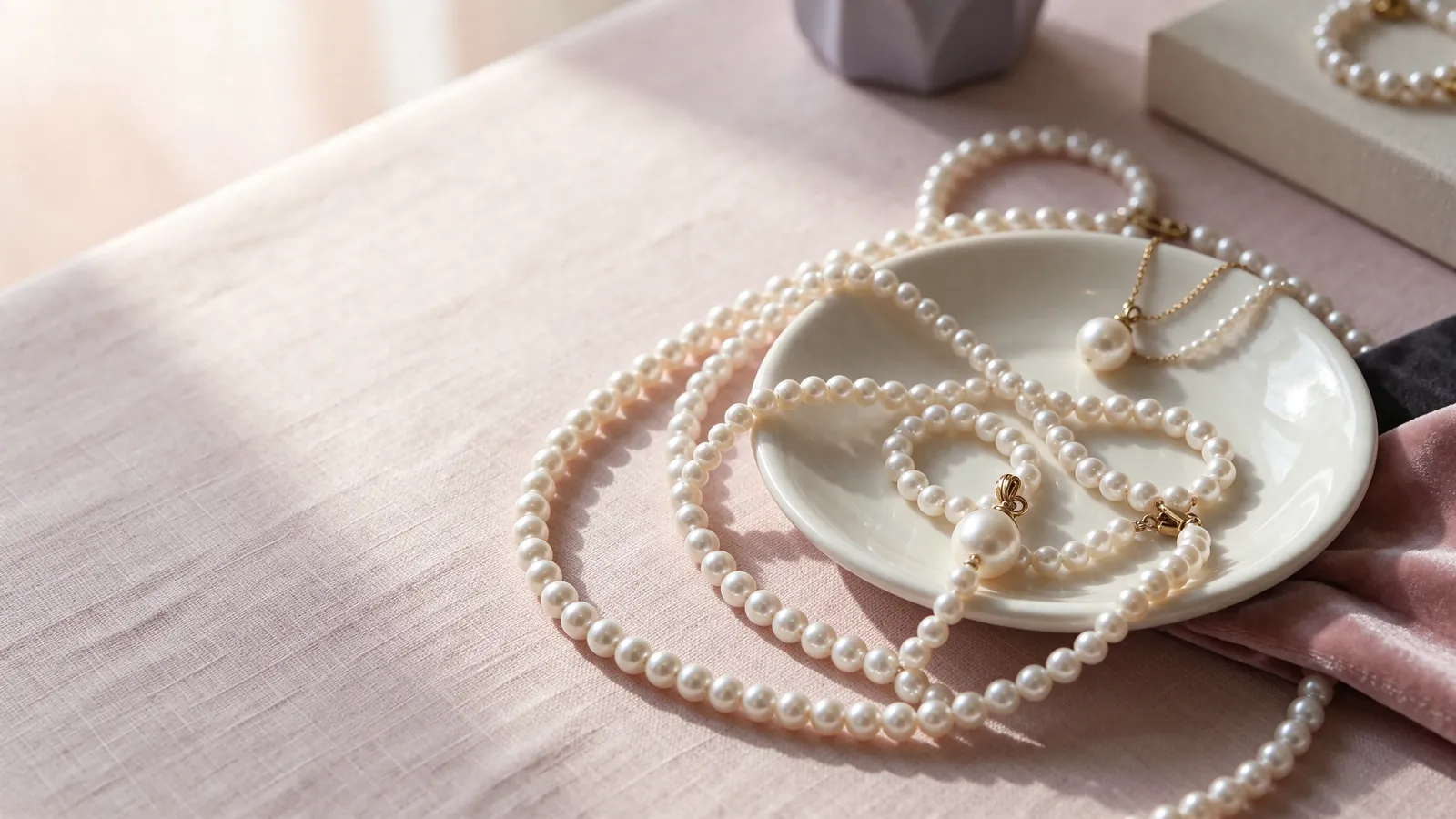
Think of a long pearl necklace as a line within the outfit, not simply extra length. On a shirt dress, the curve can compete with the button placket; on a plain sweater, it may have more space to stand out. Start by finding a clear resting point away from a prominent pocket or belt. Comparing a single strand pearl necklace helps establish whether one continuous curve is the effect you want before extending it farther down the torso.
An opera length pearl necklace does not fall at the same point on every person. Body proportions, clothing thickness and the shape of the neckline all change the result. Inspect the strand from the side to see whether fabric folds lift it. If a long pearl strand necklace is arranged in two loops, assess the space near the neck separately from the lower curve. Both areas should work with the garment without trapping the pearls at its edge.
Will a Long Pearl Necklace Work Doubled? Assess the Length, Clasp and Fit of an Opera Length Pearl Necklace or a Long Pearl Strand Necklace | Flint Jewelry
First confirm that the clasp opens and closes normally, then test the arrangement without stretching the necklace. Dividing the length in half describes equal loops, not their fit on your neck. Different loop heights and the volume of the pearls change the clearance needed. Sit, reach and turn your head; an arrangement that pulls at the throat is not a comfortable doubled option.
Measure for your clothes rather than shopping by a label
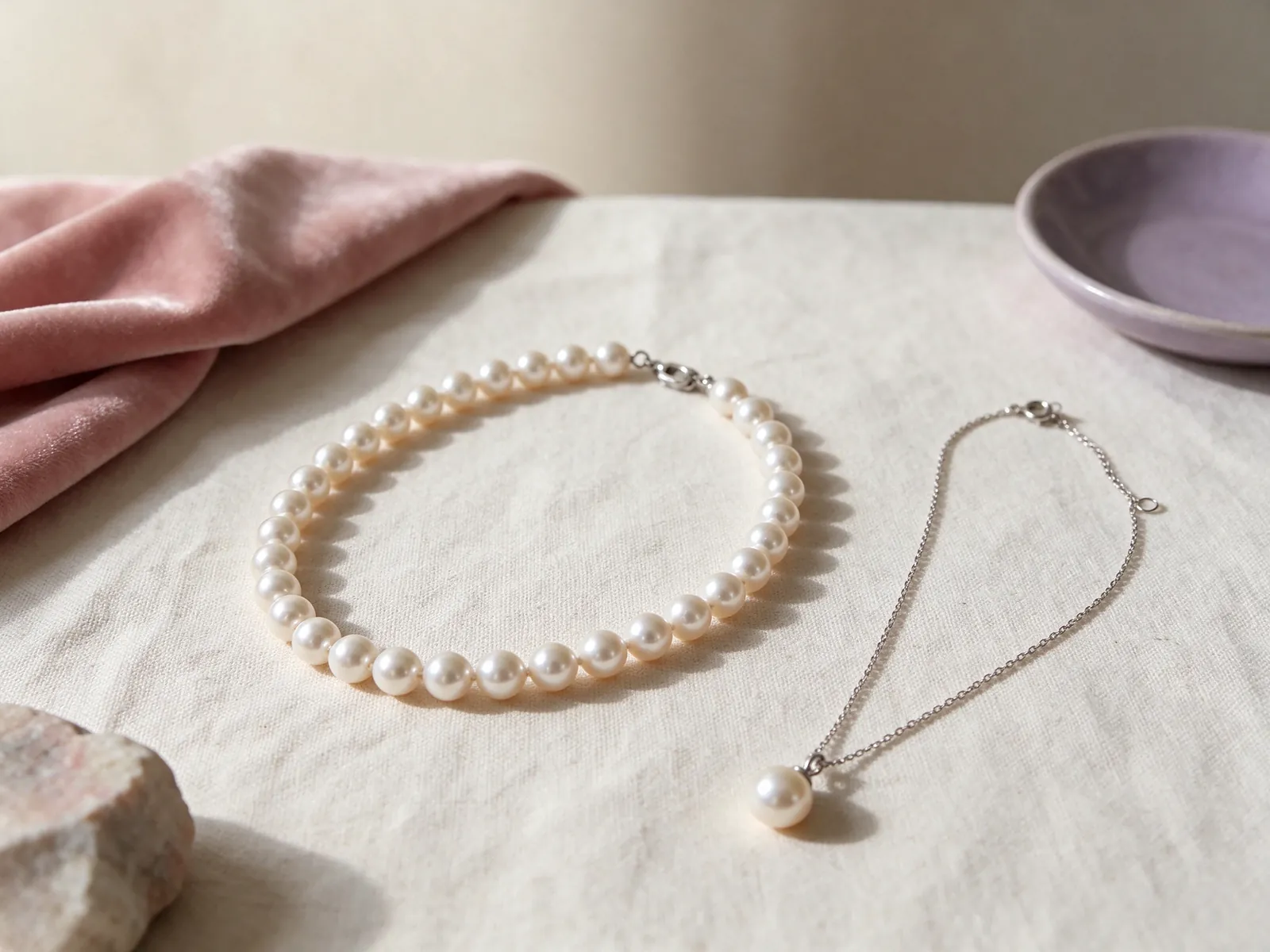
Use a soft cord to map the desired curve over an outfit you wear regularly. Allow it to hang naturally instead of holding it straight against your chest. Record whether you want the necklace on skin or over fabric, and check the resting point in a full-length mirror. A pearl necklace length guide is useful for organizing choices, but the final comparison belongs on your own neckline and clothing.
Ask for the measured length even when the necklace has a familiar style name. WSP's public chart lists 70 cm as Long, 80 cm as Opera and 90 cm as Opera or Long; these categories overlap rather than setting one universal fit. Confirm whether the stated total includes the clasp. If a lower curve meets your belt or work surface, compare a matinee pearl necklace as an alternative instead of treating the longest option as the most versatile.
Include a seated check in the measurement process
A standing mirror view is only part of fitting. Sit in your usual chair and lean forward gently to check the necklace against the desk and waistline. Keep the outfit, intended drop and measurement method together in your notes so that different necklaces are compared under similar conditions.
Choose between two loops, separate layers and fixed rows
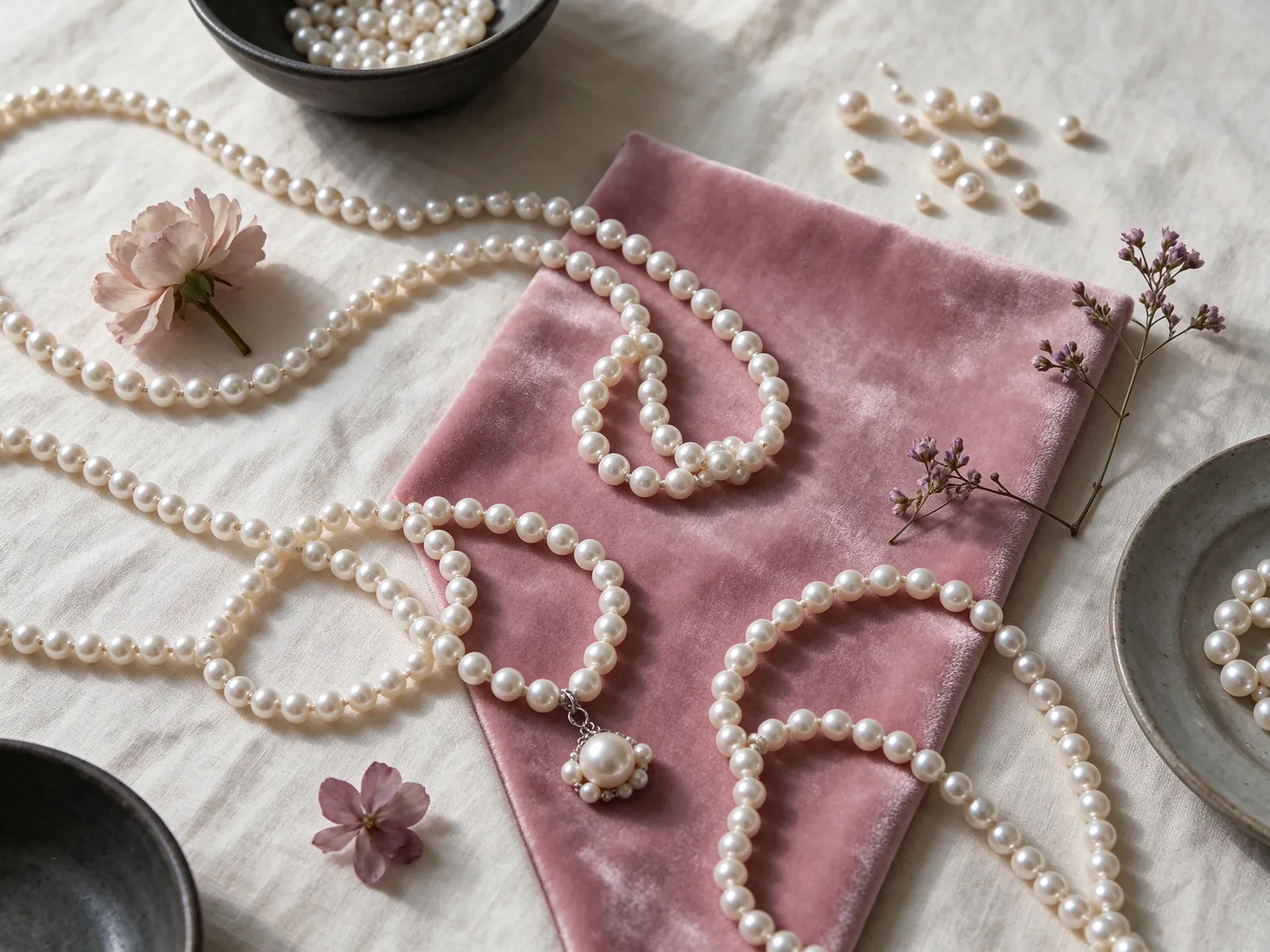
Two visible rows do not necessarily mean one strand has been doubled. A multi strand pearl necklace may use independently sized rows connected to one clasp. That construction can behave differently from a continuous long strand folded into two loops. If your aim is a distinct and repeatable space between rows, look at how they are connected. If you want to switch between a long line and two loops, check whether that individual strand supports both comfortably.
Independent necklaces can provide contrast without changing the long strand itself. In pearl necklace layering, a shorter line above the neckline and a longer curve below it may give each piece a separate visual area. Test the combination while walking and reaching, then inspect crossed strands and touching clasps. Leave out an extra necklace if it adds frequent tangles rather than a useful difference in proportion.
Let spacing come from the arrangement, not neck pressure
Set out the two loops before fastening and observe how they settle. Do not tighten the upper loop to hold the lower one apart. If both return to the same level after movement, the strand may not produce the separation you want; independent layers or fixed rows offer different construction choices.
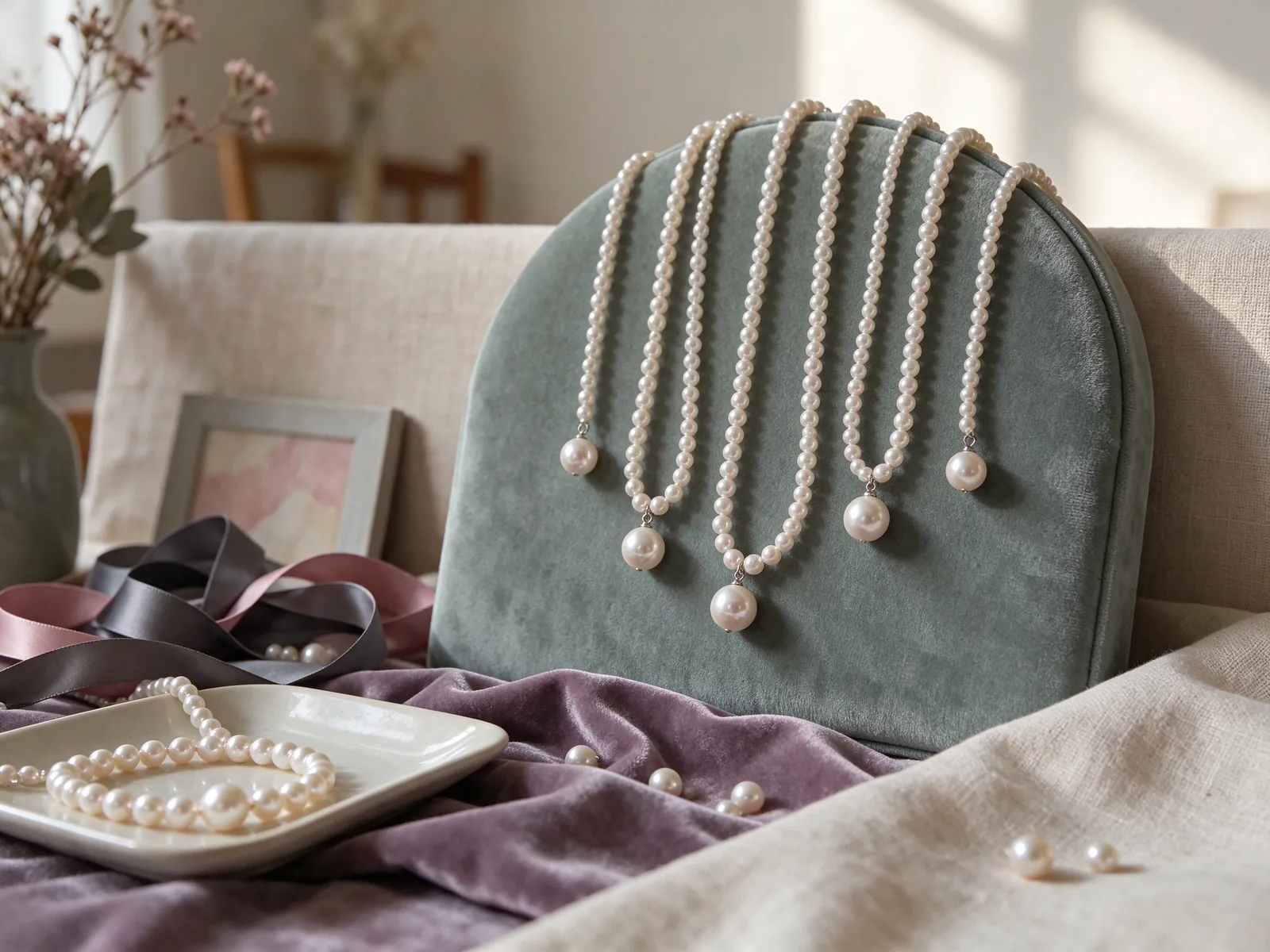
Balance the necklace with prints, lapels and daily movement
A long curve is easier to read when it does not end on the outfit's strongest detail. With a large print, examine the pearls across both lighter and darker areas of fabric. With a button-front shirt, look for a resting point that does not stack directly onto a prominent fastening. Color contrast can help the styling, but it does not establish quality or pearl identity. Choose the combination you like on your real wardrobe.
Add the jacket and bag before deciding the outfit works. A lapel may hide a section, while a shoulder strap can press the necklace into the fabric. If the collar already occupies much of the chest area, a pearl choker necklace offers a different approach close to the neck. It is an alternative to compare, not an accessory you must add to the long strand. Consider the earrings from the same complete-outfit view.
Simulate the movements the outfit needs to handle
Reach for a bag, put on the jacket and lean toward a tabletop. Watch for caught pearls, a clasp against a button or a lower curve contacting the desk. If the necklace needs constant adjustment, change the wearing arrangement or outfit rather than accepting inconvenience as part of the look.
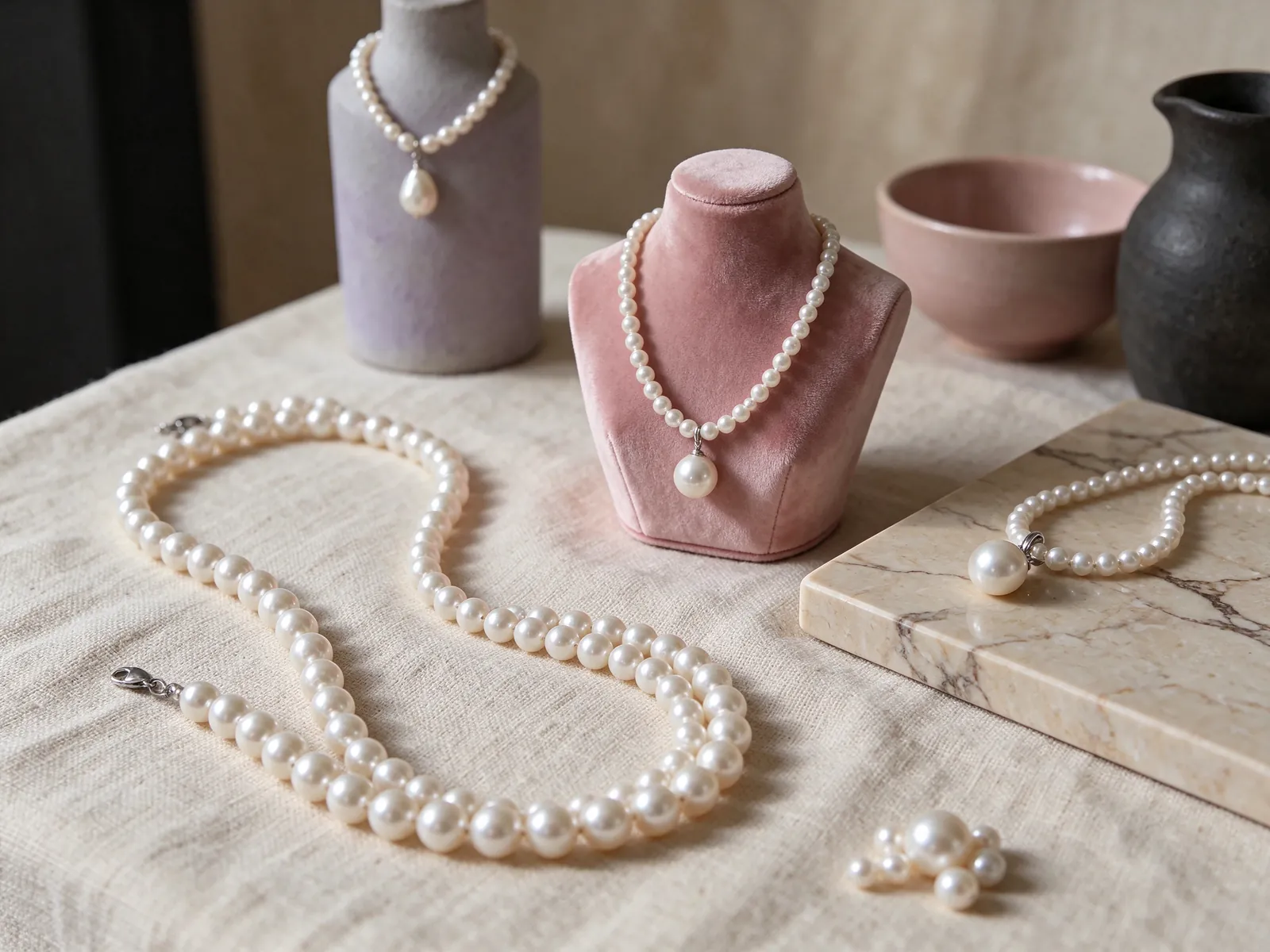
Evaluate the sequence of pearls, not one impressive close-up
GIA's seven pearl value factors are size, shape, color, luster, surface quality, nacre quality and matching. A long strand makes matching especially relevant because the eye follows a sequence of pearls. Uniformity can suit an orderly design, while graduated sizes or irregular shapes can create an intentional rhythm. Ask whether the arrangement looks coherent as a whole instead of assuming that every visible difference lowers its quality.
Look at an overall view and detailed images together. When viewing a necklace in person, observe reflections in gentler light and change its angle so that a bright highlight does not become your only impression of luster. Read the specific description for pearl identity and any documented information. Neither shape nor color alone can prove origin, natural-versus-cultured identity or a certificate, and the phrase long necklace provides none of those answers.
Check the design laid out and in its worn curve
Laying the strand out can make its sequence easier to follow, while wearing it shows how that sequence turns and overlaps. For irregular shapes, observe their direction along the curve. For a more uniform design, follow the visual continuity instead of selecting one especially bright pearl as representative of the entire piece.
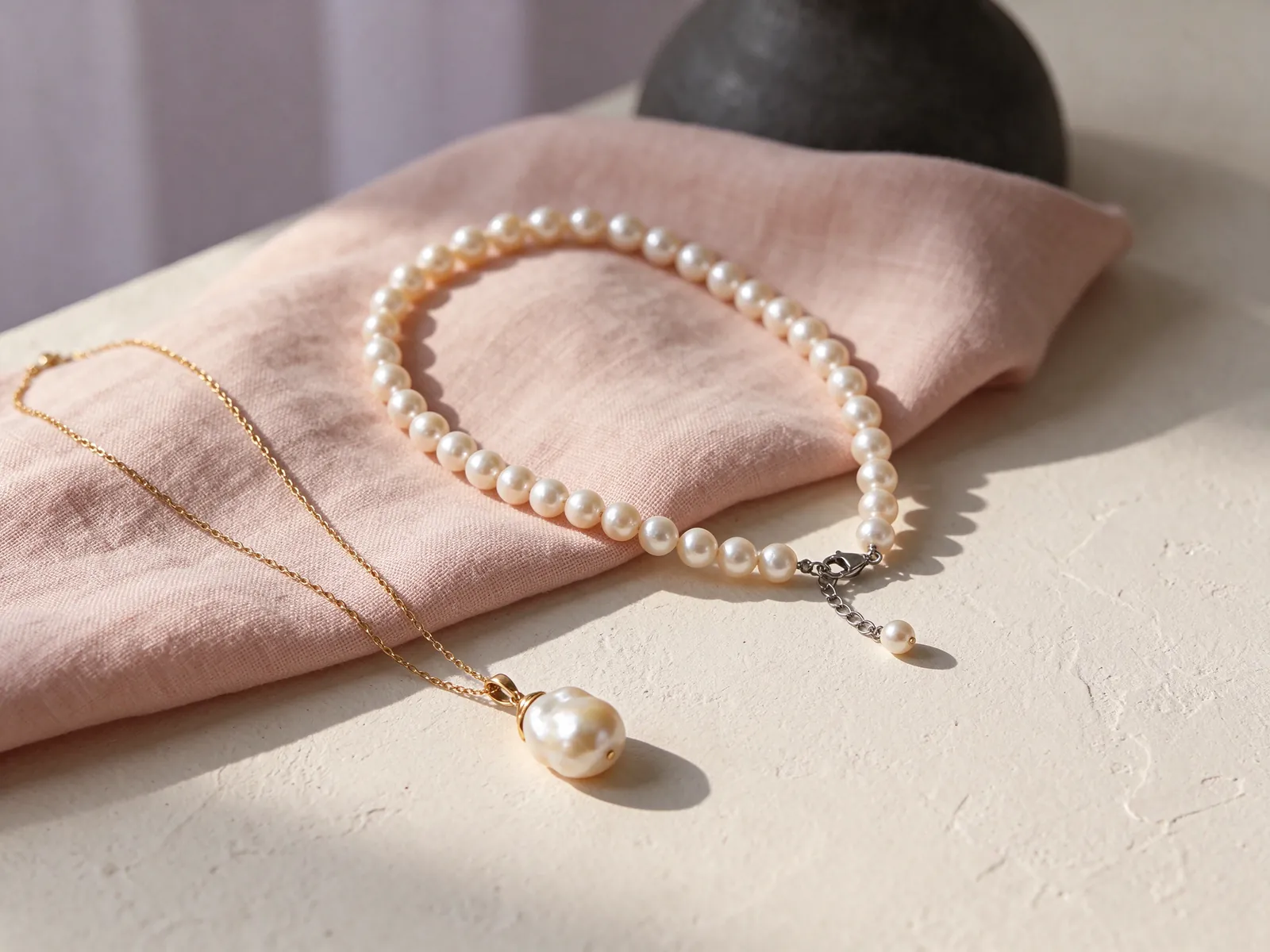
Make clasp handling and string condition part of the choice
Practice opening and fastening the clasp without pulling on the pearls. Check its position during movement: a clasp comfortable at the back may feel different near the side or against the neckline in a doubled arrangement. Decorative appearance does not guarantee comfort in every location. Inspect the connections as well as the visible front of the necklace, and ask how an unfamiliar mechanism is intended to operate.
Before rewearing an older long strand, look for loose string, unexpected gaps or a clasp that does not close securely. Knots are one part of construction, not a complete test of the necklace's condition. If you are thinking about shortening or reorganizing an existing strand, identify what feels awkward and which elements you want to retain. That makes a redesign discussion about usable length and structure rather than assuming every strand can be converted into an identical arrangement.
Change arrangements without forcing the connections
Place the strand on a soft, clean surface to straighten it before trying two loops. Do not pull a closed necklace over your head when it does not clear comfortably, wrench the clasp or twist a connection to make it fit. Stop when handling feels difficult and ask about the intended wearing method.
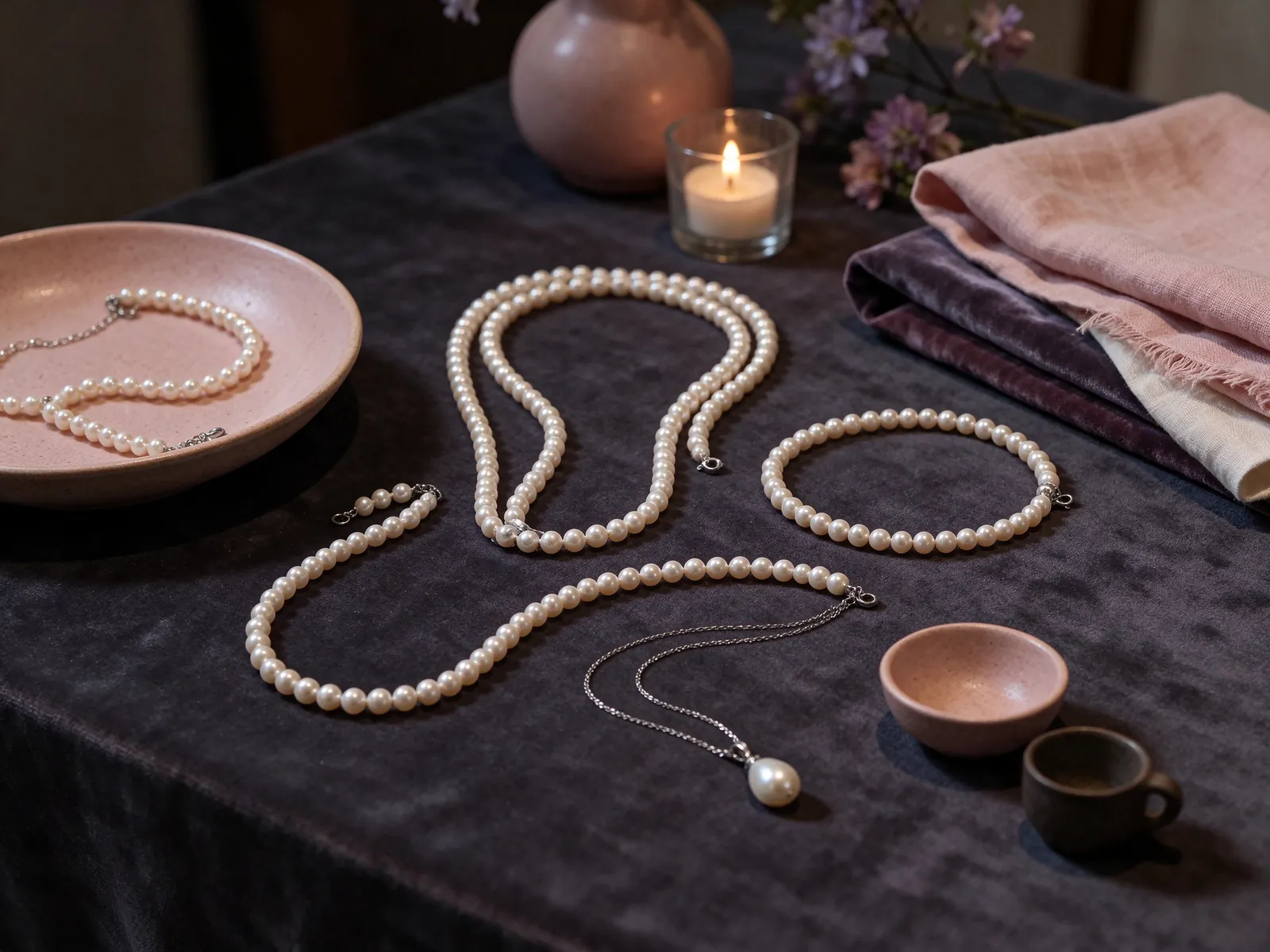
Keep care simple and prepare a focused fitting discussion
Long necklaces can touch fabric, skin and other accessories during one wearing. GIA rates pearl at 2.5 on the Mohs hardness scale and advises never using ultrasonic or steam cleaners. Put on the necklace after applying perfume and hair products, and gently wipe it with a very soft, clean cloth afterward. Store the strand untangled and apart from jewelry that could scratch it, rather than winding it around other chains.
Prepare photos of two typical necklines and decide which effect matters most: one extended curve, occasional doubling or a fixed multi-row silhouette. Review actual length, the chosen resting point, clasp handling and seated comfort before making a selection. A WhatsApp conversation with Flint Jewelry can start with those outfit and wearing preferences. For the identity and specifications of a particular necklace, use its individual description rather than expectations attached to a style name.
Let cleaned string dry fully before wearing again
GIA says that the string of pearls cleaned with water must be completely dry before wearing. Avoid excessive heat as a shortcut and do not pack a damp strand tightly into storage. Gentle wiping and orderly storage also reduce the temptation to tug at a tangled necklace when you next get dressed. For a conversation about your own long strand, share its current length, a clasp photo and a typical neckline with Flint Jewelry on WhatsApp, and explain which wearing position you want to improve.
| Styling goal | What to inspect | What to watch on the outfit | Next choice |
|---|---|---|---|
| A continuous long curve | Full drape and lowest point | Buttons, belt and tabletop contact | Select the drop before relying on a category name |
| Comfortable doubling | Clasp operation and upper-loop clearance | Pressure at the collar or throat | Keep a single line if two loops pull |
| Visible separation | Row positions after movement | Loops returning to the same height | Compare separate necklaces or fixed rows |
| A jacket-ready look | Lapels and bag-strap contact | Trapped or hidden pearls | Fit with all outfit pieces in place |
| Easy everyday wear | String, clasp closure and tangles | Snagging when reaching or sitting | Prioritize comfortable handling and intact construction |
Pearl knowledge and authoritative references
GIA lists seven pearl value factors: size, shape, color, luster, surface quality, nacre quality and matching. The matching factor is relevant when viewing the complete sequence of pearls in a long necklace.
Read the reference for this factFrequently asked questions
Can I buy by the word opera without checking the measurement?
The actual measurement is more useful. WSP's chart uses Opera for 80 cm and Opera or Long for 90 cm, showing overlap in names. Confirm the full length, whether the clasp is included and where the necklace falls on your chosen outfit.
Is a doubled strand the same as a two-row necklace?
Not necessarily. Doubling uses one continuous strand, while a fixed multi-row necklace can connect separately sized rows to a shared clasp. Their spacing, handling and weight distribution may differ, so compare construction rather than counting visible lines in a photo.
Can a knot keep a long necklace away from my belt?
Do not force a styling knot to shorten a strand. Its string, pearls and connections may not be intended for that stress. Ask about the necklace's permitted wearing arrangements, or compare a different length that naturally clears the belt.
What if the necklace looks good standing but hits my desk?
Treat the seated result as part of the fit. Try a different wearing arrangement only if the construction permits it comfortably, or compare a higher resting point. A standing photograph should not outweigh the movements required in daily use.
Does stronger color contrast mean the pearls are better?
Contrast describes how the necklace reads against clothing, not its overall quality. GIA's assessment framework includes seven factors, including luster and matching. Pick the color combination you enjoy while reading the specific necklace's description for its identity and other details.
Updated: