
How does length change the silhouette of a small pearl necklace, baby pearl necklace or dainty pearl strand necklace? | Flint Jewelry
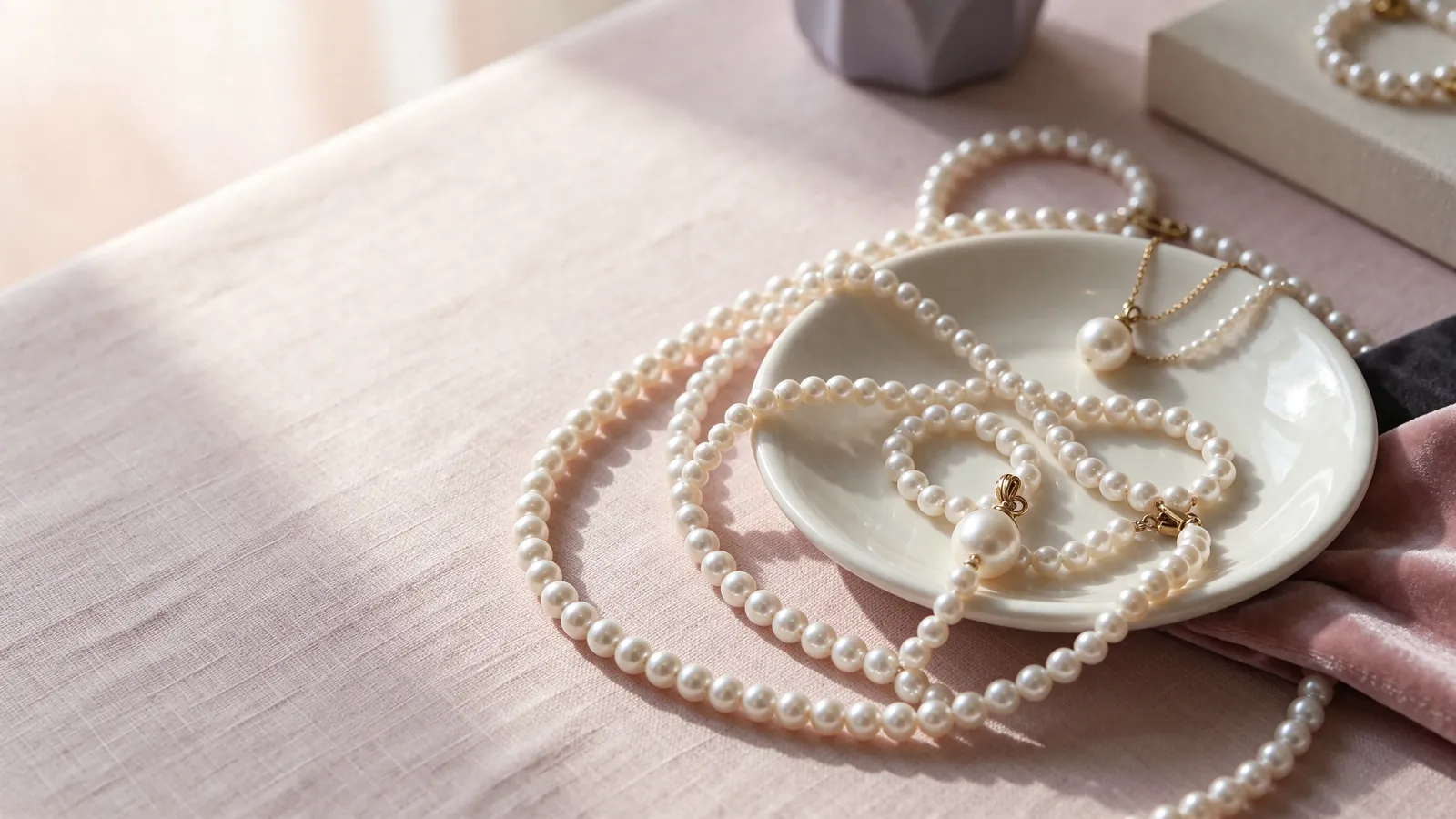
Think of the necklace as a line within your outfit. A strand near the neck frames one area; a lower curve draws the eye toward another. Neither position is automatically more flattering. Begin with a top you reach for often and identify where you want the pearl line to remain visible. A strand landing exactly on a moving fabric edge can be less effective than one with a clear space of its own.
A stated length is useful, but it cannot predict the same position on every person. Neck circumference, posture and the garment opening all matter. Use the pearl necklace length guide to compare wearing silhouettes, then test the necklace while seated and standing. Look from the front and side, and notice whether the collar shifts the strand. Your preferred position on your own body is an important part of the comparison.
Balance necklines and layers with a small pearl necklace: styling a baby pearl necklace or dainty pearl strand necklace | Flint Jewelry
For a crew neck, try a line entirely above the fabric edge and one entirely over the top. For a V-neck, compare the pearl curve with the point of the opening rather than simply following its outline. The pearl choker necklace discussion is useful if you favor a closer position. Check comfort when raising and turning your head; a fine look should not require a restrictive fit.
Read the style name separately from the pearl identity and layout
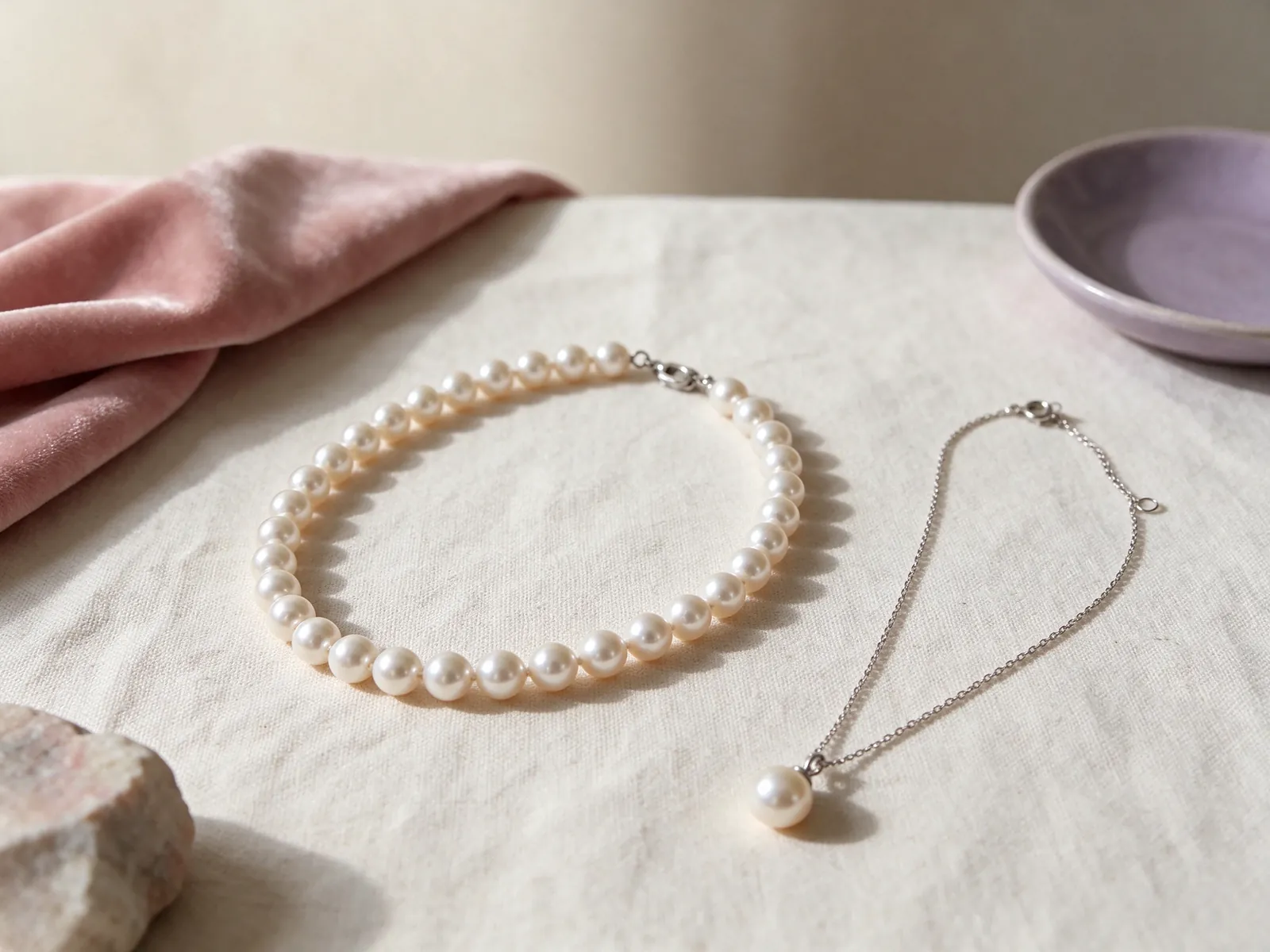
A baby pearl necklace is not a necklace made from a separate species called baby pearl. The wording communicates a size or style idea. It cannot establish pearl origin, natural or cultured identity, or a quality grade. Read the pearl category separately from the visual scale. Baby also does not mean the necklace is suitable for infants or young children; the actual specifications and intended use matter more than the name.
Next, identify the layout. Does the design form an uninterrupted pearl strand, or are the pearls separated by visible chain sections or other elements? The first emphasizes a continuous curve; the second introduces deliberate spaces. Both may look delicate, but they need different visual comparisons. Study a full view of the necklace and its ends so that one appealing close-up does not stand in for the complete construction.
Describe the visual result you want before narrowing the options
If you want an unbroken line of pearls, begin with the single strand pearl necklace topic and then consider the finer visual scale. If your goal is occasional pearl accents around a collar, pay more attention to spacing and the connecting elements. Saying that you want a continuous curve or a more open arrangement communicates something practical that the word dainty, on its own, cannot resolve.
Assess the full strand, not size alone
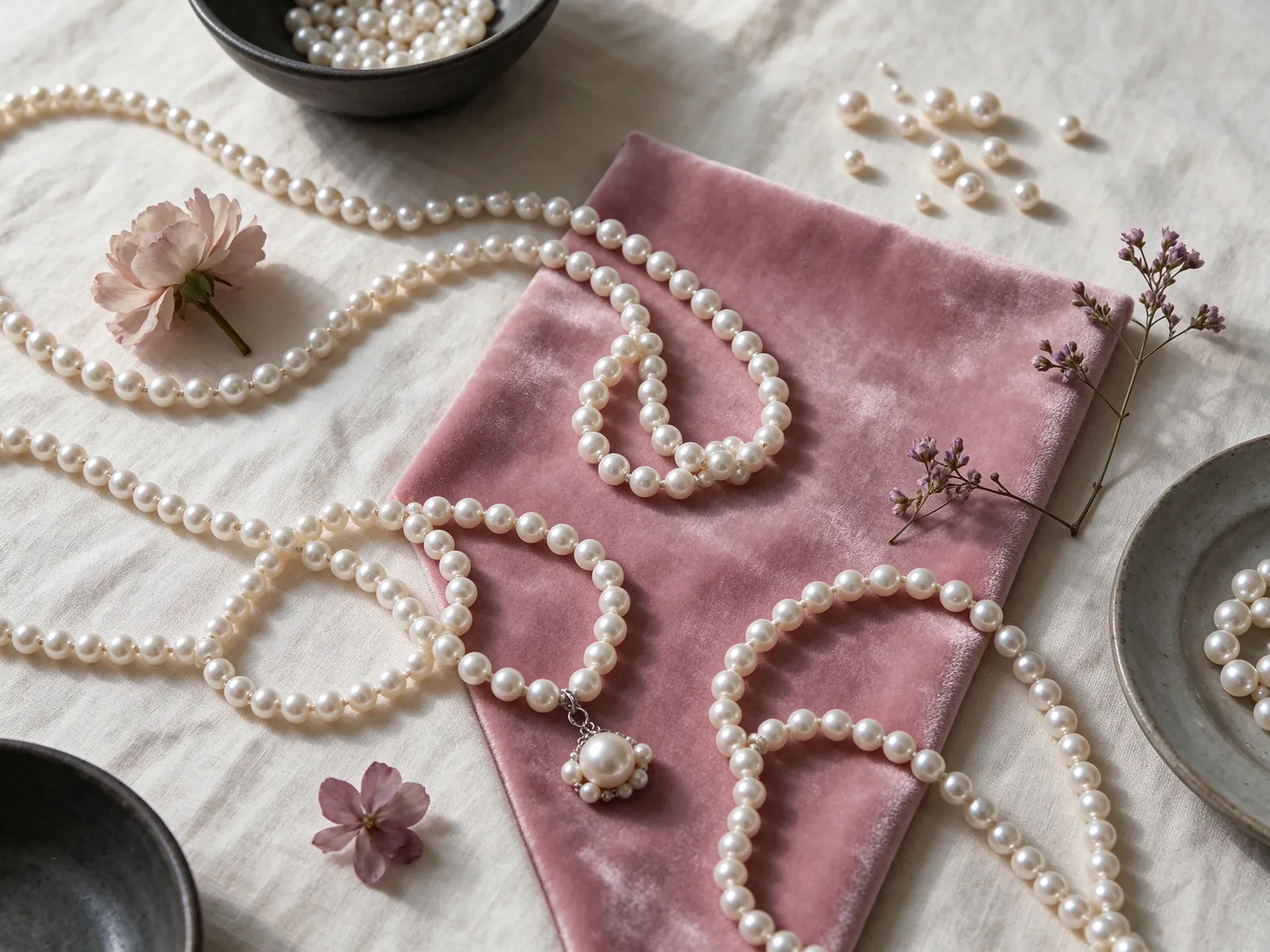
GIA identifies seven pearl value factors: size, shape, color, luster, surface quality, nacre quality and matching. Small pearls still need a balanced assessment. In even, gentle lighting, look at the reflections and at how neighboring pearls relate to each other. A photograph with intense lighting may draw attention to brightness without revealing all the surface details. Compare the whole necklace before deciding which close-up features matter to you.
Matching is about the relationship among pearls in the design. Look from the center toward each end for changes in shape, color and size. An intentional progression can create a different rhythm from an even arrangement; choose the rhythm you enjoy rather than assuming all variation is a fault. Inspect surfaces more closely too, while remembering that a bright reflection alone does not measure nacre thickness or establish a pearl's identity.
Use two viewing distances for two different questions
At ordinary mirror distance, ask whether the strand produces the silhouette you wanted near your face. At a closer distance, look at individual details and transitions between pearls. Keep the background and lighting similar when comparing necklaces. If the fine line feels too understated, the large pearl necklace guide can help you explore a stronger visual scale. Greater prominence is a styling preference, not proof of better quality.
Make the clasp and strand construction part of the decision
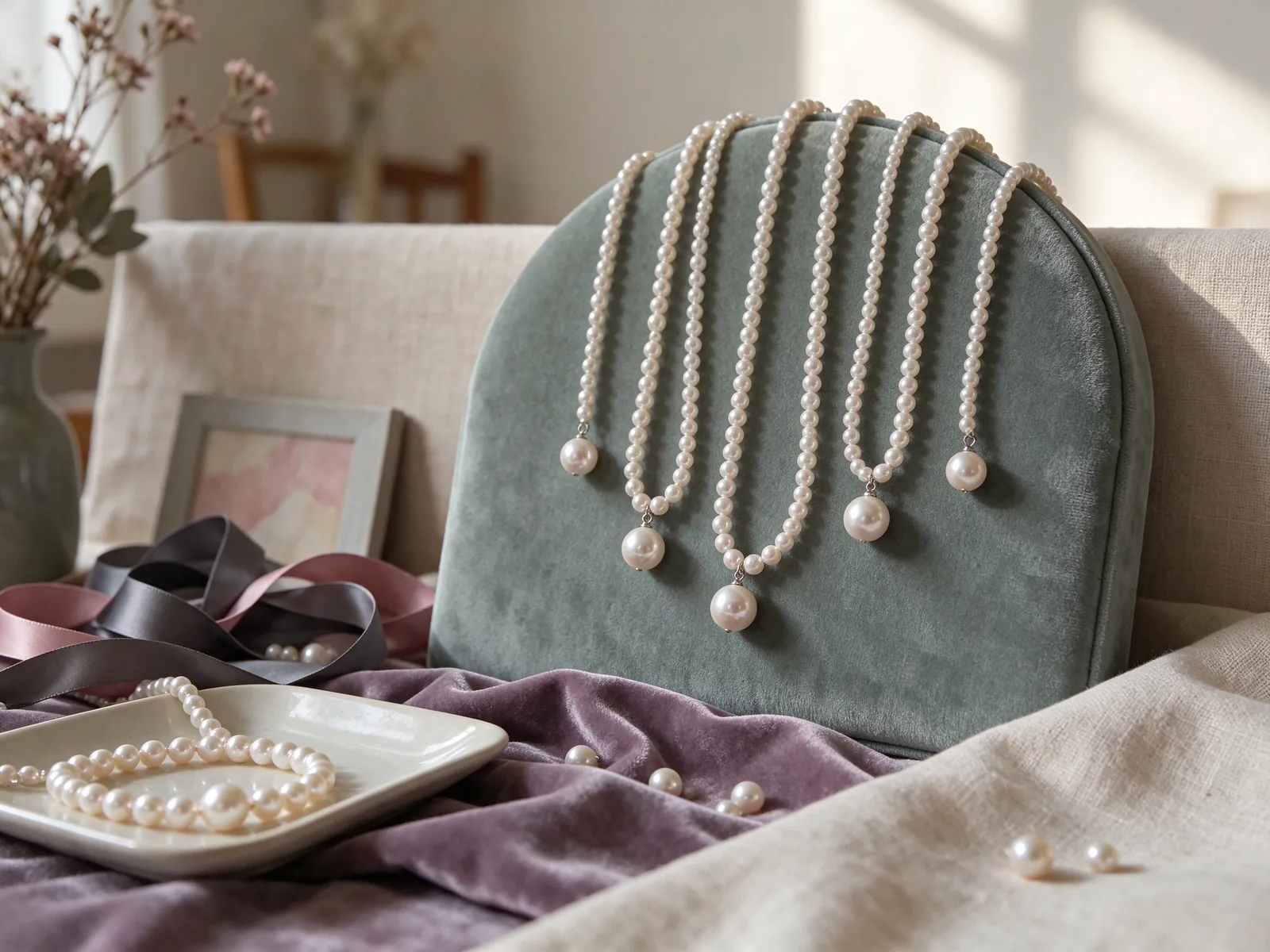
Try the clasp yourself rather than judging it only by how discreet it looks. Can you open and close it comfortably, and do the end details lie smoothly against your neck? If you usually wear your hair down, repeat the test that way. A tiny-looking fastening may not suit your handling preferences. Everyday ease matters alongside appearance, particularly for a necklace you intend to put on without assistance.
Look at the spaces between pearls and the condition of the connecting material. Some strand constructions include knots between pearls, while others use different arrangements; do not assume a method from a distant photo. Check whether the necklace hangs in a natural curve or shows localized bunching, stiffness or slackness. Frayed material or a clasp that no longer operates normally is a reason to stop wearing the necklace and seek an appropriate inspection.
Include a simple getting-dressed test
After the appearance test, adjust your collar and put on a jacket to notice possible catching or pulling. Put on over-the-head clothing before adding the necklace, and release the clasp before removing the strand. Avoid pulling on pearls to rotate the clasp around your neck. The fine visual line does not guarantee resistance to tension, so a handling routine that minimizes tugging is worth establishing from the start.
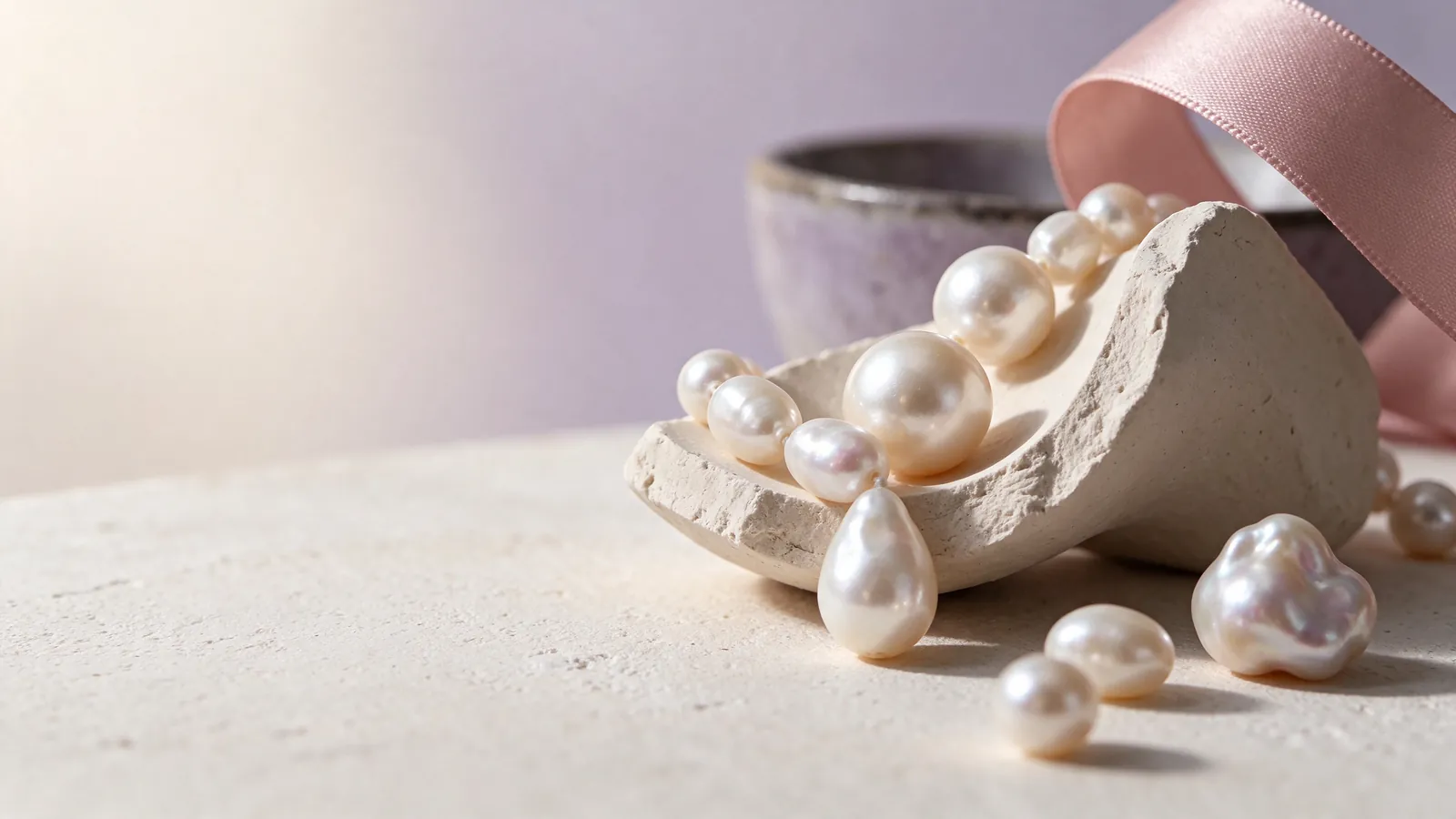
Choose the background: open collars, knits and detailed necklines
An open shirt lets you compare two clear approaches. Inside the collar, the strand frames the exposed area; over the shirt, it becomes a line on the fabric. Check the button opening and collar points in the first arrangement, and the placket in the second. A solid-color top makes a fine strand easy to see. A busy print may soften its presence, which can suit a deliberately low-key outfit.
Textured knitwear needs a movement check as well as a color comparison. Notice whether sections of the pearl line sink into the raised surface or encounter loose fibers. For an embellished evening neckline, consider where embroidery, sequins and decorative edges sit relative to the pearls. The necklace should have a deliberate visual place, without relying on repeated contact with textured details to hold its position.
Compare arrangement when small size is not the whole attraction
You may find that you want a relaxed rhythm rather than simply smaller pearls. The baroque pearl strand necklace guide provides a different shape-focused comparison. Look at the complete outline with your chosen clothes, not just the most distinctive pearl in a close-up. Regular and irregular shapes offer different styling possibilities; shape by itself cannot establish origin, natural-versus-cultured identity or an accompanying certificate.
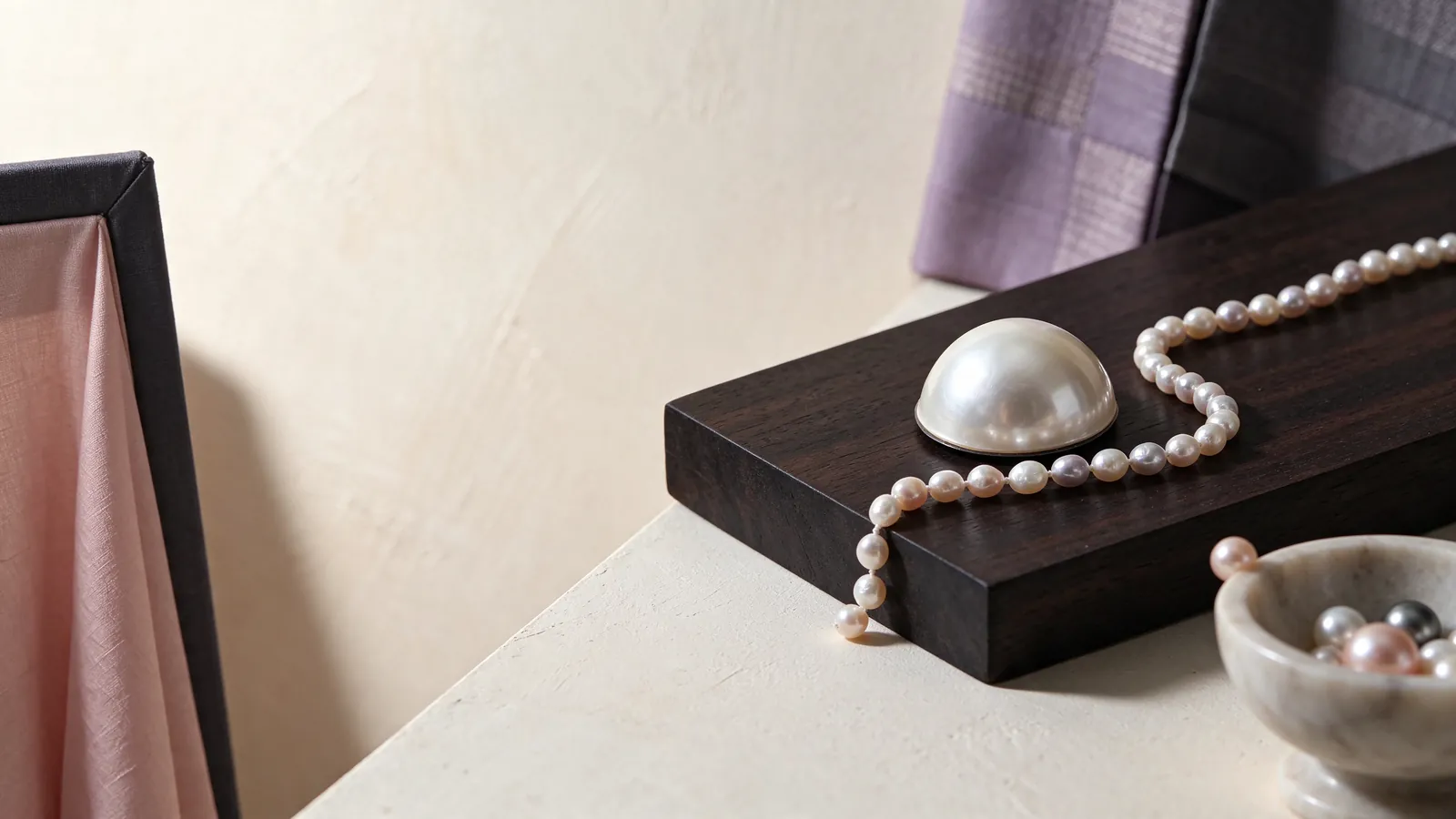
Give every layer a role, then test the combination in motion
When layering a dainty pearl strand necklace, decide whether it is the upper framing line or a softer curve below another piece. Each necklace should contribute something you can identify. If the lines merge constantly or one pushes the other into the garment edge, reposition them or simplify the combination. Adding pieces is not the same as creating balance; a clear relationship between two lines can be more effective than several overlapping ones. The pearl necklace layering guide offers another way to compare emphasis and neckline space. Use that comparison with your own movement test, not as a formula that every necklace combination must follow.
Check the back as well as the front. After sitting and turning gently, see whether the clasps meet or a chain has moved onto the pearls. A pendant repeatedly tapping the strand can also change the practical suitability of the arrangement. Bring earrings into the overall view: a neckline carrying several jewelry lines may work better for you with a simpler ear silhouette and more open space around the face.
Compare the layered look with the strand worn alone
Use the necklace alone as a baseline, then add one piece and ask what it improves. It might extend a vertical line, introduce color contrast or help frame an open neckline. If the change adds only clutter or frequent adjustment, remove it. Keep testing with the same clothes so the comparison remains useful. Comfortable movement is part of the finished style, not an afterthought to the photograph.
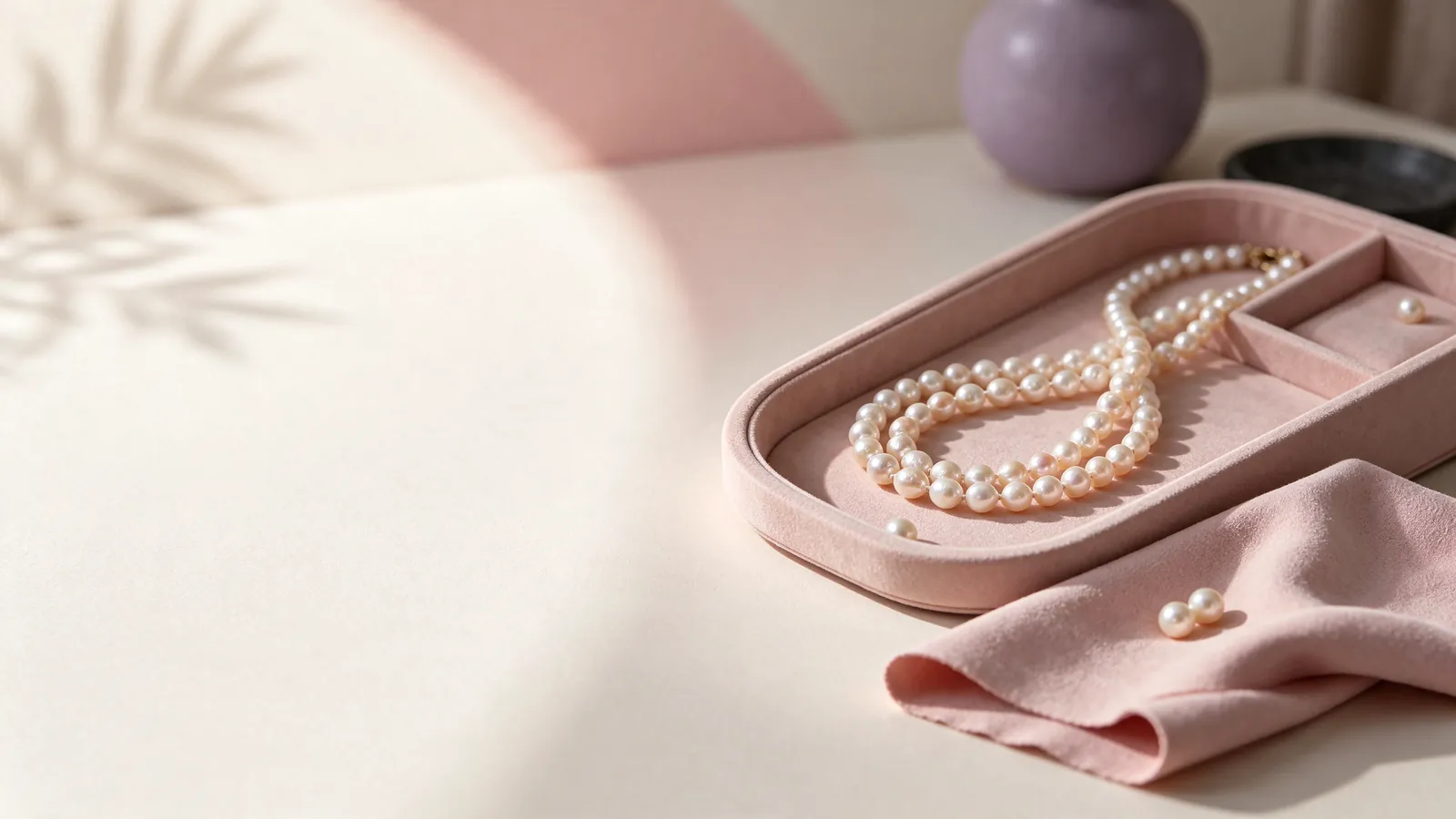
Build gentle care into the wearing routine
GIA lists pearl at 2.5 on the Mohs hardness scale. A small pearl strand needs protection from repeated rubbing just as other pearl jewelry does. Wipe it after wearing with a very soft, clean cloth, and store it apart from harder pieces and projecting metal details. Let the necklace rest naturally instead of compressing it into a tight coil. Before putting it away, notice any change in the fastening or thread.
Keep perfume, hair spray, acids and excessive heat away from pearls. Finish cosmetics and hair styling before adding the necklace to reduce direct contact with sprays. GIA states that pearls should never be cleaned in ultrasonic or steam cleaners. If a strung necklace is cleaned with water, the string must be completely dry before wearing. Consider the fastening and other components as well; a long soak is not a substitute for suitable care.
Finish with a personal comparison note
Write down the neckline you tested, the wearing position you preferred, whether layers added anything useful, and how the clasp felt to operate. These observations are more informative than remembering only a style name. Revisit luster, matching and construction together before choosing your direction. A small pearl necklace succeeds when its visual scale and everyday handling both suit the way you actually dress. Still choosing between silhouettes? Talk with Flint Jewelry on WhatsApp and share your usual neckline, preferred wearing position and clasp-handling preferences. A clear picture of how you dress is a practical starting point for your inquiry.
| Focus | Visual question | Outfit test | Movement check | Useful outcome |
|---|---|---|---|---|
| Scale | Does the complete line have the desired presence? | Start with a familiar solid-color top | Use ordinary mirror distance | A fine line that still reads clearly |
| Position | Where does the curve sit relative to the fabric edge? | Compare inside and outside an open collar | Sit, look up and turn gently | A comfortable, deliberate wearing position |
| Matching | How do color, brightness and shape flow along the strand? | Keep lighting and background similar | Inspect from center to ends | A visual rhythm that suits your preference |
| Construction | Are the ends and connecting material orderly? | Check against hair and collar details | Operate the clasp and adjust clothing | Easy handling without abnormal pulling |
| Layers | Can each necklace keep a distinct role? | Include neckline and earrings | Inspect front and back after movement | Balance without persistent rubbing |
Pearl knowledge and authoritative references
According to GIA, pearl has a Mohs hardness of 2.5. Its care guidance rules out ultrasonic and steam cleaners, making gentle care relevant even for a small pearl strand.
Read the reference for this factFrequently asked questions
Does the word baby tell me what kind of pearl is used?
No. It describes a size or style idea, not a distinct pearl species. Look separately for the pearl category and necklace layout. The name alone cannot establish origin, natural or cultured identity, or quality grade.
How can I tell whether the pearl line is too subtle for my outfit?
Look at the complete necklace from normal mirror distance with the clothes you intend to wear. A close-up exaggerates its visual presence. If you want individual pearls to become a stronger focal point, compare a different visual scale rather than judging small size as a quality limitation.
What should I check before pairing a fine strand with knitwear?
Look for sections that disappear into raised texture and for contact with loose fibers. Move and adjust the garment to see whether the relationship changes. Choose a wearing position that gives the necklace a clear outline without repeated catching or rubbing.
Is a discreet clasp enough reason to choose a necklace?
Not by itself. Practice opening and closing it and examine how the ends sit against your neck and hair. A clasp should fit your handling preferences as well as the visual design, especially if you expect to put the necklace on without help.
If I clean a strung pearl necklace with water, can I wear it immediately?
No. GIA advises that the string must be completely dry before wearing. Pearls also should never be cleaned with ultrasonic or steam cleaners. Routine care includes gentle wiping with a very soft, clean cloth after wear.
Is a baby pearl necklace a necklace for an infant?
Not on the basis of its name. Baby refers to visual scale or style here, not age suitability. A small-looking necklace should not be treated as an infant accessory simply because of that wording; intended use and the wearer must be considered separately.
Updated: