
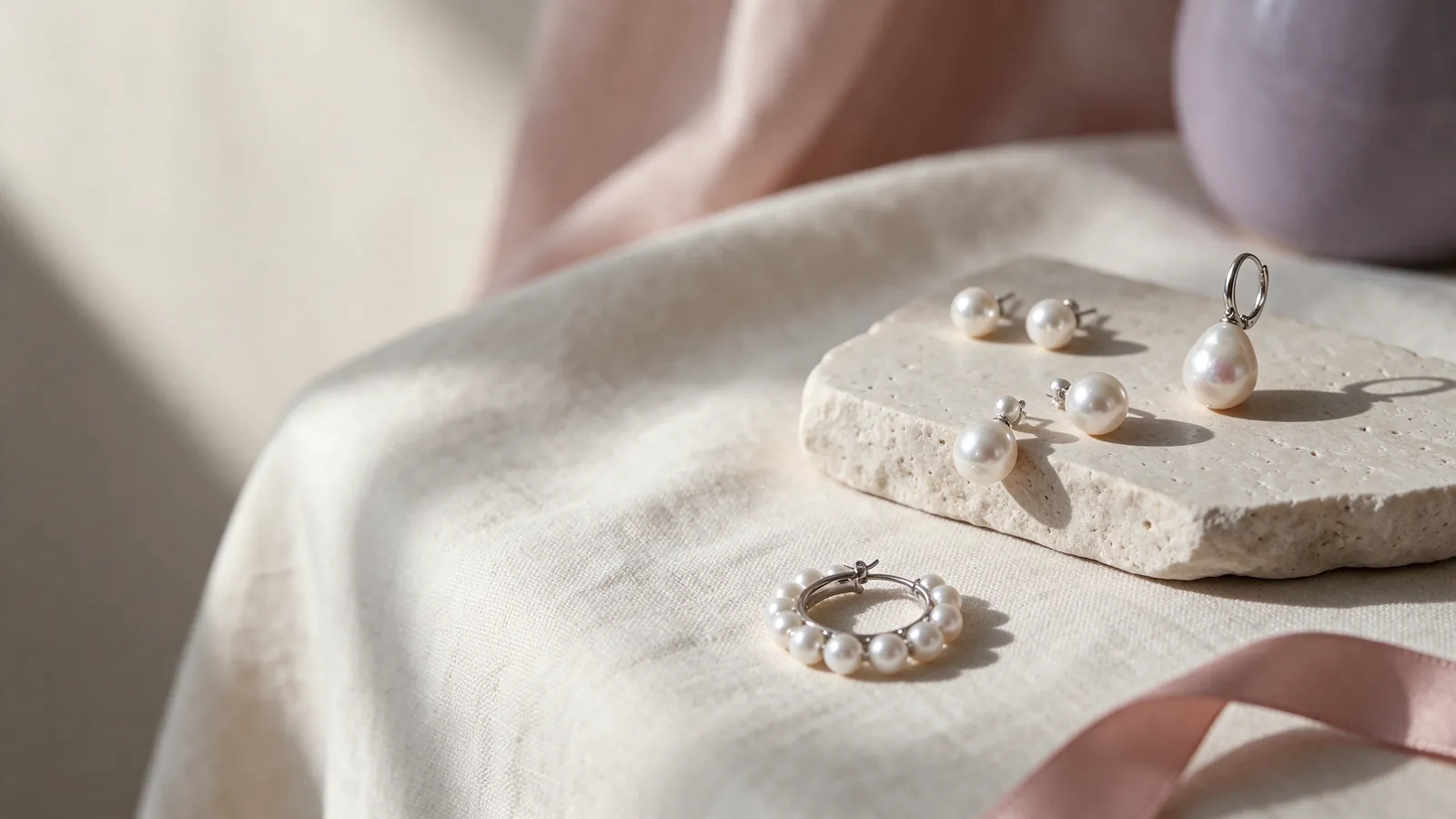
How does gold colour shape the look of 18K gold pearl earrings and 750 gold pearl earrings when choosing 18k pearl stud earrings?
Begin with a familiar outfit rather than an isolated close-up of an earring. White gold can continue the clean visual line of a white shirt, grey knit or navy jacket; yellow gold can introduce a warmer connection with cream and brown fabrics. Rose gold offers another way to link soft pinks, lavender and neutral clothing. These are styling suggestions, not rules about which skin tone may wear which colour. Ask whether you want the white pearl to stand out against your clothes or whether you prefer the metal to sit quietly within the overall palette.
Soft Tide puts the softly irregular pearl outline beside a pared-back stud, so the gold colour need not become the main event. An existing watch, ring or pair of glasses can provide a useful colour reference. Mixed-metal styling is also a personal choice: a simple outfit can give different tones room to work together without competing. The guide to pearl stud earrings helps organise questions about close-to-ear outlines and construction. For this design, bring the colour relationship you like to Flint Jewellery rather than assuming that every accessory must match exactly.
After choosing a gold colour for 18K gold pearl earrings or 750 gold pearl earrings, how can 18k pearl stud earrings complement your neckline?
A crew neck or high collar places more visual attention near the face, while an open shirt collar leaves a larger area below the ear. A close-to-ear pearl can be a quiet point of brightness in either setting. Compare your usual hairstyle with your hair tucked back, and look from the side as well as the front. The collar, shoulder line and glasses may alter the balance more than an ear-only photograph suggests.
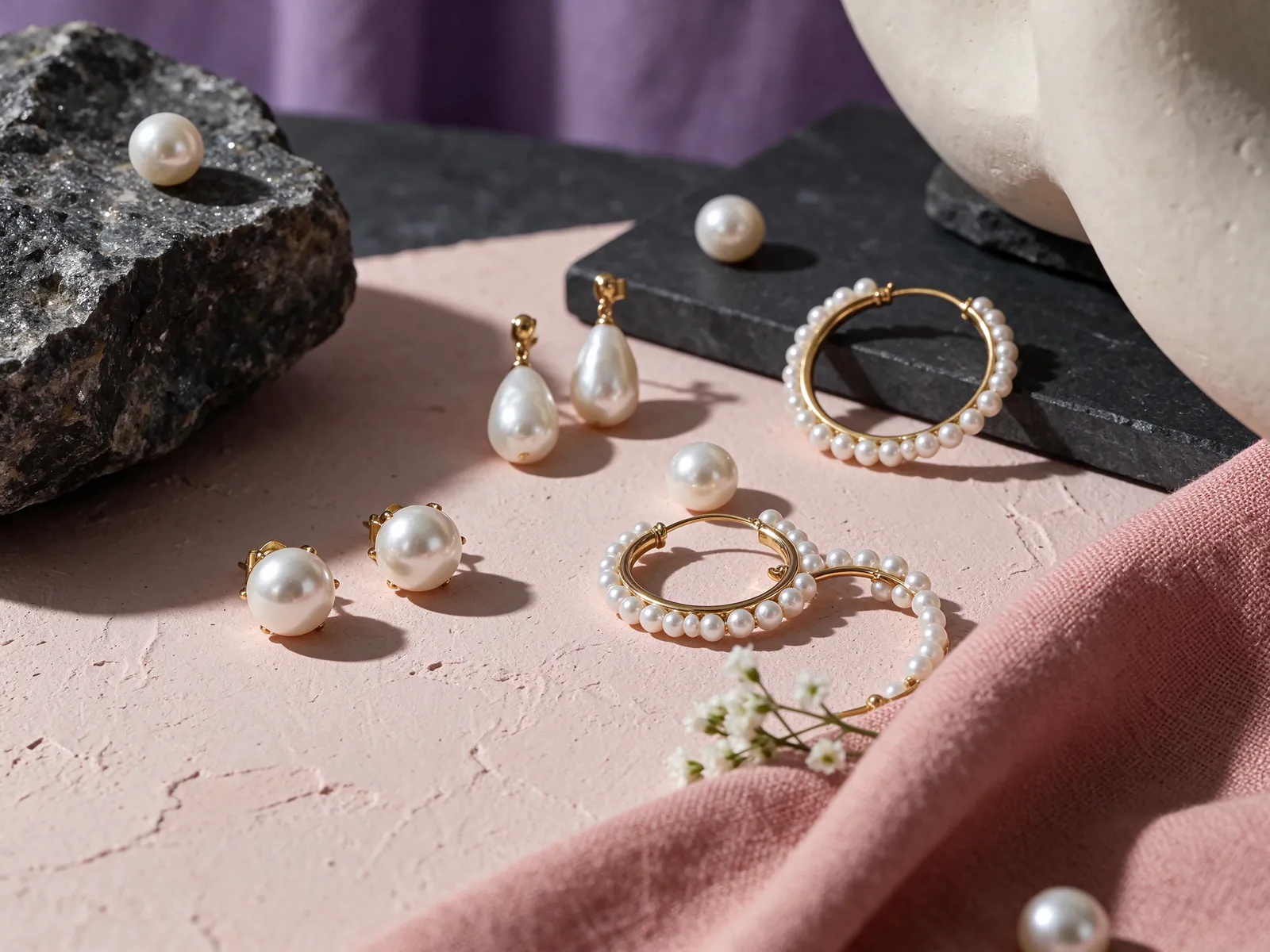
Read the baroque outline alongside the approximately 7~8mm description
The Soft Tide specification describes a white baroque pearl, approximately 7~8mm. That measurement is a useful starting point, but an irregular outline is not visually interchangeable with a neat circle. The front-facing width, surface folds and orientation all affect how much presence the pearl appears to have. Tell Flint whether you favour a restrained outline or a more visibly rippled edge. Do not turn a diameter estimate into an assumption about weight, projection from the ear or the exact shape of another pearl.
Separate shape from lustre and surface appearance when considering what attracts you. Notice how light moves across a fold, how distinct the bright reflections look, and whether the outline feels right beside your face. GIA describes seven pearl value factors, with shape only one part of the picture. An irregular form is not automatically a lesser choice, and a white appearance does not identify origin or natural-versus-cultured status. If you are drawn to sharper visual order, geometric pearl earrings offer a different design vocabulary against which to consider your preference for Soft Tide's flowing contour.
Describe the feature you like, not an imagined perfect duplicate
Mark the edge, fold or viewing angle that interests you in a styling photograph, then explain what it contributes: perhaps a quieter front view with more texture visible from the side. This is more informative than asking for an identical irregular outline. If you want a left-and-right arrangement, discuss how the visual weight and direction should relate. Matching in a design discussion can mean a considered relationship rather than insisting that every curve be indistinguishable.
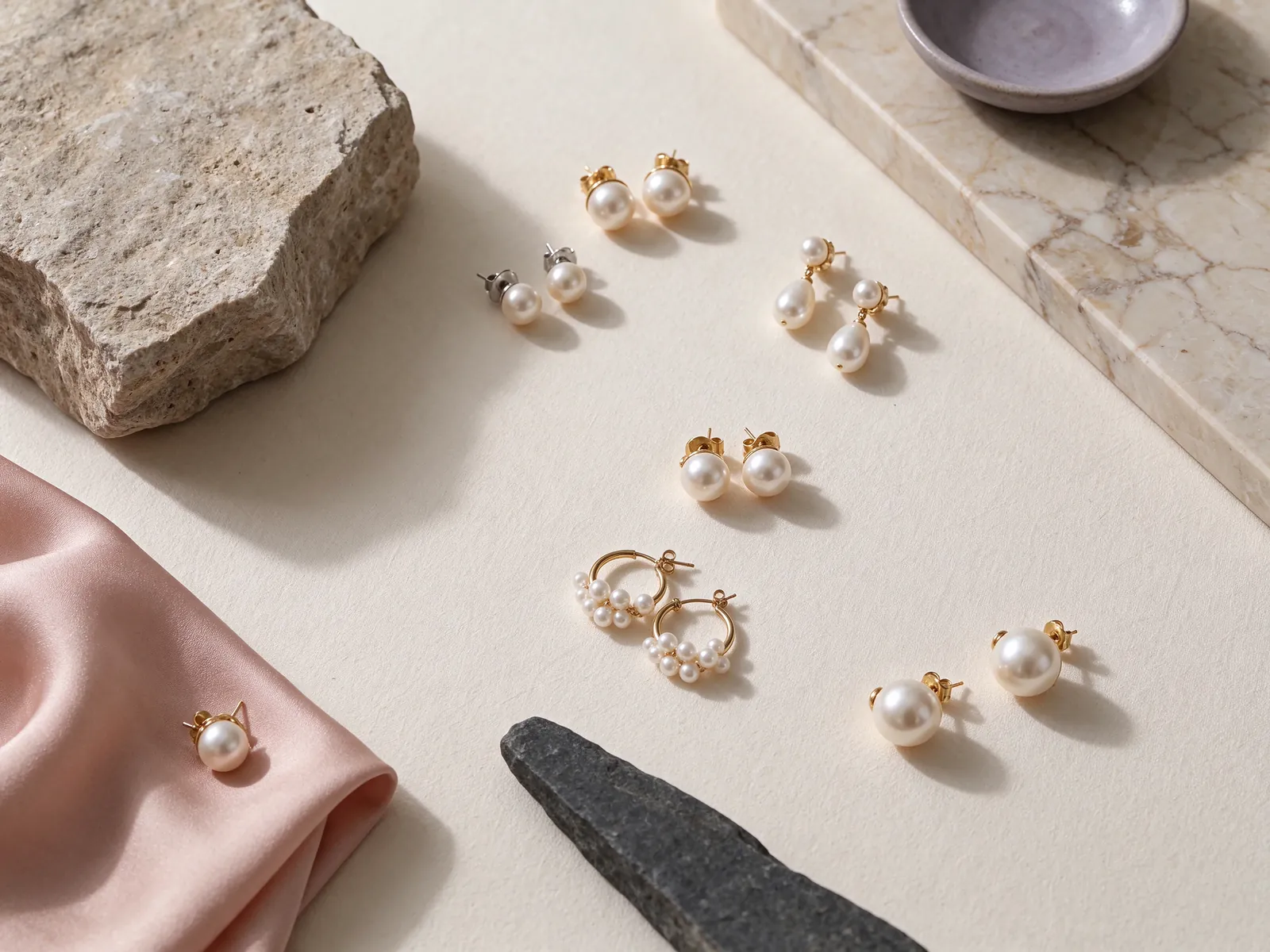
A single earring needs a clear wearing brief
Soft Tide is specified as a single earring. If your intention is to wear earrings on both sides, say so explicitly and discuss the relationship you want between the two sides. You might prefer similar visual presence, or you might be planning a deliberate asymmetry. For a single-ear look, a photograph of the jewellery already worn on the other side can make the conversation more concrete. A single-item description should not be read as confirmation that two earrings are included.
The simple stud construction keeps the design focus close to the ear, but appearance alone cannot establish how it will feel on you. Mention your piercing position, experiences with earring backs, and whether you often use headphones, a telephone or a scarf. Specific observations such as a back pressing uncomfortably or an earring tilting forward are more helpful than a general request for comfort. Neither a simple silhouette nor an approximate pearl diameter establishes the finished weight or guarantees a particular wearing experience.
Consider a charm as a separate styling discussion
Soft Tide can be paired with an earring charm, but that does not itself describe a detachable mechanism. Discuss the intended line, connection and relationship to your collar before treating it as a two-way design. Think about where a vertical accent would sit beside your hair and what happens when you turn your head. A high collar and a draped evening neckline create different needs; photographs of those garments are useful without inventing a fixed charm length.
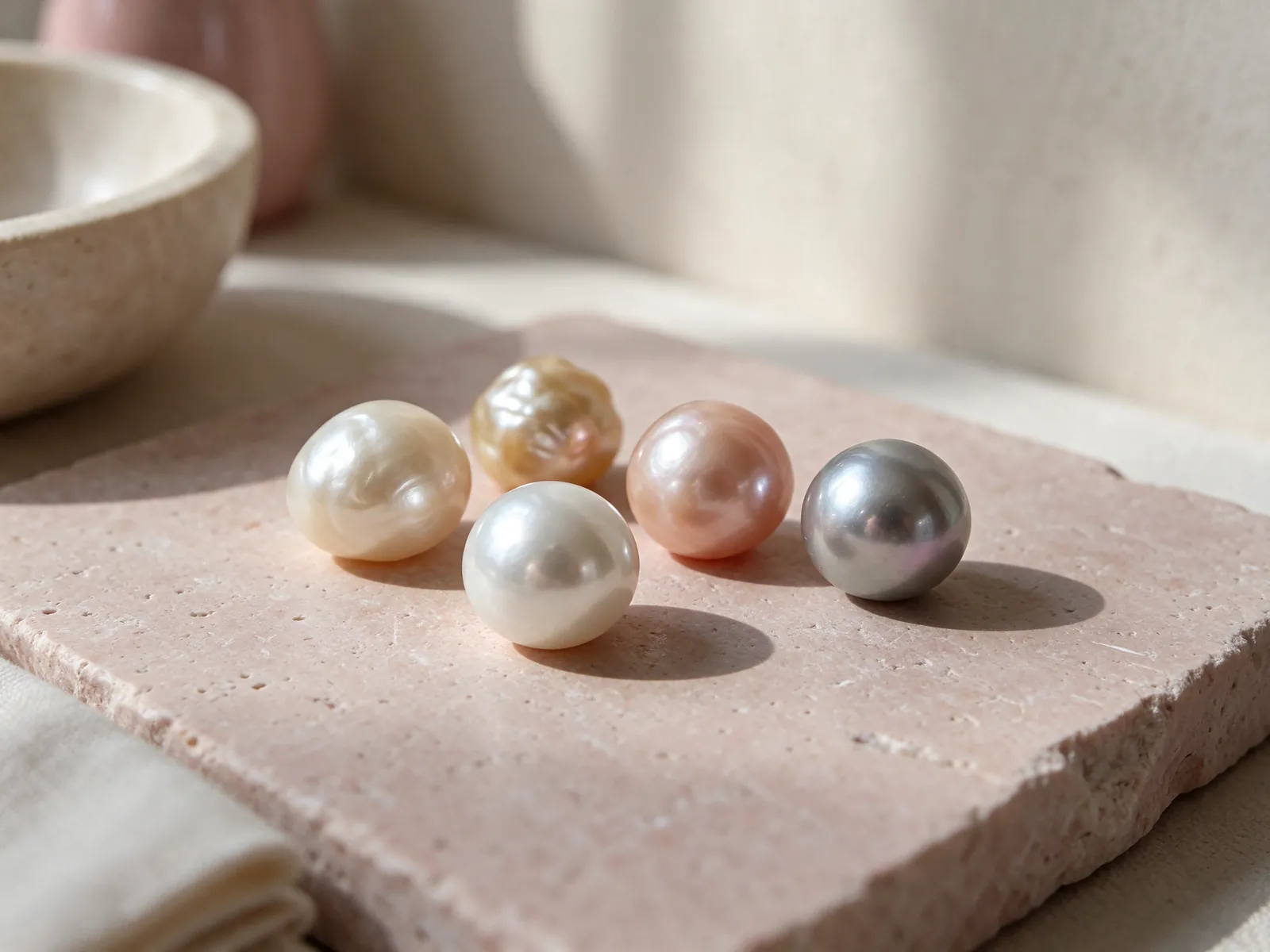
Distinguish white gold from platinum and use comparisons purposefully
The gold options discussed here are 18K750 white, yellow and rose gold. White gold is not platinum, even when both have a white-metal appearance in a photograph. If you prefer that colour family but wish to consider platinum, the topic of platinum pearl earrings provides a separate route for discussing PT950 or PT900. Keep the colour decision distinct from the metal name, then consider the construction and your wearing requirements. Visual similarity is not a substitute for reading a stated material.
Searches may also bring up 10K gold pearl earrings, 14K gold pearl earrings and sterling silver pearl earrings. Those comparison topics help frame questions about descriptions; they do not indicate that Flint supplies those materials. Read which component a material statement refers to and what construction is described. Avoid assuming that a search-result title, a colour label or a single number explains the whole piece. A useful comparison starts with the same intended use, not with a presumed price or a universal durability ranking.
Keep colour, construction and personal experience as separate questions
First identify the colour relationship you enjoy with your wardrobe. Next describe the outline and stud arrangement you want near the ear. Finally explain any practical wearing concerns. This order avoids asking the metal colour to answer a construction question. If budget is part of your discussion, specify the single-ear or left-and-right intention and whether a separate charm is involved, so that everyone is talking about the same design requirements.
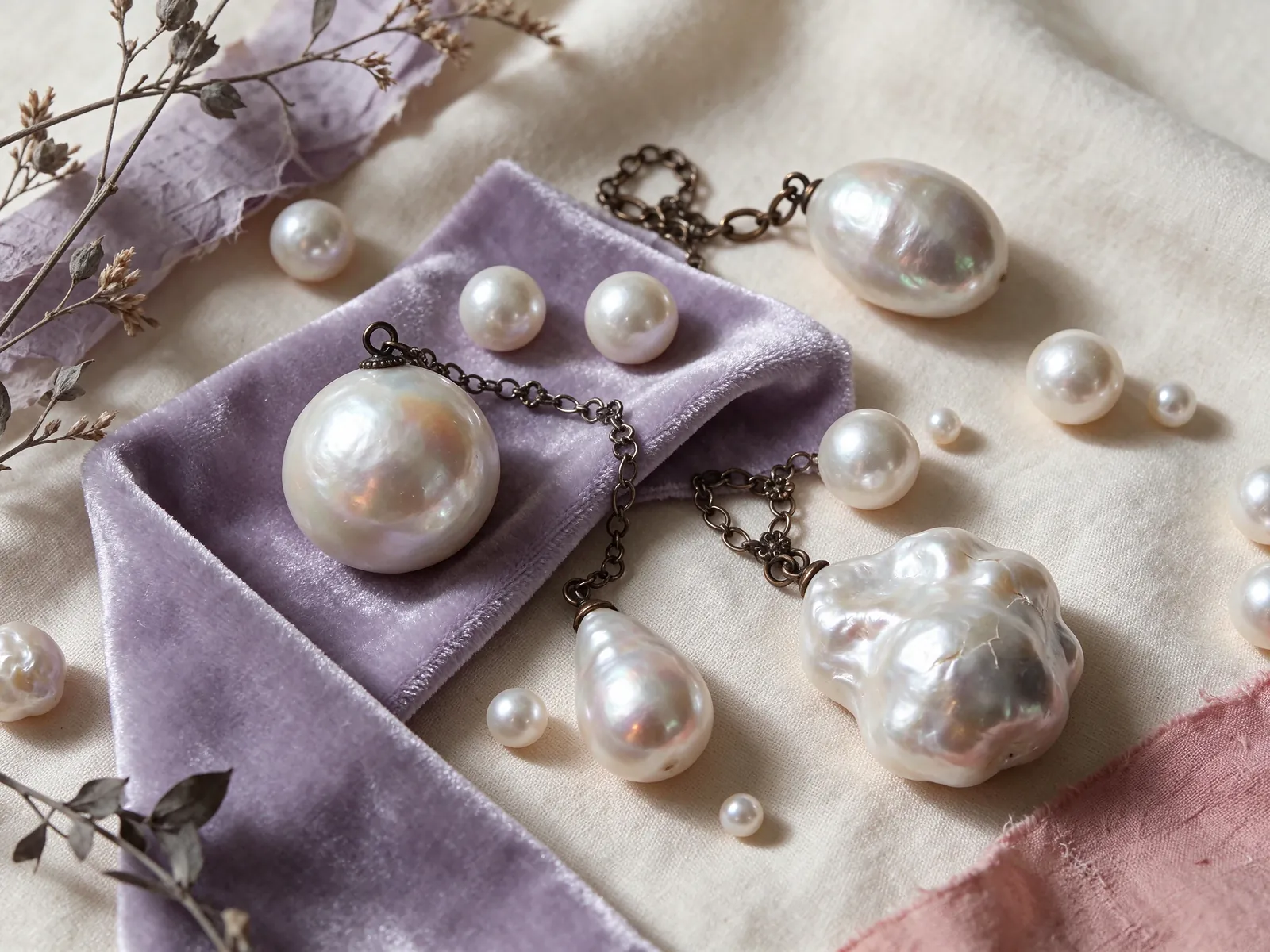
Let the pearl remain a clear accent from workwear to evening clothes
With a shirt, tailored jacket or plain knit, the pearl can provide texture near the face while the clothing keeps a clear outline. If a fabric already has a strong pattern, simplify the other accessories so that the pearl folds and the clothing do not compete for attention. Glasses deserve a place in this assessment too. A pronounced frame may work well with a quieter ear-level accent; there is no need to increase every accessory's scale simply because one element is bold.
For evening clothing, consider contrast rather than automatically seeking more decoration. An exposed shoulder or a strongly shaped collar can sit beside a softly irregular pearl, creating a relationship between structured fabric and flowing contour. Hair worn up reveals the ear outline; hair left loose gives an intermittent glimpse. Photograph two outfits in similar light and decide whether you want the same focal point in both. That makes a gold-colour or charm discussion more useful than designing around an occasion label alone.
Give a necklace or brooch its own visual space
If a necklace already fills the centre of the neckline, the earring can contribute shape and lustre without repeating the same decorative density. A brooch near the shoulder may bring brightness close to the same side of the face, so compare the spacing in a full outfit view. Choose a shared cue, such as a warm tone or a simple curve, rather than insisting that every accessory be identical. One clear focal point often makes the whole outfit easier to read.
Address ear sensitivity separately from pearl care
If jewellery has caused discomfort before, explain the contact area and the reaction you experienced rather than asking for a colour that can never cause sensitivity. The guide to pearl earring back types helps organise questions about back construction, while pearl earrings for sensitive ears considers contact areas and practical selection concerns. Metal names do not guarantee an individual response. If wearing an earring brings pain, redness, swelling or other discomfort, stop wearing it and seek appropriate professional advice rather than treating the design as a medical solution.
Choosing gold does not remove the pearl's own care needs. GIA lists pearl hardness as 2.5 on the Mohs scale and says pearls should never be cleaned with ultrasonic or steam cleaners. Finish using perfume and hair spray before putting on the earrings, and avoid touching the pearl with hands carrying those products. After wearing, use a very soft clean cloth. Keep pearls apart from harder jewellery in storage and away from acids and excessive heat; these are practical precautions, not a promise of permanent appearance.
Handle the stud without using the pearl as a lever
Remove the earring over a stable surface so a small back is less likely to disappear if dropped. Hold the metal rather than twisting the pearl to pull the stud free. Look for an obvious change in the connection or a bent post before wearing again. If something appears loose or distorted, pause wearing and discuss the issue; forcing, heating or aggressive cleaning is not a sensible substitute for an appropriate examination.
Build a useful customisation conversation with Flint Jewellery
Prepare a front and side photograph of the ear area, a photograph of a usual neckline, and a short description of how you intend to wear the earring. There is no need to include private documents. Note your preferred gold colour, whether you like a restrained or more rippled outline, and whether you are planning a single-ear look or a left-and-right arrangement. Existing jewellery can be included when you want a clear relationship with a watch, ring or other ear accessory.
Rank the details that matter most. You may want a quiet workday outline first and an evening charm idea second, or you may prioritise how the pearl appears beside your glasses. This helps distinguish essential needs from optional styling changes. Share those directions with Flint Jewellery on WhatsApp at +85260106207, keeping Soft Tide's white baroque pearl and simple stud as the starting point. For a gift, learn whether the recipient has pierced ears and how they usually wear earrings before making assumptions about a pair.
Make a gift personal through habits rather than unsupported labels
The recipient's usual metal colours, neckline and hairstyle can suggest a styling direction. They cannot establish piercing measurements or how that person's skin will respond. If you are unsure about symmetry or single-ear styling, leave room for their preference to shape the discussion. A thoughtful gift brief comes from understanding how someone dresses; it does not need an imagined pearl origin, grade or certificate to make it meaningful.
| Decision | Design starting point | What to observe | What to discuss |
|---|---|---|---|
| Gold colour | 18K750 white, yellow or rose gold | Wardrobe tones and existing accessories | A distinct pearl accent or a quieter colour connection |
| Pearl outline | White baroque pearl, approximately 7~8mm | Front view, side folds and hairstyle | Preferred curves and visual presence |
| Wearing unit | Single earring | A single-ear look or left-and-right balance | Your intended arrangement |
| Construction | Stud earring | Collar, glasses and position of the back | Previous wearing experiences and everyday activities |
| Charm styling | Can be paired with an earring charm | Hair, scarf and neckline relationship | Desired line, connection and purpose |
Pearl knowledge and authoritative references
GIA identifies seven pearl value factors: size, shape, colour, lustre, surface quality, nacre quality and matching for jewellery with more than one pearl. For earrings, that is a useful reason to consider outline and visual relationship separately from diameter alone.
Read the reference for this factFrequently asked questions
Are 18K750 white gold pearl earrings the same as platinum pearl earrings?
No. White gold and platinum are different material names, even when their appearance belongs to the same white-metal colour family. Soft Tide can be discussed in 18K750 white, yellow or rose gold. PT950 or PT900 platinum is a separate material direction, not another name for white gold.
Does Soft Tide's single-earring unit include a pair?
The stated unit is one earring, not a pair. If you want to wear the design on both sides, explain that intention and discuss how the pearl outlines and visual presence should relate. Do not treat a single-item description as confirmation of two included pieces.
Will an approximately 7~8mm baroque pearl look like a round pearl of that size?
Not necessarily. An irregular edge, folds and orientation affect the apparent size. Use the measurement as a starting point alongside the front and side views, your hairstyle and your neckline. It does not establish weight or exact projection from the ear.
Does the option to pair Soft Tide with a charm mean it is detachable?
The ability to discuss charm styling does not specify a detachable connection. Explain the line and neckline relationship you want, then discuss the construction. A two-way mechanism used by another design should not be assumed for Soft Tide.
Can I use an ultrasonic cleaner because the stud is gold?
No. The pearl's cleaning requirements still apply. GIA says pearls should never be cleaned with ultrasonic or steam cleaners. Routine care uses a very soft clean cloth after wearing, with precautions against perfume, hair spray, acids and excessive heat.
Updated: