
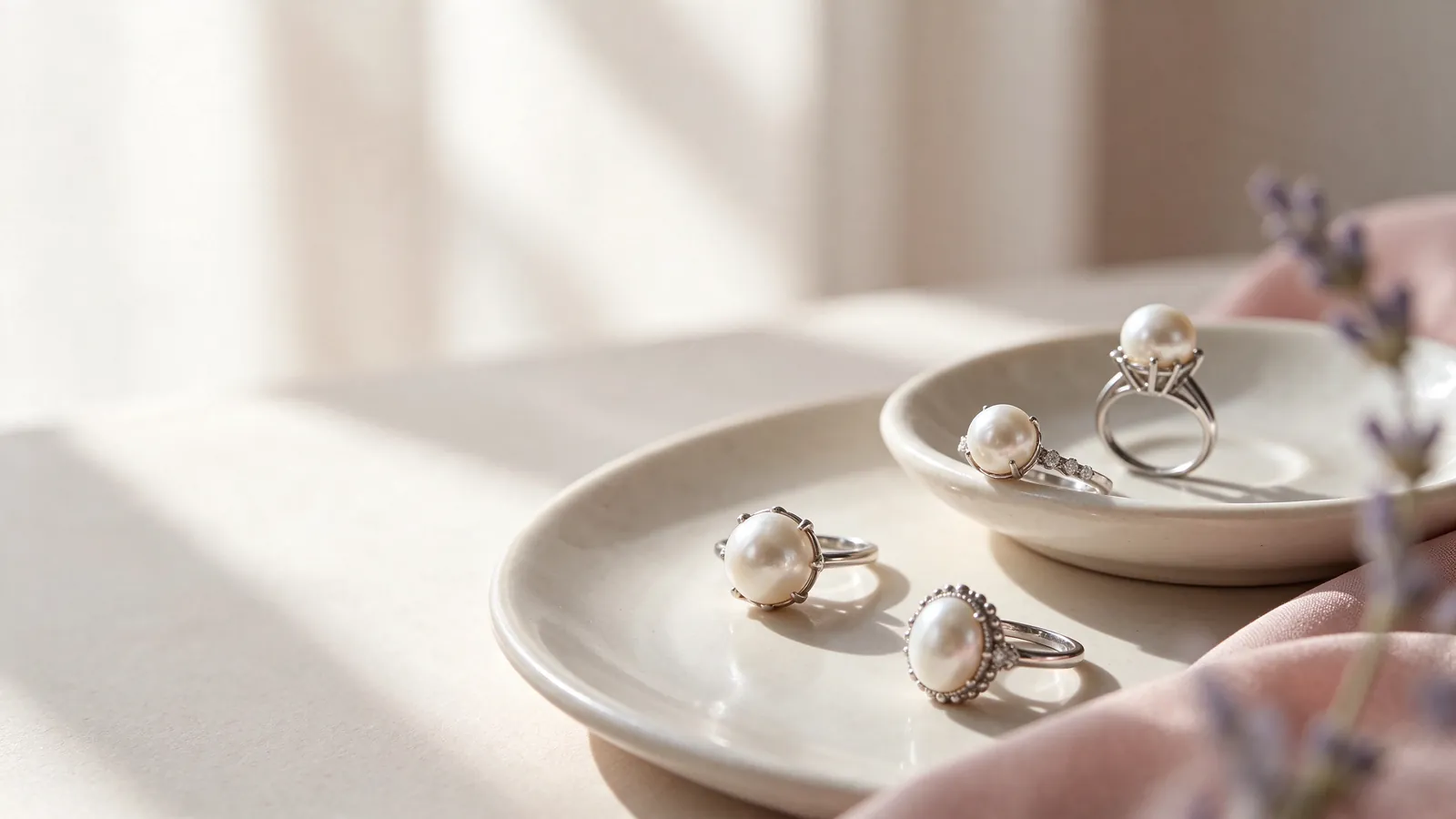
Comparing a mabé pearl ring or mabe pearl ring: the profile and proportions of a half round mabe ring
Begin with your hand relaxed rather than posed for a photograph. Look at how far the ring face extends towards the neighbouring fingers and how much of its outline comes from the metal surround. When exploring pearl rings Hong Kong, compare designs on the same finger and from a similar viewing distance. A larger-looking photograph may reflect camera position rather than a larger ring face.
Next turn your hand sideways. A broad face with a gentle rise and a narrower face with a higher dome can have quite different visual weight, even when both are described as half-round. Neither outline establishes Mabé identity. Instead of choosing by hand shape alone, decide whether you want a quiet accent or a focal point, then check the space beside the ring and its height above your finger.
Trying on a mabé pearl ring or mabe pearl ring: checking half round mabe ring fit as you bend your finger
Gently close your hand, hold a pen and let your fingers rest together. Notice pressure at the shoulders, rotation and the feel of the band as you bend. Learning how to measure ring size provides a useful starting point, but a broad band or prominent face deserves its own fitting. Passing over the knuckle and sitting comfortably at the base are separate checks.
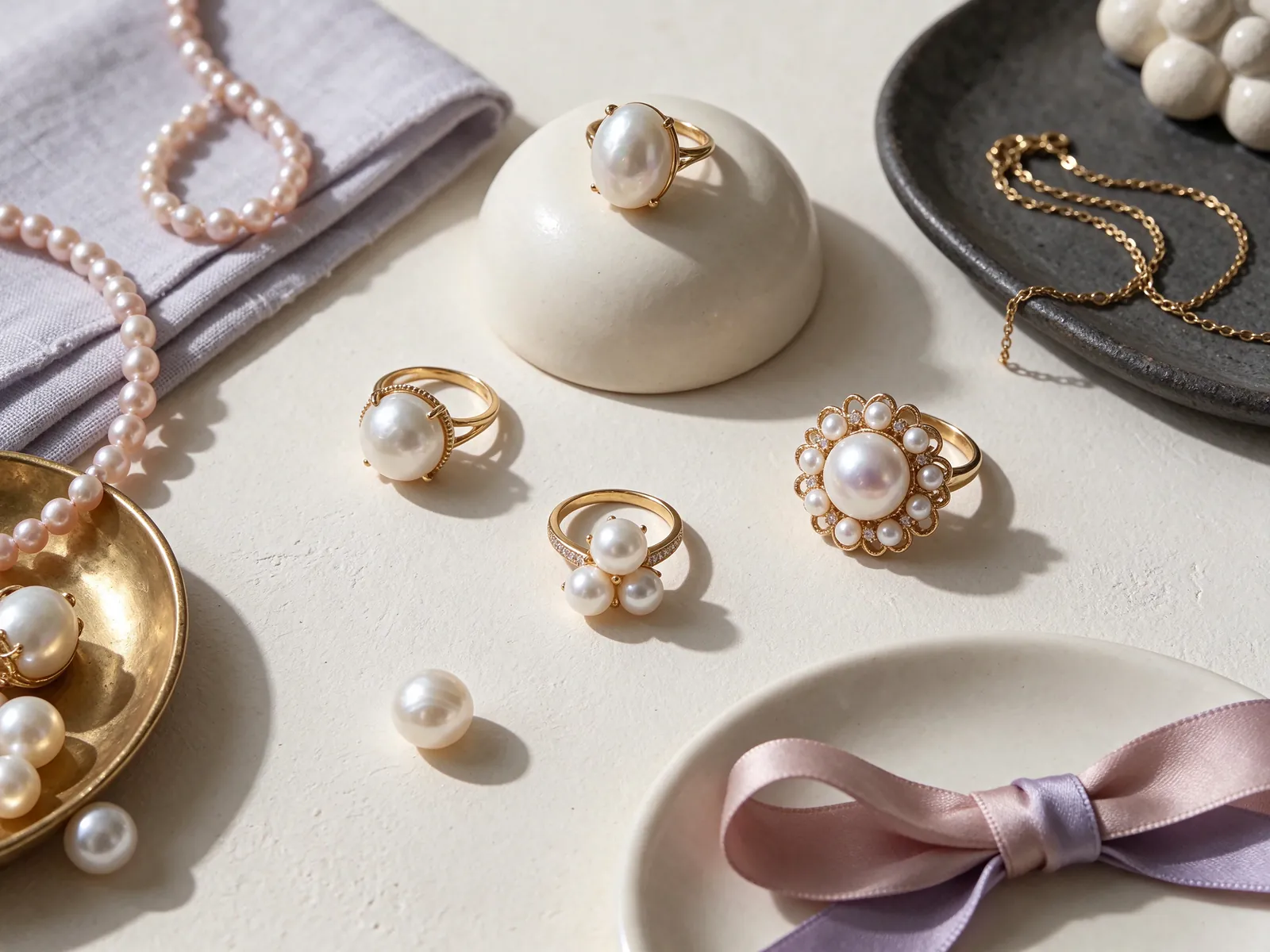
Read the name and the pearl description as different information
Mabé pearl ring and mabe pearl ring are spelling variants you may encounter in searches. Half-round describes an outline, not sufficient evidence of a pearl's structural identity. Read a description closely enough to distinguish a statement about shape from one about the pearl itself. An attractive dome in a photograph cannot settle questions about origin, treatment or natural-versus-cultured identity.
Alternative searches can help clarify what you actually like. A baroque pearl ring is a useful topic when considering irregular outlines, while a freshwater pearl ring introduces a different classification question. Those terms do not form a simple round-versus-half-round comparison. If a wide, softly curved face is your priority, describe that preference first, then ask for clear information about the particular pearl rather than relying on a search label.
Ask questions that separate appearance from identity
Ask what the pearl is described as, which parts are visible and which are concealed by the setting. If a report accompanies it, establish which pearl the document concerns before reading its conclusion. A report logo alone is not the answer. Keeping these questions separate helps you appreciate the ring's appearance without treating its silhouette as proof of information that cannot be seen.
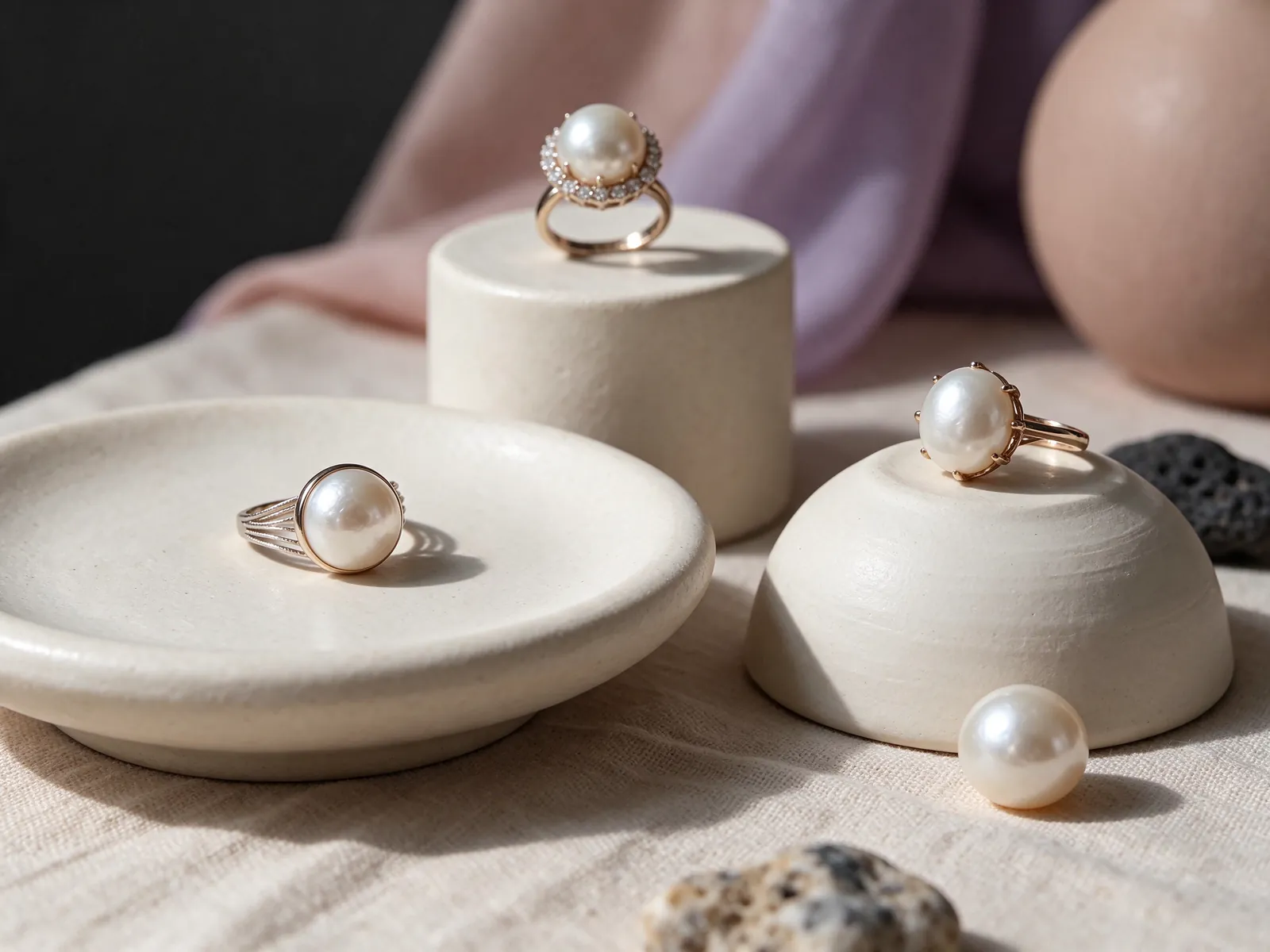
Assess lustre, surface features and colour under comparable light
Slowly rotate the ring in soft light and watch how reflections travel across the visible surface. Compare bright and shaded areas rather than judging only the brightest patch. Camera exposure, background and the surrounding metal can change the impression. For a fair visual comparison, use similar lighting and distance; a heavily illuminated photograph may conceal the distinctions you would notice in person.
GIA describes seven pearl quality factors: size, shape, colour, lustre, surface quality, nacre quality and, for multi-pearl jewellery, matching. Use them to organise questions, not to assume every factor can be established from a ring photograph. Bodycolour, overtone and orient are also distinct, and not every pearl displays all three. Your preferred colour should be considered beside your skin, clothing and metal choice, rather than selected solely by a memorable colour name.
Evaluate visible features at both close and wearing distance
Look closely for visible marks or uneven areas, then return to the distance at which you normally see your hand. A feature near the surround may affect the appearance differently from one in the centre. Do not diagnose a line as a crack from a photograph or assume every mark is harmless. Ask to see the actual position and understand its condition before deciding whether it suits your preferences.
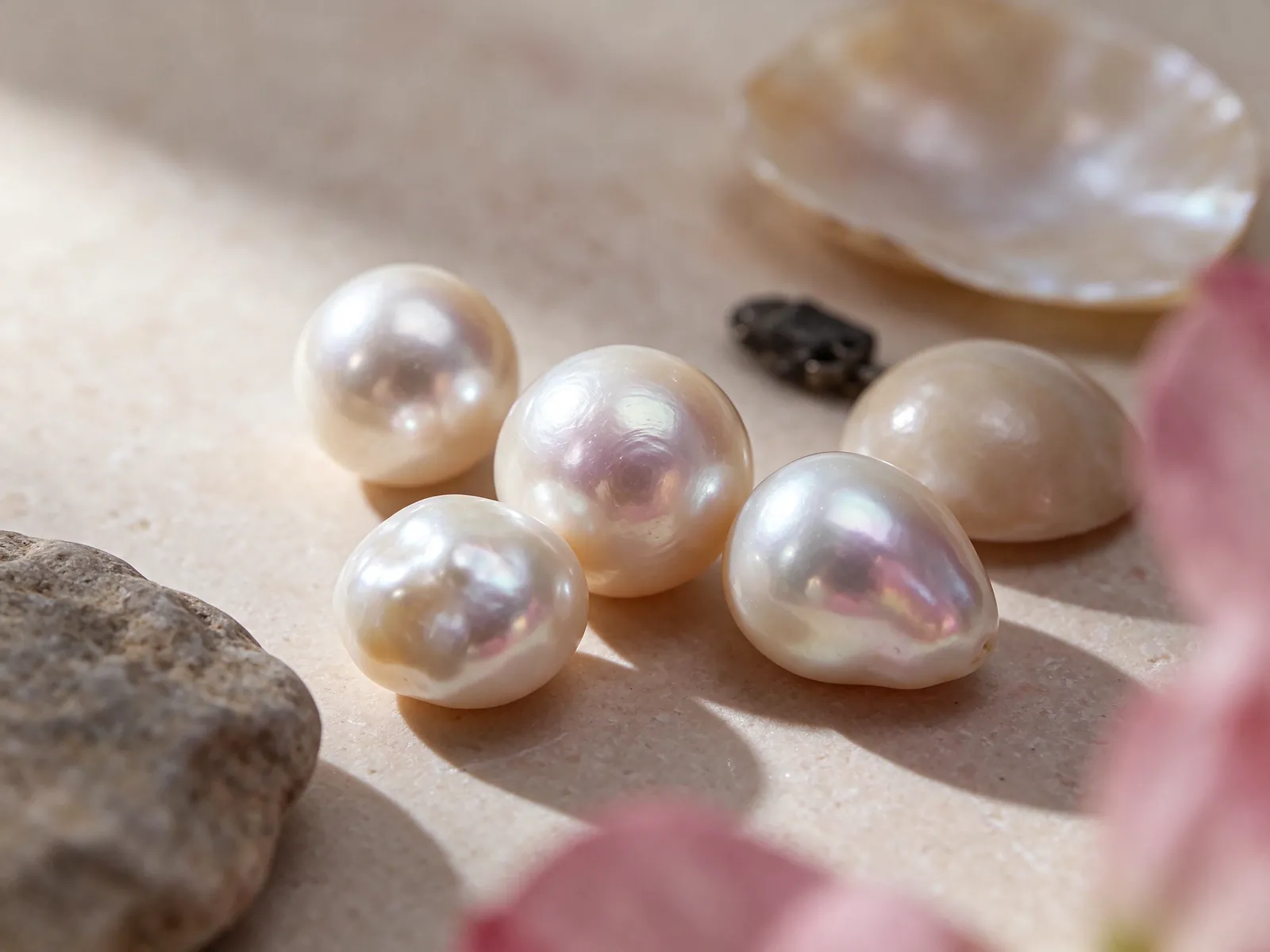
Examine the setting, band and points of contact
The pearl face is only part of what you wear. Inspect the underside of the setting, the ring shoulders and any projecting metal edges. Notice which surfaces approach your finger and the neighbouring fingers. Setting names alone do not provide a universal ranking of protection: the actual outline, contact points and finishing need attention. A photograph from above rarely answers these practical questions.
If the face turns to one side, do not immediately choose a smaller ring size. Weight distribution, band shape and the difference between your knuckle and finger base are also worth discussing. Record whether movement occurs with a relaxed hand, during walking or when bending. A narrower ring you already own may not provide a reliable fit comparison for a broad band with a different face.
Use familiar sleeves and everyday hand movements
Let the cuff of a usual shirt or jacket pass naturally over your hand without pulling it against the ring. Then hold your phone, lift a cup by its handle and reach into a bag. These movements help distinguish discomfort caused by height, width or an exposed edge. Comfortable fitting does not mean the ring should remain on for sport, cleaning or heavy lifting.
Choose metal colour around the pearl and your existing jewellery
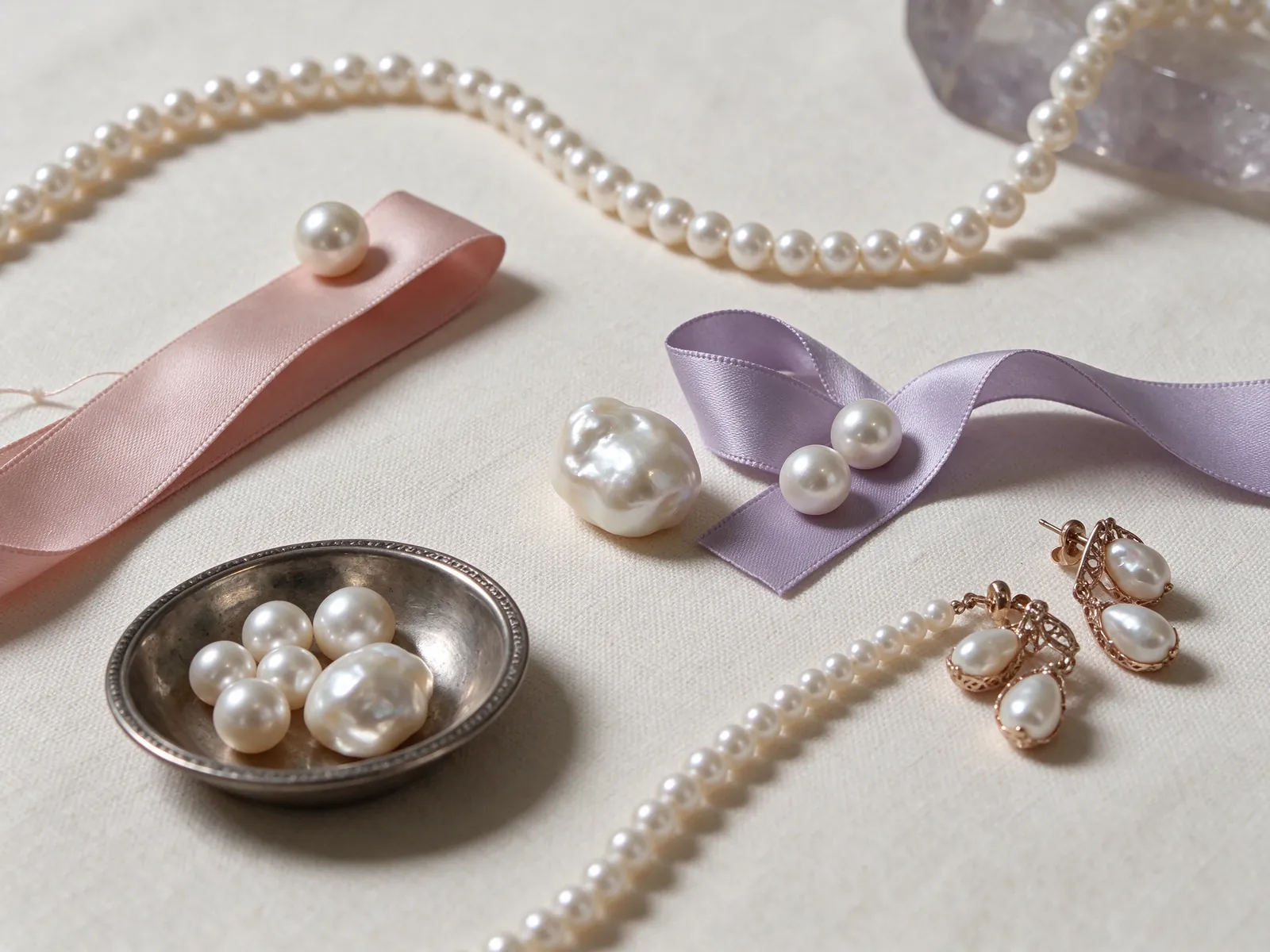
Consider whether you want the metal surround to blend gently with the face or create a clear visual boundary. The 18K gold pearl ring guide can help frame this styling decision. Place the proposed colour beside a familiar watch, earrings or wedding ring and judge the whole combination. A white, yellow or rose-coloured appearance does not identify the pearl or establish its origin and value.
For another metal direction, read about a platinum pearl ring. Clear material names for a discussion are 18K 750 white gold, 18K 750 yellow gold, 18K 750 rose gold, PT950 platinum and PT900 platinum. Metal preference remains separate from pearl identity and the actual setting. Compare your preferred metal colour with the face outline and fitting comfort to find a visual direction that feels balanced.
Check neighbouring rings before planning a stack
A pleasing stack in a photograph may still allow another ring to touch the pearl or push against its surround. Look for actual clearance and bend your finger gently. Moving the second ring to a neighbouring finger can create visual balance, but check contact when the fingers come together. Treat the appearance of the combination and its comfort in motion as two separate decisions.
Style a broad pearl face for work and evening occasions
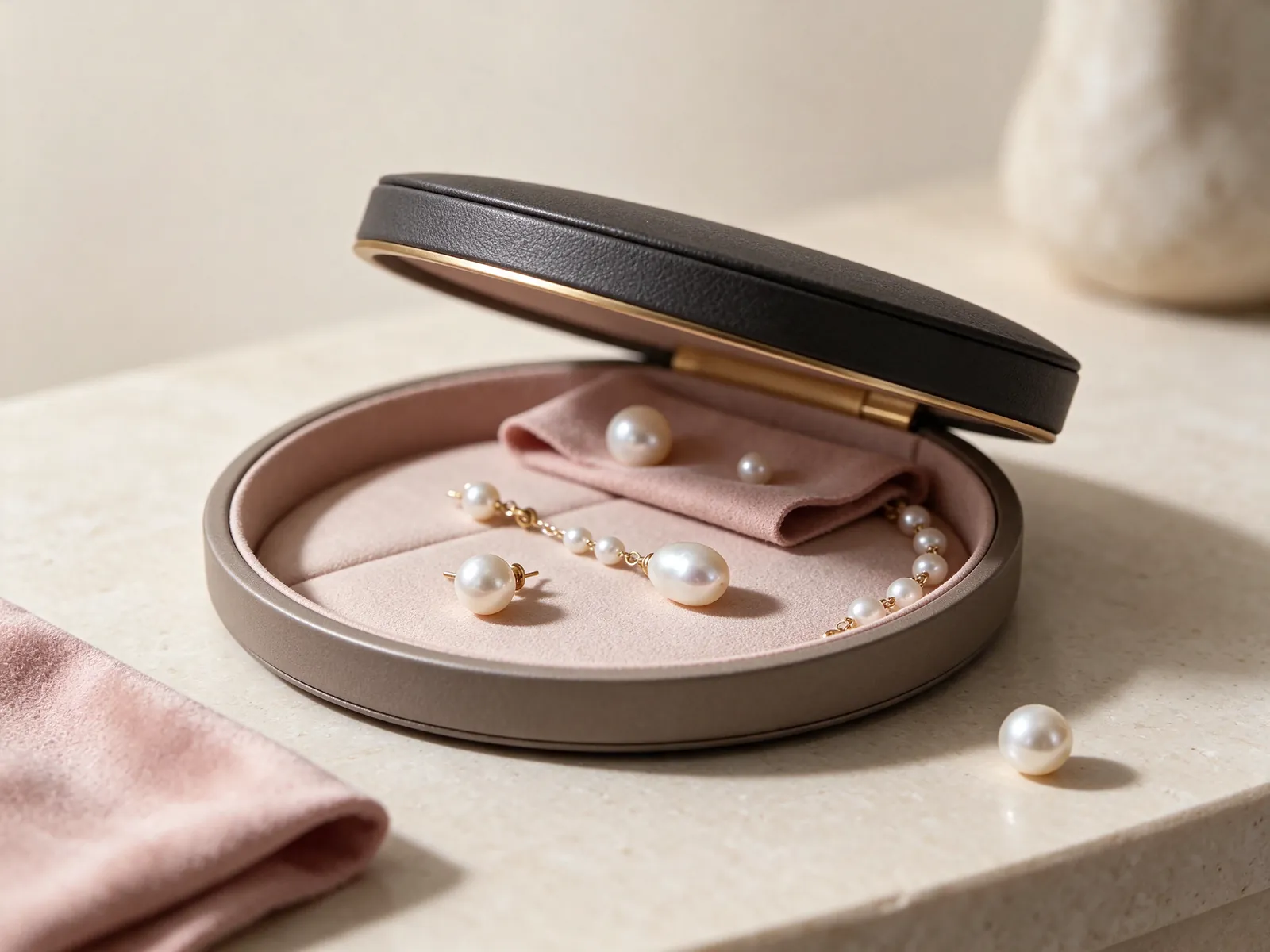
For office wear, start with the tasks your hands perform. Sit in your usual typing position or handle a folder during fitting, then decide whether the ring feels unobtrusive enough for those movements. A broad face can provide the main accent without several additional statement rings. With knitwear, test sleeve contact rather than assuming that a smooth-looking dome will pass through every cuff easily.
For an evening outfit, a plain fabric near the hand can give the ring a clearer visual position. The pearl need not match the clothing exactly; consider whether the colours compete or complement one another under the actual lighting. Dark, pale and warm fabrics create different contrasts. Strong indoor lighting may also alter the impression of overtone, so a studio photograph is not a complete styling test.
Keep one familiar outfit as a comparison baseline
Use an outfit you wear often, together with your regular watch or earrings, to compare possibilities. First look at the overall balance, then focus on the hand. Decide whether the ring should be the sole focal point or echo other jewellery. A design chosen for one special outfit can be a deliberate choice, but it need not suit every activity in your everyday routine.
Plan care around the setting and your daily routine
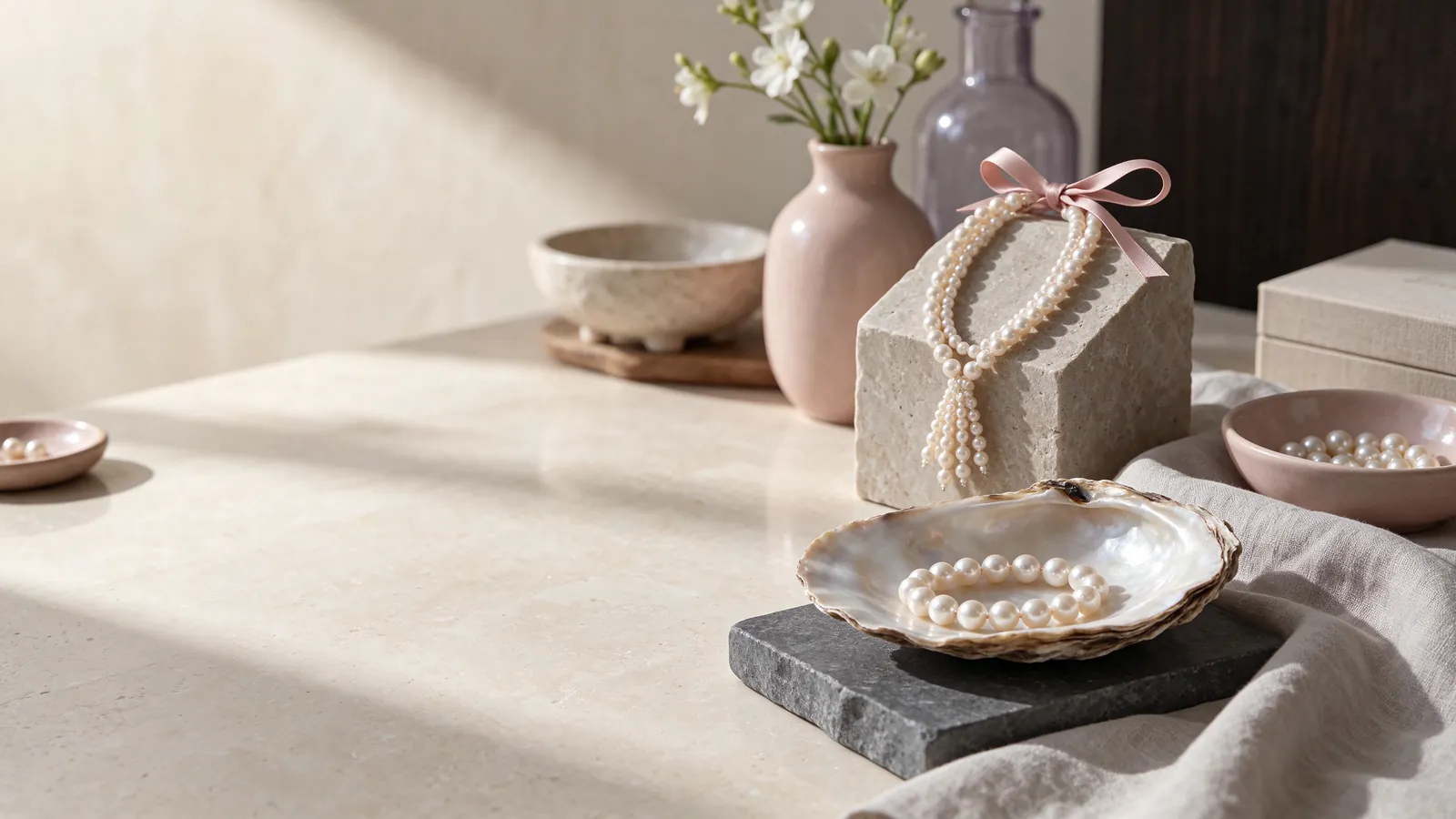
GIA lists pearl hardness as 2.5 on the Mohs scale. That makes avoiding abrasive contact an important care consideration, but the number is not an impact-resistance guarantee. Remove a pearl ring before handling cleaning chemicals, taking part in sport or moving heavy objects. Keep perfume and hair spray away from the pearl, wipe it after wearing with a very soft clean cloth and store it separately from other jewellery.
Pearls should never be cleaned in ultrasonic or steam cleaners. If the face feels loose or you notice an unfamiliar change at its edge, stop wearing the ring and seek an assessment rather than prying at it or adding glue yourself. Cleaning instructions should suit the actual mounting; instructions for a strung pearl necklace should not automatically be applied to a pearl set in a ring.
Turn your preferences into a useful selection conversation
Describe your preferred finger, face outline, usual sleeves and existing rings. Then ask about pearl identity, visible surface condition, setting contact points and a suitable fitting method. This is more productive than asking which ring is universally best. A photograph can communicate a styling preference, but it should not stand in for the particular ring's dimensions, pearl description or price information.
To organise your questions about a mabé pearl ring, contact Flint Jewellery on WhatsApp at +85260106207 for a general selection discussion. Share your preferred finger, familiar sleeves and styling direction so the conversation can focus on the proportions, fit and care considerations that matter to your routine.
| Comparison | What to observe | Fitting check | Styling consideration | Question to ask |
|---|---|---|---|---|
| Name and identity | Separate the pearl description from half-round shape | Do not use fitting as identity evidence | Describe the outline you prefer | How is this particular pearl identified? |
| Face proportions | Compare front width and side height | Rest neighbouring fingers together | Check the outline beside your cuff | How much size comes from the surround? |
| Lustre and surface | Rotate slowly in comparable light | Return to normal wearing distance | View the colour beside fabric and metal | Where are the visible surface features? |
| Setting and fit | Inspect shoulders, underside and projecting edges | Bend, hold a pen and test a sleeve | Keep other rings from touching the pearl | Which part causes rotation or pressure? |
| Care | Discuss cleaning for the actual mounting | Remove before cleaning or heavy lifting | Store separately to reduce rubbing | What should I do if the face feels loose? |
Pearl knowledge and authoritative references
GIA lists pearl hardness as 2.5 on the Mohs scale. This supports care advice about avoiding scratches; it does not promise impact resistance or a particular lifespan.
Read the reference for this factFrequently asked questions
Does a half-round outline prove that a ring contains a Mabé pearl?
No. Half-round is a shape description. Read the pearl identity separately and do not infer structure, origin or treatment from a domed photograph. The spelling variants mabé and mabe do not remove the need for information about the particular pearl.
Will a low-looking face always slide comfortably through a shirt cuff?
Not necessarily. Setting height, projecting edges and the fabric all affect contact. Let a familiar cuff pass naturally over your hand during fitting, then try a phone or cup handle. A photograph from above cannot answer these questions.
Should I size down if the pearl face rotates?
Not automatically. Discuss the band shape, weight distribution and knuckle-to-finger-base difference, and note which movements cause rotation. A smaller size may affect passage over the knuckle or comfort when bending, so assess the actual design.
Should I match the pearl colour to my skin or my metal jewellery first?
Look at both together with one familiar outfit under comparable light. You may prefer a gentle blend or a contrasting surround. There is no need for every element to match, and a favourite colour does not establish pearl identity.
Can I put a pearl ring in an ultrasonic cleaner with my other rings?
No. GIA advises against ultrasonic and steam cleaning for pearls. Use a very soft clean cloth after wearing, and seek advice appropriate to the setting if it becomes loose or shows an unfamiliar change rather than attempting a glue repair.
Updated: