
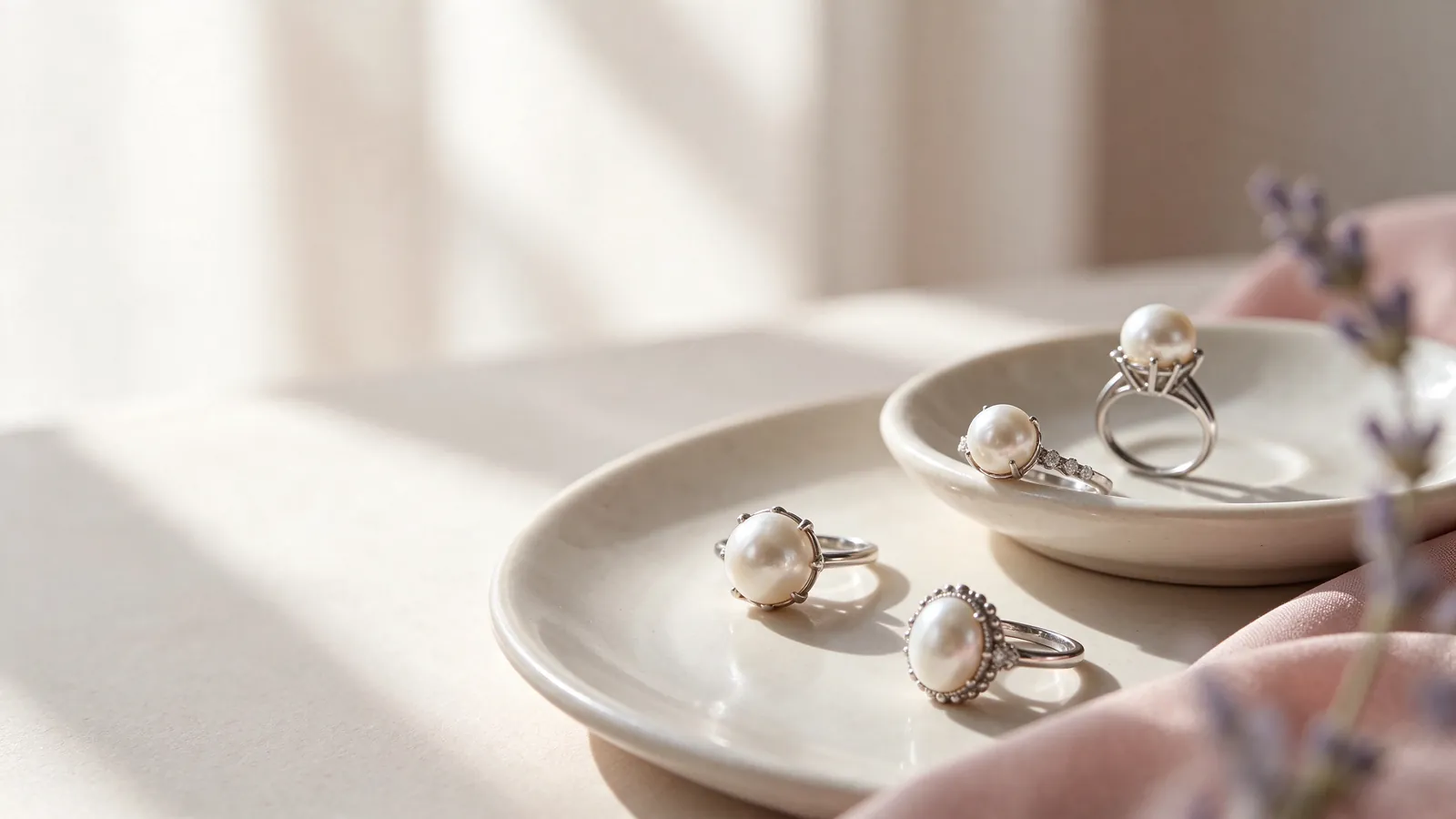
Evaluating a mabé pearl ring or mabe pearl ring: how a half round mabe ring balances profile and proportions
Start by looking at the complete ring on a relaxed hand. The apparent size includes both the pearl face and its metal border, so a wide outline is not necessarily all pearl. Compare pearl rings on the same finger and at a similar distance before deciding which proportion you prefer. Notice the space beside the ring and whether it visually dominates your hand or works as a smaller accent.
A side view adds information that a top-down image misses. Check how far the setting rises, how its shoulders meet the band, and how the face sits over the finger. A broad, gently raised outline can look different from a narrower, taller one. Neither shape by itself establishes Mabé identity. Treat the silhouette as a design preference, then consider the actual pearl description separately.
Fitting a mabé pearl ring or mabe pearl ring: checking half round mabe ring size and comfort when your finger bends
Try a relaxed hand, a gentle fist and a normal writing position. Check for pressure between fingers, sideways movement and discomfort under the band. A guide to how to measure ring size helps prepare for fitting, but your existing narrow ring may feel different from a wide band with a prominent face. Confirm both comfortable passage over the knuckle and stability at the finger base.
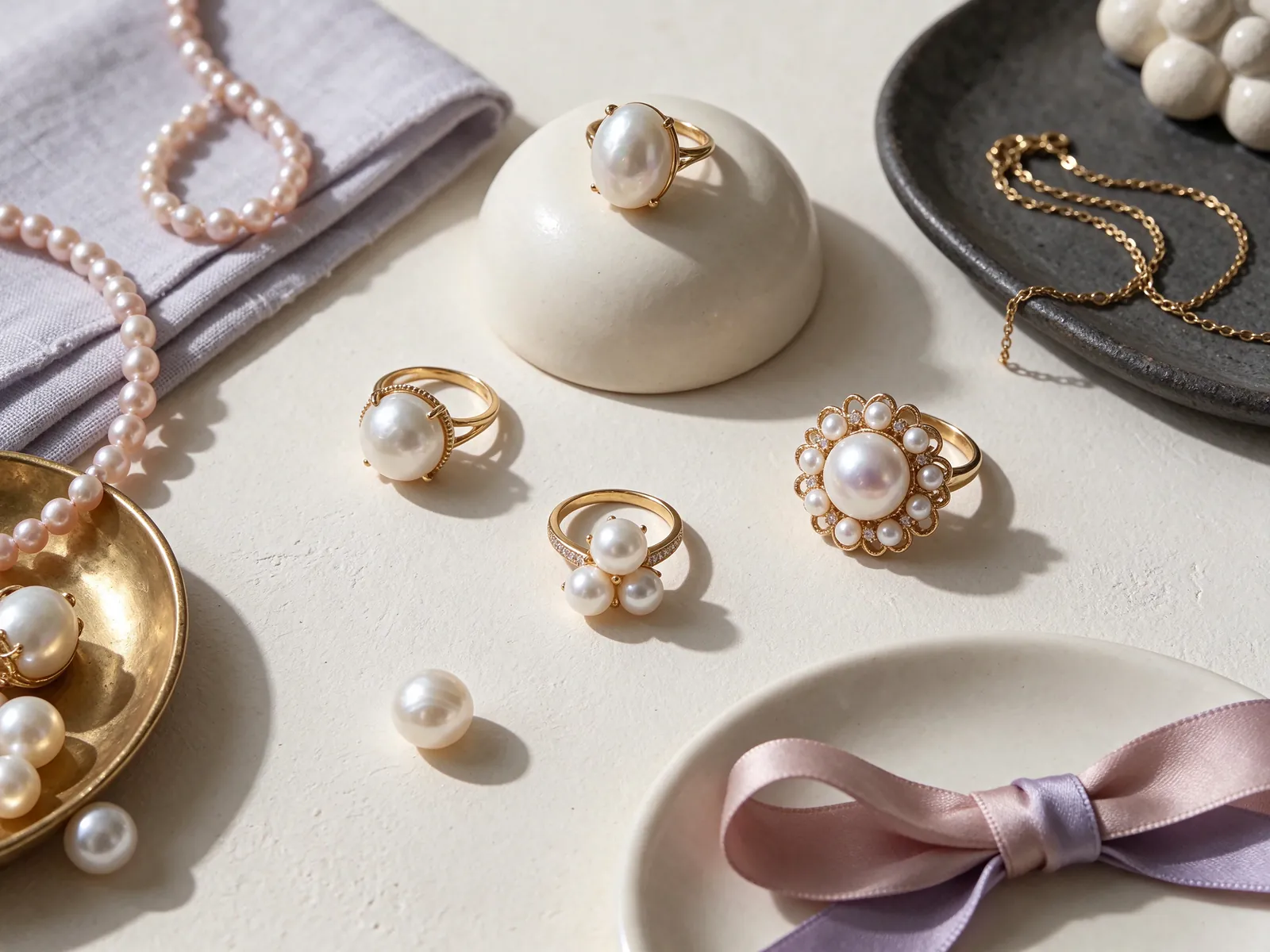
Distinguish search terminology from information about the pearl
The phrases mabé pearl ring and mabe pearl ring use different spellings for the same search name. The phrase half round mabe ring adds an outline description, but an outline is not proof of structural identity. In a listing, identify which statements describe appearance and which explain the pearl itself. A rounded dome alone does not reveal origin, treatment status or whether a pearl is natural or cultured.
Consider related topics according to the question they answer. A baroque pearl ring is helpful for exploring irregular visual outlines; a freshwater pearl ring concerns another pearl classification. They are not interchangeable labels for every non-round or half-round face. If your goal is a broad, soft-looking centerpiece, explain that appearance first and then ask how the actual pearl is identified rather than letting a search term make the decision.
Read accompanying information for the specific pearl
Ask for a clear pearl description and an explanation of which areas the setting hides. When a report is provided, check that its subject corresponds to the pearl being discussed, then read the conclusion. A logo on the cover does not replace that reading. The aim is to keep visible beauty, naming and documented identity in their proper roles rather than assuming they all say the same thing.
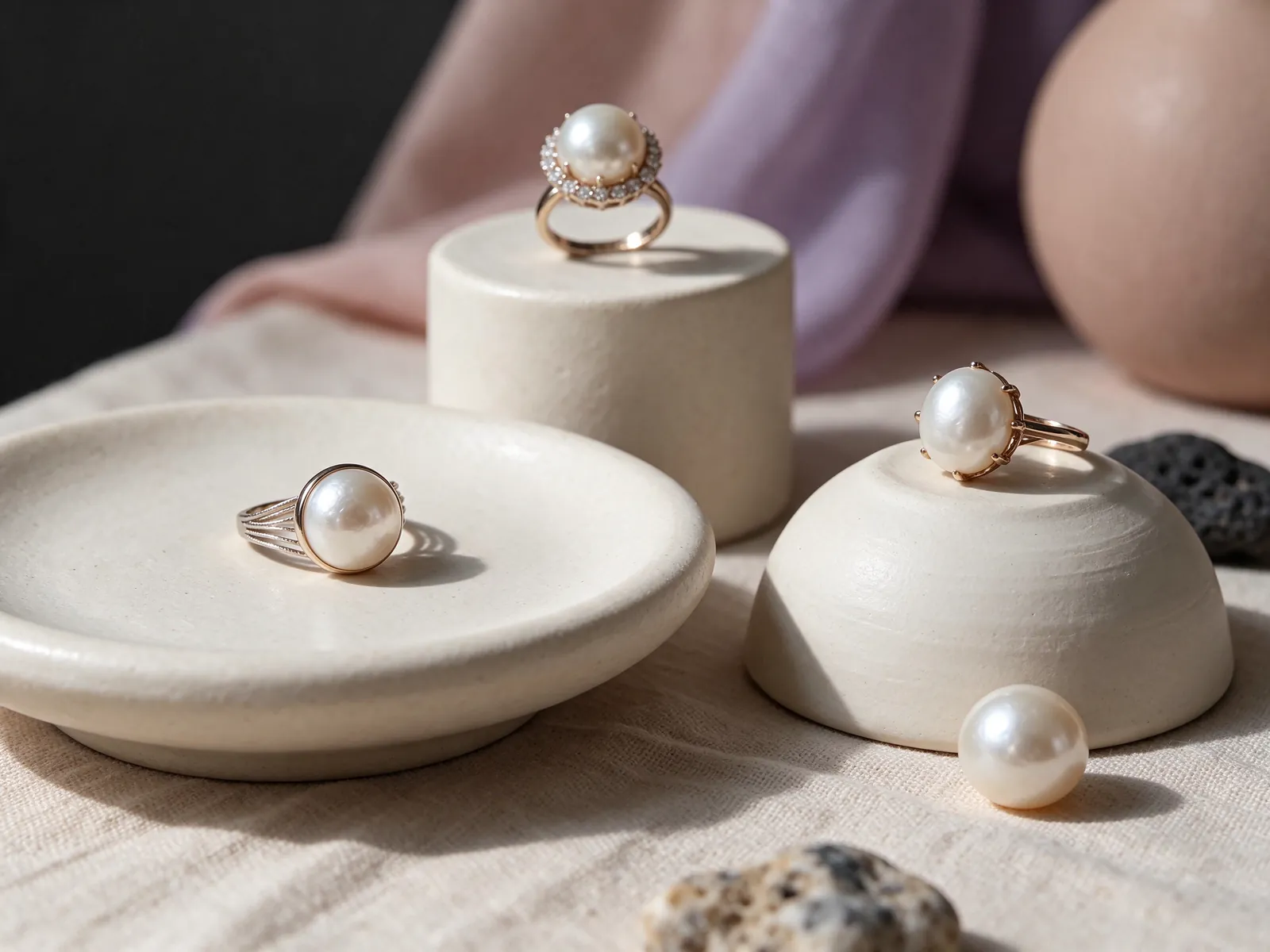
Compare luster and surface appearance without relying on exposure
Move the ring slowly under soft light and observe the transition between reflections and shaded areas. Look beyond the brightest highlight to see how light travels across the face. Photography can change the result through exposure, background or reflections from the metal. If you are comparing two rings, similar lighting and viewing distance are more informative than comparing isolated images taken under different conditions.
GIA identifies seven pearl quality factors: size, shape, color, luster, surface quality, nacre quality and, for multi-pearl jewelry, matching. These provide a useful framework for questions, not a reason to assume that all quality information is visible in a photograph. Bodycolor, overtone and orient describe different color components, and not every pearl shows all three. Consider your preferred appearance beside skin, fabric and metal rather than relying entirely on a color name.
Judge visible marks in their position and wearing context
Examine visible spots, lines or uneven areas closely, then step back to the distance at which you normally see a ring on your hand. A mark at the border may have a different visual effect from one in the middle. Do not identify a crack from a photo or dismiss every feature as insignificant. Ask to see and understand the actual condition before choosing what you are comfortable accepting.
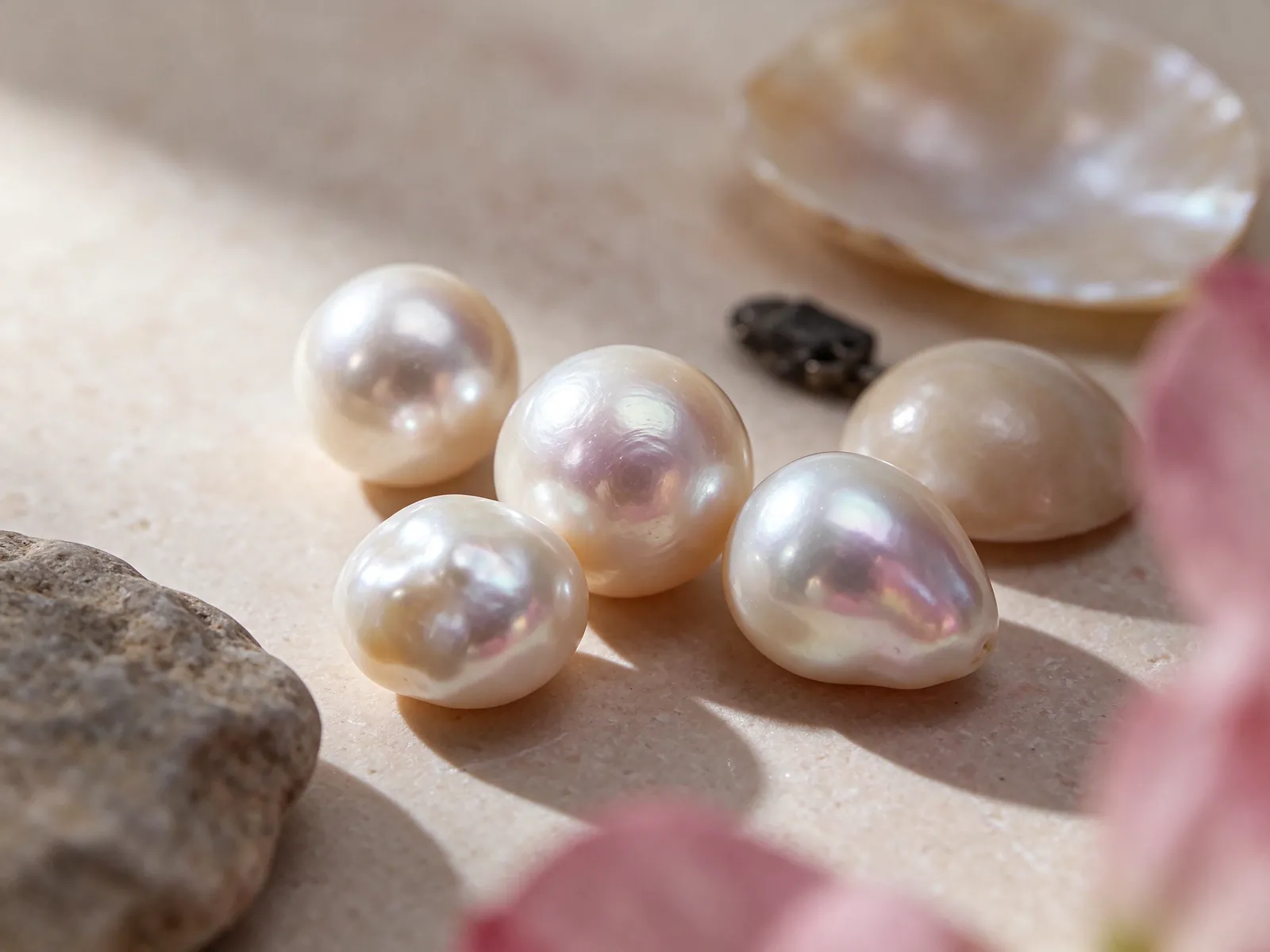
Inspect the mounting where appearance meets everyday movement
Look underneath and around the face, not just at the pearl. Check the setting's outline, the shoulders and any metal that projects toward your skin or clothing. The name of a setting does not universally determine how protective or comfortable it will be. Actual edges, contact areas and height are the details you can examine during a fitting and discuss when considering a design.
Rotation deserves a practical assessment rather than an immediate size change. Note whether the face moves when your hand hangs down, while walking or only when the finger bends. The band shape, weight distribution and difference between knuckle and finger base may all matter. Choosing a tighter ring without considering them can create a different problem, such as pressure or difficulty removing it over the knuckle.
Test the ring with objects and clothing you actually use
During fitting, hold a phone, grasp a cup handle and reach naturally into a bag. Let a familiar shirt or jacket cuff move over the hand without forcing the fabric against the ring. These checks reveal whether height, width or an exposed edge interferes with your routine. Passing them is a comfort observation, not permission to wear the ring during sports, chemical cleaning or heavy work.
Use metal color to frame the face and coordinate existing jewelry
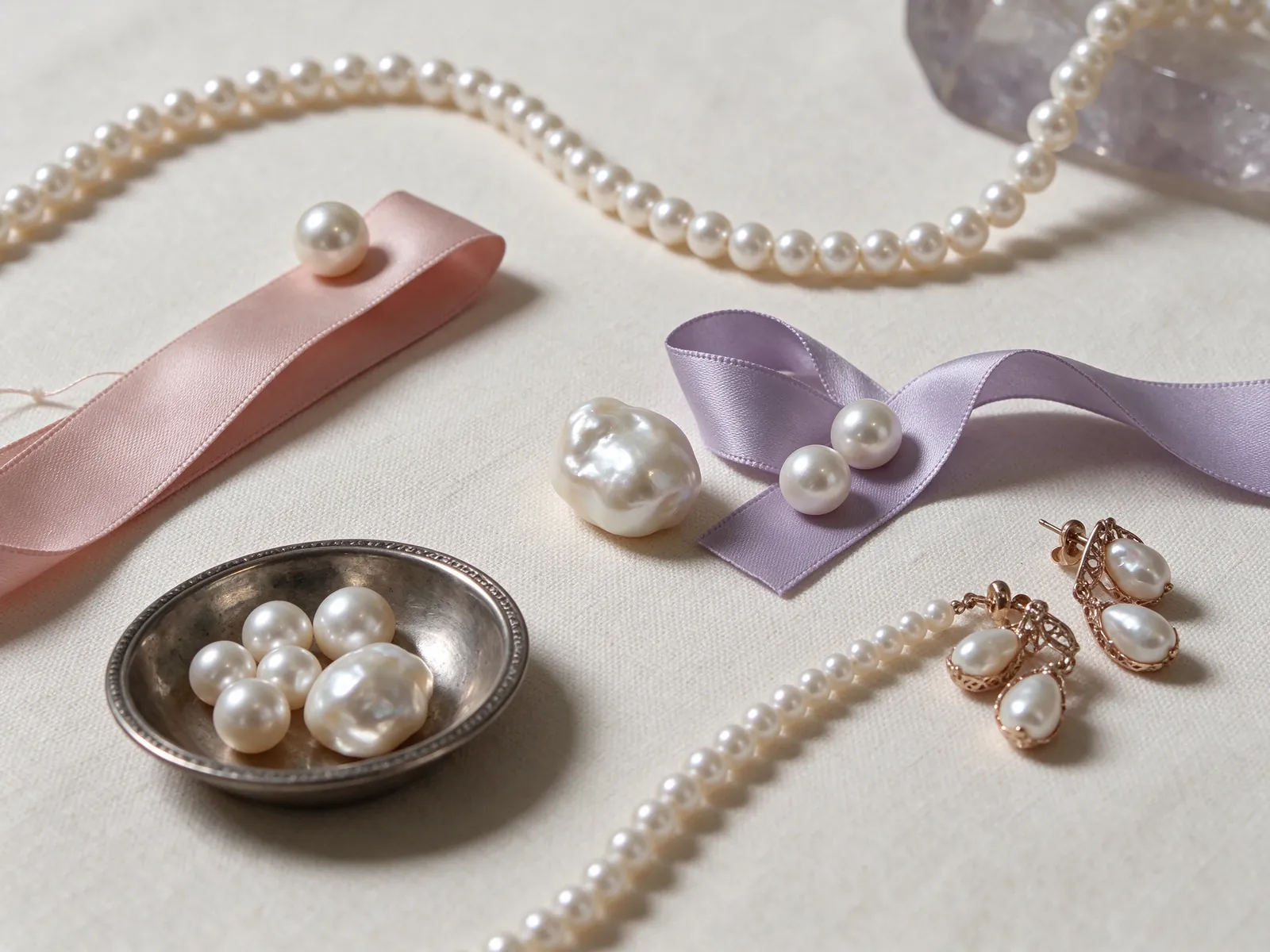
A metal border can blend with the pearl's appearance or emphasize its outline through contrast. Use the 18K gold pearl ring topic to think through that styling choice, then compare the proposed color beside your regular watch or earrings. White, yellow and rose-colored metal appearances are not pearl identity clues. Choose the visual relationship you enjoy without treating it as evidence of origin or quality.
A platinum pearl ring offers another metal topic for comparison. For a clear material discussion, the names are 18K 750 white gold, 18K 750 yellow gold, 18K 750 rose gold, PT950 platinum and PT900 platinum. Your preferred metal is only one part of a ring decision. Compare the metal color with the face outline and fitting comfort while assessing the pearl's identity and mounting details separately.
Check clearance before wearing a second ring alongside it
If you want a stack, examine whether the other ring touches the pearl or pushes into its surround. Bend the finger gently and check again; a still photograph may hide contact that appears during movement. Wearing the second ring on a neighboring finger can provide a similar visual rhythm, but check both fingers together. Good-looking placement and comfortable, non-contact placement are separate considerations.
Build an outfit around the ring's visual emphasis
For work, start with the hand positions you use most. Try a normal typing posture or handle a document while fitting, then judge whether the ring gets in the way. A prominent pearl face can supply the main jewelry accent without several other large rings. Knit sleeves need their own contact check, even when the ring looks smooth and low in a photograph.
For a dinner or evening event, simple fabric near the wrist can leave the face visually distinct. Matching the pearl exactly to the clothing is not necessary; decide whether the contrast feels balanced under the lighting you expect. Pale, dark and warm fabrics frame the ring differently. Bright indoor lighting can also change the impression of overtone, so do not make the entire styling decision from a studio image.
Compare with a familiar outfit before adding more accessories
Choose an outfit you wear regularly and keep your usual watch or earrings in the comparison. Look at the whole silhouette first, then the hand. Decide whether the ring should stand alone or quietly echo another piece. A ring selected for a specific occasion may be exactly what you want, but that does not mean its proportions and setting will suit every part of your daily routine.
Make care part of the decision rather than an afterthought
According to GIA, pearl has a Mohs hardness of 2.5. Avoiding abrasive contact is therefore an important consideration, but hardness is not a guarantee against impacts. Remove the ring before using cleaning chemicals, playing sports or lifting heavy items. Keep perfume and hair spray away from the pearl. After wearing, wipe it with a very soft clean cloth and store it separately from harder jewelry that might rub against it.
Do not use ultrasonic or steam cleaners on pearls. If the face becomes loose or the edge looks unfamiliar, stop wearing the ring and have the condition assessed instead of levering the setting or applying glue at home. Care should account for the actual mounting. Instructions intended for a strung pearl necklace should not simply be transferred to a pearl ring with different contact points.
Prepare specific questions that connect preference and practicality
Explain which finger you plan to use, your preferred outline, everyday sleeves and any rings you want to wear nearby. Ask about the actual pearl description, visible surface condition, fitting and mounting care. Those questions are more useful than seeking a universally best ring. An inspiration photo can show a style preference, but it cannot establish the dimensions, pearl identity or price of the ring you eventually consider.
For a general discussion of mabé pearl ring selection, contact Flint Jewelry on WhatsApp at +85260106207. Describe your preferred finger, everyday sleeves and styling direction to organize the questions about proportions, fitting and care that are most relevant to you.
| Decision area | Visual check | Movement check | Outfit consideration | Useful question |
|---|---|---|---|---|
| Name and pearl identity | Distinguish half-round shape from identification | Fitting cannot establish pearl identity | Begin with the silhouette you want | What describes this particular pearl? |
| Face proportions | Look at front width and side profile | Rest fingers together naturally | View the face beside a familiar cuff | How does the border affect the outline? |
| Luster and surface | Compare bright and shaded areas in similar light | View again at normal hand distance | Check color beside fabric and metal | What is the condition of this visible mark? |
| Setting and size | Examine shoulders, underside and edges | Bend, write and hold a cup handle | Prevent another ring from touching the pearl | When and where does pressure or rotation occur? |
| Care routine | Understand cleaning for the mounting | Remove before chemicals or heavy work | Store away from rubbing contact | Who should assess a loose face? |
Pearl knowledge and authoritative references
GIA assigns pearl a Mohs hardness of 2.5. Use this as a reason to avoid abrasive contact, not as a guarantee of impact resistance or years of wear.
Read the reference for this factFrequently asked questions
Are mabé pearl ring and mabe pearl ring different types?
They are spelling variants of the name, not separate types on that basis. A listing still needs clear information about the particular pearl. Adding half-round to the phrase describes an outline and does not by itself establish structural identity.
Can I use the size of my narrow band for a broad pearl ring?
It is a starting point, not a complete fit assessment. A different band width, face and weight distribution may feel different. Check passage over the knuckle, stability at the finger base and comfort while bending with the actual design.
Is a bright photograph enough to compare pearl luster?
No. Lighting and exposure can change the impression. Rotate the ring in comparable light and examine both reflections and shaded areas. Also look at the visible surface close up and at normal wearing distance rather than relying on one highlight.
Can I stack a pearl ring with my everyday ring?
Check the actual clearance first. The other ring should not touch the pearl or push against its surround as your finger bends. A neighboring finger is another styling option, but examine contact when both fingers come together rather than assuming a photograph proves comfort.
Does Mohs hardness 2.5 tell me how long a pearl ring will last?
No. GIA's hardness figure supports advice about avoiding scratches; it is not a lifespan or impact-resistance promise. Daily contact, storage and the mounting all matter to care. Avoid ultrasonic and steam cleaners, and seek assessment if the face becomes loose.
Updated: