How can you balance long pearl dangle earrings, including pearl chain earrings and other dangling pearl earrings, with your hairstyle and neckline?
Build the comparison around an outfit you actually wear. Check where the lowest point sits relative to your jaw, shoulder and neckline, rather than choosing from a close-up of the earrings alone. A buttoned collar, a thick knit and an open neckline leave different amounts of room. Sit as well as stand: clothing can shift upward, changing the space around a pearl that looked clear a moment earlier. The right balance should suit ordinary posture, not just a carefully posed photograph.
Think about the moving outline as well as the still one. Dangling pearl earrings can swing toward the side of a collar when you turn or speak. If that contact becomes distracting, consider a different resting point or compare pearl stud earrings for a placement closer to the ear. A longer design is one styling direction, not an obligation to work around fabric throughout the day. Personal preference and usable clearance should guide the decision together.
When trying long pearl dangle earrings, how can you check whether pearl chain earrings and other dangling pearl earrings touch your hair or collar?
Start with your everyday hair arrangement. Face forward, turn slowly to each side and look down at an object in your hands. Watch whether a strand enters a connection, the pearl brushes an edge of fabric or hair hides the fastening. If something catches, let the motion stop and separate the strand gently. Do not pull the descending element to drag it out of the hair.
Understand what a chain, a dangle and a pearl outline each describe
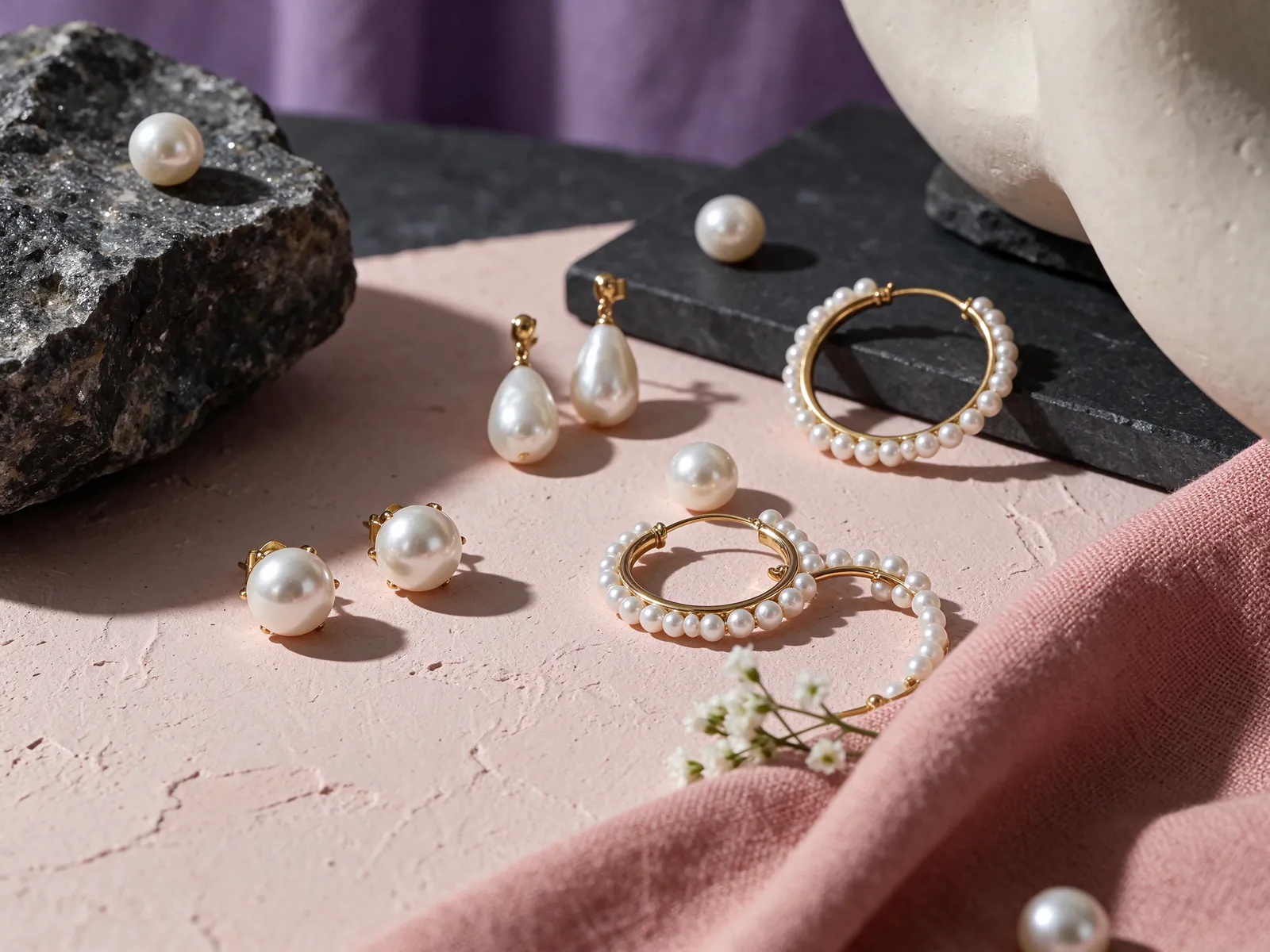
These terms answer different questions. Dangle refers to a hanging design and its motion; it does not specify a teardrop pearl. Chain refers to the construction that joins elements. Pearl shape is a separate visual choice, whether the outline is round, elongated or irregular. When looking at pearl chain earrings, identify the actual links and joining points. A slender fixed metal curve should not be assumed to have the construction or movement of a linked chain.
Use pearl drop earrings as another comparison for how a pearl sits below the lobe, but do not rely on the style name to tell you the complete length. Meanwhile, pearl hoop earrings offer a different arrangement of space, with a circular outline rather than a primarily descending line. Describe the effect you want in practical terms: an exposed connection, a pearl close to the ear, or a line that moves beside your hair. That description makes a styling conversation more precise.
Inspect the connections without guessing pearl identity
Look at where the ear fitting joins the hanging element and where the pearl is attached. A close view explains structure, while a wearing view can show how it moves. Consider both when they are available. A pearl's photographed outline or color cannot tell you its species, origin, natural-versus-cultured identity or whether a certificate accompanies the piece.
Compare the complete drop instead of an isolated chain measurement
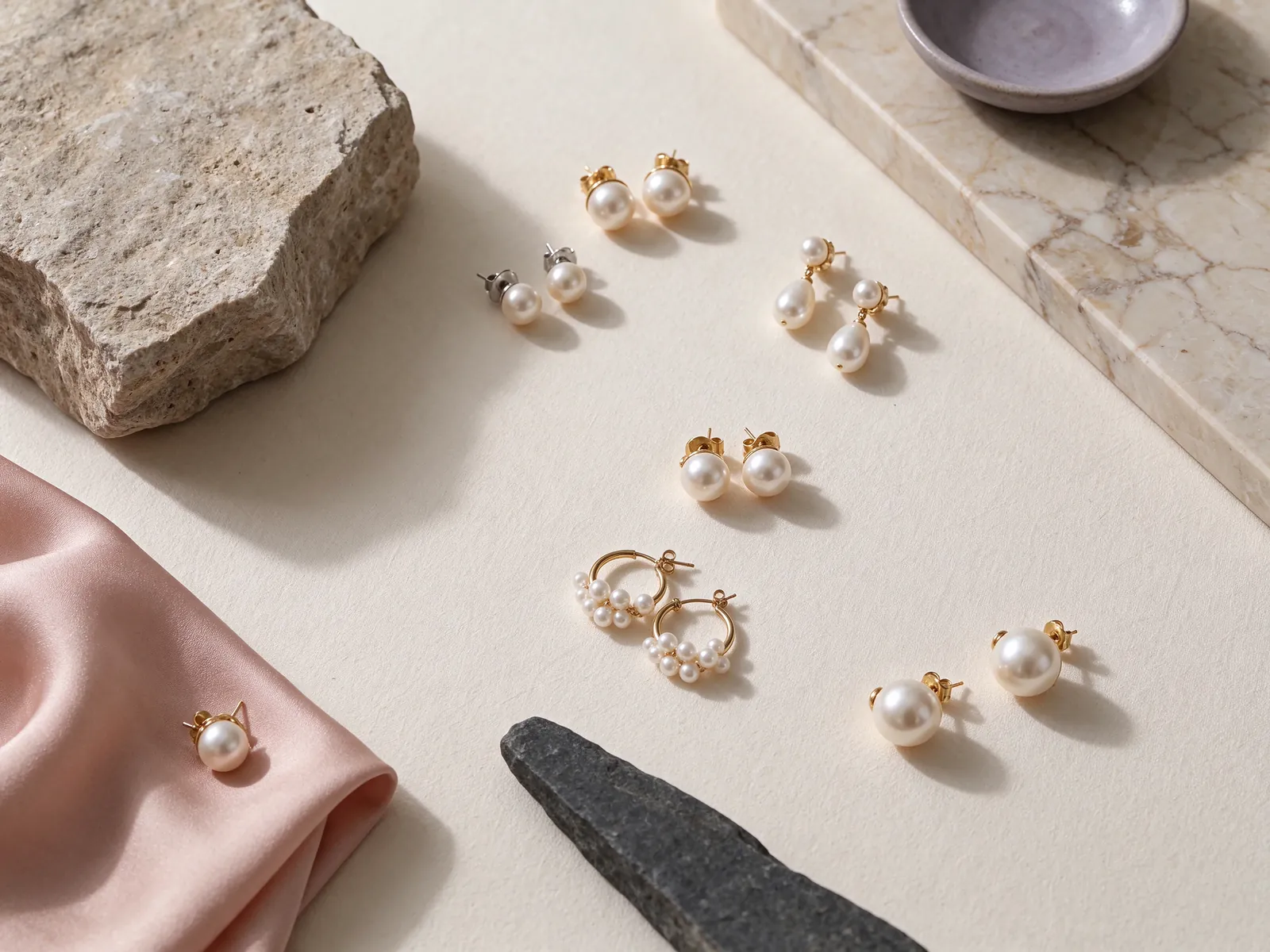
A listed length is useful only when you know its endpoints. Ask whether it describes the connecting chain or the full distance from the ear fitting to the lowest point. The pearl and the fitting also influence the finished position. A chain measurement by itself cannot establish whether the earring reaches your jaw or approaches a collar. If you own a pair with a comfortable drop, use its actual position when worn as a reference for discussing a longer or shorter line.
Keep comparison photos consistent. Let your head rest naturally, use front and side views, and try both exposed ears and your usual hair arrangement. The front view shows proportion beside the face; the side view reveals the relationship to the neck and clothing. Decide whether you prefer seeing the full connection or a pearl that appears briefly through the hair. Photographs help compare silhouettes, but they should not be used to estimate an unlisted pearl diameter, weight or metal quantity.
Choose a visual balance rather than following a face-shape formula
A descending line gives a vertical direction, but its effect also depends on the pearl's visual presence and nearby details. Try reducing bulky hair or collar decoration before deciding that you need more length. Compare different resting points with the same outfit. A face-shape suggestion can inspire a trial, but your own preferred result should settle the choice.
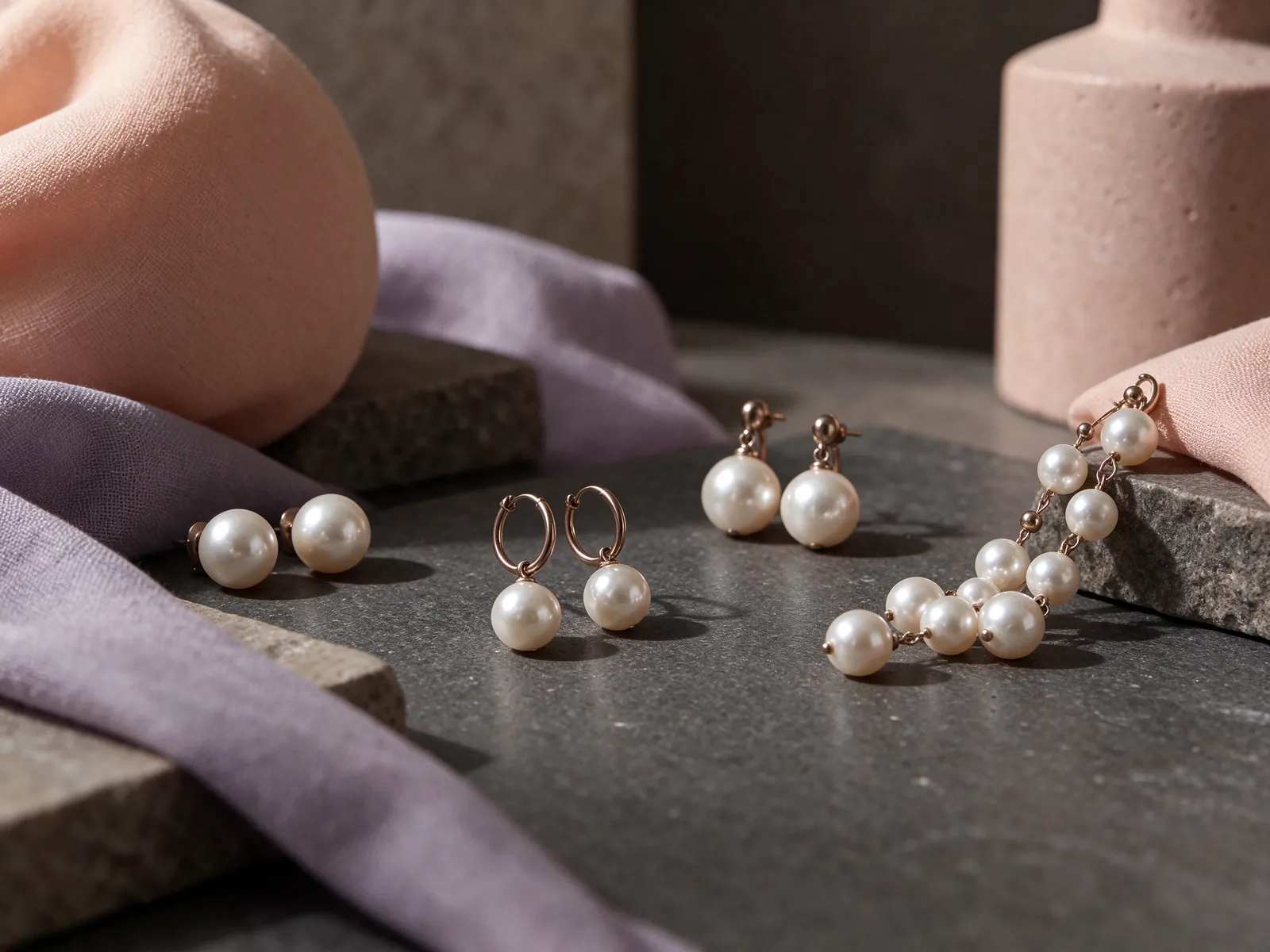
Make the fitting and wearing feel part of the selection
A fine-looking connection does not establish how an earring will feel on your ear. During a trial, notice lobe pulling, forward tipping and whether the orientation changes when you move. Consider the pearl placement, connecting elements and fastening together. Your response after a natural conversation or head turn matters more than the first still impression. If you experience pain or irritation, stop wearing the earrings instead of accepting discomfort for the sake of the silhouette.
For pearl hook earrings, understand how the hook passes through the piercing and how any closure or retaining part is used. If your ears are not pierced, clip-on pearl earrings need their own assessment of placement and pressure. Similar descending outlines do not mean identical fitting routines. Think about whether you can put the piece on and remove it easily when your hairstyle or outerwear is close to the ear, without pulling on the hanging elements.
Support the ear fitting when opening or closing it
Handle the fastening at the ear rather than treating the pearl or chain as a grip. Gently move obscuring hair aside before operating it. Check for a visibly loose connection or a part that has become distorted. If the structure looks wrong, set the earrings aside for appropriate inspection; pulling harder or bending a connection by force is not a sensible way to restore its position.
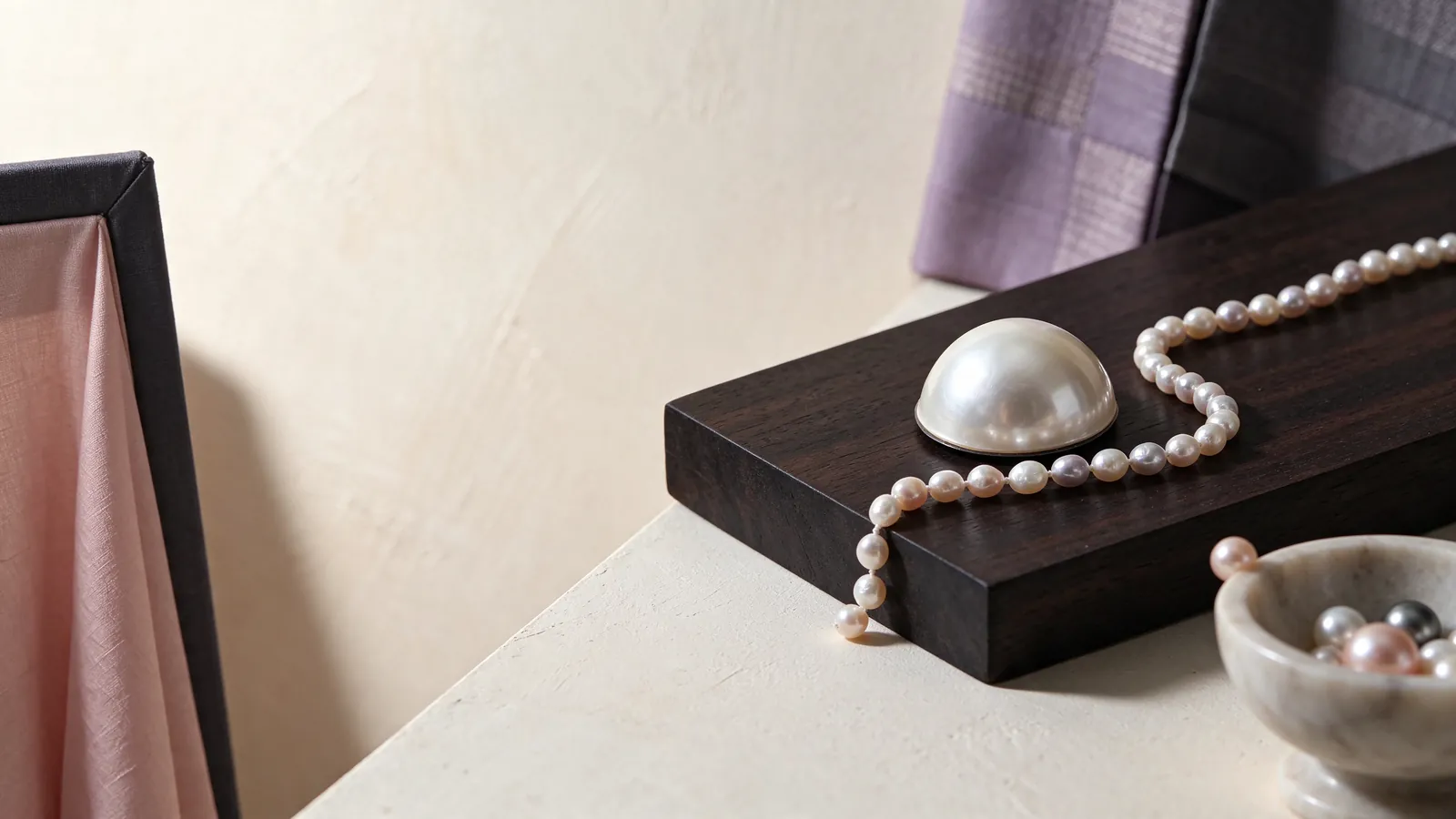
Style around real clothing details, from everyday tops to formal events
An uncomplicated neckline can make a long line easier to see. A ruffle, tie or embroidered collar may place another focal point directly beside it. If you add a necklace, decide where you want attention to gather: near the face or on the chest. There is no universal rule that requires long earrings to be paired with a particular necklace length. Look at the combined amount of detail and whether the earrings still show the outline you intended.
For a wedding or an evening occasion, include the planned hair, shoulder embellishments and any wrap in the trial. An updo reveals the connection, while loose hair can create intermittent glimpses. A veil or fine fabric may move toward the earrings when you sit or lean in to speak. Consider these ordinary actions before committing to the look. A successful outfit should let you participate comfortably, not keep you occupied with protecting the jewelry from every nearby fold.
Settle scarves and pull-over layers before adding earrings
Even soft fabric can enter a joining point. Remove earrings before pulling clothing over your head or rearranging a scarf, then put them on once the neckline and hair are in place. Turn to check the edge of a wrap in motion. If you expect frequent adjustments, a different drop position may suit the outfit better than continuously holding the earrings aside.
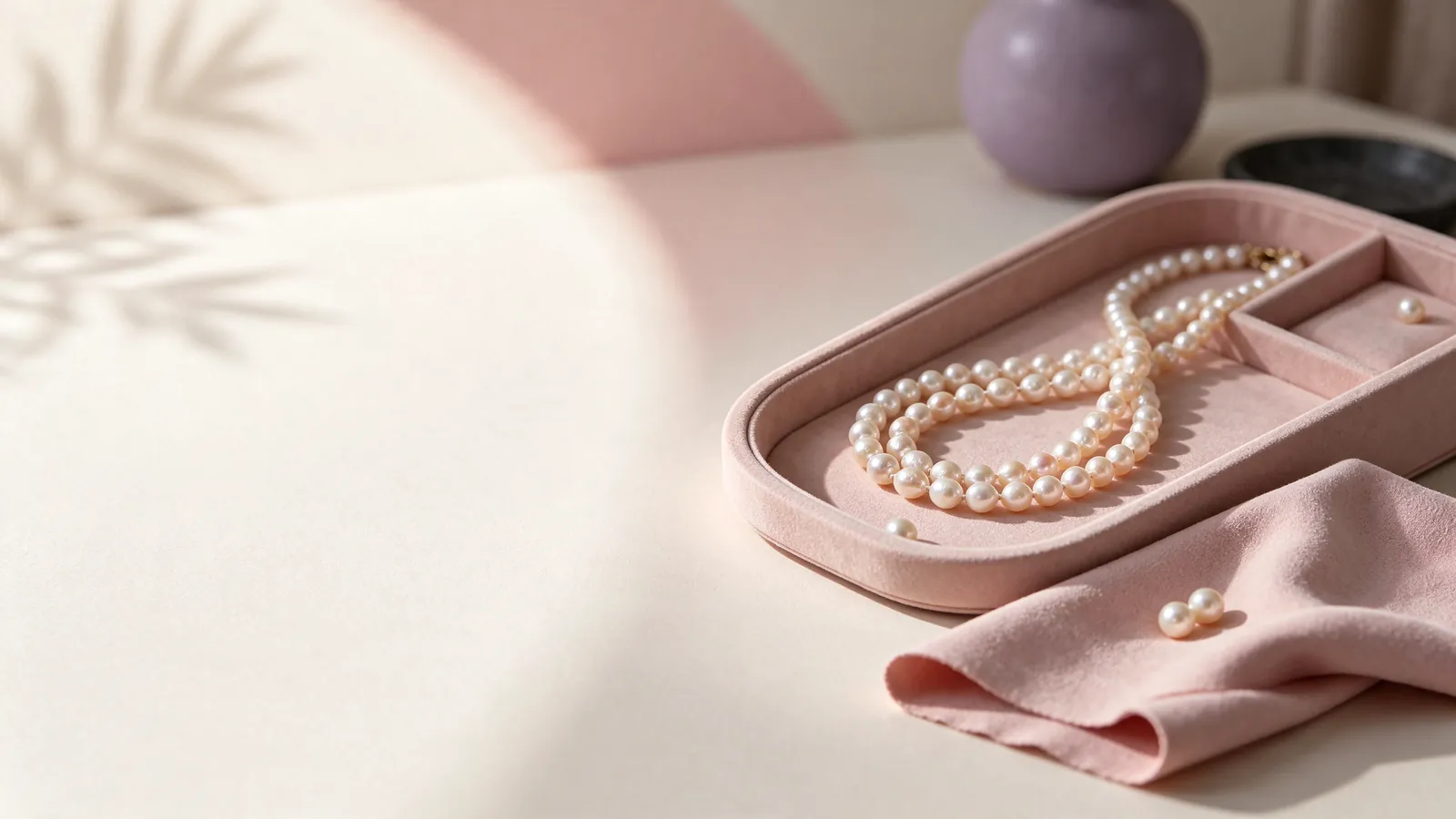
Evaluate pearl quality and pairing alongside the long design
GIA identifies seven pearl value factors: size, shape, color, luster, surface quality, nacre quality and matching. An eye-catching chain or other connection should not distract from evaluating the pearls. Compare the pair in the same light, considering color and luster as well as the outline you prefer. Large size, roundness or an especially bright photograph does not replace the broader quality assessment. The design and the pearls contribute different things to the finished impression.
Separate the pairing of the pearls from the way the whole earrings sit. First compare the pearls side by side; then check the resting points and orientation while wearing the pair. A tilted fitting, caught hair or fabric contact can change one side's angle without establishing a mismatch between the pearls. Color and shape also cannot establish origin, natural-versus-cultured identity or certification. Use information about the particular piece for those questions rather than inferring it from appearance.
Use comparable light and angles for a fair visual check
Camera angles and strong illumination can change the appearance of reflections. Keep both pearls near the same background, then turn them gently to observe surface appearance and luster. Because a dangling design changes a pearl's direction during movement, look at more than a still front view. An editorial styling image provides an idea of the silhouette, not evidence of the pearl's identity.
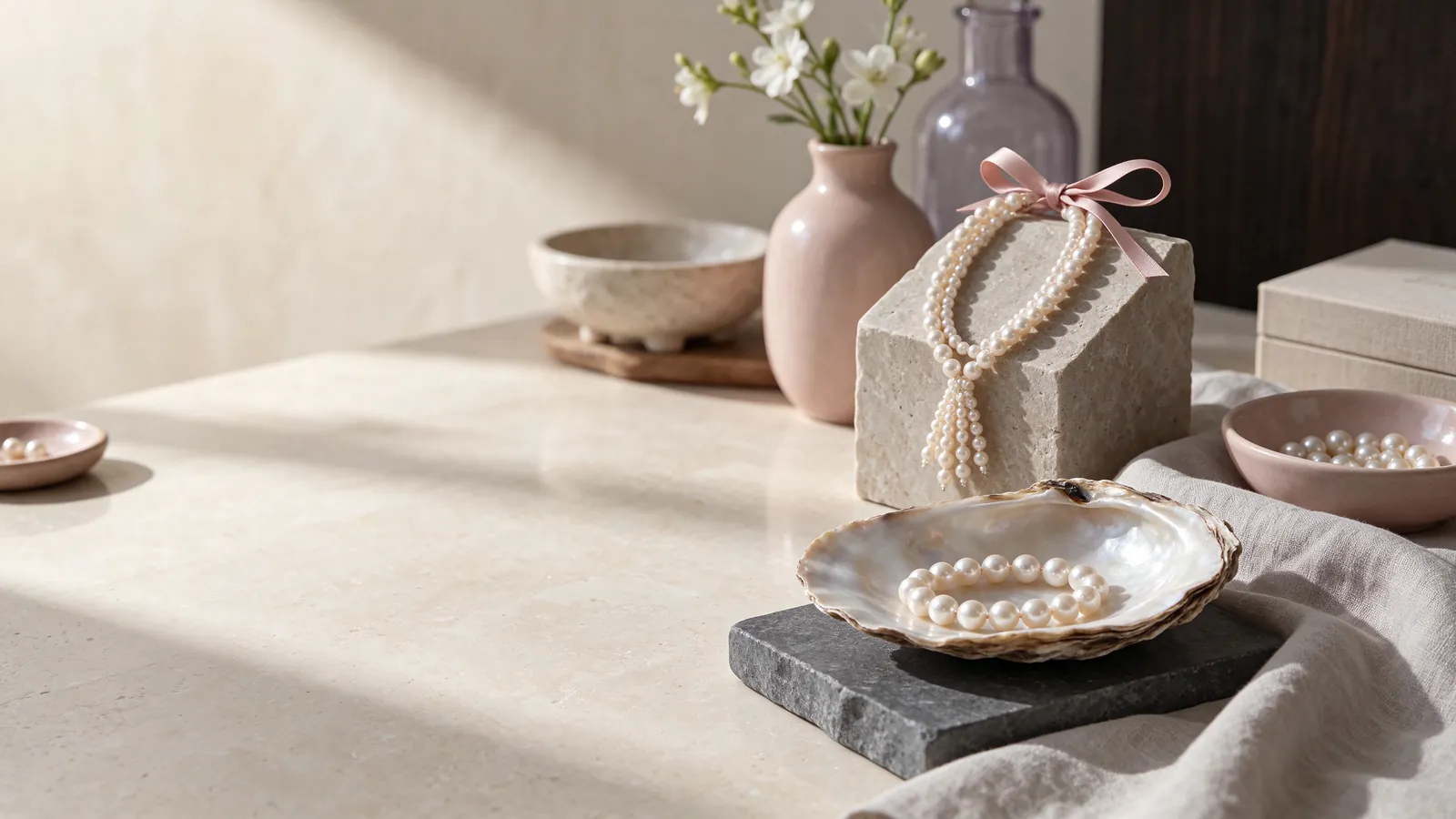
Care for moving connections without stressing the pearl surface
GIA ranks pearl at 2.5 on the Mohs hardness scale and states that ultrasonic and steam cleaners should never be used for pearls. For a long earring, gentle care must also avoid tension at the connections. Use a very soft, clean cloth after wearing, supporting the pearl and connecting parts as you wipe. Do not pull the pearl to make a chain lie straight, and keep the pair from rubbing against harder jewelry.
Apply perfume and hair spray before putting the earrings on, and avoid exposing pearls to acids or excessive heat. Store each earring separately, allowing the connecting elements to rest without becoming wound into the other fastening. When a tangle appears, place the earrings on a soft surface and identify the crossing parts before trying to separate them. Check for trapped hair after wearing and look at the fastening before the next use, rather than discovering a problem while pulling the piece free.
Make a gift discussion specific to the recipient's routine
Ask about piercings, familiar ear fittings, usual hairstyle and regularly worn collars or scarves. Those details help explain whether the recipient prefers an exposed long line or a pearl glimpsed beside the hair. Discuss practical clearance and handling with Flint Jewelry alongside the visual direction. A considered gift should reflect how the person dresses and uses jewelry, not only the impression when the box is opened. Share your everyday hairstyle and neckline with Flint Jewelry on WhatsApp at +85260106207 to discuss your earring styling direction.
| Check | How to compare | Why it matters |
|---|---|---|
| Complete drop | Locate the lowest point beside jaw and collar | Chain length alone may not describe the worn position |
| Hair and fabric | Turn, look down and sit in the intended outfit | Static clearance can change during movement |
| Construction | Identify fixed parts and moving connections | A long metal outline is not necessarily a chain |
| Ear fitting | Assess handling, tilt and personal wearing feel | Similar outlines can use different fittings |
| Pearl matching | Compare color, luster and outline in similar light | Evaluate the pearls separately from worn angle |
Pearl knowledge and authoritative references
GIA states that pearl has a Mohs hardness of 2.5 and should never be cleaned using ultrasonic or steam cleaners. Long earrings also require gentle handling of their connections.
Read the reference for this factFrequently asked questions
Can a round pearl be used in long dangle earrings?
Yes. Dangle describes hanging movement rather than a teardrop shape. Consider the pearl outline separately from the connection and the complete descending silhouette.
Why does the same pair look different with an open neckline and a high collar?
The clothing changes the space around the lowest point and may overlap the connection. Try the actual top while standing and sitting, then check the side of the collar during a head turn.
Can a thin-looking chain tell me whether earrings will feel light?
No. Appearance alone does not establish weight or your comfort. Consider the pearl, connections and fitting together, and pay attention to pulling or tipping during normal movement.
Should I leave long earrings on while adjusting a scarf?
Remove them before rearranging fabric close to the ear. Put them back on after the scarf and hair are settled, then check whether the fabric edge approaches the connections as you turn.
How should I separate two tangled long earrings?
Lay them on a soft surface and identify the crossing connections, fastenings or hair before gently separating them. Do not pull opposite ends. Set aside a piece with a distorted or loose connection for inspection.
Updated: