
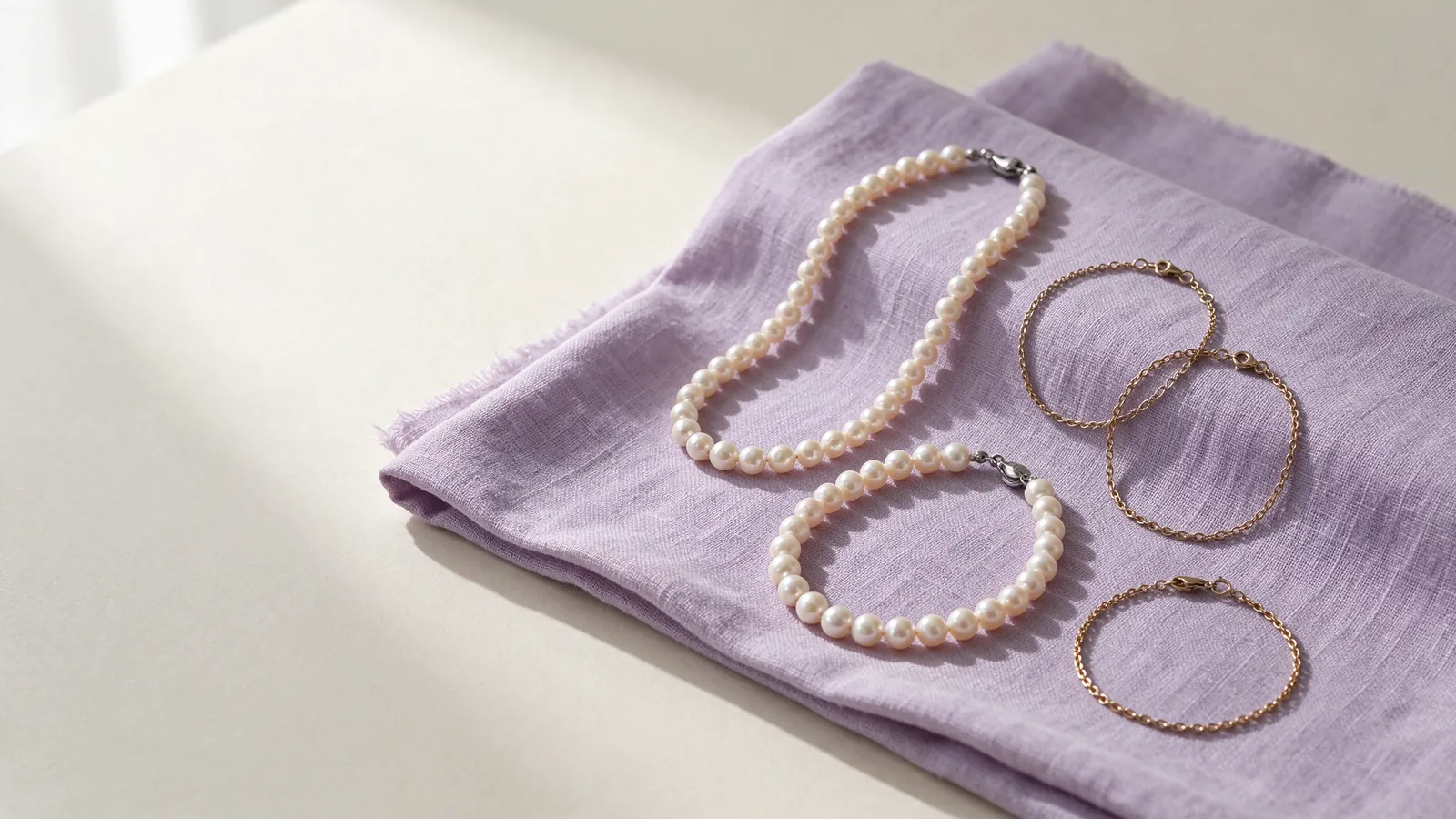
A comfortable pearl strand bracelet: fitting a single strand pearl bracelet for a classic pearl bracelet look
Start by measuring the part of your wrist where the bracelet will sit. Keep a flexible tape close to the skin without tightening it, and write down the location as well as the measurement. Do not turn that circumference straight into a finished bracelet length. Pearls take up space inside the curve, and clasp construction also influences fit. Use the pearl bracelet size guide to understand the measurement step, then treat trying the bracelet on as a separate part of choosing.
Check a single strand pearl bracelet during the movements you make most often: reaching for a bag, using a keyboard and bending the wrist. Some movement may feel pleasant, while repeated sliding toward the palm may interrupt your routine. Notice whether you keep repositioning it or whether the pearls press under your arm on a desk. Bring a typical long-sleeved shirt into the trial, because a cuff can change a fit that seemed comfortable on an uncovered wrist.
Checking the clasp of a pearl strand bracelet: practical details for a single strand pearl bracelet with a classic pearl bracelet feel
Try fastening the clasp yourself with the hand you normally use. Confirm that you understand how it opens, where to hold it and how the parts meet before applying force. Then turn your wrist to see how the clasp feels underneath, not just how it looks on top. If it is difficult, distinguish a grip problem from an alignment problem or uncomfortable pressure. Each observation tells you something different about practical handling.
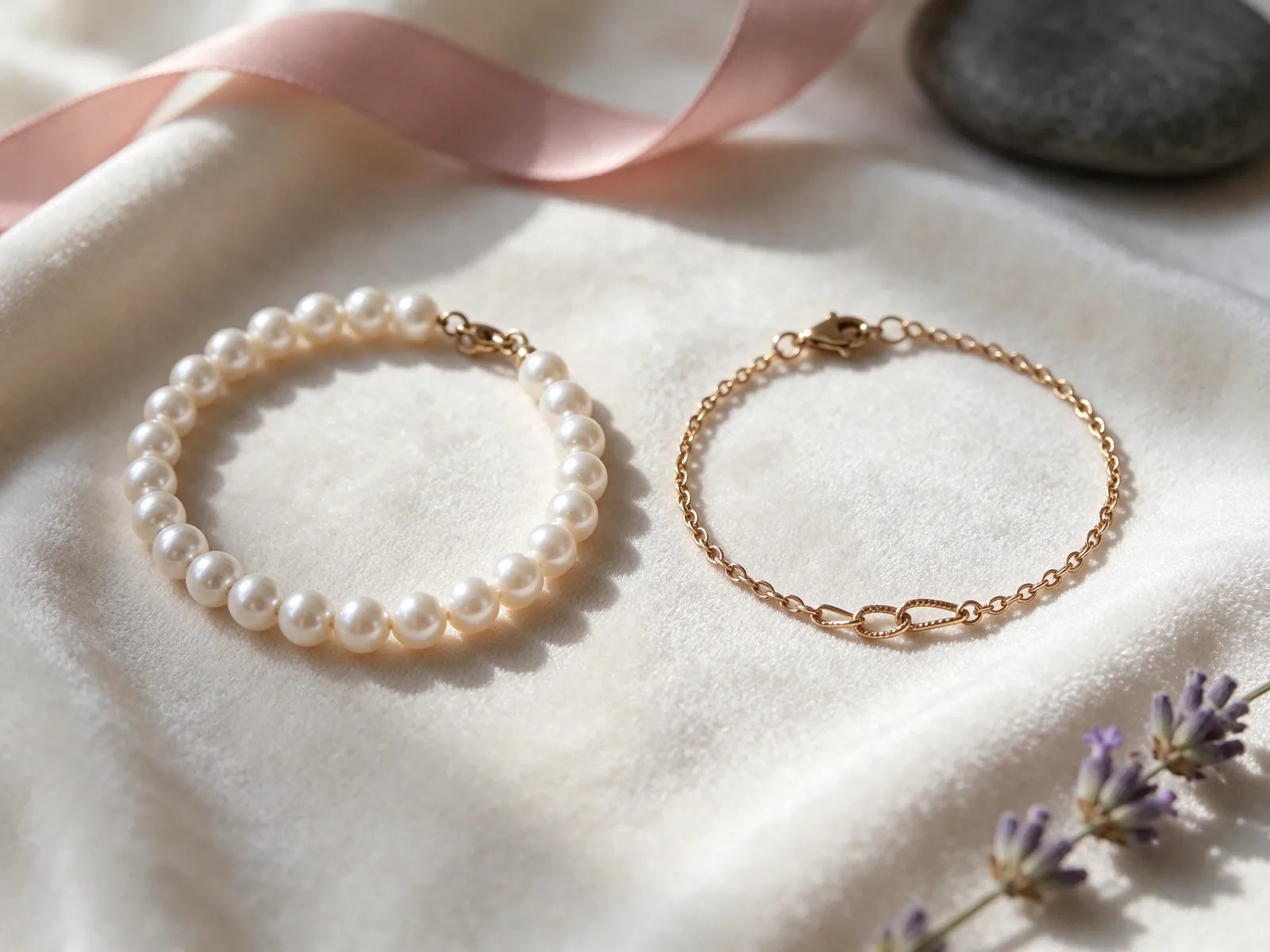
Assess the row as a complete composition
A classic pearl bracelet is often appreciated as one continuous line, so begin with the entire strand at a normal viewing distance. After that, look at neighboring pearls and the transitions between them. Does the luster feel coherent? Do color differences create the effect you want? Is the outline steady or varied? This approach keeps the most eye-catching pearl from dominating a decision about a bracelet whose appearance depends on the whole row.
GIA uses seven pearl quality factors: size, shape, color, luster, surface quality, nacre quality and matching. Matching gives you a useful way to think about relationships within a strand, but it does not replace the other factors or require you to prefer identical-looking pearls. A pearl bracelet guide provides a broader view of style options. When focusing on a single row, return to how the combined appearance sits around your wrist rather than relying on a grade word alone.
Use comparable light before comparing details
Place alternatives in similar light and against a similar background so you are not comparing one bright reflection with one shaded view. Camera exposure, angle and screen settings can change the impression of luster or color in photographs. Images can help communicate a style preference, but they do not create a precise quality ranking when taken under different conditions. Check the full row again after examining details to keep the everyday visual effect in perspective.
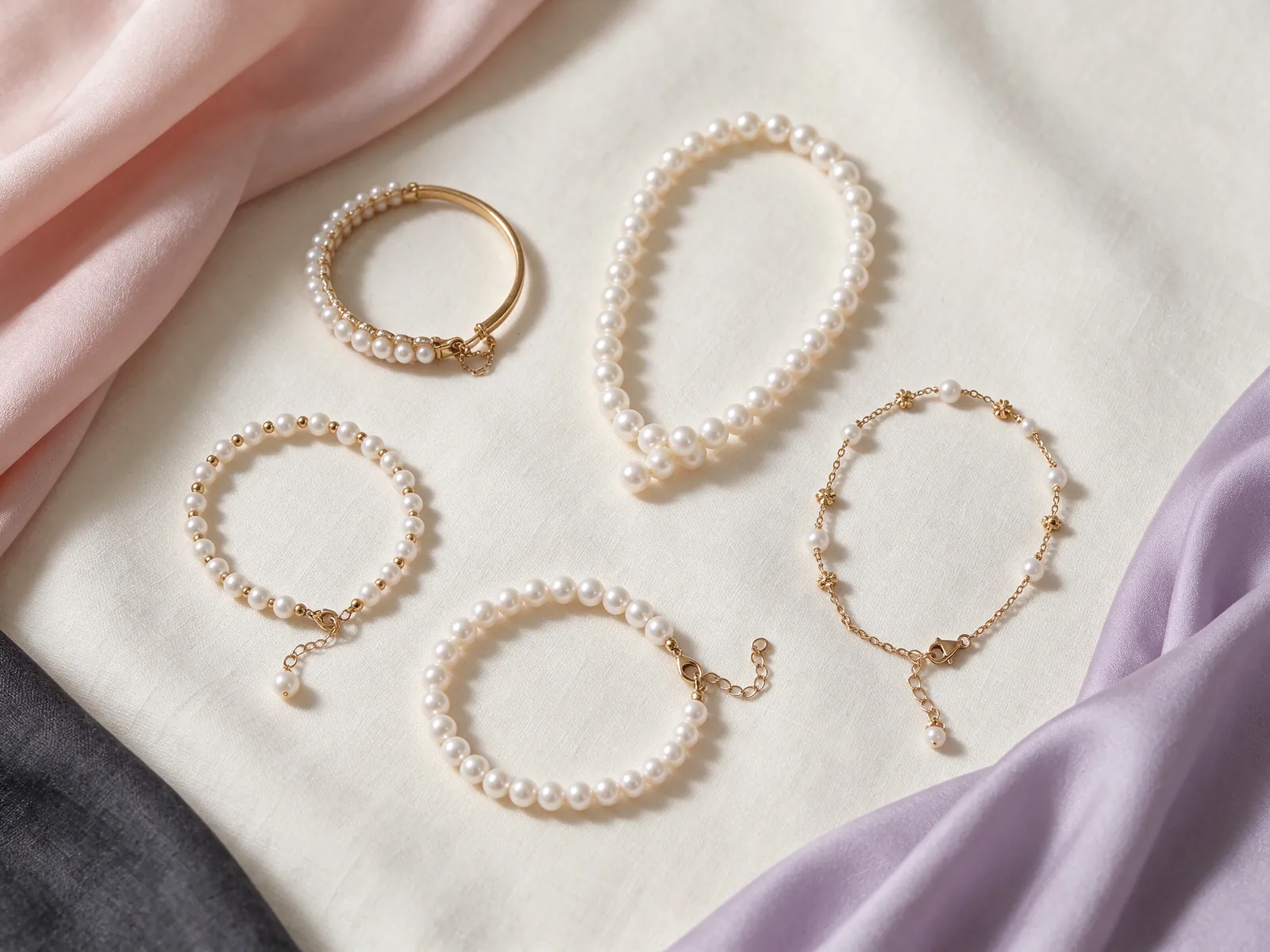
Let shape support the mood you want to wear
If you want an understated line, a relatively rounded outline may give you the ordered rhythm you enjoy. If you want more variation, irregular contours can introduce changes in direction and height along the strand. Neither shape is automatically the right choice for everyone. Think about whether the bracelet should quietly finish an outfit or act as a focal detail, then look at it from several wrist angles rather than only laid flat.
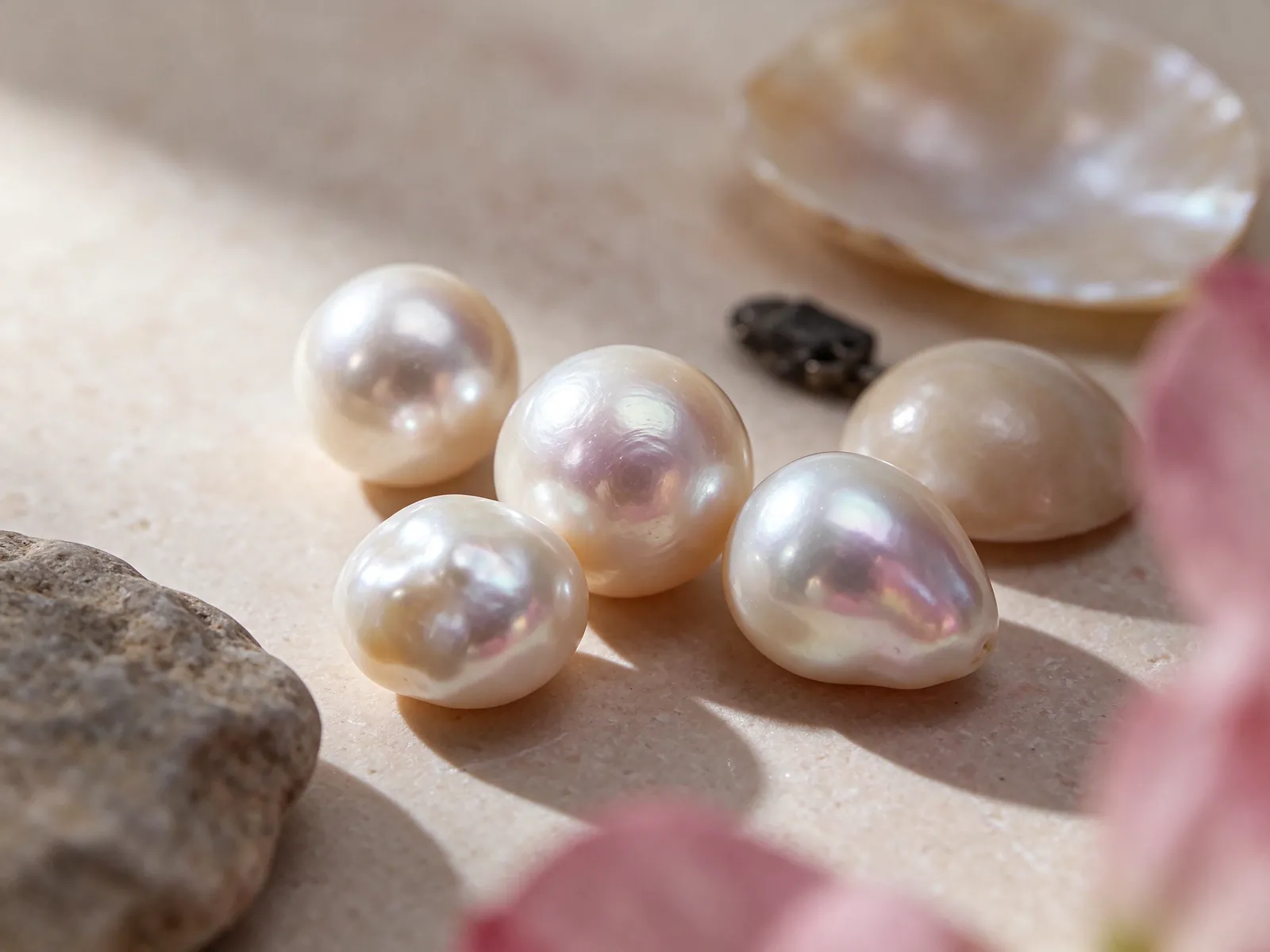
For a baroque pearl bracelet, examine how the individual contours turn when your arm moves. A projecting outline may have a strong visual presence while also contacting a sleeve differently. Appearance and pearl identity are separate questions: shape or color alone cannot establish origin or whether a pearl is natural or cultured. Choose the rhythm you like by looking, and use relevant documentation for identity questions instead of drawing conclusions from a photograph.
Describe the outline instead of relying on a label
Words such as timeless and unusual can mean different things to different people. A more useful description might be a steady silhouette, softly changing colors or a visibly irregular sequence. Look near the clasp as well as across the central portion to see whether the arrangement feels balanced. These concrete observations make it easier to compare choices consistently and explain the visual result you want in a design conversation.
Build the outfit around real sleeve and watch contact
Test the bracelet with a buttoned cuff if that is how you normally dress. A strand that is visible only with the sleeve pushed up may not give you the effect you expect during the day. With knitwear, pay attention to connections near the clasp that could catch the fabric. Short sleeves show more of the row, but long sleeves can reveal it intermittently without requiring you to move the bracelet down toward your hand.
Consider wearing a watch on the opposite wrist to reduce contact between the case and the pearls. If you want both together, check them while moving, carrying a bag and resting your hand on a work surface. A layered combination can look balanced while still rubbing in use. Let your habits guide the arrangement rather than assuming that the most attractive still photo will be the easiest combination to wear throughout a typical day.
Choose one leading detail for a clear wrist composition
With busy prints, a continuous strand can keep the wrist visually simple; with plain clothing, its contour and luster can become the main detail. Rings do not have to match every color exactly, but deciding which piece leads can prevent the combination from feeling crowded. Include your usual jacket and bag when testing the outfit. Adjusting cuffs and gripping handles reveal practical contact points that you may not notice while standing still at a mirror.
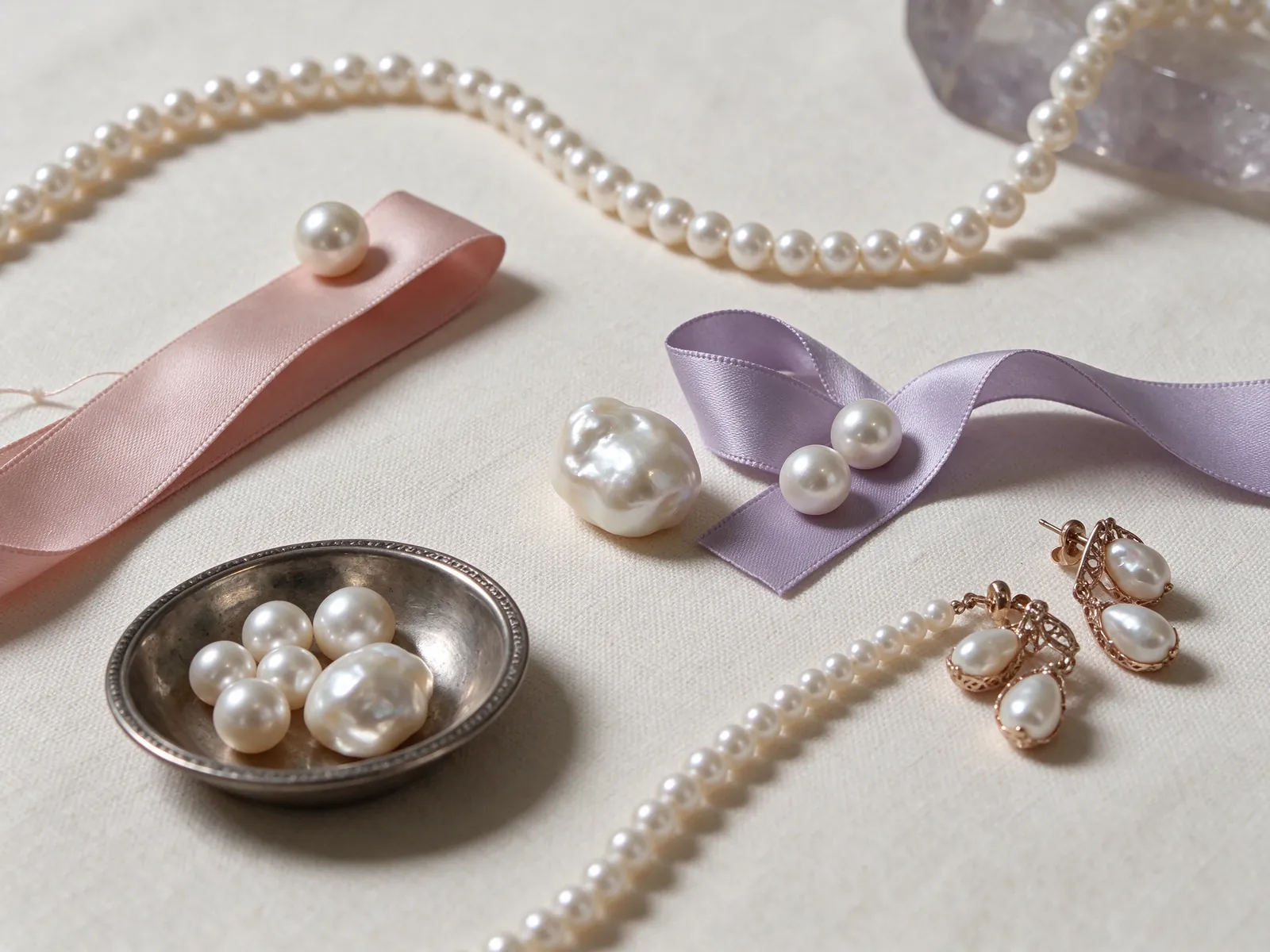
Explore width and spacing before deciding to stack
If you want more visual coverage than one row offers, compare a multi strand pearl bracelet before adding separate bracelets. A multi-row structure changes the width of the composition and the way the rows gather near the clasp. Watch whether they keep the arrangement you prefer as the wrist turns. Greater coverage is a styling choice, not proof that a bracelet is more formal, more comfortable or better suited to every occasion.
For more open space, consider the rhythm of a pearl station bracelet. For two different lines within one piece, explore a half chain pearl bracelet and observe the transition between the pearl and chain sections. Spacing, placement and balance are more useful questions than assuming that less visual bulk means easier wear. Check which section settles on top of the wrist, whether it rotates and how its connections interact with the clothing you plan to wear.
Compare structures with one repeatable test
Wear the same type of sleeve and repeat a wrist bend, a reach and a bag lift for each option. Keep separate notes for appearance and comfort: you may like a wider outline while needing more cuff clearance, or prefer a single row despite noticing more movement. Clear trade-offs are more useful than ranking each structure as simply better or worse. A single strand can remain a complete look without another piece beside it.
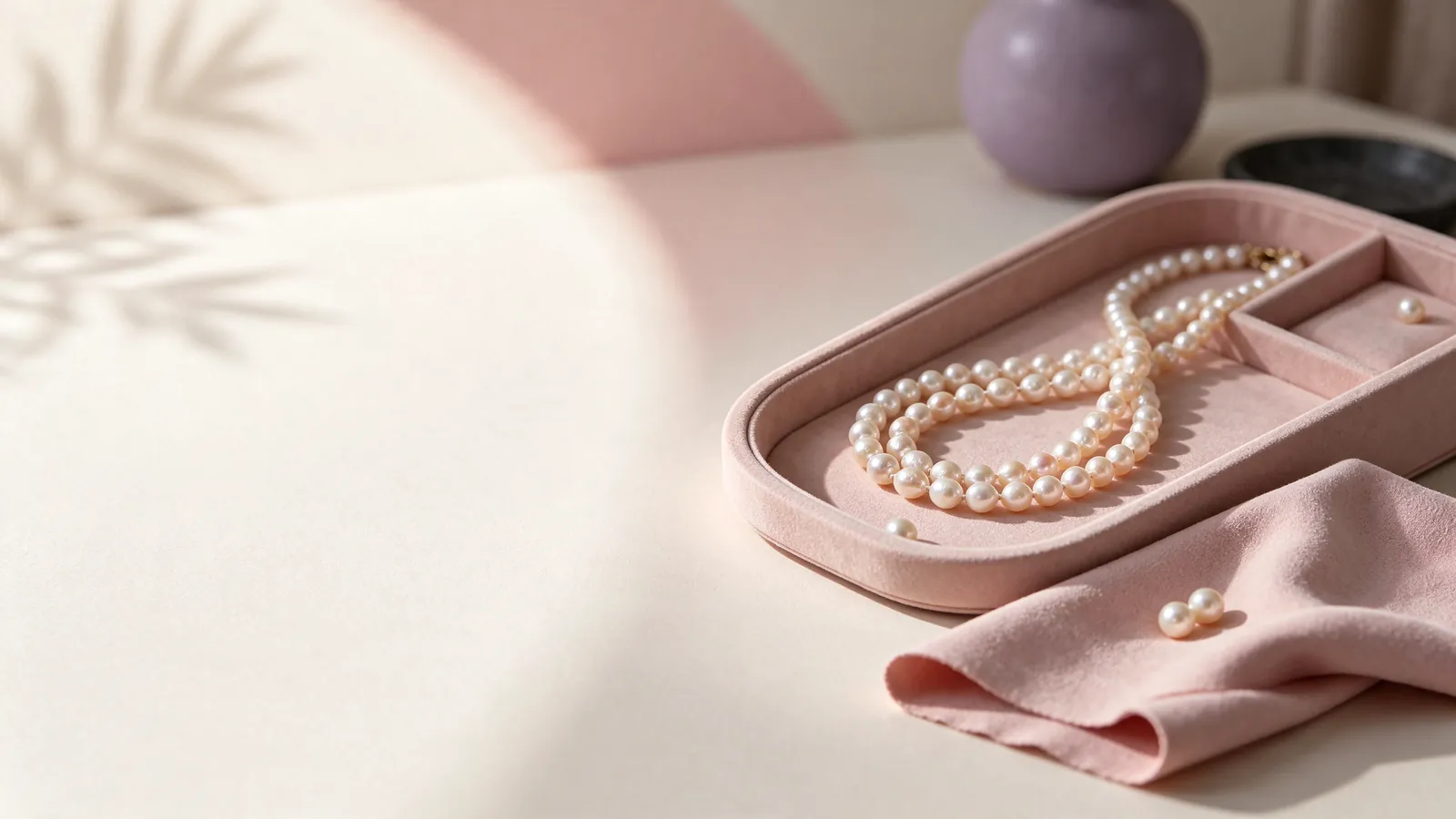
Protect the surface without overlooking the string
Pearl is listed by GIA at 2.5 on the Mohs hardness scale. This is a surface-care consideration, not a measure of how much tension a finished bracelet can tolerate. Use a very soft, clean cloth after wearing and keep the strand separate from jewelry that might scratch or rub it. Avoid acids, perfume, hair spray and excessive heat. Put the bracelet on after your grooming routine rather than exposing it while applying those products.
Pearls should never go into an ultrasonic or steam cleaner. When a strung bracelet has been cleaned with water, wait until the string is completely dry before wearing it again. Surface dryness does not tell you that the thread has dried. Also notice changes in spacing, visible fraying or looseness near the clasp. Do not pull the bracelet to prove that a connection holds; an unusual change is a reason to stop wearing it and seek an assessment.
Make storage a gentle inspection moment
Set the bracelet on a soft, stable surface and look at the clasp connections and the spaces between pearls before storing it. Avoid hanging the strand under tension to straighten it. If you see a change, note where it is and what it looks like so you can describe it clearly. The purpose is to notice differences without adding stress, not to judge hidden string condition from an attractive pearl surface or a clasp that still works.
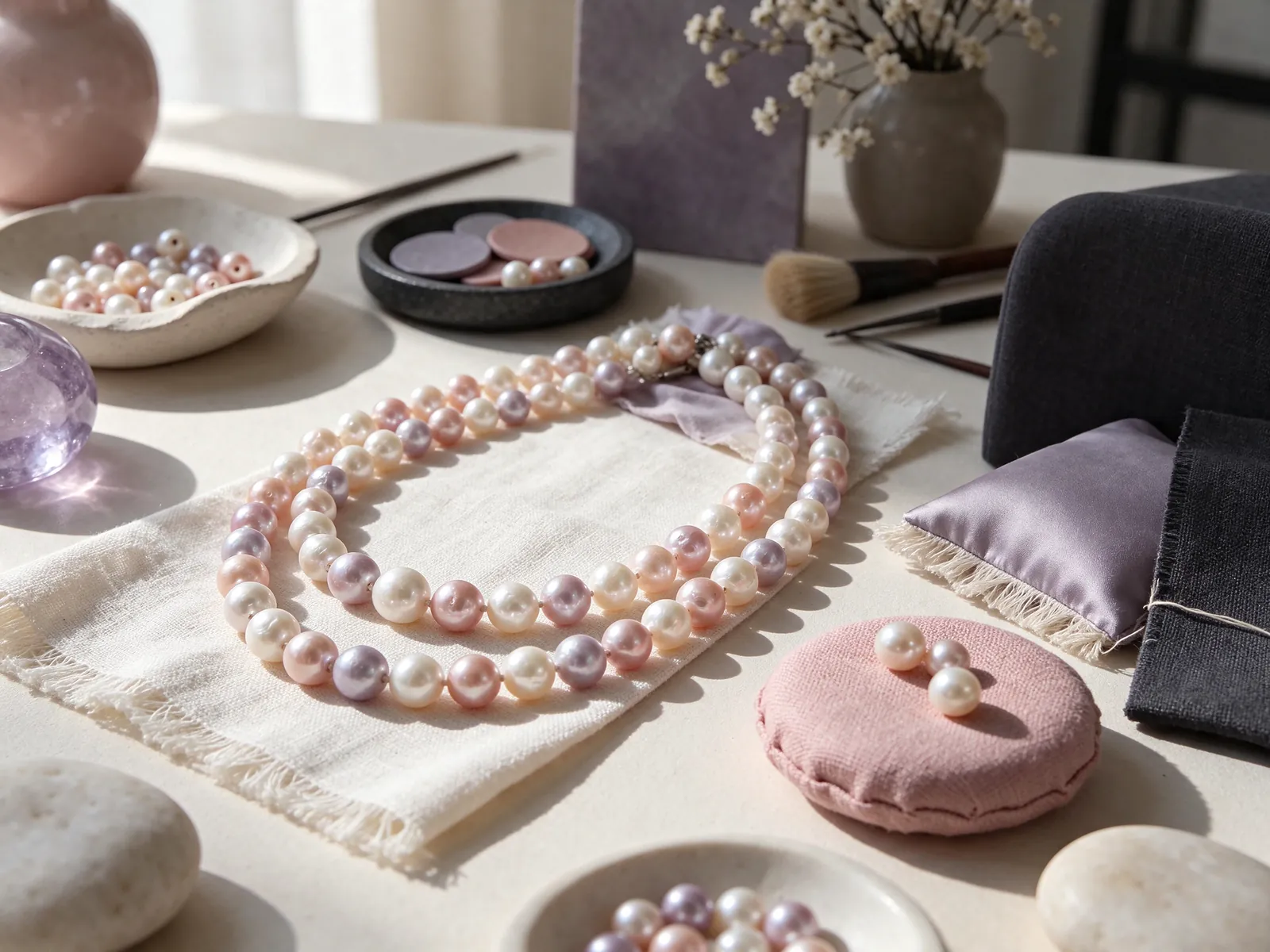
Bring a useful wearing brief to a design conversation
A practical conversation with Flint Jewelry can start with your wrist measurement, the position you measured and the fit you prefer. Add which hand you use for fastening and the sleeves you wear for work or everyday outings. If a bracelet you already own bothers you, describe the issue: sliding toward the palm, pressure against a desk or difficulty aligning the clasp. Those experiences communicate your needs more clearly than asking only for a familiar length.
Select a few priorities before a customization discussion. Easy independent fastening, a calm overall color impression and comfortable cuff clearance might matter more to you than every other visual detail. An image can show a silhouette you enjoy, but it cannot establish pearl identity or communicate the sensation you want on your wrist. Start with your intended use and preferred result, then consider details together rather than collecting unrelated features from several photographs.
Keep flexible preferences separate from essential needs
A rounded rhythm or irregular outline may be flexible, while being able to close the clasp and type comfortably may be essential. Write those categories separately and use them when evaluating options. This makes it easier to understand why an attractive feature may not fit your routine. Choosing a pearl strand bracelet becomes more grounded when the appearance, inner fit and method of handling all support the way you intend to wear it.
To discuss wrist fit and wearing preferences, contact Flint Jewelry on WhatsApp or call +85260106207. Share your measuring position, typical sleeves and the clasp details that matter most to you, so the conversation starts with your practical needs.
| Decision area | What to observe | Preferred result | Trade-off to consider | Try this |
|---|---|---|---|---|
| Wrist fit | Compare measured position with usable space when worn | Movement that suits your routine | Flat length does not fully describe inner fit | Reach, then bend your wrist |
| Clasp use | Grip, alignment and underside position | A closing method you can operate comfortably | Appearance and ease of handling may differ | Fasten and unfasten it yourself |
| Row composition | Neighboring pearls in comparable lighting | An overall rhythm you enjoy | A standout pearl may distract from the full strand | View from normal distance, then rotate |
| Outfit contact | Cuffs, watch case and bag handles | Less repeated rubbing or trapping | A layered look may add contact points | Button your sleeve and lift your bag |
| String care | Spacing and visible changes near connections | Gentle inspection and separate storage | A dry pearl surface is not proof of dry thread | Lay on a soft surface without tension |
Pearl knowledge and authoritative references
GIA describes seven pearl quality factors: size, shape, color, luster, surface quality, nacre quality and matching. For a single-row bracelet, compare the complete strand's matching while also considering the other factors.
Read the reference for this factFrequently asked questions
How can I tell whether movement is comfortable or excessive?
Use everyday actions rather than a fixed rule. Let the arm hang, bend the wrist and work with your usual sleeve. If the bracelet repeatedly reaches your palm, presses at the desk or needs repositioning, that movement may not suit you even if the strand looks good while still.
Is a rounded shape required for a classic pearl bracelet look?
No. An ordered rounded outline is one approach, but a coherent irregular rhythm can also suit understated clothing. Decide which effect you want and examine the entire row as it moves. Shape alone does not identify origin or natural-versus-cultured status.
What is a useful way to compare strands shown in photographs?
Use images to discuss outlines and arrangements, while recognizing that lighting, camera exposure and screens affect appearance. Differently photographed strands cannot be precisely ranked for quality from those images alone. When possible, compare under similar conditions and at a normal viewing distance.
What should I prepare before discussing wrist fit?
Bring the wrist reading and measuring position, describe your preferred amount of movement and identify your typical sleeves. Mention which hand operates the clasp and any problem with an existing bracelet. These details connect the discussion to practical use rather than a flat length alone.
Can I use steam cleaning to reach between strung pearls?
No. GIA says pearls should never be cleaned with steam or ultrasonic cleaners. Routine care uses a very soft, clean cloth after wearing. If a strung bracelet is cleaned with water, the string must be completely dry before it is worn again.
Updated: