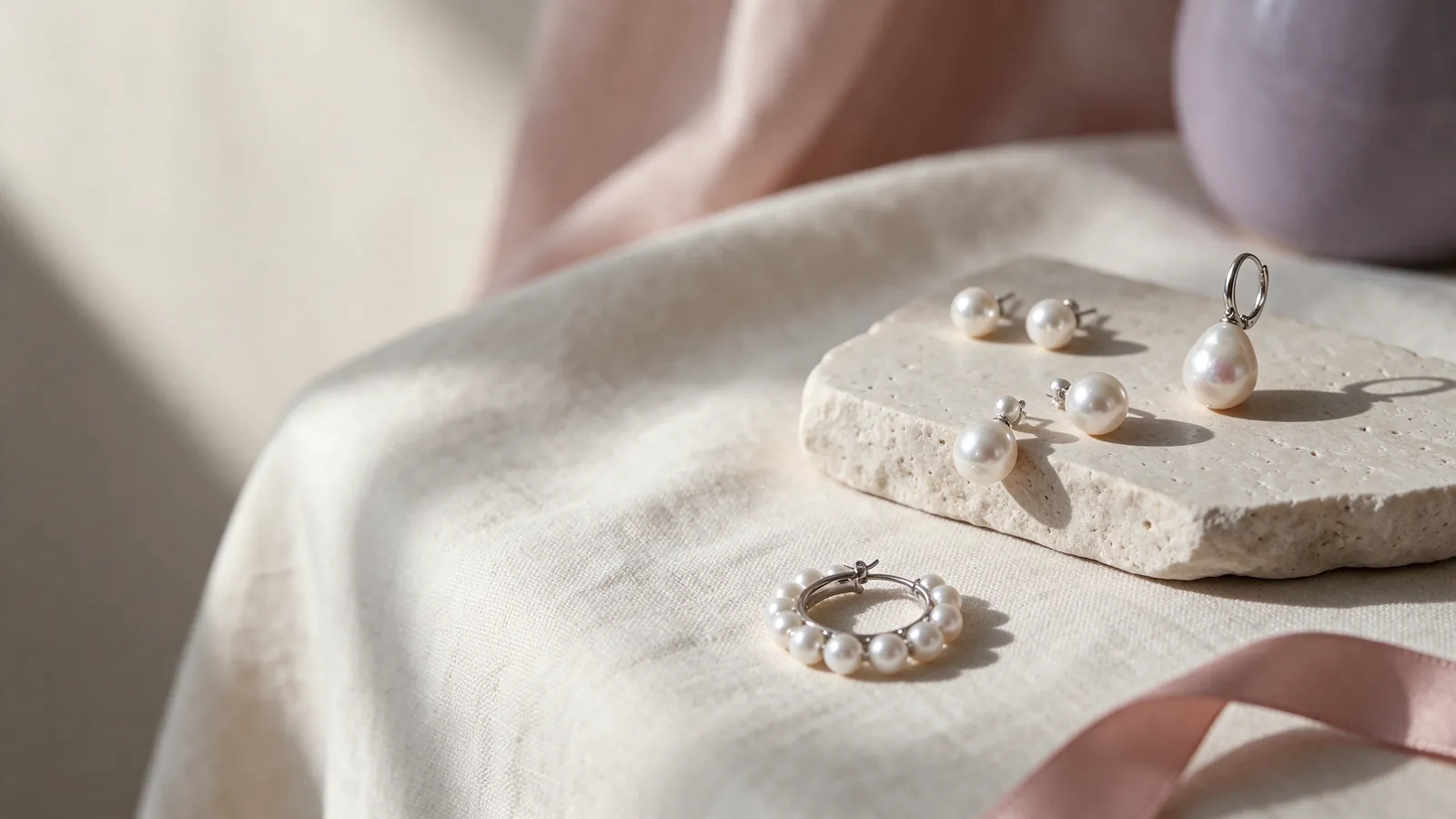
How can you compare proportions in star-motif pearl earrings and star pearl earrings when considering pearl earrings with stars?
Begin by deciding what you want someone to notice first. If the pearl is the center of attention, the star might function as a small graphic interruption beside its curved outline. If the motif leads, its points and reflective surfaces may establish the overall character before the pearl becomes apparent. Look for the amount of visible pearl, the spread of the star and the space between them. These relationships are more informative than calling a design simply delicate or bold.
Compare star pearl earrings within the broader range of pearl earrings to work out whether your preference is for the motif itself or for a particular overall footprint. A close crop emphasizes detail and removes the surrounding ear, so it can make a small design feel surprisingly dramatic. Use a front view with context and a side view when available. Try to compare pictures at a similar scale rather than treating their screen size as a measurement of the jewelry.
How does the star's position in star-motif pearl earrings and star pearl earrings influence the visual balance of pearl earrings with stars?
Think of placement as a direction for the eye. A star near the piercing draws attention upward; a side accent widens the outline; a pearl below a separate motif establishes a descending line. Also check how the arrangement faces on the left and right ears. An inward-facing point and an outward-facing point can create different impressions. Viewing each element on its own, then together, makes it easier to describe the balance you prefer.
Which star details make a design crisp, soft or visually busy?
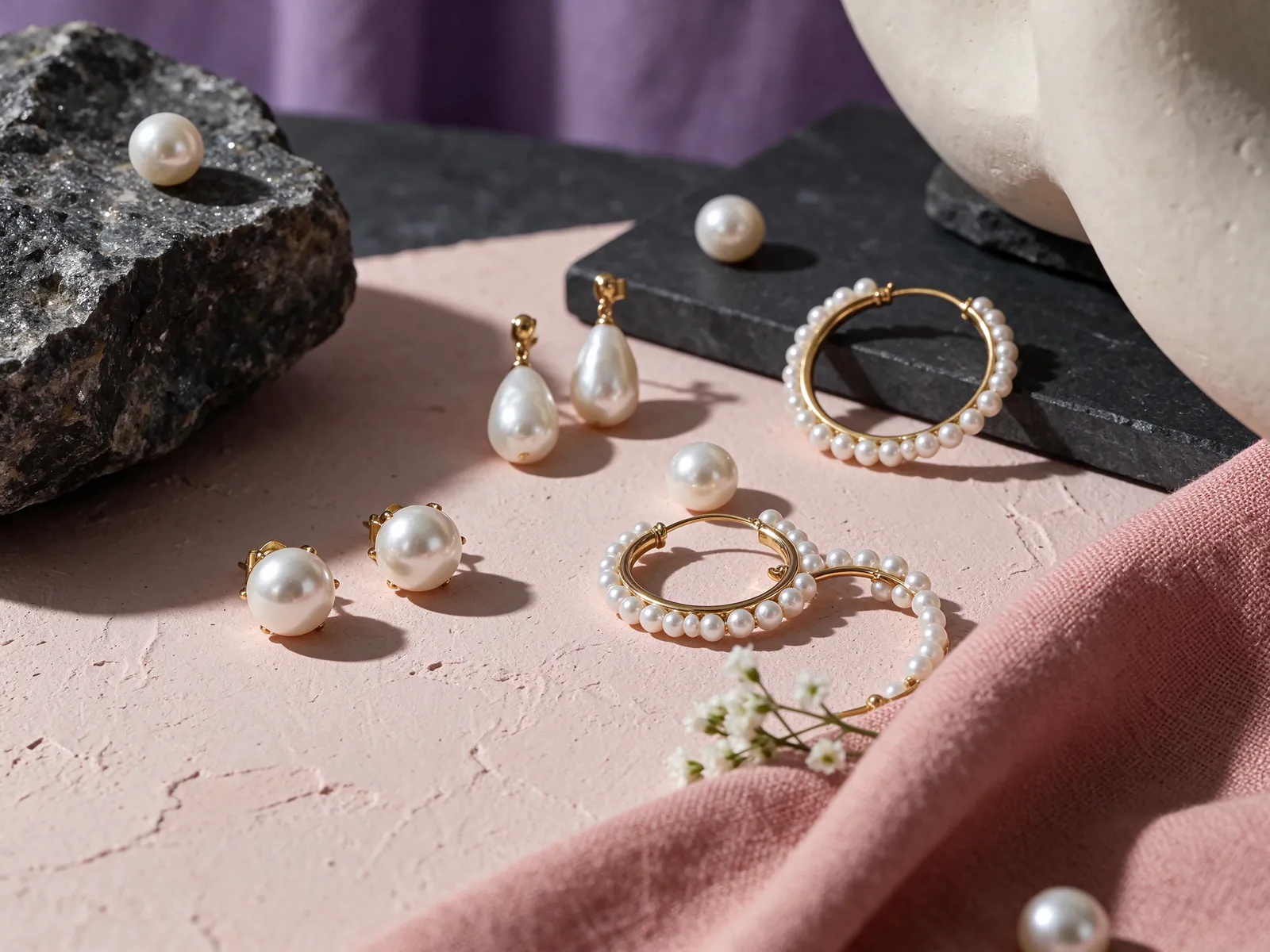
A star can have slender points, broader arms, rounded tips or an open center. Each changes the way the outline relates to the pearl. An open design brings the background into the composition, while a solid face presents a larger continuous reflection. Before focusing on decorative sparkle, examine the silhouette. Imagine it beside your usual collar or glasses: does it repeat their angles, or introduce a different rhythm near your face?
Decoration can make the star more conspicuous, but brightness in a photo cannot establish a gemstone's identity. Metal edges also catch light. Separate the written description of the star's construction and decoration from the written description of the pearl. If you want a quiet accent, inspect how much of the pearl remains visually distinct when the motif reflects light. A design that looks intricate close up may read as a simpler bright shape from farther away.
Evaluate the shape at more than one viewing distance
Make the image smaller and ask whether you still see both a star and a pearl. Then enlarge it to study where the outlines meet. This helps separate overall effect from close-up craftsmanship detail, without turning either observation into a pearl grade. A strong graphic outline can be a style preference; it does not by itself reveal the pearl's identity or quality.
What should a star earring do when you turn your head?
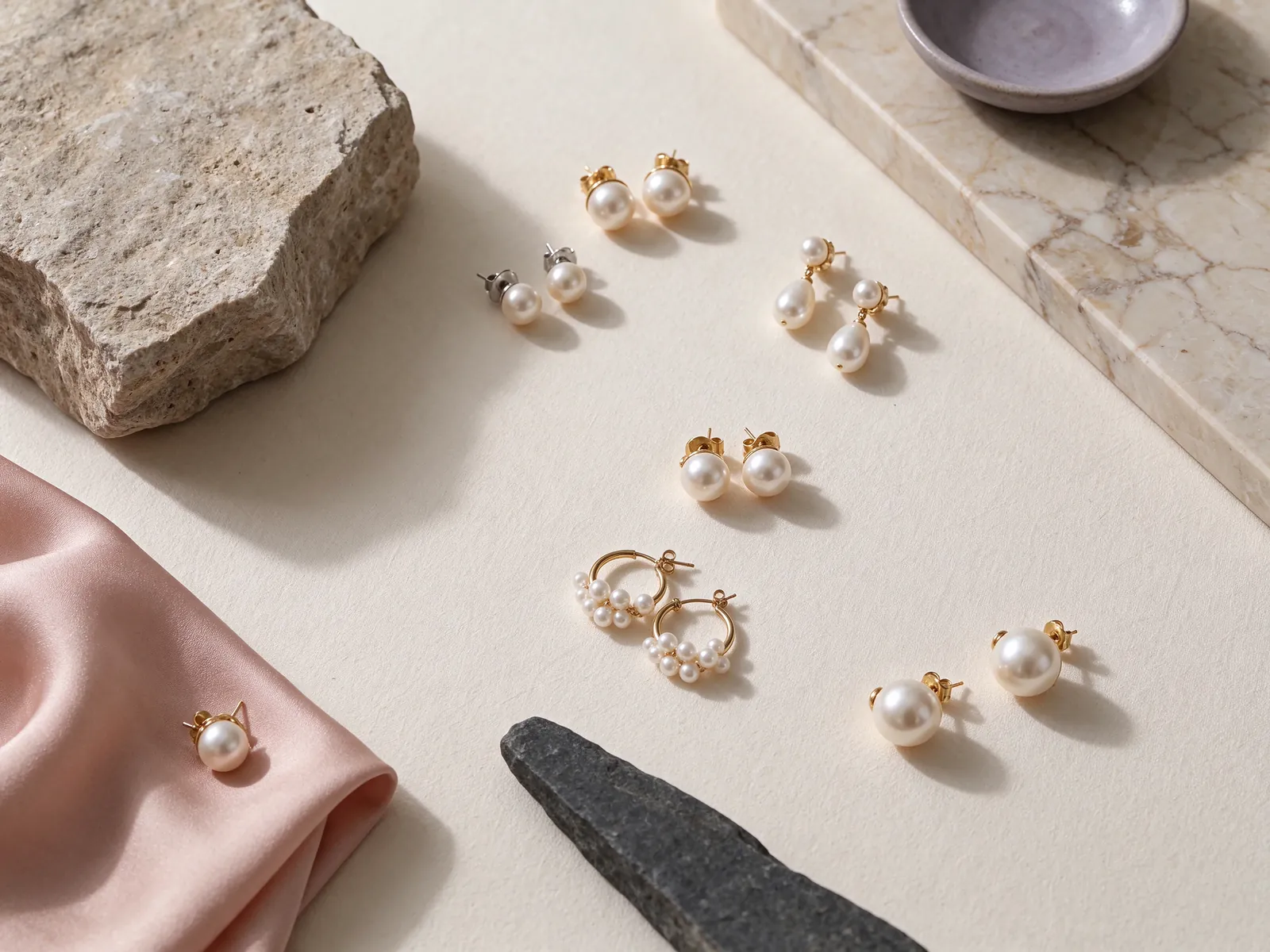
The position of your piercing affects the space available around a stud. A lower piercing may put a downward star point closer to the lobe's edge; a higher one changes how much of the outline rests over the ear. Look beyond a straight-on view and consider projection from the side. Someone else's wearing photo explains the composition, but differences in ear shape and piercing placement mean it is not a prediction of your own result.
When trying on a pair, check whether the star keeps its intended direction, tips forward or touches the skin during ordinary movement. Use the backing according to its actual fastening design, rather than tightening it repeatedly to lock the motif in place. If sensitivity is part of your decision, pearl earrings for sensitive ears offers a separate selection discussion. The practical issues include contact points and your own reactions; neither a decorative shape nor a metal name guarantees comfort for every wearer.
Include hair and clothing in a fit check
Let your hair fall normally, tuck it back and gently turn your head. Notice whether a point catches strands or meets a scarf or collar. With a hanging arrangement, watch whether the pearl moves behind the motif or remains visible. A persistent pull, repeated catching or pressure is worth addressing before concentrating on the appearance. Ordinary movement is a better test of suitability than a carefully posed still image.
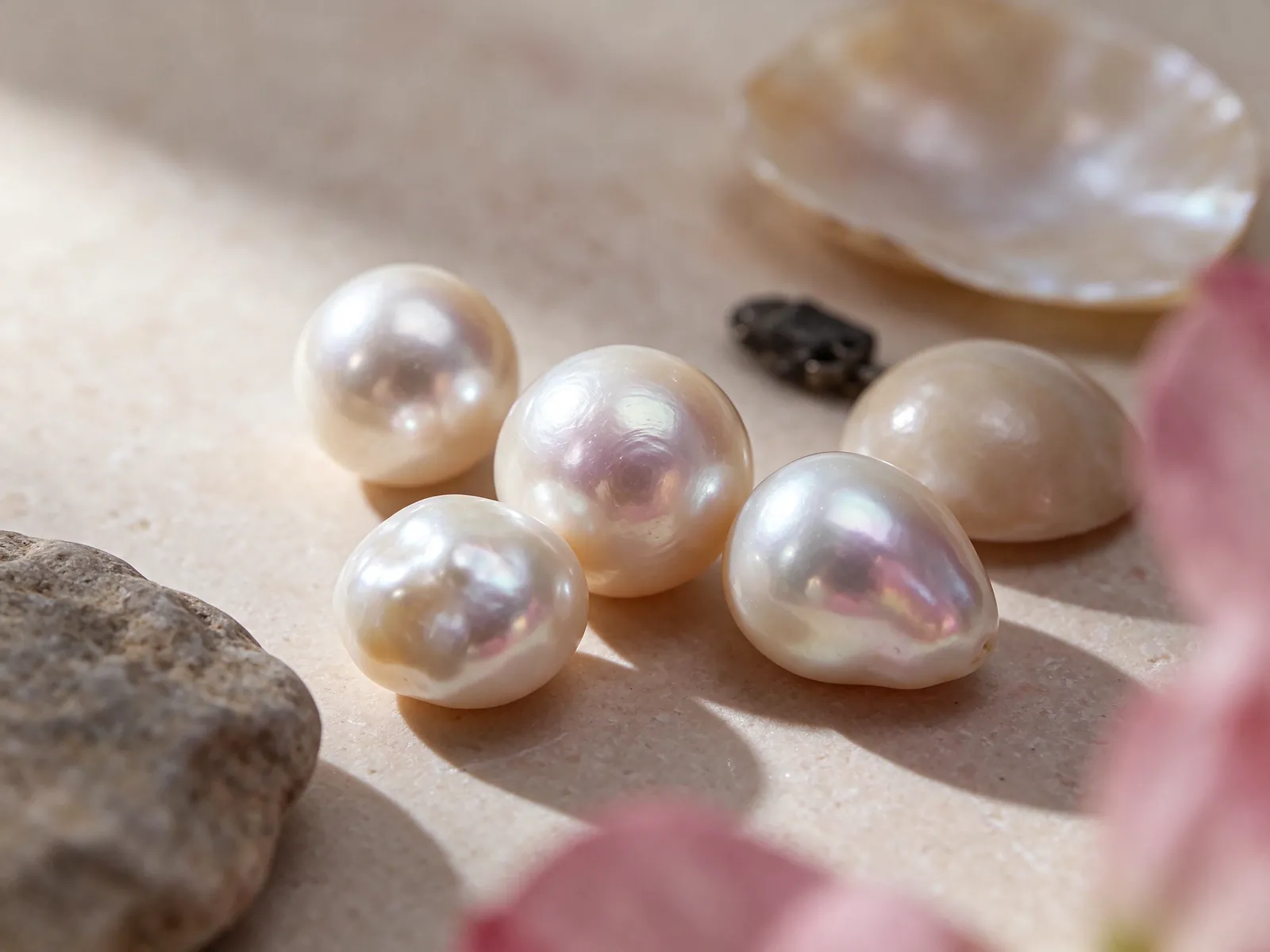
How can you build an outfit around a small graphic accent?
Choose one main area of emphasis near the face. With a plain top and an open view of the ear, even a compact star can contribute a recognizable detail. With a busy print, a decorative neckline or prominent hair accessories, it may need more visual space rather than greater size. Removing a competing accessory or changing the hairstyle can make the earring clearer while keeping the outfit expressive.
For an evening outfit, consider the relationship between earrings and necklace instead of assuming every element should sparkle equally. A substantial pendant can lead, with the star acting as a smaller echo. A high collar changes the question to clearance and fabric contact. The guide to geometric pearl earrings is useful if you like the star's angles but are undecided about the symbol: other graphic arrangements may help you identify the line quality you actually want.
Check the effect in the light you normally use
An exposed ear shows the complete outline, while loose hair can reduce it to occasional flashes. Compare gentle daylight with ordinary indoor light and pay attention to the distinction between pearl luster, metal reflection and the color behind them. A star that is subtle in everyday conditions is not necessarily unsuitable, but it should match the amount of visibility you expect from the design.
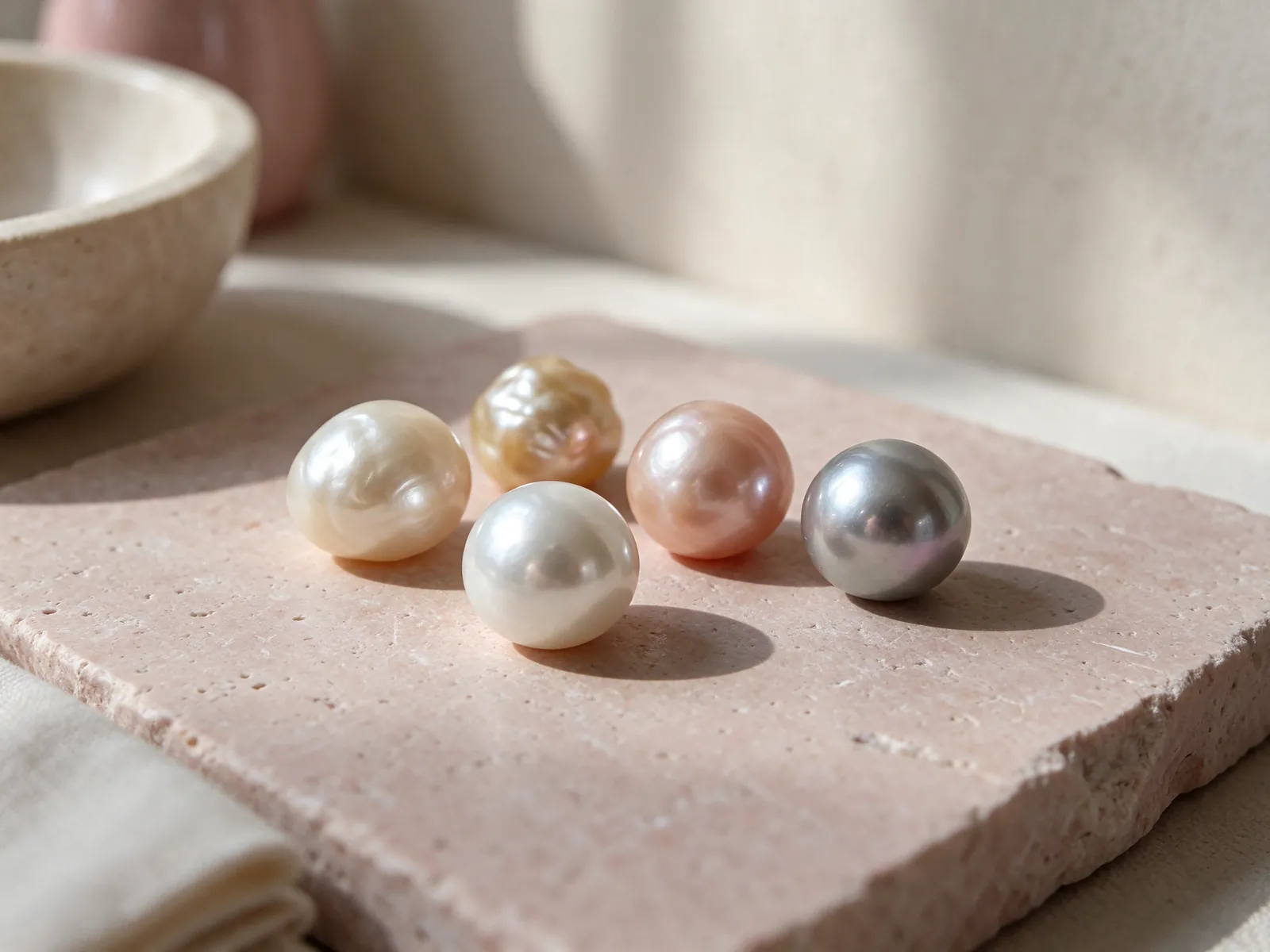
How should you compare metal color without guessing material identity?
Treat metal color as part of the composition. A warmer tone can connect the star to warm clothing, or create a deliberate contrast against cool colors. A white-metal appearance can outline the pearl differently, depending on the background and lighting. Instead of following a universal skin-tone rule, place the visual idea beside familiar pieces in your wardrobe. The same motif can feel restrained or noticeable when the surrounding colors change.
Read about 18K gold pearl earrings if gold color is central to your preference, and compare platinum pearl earrings when exploring a white-metal look. Those are material-focused guides, not reasons to identify a metal by its photograph. Camera settings, reflected surroundings and lighting can shift apparent color. Read the stated material name independently, then consider how the visible tone works with your clothes. This keeps aesthetic preference separate from claims about composition or the identity of a particular piece. The metal choices are 18K 750 white gold, 18K 750 yellow gold, 18K 750 rose gold, PT950 platinum and PT900 platinum. Guides covering other metals are independent comparisons, not additional material options.
Compare the two pearls under the same conditions
Observe the pearl's visible color before deciding how the star changes its contrast. Look at both earrings in the same light and against the same background, rather than comparing separate photographs with different exposures. Visible color and shape can inform your aesthetic choice, but neither is enough to determine origin or natural-versus-cultured identity. Keep that distinction clear while evaluating how coordinated the pair appears.
How does a star compare with a heart or ribbon motif?
Stars establish their identity through outward points, while heart-motif pearl earrings rely more on rounded continuity. Comparing the two can clarify whether you enjoy a sharper graphic rhythm or a softer outline beside a pearl. Do not confuse motif preference with scale: you can like a star and want a very restrained accent, or like a curved shape and want it to be prominent. Judge the footprint and the diagram of the design separately from its name.
The loops, folds or descending lines associated with ribbon pearl earrings offer a different kind of movement. Compare those shapes with your regular necklines and accessories to decide whether you want repetition or contrast. A star need not carry a universal symbolic message to be meaningful to you. It can simply fit your taste, and its appeal does not depend on any promise of protection, blessing or a special outcome for the wearer.
Use observed preferences when selecting a gift
For a gift, look at what the recipient already wears. Motif studs, exposed-ear hairstyles and a preference for crisp accessories may be useful clues, but do not assume everyone enjoys the same star shape. If their usual earrings stay close to the lobe, projecting points deserve particular attention. Familiar habits are more practical guidance than assigning a fixed meaning to the symbol.
What pearl checks and care habits belong in the final decision?
The motif is only one part of the earring. GIA identifies seven pearl value factors: size, shape, color, luster, surface quality, nacre quality and matching. These help frame observations beyond whether you like the star. Compare visible reflection, surface features and the appearance of the pair under consistent lighting. Do not fill in hidden areas of the pearl from imagination or use a round-looking outline to establish its identity. Attractive design and pearl assessment remain distinct questions.
Care must account for the pearl even when the star looks like an ordinary metal ornament. GIA places pearl at 2.5 on the Mohs hardness scale and states that ultrasonic and steam cleaners should not be used. Wipe gently with a very soft clean cloth after wearing and avoid perfume, hair spray, acids and excessive heat. In storage, keep star points from rubbing against pearl surfaces or other jewelry. A sharp tool is not an appropriate way to scrape deposits from the junction between motif and pearl.
Summarize the design you want in practical terms
Before settling on a direction, describe the preferred focal point, the suitable outline for your ear and the everyday conditions in which you will wear it. Front and side observations, clothing colors and actual fitting impressions turn a broad request into a useful conversation. Balancing those details with pearl quality and care keeps your decision grounded in more than the first appealing image. Share your preferred motif position, earring outline and everyday styling with Flint Jewelry on WhatsApp at +85260106207 to discuss the details that matter to your choice.
| Aspect | Visual check | Possible emphasis | Practical check | Question to ask |
|---|---|---|---|---|
| Position | Where the star sits relative to the pearl | Upward, lateral or descending direction | Placement on both ears | Does the side view change the balance? |
| Proportion | Point spread and visible pearl area | Pearl as focus or star as focus | Footprint relative to the lobe | What is visible from a normal distance? |
| Outline and detail | Open center, solid face and decorative density | Negative space or continuous reflection | Hair and collar contact | What does the decoration description state? |
| Color relationship | Contrast between metal, pearl and clothing | A coordinated tone or a contrasting accent | Compatibility with other accessories | Is the material name stated independently? |
| Pearl appearance | Luster, visible surfaces and pair coordination | A consistent impression across both ears | Protection from rubbing during storage | Can both pearls be viewed in the same light? |
Pearl knowledge and authoritative references
GIA describes seven pearl value factors: size, shape, color, luster, surface quality, nacre quality and matching. They provide a framework for looking beyond the decorative star when assessing a pearl earring.
Read the reference for this factFrequently asked questions
Is a star motif the same thing as a star-shaped pearl?
No. Here, the star describes decorative metal or diamond detailing. The pearl's own shape is a separate characteristic. Identify each element in the arrangement and read the written shape description rather than transferring the motif's name to the pearl.
How can I tell whether a star design will face the way I expect?
Look at both ear orientations, piercing placement and any side view. During a fitting, gently turn your head and check for rotation or forward tilt. Do not force orientation by continually tightening the backing; fit and normal fastening matter more than a posed photograph.
Does more sparkle mean the star contains diamonds or better pearls?
Neither conclusion follows from photographic sparkle. Metal edges can reflect strongly, and lighting changes apparent brightness. Read the decoration description for gemstone information and assess the pearl separately using visible quality factors.
Can a small star work with a statement necklace?
Yes, as a styling option it can provide a secondary graphic detail while the necklace carries the main emphasis. Check the complete outfit, neckline and hairstyle to see whether the star remains readable without competing with the pendant or hair accessories.
What is the safest routine cleaning approach for the pearl beside the star?
Follow pearl-specific care rather than a metal-only routine. GIA advises against ultrasonic and steam cleaners. Gently wipe with a very soft clean cloth after wear, avoid perfume, hair spray, acids and excessive heat, and keep projecting points from rubbing against pearl surfaces in storage.
Updated: