How can pearl and diamond earrings balance luster and sparkle through the details of diamond accent pearl earrings and diamond pearl earrings?
Think about the visual order of the earrings before deciding how much sparkle you want. A rounded pearl can draw the eye to the center, with diamond accents directing attention along the surrounding lines. If every detail competes equally, the shape can become harder to read. Begin with pearl earrings to compare broad design directions, then ask whether a flower near the face suits the clothing you reach for most often.
Flint Bloom · Pearl Blossom Earrings combine rounded pearl centers, interlaced openwork petals, diamond accents and teardrop-shaped metal tips. These details give you several separate features to assess rather than one general impression of brightness. Picture the flower beside a tailored shirt, then beside a dress with decorative fabric. In each case, look for a clear center and a readable outer shape instead of assuming a more elaborate outfit needs more jewelry.
How do openwork petals carry that balance into pearl and diamond earrings, shaping the floral outline of diamond accent pearl earrings and diamond pearl earrings?
The spaces inside and between petals are part of the flower's appearance. They allow overlapping lines to remain visible without turning the border into a solid shape. The floral pearl earrings topic is useful for comparing this use of open space. View the front and side as different questions: one shows the pattern, the other helps describe its position near the lobe. Visual openness alone does not tell you the weight or wearing comfort.
Evaluate the pearl's appearance separately from the brightest highlights
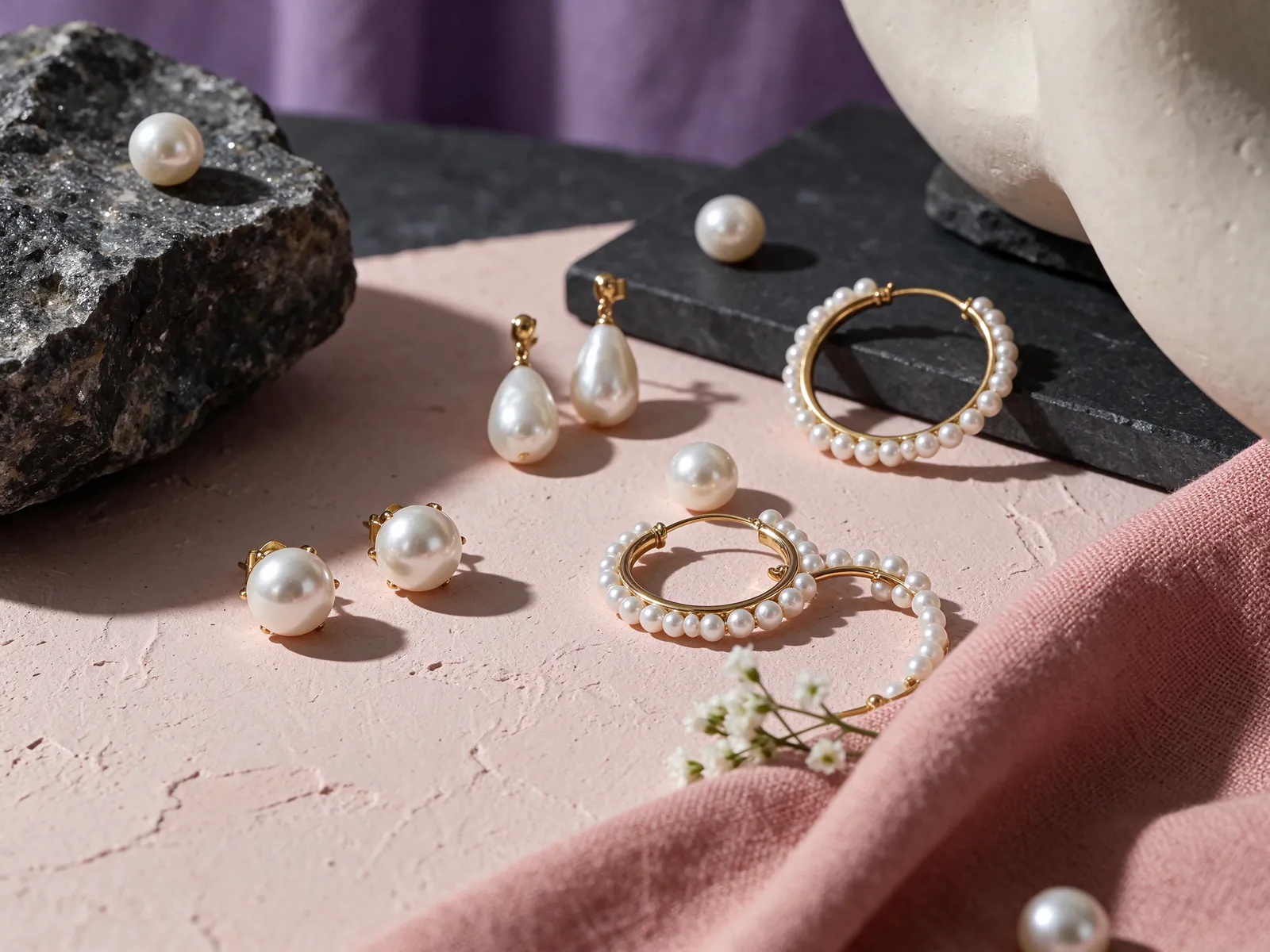
Strong lighting can draw attention to diamond sparkle while making the pearl's surface transitions less obvious. When looking at the pearl, notice the definition of reflections, how bright areas blend into darker ones and whether the two centers have a coordinated color relationship. Then return to the accents and their positions. Softer lighting can reveal a flower you enjoy even when its highlights are less dramatic than in a close-up photograph.
GIA identifies seven pearl value factors: size, shape, color, luster, surface quality, nacre quality and matching. This broader framework keeps a pair from being judged by diameter alone. To explore a more enclosing border around a center, compare halo pearl earrings as a knowledge topic. An open petal arrangement asks a different question: do you want visible gaps to be a defining part of the silhouette? Neither preference is a substitute for pearl quality information.
Check coordination across both sides
Use comparable lighting and backgrounds when viewing the two earrings. Assess their apparent center sizes, color relationship and overall shapes together. Matching is about the pair working visually as a pair, not about every minor surface feature being identical. On a styling photograph, hair can hide one side and make the arrangement look uneven. Check that both outlines are similarly visible before deciding that the design itself lacks balance.
Choose presence at the ear with the whole outfit in view
A straightforward neckline creates space for a flower's edges, while a high or embellished collar may place fabric details close to the same area. Try assessing the earrings without an additional statement necklace before changing the outfit entirely. If your preference is actually for a vertical sequence, multi-pearl earrings offer a useful comparison. If you want lines that respond to movement, read about pearl fringe earrings and distinguish that effect from a flower-shaped outline.
Wear your hair as you normally do when thinking through proportions. A pulled-back style exposes the petal pattern; loose hair may show mainly the center and a few highlights. Eyeglasses add another outline near the same focal area, so consider the frame and earrings together. The goal is not to remove all detail from your appearance, but to decide where you want attention to settle and which features should support that focal point.
Understand what the listed pearl measurement covers
Pearl Blossom's listed details include pearls of 8–8.5mm × 2P, diamonds and a pearl clip-on configuration. The measurement belongs to the pearls. It does not define the full floral height, maximum width, projection or weight of an earring. Describe the center's presence and the petals' spread separately in a custom design discussion. That distinction is especially helpful when you like the pearl size but want to talk about the surrounding outline.
Make diamond placement part of the design conversation
The location of an accent can change which line your eye follows. Highlights near an intersection may emphasize the interlaced petals, while highlights farther out may help define an edge. Decide whether the pearl should remain the first feature you notice or whether the surrounding pattern should share more attention. Thinking in terms of placement and rhythm gives a clearer design brief than asking for the largest possible total carat weight.
Diamond descriptions can address stone count, combined carat weight or an individual stone's weight; these are different pieces of information. Read them alongside the placement and structure rather than treating a number as a description of the complete earring. Likewise, a document covering particular gemstones should be understood in that scope. It does not by itself describe every pearl, metal detail or aspect of the clip-on experience.
Use everyday language to describe the desired light pattern
You might ask for a pearl-led appearance, clearly separated highlights, or petals that stay easy to recognize when you turn your head. Those phrases describe an effect without assuming a setting technique or diamond count. An outfit photo can help show where you want the flower to appear relative to the collar. Keep the open spaces, textured edges and diamond accents as distinct discussion points so each has a purpose.
Assess clip-on contact and placement, not only the decorative front
Pearl Blossom is a pearl clip-on earring design, so the conversation should include how the configuration meets the lobe as well as how the flower looks. Share your experience with clip-ons and the position you usually prefer. Glasses, hair and the location of the contact area can all be relevant to that discussion. The absence of a post is not a universal assurance that an earring will feel comfortable.
When considering the position, check the flower from the front, then move your head gently to notice whether the petals meet your hair or neckline. Avoid forcefully bending the mechanism to change pressure. If pressure or discomfort persists, take the earring off and explain the area of contact to Flint Jewelry. Describe the setting in which you expect to wear it rather than assuming the same experience for a brief celebration and a long workday.
A gift should reflect the recipient's wearing preferences
For a gift, look beyond the flower's message and consider the recipient's usual earrings. Do they wear clip-ons, favor a close-to-the-lobe position, or keep their ears partly covered by hair? Those practical observations can guide the conversation while preserving the surprise. A floral motif can carry your personal meaning, but it should not be used to predict how a particular configuration will feel for someone else.
Follow pearl care even when diamonds are part of the piece
GIA places pearl at 2.5 on the Mohs hardness scale and says pearls should never be cleaned with ultrasonic or steam cleaners. A piece containing both pearls and diamonds therefore should not be treated as diamond-only jewelry. For routine care, gently wipe accessible surfaces with a very soft, clean cloth after wearing. Do not use a sharp object to dig between petals or twist the pearl to reach a hidden area.
Avoid acids, perfume, hair spray and excessive heat, as advised by GIA. Keeping earrings aside while applying sprays reduces direct contact during your routine. In storage, separate them from other jewelry that could rub against the pearls or catch the openwork edges. When residue is difficult to reach or a component seems loose, stop repeated rubbing or home disassembly and describe the specific area that needs attention.
Treat narrow petal spaces gently
A cloth corner pulled through a small loop can catch on a fine edge, so openwork does not require forceful cleaning through every gap. Concentrate on surfaces you can reach without pulling at the structure. A close photograph is a practical way to explain an inaccessible area during a care discussion. Cleaning removes residue; it should not be approached as a way to change the pearl's underlying quality or create stronger luster.
Build a custom design brief from real wearing situations
Choose one familiar outfit and describe its neckline, your hairstyle and the detail you want people to notice. Then identify the Pearl Blossom features you like: the pearl center, interlaced petal loops, textured edges, teardrop-shaped metal tips or diamond accents. This makes the conversation specific without asking for another maker's finished design to be reproduced. A clear preference for spacing or line direction is more useful than simply requesting something dressier.
Comparing butterfly pearl earrings can help you discover whether you prefer a flower specifically or a motif that extends sideways around a pearl. Use that as an outline comparison, then return to your actual wearing needs. Material directions for discussion include 18K 750 white gold, 18K 750 yellow gold, 18K 750 rose gold, PT950 platinum and PT900 platinum. Consider the chosen material with the design rather than using its name to predict every aspect of appearance or fit.
Bring separate notes for styling and configuration
A short set of notes can cover your most-used neckline, preferred floral presence and past clip-on experience. Keep gemstone dimensions, diamond accents and the mechanism as separate subjects when reading the design details. One specification cannot establish the rest. This approach connects the soft, openwork character of Pearl Blossom with how you plan to wear it, while leaving your personal priorities clear throughout the custom design conversation. Discuss your custom pearl earrings with Flint Jewelry on WhatsApp, or call +85260106207, starting with the floral details and wearing habits that matter to you.
| Design element | Viewing priority | Everyday context | Question to discuss |
|---|---|---|---|
| Pearl and accents | A clear order of visual attention | Compare against an uncomplicated neckline | Should the pearl lead the appearance? |
| Petal spaces | A readable openwork outline | Check how much loose hair hides | Which edges should remain visible? |
| Overall presence | Center size versus full floral spread | Include glasses in the comparison | Where should the flower sit? |
| Clip-on configuration | Contact area and gentle movement | Describe your normal wearing habits | What position has worked for you before? |
| Routine care | Pearl-safe wiping and separate storage | Avoid direct perfume and hair spray | Does any narrow area need attention? |
Pearl knowledge and authoritative references
Pearl has a Mohs hardness of 2.5 according to GIA. Its guidance rules out ultrasonic and steam cleaning, which remains relevant for earrings combining pearls with diamonds.
Read the reference for this factFrequently asked questions
Can I judge the flower's overall size from the 8–8.5mm pearl listing?
No. Pearl Blossom lists pearls of 8–8.5mm × 2P. That describes the pearls, not the flower's full width, height, projection or weight. Discuss the surrounding petals separately from the center.
Is total diamond carat weight enough to choose the visual effect?
No. Placement, spacing and the relationship to the pearl center shape the appearance. Describe whether you want a pearl-led look, distinct points of light or more emphasis on the petal outline before focusing on a number.
How should I compare the earrings if I usually wear my hair down?
Use your normal hairstyle and notice which parts remain visible. Hair may reveal the pearl but hide the outer petals. Compare both sides with similar visibility before judging the pair's balance or changing your preferred outline.
Should I adjust a tight clip-on by bending it myself?
Do not forcefully bend the mechanism. Remove the earring if pressure or discomfort persists and explain the contact position to Flint Jewelry. Clip-on comfort depends on the individual and cannot be assumed from the configuration alone.
Does adding diamonds make ultrasonic cleaning appropriate?
No. GIA's guidance says pearls should never be cleaned with ultrasonic or steam cleaners. The pearl component still determines that care limitation. Gentle wiping with a very soft, clean cloth is the routine approach.
Updated: