
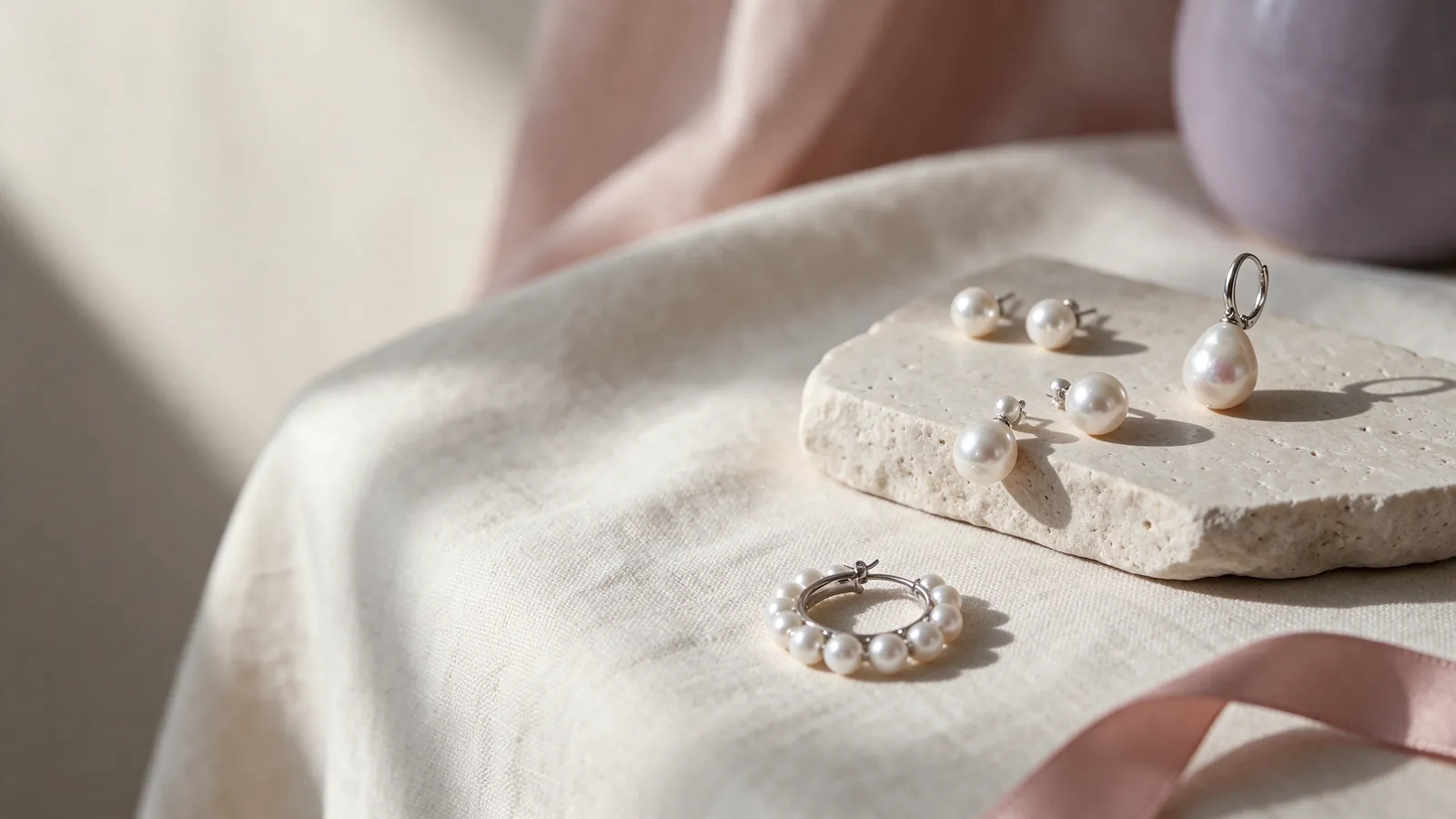
Position and length in the pearl earring styles guide: what sets pearl studs vs drops vs dangles apart, including drop vs dangle pearl earrings?
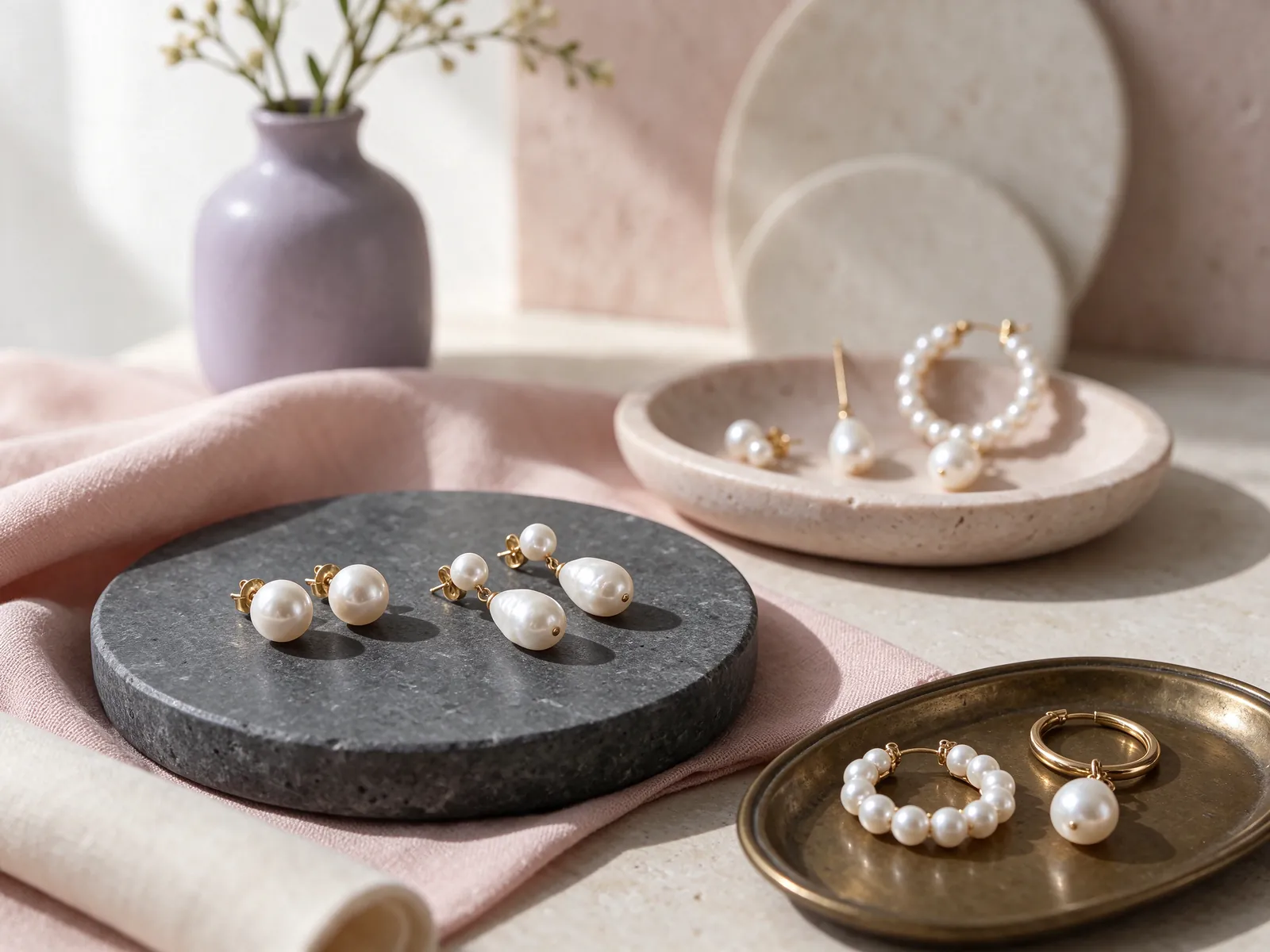
Think of the piercing as the starting point of the silhouette. A stud keeps the main decoration on the lobe. A short drop moves it just below the lobe, while a longer dangle draws a line farther down the side of the face. When looking at pearl earrings, compare how the ornament relates to the ear rather than treating a style name as the whole description.
Length descriptions become useful only when the starting point is clear. A measurement of the dangling ornament is not the same as the distance from the post to the bottom of the earring. Ask which is being described, then consider your own piercing placement. The amount of open space beneath the earlobe can look different on different people without any change to the earring itself.
Sway in the pearl earring styles guide: how does movement vary between pearl studs vs drops vs dangles, particularly drop vs dangle pearl earrings?
Watch the connection to understand motion. Studs generally lack a hanging joint, short drops are relatively still, and longer dangles can sway as you move. Yet a small linking ring can give a short design some freedom, while a rigid support can hold a suspended ornament steadier. Turn your head gently during a try-on and compare the actual response instead of guessing from length alone.
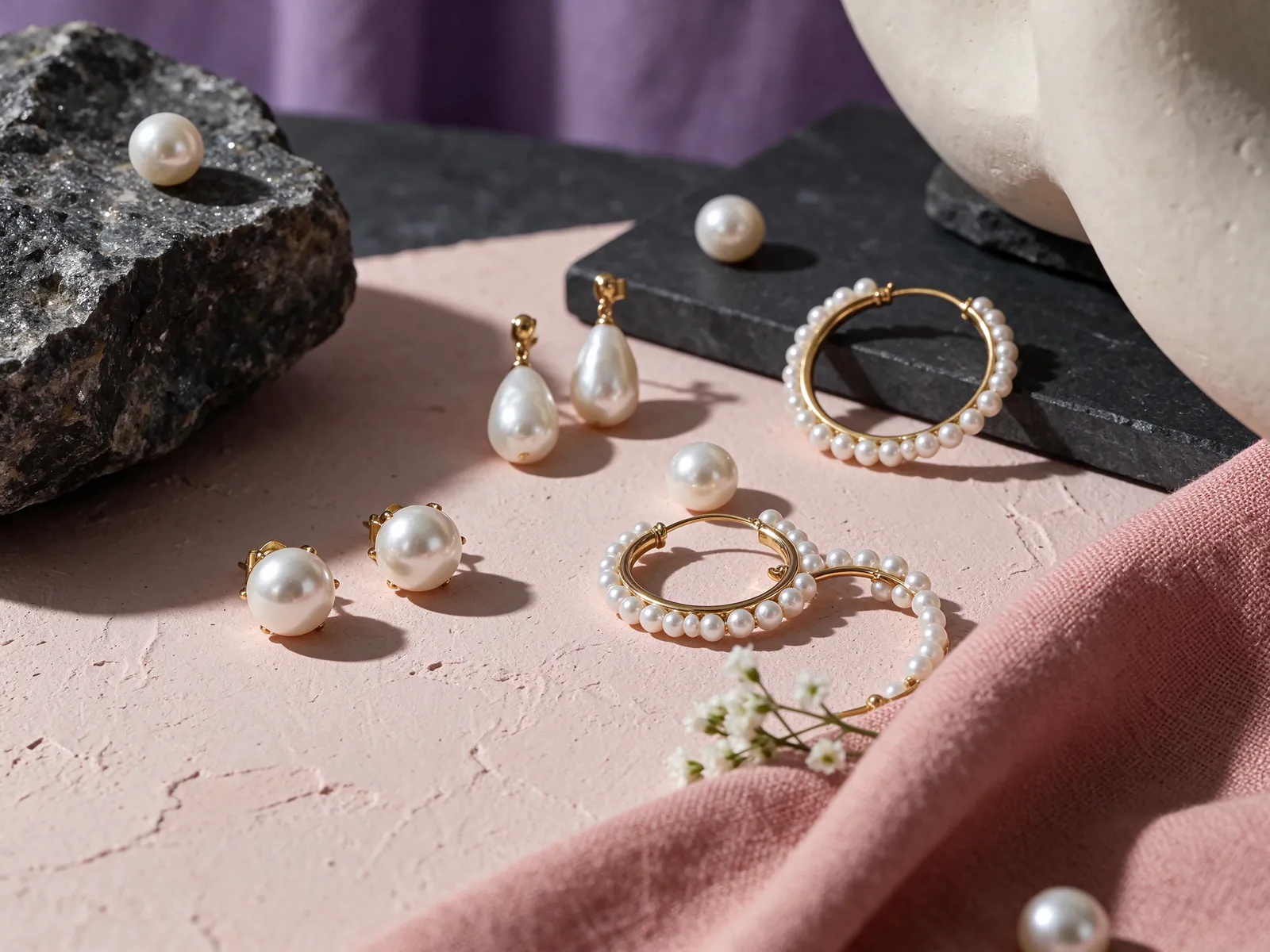
Why a drop earring does not specify a pearl shape
Drop is a construction description, not a pearl-shape guarantee. A round pearl may hang below an earlobe, and an elongated pearl may be set close to it. Decide whether you are asking for a particular pearl outline or a particular position on the ear. Keeping those requests separate makes it easier to explain what you like and prevents a shape term from obscuring the wearing effect.
The closure introduces a separate distinction. For pearl hook earrings, a hook serves as their support, but the decoration below can have different lengths and movement. The structure of pearl hoop earrings may carry a pearl directly on the hoop or suspend it underneath. Neither hook nor hoop alone answers whether the pearl stays near the lobe or creates a longer, swinging line.
Follow the structure from the fastening to the pearl
Trace the path through the post or hook, the support, and any movable rings or chain. This shows which elements can turn independently. If you prefer a pearl below the lobe but dislike noticeable swinging, describe that combination explicitly. It is a request about both position and motion, not simply a request for the shortest earring in a photograph.
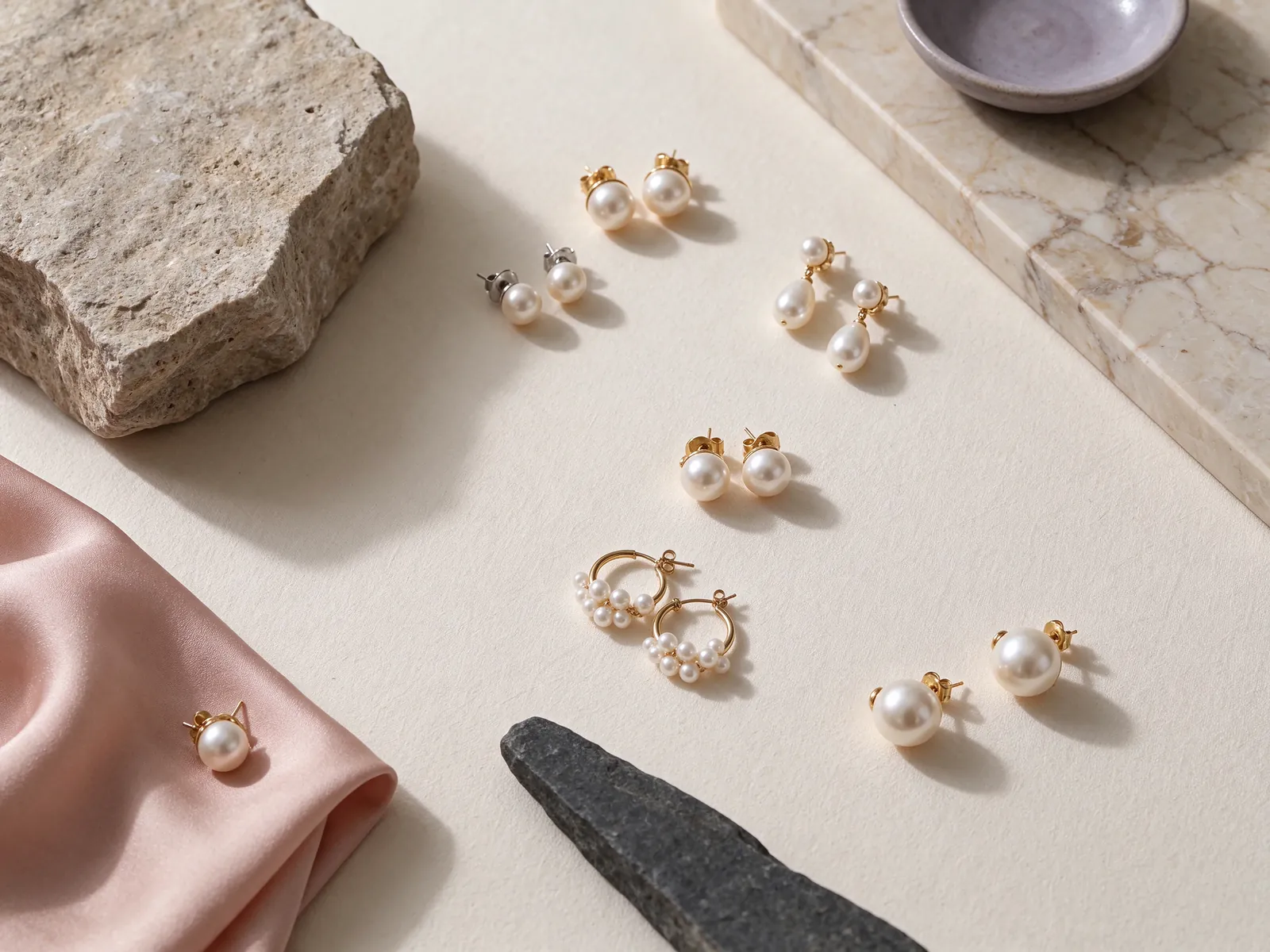
Find the outline that works with hair and necklines
Use your everyday hairstyle as part of the comparison. A stud can look clear with hair tucked behind the ear but become partly hidden when it falls forward. Designs with long pearl dangle earrings create a line beneath the lobe, though hair ends can cover their lowest detail. Rather than following a fixed face-shape formula, ask where you want the eye to land and how much of the ornament remains visible.
A collar or scarf may reach the same area as a drop or dangle. Test the earring while seated as well as standing, and check what happens when you turn or tilt your head. An open neckline leaves more visible space, but a longer earring can still compete with other details. The best comparison uses the clothing you plan to wear, not an isolated close-up.
Leave room for nearby jewelry
If you combine the main pair with pearl studs for a second piercing, check the spacing and any possible collision as the hanging part moves. Different piercing positions can produce different arrangements on each ear. Aim for distinct outlines that do not crowd or push against each other; there is no need to make every ornament identical in size to create a balanced look.
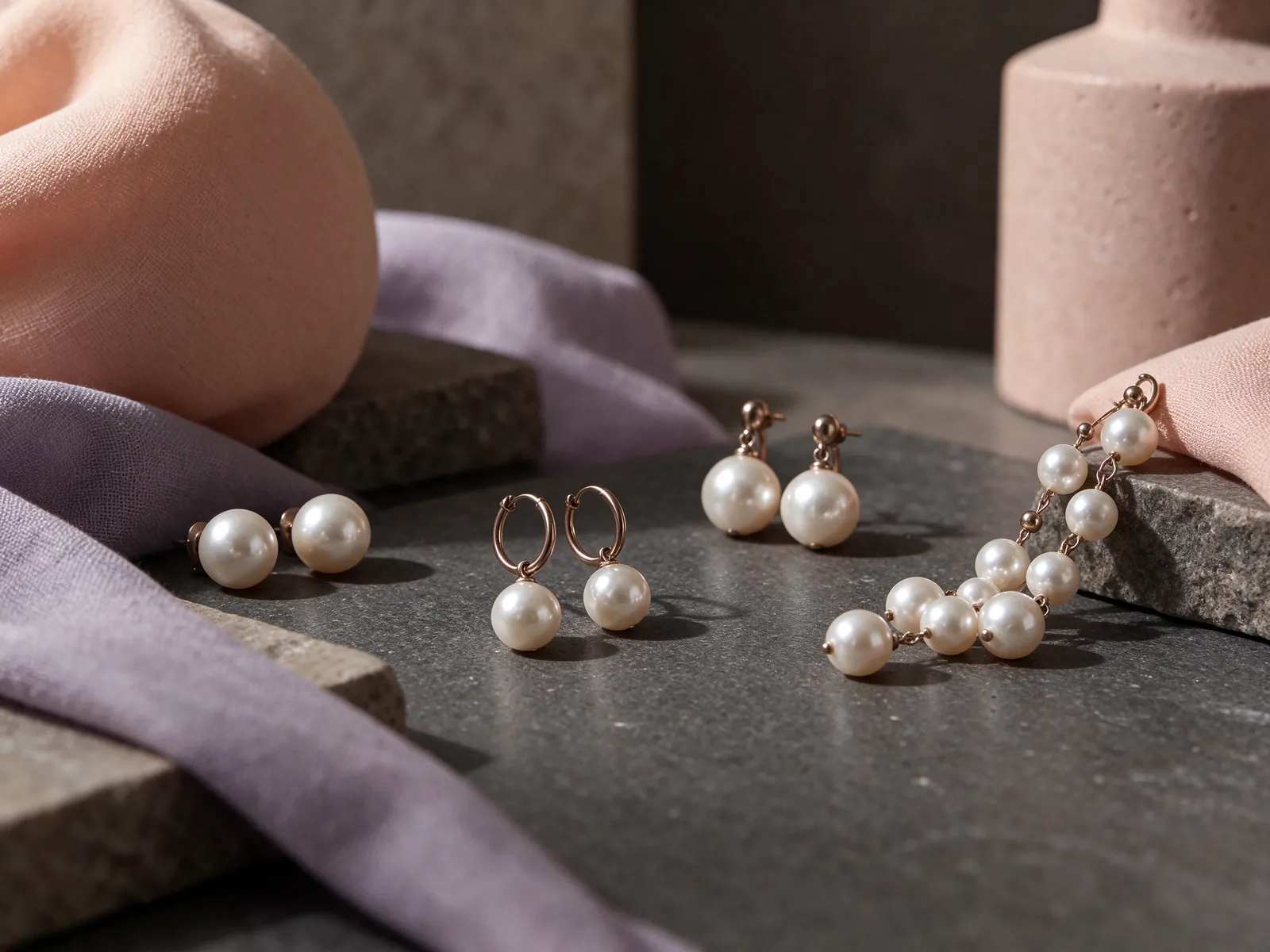
Let daily movements guide the occasion choice
There is no ranking that makes studs basic and dangles dressy by definition. For everyday pearl earrings, start with what you do: use a phone, wear headphones, change a jacket, or brush hair behind your ears. Both close-fitting and hanging designs can encounter those objects. Compare the particular fastening and moving parts, and consider when you would prefer to remove the earrings rather than forcing them into every activity.
For an event, choose a visual priority. Detailed fabric near the face may work with an ornament concentrated at the earlobe, while a simple top lets a suspended line remain easier to see. A prominent necklace can change the balance again. Compare the space beside your neck and the whole outfit instead of assuming that every celebration calls for the longest possible pearl earrings.
Make your try-on comparison consistent
When choosing between two appealing designs, keep your hair, clothing, lighting, and viewing distance similar. Take front and side views, then include a seated check for collar contact. Photos taken at different distances can make the nearer pair appear more dominant. After the visual comparison, use your preferred level of movement and practical clearance to narrow the choice.
Compare the pearls without confusing quality and style
GIA describes seven pearl value factors: size, shape, color, luster, surface quality, nacre quality, and matching. They help you evaluate pearls as a separate question from earring construction. Once you have chosen the position and motion you want, look at the pair under similar light for the appearance and coordination you prefer. A style label or a larger silhouette does not summarize all of these factors.
On-ear balance adds another useful view. Compare the direction of the two settings, their lowest points, and the impression they create together. Dangles can reveal a different side of a pearl during motion, so a front image may not show every visible angle. Shape and color alone cannot establish origin, natural-versus-cultured identity, or certification; those questions cannot be answered simply by choosing a flattering outline.
Explain what you mean by a more noticeable earring
More presence at the lobe and more length beside the face are different goals. If you want an earring to stand out, identify which effect matters to you before focusing on pearl size. You can then discuss color, shape, matching, and the setting as distinct choices. That gives a customization conversation a clearer direction than asking for a bigger pearl without describing where it should sit.
Test the backing and the way you handle the pair
A frontal view cannot tell you how the back feels. With studs, consider the post and backing at the lobe; with drops and dangles, check how the attachment supports the ornament. If there is pressure, pulling, or discomfort, take the earring off before discussing an alternative. Tightening a backing to force the preferred angle is not a substitute for a suitable construction, and no style name guarantees comfort.
Support the fastening during removal rather than pulling on the pearl or the hanging tip. Think about how often you take earrings off and whether you can operate the closure easily. For moving designs, check that hair or fabric has not caught around a joint. Handling is part of choosing a style because an attractive silhouette still needs a fastening that fits your habits.
Keep weight and skin response as separate questions
Visible length is not a reliable shortcut for total weight: the complete setting and all ornaments contribute. A stud is not necessarily lighter than every drop. Compare the specific design and your own wearing experience. If you have a history of skin reactions to jewelry, do not assume that a particular earring shape resolves it; personal sensitivities need consideration apart from the silhouette.
Protect the surface and the hanging parts after wearing
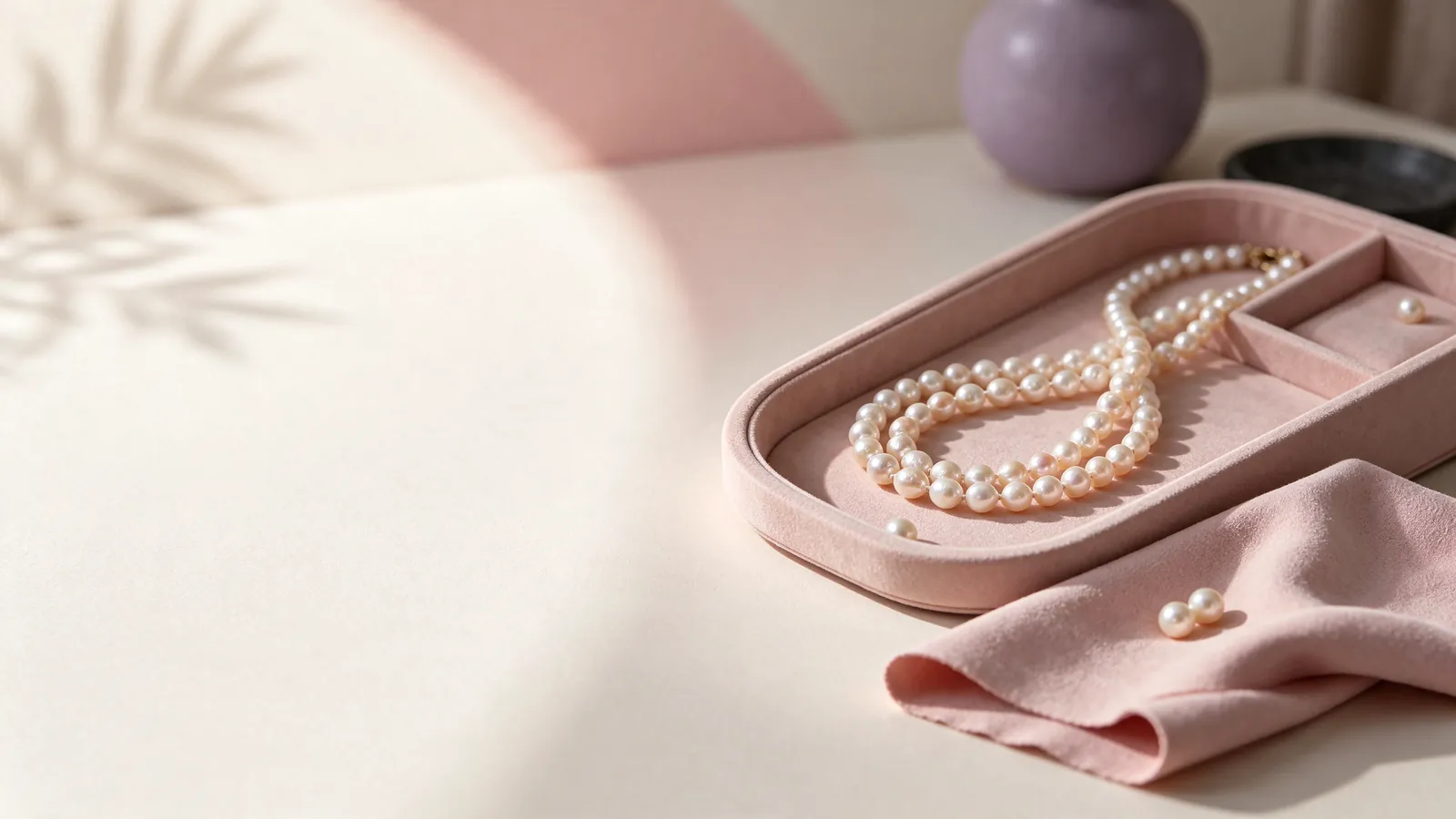
According to GIA, pearl ranks 2.5 on the Mohs hardness scale and should never be cleaned with ultrasonic or steam cleaners. Use a very soft, clean cloth after wearing and keep the pair away from harder jewelry in storage. With a hanging construction, also separate chains and joints so they are not tangled or compressed. Care includes the support system as well as the pearl's visible surface.
Apply perfume and hair spray before putting the earrings on, and avoid acids and excessive heat. Before storing a pair, check whether its fastenings and dangling elements are caught together. If a closure becomes loose or a connection appears distorted, stop wearing the earrings and seek an inspection. Cleaning will not restore the intended function of a damaged joint, and pulling a snag can stress the construction.
Turn your preferences into a practical design conversation
When talking with Flint Jewelry, describe the desired position on the ear, the amount of sway you enjoy, and the neckline you wear most often. Add hair length, piercing placement, and fastening preferences. An image can illustrate that silhouette without establishing the pearl's identity or dimensions. Keeping visual inspiration separate from actual pearl and construction choices makes the conversation more precise. Contact Flint Jewelry on WhatsApp at +85260106207 to discuss your preferred position, movement, and everyday styling.
| Feature | Studs | Short drops | Longer dangles | Try-on question |
|---|---|---|---|---|
| Position | Main ornament on the lobe | Ornament slightly below the lobe | Line extending beside the face | Where does the lowest point sit? |
| Motion | Generally no hanging joint | Relatively still, depending on links | Longer construction that can sway | Which connections move? |
| Hair | May be hidden by loose strands | Check visibility below the lobe | Check overlap with hair ends | Can you see the intended outline? |
| Neckline | Focus near the ear | Needs a little open space below | Check collars, scarves, and turning | Does clothing touch the ornament? |
| Handling | Hold the fastening, not the pearl | Support the attachment on removal | Separate movable parts for storage | Is the closure manageable for you? |
Pearl knowledge and authoritative references
GIA identifies seven pearl value factors: size, shape, color, luster, surface quality, nacre quality, and matching. Matching the pair is a separate consideration from selecting a stud, drop, or dangle structure.
Read the reference for this factFrequently asked questions
Can a round pearl be part of a drop earring?
Yes. Drop describes the suspended position of the ornament, not a required teardrop shape. A round pearl can sit below the lobe as a drop, while another pearl shape can be mounted closer to the ear. Compare construction and pearl outline separately.
How can I choose earrings if I alternate between loose hair and an updo?
Try both hairstyles with the same pair. Check whether the ornament remains visible with loose hair and whether its full outline feels balanced when the ear is exposed. Also turn your head to look for hair catching at the connections rather than judging only the front view.
Do different piercing heights rule out matching dangles?
Not automatically. Assess the actual lowest points and directions on both ears. Piercing placement can influence studs as well as hanging earrings, so changing the style name alone does not solve the visual difference. Compare the worn balance before discussing a different construction.
What matters when I already wear a statement necklace?
Look at how much visual space remains beside the neck and around the neckline. A concentrated stud or a short drop may preserve that space, but a longer line can also work with a simple outfit. The combination should be judged together rather than chosen from a fixed occasion rule.
Should I keep wearing an earring if the hanging part suddenly turns differently?
First remove it and check whether hair, fabric, or another part is caught at the connection. If the joint looks distorted or the fastening no longer behaves as before, stop wearing it and seek an inspection. Do not force it back into position by pulling on the pearl.
Updated: