
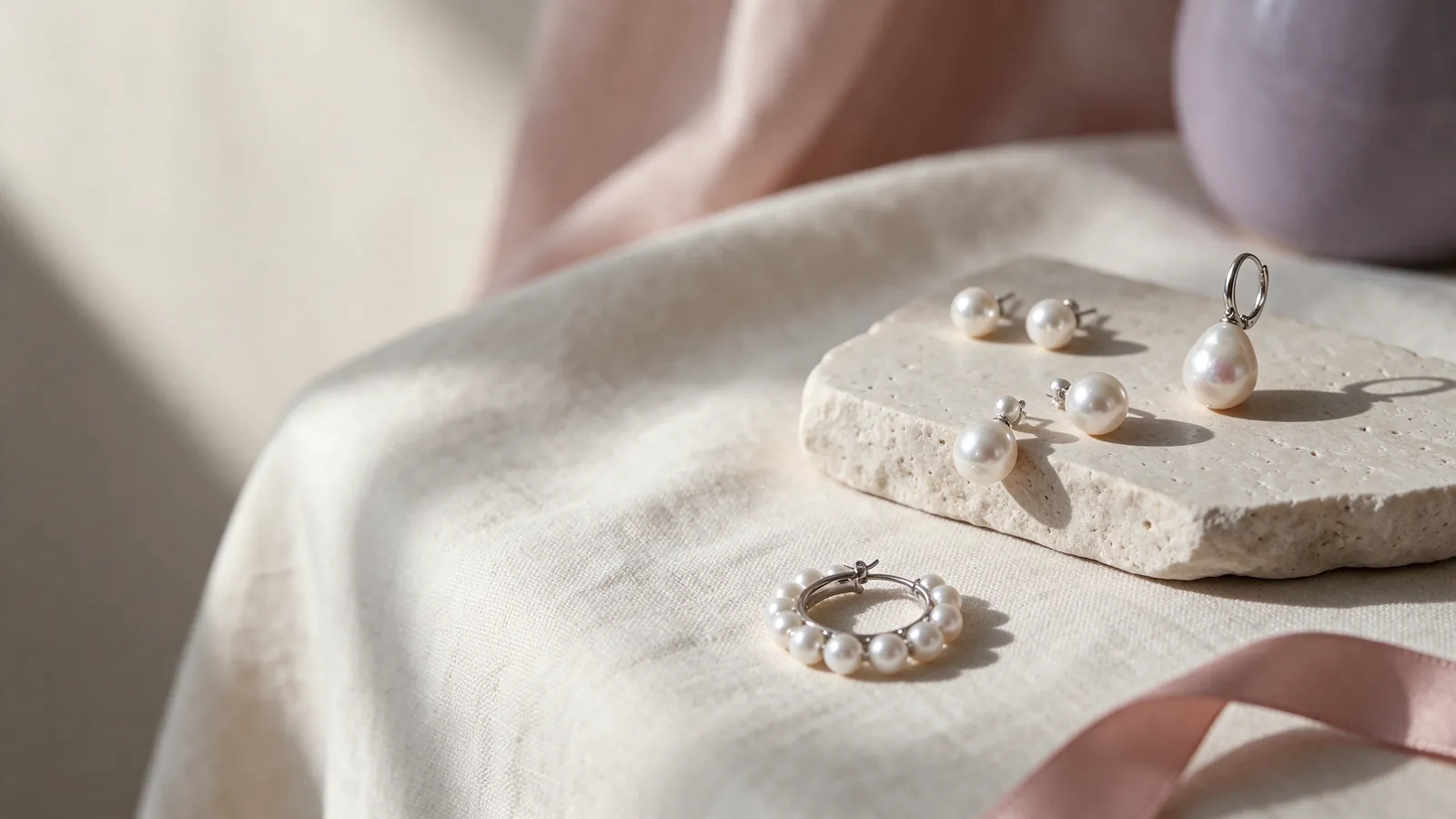
How do small pearl stud earrings complement your ear proportions and hairstyle? Balancing 4.5–6mm pearl earrings for the look of delicate small pearl studs
When shopping for small pearl stud earrings, first decide whether you want a barely noticeable accent or an easily recognized pearl outline. Those goals can lead to different choices within a small-size range. The amount of visible skin around the stud matters, as does the location of your piercing. A face-shape label alone cannot describe the relationship between an earring and your ear.
Clear the hair around your ear and look straight ahead, then check the profile while turning your head. Notice both the pearl and any visible metal around it. The pearl earring size guide is useful if you want to compare a small accent with more prominent alternatives. Use similar light and camera distance for comparisons so a dramatic close-up does not distort your sense of scale.
When comparing small pearl stud earrings, what should you notice about 4.5–6mm pearl earrings to judge the effect of delicate small pearl studs from the front and side?
Look at the lobe margin up close, then step back to include your shoulders and neckline. Delicate small pearl studs can be obvious in a close portrait but much quieter with dark hair worn down. Neither impression is wrong. Decide whether you want the detail to appear immediately or become noticeable during conversation, and evaluate both front and side views with that purpose in mind.
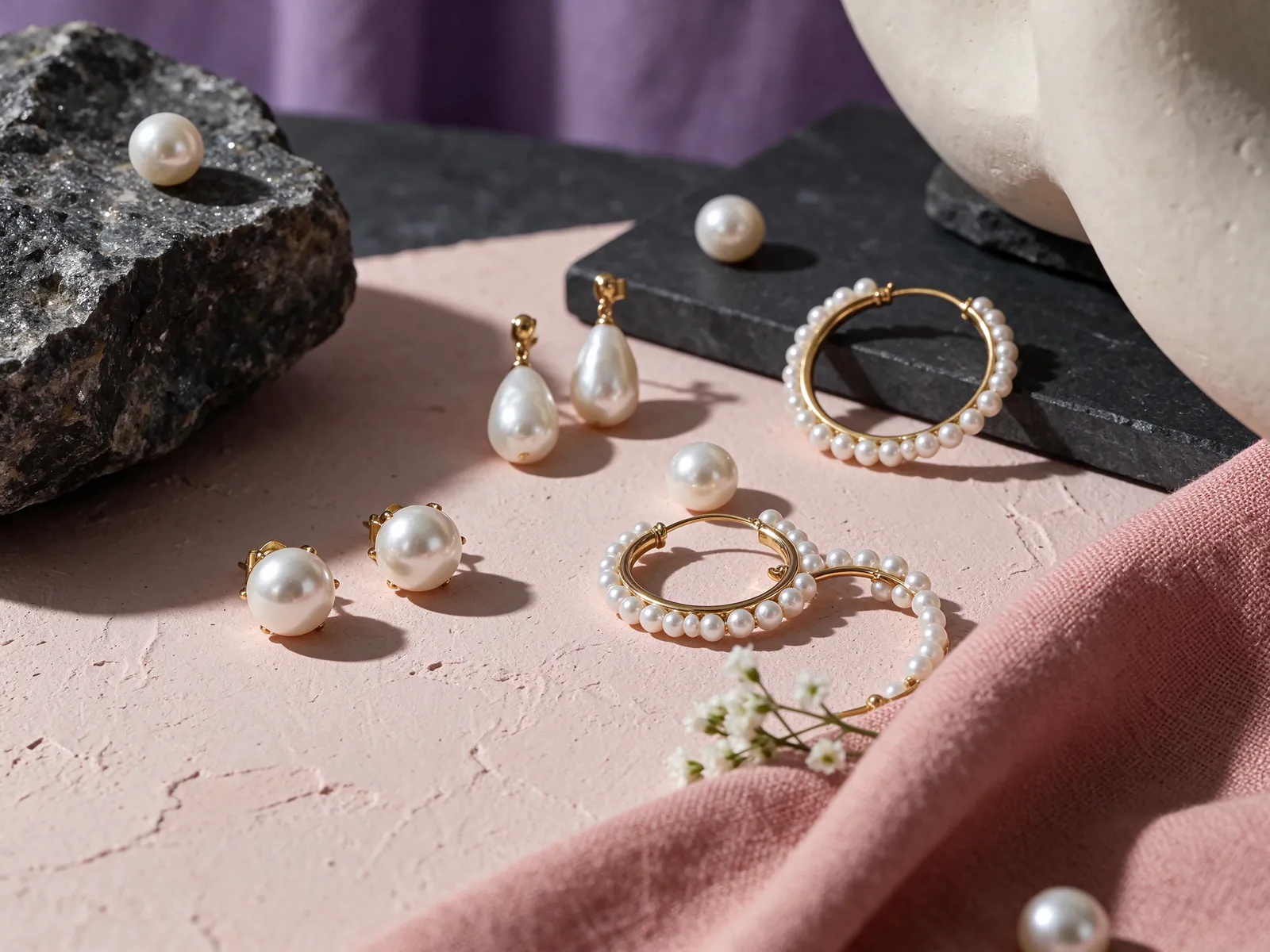
Distinguish pearl diameter from the size of the whole earring
Treat 4.5–6mm pearl earrings as a visual comparison range, not a universal recommendation. One end may leave more exposed lobe around the pearl, while the other may create a more recognizable circle. The best balance depends on your preferred effect. A larger number does not automatically mean a more polished result, and a smaller number does not automatically mean a more casual one.
The pearl's diameter is only part of an earring's visible footprint. A rim, decorative surround or mounting can make the front appear wider, and the depth of the mounting affects the profile. When comparing pearl stud earrings, understand the measurement before assessing complete designs. Read the pearl size separately from dimensions or descriptions that apply to the whole earring.
Use product images for detail, not uncalibrated measurement
A pearl that fills a product image is not necessarily large when worn. Cropping, magnification and your screen settings can all change the apparent size. Start with stated measurements, then consider wearing photographs taken in comparable conditions. Holding an on-screen circle next to your ear is not a reliable substitute, because the displayed image may not have any fixed relationship to the actual diameter.
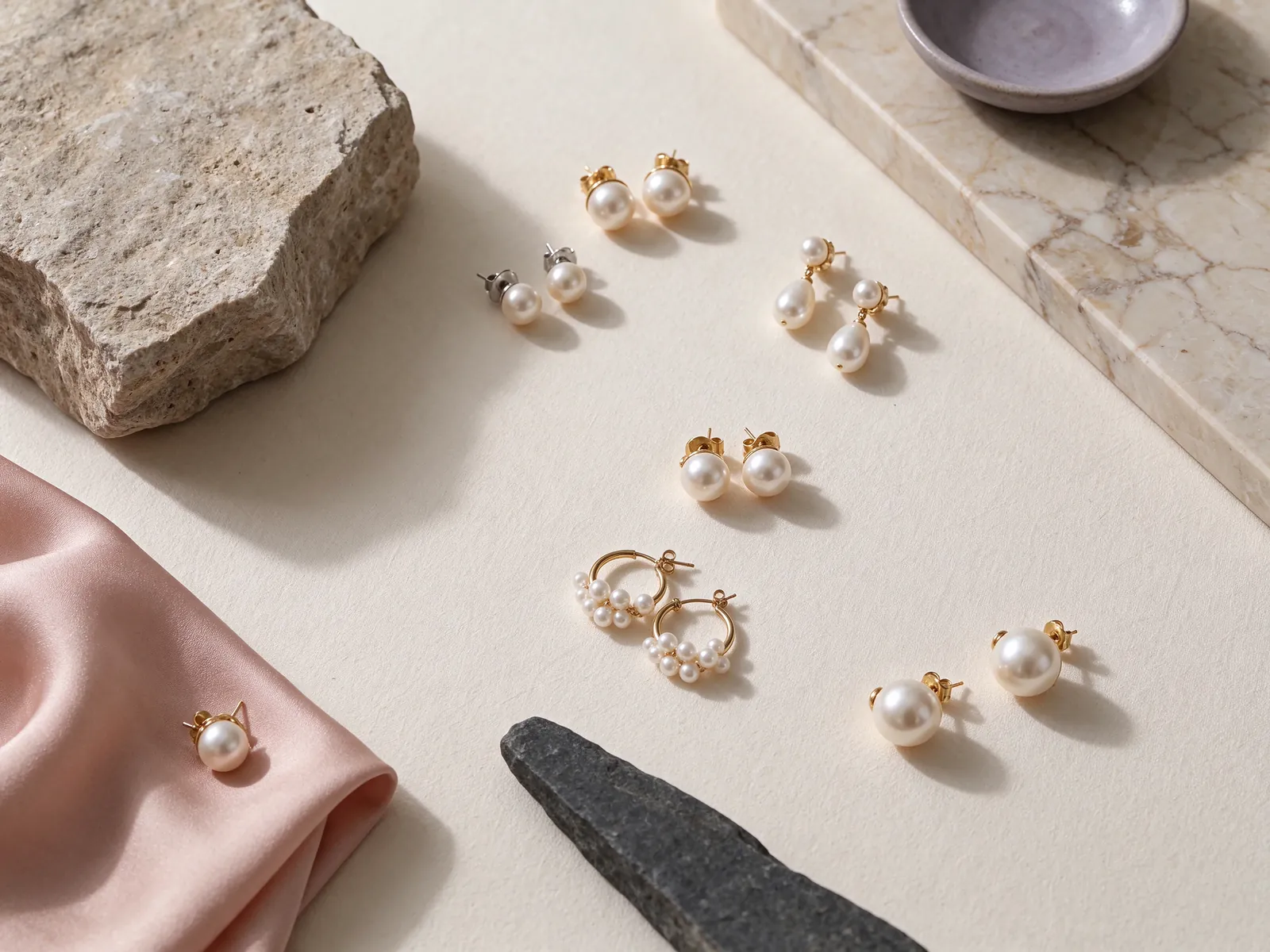
Match the outline to your lobe and the space between piercings
For a small earlobe, consider how much of its outline you want the stud to cover. A piercing near the edge can produce a different position from one nearer the center, even with the same pearl diameter. The guide to pearl earring size for small earlobes focuses on those practical relationships. Choose by the shape and placement you can observe rather than assuming every small lobe needs the smallest available-looking pearl.
With multiple healed piercings, spacing becomes a separate design question. Similar pearl outlines can look orderly, while different sizes can make one earring the focal point. When considering pearl studs for a second piercing, look at the entire front of both earrings and the space their backs require. Small pearls do not guarantee that two complete settings will fit beside each other without contact.
Judge the pair without forcing identical ear positions
Lobes and piercing heights can differ from side to side. Check each ear on its own before assessing the overall pair, and avoid tightening a back to imitate perfect symmetry. The pearls themselves can still have a harmonious relationship. Compare their outline, size, color and luster under similar lighting, while allowing your ears' natural differences to influence how the earrings sit.
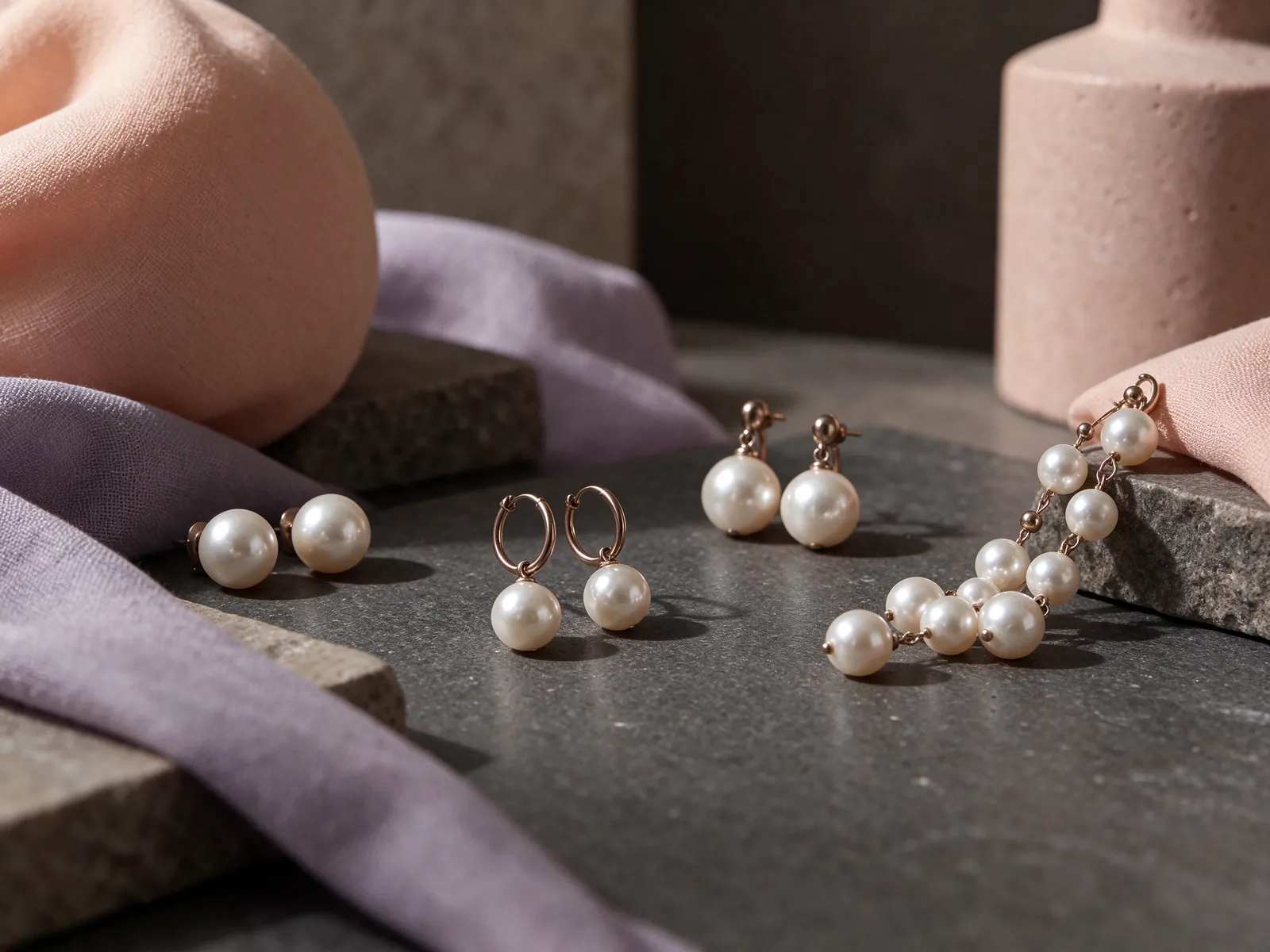
Let your normal hair and glasses show you the real effect
A small pearl may appear briefly through loose hair or remain fully visible with a short cut. If the stud seems too quiet, first tuck back the hair closest to the ear and see whether the outline becomes clear. This simple comparison helps you decide whether the issue is pearl scale or the way the hairstyle frames it, without immediately moving to a larger earring.
Eyeglass frames and hair accessories create nearby lines that can change the visual balance. Bold frames may keep the pearl in a supporting role, while a fine frame may leave more attention for the earring. Try the combination you wear most often. An earring selected without your normal glasses or hairstyle may feel different once those familiar elements are back in place.
Check hair contact behind the ear as well as visibility
Rotate your head gently and notice whether strands catch on the post or back. A compact pearl does not tell you how far the fastening extends. Apply hair spray and finish styling before putting the earrings on to reduce contact between pearls and hair products. A pleasing front view should be considered alongside a side structure that works with your everyday movements.
Build the outfit around a quiet accent instead of a size rule
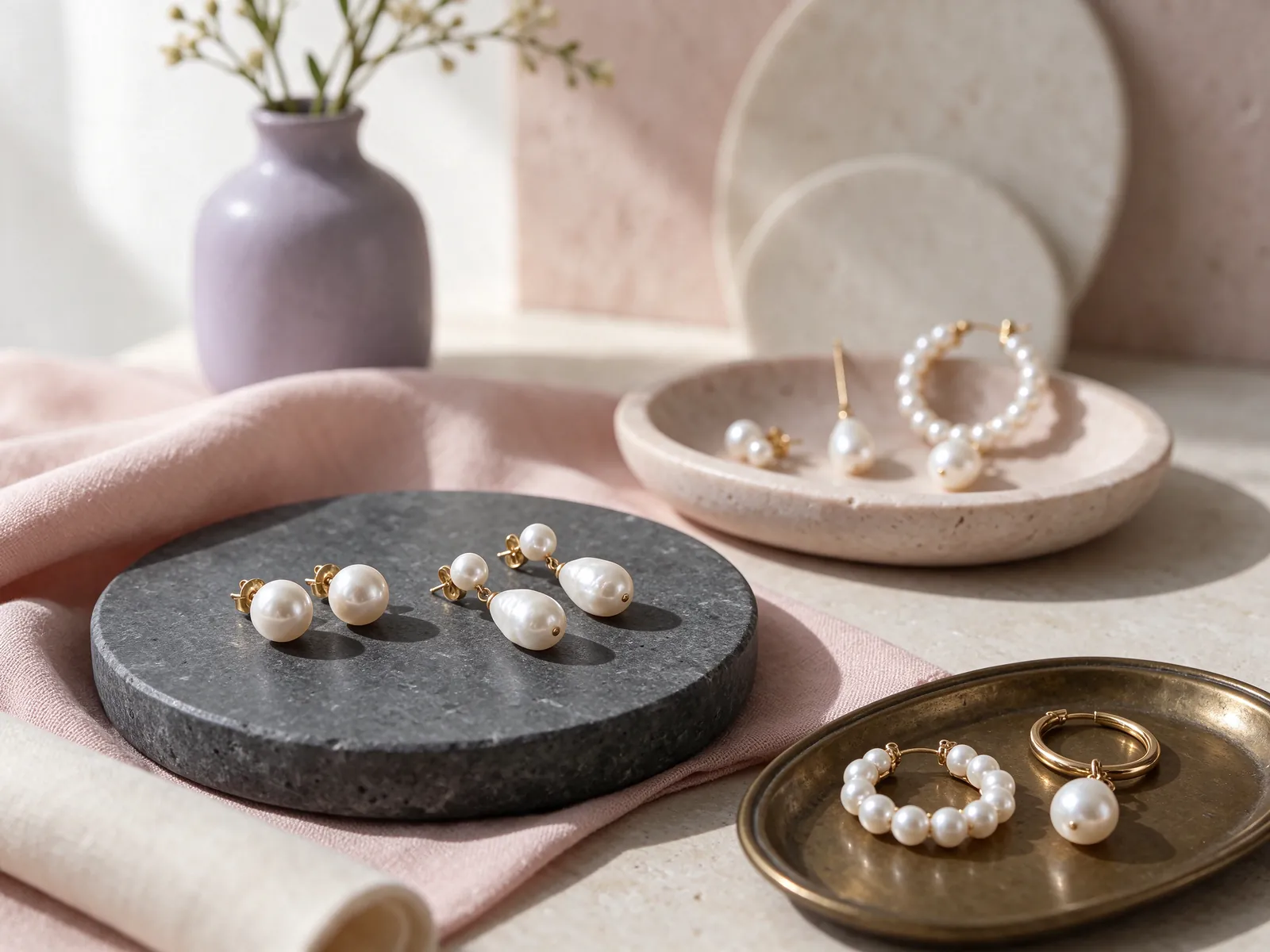
A small stud can soften the lines of a button-down shirt or add a detail beside a simple sweater. When the neckline includes a bow, strong pattern or decorative trim, a restrained earring outline can avoid competing with it. With a plain top, the pearl's luster may stand out more. Think about the visual job you want the earring to do, rather than assigning a fixed diameter to workwear.
For a dinner or celebration, swept-back hair and an open neckline can make a small pearl more visible without changing the jewelry. A noticeable necklace may lead you to keep the ears understated; wearing no necklace may leave the stud as the only close-up detail. Clothing color and the open space around the ear can help frame it, so the pearl does not have to create the entire effect by size alone.
Change one styling element before changing the earring
Try your actual outfit rather than judging the studs with an unfamiliar fitting top. Remove a prominent accessory, inspect the result and then add it back. That comparison can reveal whether the composition is crowded or the pearl simply has a quiet role. If you enjoy details noticed at close range, there is no need for the stud to be prominent in every full-body photograph.
Evaluate the mounting and back as part of the small-stud choice
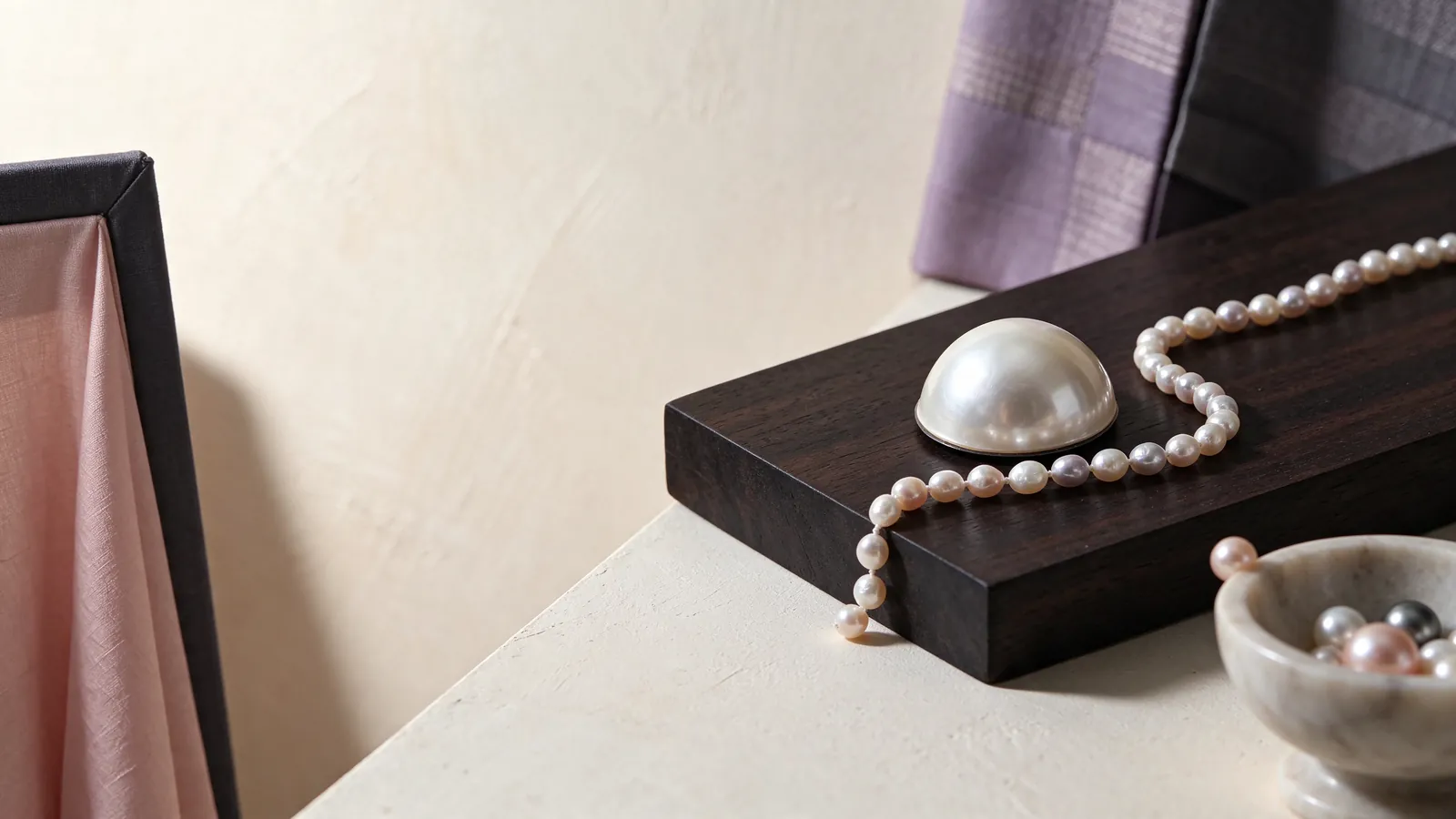
Do not equate a small pearl with a particular total weight. Metal parts, decorative elements and the back contribute to the complete earring. If a stud leans forward, examine its post position and the way the back meets the lobe. Information on earlobe support backs for pearl earrings can help you consider these structural questions without assuming diameter is the only cause of a positioning issue.
Check that the fastening closes in the way it was designed to, and pay attention to unwanted movement or pressure. Understanding pearl earring back types helps you distinguish fastening arrangements and ask whether a back is compatible with its post. Forcing a tighter fit is not a good way to compensate for an unsuitable structure. The earring should be assessed from behind as carefully as from the front.
Include headphones and routine contact in the comparison
An over-ear headset or phone can press against parts behind the lobe even when the pearl looks discreet from the front. If that contact becomes uncomfortable, remove the earrings. Small size does not establish that continuous wear is suitable for every activity. Stop wearing them and seek medical advice for persistent pain, redness or swelling rather than relying on a diameter change to address the problem.
Finish with matching and care rather than diameter alone
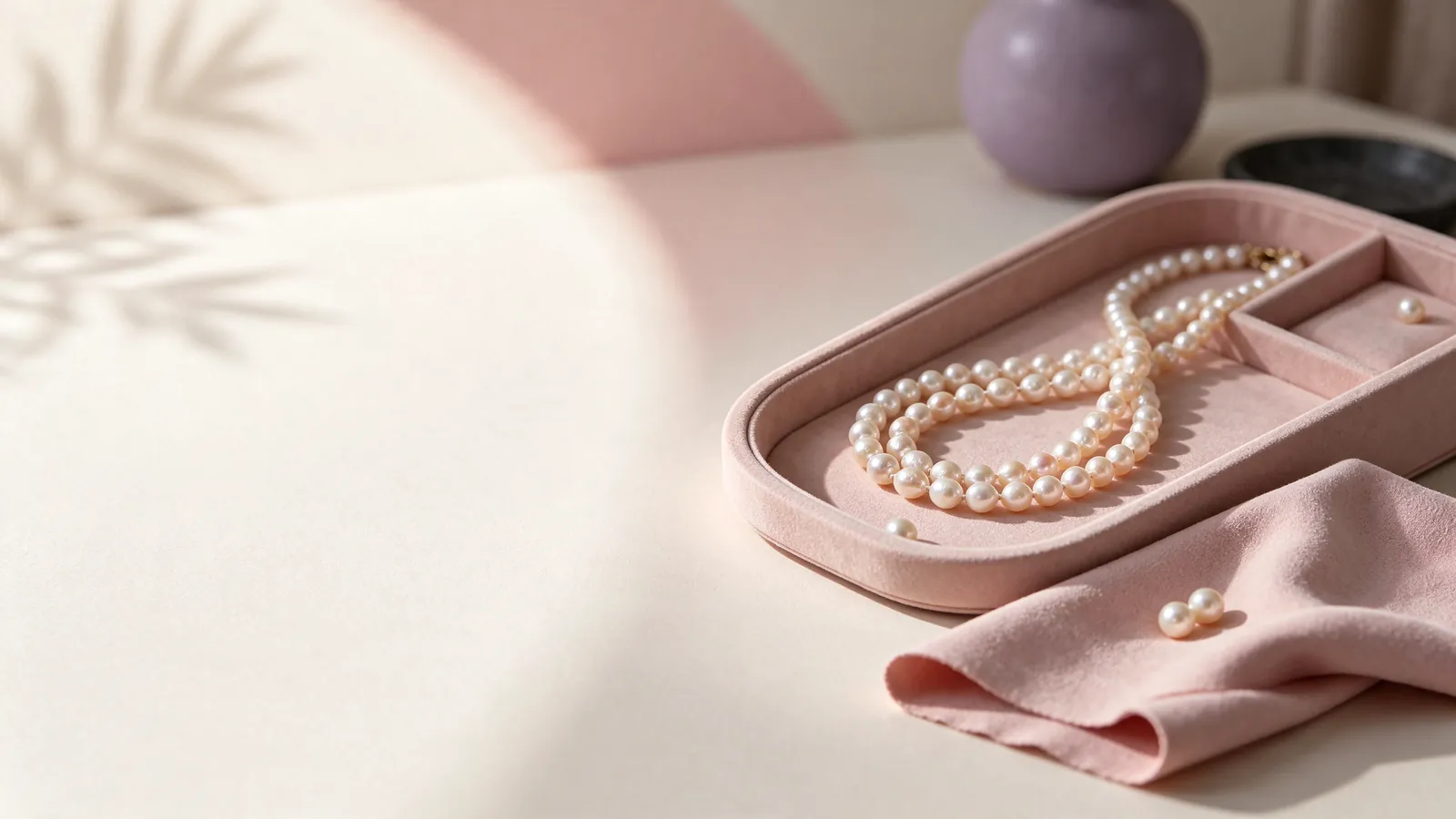
GIA identifies seven pearl quality factors: size, shape, color, luster, surface quality, nacre quality and matching. This puts diameter in context instead of making it a complete quality judgment. For a pair of studs, compare the pearls in similar light and notice whether their colors, outlines and luster feel coherent together. The small scale is a reason to inspect carefully, not to disregard those details.
A small, round or pale pearl does not establish a species, origin or natural-versus-cultured identity. If a specific identity is important to your choice, read the description and relevant documentation for the pearl concerned. Care should also be based on the material rather than apparent size. GIA states that pearls should never be cleaned in ultrasonic or steam cleaners, including pearls mounted in small studs.
Protect the surface when wiping and putting earrings away
Use a very soft, clean cloth after wearing and store the earrings so their pearl surfaces do not rub against harder objects. GIA places pearl at 2.5 on the Mohs hardness scale, making scratch avoidance relevant even for a tiny-looking accent. Check the fastening with gentle handling. If it is loose or fails to close properly, stop wearing the earring and seek an appropriate inspection.
Want to compare a subtle pearl accent with your everyday hairstyle and neckline? Contact Flint Jewelry on WhatsApp or call +85260106207 to discuss your preferred earring proportions.
| Decision | Information to consider | Front-view check | Profile check | Useful approach |
|---|---|---|---|---|
| Pearl scale | Diameter and overall setting outline | How much lobe remains visible | How far the mounting projects | Choose an outline that supports your intended look |
| Lobe and piercing | Piercing location relative to the edge | Visual balance on each side | Forward tilt or changed angle | Evaluate each ear before judging the pair |
| Hair and glasses | Your usual accessories and hairstyle | Pearl visibility in the full look | Strands contacting the fastening | Test the combination you normally wear |
| Multiple piercings | Complete fronts, backs and available space | Similar rhythm or distinct focal point | Whether the backs interfere | Allow room for the complete earrings |
| Structure and care | Fastening function and contact points | Whether the stud sits as you prefer | Pressure or unwanted movement | Combine practical fit with gentle handling |
Pearl knowledge and authoritative references
GIA describes seven pearl quality factors. Size is considered together with shape, color, luster, surface quality, nacre quality and matching, so a small diameter by itself cannot provide a complete quality assessment of pearl stud earrings.
Read the reference for this factFrequently asked questions
Should I choose 6mm if I want a small stud to show in photos?
Not from the number alone. Hair, framing, camera distance and the setting's overall outline can all affect visibility. Compare similar wearing views and your normal outfit. Decide whether you want an obvious circle or a detail noticed more readily at close range.
Can a small pearl stud still tilt forward?
Yes, positioning depends on more than pearl diameter. The post location, mounting, back and your piercing position all affect how the complete earring sits. Do not force the back tighter to correct it; reassess the structure and fit, especially if there is pressure or discomfort.
Are tiny-looking pearls identifiable by their size or color?
No. Those visible characteristics do not establish species, origin or natural-versus-cultured identity. If such information matters to you, read the description and relevant documentation for the particular pearl rather than drawing conclusions from a photo.
Will matching small studs in two piercings look too similar?
Similar circles can create a deliberate rhythm. Different sizes can instead establish a main accent and a supporting detail. The practical requirement is enough space for the complete settings and backs around healed piercings, without collision or pressure.
Can I use steam to clean a small pearl earring's metal setting?
Do not put the mounted pearl in a steam cleaner. GIA says pearls should never be cleaned by steam or ultrasonic methods. Use a very soft, clean cloth for routine pearl care, and seek cleaning guidance for the complete earring when the setting needs more attention.
Updated: