
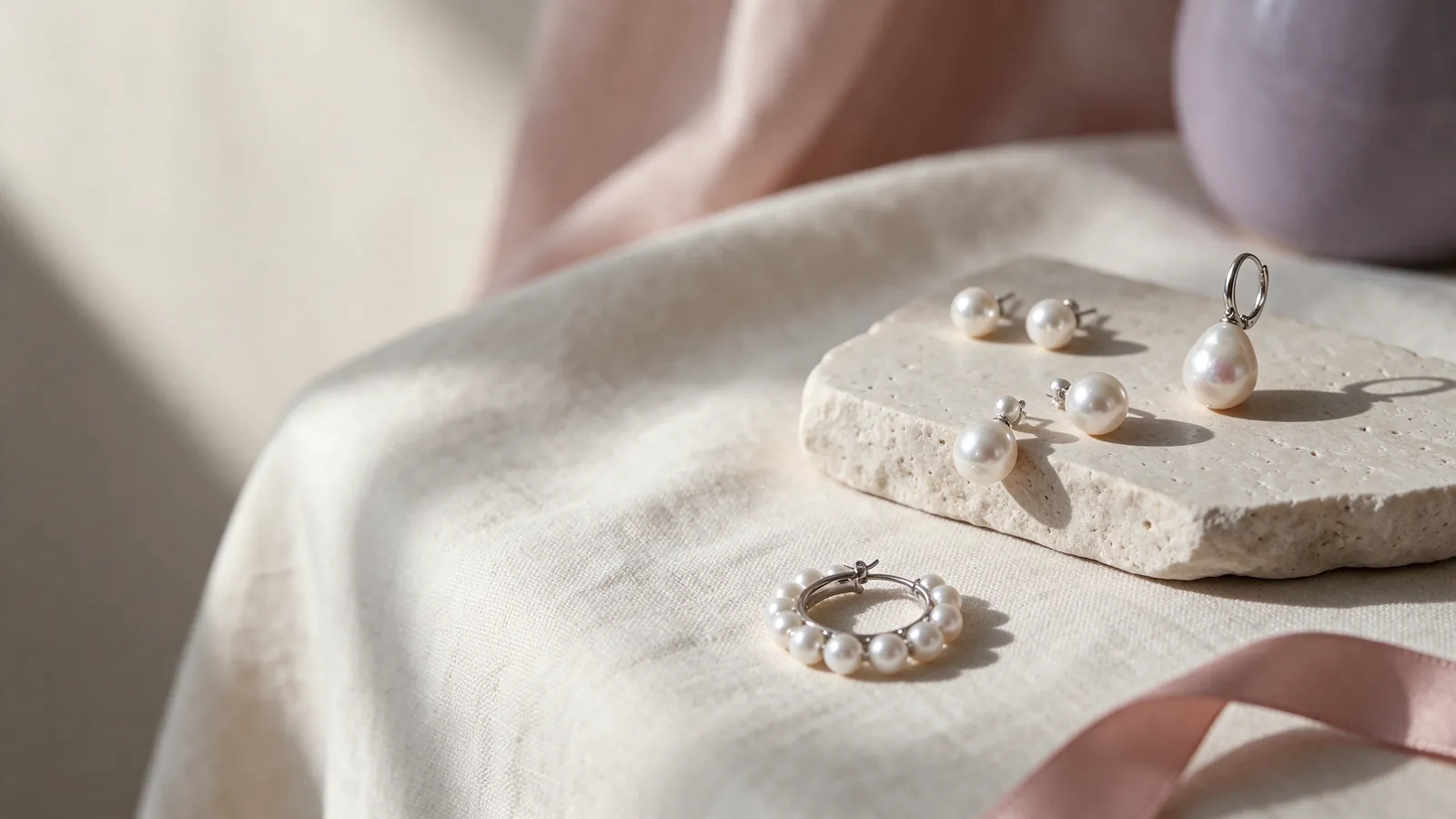
Compare the overall proportions of multi-pearl earrings, from double pearl earrings to pearl row earrings
Think of multi-pearl earrings as an outline made from several points rather than a single pearl multiplied. Double pearl earrings may create a small paired accent when the pearls are close together, or a short descending shape when one sits below the other. Pearl row earrings can lead the eye horizontally, diagonally or downward. When comparing pearl earrings, begin with the outside edges of the complete arrangement. Decide how much space you want the design to occupy beside the lobe before comparing the smaller details within it.
The same number of pearls can form very different shapes. A linear sequence encourages the eye to travel, while a group around a center creates a more concentrated pattern. Comparing floral pearl earrings is worthwhile if you are drawn to a radiating outline rather than a row. Try mentally removing the surrounding decorations from each design. What shape do the pearls themselves make? This simple exercise helps identify whether you prefer the arrangement or are primarily responding to the way the photograph is lit and styled.
For multi-pearl earrings, how do double pearl earrings and pearl row earrings balance with your earlobe and hairstyle?
Wear your hair as you normally would and check which parts of the arrangement remain visible. Look at the outer edge beside the lobe and the endpoint below it. Piercing placement can alter the resting angle, so an on-ear observation is more informative than choosing a design solely from a face-shape category.
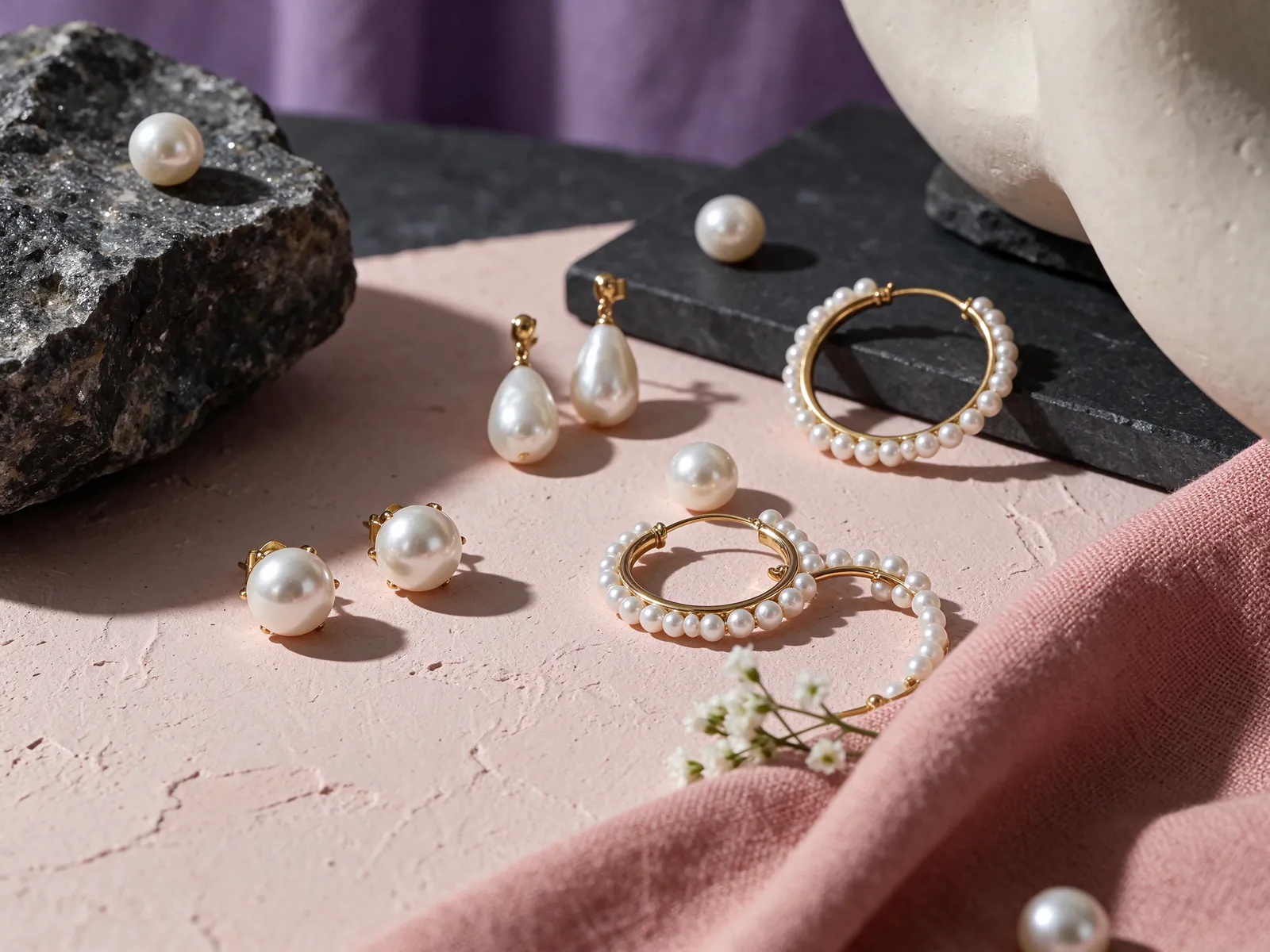
Read the gaps, size sequence and coordination between pearls
Space between pearls is part of the design. A closely packed row may read as a continuous shape, whereas a more open arrangement makes the individual pearls and connectors easier to see. Compare both against a plain background, then beside an outfit with a pattern. You may discover that the small gaps matter with a solid-color top while the overall outline dominates next to a print. Neither result is a quality ranking; it is information about how the design fits your wardrobe.
GIA describes seven pearl quality factors: size, shape, color, luster, surface quality, nacre quality and matching. For an arrangement containing several pearls, matching is a useful way to think about visual coordination. Look under consistent lighting for relationships in color, reflections and apparent size. If you are also considering halo pearl earrings, separate the pearl's own reflections from the sparkle of its surrounding setting. A luminous border and a coordinated series of pearls do not produce the same visual rhythm, even when both appear bright.
A graduated row does not need to be uniform
When size changes are intentional, look for a sequence you can understand: a progression along the row or a related idea on the opposite ear. If one pearl stands out without an obvious pattern, ask whether that contrast is part of the design. State whether your preference is coordinated uniformity or a particular kind of variation.
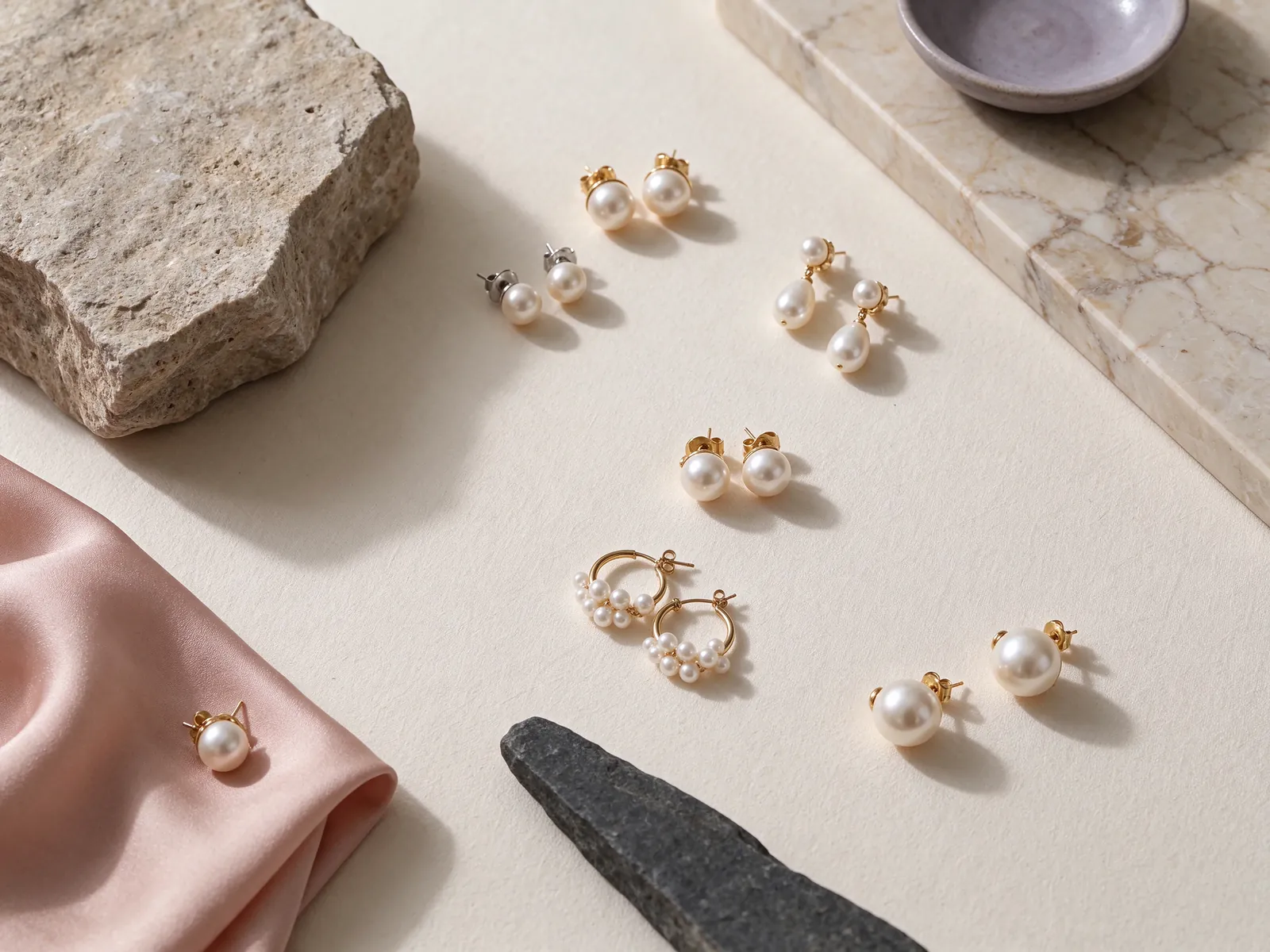
Choose a direction that works with the actual resting position
Orientation changes where attention goes. A horizontal row can emphasize the width of the earlobe, while a vertical line extends the focus beneath it. An angled arrangement introduces another direction, but it may not sit at the same angle on every ear. During a fitting, let go of the earring and observe it without supporting it with your fingers. Turn your head, pause and check again. The position it naturally returns to is the one that matters for daily wear.
If your hairstyle exposes one ear more than the other, a balanced look does not necessarily require equal visual emphasis on both sides. The styling of a single pearl earring can help you consider a quieter side alongside a more defined row. A pearl ear cuff offers a different placement, taking the accent toward the upper ear rather than extending it from the lobe. Before combining pieces, decide where you want the primary focal point and whether the secondary piece adds a useful counterpoint or unnecessary competition.
Look behind the earlobe when wearing glasses
Keep your everyday glasses on for part of the fitting. Inspect the relationship between the glasses arm, the top of the arrangement and the earring back. Move your hair and remove the glasses as you normally do. These movements reveal possible contact or obstruction that a front-facing photograph cannot show.
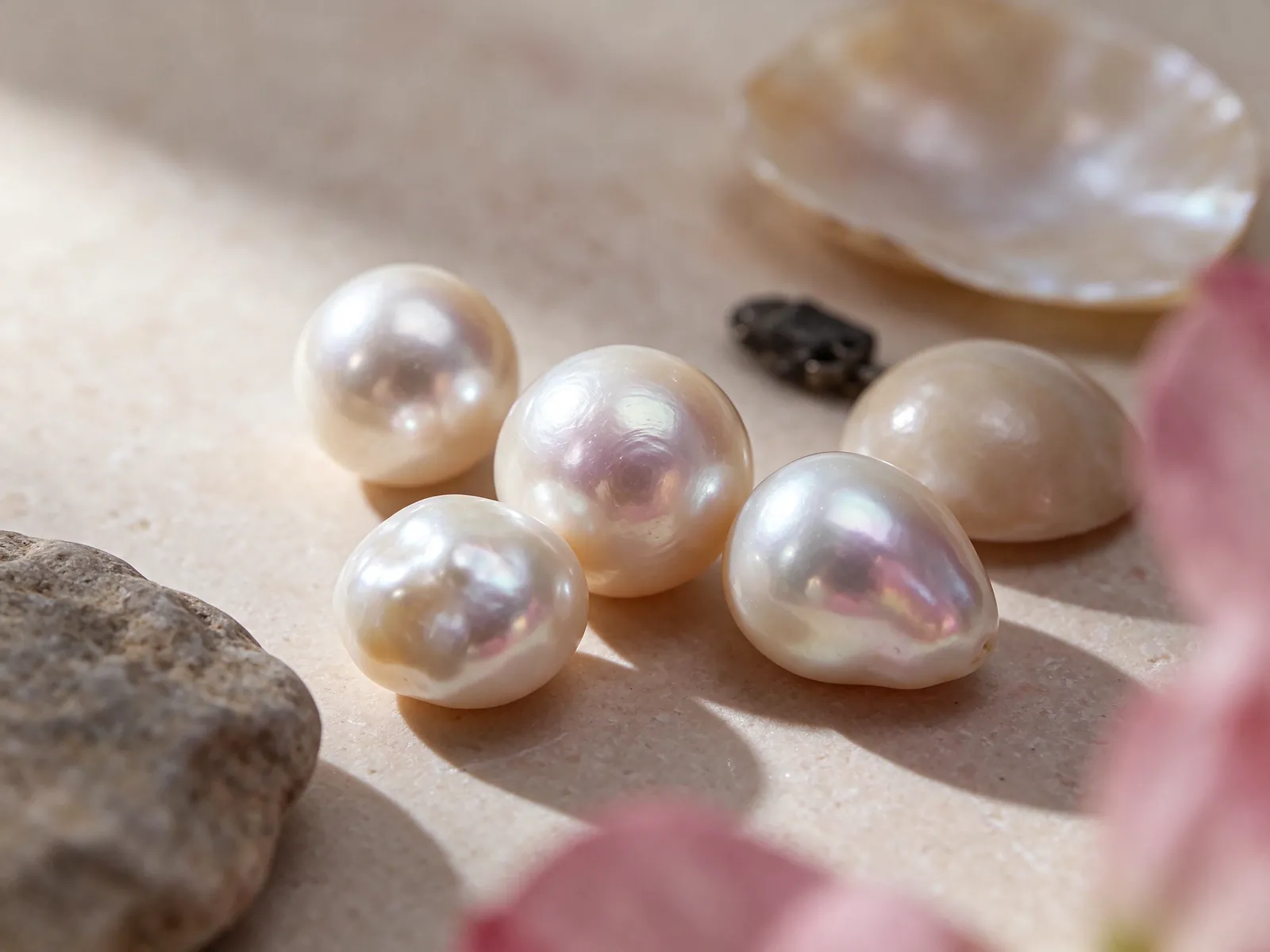
Build the outfit around visible space, not a fixed styling rule
Use your usual neckline as a starting point. A structured collar already creates lines near the face, so a compact double-pearl outline may provide the separation you enjoy. An open neckline leaves a different area of space for a downward row. Rather than treating either pairing as mandatory, compare the gap between the earring endpoint and the clothing edge. If you wear a noticeable necklace, decide whether the earrings should carry equal attention or provide a smaller repeating detail within the outfit.
Hair can conceal part of a pearl sequence and change its apparent shape. Loose hair might leave only the bottom pearl visible; a low ponytail can expose the lobe while overlapping the lower section. Check whether the visible portion still looks intentional to you. A striped top may echo a vertical row, while a diagonal arrangement can introduce contrast. Evaluate the result in a full-length mirror before moving close to inspect details, so a small feature does not outweigh the impression of the complete outfit.
Change the visibility before choosing a larger outline
For a more defined evening look, first uncover one ear or simplify the accessories around the collar. A familiar earring can become more noticeable when the full sequence is visible. If you still want greater emphasis, compare length or spacing next. This makes the decision about scale more deliberate rather than automatically adding pearls.
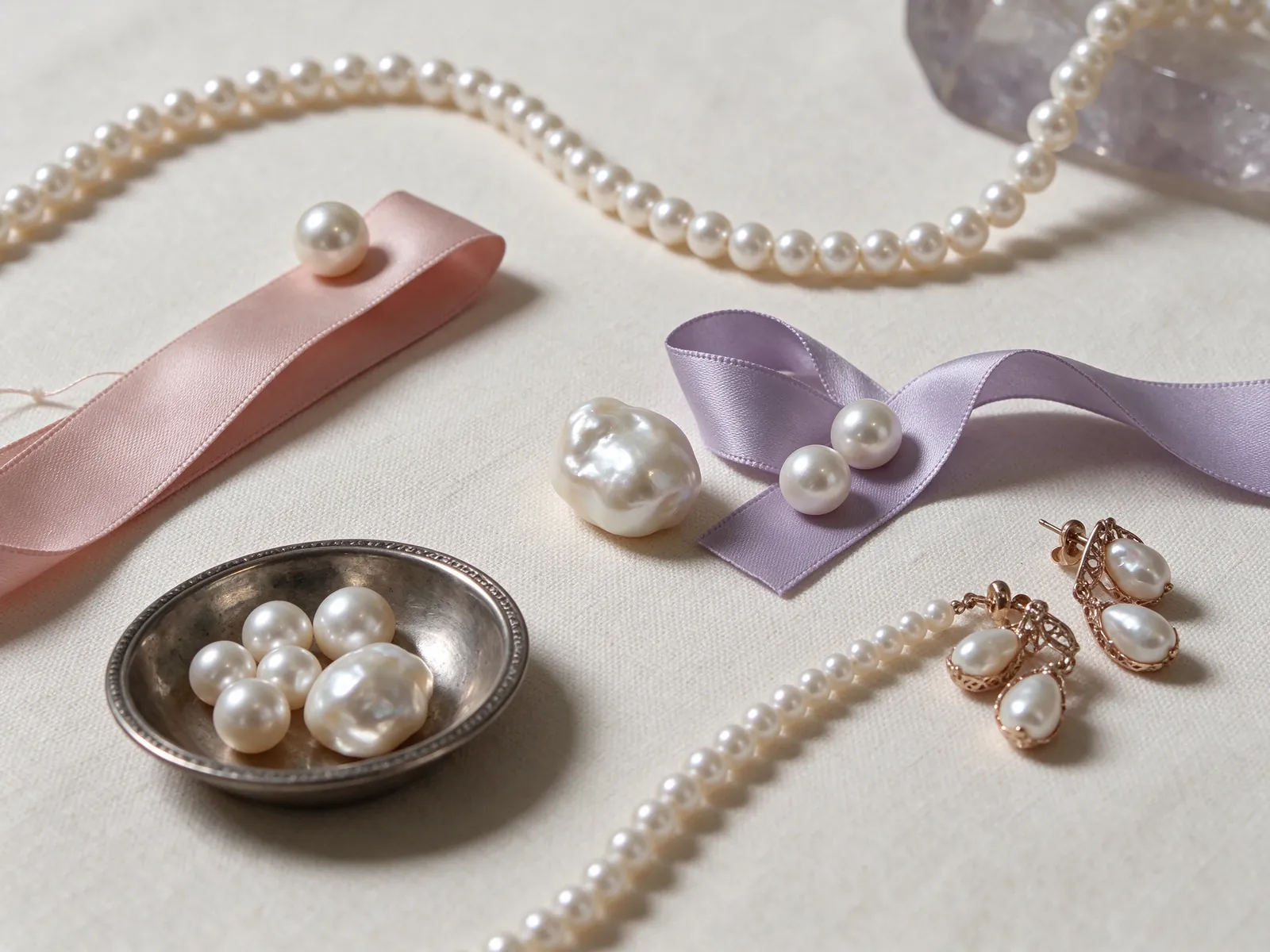
Compare structure and movement as separate design choices
A fixed pearl row and a line with movable connections may look similar when photographed, but their outlines can behave differently on the ear. Ask which parts remain fixed and which are articulated, then watch the arrangement during a gentle turn of the head. Consider both its moving shape and its position once you stop. The movement of pearl fringe earrings provides a useful comparison when you particularly enjoy a hanging rhythm. A multi-pearl layout alone does not tell you whether a design will swing or stay in one defined outline.
Think about scarves, jacket collars and other clothing that sits near the ear. A moving end may approach the fabric differently from a fixed horizontal row. The use of detachable pearl earring charms introduces another comparison: the main component has one outline, the attached element changes it, and removal creates a different appearance again. Consider which version you would actually use and how easily you can handle the fastening. More components are not automatically more practical, just as more pearls are not automatically more suitable.
Pearl count cannot predict the wearing feel
Balance, the metal framework, the fastening and the pearls all contribute to how an earring feels. During a fitting, notice tipping, pulling and pressure rather than guessing from the count. If something feels uncomfortable, identify the exact area and movement involved. A precise description is more useful than a general request for something lightweight.
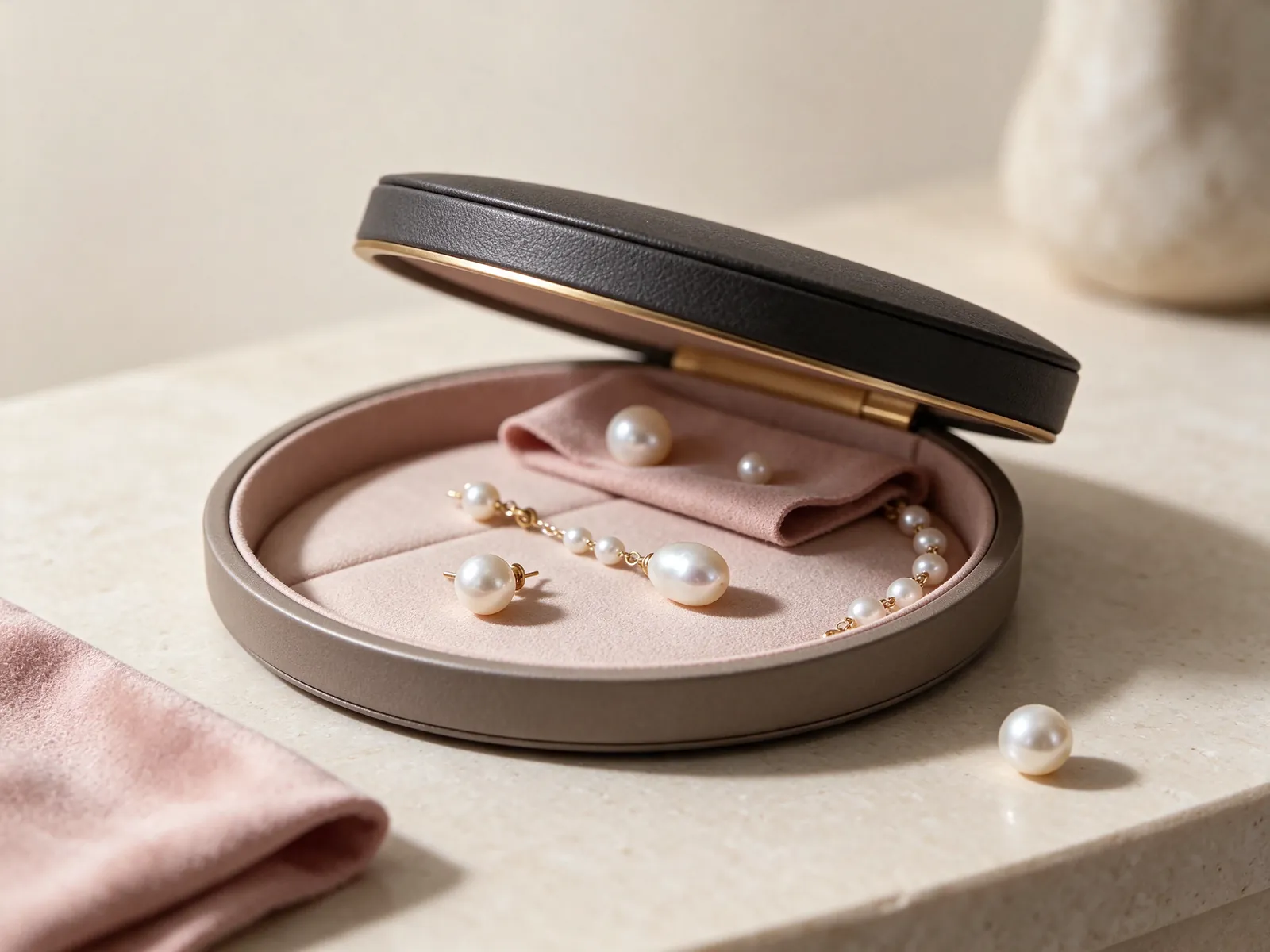
Assess luster and accent sparkle without confusing the two
Compare all the pearls in consistent light and from similar angles. Strong spotlights may brighten the whole arrangement while making relationships between the pearls harder to judge. Softer everyday lighting can help you see apparent color differences and visible surface details. Include a side view when a pearl is partly hidden by the structure. Photographs can support a discussion of appearance, but color in a photograph alone cannot establish pearl type, origin or whether a pearl is natural or cultured.
Metal showing between pearls is also part of what you see. Consider whether its color works with your regular jewelry and whether the connectors make the sequence look continuous or punctuated. With pearl and diamond earrings, identify whether you want the pearls to carry the main line and the diamonds to add small accents, or whether both should share attention. This is a decision about the distribution of light and focus. It is different from deciding how many pearls you want in the arrangement.
Describe the features you can actually see
When comparing designs, record specific preferences such as close spacing, a downward direction, coordinated apparent color or an endpoint clear of the collar. Keep the background and top consistent where possible. These observations make a clearer design brief than subjective labels such as fancy or expensive-looking, and help distinguish arrangement preferences from decorative ones.
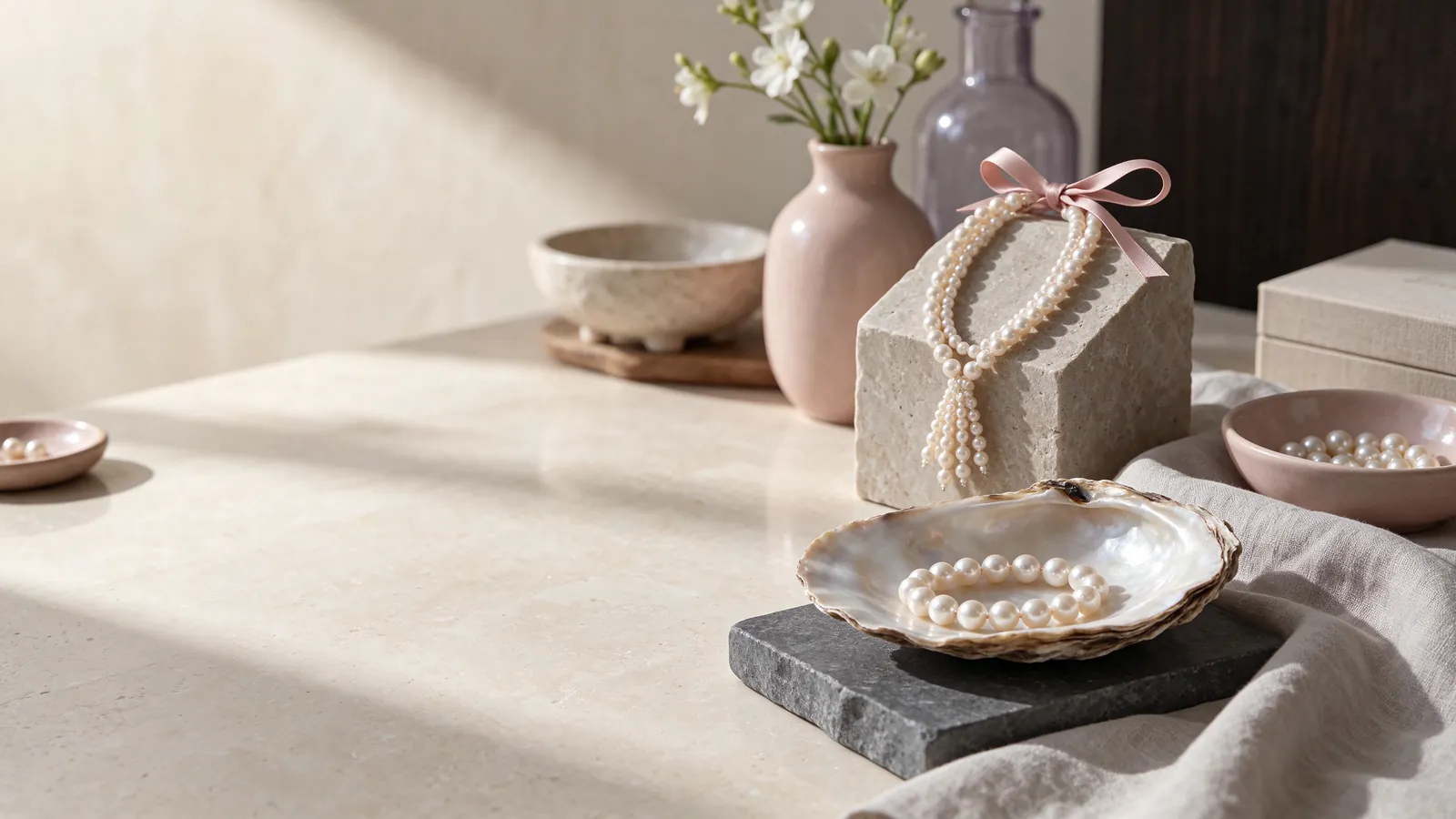
Include fastening access and gentle care in the final decision
Before deciding, repeat a few ordinary actions with the arrangement in place: turn your head, move hair behind the ear and put on the outer layer you often wear. Check whether the visible line changes or touches clothing. Make sure you can handle the fastening while holding a suitable metal area instead of pulling the pearl sequence. For storage, keep the projecting metal parts of one earring away from the pearls of the other. Everyday handling is part of suitability, not an issue to consider only after purchase.
GIA lists pearl at 2.5 on the Mohs hardness scale and says never to use ultrasonic or steam cleaners on pearls. Wipe gently with a very soft clean cloth after wearing, and do not scrape narrow spaces with hard tools. Put earrings on after applying perfume or hair spray, and avoid acids and excessive heat. If the pearl row unexpectedly changes angle or a connection appears loose, stop wearing it and seek structural advice rather than repeatedly bending or twisting the arrangement to investigate.
Turn your observations into a focused conversation
When discussing earring design preferences with Flint Jewelry on WhatsApp, describe your regular neckline, hairstyle and preferred direction beside the lobe. Include whether you wear glasses and whether you like movement. This gives the conversation a practical starting point: the outline and daily experience you want, rather than a pearl count without context.
| Feature | Outline to consider | Outfit context | What to observe on the ear |
|---|---|---|---|
| Close double-pearl arrangement | A compact paired accent | A structured collar or other nearby detail | The outer edge relative to the earlobe |
| Spaced double-pearl arrangement | Two points with visible separation | A solid-color top and an uncovered ear | Whether you enjoy the amount of open space |
| Horizontal sequence | A line traveling across the lobe | An emphasis on the ear's outline | The angle after releasing your supporting hand |
| Vertical or diagonal sequence | A line extending below or beside the lobe | An open neckline or hair pulled back | Clearance from the collar and hair |
| Movable connections | A sequence that changes with motion | An interest in a hanging rhythm | How it settles after movement and contacts clothing |
Pearl knowledge and authoritative references
GIA identifies seven pearl quality factors: size, shape, color, luster, surface quality, nacre quality and matching. Matching helps frame the comparison of several pearls sharing one earring outline.
Read the reference for this factFrequently asked questions
Can two pearls be worn from a single piercing?
Pearl count and piercing count are different questions. A connected design may place multiple pearls on one structure, while another arrangement may use separate fastening parts. Inspect the actual posts or attachment method to determine what the design requires.
Are tight pearl rows always more stable than open ones?
No. Visible spacing does not establish stability by itself. The structure, balance, fastening and piercing placement affect the resting position. During a fitting, let the arrangement settle without holding it at a preferred angle, then observe what happens after a natural head movement.
How can I tell whether different-sized pearls are an intentional design feature?
Look for an understandable progression or a related pattern on the opposite earring, and ask about the intended arrangement. If you prefer uniformity, say so directly. An intentional variation can be attractive, but it still needs to match your own preference for the overall rhythm.
Will adding more pearls make earrings easier to see with long hair?
Not necessarily. First examine the portion that remains visible and try uncovering one ear. Visibility may depend more on direction, endpoint and hairstyle than on count. Choose a shape that works in the way you normally wear your hair, rather than relying on a fully exposed promotional view.
What should I learn about the recipient before giving multi-pearl earrings?
Ask about piercings, preferred fastening, everyday glasses and hairstyle, then whether the recipient likes a compact focus or an extended line. Those details help establish practical and visual suitability. A larger count alone does not indicate that a gift will fit the recipient's style.
Updated: