
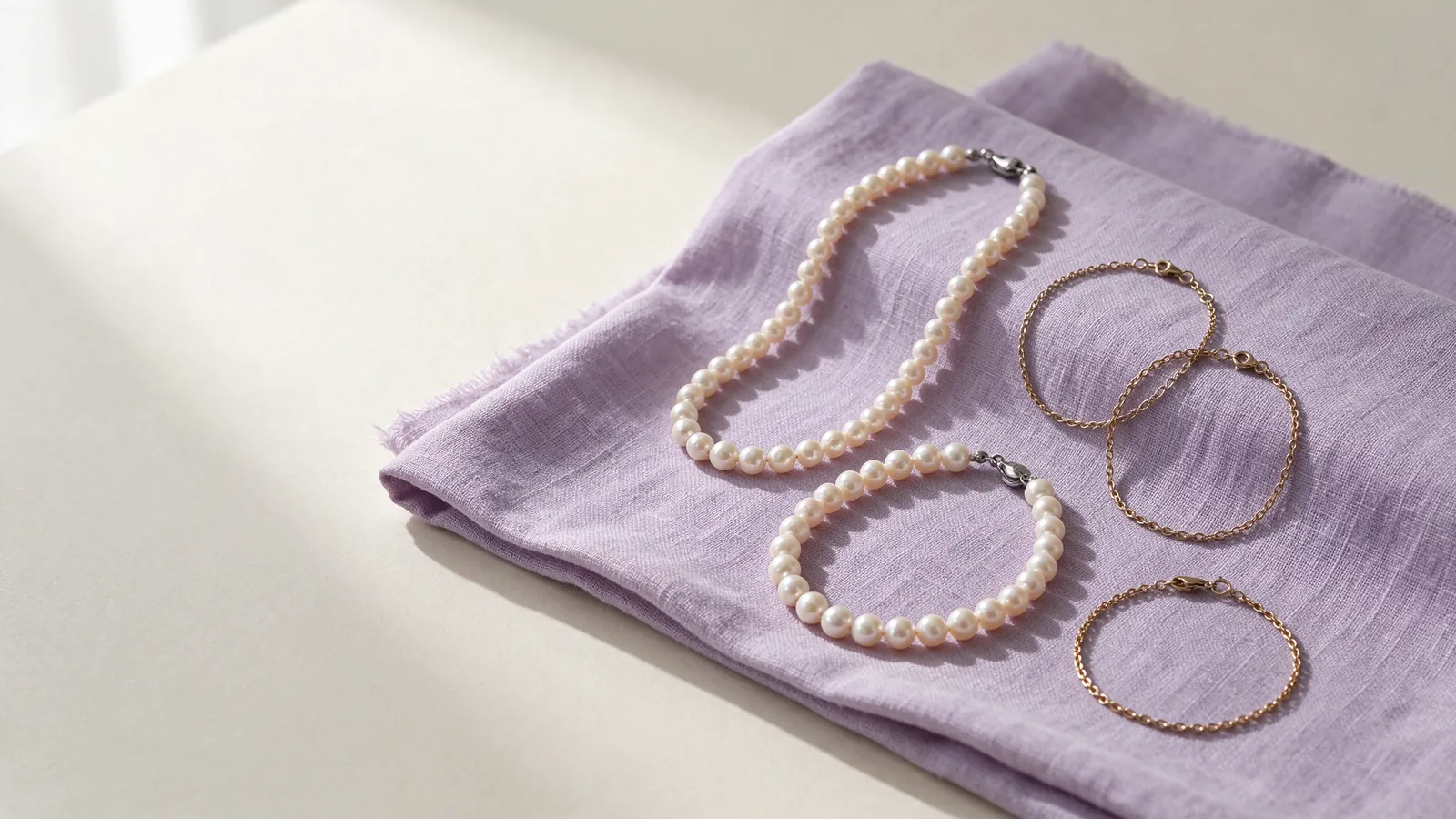
How does flower pearl bracelet scale affect pearl flower bracelet detail and floral pearl bracelet styling?
Start your flower pearl bracelet comparison at a normal viewing distance. Does the eye notice a distinct flower, a small accent, or a pattern that travels around the wrist? Petal spacing and the balance between the motif and chain influence that impression. Looking at a pearl bracelet as a complete silhouette keeps an enlarged detail photograph from becoming your only guide. The flower should make visual sense on your wrist, not merely fill an attractive image.
A pearl flower bracelet with tightly grouped elements may look concentrated, while a more open outline leaves space for the wrist to show through. Check what remains visible when a sleeve covers part of the motif. For a floral pearl bracelet, a simple shape can sometimes communicate the flower more clearly than many small details. The useful question is whether the outline suits your preferred level of emphasis, not whether it has the greatest amount of decoration.
From flower pearl bracelet proportions to pearl flower bracelet fit: wearing a floral pearl bracelet comfortably
Try three ordinary positions: let your hand hang, rest your forearm where you would type, and rotate the wrist gently. Follow the flower as it moves. If it presses underneath the wrist or turns face down, consider its connection and balance as well as length. Comfortable room cannot be defined by appearance alone or by a single finger-gap rule, because a raised motif behaves differently from an undecorated chain.
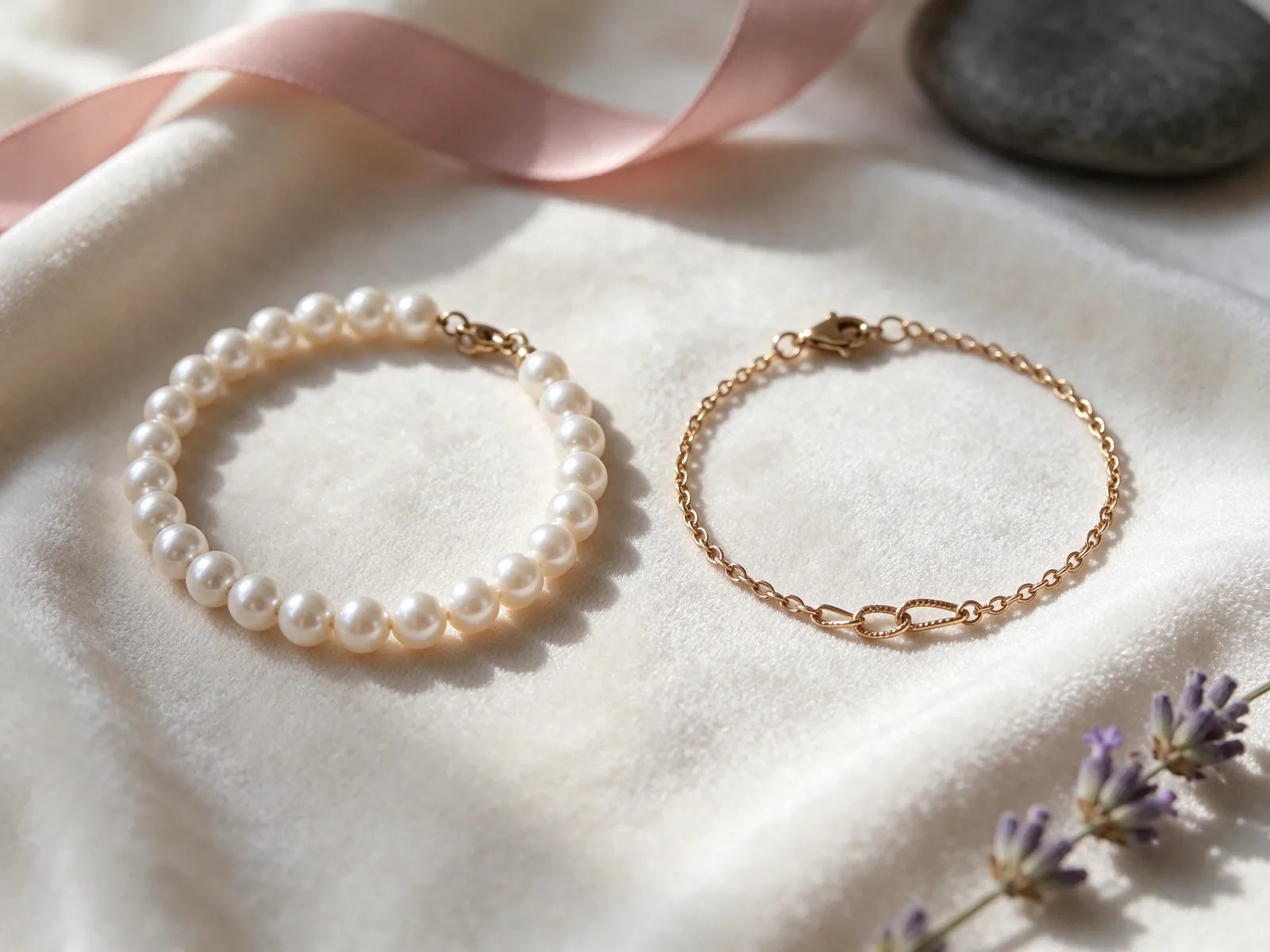
Build the fit around your wrist and working position
Measure around the intended wearing point with a flexible tape that rests close to the skin without compression. Note where you measured, since a bracelet worn nearer the hand may sit differently from one worn farther up the wrist. The pearl bracelet size guide distinguishes wrist circumference from the finished length of the piece. A flower's span, the closure and the chain's flexibility all affect the fit, so another bracelet's length is not a complete answer.
Re-create an everyday task during the fitting. A person who spends time at a keyboard needs to see whether the flower settles against the desk; someone wearing fitted cuffs needs to see whether the sleeve pushes it toward the hand. Fasten the cuff and sit down before deciding. The bracelet can look well positioned with your arm raised yet move to a less convenient spot once your forearm is resting on a surface.
Use length options without overlooking rotation
When considering an adjustable pearl bracelet, test the settings you would actually use with different sleeves. Look at where the trailing chain falls and whether the flower rotates more as the fit loosens. Adjustment gives you position choices, not a guarantee that the motif stays centered. Avoid solving every movement issue by tightening the bracelet: the aim is a practical resting position with room for ordinary wrist motion, rather than a flower held in place by pressure.
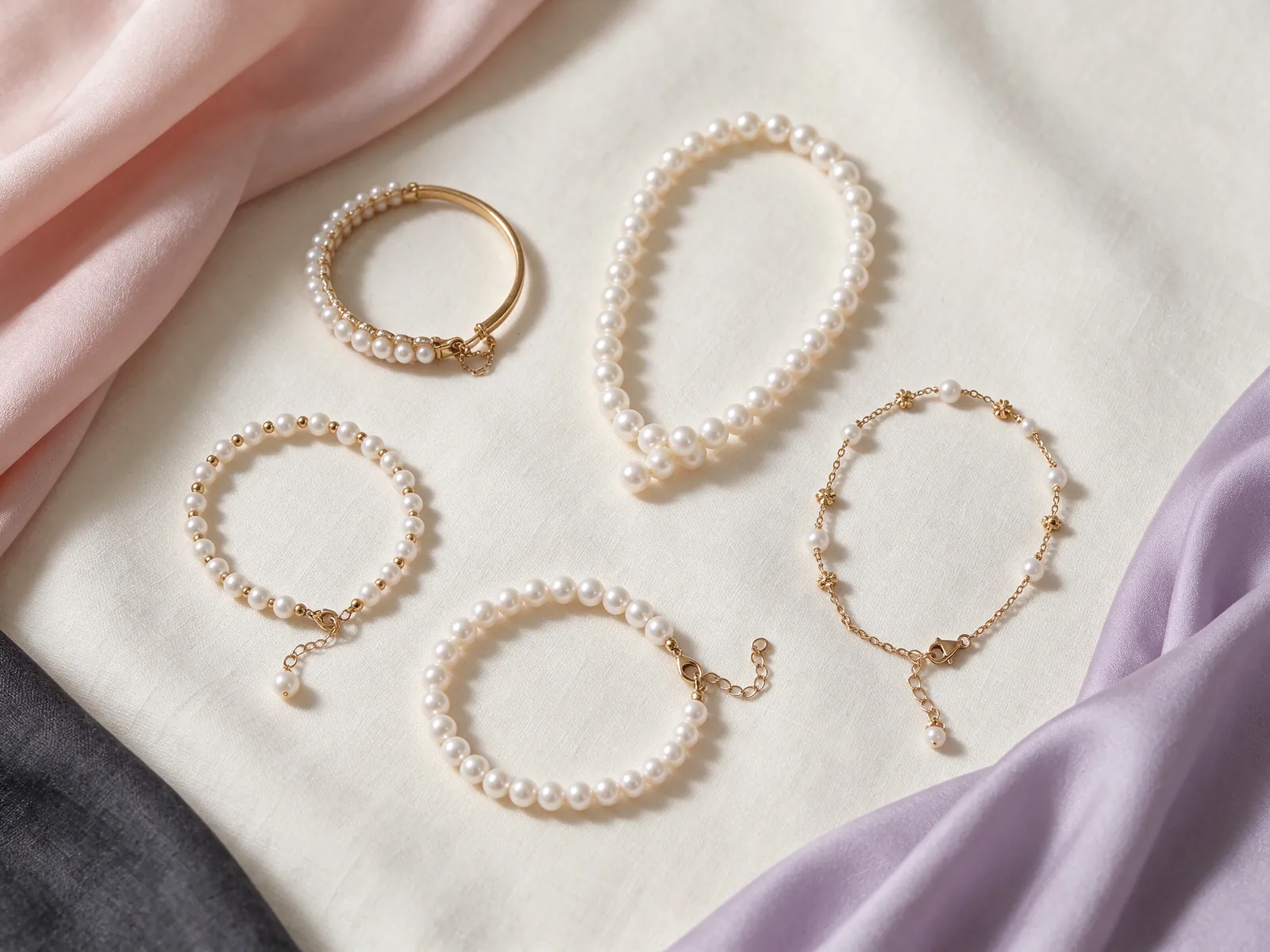
Evaluate the pearls separately from the botanical name
The word flower tells you about a motif, not the pearls' species or origin. A design may use one pearl within a petal outline or several pearls to suggest the petals themselves. Neither arrangement establishes natural-versus-cultured identity or certification. Read the pearl description on its own terms, and do not borrow specifications from a similarly shaped necklace or pair of earrings. A shared floral theme does not make separate pieces identical in construction or pearl characteristics.
GIA lists seven pearl quality factors: size, shape, color, luster, surface quality, nacre quality and matching. A multi-pearl flower offers a clear reason to consider matching: neighboring elements influence how complete the flower appears. Compare their relationship rather than selecting the brightest one as representative of all the others. Intentional differences in color or shape can belong to a balanced composition; the goal is to understand the whole design alongside the individual pearl qualities.
Compare reflections without treating a photo as a grade
View the motif in gentle light and move it slowly enough to notice how each pearl reflects that light. Then step back to judge whether the flower remains visually coherent. A dark area might be a shadow from the setting or arrangement, so a still image deserves caution. Backgrounds and display settings can change apparent color, and an exceptionally bright picture cannot establish nacre thickness, identity or a particular quality grade.
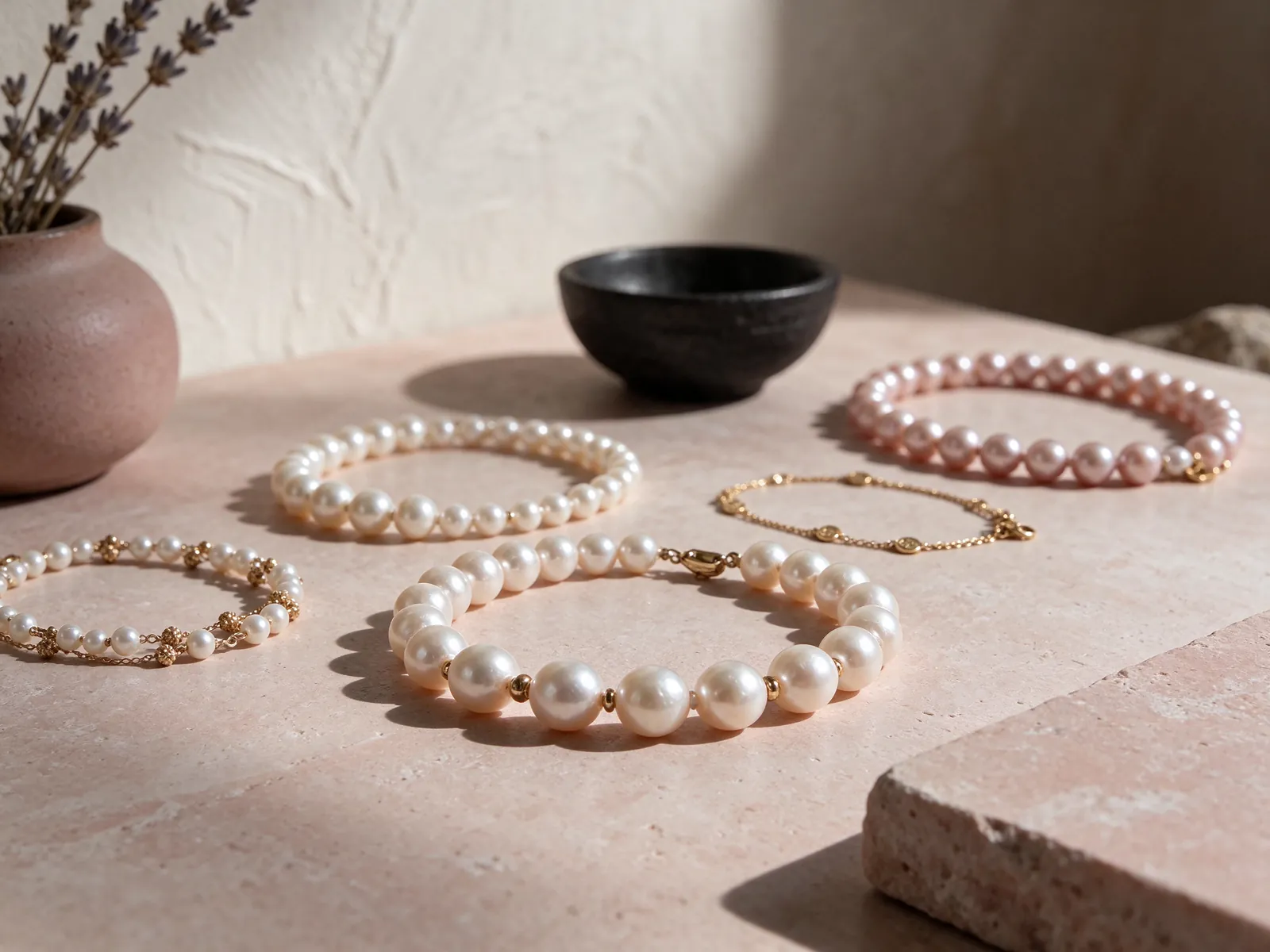
Give the flower enough space in your outfit
For everyday shirts, pay attention to where the cuff ends relative to the flower. A partly covered outline should still look intentional, and the fabric should not repeatedly push against an edge. With loose sweaters, notice whether petals, connecting loops or the closure meet the knit during normal dressing. Test the sleeve naturally rather than dragging fabric across the piece. A bracelet that catches your usual clothes may need a different wearing position or a different outfit pairing.
An exposed wrist with a short sleeve or evening outfit gives the flower a clearer stage. If the clothing already has a busy botanical print, consider whether a restrained outline would be easier to read. You can coordinate the bracelet with the color of a watch or ring without repeating every detail. Decide whether you want it to blend with existing jewelry or supply a contrast, keeping the clothing and the amount of visible wrist in mind.
Separate an attractive stack from repeated contact
Two pieces may look balanced together but still slide into one another as you walk or reach for a bag. Check where the flower meets a watch case or neighboring bracelet, especially if a petal can become trapped. Opposite wrists are an option when you want coordinated accessories without direct rubbing. If you keep them together, judge them in motion as well as in a still mirror pose; avoid using visual balance as the only test.
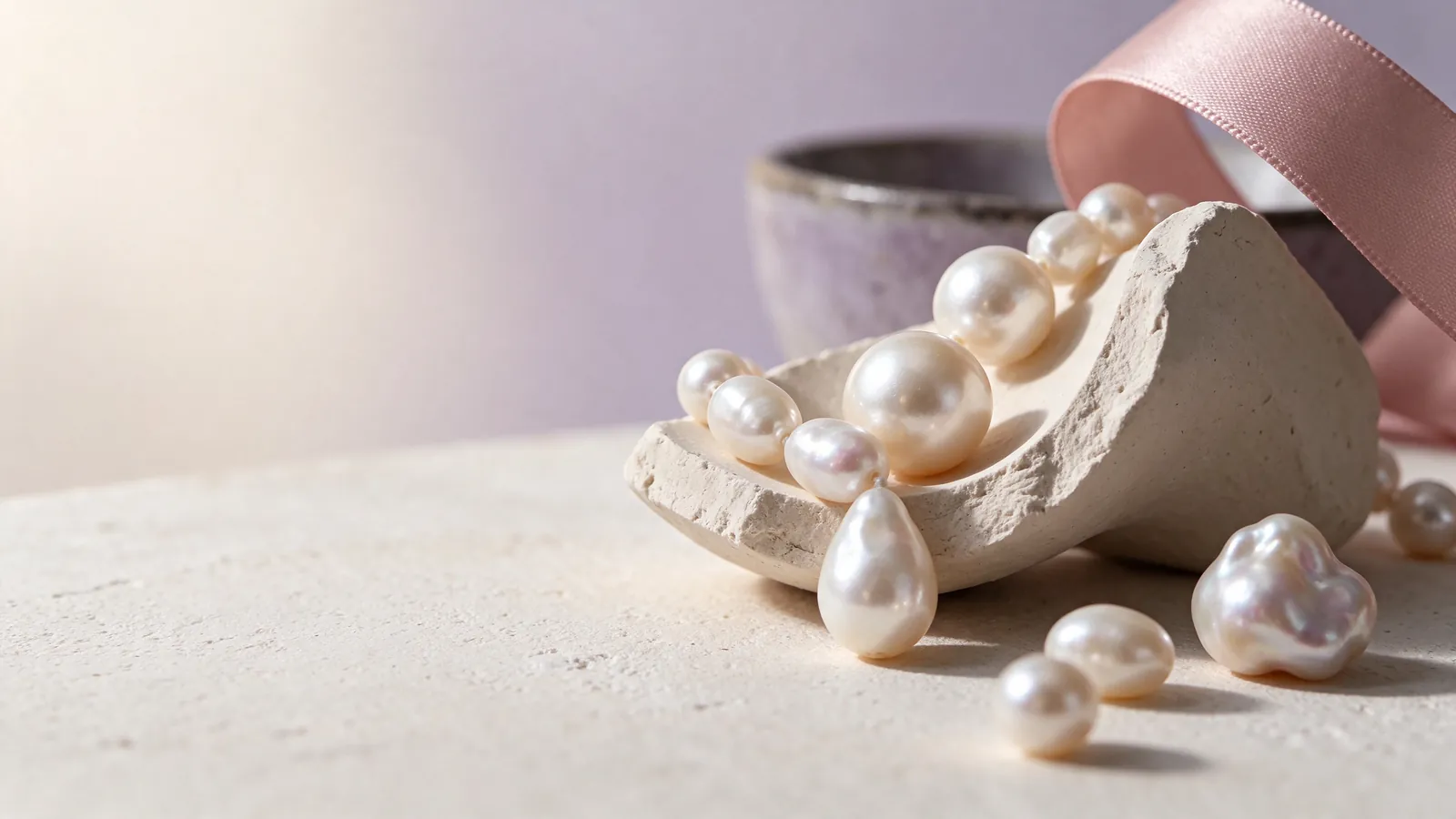
Check how the floral element is connected and fastened
A stationary flower along a chain and a hanging flower have different movement patterns. For the first, examine the angle against the wrist; for the second, follow the swing when your hand changes direction. A pearl charm bracelet comparison can clarify what an active connection means, but it does not imply that a floral element is removable. Look at the actual structure and whether moving parts meet the clasp, skin or nearby surfaces during use.
Try fastening and unfastening with your usual jewelry hand, without relying on the flower as a handle. Consider whether you can grip the closure and recognize when it is closed, then check for twisting along the chain. A pearl bracelet clasp should be judged as part of the entire piece, including the floral weight distribution. Repeatedly pulling on decorative petals for leverage is a sign to reconsider the method, not a useful fastening habit.
The back and side deserve their own inspection
Examine the flower's underside and profile when it rests at different points around the wrist. Notice an edge that presses into the skin, a projecting connection or an angle that feels awkward beside the wrist bone. Gentle wearing and removal reveal more useful information than pulling with a fingernail. If the piece becomes loose or causes scraping, stop wearing it and seek a jewelry professional's assessment rather than reshaping the decorative outline at home.
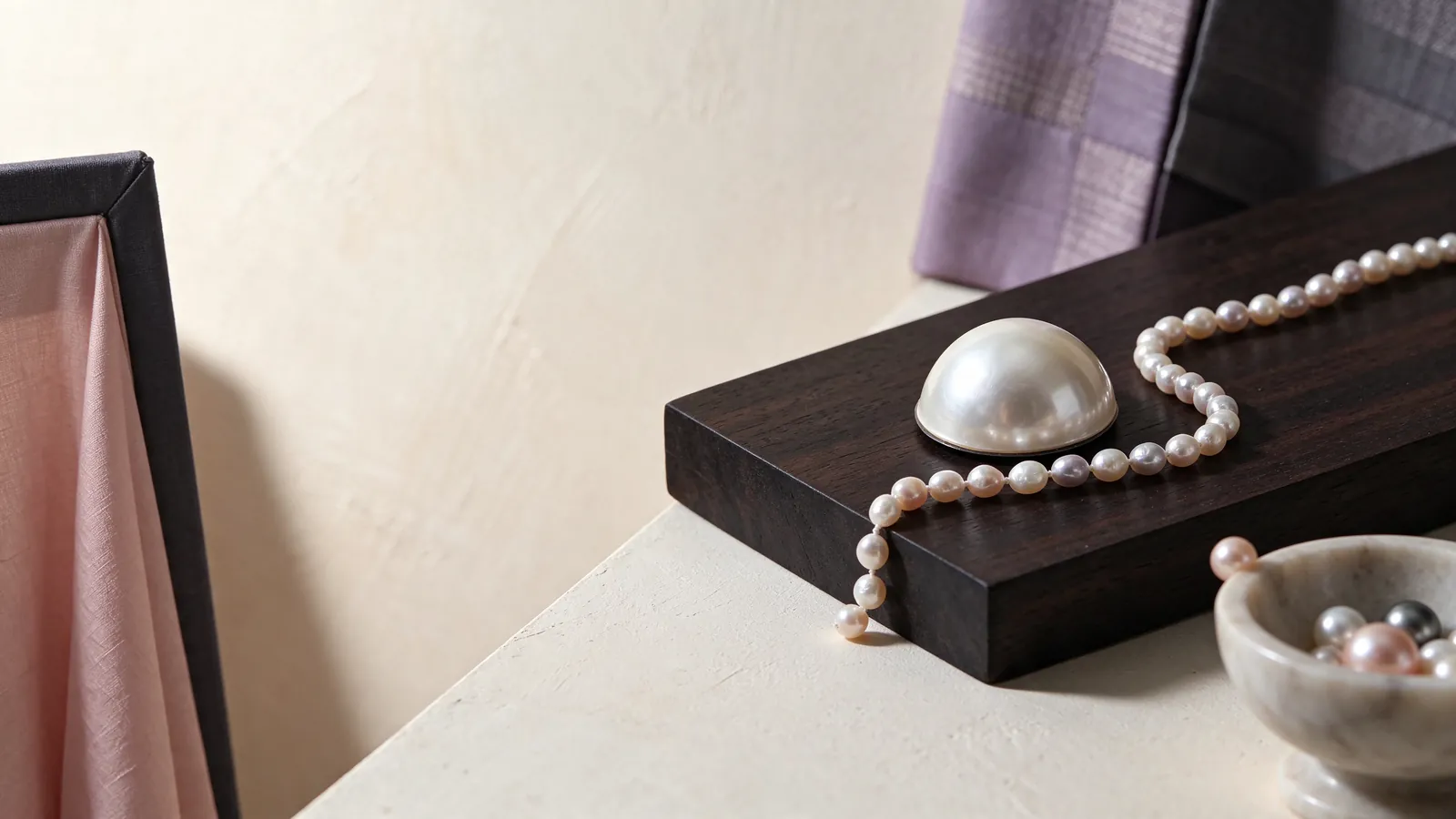
Choose between a floral focal point and other design rhythms
A heart pearl bracelet offers a different kind of focal point: its recognizable symbol can be read quickly, while a flower relies on petal outline and composition. Think about which visual language you enjoy, without assuming either motif belongs to a particular age or occasion. Compare similar sleeve conditions and wrist positions. A soft-focus background may make one photograph seem more romantic, but that mood is not a substitute for judging the actual jewelry.
If a concentrated flower feels too prominent, a pearl station bracelet provides another rhythm through the spaces between pearls and chain. Your attention travels between accents instead of resting on a single outlined motif. Consider which approach suits the movements you see most often during work and conversation. Also view the bracelet from the side: a focal flower may turn out of sight, while a distributed arrangement presents different accents as the wrist rotates.
Compare construction before choosing the decoration
A half chain pearl bracelet concerns the balance of pearl sections and chain sections; flower is a description of a motif. Keeping those ideas separate helps you make a clearer shortlist. Decide which overall structure you prefer, then assess the floral detail and test the fit. A motif name cannot tell you how flexible the bracelet is, and equal stated lengths do not make different constructions feel the same against the wrist.
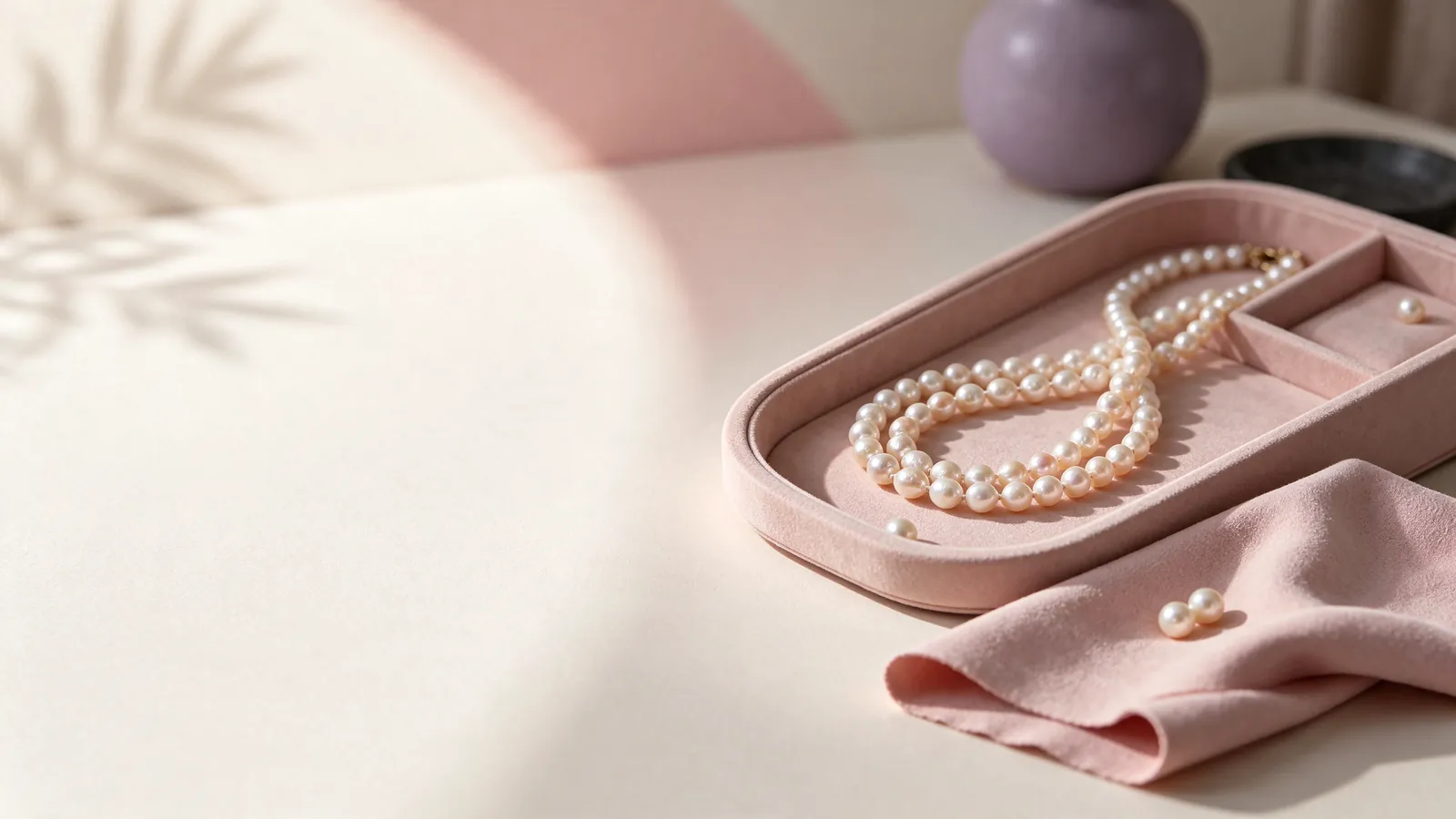
Plan gentle care and a gift that works beyond the photograph
Detailed petals do not call for aggressive cleaning. GIA ranks pearl at 2.5 on the Mohs hardness scale and states that ultrasonic and steam cleaners should never be used for pearls. Wipe accessible surfaces gently with a very soft, clean cloth after wearing. Keep perfume, hair spray, acids and excessive heat away from the pearls. Do not force a hard brush or pointed tool into the spaces between the pearls and their floral surroundings.
Put the bracelet away separately so that other jewelry does not rub the pearls or press on the flower. Keep the chain from wrapping around petals. If the construction includes string and it has been cleaned with water, wait until the string is completely dry before wearing, even if the pearls already look dry. For debris that cannot be removed by gentle wiping, have a jewelry professional consider the piece's construction instead of experimenting with chemicals or heat.
Use the recipient's routine to guide a floral gift
For a gift, observe the recipient's everyday sleeves, watch habits and typical hand movements as well as their interest in flowers. A dramatic motif may delight them visually yet need more space than their usual cuffs allow. Their preferred fit and clasp handling are useful clues, and your own wrist size is not a replacement for theirs. Choosing around these practical details makes the flower more personal than simply picking the most elaborate photograph.
For help comparing floral proportions with your usual sleeves and wrist measurement, contact Flint Jewelry on WhatsApp or call +85260106207. Share the silhouette you prefer and the movements that matter to you, so the conversation stays focused on fit and styling.
| Design area | Visual question | Movement test | Outfit consideration | Useful outcome |
|---|---|---|---|---|
| Flower silhouette | Are petals clear and the profile suitable? | Turn the wrist and inspect the side | Check what the cuff leaves visible | An intentional outline with comfortable clearance |
| Pearls within the motif | Do color, luster and shape work together? | Compare slowly in gentle light | View with the clothing palette | A coherent arrangement, not just one bright pearl |
| Length and placement | Where does the motif naturally settle? | Sit at a desk and lower the arm | Close a regularly worn cuff | Space for motion without persistent pressure |
| Hanging element | How is it connected and where does it swing? | Reach for a bag and relax the hand | Watch for sleeve contact | A movement pattern that suits daily tasks |
| Closure and underside | Can you handle it without pulling the flower? | Fasten, unfasten and check for twisting | Notice contact with loose knit loops | Manageable fastening and a smooth wearing angle |
Pearl knowledge and authoritative references
GIA names seven pearl quality factors: size, shape, color, luster, surface quality, nacre quality and matching. In a flower composed of multiple pearls, matching helps explain the arrangement but should be considered with the other factors.
Read the reference for this factFrequently asked questions
Does a floral design name identify the pearl species?
No. It describes the decorative theme. Read the pearl description separately for identity and other documented characteristics; the flower's shape and photographs cannot establish species, origin or natural-versus-cultured status.
How can I tell whether the flower will bother me while typing?
Rest your forearm in your normal keyboard position and follow where the motif settles as you turn the wrist. Notice contact beneath the wrist and pressure near the desk. A standing mirror view alone will not show those working conditions.
Should I choose a heart or flower motif for everyday wear?
Choose the visual emphasis you prefer, then compare both with your normal sleeves and hand movements. Hearts provide a recognizable symbol; flowers rely on petal composition. Neither motif is limited to a particular age group or formal occasion.
Is the tightest adjustable setting best for keeping the flower upright?
Not automatically. Rotation also depends on the motif's balance and connection. Test useful settings with everyday movement and avoid relying on pressure to hold the flower in place. Comfort and stable placement should be considered together.
Can I use a hard brush to reach dirt between the petals?
Avoid hard brushes and pointed tools around pearls. GIA recommends gentle care and excludes ultrasonic and steam cleaning. Use a very soft, clean cloth on accessible surfaces, and let a jewelry professional handle dirt that cannot be reached safely.
Updated: