
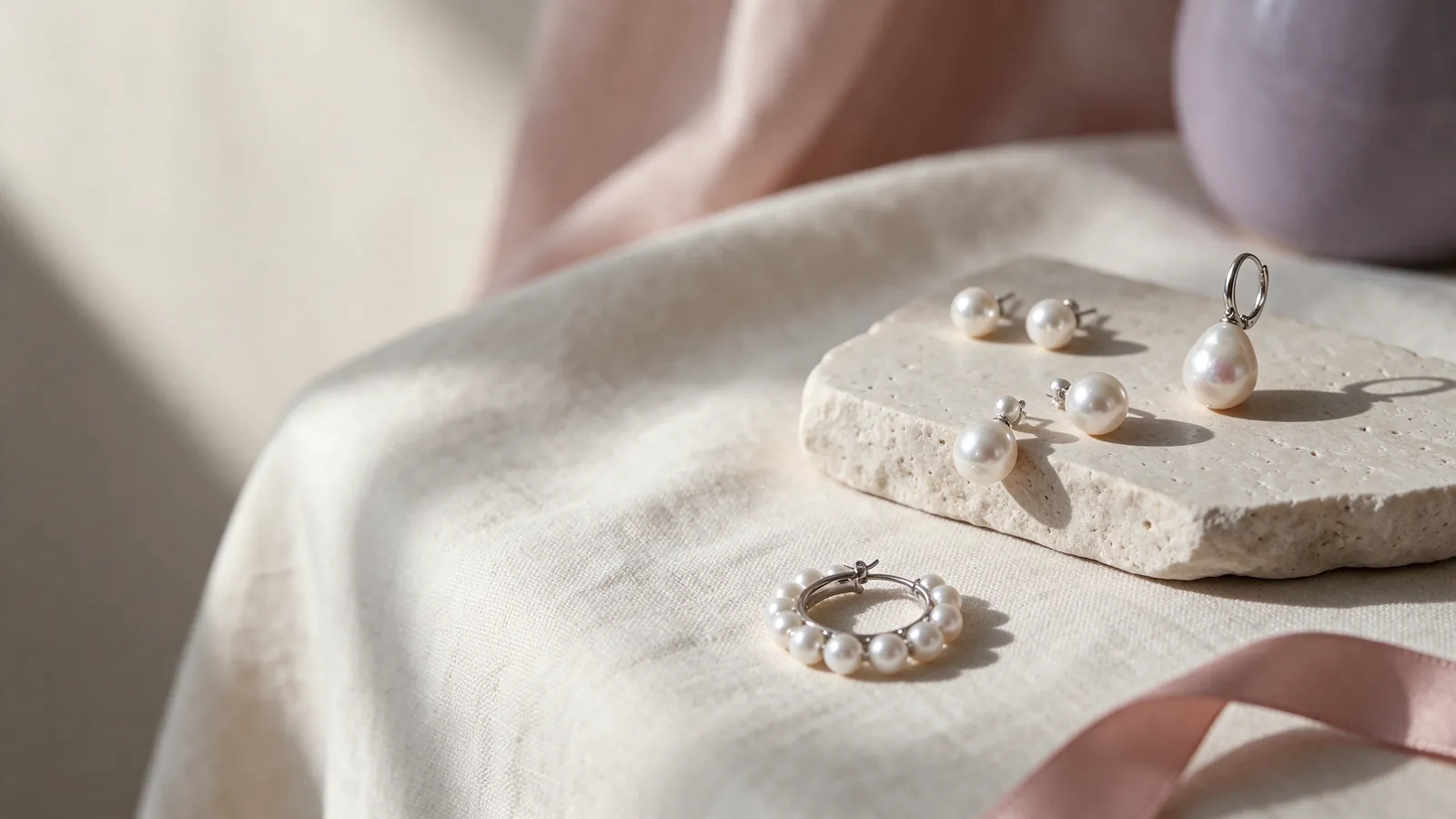
Finding visual balance in ribbon pearl earrings: motif and pearl proportions in ribbon-design pearl earrings and pearl ribbon earrings
Ribbon pearl earrings are easiest to understand by looking at the whole shape first. Does your eye settle on the pearl, or does it follow the surrounding curve? A line that sweeps upward creates a different visual direction from one that extends across the lobe. This is a feature of the decoration, not a description of the pearl itself. Compare other pearl earrings at a similar viewing scale to identify whether you prefer a pearl-centered composition or a motif with a stronger presence.
A large close-up can obscure that decision because it gives every small turn considerable visual weight. Look for an additional angle or an on-ear view that explains the outline without relying on magnification. Notice whether the curve partly covers the pearl and whether the crossing point becomes the main focus. Ribbon-design pearl earrings do not need a single ideal proportion. What matters is whether you enjoy the balance between the decoration and the visible pearl in the way you plan to wear it.
Examining ribbon pearl earrings up close: how curve width and spacing shape ribbon-design pearl earrings and pearl ribbon earrings
Follow the curve through its turns and look at the spaces it leaves beside the pearl. A wider line may feel visually stronger, while an open gap may lighten the composition. With pearl ribbon earrings, remember that skin and hair can sit behind those gaps. Compare the outline straight on and slightly from the side before deciding that a photographed gap will remain equally visible.
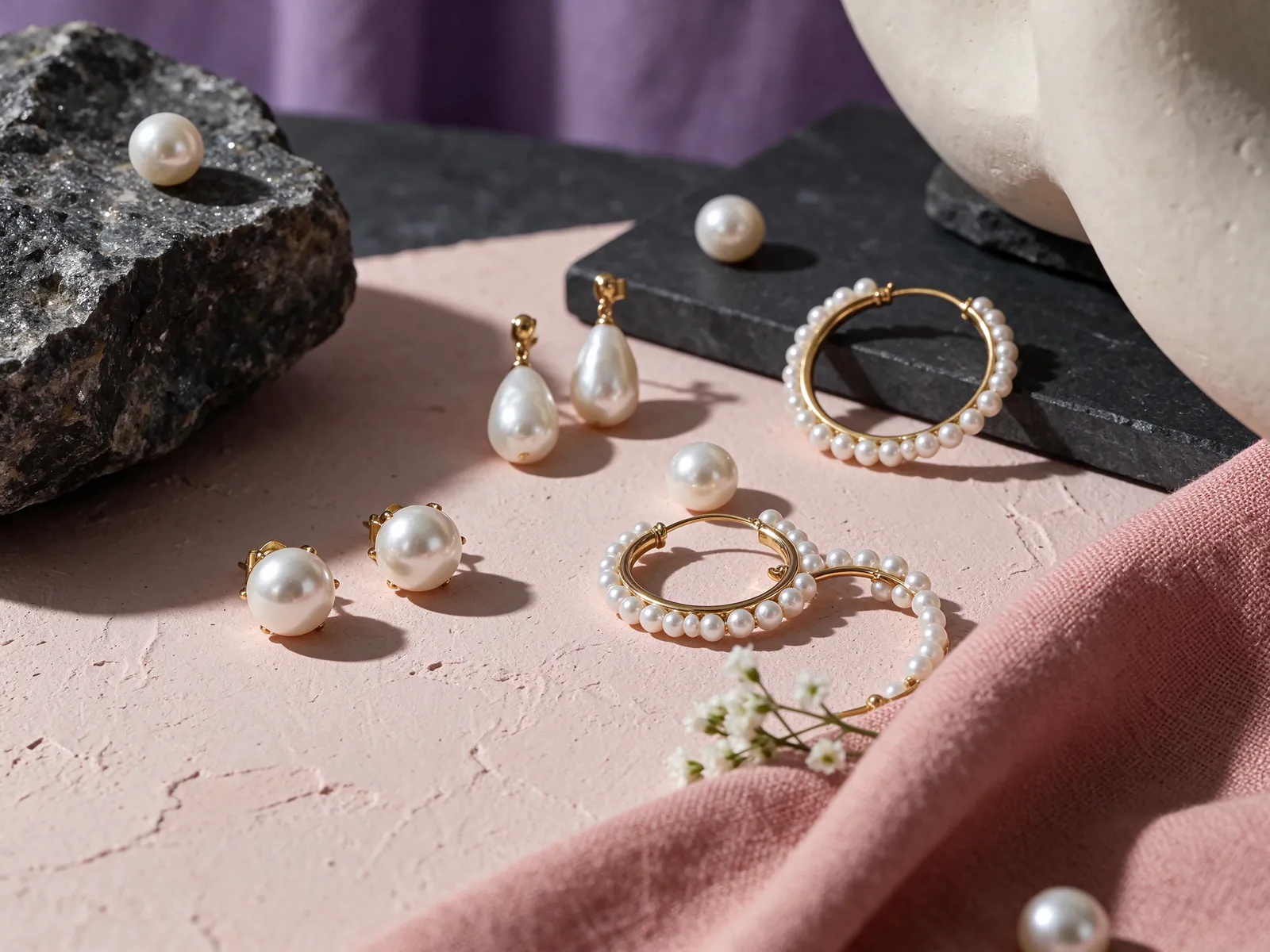
Separate the idea of ribbon from a literal bow
You may enjoy the motion of a ribbon without wanting a recognizable bow. A curved strip, a fold-like turn or an overlap can suggest the same idea in a less literal way. Identify which feature attracts you: a clear knot shape, a sweeping end or the rhythm of the line. This turns a broad search term into a practical preference and helps you avoid choosing a busy motif when the part you really wanted was a simple curve.
Inspect how the line ends as carefully as how it begins. An end that projects outward may sit closer to a collar or loose hair; one that returns toward the pearl keeps the front composition more concentrated. These are questions to investigate, not automatic comfort predictions. Back and side views can reveal where details project, while a sparkle in a photograph cannot establish what gemstone, if any, creates that effect.
Keep photographic differences out of the comparison
Use similar image scales when comparing motifs, and separate a lighting effect from a structural feature. A curve may look broader under a strong highlight or flatter in a straight-on image. If the depth is unclear, ask for an explanation of the side profile rather than inferring thickness from one photograph.
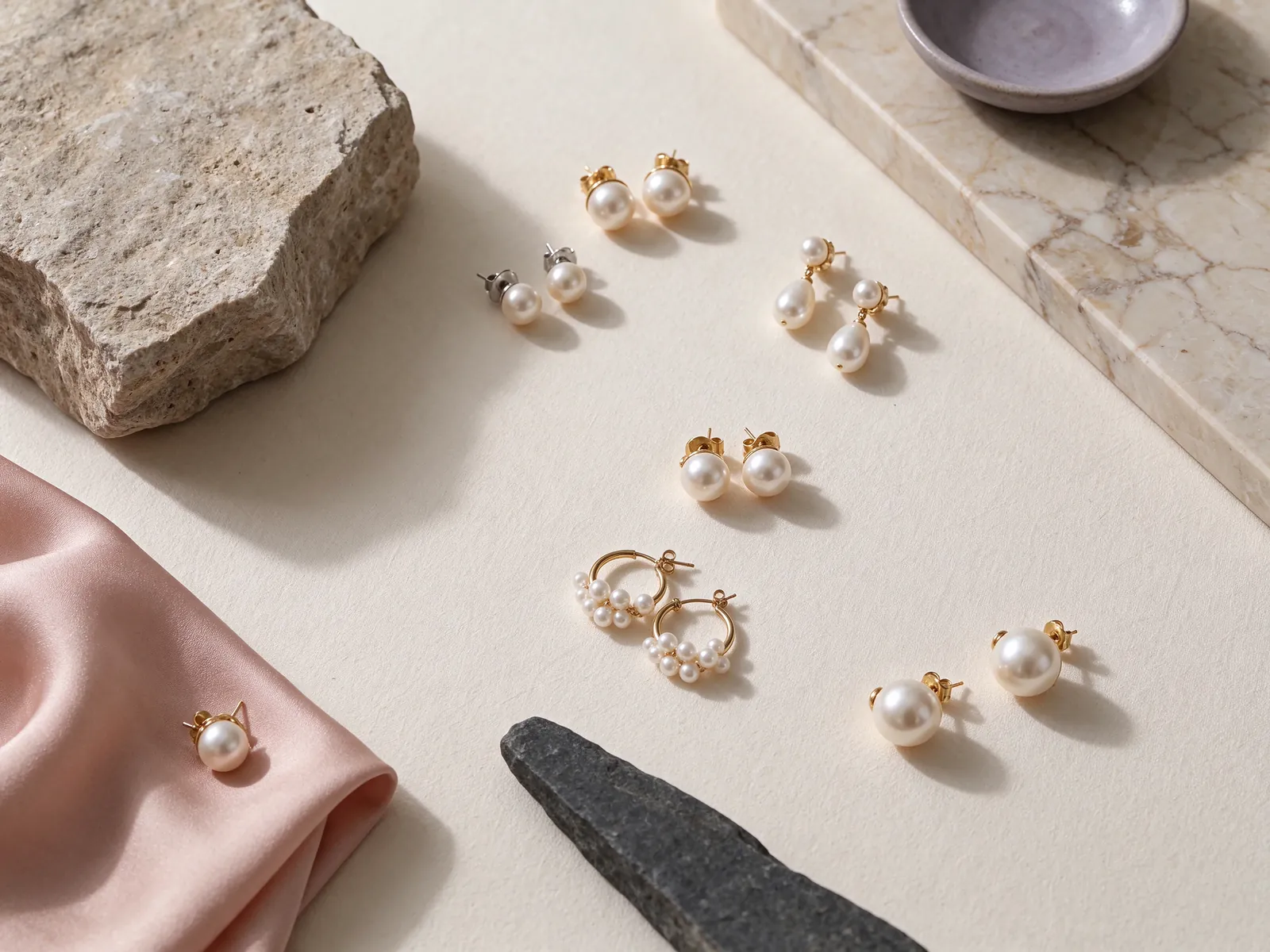
Consider the piercing, the post and the direction of the pair
Your piercing position helps determine where the composition appears on the lobe. A low placement may let the motif extend beyond the ear's edge; a more central placement may put the open areas against skin. Take a look at how your familiar studs sit and use that as a reference for placement. It offers a more concrete starting point than a rule that assigns one earring shape to every person with a particular face shape.
For a stud construction, discuss where the post sits relative to the front motif and how the back is handled. A decoration that reaches to one side may not keep the same orientation as a centered stud, and a still image does not demonstrate its behavior. During an appropriate fitting, move your head naturally and reassess the position. Notice pressure and ease of removal as well as appearance, and do not treat a tighter back as a universal solution.
Understand left and right before changing the arrangement
Check whether the earrings are mirror images or share the same direction, and ask whether each has an intended ear. Inward and outward curves create different visual paths beside the face. Compare the intended position with your usual hair part, but do not bend or twist a post to create a different arrangement.
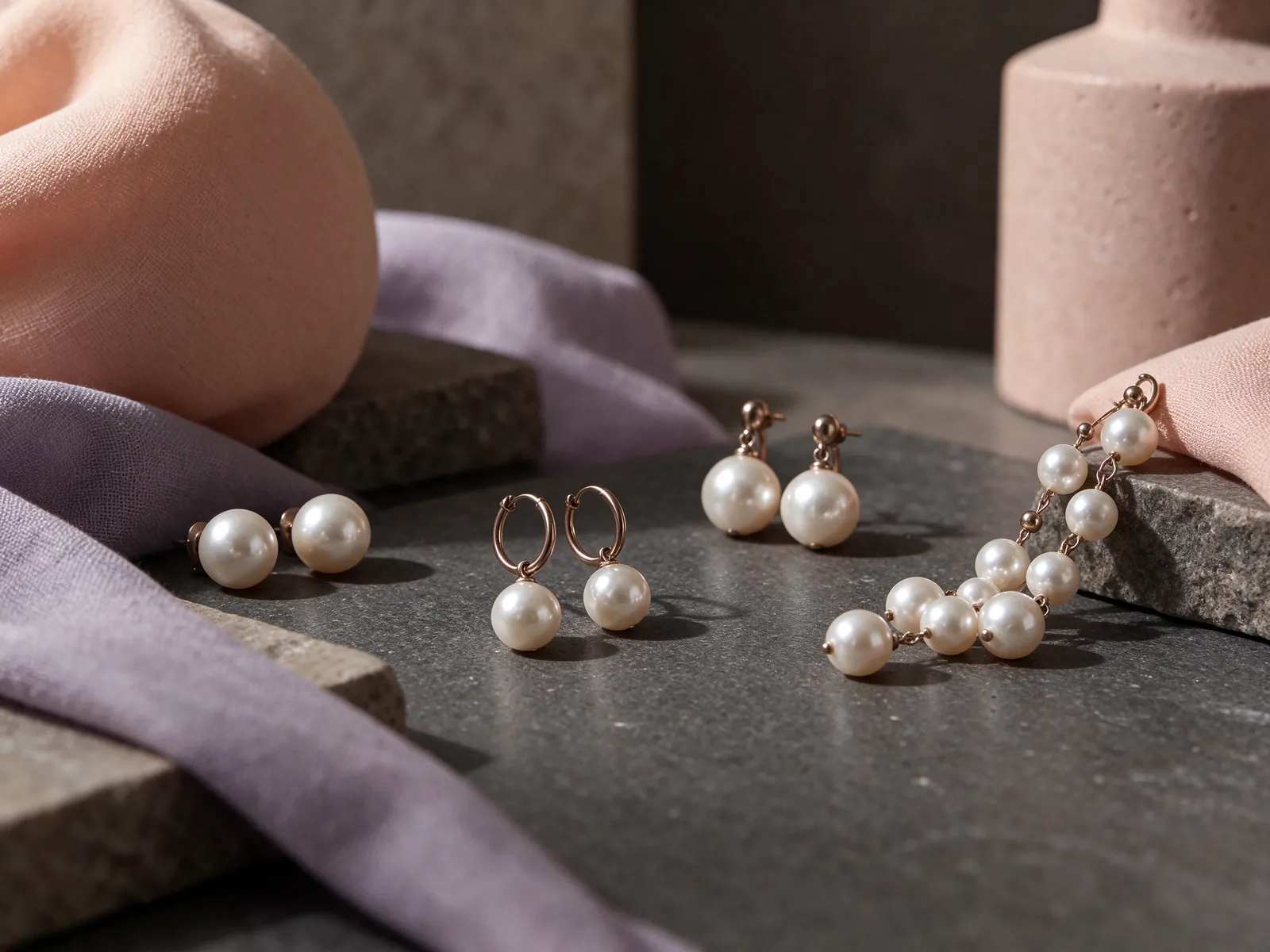
Build the outfit around the amount of detail you want
Start with the clothing closest to the earrings. A smooth neckline gives the curve a quieter background, while a tie-neck blouse or ruffled collar adds another flowing shape nearby. Neither is automatically wrong. Decide whether you want a clear focal point or a repeated theme, then reduce competing detail where necessary. The same earrings can read differently when a collar, hair or other jewelry changes, without requiring a different label for the style.
Try your normal hair position rather than only a polished fitting-room look. Hair tucked back can reveal the turns, while loose hair may hide them or approach an outward end. With a necklace, compare the direction of its lines as well as its color. The guide to 18K gold pearl earrings provides a separate route for thinking about color combinations; your ribbon comparison should still focus on whether the curve has enough space to be clearly seen.
Remember the layer you wear outside
Before choosing, consider your regular coat collar and scarf as well as the top beneath them. A projecting detail may be closer to fabric in your everyday outfit than in a bare-necked photograph. Changing the neckline or pulling hair back may also make the motif more noticeable for an evening setting without adding more accessories.
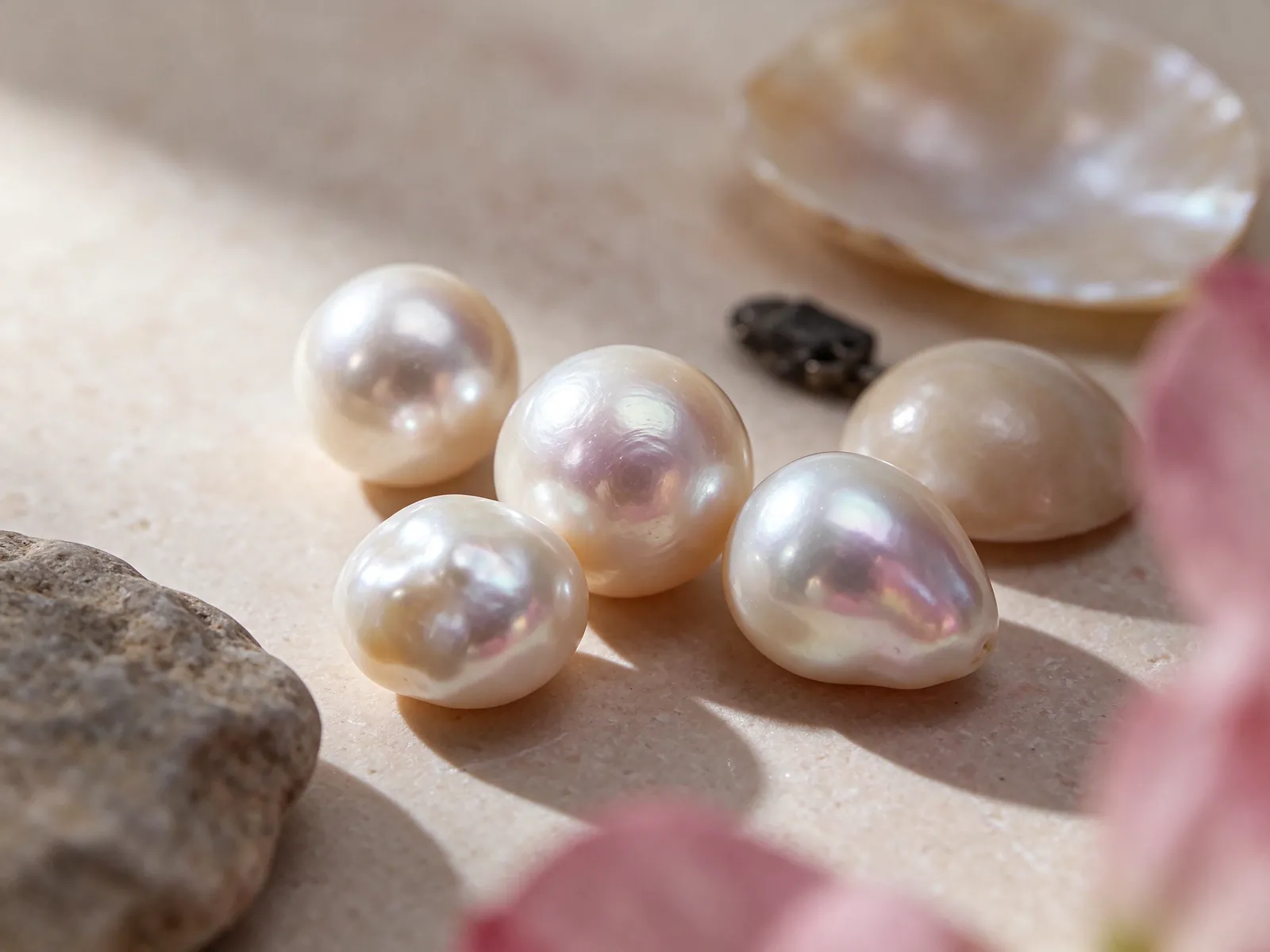
Use other motifs to identify what the ribbon adds
Comparing butterfly pearl earrings can help if you like shapes that extend to both sides: notice the difference between a wing-like outline and a ribbon's crossing or turn. Compare heart-motif pearl earrings if you prefer a more immediately recognizable symbol. Keep your attention on visible structure rather than treating one motif as suitable for an age group. Ask whether you want the pearl, a complete image or an open line to be the first thing people notice.
If a sharper sense of direction appeals to you, compare star-motif pearl earrings and geometric pearl earrings to see how points or defined shapes guide the eye. If you prefer a surrounding frame, halo pearl earrings offer a useful contrast with a ribbon's open curve. You are using these guides to distinguish preferences, not collecting features that all need to appear in one design. A simpler set of priorities usually makes the final comparison clearer.
Turn a style preference into a useful sentence
Try 'I want an upward curve with the pearl still visible' instead of only 'I want something elegant'. Add an important limit, such as avoiding a wide end beside the collar. A specific preference and a clear trade-off tell you more than a collection of images whose details contradict each other.
Judge the pearls without borrowing the setting's brightness
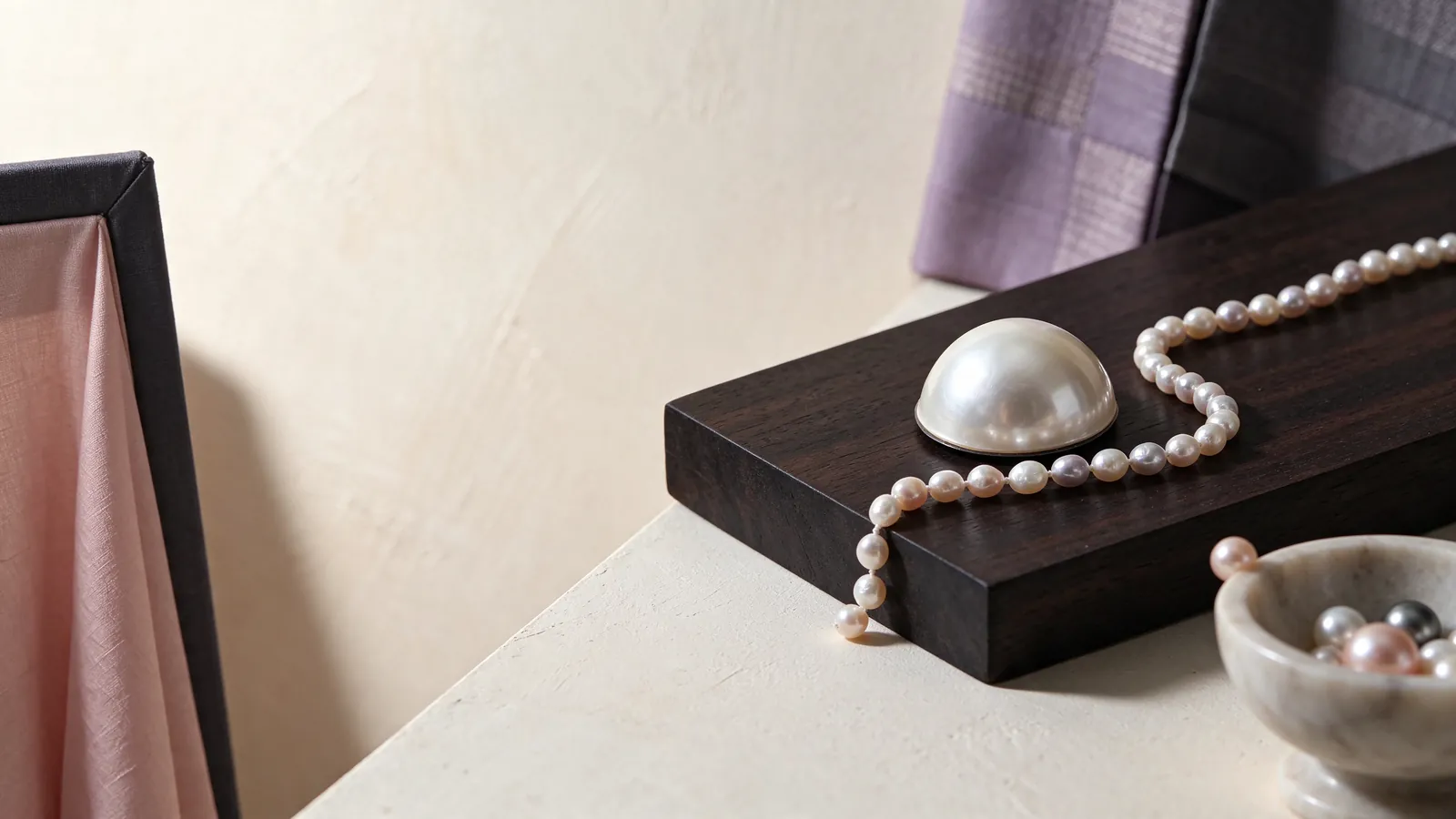
GIA identifies seven pearl value factors: size, shape, color, luster, surface quality, nacre quality and matching. They provide a useful way to separate the pearl assessment from your response to the ribbon decoration. Look at both pearls in the same gentle lighting and compare visible color and luster. The design name cannot identify pearl species, origin, natural-versus-cultured status or certification, and a bright decorative highlight is not evidence about any of those characteristics.
If a line overlaps the pearl, examine another angle to distinguish obstruction and reflection from visible surface details. Luster is about the reflective appearance of the pearl, not the brightness of the whole image. Backgrounds and lighting can alter a photographic comparison. When an item has a description or accompanying document, read the statements that apply to its particular components; do not extend a pearl description into an assurance about every part of the earring.
Look at the pair in stages
First compare the pearls, then the motifs, then the complete pair. Matching involves more than apparent size: visible color and luster also affect the result. An intentionally asymmetric composition has a different aim from two identical outlines. GIA's framework helps organize observation, but it does not certify a ribbon design or endorse a brand.
Make care and handling part of the selection
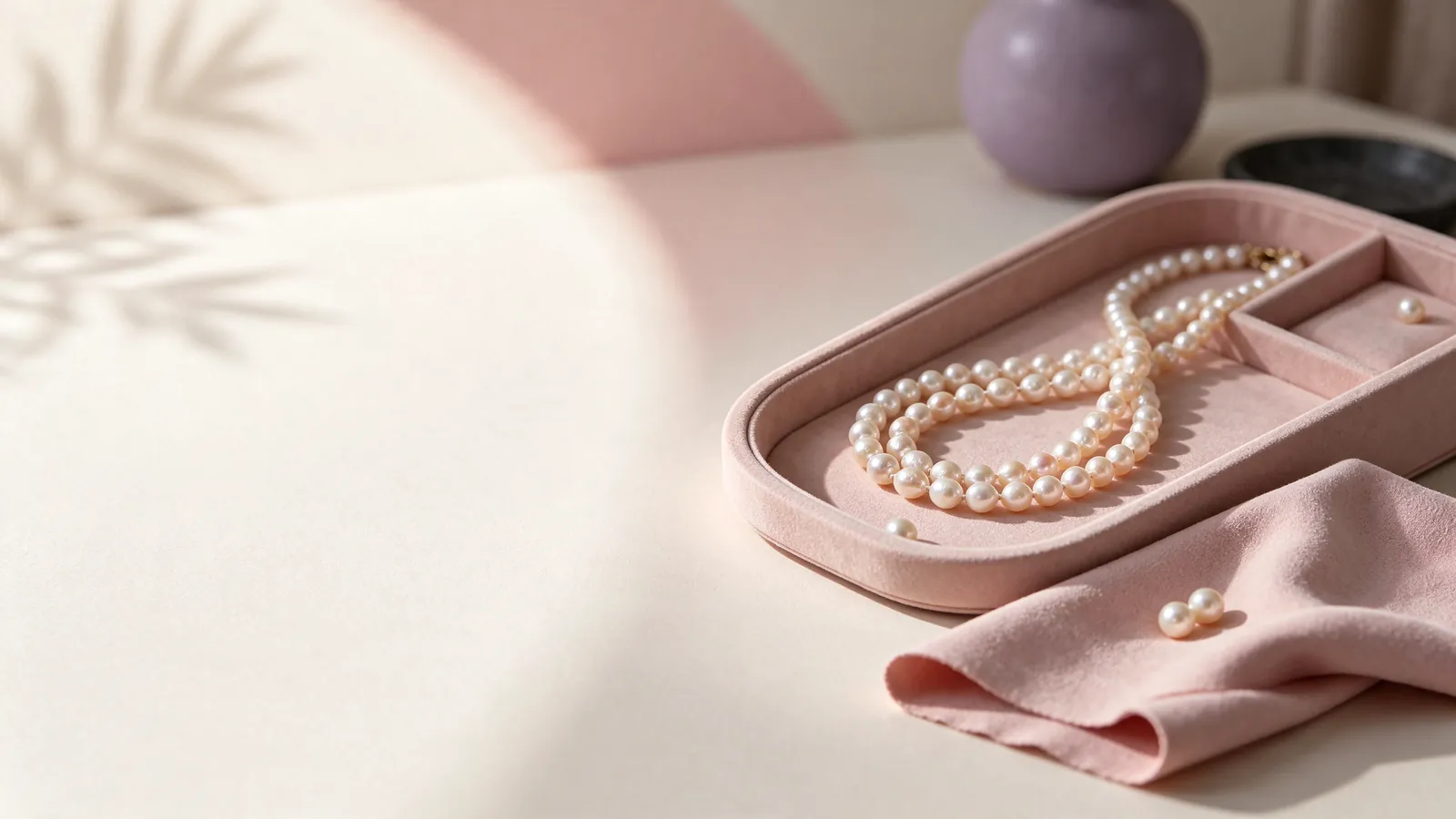
GIA lists pearl at 2.5 on the Mohs hardness scale and advises that pearls should never go into ultrasonic or steam cleaners. Decorative gaps do not make those methods suitable for pearl earrings. Wipe after wear with a very soft clean cloth, avoid perfume, hair spray and excessive heat, and do not force a tool into a narrow space. If debris is difficult to reach, ask for a cleaning approach appropriate to the actual construction.
Keep the pair apart from harder jewelry when storing it, with no projecting end caught beneath another piece or in a bag closure. Think about where you grip the earrings during removal, and avoid using a decorative end as a handle. A bent post, an unusual fastening or a loose-feeling pearl is a reason to stop wearing them and seek an assessment, not an invitation to bend the curve back yourself. Good habits limit avoidable contact but cannot promise an unchanged finish forever.
Finish with questions about your real routine
Ask whether the on-ear balance suits you, whether fastening and removal fit your habits and how the complete construction should be cleaned. Bring your everyday hair and collar into the discussion. Flint Jewelry's WhatsApp is available for pearl earring selection questions, so you can describe practical preferences without assuming a motif name answers every detail.
| Feature | Look for | Wardrobe connection | Question to ask |
|---|---|---|---|
| Pearl visibility | How the curve frames or overlaps the pearl | Choose which element leads the look | Can I compare more than one angle? |
| Space | Gaps and their appearance against skin | Consider hair and a quiet neckline | How does the outline sit on the ear? |
| Projecting ends | Direction and position beside the lobe | Include your usual coat and scarf | What does the side profile reveal? |
| Fastening | Post placement and a usable grip | Check the orientation during normal movement | How should the earrings be put on and removed? |
| Pair balance | Pearl color, luster and motif arrangement | Notice mirrored or shared directions | Is either earring intended for a specific ear? |
Pearl knowledge and authoritative references
GIA describes seven pearl value factors: size, shape, color, luster, surface quality, nacre quality and matching. These distinguish a pearl assessment from a preference for the surrounding ribbon motif.
Read the reference for this factFrequently asked questions
Can ribbon pearl earrings have an abstract design rather than a bow?
Yes. A turn, overlap or sweeping line can suggest ribbon without a complete bow outline. Identify the particular part you enjoy so you can compare an abstract curve with a more literal motif on the same basis.
Why can a motif look wider in a close-up than when worn?
Magnification gives small details more visual weight, and lighting can emphasize one side of a curve. Compare similar photo scales and an on-ear view where available, rather than assuming the close-up communicates the everyday proportions.
How do I know whether the two ribbons are meant to face inward?
Check the intended left and right arrangement and whether the pair is mirrored or shares one direction. There is no universal inward-facing rule for every design. Use the specified arrangement as your starting point and do not twist posts to change it.
Should I match the earrings to every curved detail in my outfit?
You do not need to repeat every shape. Decide whether the earrings or clothing should lead, then leave enough space to read that choice. A smooth collar may highlight the motif; a bow neckline may deliberately repeat the theme with fewer competing accessories.
Is machine cleaning a good option for small spaces in the ribbon setting?
Not for pearls: GIA says never to use ultrasonic or steam cleaners. Use a very soft clean cloth for routine wiping and seek advice for inaccessible dirt. Do not pry apart the decoration or pull on the pearl to gain access.
Updated: