
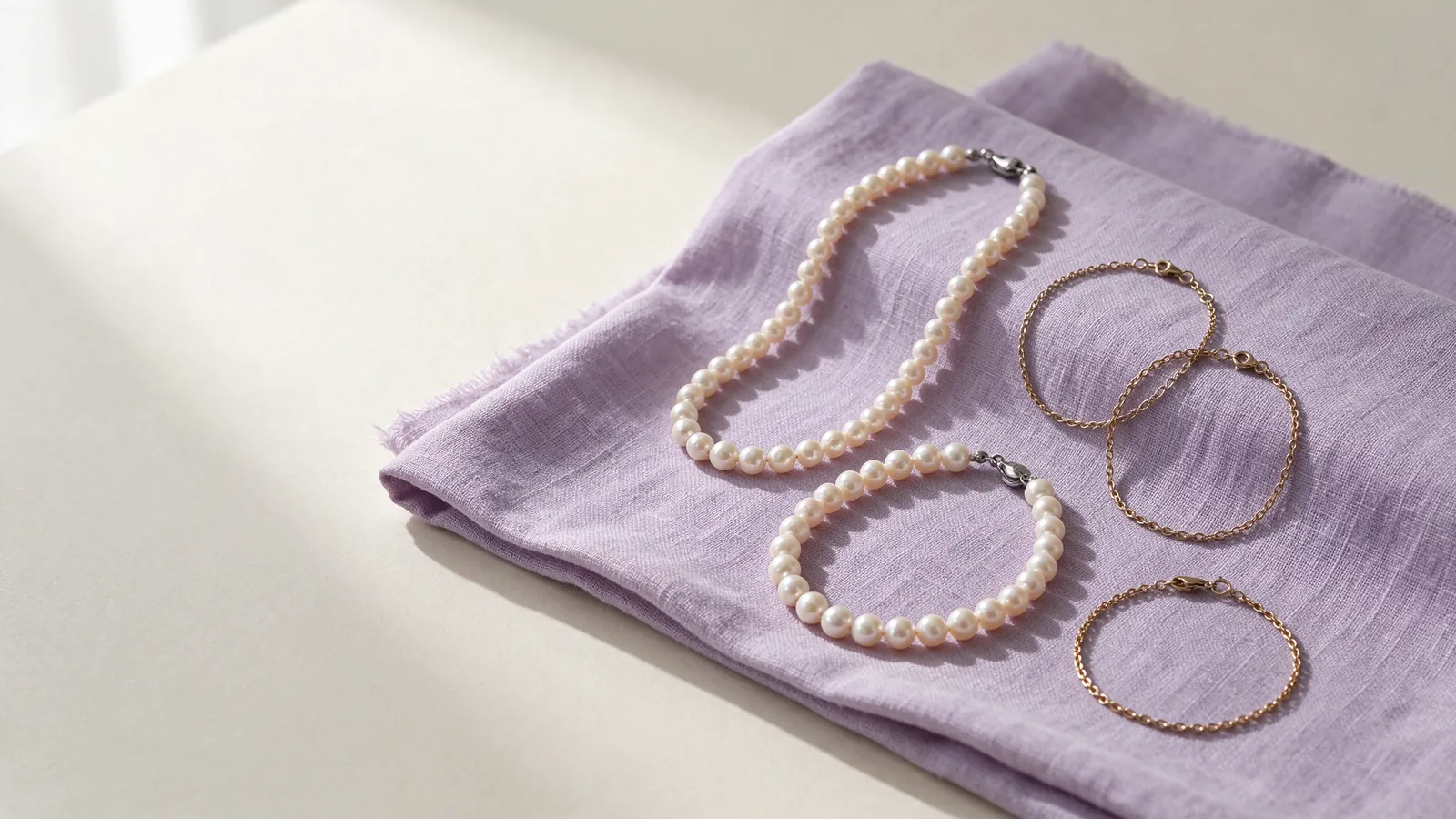
pearl bracelet size guide: what “how to measure wrist for pearl bracelet” tells you before comparing pearl bracelet length and inner circumference
Your wrist reading measures the distance around your skin where you want the bracelet to sit. A bracelet’s overall length is measured along the piece between defined endpoints, often with it laid flat. Its inner circumference describes the wrist-facing space when the fastening is closed. Knowing which number you are looking at is the first step toward a useful comparison. Check the measuring method before treating a listed length as the space available to your wrist.
A string of three-dimensional pearls does not fit exactly like every other bracelet of the same flat length. Bead bodies, the links between them and clasp construction can change the closed loop. Rather than subtracting a standard amount from a listed length, ask how the inner circumference was established. When comparing a pearl strand bracelet, think about the beads’ visual scale and the closed loop’s usable space as separate questions.
pearl bracelet size guide: after “how to measure wrist for pearl bracelet”, how should pearl size, rows and room to move shape pearl bracelet length?
Bead diameter matters, but it is not enough to calculate the inner circumference of a finished piece. Shape, spacing and how the strand bends also influence the result. Multiple rows add width and can interact differently with the wrist near the fastening. A small pearl bracelet may give the understated look you want, yet it still needs suitable room for movement. Judge the closed dimensions and the construction, not just the apparent size of individual pearls.
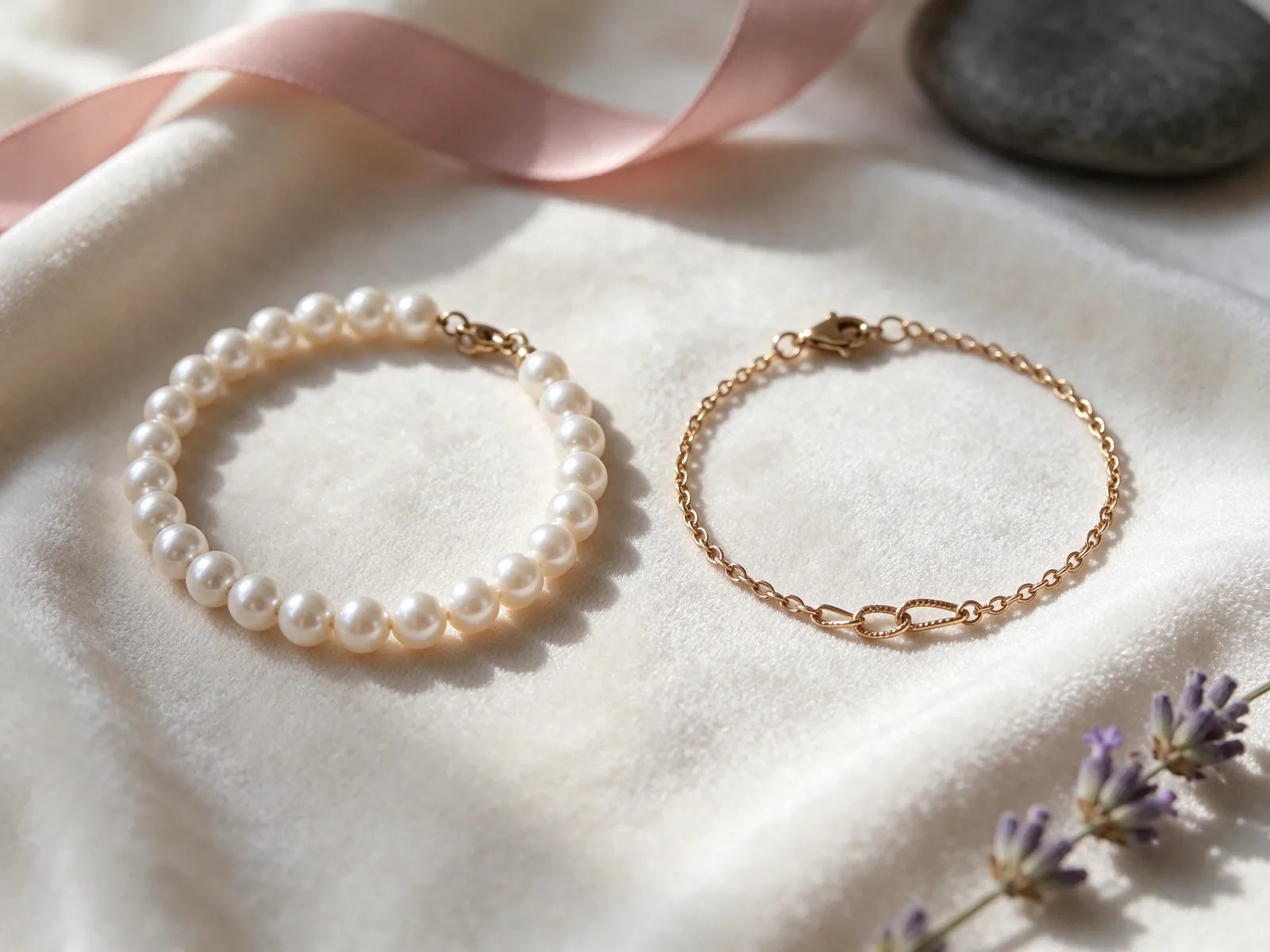
Measure the wrist you will wear it on, at the intended resting point
Choose the place you expect the bracelet to rest: near the wrist bone or slightly farther up the arm. Keep your hand relaxed and wrap a flexible measuring tape evenly around that point. The tape should touch the skin without squeezing it or leaving an intentional gap. Record that reading as wrist circumference. Adding space comes later, when you consider the style and your fit preference; putting it into the initial measurement makes the starting point less clear.
A nonstretch paper strip can help if you do not have a flexible tape. Mark the meeting point, flatten the strip and use a ruler to read the length. Stretchy cord is a poor substitute because tension can change the result. Write down the unit, which wrist you measured and where the strip sat. If you plan to wear a watch too, measure the bracelet’s intended position rather than copying the watch strap’s size.
A useful record includes the method, not just the number
Take another reading at the same location to check that the tape was level and held consistently. If the fit of your usual jewelry feels different on another day, keep a note of that circumstance with the measurement instead of selecting the lowest reading by default. Photos can show placement, but perspective may obscure the scale. A written value, unit and wearing position make the information easier to discuss than a general label such as regular or medium.
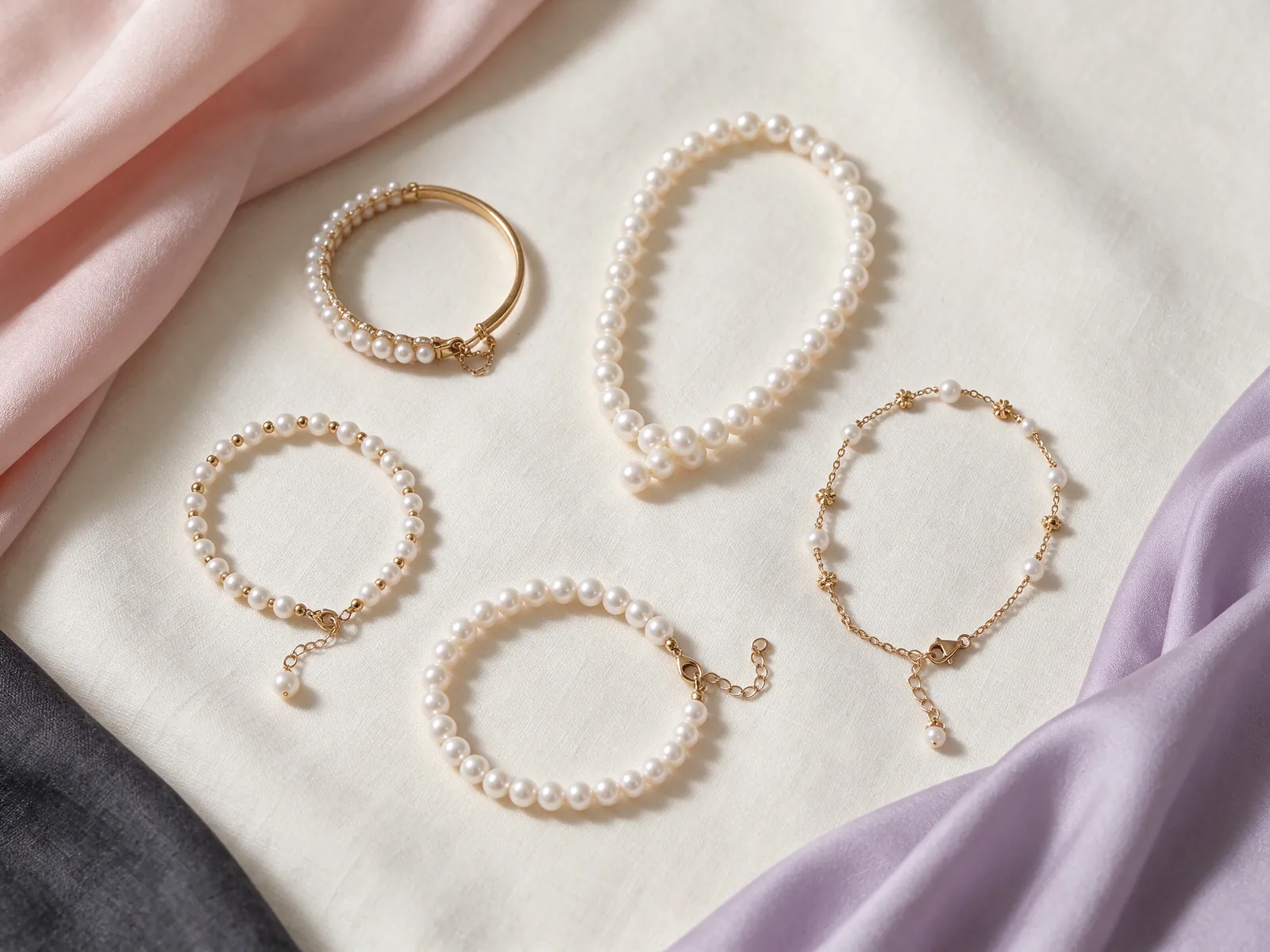
Translate close or loose into what you want the bracelet to do
Fit preferences are easier to compare when they describe movement. You might want a bracelet to remain near the wrist bone when reaching, or you might enjoy a noticeable drape when your hand hangs down. Think about using a keyboard, carrying a bag and putting on a jacket. A close fit should not compress the skin, and extra length is not automatically better if the strand repeatedly moves toward the palm or meets a work surface.
Adding an allowance to a wrist measurement is only a starting approach. It does not establish the closed inner circumference of a particular pearl bracelet. A formula that describes your preferred chain fit may not work the same way for larger bead bodies, multiple rows or a different clasp. Instead of asking only for a familiar pearl bracelet length, explain where you want it to rest and what movements should remain comfortable, then compare the relevant closed dimensions.
Look for changes as you lift, turn and bend your wrist
Once the bracelet is fastened, assess it with your arm relaxed and then with gentle everyday movements. Notice whether the clasp shifts underneath, a row catches or the strand presses as you bend your wrist. Avoid pulling on it to see how much space you can create. Sliding a finger underneath may describe your own fit experience, but fingers and beads vary in shape and size; it cannot serve as a universal replacement for measurement.
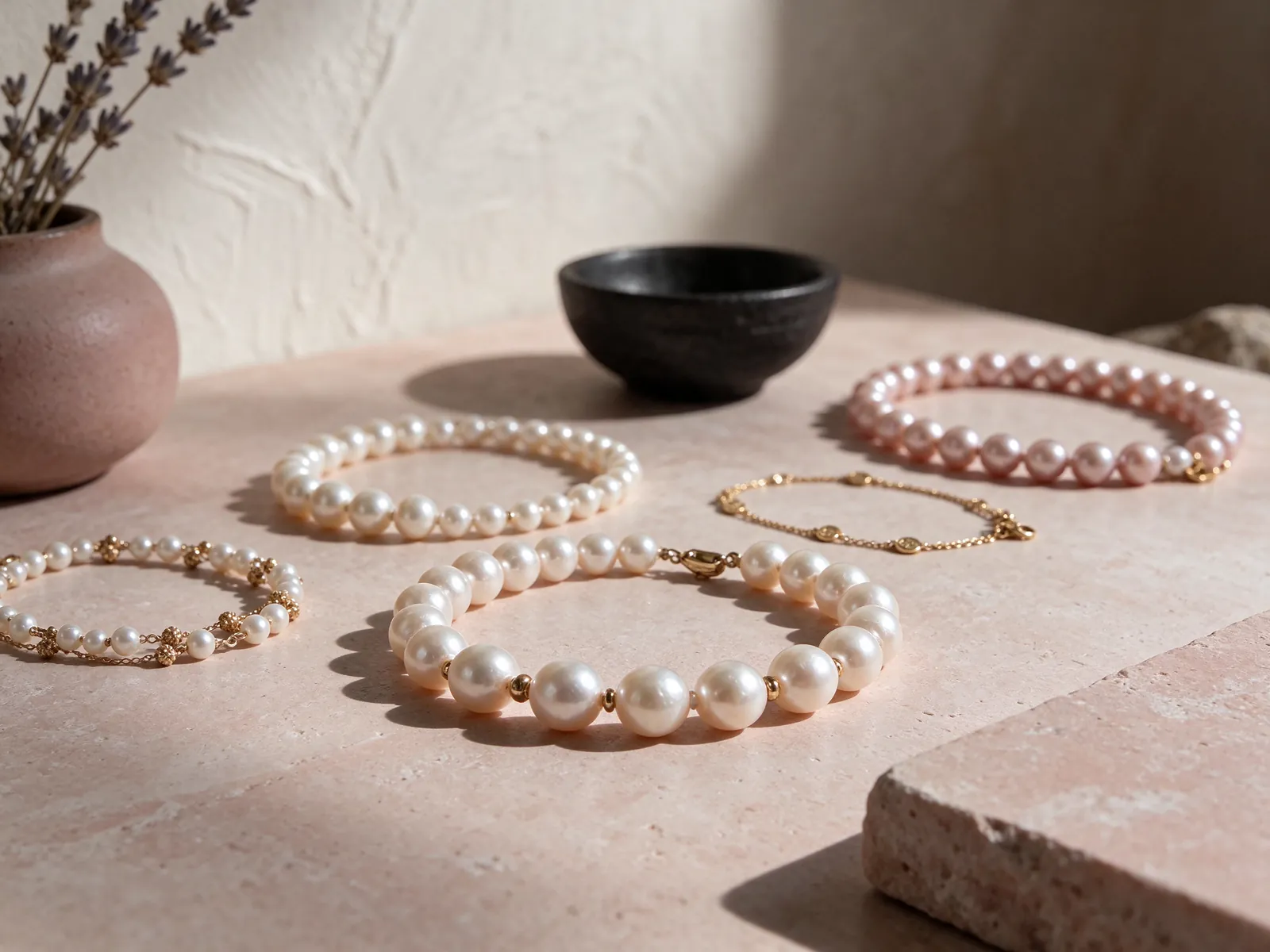
Account for the fastening and any length left beyond it
When reviewing a pearl bracelet clasp, consider how the fastening closes as well as how it looks. Establish whether the stated bracelet length includes the whole clasp and whether it refers to a flat piece or a closed loop. If you put bracelets on without assistance, try the opening and closing action with your other hand at the fit you prefer. A fastening that changes the loop’s shape may also change how the piece sits against the wrist.
For an adjustable pearl bracelet, focus on the position you are likely to use, not just the fact that several settings exist. Ask about the inner circumference there and observe the extension beyond the closure. The tail may rest differently against a sleeve or desk as the setting changes. An adjustable design still needs a fit assessment: being able to fasten it at a given point does not establish that the loop and hanging detail suit your routine.
Plan a charm’s position instead of solving every issue with more length
A pearl charm bracelet introduces a hanging detail whose position depends on the attachment and the bracelet’s movement. Decide whether you want it near the side of the wrist or visible toward the back of the hand. If a charm keeps hitting a tabletop, extra length may give it more travel rather than improve wear. Compare its connection point, the strand’s room to move and your daily actions before treating a longer bracelet as the solution.
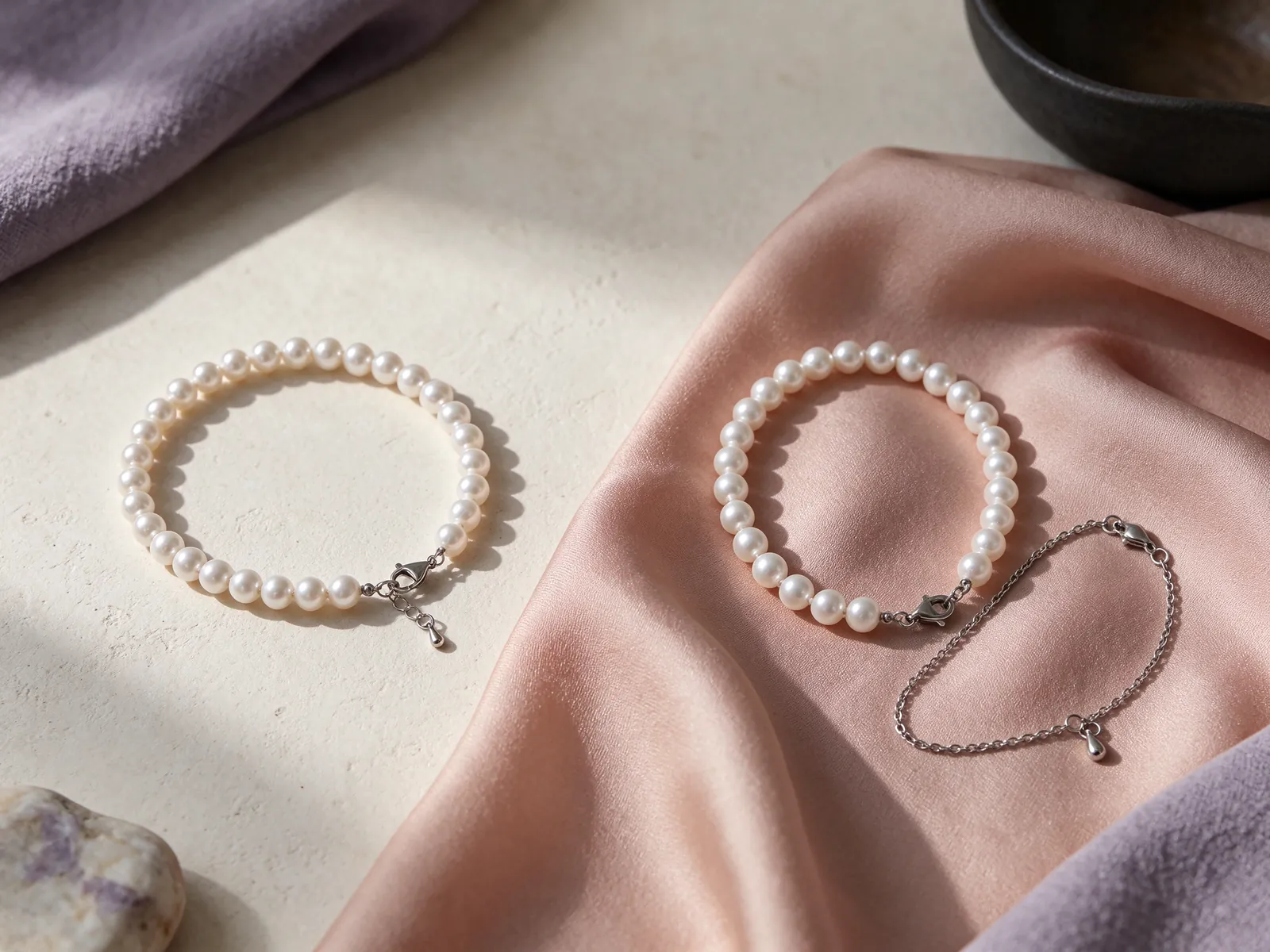
Evaluate the complete outfit, including cuffs and a watch
A bracelet may settle differently when a watch, another bracelet or a cuff shares the same area. For a white pearl bracelet paired with a shirt, look at the amount visible outside the cuff and how the fabric moves it when you bend your hand. Color may guide the styling choice, but it does not determine practical clearance. Try the combination you actually expect to wear instead of judging fit from the bracelet alone in a mirror.
GIA places pearl at 2.5 on the Mohs hardness scale, making repeated contact with harder jewelry edges worth considering. This is not a comfort rating or a forecast of how long a bracelet will last. Check whether the pearls keep rubbing against a watch case, another clasp or a metal edge during movement. If the pieces repeatedly meet, separating them can be a sensible styling choice; making the pearl bracelet tighter is not necessarily an answer.
Test the outfit with the activities that matter to you
Adjust your sleeve, pick up a bag and sit with your hands where they normally rest at work. See whether fabric catches the bracelet or pushes it toward the hand. On a wider, multirow piece, check whether the rows remain naturally arranged after these movements. A bracelet being small enough to fit inside a cuff says little about how it feels under the fabric. Separate a length issue from one caused by width, layering or garment pressure.
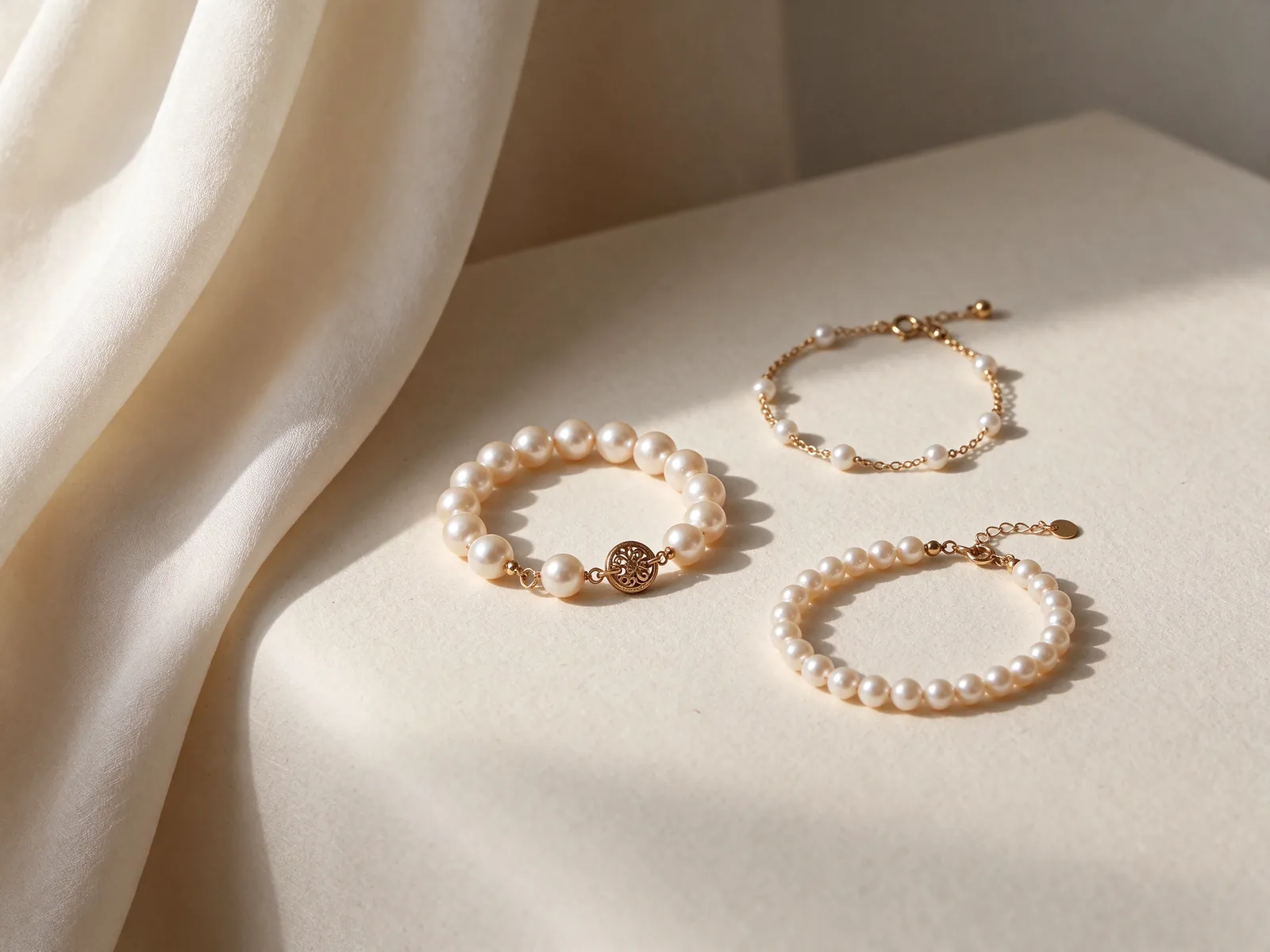
Compare an old favorite carefully, especially when buying a gift
An existing bracelet can show the fit you enjoy, but first identify what you are comparing. Note its measuring endpoints, fastening position and how far it travels on the wrist. A fine chain, a pearl strand and a wider bracelet do not necessarily provide equal inner space at the same flat length. If the new construction differs, use the old favorite to explain your preference rather than assuming that copying its stated length will reproduce its fit.
For a recipient, height, clothing size and a photograph cannot reliably tell you wrist circumference. With permission, take a measurement or learn about a frequently worn bracelet whose dimensions can be clearly described. If those details are unknown, discuss a way to obtain them before settling on a guessed size. International measurements also need a unit check: compare inches with inches or centimeters with centimeters, and retain the original unit when passing along a reading.
Treat size labels as categories, not shared measurement standards
Small, medium and large may be convenient categories, but their definitions can vary across designs and sellers. Look for a specific value, its unit and the method used to obtain it. Determine whether that value includes the clasp and whether the closed inner circumference is also given. A photo of a flat bracelet without defined measurement points cannot establish its usable space. Keeping the recipient’s wrist reading separate from an existing bracelet’s dimensions avoids mixing different kinds of information.
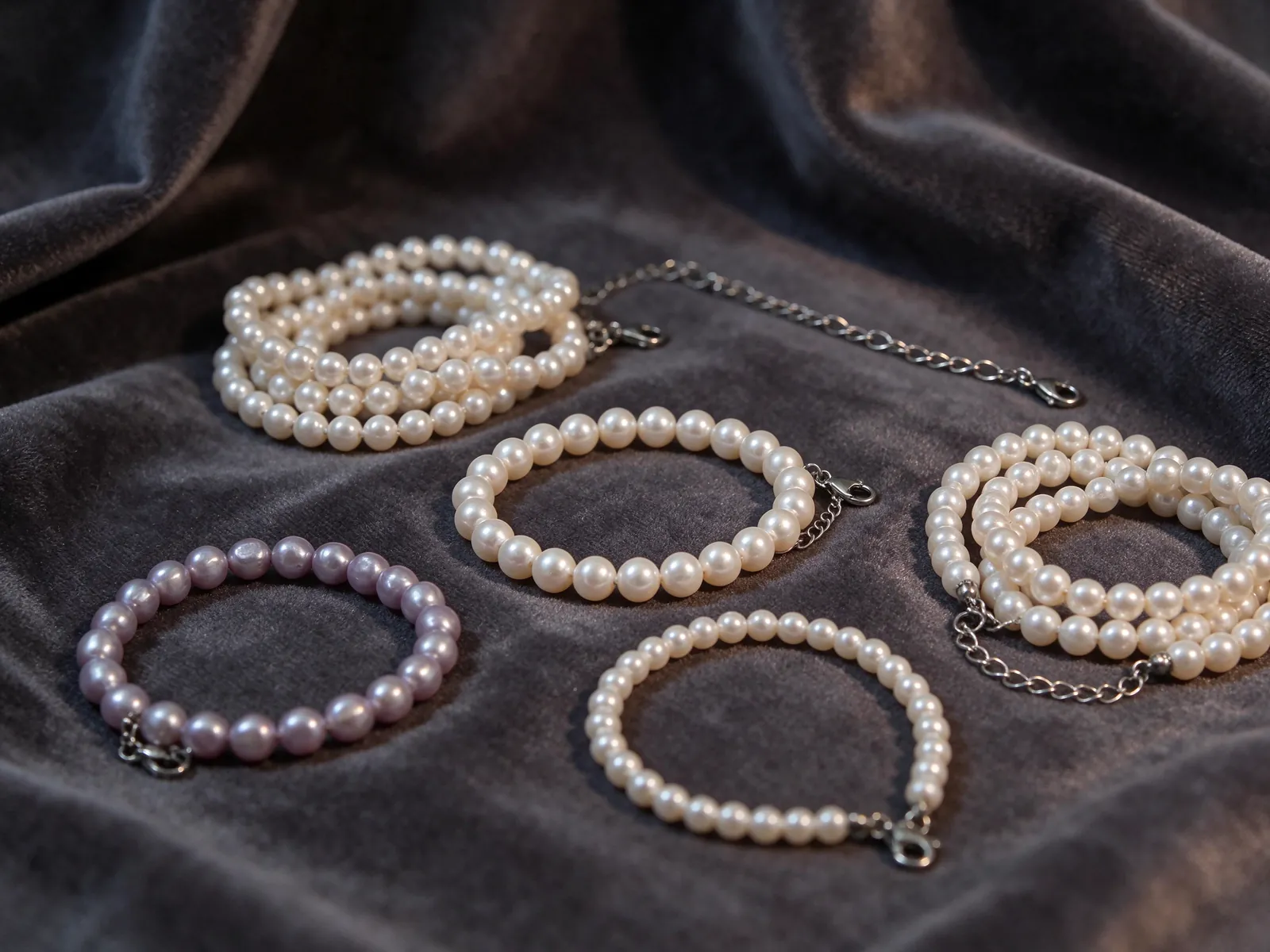
Build a clear sizing brief before discussing a particular design
When speaking with Flint Jewelry, share your wrist circumference with its unit, the hand and wearing position, and the movement you prefer. Mention whether the bracelet will accompany a watch, long sleeves or other jewelry. If an existing bracelet helps explain your preference, describe both its measurement and its behavior on your wrist. A complaint such as too loose becomes more useful when it identifies sliding, a rotating clasp, a catching tail or an unwanted resting position.
For a particular construction, ask how overall length and closed inner circumference are defined and how the fastening or adjustment works. Changing an existing strand may involve its arrangement and connections as well as its length, so explain the result you want rather than removing beads or stretching the piece yourself. A clear brief supports a specific conversation without assuming that every construction behaves the same way.
A changed fit may call for a condition check, not a new size
Before deciding a bracelet needs a different length, check whether its fastening position, outfit or usual resting point has changed. Notice any connection that looks unusual or a clasp that is difficult to close. After cleaning strung pearls with water, GIA advises waiting until the string is completely dry before wearing, so do not judge fit on damp thread. If the fastening or connections seem loose, attend to the jewelry’s condition rather than pulling it to regain the previous feeling. To discuss bracelet fit with Flint Jewelry, share your wrist measurement and preferences on WhatsApp at https://wa.me/85260106207 or call +85260106207.
| Detail | Measurement or preference | What to record | Why it matters | Question to ask |
|---|---|---|---|---|
| Wrist circumference | Distance around the skin at the wearing point | Unit, wrist and position, without added space | Provides the starting wrist measurement | How does this relate to the closed inner space? |
| Overall length | Length between defined flat endpoints | Whether the clasp and extension are included | Equal flat lengths may fit differently | What are the measurement’s start and end points? |
| Inner circumference | Wrist-facing space when closed | Fastening position and measuring method | Bead bodies and construction affect available room | Which closed setting does this value describe? |
| Desired movement | How close or draped you want the bracelet | Resting point and everyday actions | Appearance alone does not establish fit | Where should it sit as I reach or bend my wrist? |
| Adjustable setting | The closure point you expect to use | Loop size and the extension’s position | A tail can meet sleeves or work surfaces | How does the bracelet behave at that setting? |
Pearl knowledge and authoritative references
GIA lists pearl at 2.5 on the Mohs hardness scale. Consider repeated contact with harder watch or jewelry edges when planning a bracelet stack; the hardness figure does not guarantee fit, comfort or a particular service life.
Read the reference for this factFrequently asked questions
Should the wrist measurement include the extra space I want?
Keep them separate. First measure close to the skin without squeezing or intentionally leaving a gap. Then describe your desired movement when comparing the bracelet’s closed dimensions. Adding space to the tape reading and again during length selection can confuse the starting measurement.
Can I copy the length of a comfortable chain for a pearl bracelet?
Use the chain to illustrate your preference, not as an automatic template. Pearls, connections and fastenings can change the closed space. Compare how each length was measured and consider the pearl bracelet’s inner circumference before assuming equal lengths mean equal fit.
What if the bracelet fits at rest but presses when I bend my wrist?
That movement is part of the fit assessment. Check the wearing position, clasp orientation and how the strand bends rather than judging only its still appearance. Avoid pulling the bracelet for extra room; describe the pressure and the movement when discussing fit.
Can clothing size help me choose a gift bracelet size?
It cannot reliably establish wrist circumference. With the recipient’s agreement, obtain a wrist reading or measurements of a regularly worn bracelet with a known measuring method. Also learn whether they enjoy a close fit or more movement instead of treating a guessed size as certain.
Why check the extension if an adjustable bracelet already closes comfortably?
The loop’s fit is only one part of the experience. The remaining tail may catch a cuff or meet a desk depending on the setting. Check its resting position during everyday actions as well as the inner circumference at your preferred closure point.
Updated: