
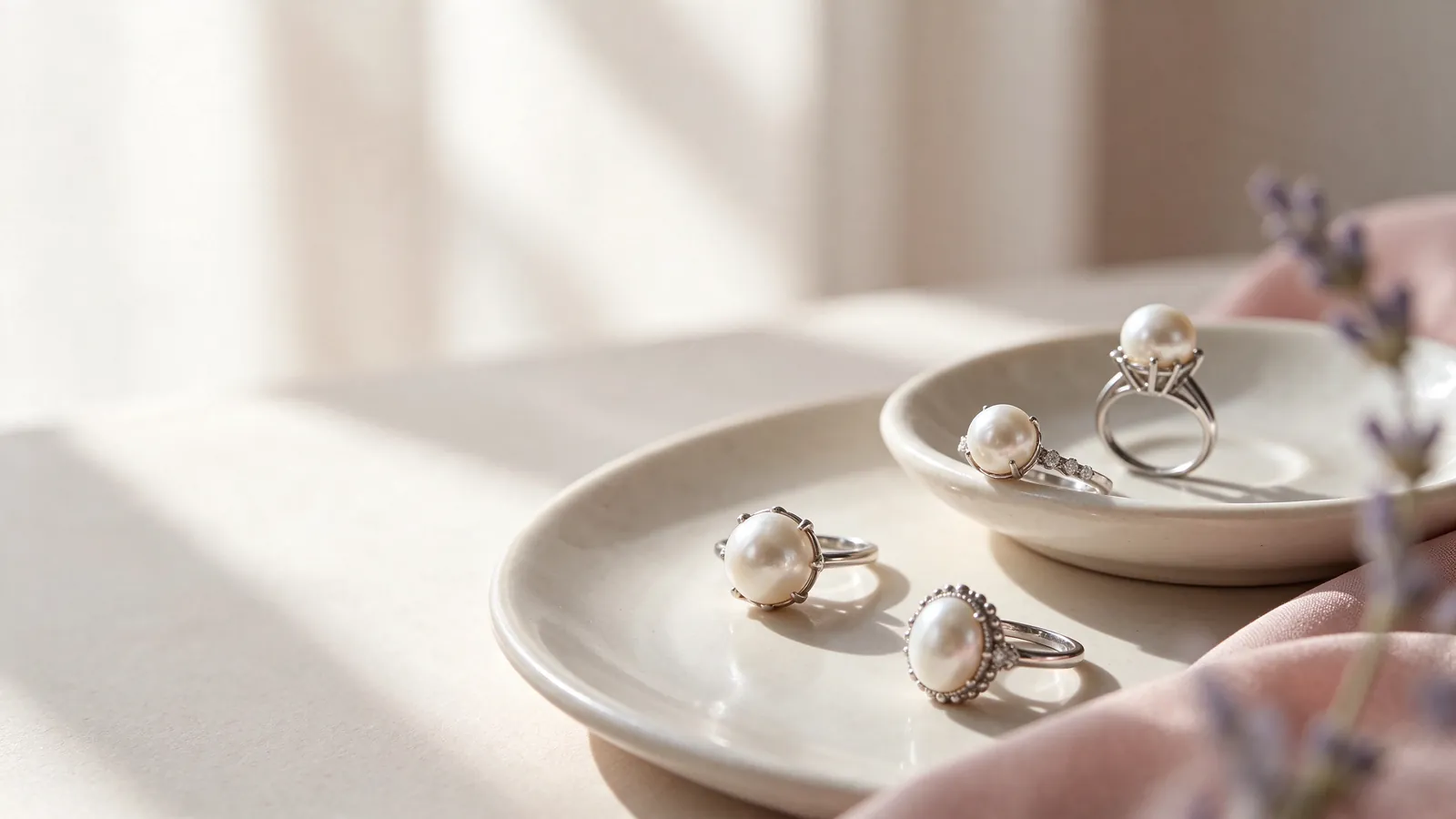
How Can You Evaluate the Fit of an open pearl ring, a pearl fork ring or an open band pearl ring?
Decide where you plan to wear the ring before evaluating the opening. Your intended finger, the stated size, and the shape of the band matter more than whether the ends appear easy to move. An open pearl ring can have a fixed size even when the gap is clearly visible. The opening belongs to the silhouette; it should not be treated as a built-in mechanism for passing the ring over a knuckle.
Try the ring with your hand relaxed, then gently curl and extend your fingers. Pay attention to pressure from the ends, movement of the pearl position, and contact with neighboring fingers. When comparing pearl rings, use the same sequence for each style. A ring that looks centered in a still photograph may sit differently once you use your hand, and that difference is worth noticing before choosing.
Why Doesn't an open pearl ring, a pearl fork ring or an open band pearl ring Necessarily Offer Adjustable Sizing?
Asking are open pearl rings adjustable is only the beginning. The answer depends on how a particular band, joint, and pearl setting are constructed. Ask what size is supplied, whether resizing is permitted, and what any change would mean for the placement of the ends. Do not repeatedly bend the band to find a comfortable fit. A change in the gap can also change the relationship between the setting and your finger.
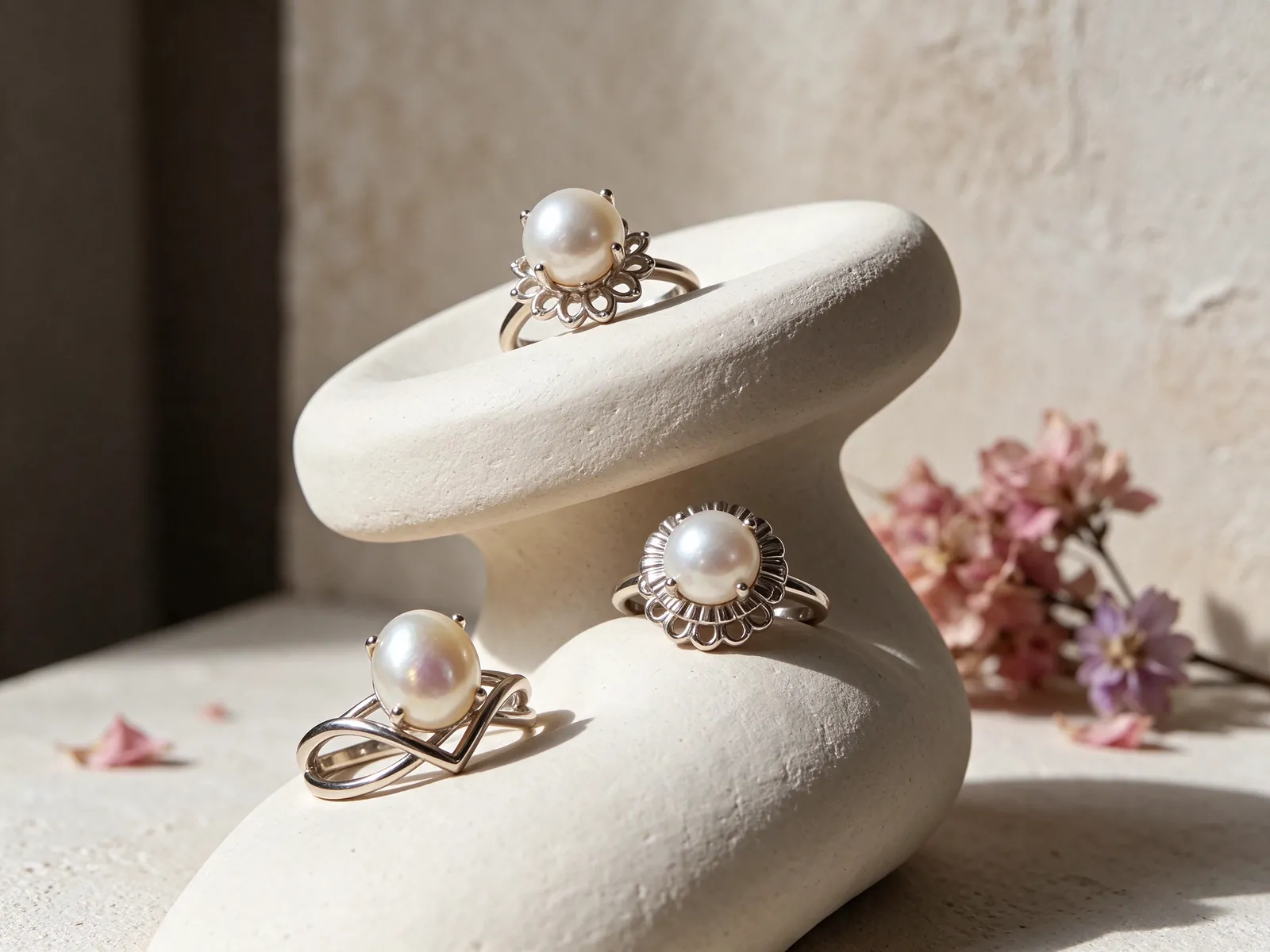
Separate a Style Name from the Structure You Can See
An open outline emphasizes a break in the visible ring shape. A fork description emphasizes a branching or terminal arrangement, while bypass focuses on lines that pass or sweep around one another. A design can share aspects of these visual ideas without making the words interchangeable. None of the names, by itself, tells you how the pearl is attached or what modifications the ring can accept.
Trace the arms in a photograph rather than starting with the product name. Look for the location of the opening, any overlap, and where the pearl sits relative to the ends. For comparison, a pearl solitaire ring can help you think about a concentrated focal point versus a more dispersed outline. The comparison is about composition, not a claim that all rings in either style use the same construction.
Use the Side Profile to Resolve Hidden Geometry
Two ends that appear aligned from the front may occupy different heights. Request or inspect a side view to understand how far the pearl stands above the finger and whether a tip projects outward. If the pearl hides part of an arm, that hidden section remains unknown from the front image. During a fitting, rotate your wrist to see how the outline changes instead of relying on a single flattering angle.
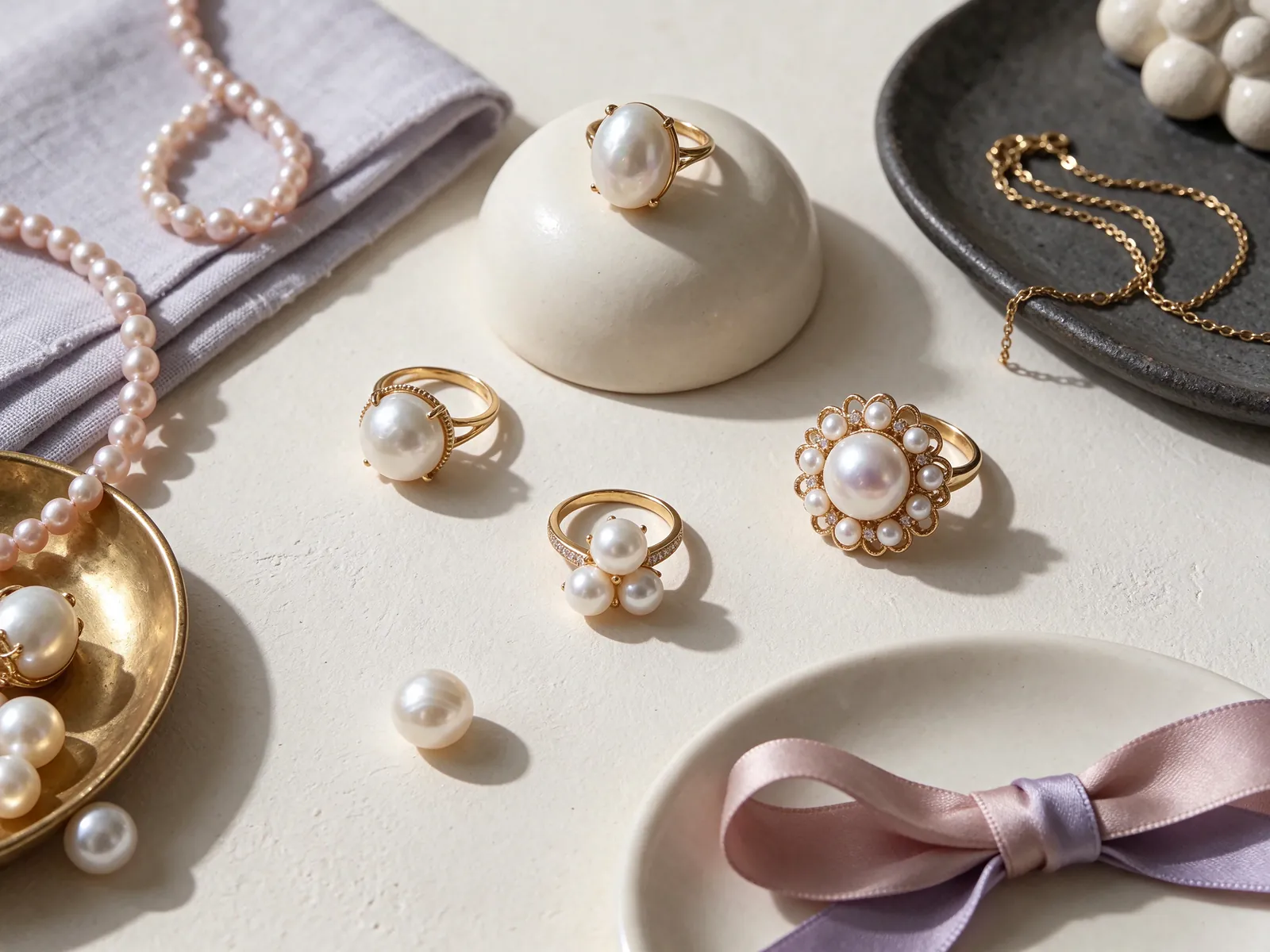
Choose a Composition, Not Just a Prominent Pearl
The empty area inside an open silhouette can be as visually important as the pearl. Ends positioned close together may produce a compact focal point, while offset elements may create movement along the finger. Step back from a close-up view and look at your whole hand. Consider whether the pearl draws attention in a way you enjoy and whether the open space remains clear in the position you will actually wear.
If several pearls form the composition, use a multi pearl ring comparison to examine both the individual pearls and their relationship. GIA identifies seven pearl quality factors: size, shape, color, luster, surface quality, nacre quality, and matching. Matching helps describe how multiple pearls work together, but deliberate contrast can also be a visual preference. Color or shape alone cannot establish where a pearl came from or whether it is natural or cultured.
Keep Viewing Conditions Consistent
Compare similar angles in similar light so that a stronger highlight does not masquerade as a different proportion. Look at reflections on the pearl, then at the balance between the pearl and the metal lines. Edited photographs can alter a color impression, and a close crop can exaggerate presence. On your hand, examine the front and side together before deciding which arrangement feels visually balanced.
Match the Profile to Your Everyday Hand Movements
Think about the ordinary objects your hands meet: a keyboard, a bag handle, a desk edge, and clothing cuffs. At a fitting, imitate typing and pick up a familiar light object without forcing the ring against anything. Watch for turning, pressure, or contact at the side of the finger. This is a way to assess practical comfort, not a reason to perform scratch or impact tests on jewelry.
A raised setting or exposed end may interact with a sweater sleeve differently from a continuous low outline. If you are drawn to movement, examine a pearl charm ring as a separate choice. A moving charm and an open arm do not behave alike, even if both create a lively silhouette. Consider your work and clothing habits rather than assuming that a similar visual mood means a similar wearing experience.
Plan When to Wear It and When to Remove It
If a task involves firm gripping, tools, cleaning products, or repeated contact with hard surfaces, removing the ring may be more sensible than expecting every detail to accommodate the task. Also consider whether gloves can pass over the setting without catching. When taking the ring off, grasp the band instead of tugging on the pearl. A wearing routine should support the design rather than test its limits.
Style the Opening Without Trying to Fill It
An open ring can stand on its own beside a simple shirt or add a clear outline against soft textures. Let the visible space remain part of the design. If earrings or a necklace already provide a strong focal point, the ring does not need another large piece beside it. Begin with a single ring and judge the full outfit before adding more jewelry to the same hand.
When exploring stackable pearl rings, leave room for both the settings and the bands. Do not wedge another ring into an opening just because it appears to fit in a photograph. Bend your fingers gently to check whether the pieces touch, and inspect the side profile as well as the front. Splitting a combination between fingers can preserve the individual outlines and avoid forcing them into a tightly packed arrangement.
Finger Placement Changes the Styling and the Exposure
A pearl pinky ring sits near the edge of the hand, where an outward-facing element may meet objects differently from a ring on a central finger. An index-finger placement brings a ring into many reaching movements. Try the intended position at its actual size; do not transfer a ring by bending the arms. Assess both the visual balance and the points where the ring meets your hand.
Understand Pearl Care Beyond the Shape of the Band
According to GIA, pearl ranks 2.5 on the Mohs hardness scale. That number concerns scratch resistance; it does not rate the strength of an open ring or predict the performance of its setting. Keep the pearl from rubbing against harder jewelry during storage. An exposed pearl position also makes it useful to think about contact with desks, handles, and other hard surfaces while wearing.
GIA recommends wiping pearls with a very soft, clean cloth after wear and says they should never be cleaned with ultrasonic or steam cleaners. Avoid acids, perfume, hair spray, and excessive heat. For a mounted ring, do not assume that the open band makes soaking appropriate. Hold the band securely and wipe gently, without pulling a cloth through narrow spaces or putting leverage on an exposed tip.
Notice Changes Without Trying to Correct Them Yourself
If the ends appear displaced, the pearl moves unexpectedly, or a previously comfortable edge begins to scratch, stop wearing the ring and seek professional inspection. Pressing an arm back into position can change its appearance without resolving a setting or joint issue. Observe the original alignment as part of normal care; do not open and close the ring repeatedly as a homemade test of durability.
Make the Buying Conversation About Your Real Priorities
Describe the finger you intend to use, whether you prefer a low or prominent pearl position, and the types of sleeves you wear. Explain whether you want a single focus or an arrangement across separate ends. Ask which sizing system is being used and what resizing, if any, is permitted. These concrete questions connect your style preference with fit instead of relying on the word open to answer everything.
A broad, visually complete face may be closer to what you want from a pearl signet ring, while an open outline emphasizes visible space and the direction of its arms. Compare those compositions on their own terms. There is no universal winner between them, and the name does not establish comfort or quality. Choose the relationship of shape, proportion, and daily use that makes sense for you.
To discuss your style and sizing priorities with Flint Jewelry, contact us on WhatsApp at +85260106207. Tell us which finger you plan to use, what your daily routine involves and the pearl position you prefer, so you can frame the size and construction questions around your own needs.
For Gifts, Confirm the Intended Finger Before the Surprise
Giving an open ring still requires a conversation about size. Learn which finger the recipient uses for rings and whether raised jewelry fits their routine. A photograph of someone else wearing a similar shape cannot answer those questions. If their preferences are uncertain, comparing front and side profiles together can be more thoughtful than assuming an opening will compensate for an unknown size after the gift is given.
| What to compare | Look from the front | Look from the side | Try gently | Keep in mind |
|---|---|---|---|---|
| Open space | Balance between the ends | Pressure points beside the finger | Extend and curl your fingers | An opening is not a sizing mechanism |
| Fork outline | Branching and terminal placement | Different heights of the ends | Turn your wrist | Style names do not define every structural detail |
| Bypass composition | Lines passing around one another | Overlap and pearl clearance | Relax after lightly closing your hand | Bypass and open are related, not identical |
| Everyday contact | Outward-projecting elements | Height near sleeves and objects | Imitate typing or holding a bag | Comfort observations are not impact tests |
| Multiple rings | Whether each outline remains readable | Contact between bands and settings | Bend fingers in the intended combination | Do not force another band into the gap |
Pearl knowledge and authoritative references
GIA lists pearl at 2.5 on the Mohs hardness scale. This is a scratch-resistance measure, not a rating of the overall strength of an open pearl ring.
Read the reference for this factFrequently asked questions
Can an open ring still have a specific ring size?
Yes. A visible opening does not remove the need for a stated size, and the ring may not permit resizing. Ask which sizing system applies and how the individual design is meant to fit. Do not use the gap as permission to reshape the band.
Is the biggest-looking pearl always the best choice for this silhouette?
Not necessarily. The relationship between the pearl, the ends, and the visible space matters as much as visual prominence. Look at the whole hand and the side profile, and consider whether the prominent position will meet neighboring fingers or everyday objects.
How do I know whether the two arms overlap or simply look close together?
Inspect the side profile and trace the metal lines from more than one angle. A front image can hide height differences or a section behind the pearl. Do not infer a hidden connection, separation, or resizing ability solely from the name fork or bypass.
Is an open silhouette a practical choice if I often wear sweaters?
Consider how exposed ends and the pearl setting sit beside your own cuffs. Move fabric gently during a fitting without repeatedly snagging or pulling it. If the profile conflicts with your routine, another shape or a different wearing occasion may be more suitable.
Does pearl's Mohs hardness tell me how often I can wear the ring?
No. GIA's figure of 2.5 describes scratch resistance, not a wearing schedule or a durability guarantee. Your activities, the setting, storage, and careful handling all matter. Avoid hard contact and use appropriate pearl cleaning methods rather than treating the number as an overall rating.
Updated: