
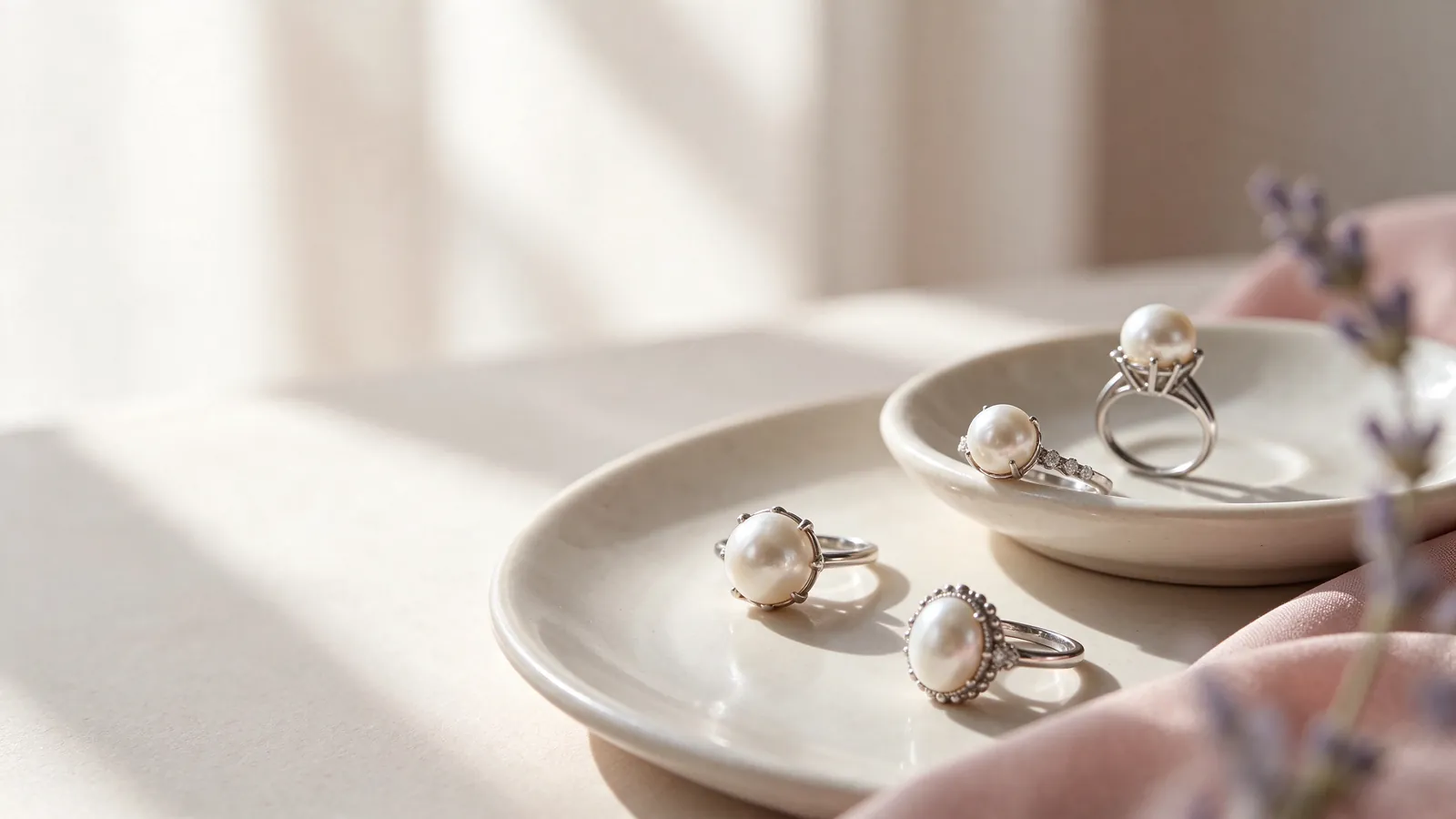
What Matters for Fit When Choosing an open pearl ring, a pearl fork ring or an open band pearl ring?
Start with the intended finger and the stated ring size, not the width of the opening. An open pearl ring may still be made to a fixed size. The space between its ends is part of the design, while the curve around the finger determines where the ring sits. Do not pull the ends apart to make the ring pass a knuckle or squeeze them together to stop it moving.
At a fitting, let your hand relax before gently bending the fingers. Notice whether an end presses into the side of a finger, whether the pearl turns away from the intended position, and whether the band feels different when you straighten your hand. When browsing pearl rings Hong Kong, use these observations to compare styles rather than treating every ring with a visible gap as the same fit solution.
Does an open pearl ring, a pearl fork ring or an open band pearl ring Allow Resizing?
The question are open pearl rings adjustable needs an answer about the individual construction. Ask whether any resizing is permitted, how it would be carried out, and whether it would change the position of the pearl setting. A forked arm or an open band is not designed for repeated bending simply because you can see a gap. Keep the original shape intact until the permitted options are clear.
Read the Ring Arms Before Comparing the Names
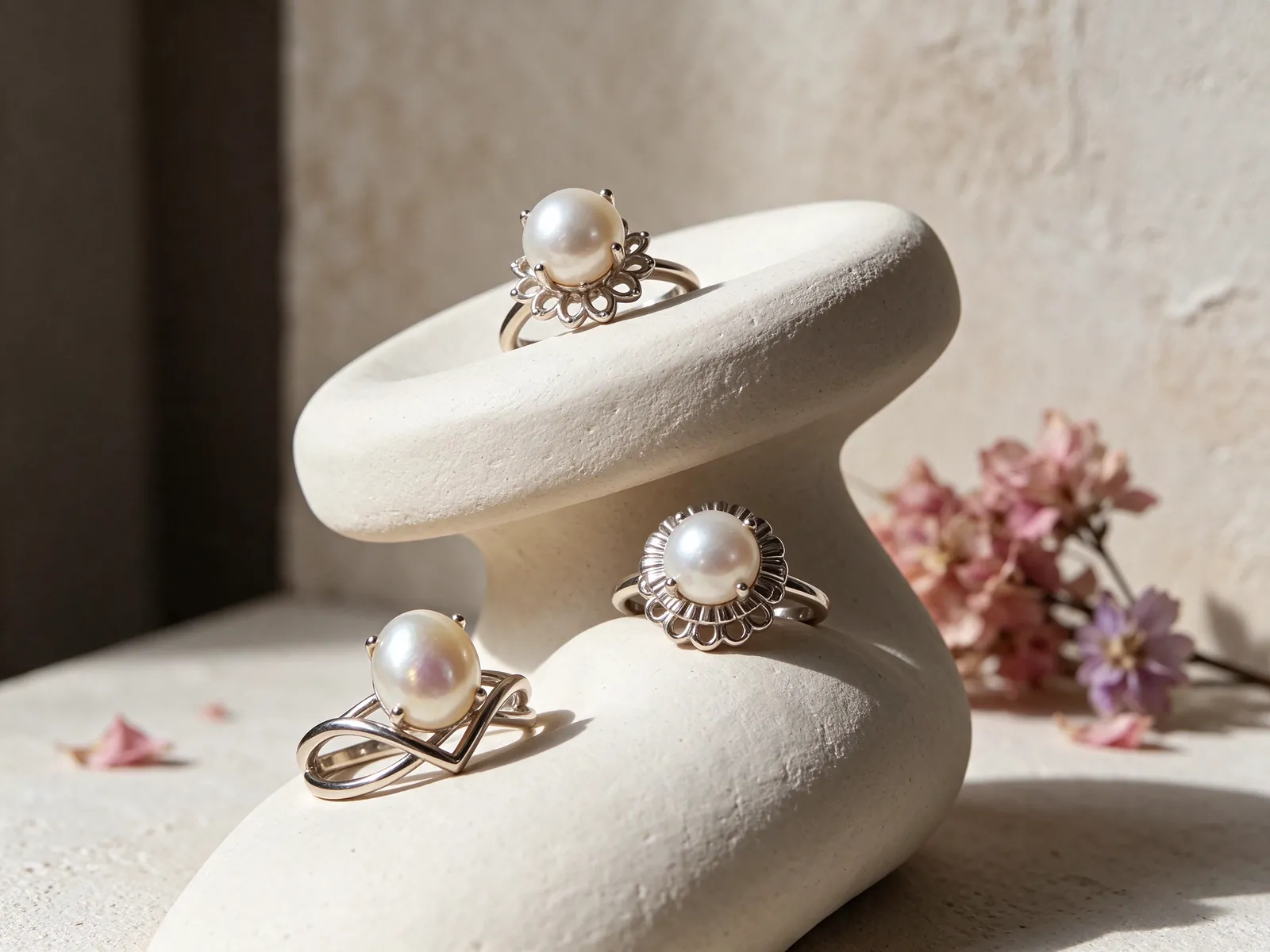
Open describes a silhouette with a visible interruption rather than a conventionally closed outline. Fork draws attention to the branching or terminal arrangement of the arms. Bypass refers to lines that pass or curve around one another in the composition. These ideas can overlap visually, but the names alone do not tell you where the arms join, how the setting is supported, or whether the band is adjustable.
Follow the metal line from one end to the other when looking at a photograph. Identify the opening, the pearl position and any crossing or overlapping lines. If you prefer a clearly concentrated focal point, compare the composition with a single pearl ring. The useful distinction is between a single visual centre and a more distributed outline, not an assumption that one name guarantees a particular construction or strength.
A Side View Can Change Your First Impression
A front photograph can make two ends appear level when one actually sits above the other. A side view helps reveal the height of the pearl, the clearance near the finger and the direction of an exposed tip. Compare the same views for each ring. If an important part is hidden behind the pearl, do not fill in that missing structure from the style name alone.
Balance the Pearl with the Space Around It
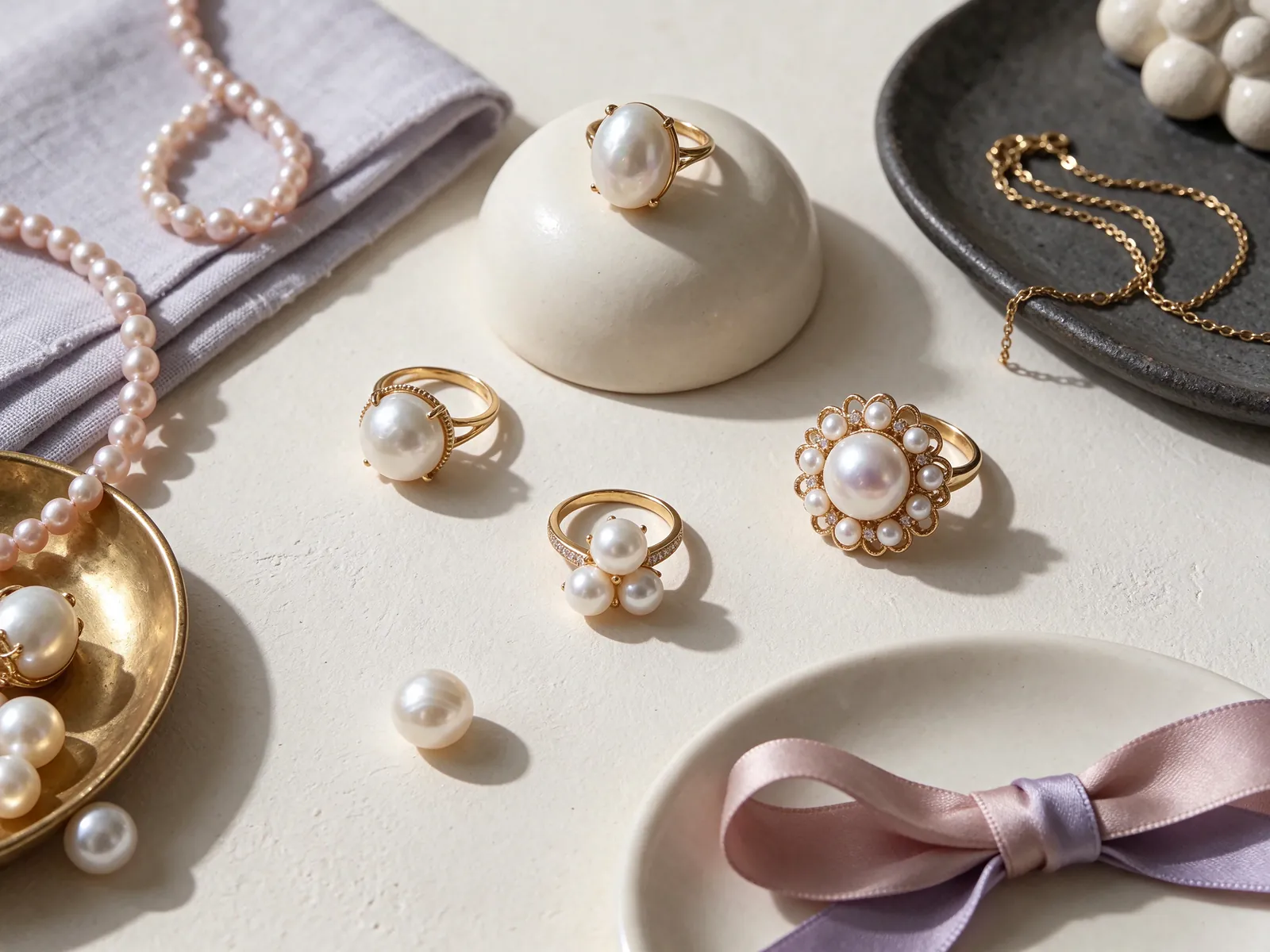
Negative space contributes to the character of an open ring. A compact arrangement can keep attention close to the pearl, while separated ends can lead the eye along the finger. Judge that space on your own hand: a pleasing gap in a close-up photograph may look different when the whole hand is visible. Also notice whether the most prominent part extends towards a neighbouring finger or beyond the side of your hand.
Where several pearls are involved, a multi pearl ring comparison can help you separate individual quality from the overall composition. GIA describes seven pearl quality factors: size, shape, colour, lustre, surface quality, nacre quality and matching. Matching is particularly useful when considering how several pearls work together. Similarity or contrast may appeal for different reasons, but shape and colour alone do not establish origin or natural-versus-cultured identity.
Compare Light and Proportion Under Similar Conditions
Keep your hand in a similar position when comparing rings and use consistent lighting where possible. Look at the clarity of reflected light on the pearl before looking at the arrangement of the ends. Colour editing and strong highlights in a photograph can change an impression. Rotate your wrist during a fitting to see whether the balance you liked from the front remains appealing from an everyday viewing angle.
Try the Movements Your Day Actually Requires
A ring that feels comfortable while your hand is still can behave differently at a keyboard or when holding a bag. During a fitting, gently imitate typing, pick up your own bag handle and bend your fingers naturally. Watch for rotation and contact with adjacent fingers. These are comfort observations, not impact tests; there is no reason to knock the ring against a hard surface to assess it.
Think about blouse cuffs, knitted sleeves and scarves that regularly pass near your hands. An exposed end or a raised pearl position may meet fabric differently from a low, continuous outline. If movement itself attracts you, compare a pearl charm ring separately: a moving charm and a fixed open arm create different interactions. Neither should be chosen on appearance alone when your work involves frequent gripping or handling delicate textiles.
Check Sleeve Clearance Without Pulling at the Ring
Move your own cuff gently past the ring rather than dragging delicate cloth over an end repeatedly. If gloves are part of your day, consider putting them on and removing them without catching the setting. When taking the ring off, hold the band rather than pulling the pearl. For tasks involving tools, cleaning or repeated hard contact, consider removing the ring instead of expecting its silhouette to suit every activity.
Give an Open Silhouette Room in Your Jewellery Styling
An open outline can echo the clean lines of a shirt or introduce a distinct shape beside softer fabrics. It does not need surrounding rings to make its empty space look complete. If your earrings or necklace already provide a strong focal point, allowing the ring to stand alone can make the whole arrangement easier to read. Start with the ring on its own before adding further jewellery.
For pearl stacking rings, check the physical relationship as carefully as the visual one. A second band should not be wedged into the opening merely to achieve a close-fitting photograph. Look for contact between pearl settings, exposed tips and neighbouring bands as you bend your fingers. Wearing the pieces on separate fingers may preserve both outlines more successfully than trying to make them fit tightly together.
Changing Fingers Changes the Contact Points
A pearl pinky ring sits near the outside edge of the hand, whereas an index-finger ring participates in many reaching and gripping movements. An open silhouette can therefore feel different in each position. Use the actual size of the intended finger rather than bending a ring to transfer it. When planning a combination, check contact both between the rings and between the rings and your fingers.
Care for Both the Pearl Surface and the Open Ends
GIA gives pearl a hardness of 2.5 on the Mohs scale. This describes resistance to scratching, not the overall strength of a finished ring. An exposed pearl position deserves attention around hard objects and other jewellery. Store the ring separately so its pearl is not rubbing against harder pieces, and avoid treating the opening as a convenient point to hook or hang the ring.
After wearing, wipe the pearl gently with a very soft, clean cloth. GIA advises against ultrasonic and steam cleaning for pearls and warns about acids, perfume, hair spray and excessive heat. Do not push a cloth forcefully between narrow arms or soak a mounted ring without suitable cleaning guidance for its setting. Support the band while cleaning so that you are not pulling on the pearl or an exposed end.
A Changed Shape Calls for Inspection, Not Home Bending
If the ends no longer sit as they did, the pearl moves unexpectedly, or the ring begins to scratch your skin, stop wearing it and seek professional inspection. Bending an arm back may conceal a change without addressing the setting or a joint. Regular observation should mean noticing the original relationship between the parts, not repeatedly opening and closing the band to test its strength.
Turn Your Style Preference into Clear Buying Questions
Before discussing a ring, describe the intended hand and finger, the clothing you usually wear and whether your day involves typing or carrying items. Explain whether you want one concentrated pearl position or a composition spread across the ends. Then ask about the sizing system, permitted resizing and the side profile. These details make a style conversation more useful than simply requesting an adjustable-looking open ring.
If your preference is really for a broad, visually complete face, a pearl signet ring offers another composition to consider. If you enjoy seeing skin within the outline, keep comparing the spacing and direction of open arms. There is no need to rank these shapes as universally better or worse. The choice should connect your preferred appearance with a fit and a wearing routine you understand.
To discuss your style and sizing priorities with Flint Jewellery, contact us on WhatsApp at +85260106207. Share the finger you intend to use, your everyday activities and the pearl position you prefer, so the conversation can focus on the fit and structural questions that matter to you.
For a Gift, Do Not Use the Gap as a Sizing Shortcut
An open shape does not remove the need to know which finger the recipient intends to use. Ask about their usual rings and whether they prefer a low or more prominent pearl position. Another person's wearing photograph cannot establish their size. A gift becomes more considerate when the fit and practical preferences are understood rather than left to the assumption that the band can be adjusted afterwards.
| Feature | Front-view check | Side-view check | Gentle fitting action | Decision point |
|---|---|---|---|---|
| Visible opening | Space between ends | Contact near the finger sides | Bend and straighten the fingers | A gap does not establish adjustability |
| Forked arrangement | Direction of the branches | Relative height of the ends | Rotate the wrist | Read the construction as well as the name |
| Bypass lines | Where the lines pass one another | Overlap around the pearl | Relax the hand after a gentle fist | Related silhouettes are not identical structures |
| Sleeve clearance | Prominent tips or pearl positions | Distance from fabric | Move a cuff gently | Do not pull fabric repeatedly across the ends |
| Stacking space | Separate outlines of each ring | Contact between settings and bands | Imitate ordinary typing | Separate fingers may suit the combination better |
Pearl knowledge and authoritative references
GIA places pearl at 2.5 on the Mohs hardness scale. The figure describes scratch resistance, not a guarantee of strength for an open ring or its setting.
Read the reference for this factFrequently asked questions
Why can an open ring fit at rest but feel different when typing?
Finger movement can change where an exposed end or pearl setting meets the skin. Observe rotation and contact during gentle typing movements at a fitting. A static photograph cannot show those contact points, and bending the arms is not an appropriate way to solve them.
Does a fork ring always have a symmetrical pair of pearls?
No. The term concerns an arrangement of arms or ends, not a universal pearl count or matching rule. Look at the actual layout and compare the pearls individually where several are present. Do not infer their identity or measurements from the style name.
Should the open ends point towards the fingertip?
The intended orientation depends on the design. Ask how it is meant to sit, then observe the front and side views in that position. Comfort, contact with neighbouring fingers and the balance of the pearl matter more than following a universal direction rule.
How should I compare an open ring with a conventional single-pearl style?
Compare the focal point, the space visible around the pearl and the side profile on the same finger. Also try the same gentle hand movements. This separates your preference for the outline from practical questions about fit, height and contact.
Can I clean the narrow opening with a stiff brush?
Avoid forcing a brush or cloth between the arms and against the pearl setting. GIA recommends very soft, clean cloth care for pearls and rules out ultrasonic and steam cleaning. Ask for appropriate cleaning guidance for a mounted ring when access is difficult.
Updated: