
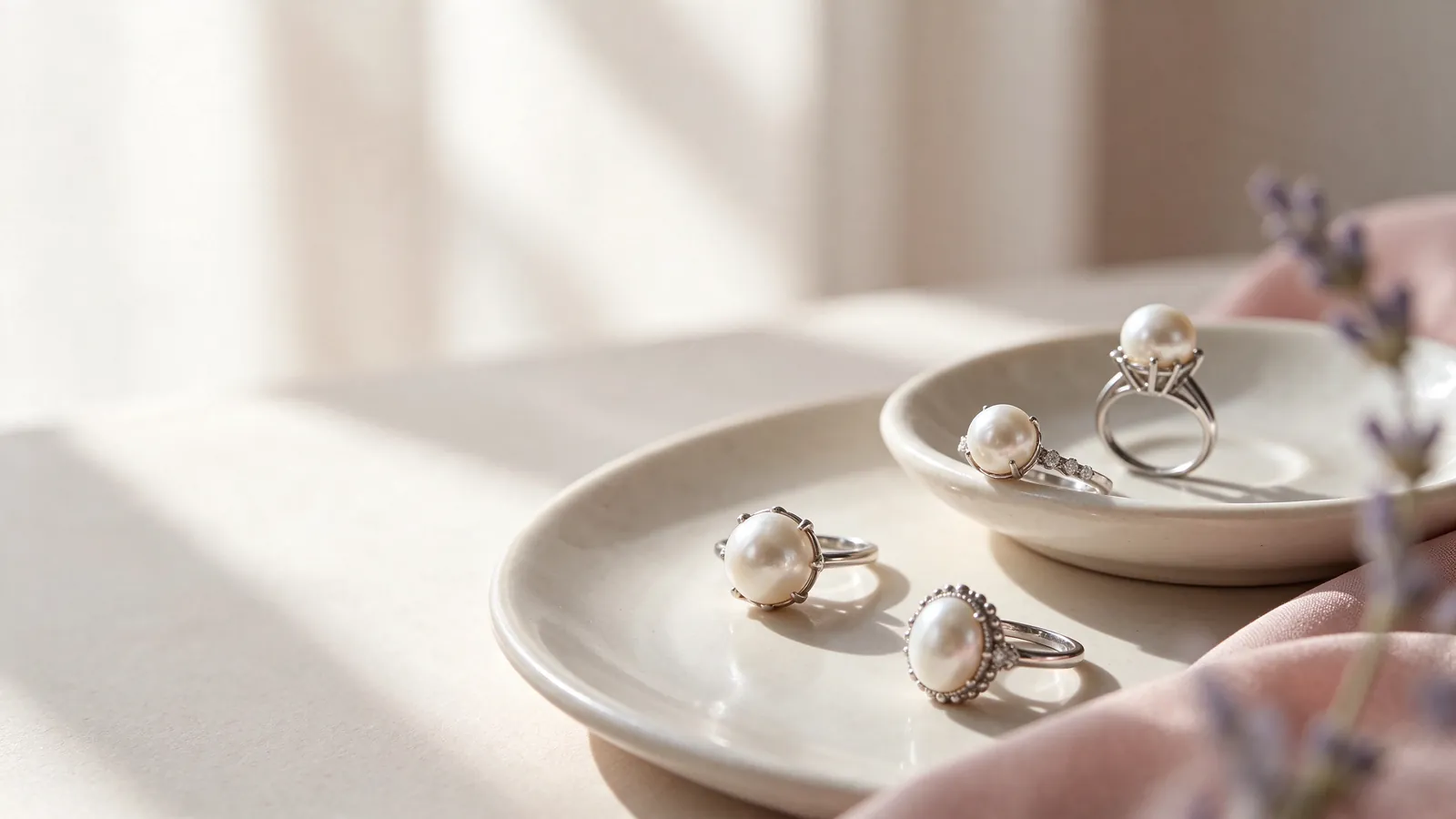
How do petal proportions shape a pearl flower ring, a floral pearl ring or a flower shaped pearl ring?
A pearl flower ring creates a relationship between a rounded centre and an outward-moving outline. Start by asking which part you notice first: the pearl, the petals or the spaces between them. Broad petals can give the ring a stronger horizontal presence, while a closer outline keeps the centre more concentrated. When comparing pearl rings Hong Kong style guides, use a similar viewing distance rather than judging the apparent scale from differently cropped photographs.
A floral pearl ring need not have a perfectly symmetrical arrangement to look balanced. Offset petals can feel more organic, whereas an even outline creates a clearer centre. Neither approach tells you how comfortable the ring will be. For a flower shaped pearl ring, look at where the widest petals finish relative to your finger edges. Counted petals are less useful than the overall outline, the visible pearl surface and the amount of space around it.
When trying on a pearl flower ring, how should a floral pearl ring or flower shaped pearl ring sit on your finger?
Relax your hand, bring your fingers together and then gently spread them. Notice whether a petal presses into a neighbouring finger or makes the ring turn. Pick up your phone and lightly close your hand to test ordinary movements. A wide ring head is not automatically uncomfortable, but repeated repositioning is worth noting alongside its visual appeal.
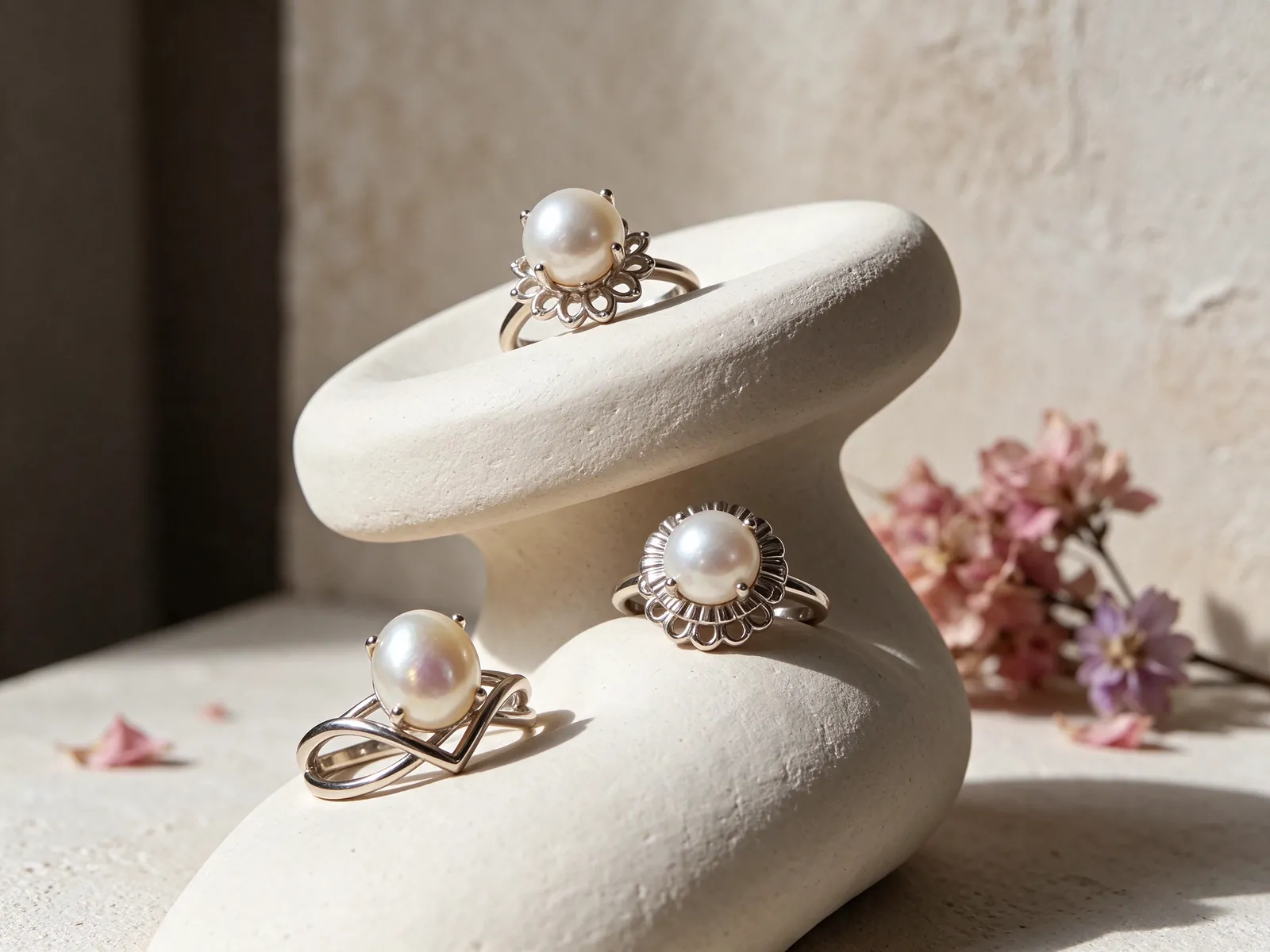
Check the side profile before choosing an elaborate outline
The front view does not show the full relationship between the pearl, petals and band. From the side, look at which parts sit highest and which edges project outward. A sculptural profile may catch your eye, but it can also meet a narrow cuff or the inside of a bag during normal use. Petals around a pearl do not establish complete protection; an exposed pearl surface can still come into contact with objects.
If you regularly wear knitwear, lace or loosely woven sleeves, include those fabrics in a gentle try-on. Move your wrist normally without pulling material across the ring. Compare the spread of a pearl butterfly ring if you like a different horizontal motif, or the concentrated arc of a pearl tiara ring if you prefer a more directed outline. These comparisons clarify space and movement rather than proving one motif is stronger than another.
Choose movement tests that reflect your routine
Typing, holding a cup and putting on a jacket reveal different contact points. Observe where you feel pressure and whether it comes from the band or the ring head. Keep these tests gentle: they are ways to assess comfort, not impact tests or substitutes for a jewellery inspection. A familiar movement is more informative than a carefully posed hand.
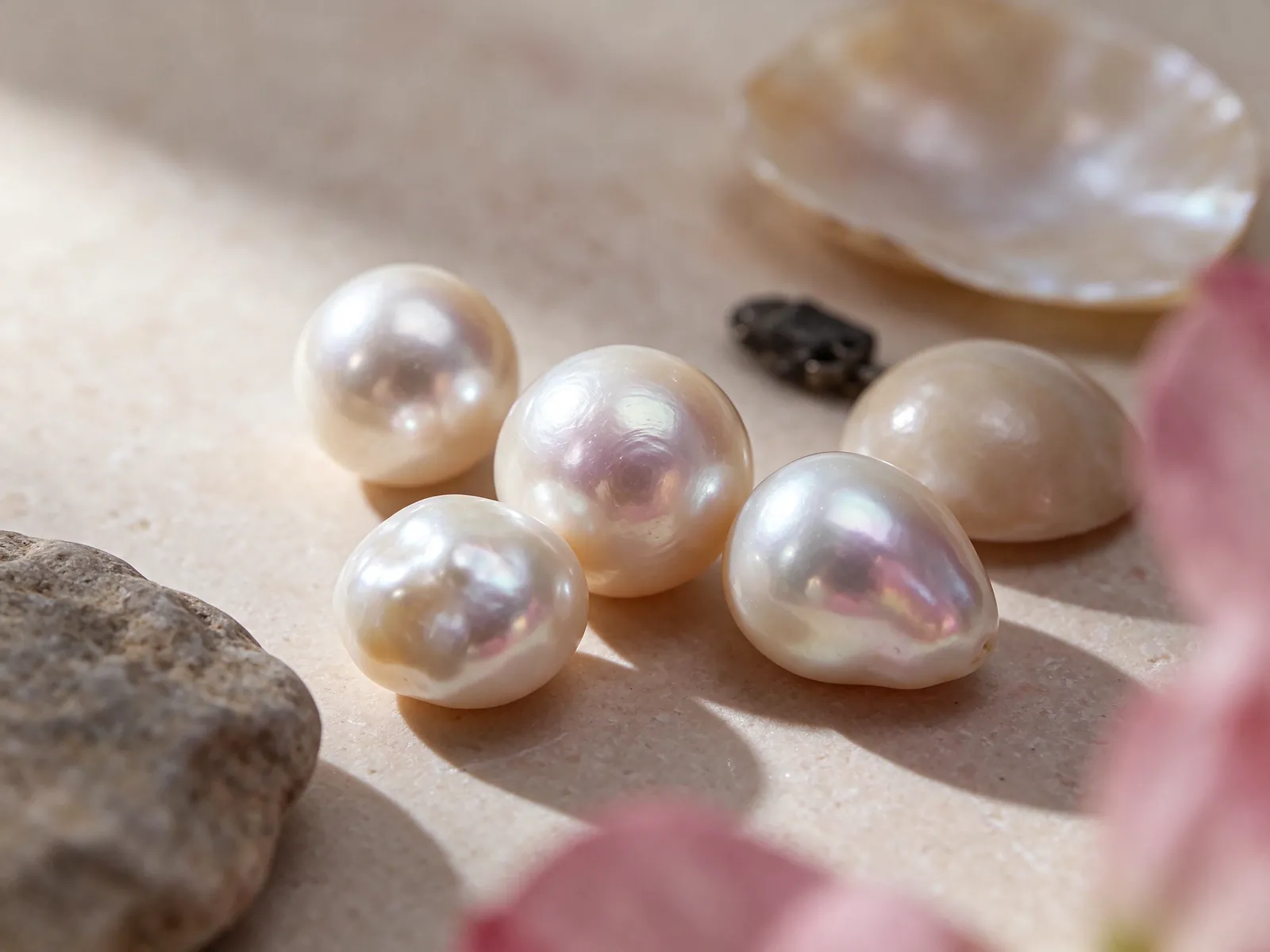
Judge the pearl separately from the floral setting
Bright metal reflections can make a floral setting look lively without telling you much about the pearl itself. Turn your hand in softer light and observe the clarity of reflections, visible surface characteristics and the colour relationship with the petals. GIA describes seven pearl value factors: size, shape, colour, lustre, surface quality, nacre quality and, for multi-pearl jewellery, matching. This provides a useful framework, not a grade that can be assigned from an attractive photograph.
Look at the pearl against your hand and a neutral background before concentrating on the decorative border. If you plan to wear existing pearl earrings, compare the overall colour impression together rather than demanding a match from separate screen images. Shape and colour alone do not establish origin or natural-versus-cultured identity. A flower motif likewise says nothing about pearl type. Read the individual jewellery description and ask specific questions about pearl identity and any stated treatment information.
Use lighting that resembles where you will wear it
For an office ring, ordinary indoor light deserves attention as well as display lighting. Slowly turn the hand and see whether the pearl remains the focal point when the metal highlights change. Strong spotlights and screen settings can alter the impression of colour. A difference between photographs should not automatically be treated as a difference in pearl quality.
Match metal colour and petal texture to your wardrobe
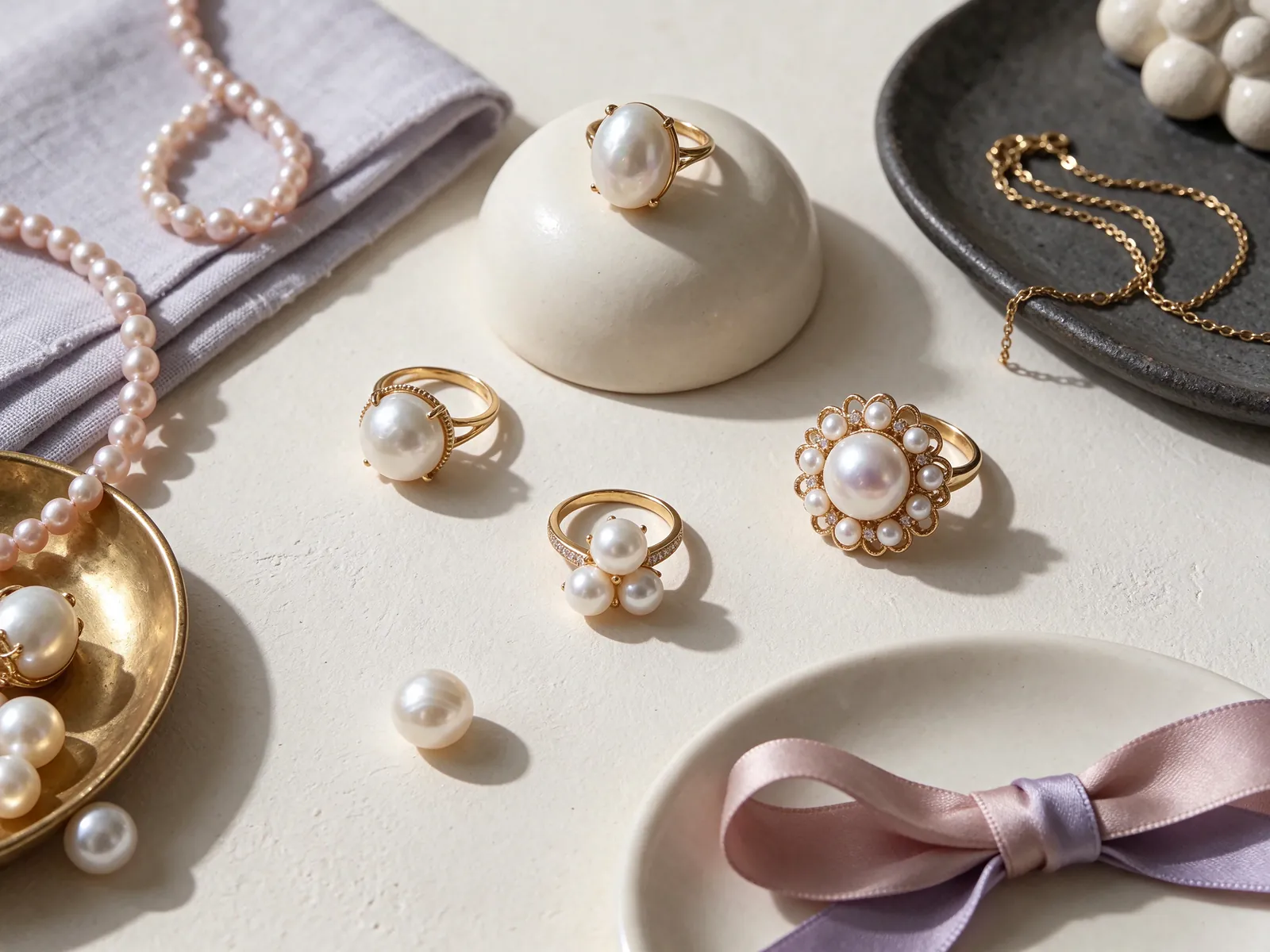
Metal colour changes the frame around the pearl. A white-toned outline can emphasise contrast and definition; yellow gold gives a warmer overall impression, while rose gold can echo warm colours in clothing. These are styling observations, not conclusions about the pearl's identity or quality. Try the ring beside the watch, earrings or plain band you wear most often, then decide whether a shared metal colour or a deliberate contrast suits you better.
Fine beaded edging and engraved petal surfaces add detail at close range. Smooth borders leave more attention on the silhouette and pearl. A beaded edge should not be mistaken for a row of additional gemstones. When discussing metal choices, distinguish 18K 750 white gold, 18K 750 yellow gold, 18K 750 rose gold, PT950 platinum and PT900 platinum by their stated names. The name alone does not describe petal thickness, overall weight or the feel of the finished ring.
Decide whether you want detail or a clear silhouette
Plain shirts can give a detailed floral edge room to stand out. Embroidery, patterned sleeves and textured fabrics may work better with a clearer outline. Consider whether you want the flower visible from across a room or discovered at conversational distance. Making that choice first is often more useful than selecting the maximum amount of decoration.
Give the flower a clear role in your accessories
Begin with the flower ring as the main feature on one hand. Add other rings only after checking both the visual balance and the gap between neighbouring ring heads. Petals that spread sideways can meet another piece during movement even when a posed arrangement looks neat. For work, a plain top and restrained earrings let the outline read clearly; for an evening outfit, space around the cuff can make the ring noticeable without repeating floral motifs everywhere.
A pearl charm ring offers a different direction if you enjoy a motif with movement, while a pearl signet ring provides a comparison for a more defined, solid-looking outline. The floral approach draws attention outward from its centre. Choose between these visual ideas according to your clothing and hand movements, not a fixed ranking of formal or casual styles. With a busy print, remove one accessory at a time to see what helps the ring become legible.
Step back from the close-up photograph
Look at the whole hand and then the complete outfit. If a substantial watch and the floral outline compete, try placing them on different hands. A statement pearl ring guide can help you consider a stronger focal point, but a photograph should not persuade you to choose a ring head that interferes with your usual activities.
Treat finger choice and sizing as part of the design
Choose the intended finger before comparing fit. The same floral outline can have different spaces around it on different fingers. Check passage over the knuckle, pressure when the hand is relaxed and any tendency for the head to rotate. Simply getting the band on does not establish a suitable fit. Keep comparisons on the same finger and note whether discomfort comes from band tightness, the underside of the head or contact with an adjacent finger.
For a gift, useful clues include the recipient's preferred hand, usual clothing and how actively they use their hands at work. A photograph can communicate taste but cannot accurately establish ring size. Do not assume a larger size solves uncertainty, or that later resizing is always possible. The band, floral construction and pearl assembly can affect whether adjustment is suitable. Discuss the actual ring's sizing options rather than treating flexibility as an automatic feature.
Prepare a practical description for a style enquiry
Describe whether you prefer spreading or close-set petals, your usual metal colour, the intended finger and the sleeves you wear most. If you have a size measurement, identify the hand and finger it refers to. These details make a general style and sizing conversation clearer than simply requesting something floral, without allowing a number to override uncomfortable pressure.
Care for the pearl as well as the spaces between petals
After wearing, look for trapped fibres or dirt in the floral outline under good light. GIA lists pearl hardness as 2.5 on the Mohs scale and says pearls should never be cleaned with ultrasonic or steam cleaners. Use a very soft, clean cloth for routine wiping. Do not push hard tools into petal gaps beside the pearl; if a recess is difficult to clean, ask about a suitable method instead of levering the decoration.
Keep perfume, hair spray, acids and excessive heat away from pearls. Finish applying cosmetics before putting the ring on, and remove it for cleaning tasks, heavy lifting or activities likely to knock the hand. Store it separately from hard objects so the pearl and metal parts are not rubbed by other jewellery. A floral frame is a design feature, not a reason to omit these precautions or expect it to prevent every contact.
Pause wear if the edge or assembly feels different
An edge that suddenly snags, unexpected movement near the pearl or an unfamiliar sound deserves attention. Stop wearing the ring and arrange an inspection rather than repeatedly shaking it to test the problem. Note the affected position and the movement that revealed it. Do not glue the pearl or bend petals back yourself, as this can complicate subsequent attention.
For general style and sizing questions, contact Flint Jewellery on WhatsApp at +85260106207 with your preferred petal outline, metal colour and intended finger.
| Feature | Visual check | Movement check | Decision point |
|---|---|---|---|
| Petal spread | Look at the space around the pearl | Bring neighbouring fingers together | Choose a spread that suits the hand |
| Side height | Locate the highest pearl and petal points | Move gently through a familiar cuff | Consider regular clothing contact |
| Edge texture | Separate a smooth outline from close detail | Observe contact with soft fabrics | Balance detail with wardrobe texture |
| Fit stability | See whether the flower stays centred | Hold a phone and lightly close the hand | Distinguish band fit from head pressure |
| Other accessories | View the whole hand and outfit | Check gaps between nearby rings | Let one feature lead before adding more |
Pearl knowledge and authoritative references
GIA lists pearl hardness as 2.5 on the Mohs scale. A floral metal outline does not remove the need to avoid scratching and unsuitable cleaning methods.
Read the reference for this factFrequently asked questions
Does a higher petal count make a floral ring better balanced?
Not by itself. The total spread, spacing and visible pearl surface matter more than the count. Compare the outline on a relaxed hand and check neighbouring-finger contact before deciding whether the arrangement suits you.
Can the petals protect the pearl from every knock?
No floral outline establishes complete protection. Check the exposed pearl surface from the side, and remove the ring before activities likely to cause impact. Do not deliberately knock the ring to test its strength.
Is fine beaded edging the same as extra gemstone setting?
Beaded edging can be a metal decoration rather than a row of stones. Reflections in a photograph are not enough to identify it. Read the individual piece's material description and ask how its decorative edge is made.
Can I combine a floral ring with a patterned cuff?
Start with fewer accessories on that hand and view the whole outfit. Check that the pattern leaves enough visual space for the flower, then gently test whether the cuff contacts the petals. The best combination depends on both proportion and fabric.
What if fibres collect between the petals?
Inspect the area in good light and avoid scraping beside the pearl with hard tools. Routine pearl care uses a very soft, clean cloth. For trapped material that does not lift easily, ask about a suitable cleaning method; do not use steam or ultrasonic cleaning.
Updated: