
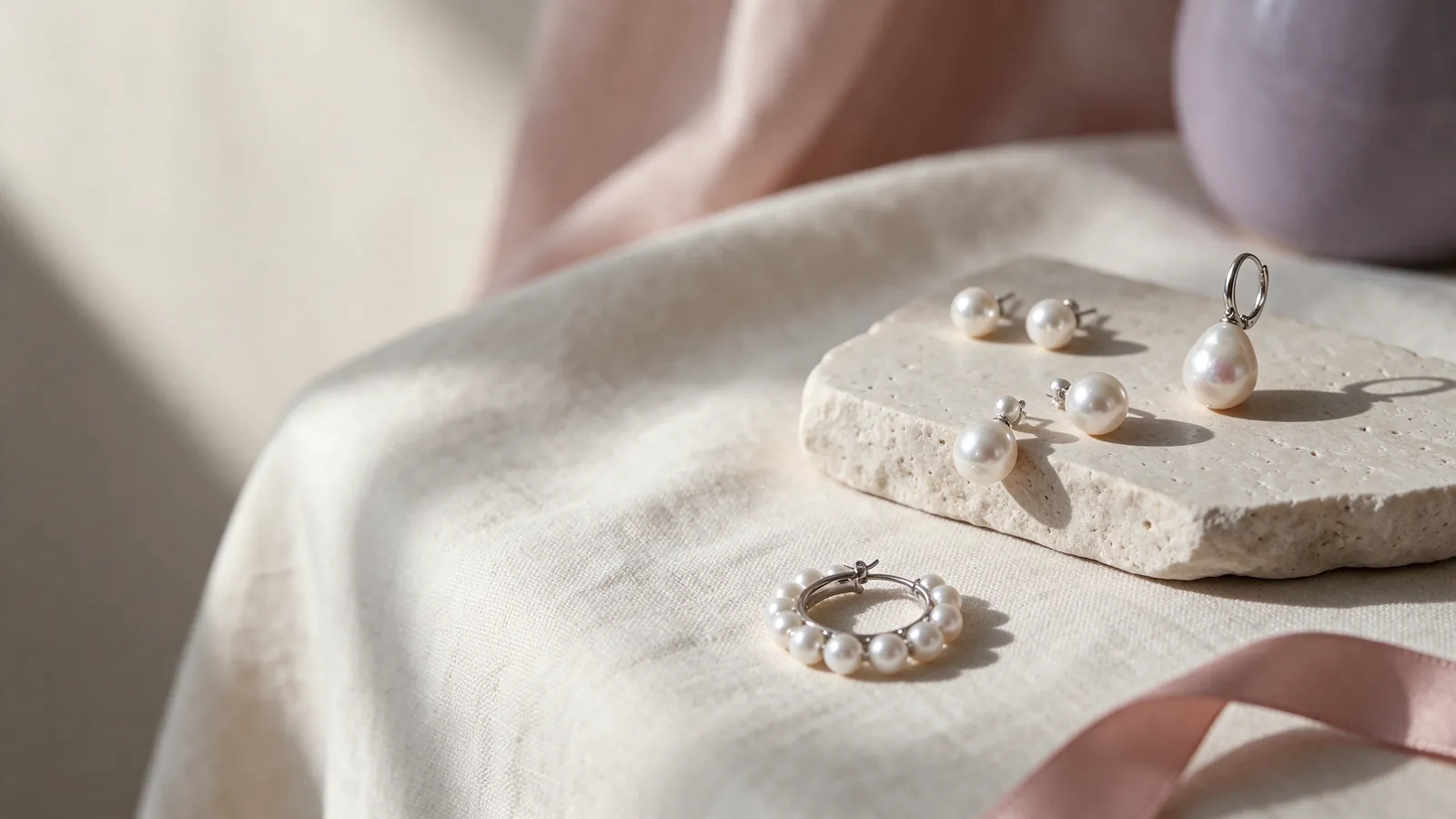
Balancing floral pearl earrings: pearl centres meet openwork in pearl flower earrings and flower-motif pearl earrings
Begin with the centre of the flower rather than its widest edge. In Flint Bloom · Pearl Blossom Earrings, rounded pearls sit within interlaced openwork petals, accompanied by diamond accents and small teardrop-shaped metal tips. The pearl provides a visual anchor, while the petal loops give the outline direction. When considering floral pearl earrings, ask whether you notice the pearl first or whether the outer lines dominate your view. That distinction helps turn a general preference for flowers into a useful design conversation.
Open spaces are part of the composition, but they do not establish an earring's weight or comfort. Look at the silhouette against both a pale collar and darker hair: the same gaps may read differently on each background. If you are still deciding between a compact centre and a more extended motif, pearl earrings Hong Kong provides a broader starting point for comparing design directions. Return to the flower with a clearer idea of how much outline you want beside your face.
Considering clip-on fit for floral pearl earrings: styling pearl flower earrings and flower-motif pearl earrings beside a clean neckline
A clean neckline can be a crisp shirt collar, a plain crew neck or an uncluttered dress. It does not have to expose more skin. Check whether the collar leaves the lower outline visible when you turn your head, then consider the clip's contact with your ear separately. A pleasing front view is only one part of the choice; the side view and your own experience of the fastening matter too.
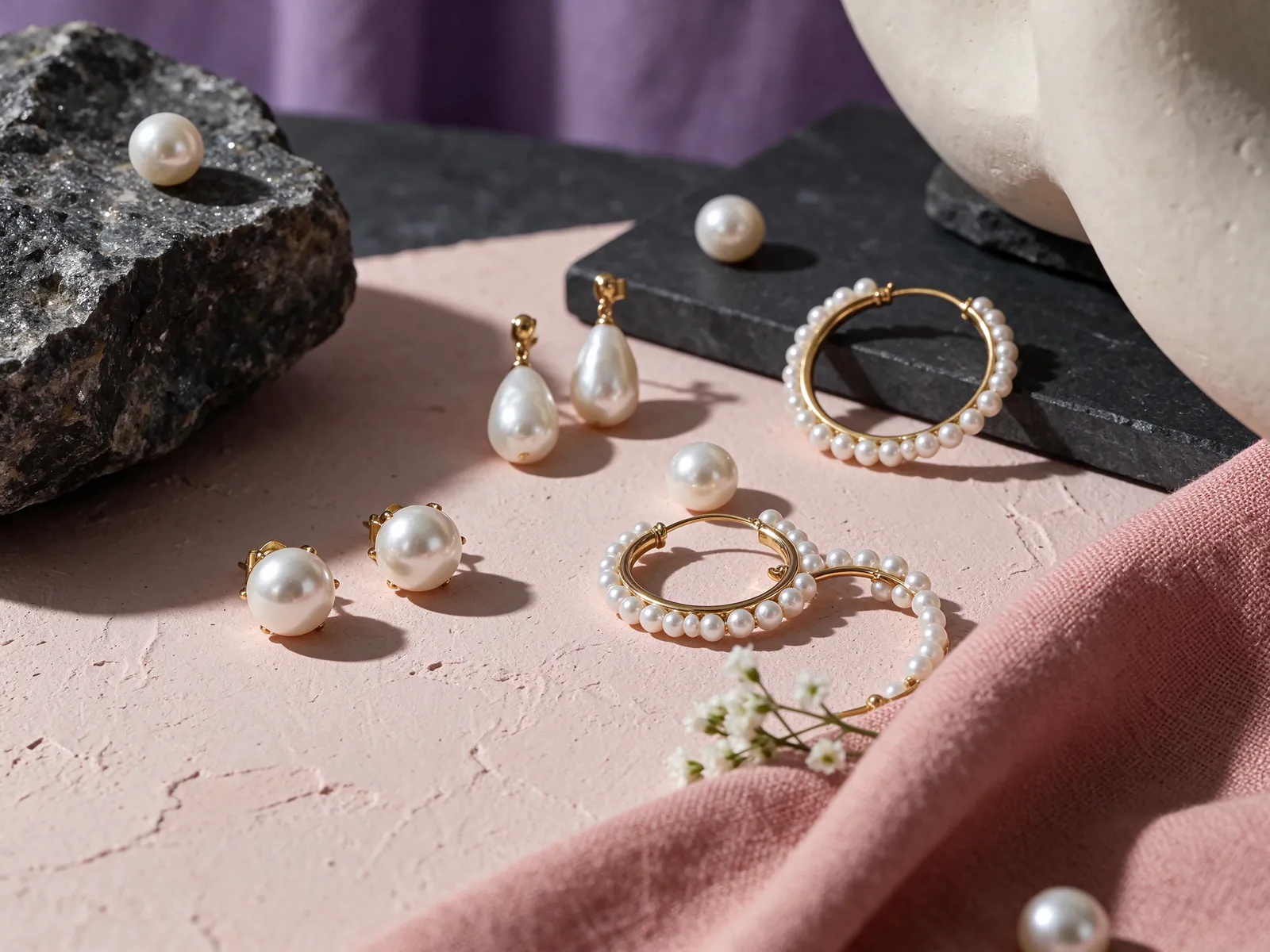
Clip-on contact: describe your habits before choosing the outline
The stated configuration of Flint Bloom · Pearl Blossom Earrings is a pearl clip-on pair. For a fit discussion, describe whether previous clips have slipped, pressed at a particular point or felt different on each ear. Ear shape and personal sensitivity are not visible in a styled photograph. Rather than asking only whether a pair is comfortable, explain the contact you prefer and the everyday situations in which you expect to wear it.
Hair, mask loops, scarves and a telephone held to the ear can all meet the earring during an ordinary day. If a fitting opportunity is available, notice the pearl's position while sitting upright and gently turning your head. Do not pull the petals or increase clip pressure yourself to solve movement. The fastening and decorative outline need to be considered together, particularly if you want to discuss changes to the floral proportions.
Keep appearance and contact sensation as separate observations
First use a mirror to note where the flower sits; then look away and notice the contact sensation without being distracted by the appearance. Remove the earrings if you experience pain or persistent discomfort and seek professional advice on the structure. Ongoing skin symptoms call for medical advice. A clip-on configuration does not imply a universal fit, and a metal name alone cannot establish how your skin will respond.
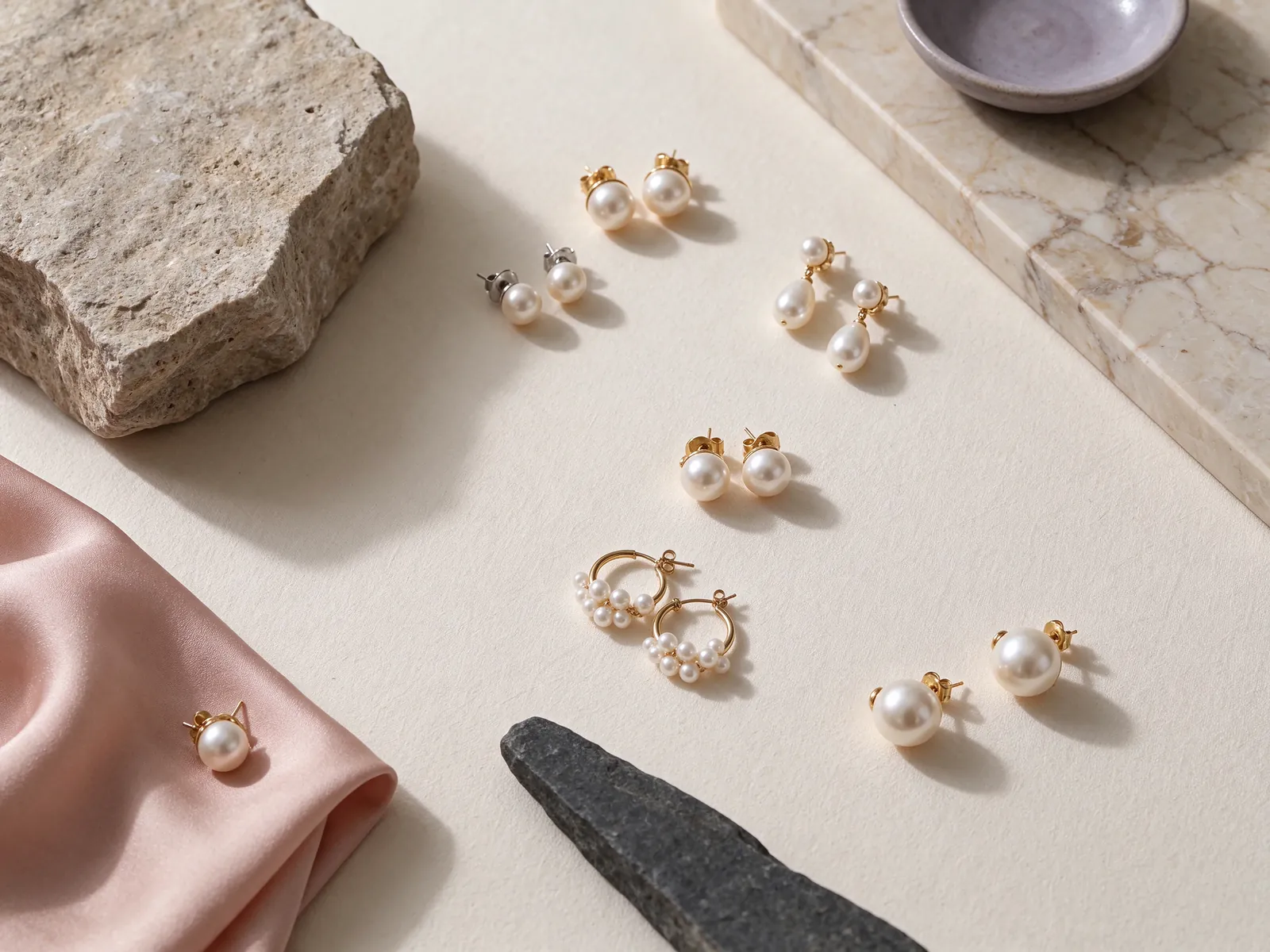
Petal rhythm, diamond accents and the distinction from a halo
A floral outline is not defined simply by the presence of diamonds. Interlaced petals introduce changing directions around the pearl, while smaller bright details can support that centre. When comparing pearl and diamond earrings, consider whether you want those accents to remain secondary or become a stronger part of the composition. Visible sparkle cannot tell you diamond weight or grading, so keep visual preferences separate from questions about individual gemstone details.
The topic of halo pearl earrings offers a useful comparison when you prefer a more concentrated surrounding outline. Look for the difference between an enclosing effect and petals that extend outwards; neither is inherently more refined. In Flint Bloom · Pearl Blossom Earrings, the small teardrop-shaped tips are metal details. They should not be read as additional pearls or assumed gemstones merely because their shape resembles a drop.
Read the overall image before the close-up
An overall view helps you understand the flower's outline; a closer view helps you distinguish the pearl, petal edges and points of light. Neither view can show how a clip feels on your ear. If only a front image is available, ask about side projection and the rear configuration during your discussion. Do not infer pearl species, origin or treatment from a rounded shape or a pale appearance.
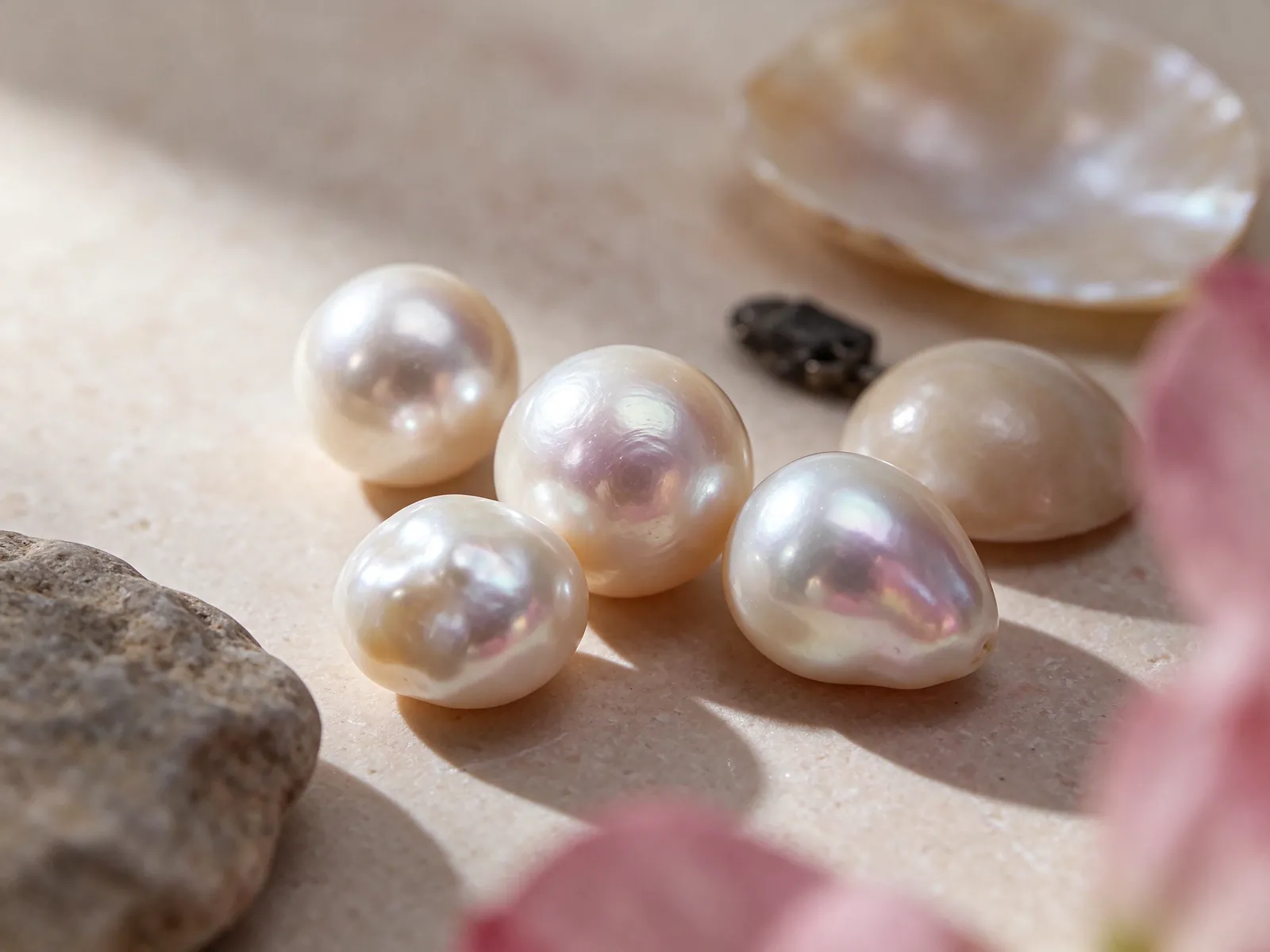
Everyday dressing: make room for the floral detail
For a working wardrobe, start with clothes you already use rather than an imagined occasion. A ruffled or heavily patterned collar can compete with petal edges; a plain surface makes their spacing easier to see. Warm ivory, pink or lavender may give a softer setting, while darker clothing can emphasise the outline. These are styling experiments, not rules about complexion. Compare the earrings with more than one familiar top to judge the contrast you actually enjoy.
For an evening look, decide whether the ears or neckline should carry the strongest detail. A statement necklace, embellished shoulder and floral earrings may divide attention if all are equally prominent. Leaving the neck uncluttered is one option, but a restrained necklace can also work when it does not obscure the flower's lower edge. Remember the jacket or wrap you will wear on the journey, rather than judging the outfit only without outer layers.
Use hair and collar photographs to explain proportion
Try your hair tucked behind the ear and then in its usual position. One arrangement reveals the whole flower; the other may allow glimpses of it through the hair. A front photograph and a side photograph of your usual collar can make a discussion more precise. Instead of saying only that you want something understated, describe whether the centre should remain visible without the petal edge reaching the collar.
Comparing motifs without losing your own design priorities
If natural motifs appeal to you, compare the outward direction of butterfly pearl earrings with the flower's centred arrangement. Do you prefer a wing-like spread or a sense of petals gathering around a pearl? This is a question about line and space, not a promise that a motif expresses a particular personality or brings a benefit. Naming the visual movement you enjoy gives a designer more useful information than a broad description such as romantic.
You can also compare ribbon pearl earrings when you are drawn to flowing lines rather than a clearly separated petal outline. If your main interest is a longer vertical rhythm, pearl fringe earrings raises a different set of styling questions. These comparisons help clarify your preference; they do not mean each motif can be transferred directly into the same clip-on structure. A longer or differently extended outline calls for its own discussion of fastening, contact and everyday movement.
Choose one feature to retain and one concern to resolve
A useful brief might retain the pearl as the floral centre while asking for a clearer view of the open spaces beside your usual collar. Another might prioritise the petal outline over the diamond accents. Describe those preferences in your own words rather than requesting an exact copy of another maker's piece. Separating a favourite feature from a practical concern keeps the conversation focused on your needs.
Pearl quality and care within an openwork setting
GIA describes seven pearl value factors: size, shape, colour, lustre, surface quality, nacre quality and matching. In a pair of flower-motif pearl earrings, matching invites you to consider whether the two centres appear harmonious in colour, lustre and visual size. That judgement should sit alongside the balance of the petals. A rounded shape or similar colour does not establish pearl origin or natural-versus-cultured identity, and general GIA education is not a certificate for a Flint design.
GIA ranks pearl at 2.5 on the Mohs hardness scale and advises against ultrasonic or steam cleaning. Diamond and metal elements in a floral earring do not remove the need to protect its pearl. After wearing, use a very soft, clean cloth and avoid contact with perfume, hair spray, acids and excessive heat. Do not scrape between openwork petals with a sharp tool; a difficult deposit is a reason to ask a jewellery professional about appropriate cleaning.
Prevent tangles when putting the pair away
Give the earrings a separate space so that chains and other pieces do not catch in the openwork or rub against the pearls. Handle a secure part of the metal structure rather than pulling a pearl or an outer petal. If a fastening or setting appears to have moved, stop wearing the pair and have it inspected. Cleaning, changing clip contact and repairing a setting are different tasks, not interchangeable home adjustments.
Prepare a floral brief for personal wear or a thoughtful gift
Use Flint Bloom · Pearl Blossom Earrings as a concrete starting point: pearl centres, interlaced openwork petals, diamond accents, teardrop-shaped metal tips and a clip-on configuration. Prioritise what matters most, such as where the centre sits on your ear and how the outline meets a favourite collar. Your preferences for floral detail and the fastening can then be discussed together, rather than treating appearance as a complete answer to fit.
Material choices for a bespoke discussion are 18K 750 white gold, 18K 750 yellow gold, 18K 750 rose gold, PT950 platinum and PT900 platinum. Consider the jewellery colours you already wear and the contrast you prefer around the pearl. Do not use the material name to predict total weight or personal skin response. The selected material, floral proportions and fastening details belong together in the written design description you agree with Flint Jewellery.
For a gift, establish the recipient's earring habits first
A person who enjoys flowers may still prefer a smaller outline or a different fastening experience. Before choosing for someone else, learn whether they use clip-on earrings and what collars and hairstyles they wear most often. If that information is uncertain, organise the floral preferences as a discussion brief rather than guessing their fit. Thoughtful preparation connects the gift to the recipient's everyday wardrobe without assuming what will feel right on their ears.
Discuss your preferred floral details, clip-on contact and chosen material with Flint Jewellery on WhatsApp, or call +85260106207. Bring your usual collar and hairstyle into the conversation so the bespoke discussion starts with the way you expect to wear the earrings.
| Detail | Selection question | Styling consideration | Practical step |
|---|---|---|---|
| Pearl centre | Is the visual focus easy to identify? | Background colour changes contrast | Compare a pale and a dark familiar top |
| Openwork petals | Do the spaces and outline suit your preference? | Detailed collars may compete with the edges | Look from the front and the side |
| Diamond accents and metal tips | Do you prefer smaller glints or the petal rhythm? | An uncluttered neckline can focus attention | Distinguish gemstone accents from metal reflections |
| Clip-on contact | What contact and position do you prefer? | Hair, scarves and mask loops may meet the pair | Describe previous clip-on experiences |
| Storage | Could another piece catch in the petals? | Changing clothes can bring contact with fabric | Store separately and wipe pearls gently |
Pearl knowledge and authoritative references
GIA ranks pearl at 2.5 on the Mohs hardness scale and advises that pearls should never be cleaned in ultrasonic or steam cleaners, including when a pearl is part of a mixed-material floral earring.
Read the reference for this factFrequently asked questions
Does openwork mean the earrings will feel light?
Openwork describes the spaces in the metal design. It does not establish total weight or comfort. Discuss the actual structure and your preferred clip contact rather than estimating either from the photograph.
Must pearl flower earrings be worn with a low neckline?
No. A plain crew neck or crisp collar can leave enough visual space for the flower. Check the lower edge against the collar from the side as well as the front, especially when adding a jacket or wrap.
Are the teardrop-shaped tips additional pearls?
In Flint Bloom · Pearl Blossom Earrings, these are described as metal tips. The pearl centres, diamond accents and metal outline have different roles; a drop-like shape alone should not be interpreted as a gemstone.
Can the two pearl centres be assessed only by colour?
Colour is one part of matching, alongside aspects such as lustre and visual size. GIA's seven pearl value factors offer a broader framework. A colour match by itself does not establish origin, identity or certification.
What should I do if hair catches in a petal?
Stop pulling and gently free the hair while supporting the earring. Avoid bending the petal or forcing the clip. If the structure appears changed afterwards, stop wearing the pair and ask a jewellery professional to inspect it.
Updated: