
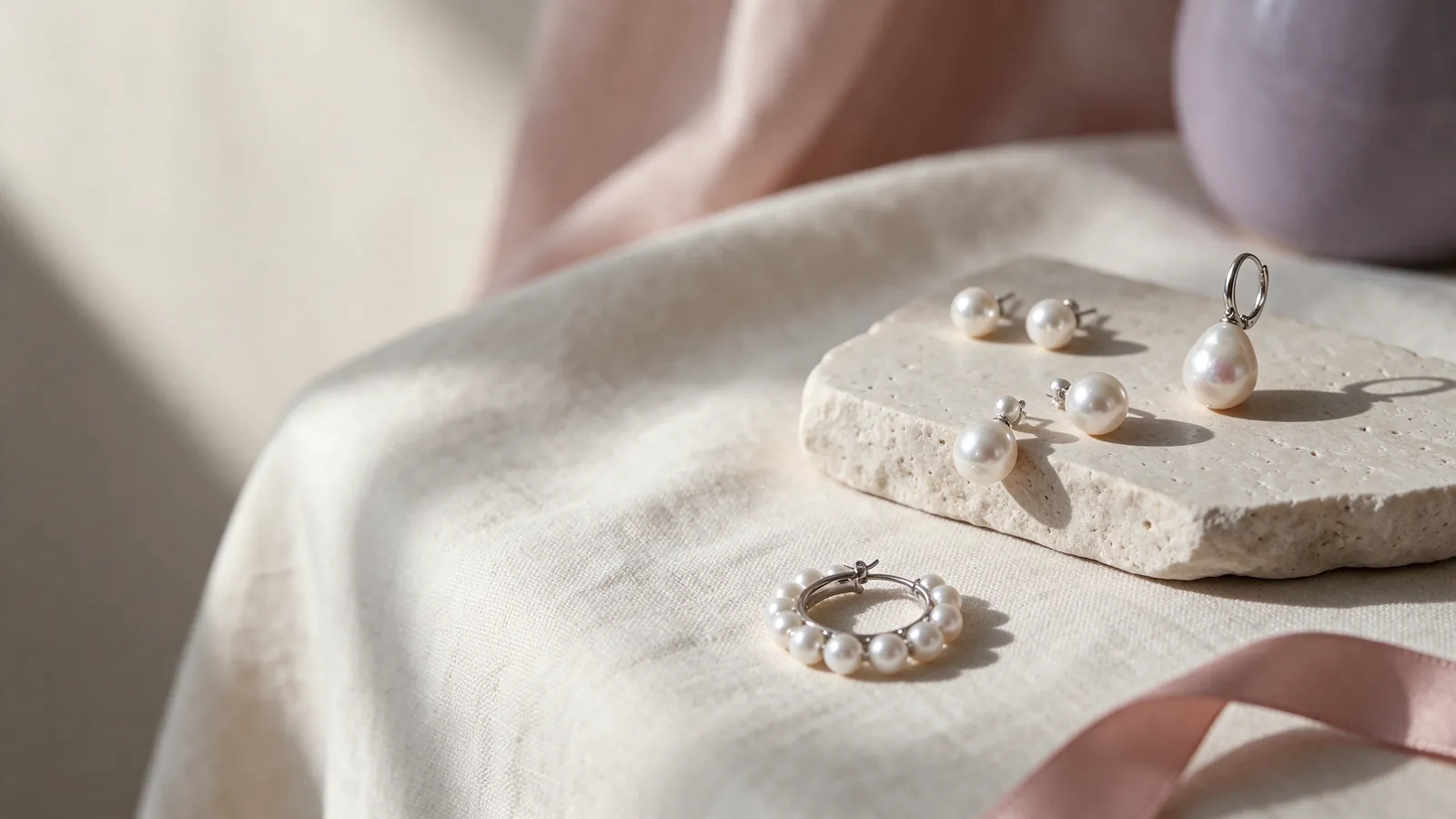
How do proportions shape the look of 10K gold pearl earrings and K10 pearl earrings, including 10k pearl studs?
Start with the area around your earlobe rather than the metal wording in a title. A pearl can sit within a broader frame, project forward or form part of a short hanging outline, so its dimensions alone do not describe the complete silhouette. Decide whether you want a quiet detail beside your face or a more visible accent when your hair is tied back. That choice gives the measurements a purpose and helps you avoid treating a closely cropped photograph as an indication of actual size.
A front view shows the outline, while a side view helps you understand how far the earring stands away from the ear. If you wear glasses, use a phone frequently or favour structured shirt collars, consider where those objects might meet the design. The guide to pearl studs vs drops vs dangles can help separate a close-to-ear shape from a hanging one before you compare their proportions. A style name describes a form, not a universal wearing experience.
When comparing 10K gold pearl earrings and K10 pearl earrings, which dimensions matter for 10k pearl studs?
Separate pearl dimensions from the overall height and width, then consider side projection and the post-and-back arrangement. An overall measurement cannot tell you how much of the outline belongs to the pearl rather than its frame. Likewise, a pearl measurement cannot describe the whole earring. Compare the outline with an earring you already know, and ask for the missing dimension instead of relying on words such as petite or substantial.
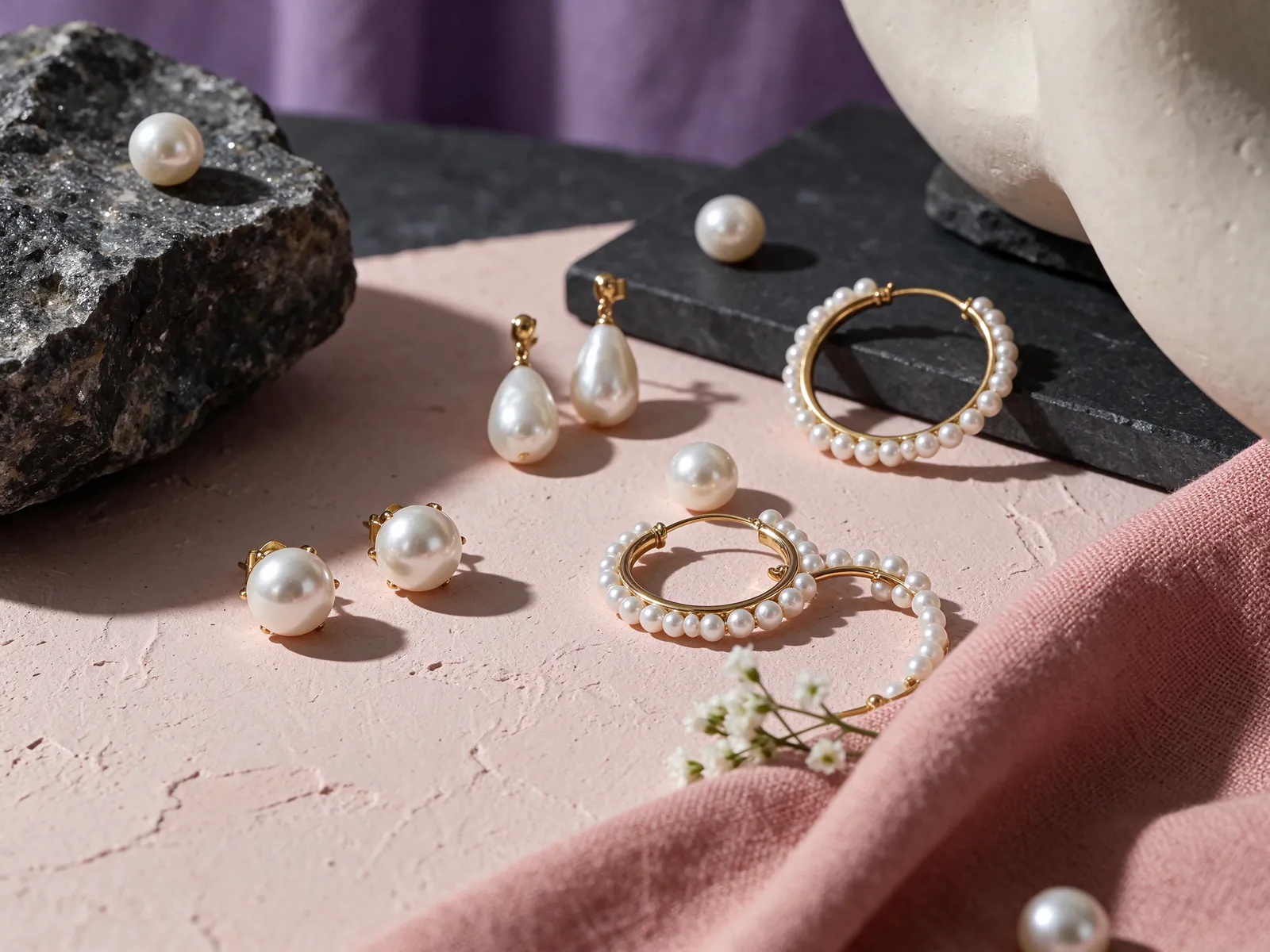
Keep metal terminology separate from pearl evaluation
10K and K10 are alternative ways of writing the same metal designation. Neither is a pearl grade. When reading a description, give the metal, pearl and earring structure their own place in your comparison. The title may identify a metal designation without explaining every post, back or decorative component. A useful description makes those parts understandable rather than expecting a short title to answer all questions about the piece.
GIA describes seven pearl quality factors: size, shape, colour, lustre, surface quality, nacre quality and matching. For earrings, matching deserves attention because the two sides are worn as a pair. Compare their apparent size, colour and reflected light under similar viewing conditions. Coordination does not require the absence of every visible difference, and an attractive metal outline does not establish pearl quality. Look at the pair as well as individual close-ups.
Look at the pair before concentrating on a single detail
Begin with whether both sides have a balanced visual centre, then examine the pearl features that matter to you. Shape or colour alone cannot establish origin or natural-versus-cultured identity. If those details are important, read the explicit description and relevant documentation for the particular piece. If your immediate question is styling, first identify the colour and outline you enjoy, then compare the quality factors individually.
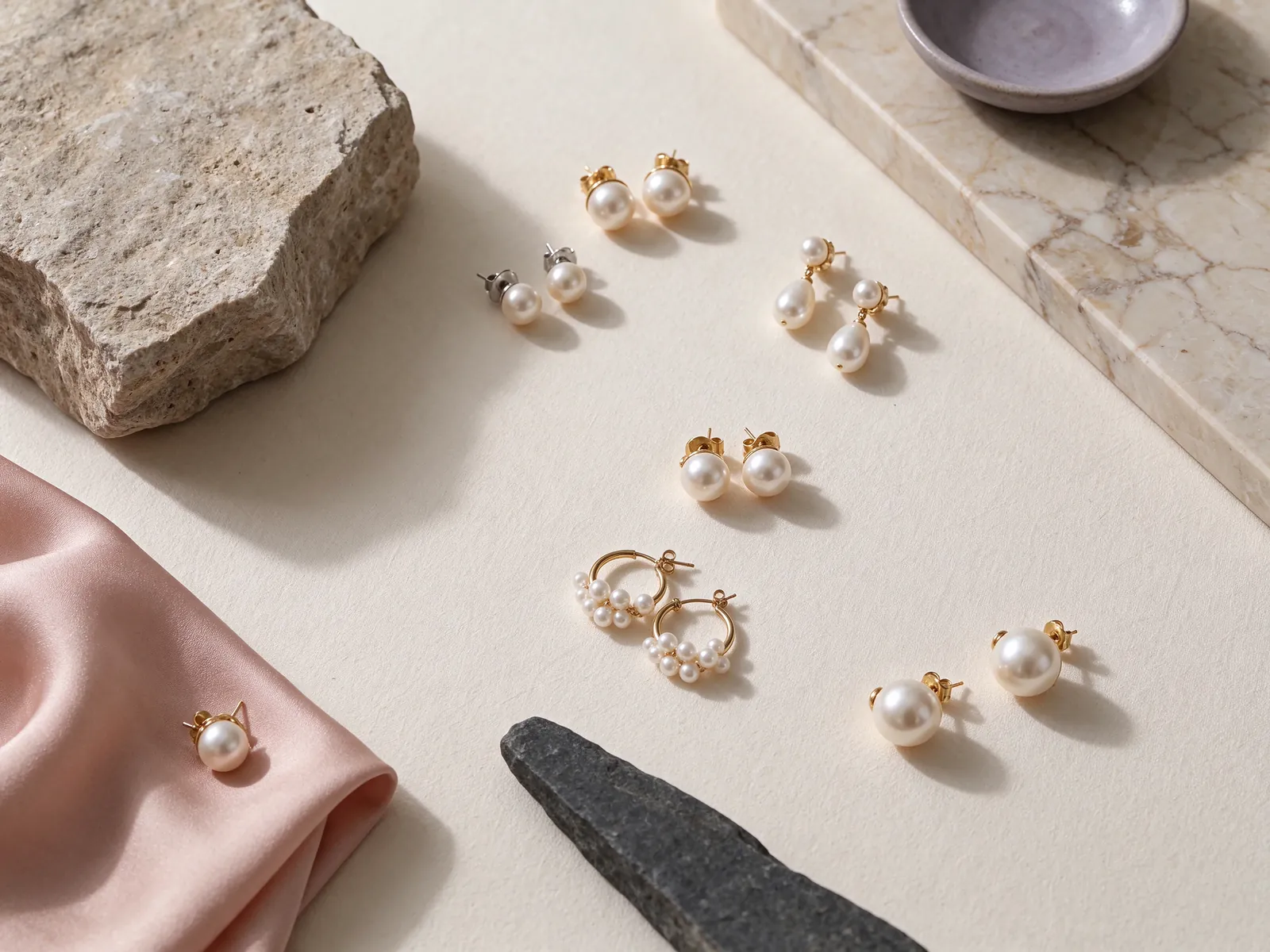
Consider the fastening alongside your daily movements
A stud may look close to the ear without sitting at the same angle on every wearer. Piercing position, earlobe shape, the weight distribution at the front and the contact area of the back can all influence how the outline is presented. Ask how the back is secured and removed, and notice whether you can operate it without pulling at the earlobe. The word stud cannot answer these structural questions by itself.
Bring your usual habits into the comparison. Long hair, glasses, a mask or headphones may occupy the same space as an earring, and a more projecting design may behave differently from a flatter outline. When trying a style, look from the side as well as the front and consider looking down or turning your head. Do not overtighten a back simply to make the front appear more upright, and do not treat its appearance as a security guarantee.
Metal designation is not a sensitivity guarantee
If you have experienced a reaction to jewellery, pay attention to the stated materials of the components that touch you. Do not assume that all pieces bearing one designation have identical contact parts. A metal label is not a promise of suitability for sensitive skin. Stop wearing an earring that causes discomfort and seek appropriate medical advice when needed; your known experience is more useful than a broad comfort claim.
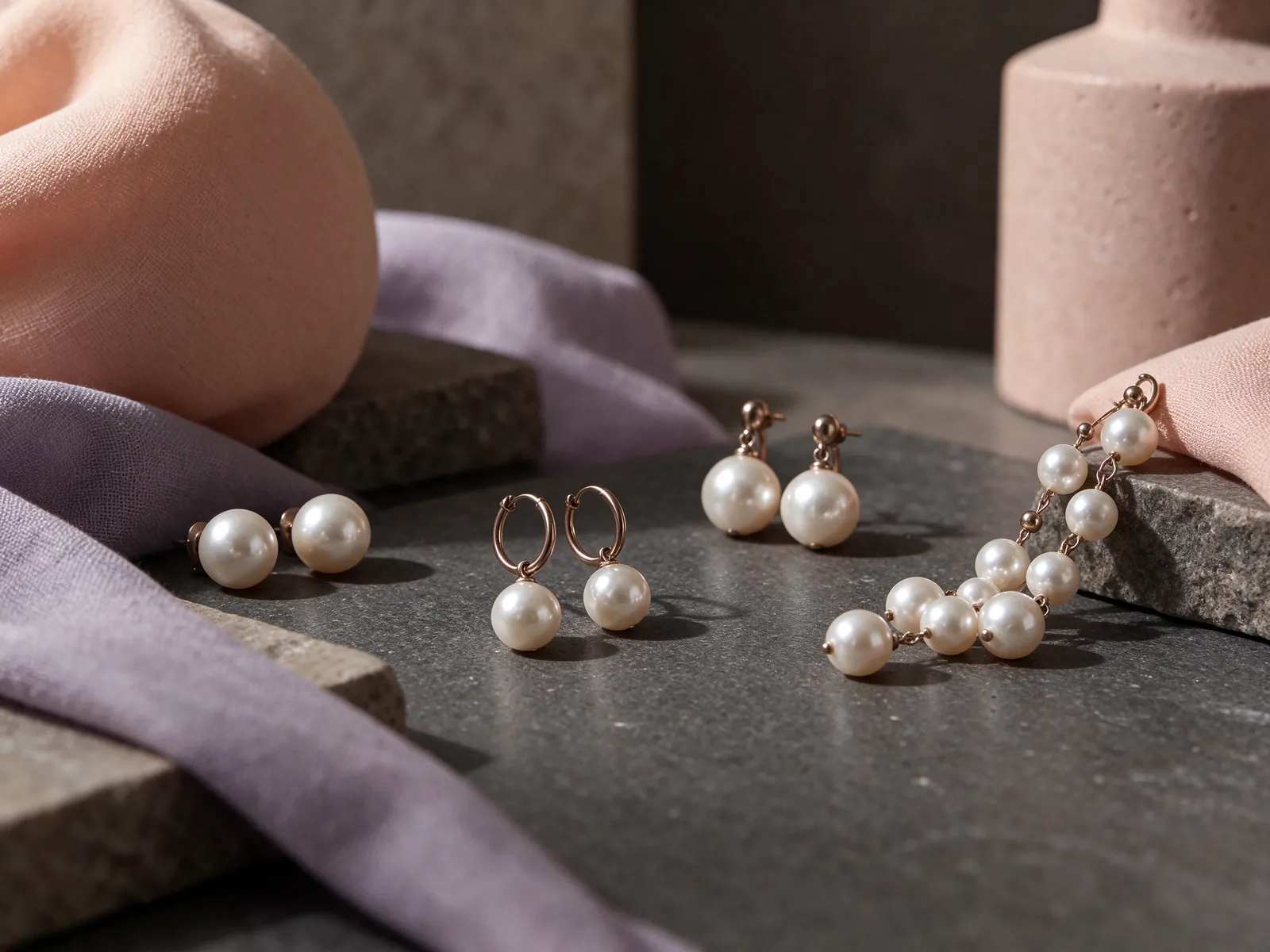
Use your working wardrobe to choose a visual role
For office dressing, look at the lines already near your face: glasses, a shirt collar and a necklace may each have a strong shape. An earring does not need to compete with all of them. If you want the pearl to be a restrained detail, compare simple front outlines first and side projection second. Reading about everyday pearl earrings can help connect the look to commuting, desk work and plans after work, rather than making one metal name the definition of an office style.
At weekends, changing your hair can change how much of the earring is visible without changing the jewellery itself. Tied-back hair reveals the edge of a design; loose hair may partly cover a close-to-ear shape. A patterned neckline may already provide enough detail, leaving the pearl to act as a calmer accent. When comparing photographs, choose wearing angles that resemble your own habits rather than allowing an unusually styled image to determine your choice.
View the whole upper-body composition
Use a mirror to see the relationship between glasses, earrings and neckline instead of studying only the earlobe. Decide what you want to notice first: the face, the pearls or the clothing detail. There is no single rule requiring every metal colour to match. A clear visual priority lets you choose coordinated or contrasting colours deliberately, while keeping practical dimensions in the decision.
Compare other metal names without changing every design variable
If you are reading about several metal designations, hold the style conditions as steady as possible. Compare similar outlines and record overall dimensions, fastening and pearl appearance separately. Otherwise, the difference between a broad earring and a small stud can be mistakenly attributed to the metal name. The page on 14K gold pearl earrings addresses another naming comparison, while the pearl earring size guide helps distinguish pearl dimensions from the complete outline and its proportions beside the earlobe.
For a discussion with Flint Jewellery, the material directions are 18K 750 white gold, 18K 750 yellow gold, 18K 750 rose gold, PT950 platinum and PT900 platinum. The knowledge pages on 18K gold pearl earrings and platinum pearl earrings offer related reading. Consider these directions alongside your preferred outline and colour, rather than treating this guide's 10K terminology as a Flint product request. This is an independent comparison of naming and form, not a Flint offer of 10K goods.
Compare colour in the context of existing accessories
Think about the visual colours of your glasses, rings and necklaces before deciding whether you prefer coordination or contrast. Then ask whether the pearl remains the main accent. Lighting and photographic white balance can alter the apparent colour, so one image is not a precise colour reference. Keep questions about the back and outline in the conversation rather than reducing the whole choice to colour.
Turn gift ideas and personal preferences into useful questions
For a gift, begin with whether the recipient has pierced ears, which fastening they normally use and how prominent an outline they enjoy. Their usual hair, glasses and collars can tell you more about proportions than a guess about their favourite K number. Contact sensitivity and ease of handling are also personal. Your own wearing experience should not be treated as evidence that the same structure will suit somebody else.
For yourself, describe the intended result in practical terms: a quiet front outline, a visible accent with tied-back hair, or a shape that works beside your regular glasses. When discussing the listed material directions with Flint Jewellery on WhatsApp, explain your wardrobe and fastening preferences. This gives the conversation a useful starting point without assuming a pearl type, a particular design or availability from a photograph.
Ask a separate question for each missing dimension
If only the pearl size is described, ask about complete height and width. If only a front view is shown, ask about side projection. If the term stud is the only structural detail, ask how the back operates and which components make contact. A photograph of an earring you already wear can communicate an outline preference without asking for another maker's design to be copied.
Care for the pearl and the fastening as one piece
GIA advises that pearls should never be cleaned with ultrasonic or steam cleaners. A metal component does not make the complete earring suitable for a cleaning method used on metal alone. After wearing, use a very soft, clean cloth to wipe the pearls. Avoid acids, perfume, hair spray and excessive heat. Completing fragrance and hair-styling steps before putting on earrings helps reduce direct contact with those products.
Store the earrings so they do not rub against each other or other jewellery, and keep the backs organised with the pair. Before wearing again, notice any looseness or distortion, especially after hair or clothing has caught on the design. Do not repeatedly bend a component to correct its appearance. Care is about reducing unnecessary contact and strain, not promising that a metal designation will keep a pearl unchanged indefinitely.
Keep a simple before-and-after routine
Before leaving, secure the fastening as its design requires. After wearing, wipe gently with a clean, soft cloth. During storage, avoid rubbing against other pieces. If a component needs a different treatment, follow the care guidance for that particular earring rather than improvising soaking or heating. A bright-looking front does not remove the need to pay attention to the structure behind it.
To bring your outline, fastening and material preferences together, contact Flint Jewellery on WhatsApp or call +85260106207 to discuss the five material options described above.
| What to compare | Information to separate | Styling relevance | Useful question |
|---|---|---|---|
| Pearl dimensions | Pearl size and complete earring size | Pearl scale relative to the earlobe | Are overall height and width also described? |
| Front outline | Pearl, frame and hanging parts | Visibility with hair tied back | Which parts form the full outline? |
| Side projection | The front's distance from the ear | Relationship to glasses, hair and collars | Is there a side wearing view? |
| Fastening | Post, back and contact components | Handling and presentation angle | How is the back secured and removed? |
| Pearl evaluation | GIA's seven factors and pair matching | Colour, lustre and visual coordination | Are pearl details separate from the metal label? |
Pearl knowledge and authoritative references
GIA identifies seven pearl quality factors: size, shape, colour, lustre, surface quality, nacre quality and matching. A metal designation does not replace these observations.
Read the reference for this factFrequently asked questions
Does K10 identify a different pearl quality from 10K?
No. K10 and 10K are different arrangements of the same metal designation, and neither is a pearl grade. Read the pearl description and consider the pair's appearance independently of the metal wording.
Why is pearl size not enough when choosing a stud?
The frame, any hanging part and the front's projection also contribute to the complete outline. Pearl dimensions alone cannot describe how much of your earlobe the earring visually covers or how far it stands forward.
Can a stud description tell me whether it will work with glasses?
Not by itself. Compare the front outline and side projection with your frames, hair and usual movements. The fastening and your piercing position also affect how the earring is presented.
Is this a Flint Jewellery page for ordering K10 earrings?
No. It is an independent terminology and style comparison. Material discussions with Flint Jewellery are limited to 18K 750 white, yellow or rose gold and PT950 or PT900 platinum; the K10 title is not a Flint offer.
Can I use my usual ultrasonic cleaner on a pearl earring?
GIA advises against ultrasonic and steam cleaning for pearls. Do not apply a metal-only cleaning routine to the whole piece. Use a very soft, clean cloth for routine wiping and follow the specific earring's care guidance for its other components.
Updated: