
How can pearl studs for a second piercing and second-hole pearl earrings create balance alongside small pearl studs for multiple piercings?
Start by deciding whether the first earring should lead the composition or whether both pearls should read as a quiet sequence. A decorative first stud may benefit from a simpler neighbour, while a drop earring can provide the main vertical line. The pearl earring size guide helps explain diameter, but the visible footprint also includes the setting. Judge the space occupied by the complete earring rather than treating a small-sounding description as an answer to proportion.
A clear hierarchy does not always require a large pearl followed by a tiny one. Two similar pearl fronts can still have different roles if one setting is more elaborate or the first earring has a longer outline. Look at the arrangement with your hair away from the ear, then return to a normal viewing distance. Enlarged product photographs can make modest differences seem dramatic, especially when the photographs use different crops.
Checking the spacing of pearl studs for a second piercing and second-hole pearl earrings when styling small pearl studs for multiple piercings
Separate the distance between the piercing centres from the clear space between the earring edges. Those are different observations: distinct holes can still carry overlapping fronts. Check the side and rear as well, because visible space beside the pearls says nothing about whether the backings touch. Your own placement is more useful than another person's carefully posed ear photograph.
Compare the complete footprint, including the setting
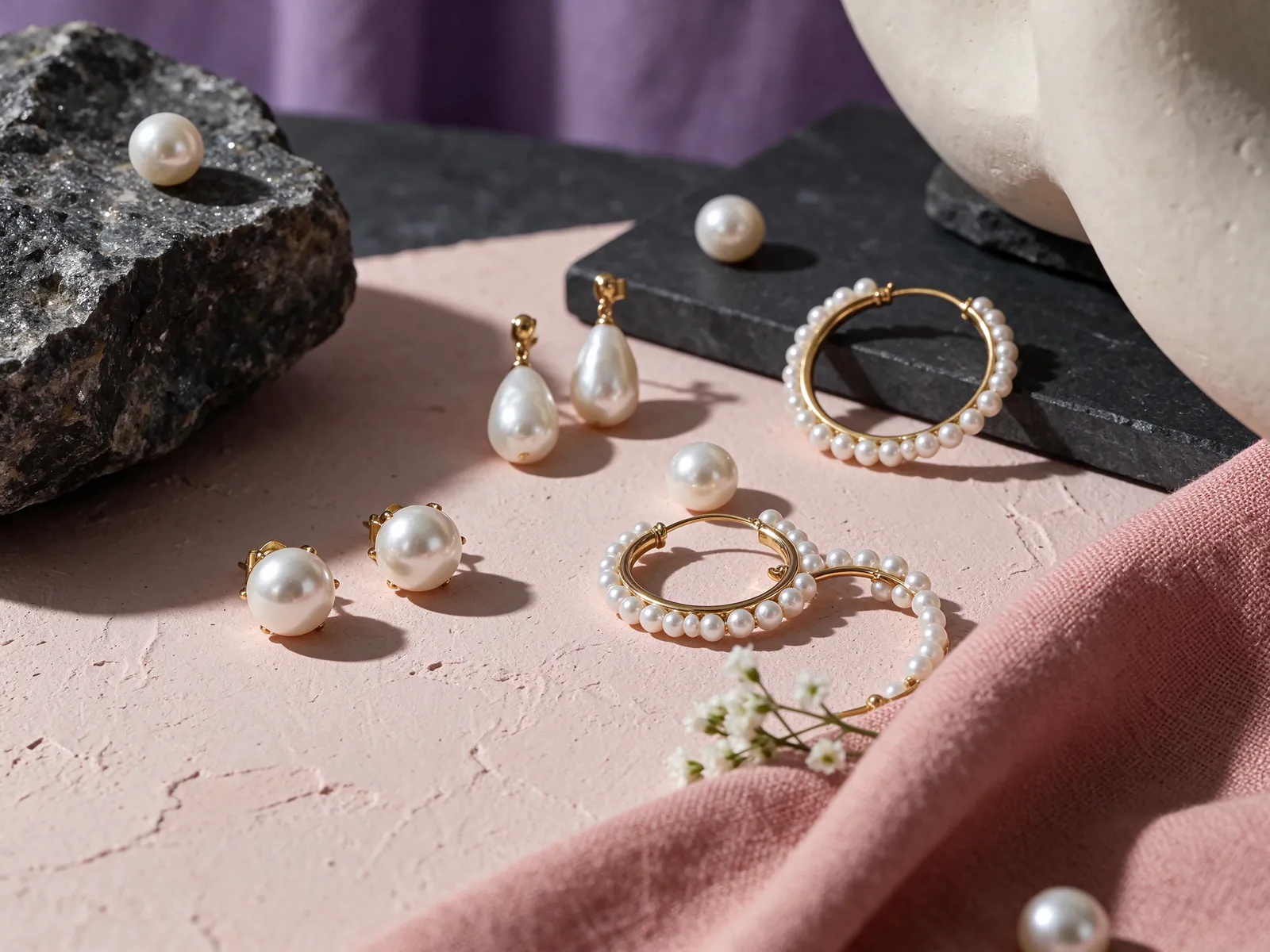
When comparing small pearl stud earrings, consider the pearl front, the surrounding metal and how far the design projects from the lobe. A plain-looking pearl and a pearl with a wider decorative surround may occupy different amounts of space even when their diameters are similar. If the first earring already reaches towards the second hole, changing its outline may be more useful than continuing to search for a smaller second pearl.
Keep a short comparison note for the pearl, setting, post and backing rather than one overall impression of smallness. A front photograph can show shape and lustre; a side view is more informative about projection. If only the front is shown, avoid assuming how the back will sit. A practical question is whether the full design leaves room beside your existing earring, not which size is supposedly suitable for everyone.
Look at the lobe edge as well as the neighbouring pearl
For a smaller lobe, examine how each front relates to the outer edge of the ear. The guide to pearl earring size for small earlobes develops this visual comparison. Leaving more or less visible lobe is a styling preference, not a universal fit test. Neither a neat photograph nor a nominal diameter can establish suitability on its own.
Give posts and backings their own fit check
The rear of a layered ear arrangement deserves as much attention as the front. Post direction, backing width and the relative position of the holes can all affect whether the pieces interfere with one another. A single stud describes a quantity, not evidence that a design suits a second piercing. Likewise, a cartilage stud should not be treated as interchangeable with an earring intended for a lobe merely because both look compact.
Where your piercings are established and appropriate for trying jewellery, notice what happens when you turn your head, tuck your hair behind your ear or put on glasses. Do not force a backing tighter simply to align the pearl fronts, or loosen it excessively to create space. If the combination needs constant adjustment, simplify the arrangement first. New or healing piercings need guidance from a qualified piercing professional rather than a choice based on appearance.
Describe the point of interference precisely
Note front overlap, rear contact and movement separately. This makes it easier to explain whether the problem concerns proportion or physical interference. Stop using a combination that causes pressure, pulling or pain, and seek appropriate professional help for persistent discomfort. These observations help describe the situation; they are not a way to diagnose a piercing or treat symptoms by changing earrings.
Let the first earring determine the second stud's role
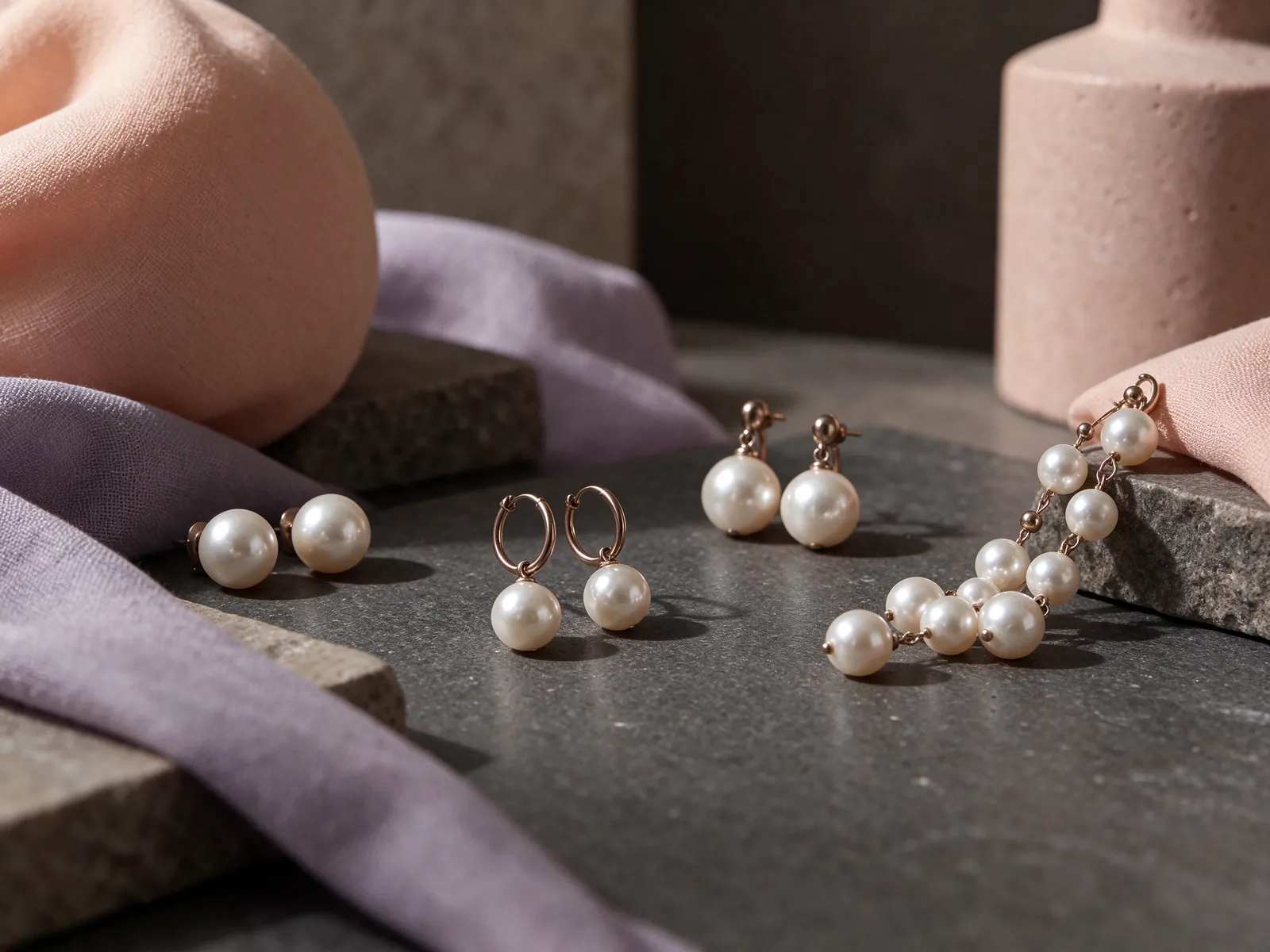
With two close-to-the-ear studs, the eye often follows a horizontal or diagonal sequence, making the edges between them important. With a drop or dangle, the second pearl can act as a steady point beside a moving line. Reading about pearl studs vs drops vs dangles helps distinguish these outlines. In a real pairing, inspect the first earring's upper attachment as well as the decorative element below it.
Choose one connecting element before repeating every detail. Pearl lustre can unite an ornate first earring and a restrained second stud; a similar metal colour can connect different silhouettes. Repeating pearl, metal and elaborate decoration all at once may create competing focal points. If the first earring is already expressive, a quiet second position gives it room to be seen rather than turning the whole area into a single dense ornament.
Leave room beside a statement pearl
The styling discussion of 12mm pearl earrings offers a useful contrast in visual emphasis. Consider how a bold first pearl relates to the lobe before deciding whether the second position needs another focal point. The prominence of a main pearl also depends on its setting and the surrounding lobe space, not diameter alone. Wearing just the main earring can also be a complete choice when adjacent fronts would crowd one another.
Connect the pearls through colour, lustre or shape
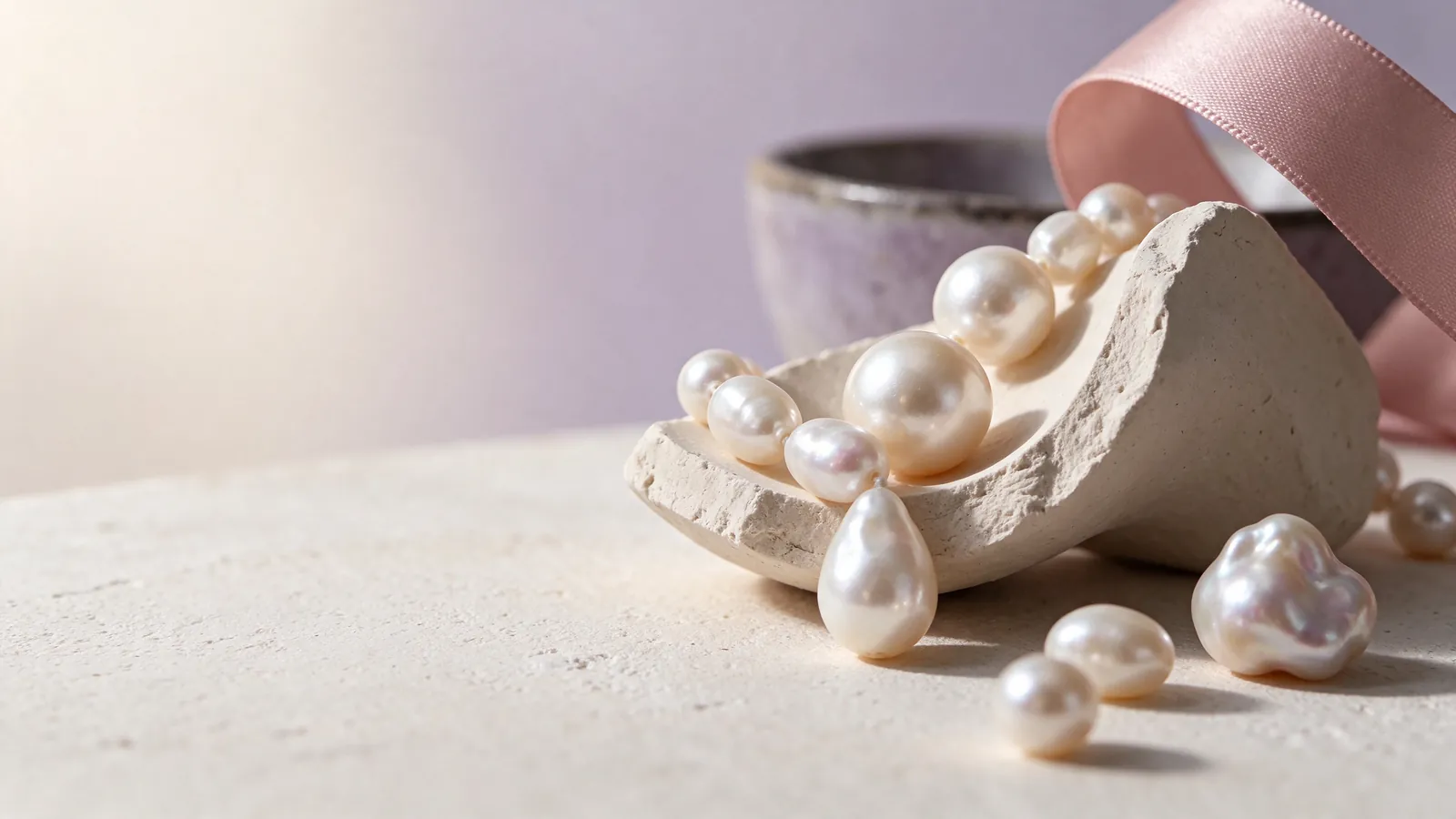
Pearls do not have to look identical to form a coherent pairing. For a quiet effect, begin with similar colour and a comparable impression of lustre. For a more individual rhythm, keep one of those qualities close while allowing the outlines to differ. Compare the pieces under the same light: a warm indoor photograph and a daylight photograph are poor evidence of a real colour difference. Turn the pieces to see how reflections change.
GIA describes seven pearl value factors: size, shape, colour, lustre, surface quality, nacre quality and matching. Several of these provide a useful vocabulary for discussing a layered look, especially matching and the visible qualities. They do not allow you to establish every quality from a photograph. A similar shade or shape does not establish origin, pearl type or natural-versus-cultured identity. Keep aesthetic comparisons separate from the information identifying the pearls.
Choose what should match before choosing what can differ
If the first pearl has a distinctive outline, a simpler second front can balance it without copying it. If both earrings are restrained, a small shape contrast can provide interest. Decide whether colour, lustre or shape is the shared thread, then allow another feature to vary. This produces a clearer preference than asking only whether both pieces belong to the same named collection.
Test the styling against glasses, hair and your working day
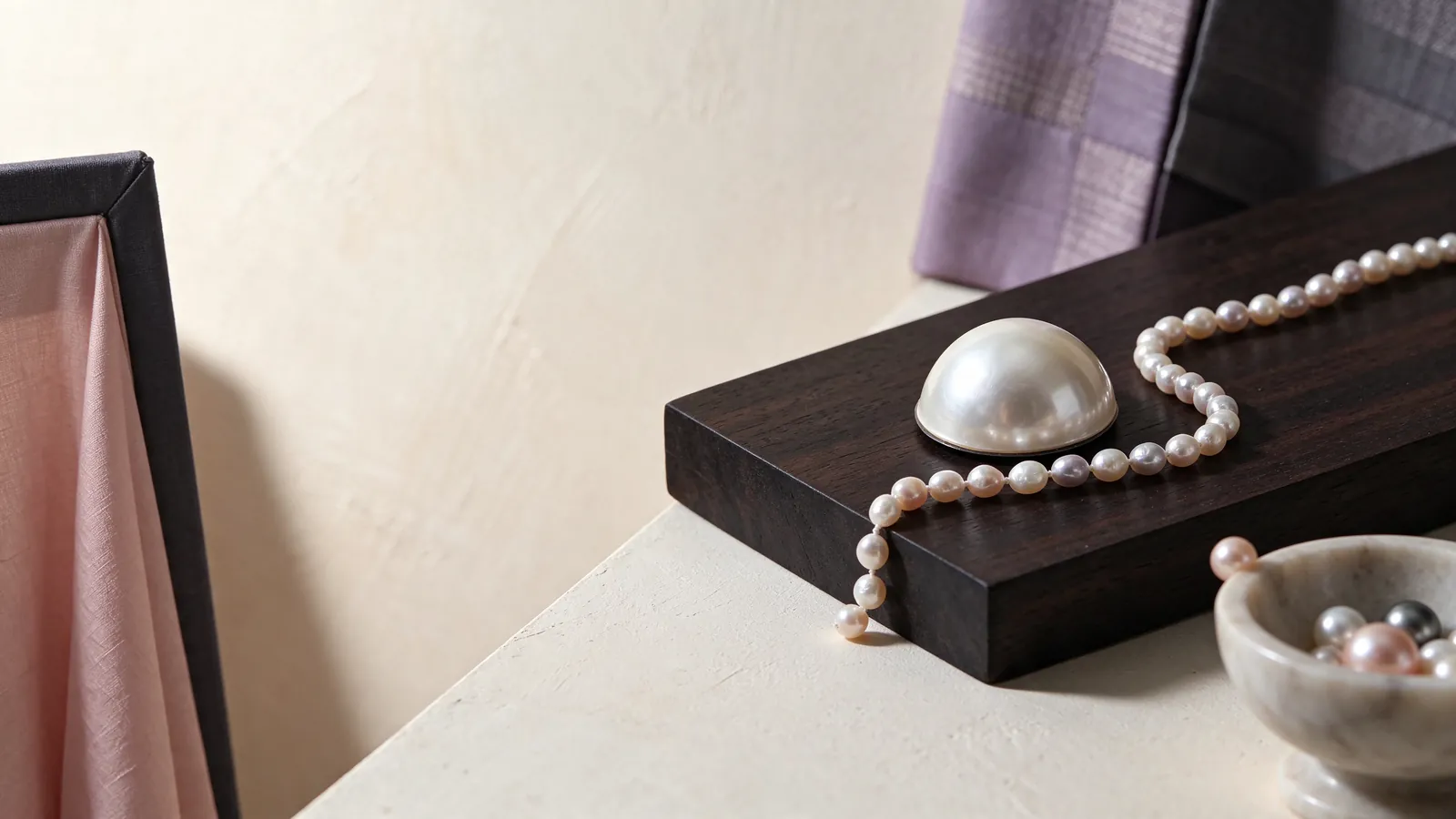
An arrangement that reads beautifully in a close-up can look different once hair, spectacle arms and a neckline enter the picture. If you regularly wear glasses, include the area behind the ear in your checks. If you usually tie your hair back, the spacing and lobe outline become more visible. The ideas in everyday pearl earrings offer a wider outfit perspective, while the second stud should still work with the movements you actually make.
A detailed collar or other accessories near the face may call for a simpler ear composition. Start with fewer decorative elements and see whether the pearl light already connects the outfit. The two ears do not necessarily have identical piercing positions, so avoid forcing both arrangements into the same apparent line. A similar hierarchy on each side can provide coherence even when the exact spacing differs. Check the overall look in a wider mirror before studying tiny differences.
Prepare a useful styling question
When discussing a look with Flint Jewellery, describe the main earring's outline, the second hole's position on the lobe and whether you wear glasses or keep your hair up. If you choose to share photographs, front and side views can explain proportions. Focus the conversation on the arrangement and structure rather than assuming a particular pearl type or design must suit your ear.
Protect pearl surfaces during wearing and storage
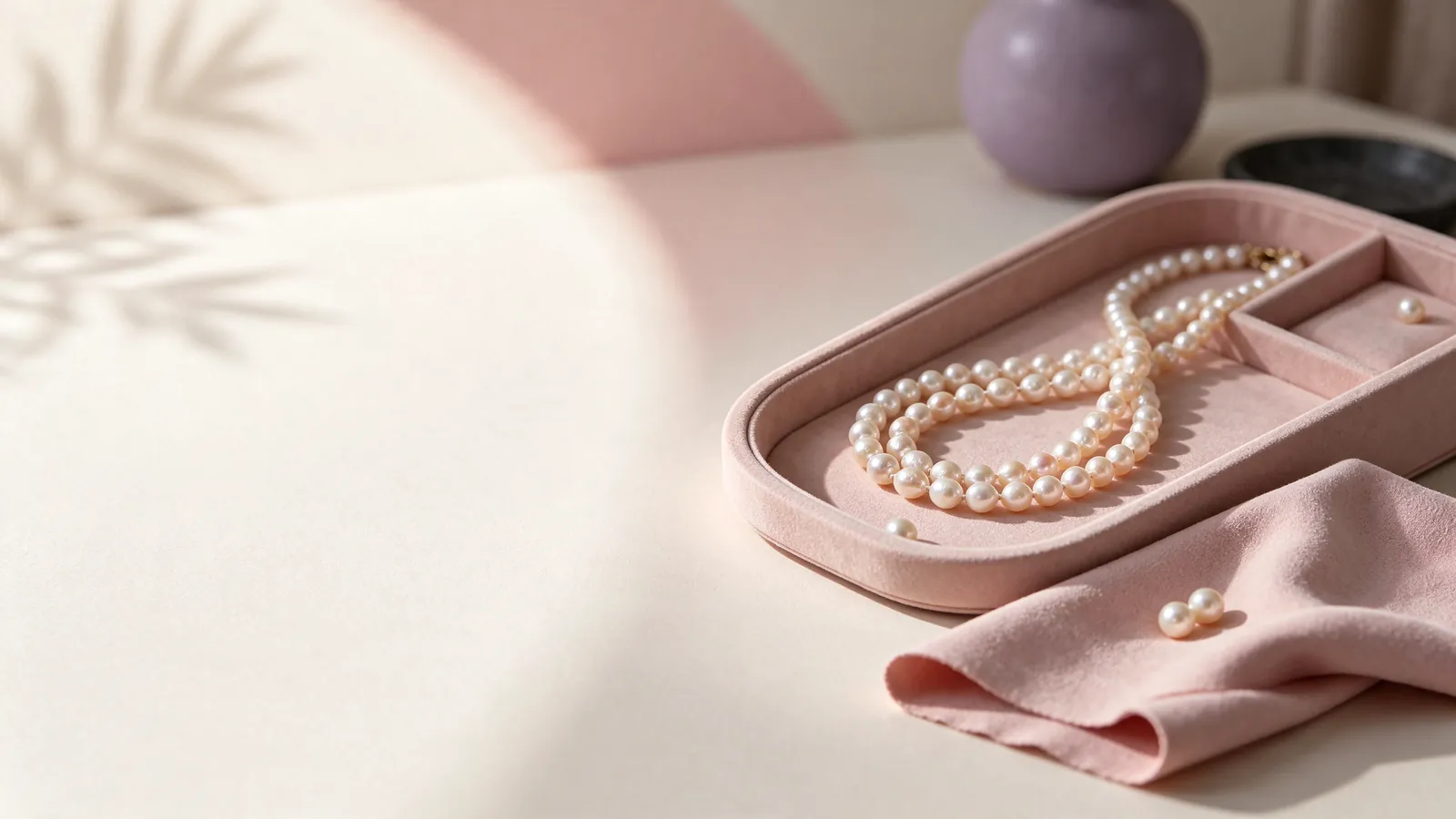
Adjacent jewellery should not repeatedly rub against the pearl fronts. GIA lists pearl at 2.5 on the Mohs hardness scale, a useful reminder to handle the surface gently. That number is not a measure of an earring's load capacity or suitability for a piercing. If neighbouring pieces keep making contact during normal movement, reconsider the pairing. After removal, separate pearl surfaces from posts and backings with compartments or a soft barrier.
After wearing, gently wipe the pearls with a very soft, clean cloth and look for cosmetic residue. Keep perfume and hair spray from direct contact, and remove the earrings when applying products around the ear. GIA advises against ultrasonic and steam cleaning for pearls. A metal post does not make the complete pearl earring suitable for a cleaning method designed for another material; consider the construction of the whole piece.
Organise the pairing without mixing care routines
Store the main and second earrings near each other but physically separated, so you can recognise the pairing without allowing the metal parts to rub the pearls. Jewellery cleaning and piercing aftercare are different subjects. Ask a qualified professional about piercing care rather than transferring pearl-cleaning advice to the ear. This keeps styling, fit observations and surface protection as distinct decisions. To discuss the balance of your main and second earrings, contact Flint Jewellery on WhatsApp at +85260106207 and describe your usual styling, piercing placement and the space you want to preserve.
| Situation | Front view | Side or rear view | Styling choice | Practical check |
|---|---|---|---|---|
| Main earring is a stud | Look for overlapping outer edges | Check whether backings meet | Create hierarchy with outline or lustre | Compare complete footprints together |
| Main earring is a drop | Inspect its upper attachment | Notice movement towards the neighbour | Use the second pearl as a steady point | Observe a normal head turn |
| Smaller lobe | Consider the outer lobe edge | Compare projection and rear space | Prefer clear spacing over extra detail | Check both hole placement and earring edges |
| Glasses or tied-back hair | Look at the visible pearl sequence | Check contact near spectacle arms | Choose for ordinary movements | Review the wider outfit before the close-up |
| Removal and storage | Look for cosmetic residue | Keep posts away from pearl fronts | Separate pieces to limit rubbing | Wipe gently with a very soft clean cloth |
Pearl knowledge and authoritative references
GIA lists pearl at 2.5 on the Mohs hardness scale. This supports gentle handling and separation from adjacent metal during storage, not a claim about piercing suitability or earring load capacity.
Read the reference for this factFrequently asked questions
Must the second pearl be smaller than the first?
No. Hierarchy can come from the first earring's length, setting or decorative outline rather than diameter alone. Compare the complete fronts and the space between them. Similar-sized pearls can still read clearly as separate elements when their roles and placement are distinct.
Does a clear gap at the front mean the pairing fits?
Not necessarily. Backings can touch behind the lobe even when the pearl fronts remain separate. Check side and rear positions as well as ordinary movement where trying jewellery is appropriate for your piercings. Do not tighten a backing simply to force the arrangement into alignment.
Is an earring sold singly intended for a second hole?
Selling a stud singly describes quantity, not suitability for a particular placement. The setting, post and backing still need consideration. A compact cartilage stud is also not automatically interchangeable with an earring for an adjacent lobe piercing.
How can pearls with slightly different colours look connected?
Compare them in the same light, then choose a shared feature such as lustre or a restrained outline. Reduce competing decoration if you want the colour difference to read as an intentional rhythm. Photographic colour alone cannot establish pearl identity or all aspects of quality.
Can the whole ear arrangement go into one pouch after wearing?
Keep the pearl fronts separate from posts, backings and neighbouring jewellery, using compartments or a soft barrier. This limits rubbing during handling. Follow pearl-appropriate cleaning advice, never ultrasonic or steam cleaning, and keep jewellery care separate from professional advice about piercing aftercare.
Updated: