
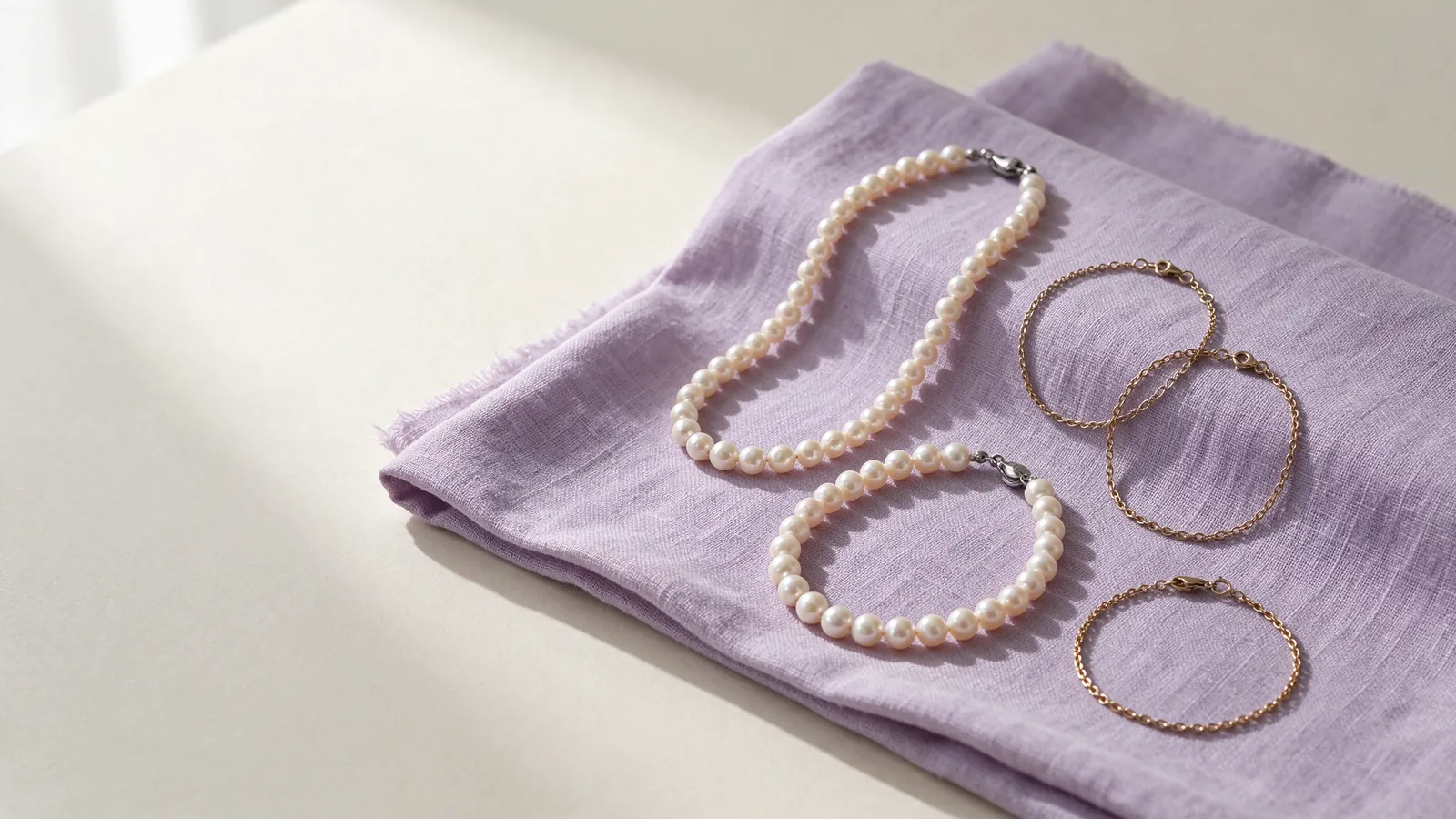
How Does Wrist Fit Affect a pearl charm bracelet, Whether It Is Called a pearl bracelet with charms or a charm pearl bracelet?
Begin with the place on your wrist where you actually want the bracelet to sit. A soft measuring tape should follow that position without being pulled tightly into the skin. The pearl bracelet size guide helps distinguish your wrist measurement from a bracelet's stated length and its usable space when fastened. A dangling charm adds another consideration: a comfortable chain can still place its decoration where you do not want it.
During a fitting, turn your palm upwards and downwards, bend your wrist gently and pretend to hold your phone. Watch whether the charm moves towards your palm, presses near the wrist bone or gathers under a cuff. More slack does not automatically create a better fit. It may allow the focal point to travel around the wrist, while a close fit may leave a connection pressed between the pearls and your skin.
Can Charms Move Freely on a pearl charm bracelet? Checking Connections on a pearl bracelet with charms or a charm pearl bracelet
Consider movement at each fastening position if you are exploring an adjustable pearl bracelet. Shortening the bracelet changes the fit, but does not necessarily bring a charm back to the centre of your hand. A fixed attachment and a sliding attachment behave differently. Check where the charm and any extension tail settle, rather than assuming that a familiar ring shape will move or fit in the same way on another chain.
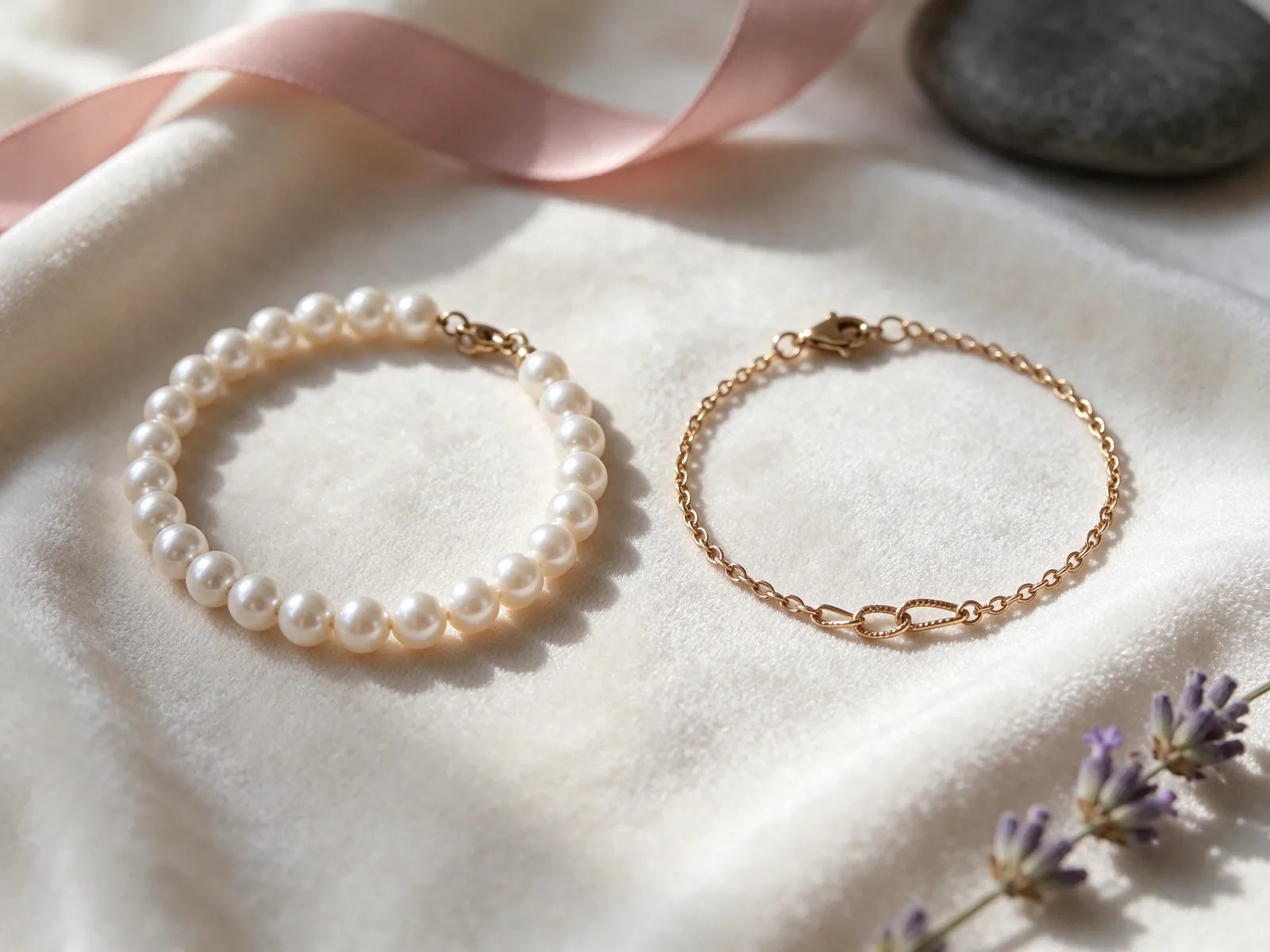
Choose a charm position around your usual movements
A central charm can create a clear focal point when the bracelet is arranged for a photograph. On a moving wrist, however, that centre may not remain facing upwards. A side detail can preserve a longer uninterrupted line of pearls, while a charm near the fastening brings the decoration and opening mechanism together. Compare all three views of the wrist: the back of the hand, the palm side and the side profile.
When looking at a pearl bracelet clasp, ask whether your fingers can identify and operate it without the charm getting in the way. Try fastening the bracelet with the hand you normally use, not only after someone else has put it on for you. Notice whether the charm obscures the opening or makes it harder to see the closure. Ease of operation is a separate question from how discreet the clasp looks.
Bring a familiar sleeve into the comparison
A shirt or jacket you wear often makes a useful fitting companion. Pull the cuff into its normal position, then rest your hand on a desk. Does the charm catch fabric or become the first part to touch the surface? Someone who uses a mouse throughout the day may prefer a different hanging direction from someone who mostly wears short sleeves. Reconsider the position if a detail repeatedly interrupts a normal movement.
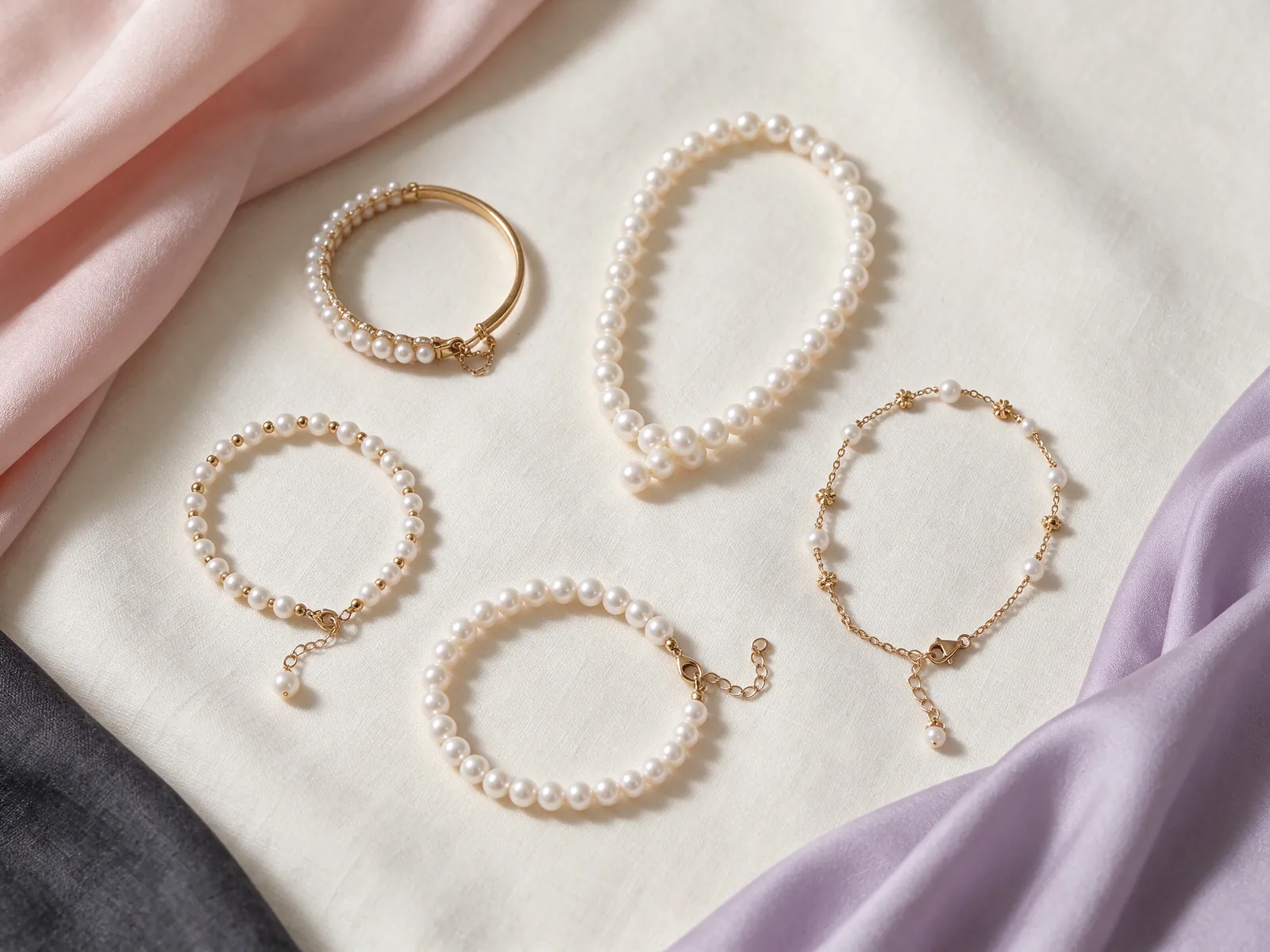
Understand the attachment before considering interchangeability
Find out whether the charm is permanently attached, has its own opening, or uses a designated connection. Rings that look alike may have different entrances, closures and ranges of rotation. Do not bend a fixed ring open or pull it past a clasp to test a fit. If you already own a bracelet, show its chain end, fastening and intended attachment point; a photograph of the charm's front alone cannot explain how the pieces would connect.
A half chain pearl bracelet is a useful comparison when you want to understand how pearl and chain sections meet. Observe the junction between the sections and the area where a charm would sit. A visible gap between pearls is not necessarily an attachment point. Threading, connecting rings and decorative elements serve different purposes, so an attractive space in the layout should not be treated as a place designed to carry another piece.
Why a necklace charm is a different question
A wrist bends, approaches desks and bags, and is pushed by sleeves in ways a necklace is not. Even if a pendant can pass onto a necklace, that does not establish its suitability for a bracelet. Look at its back, the way it hangs against the skin and the direction in which its connection moves. Describe the intended wrist position and use before comparing colours or matching silhouettes.
Balance the motif with clothing and other jewellery
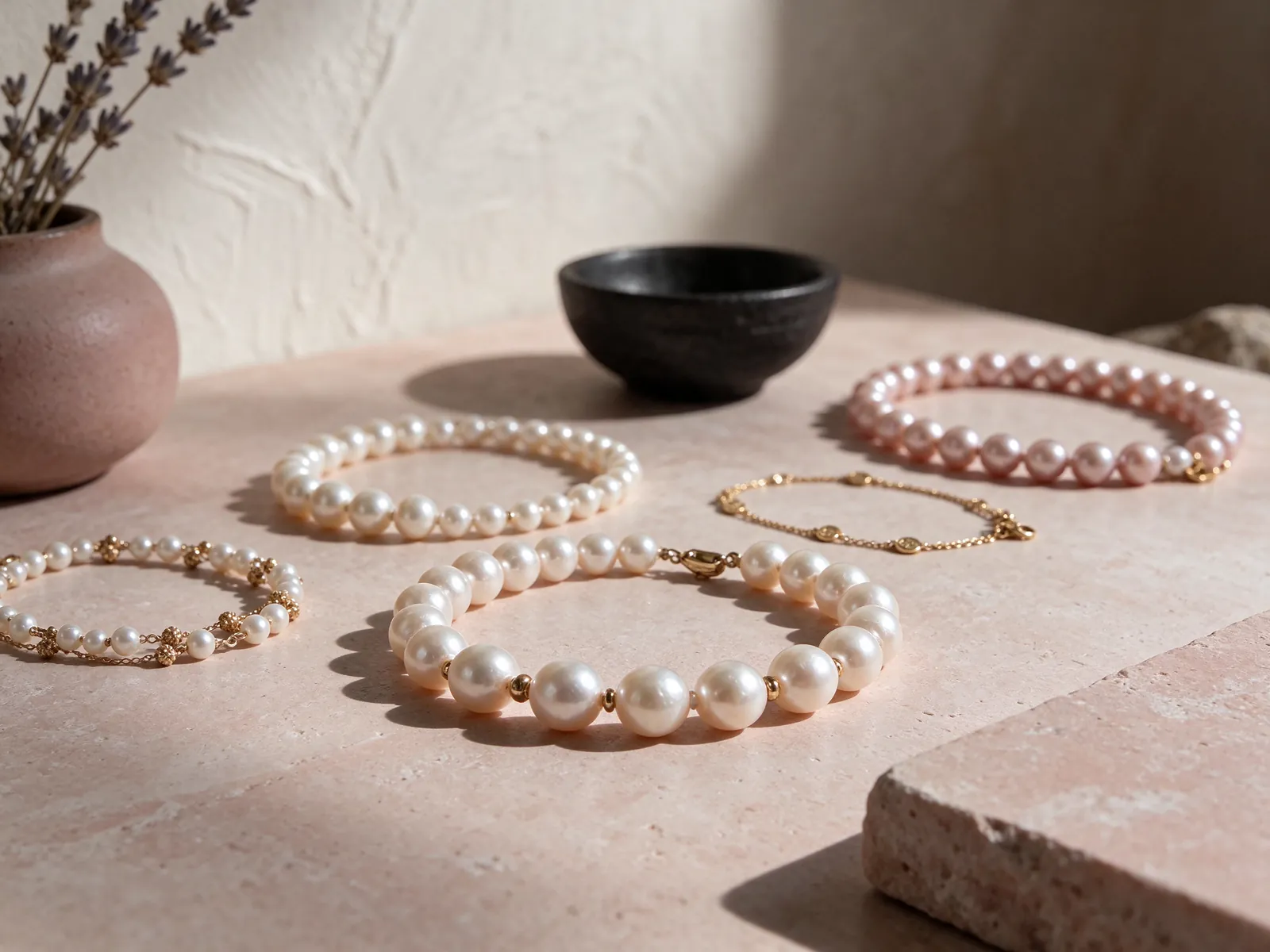
A flower pearl bracelet offers a useful way to compare a motif arranged along the bracelet with a decoration hanging from one point. With embroidered sleeves, floral prints or frilled cuffs, consider how much detail already sits near your wrist. A clear pearl line and one focal point may make the design easier to read than several overlapping ornaments. Let the garment and bracelet each have some visual space.
A heart pearl bracelet introduces another motif, but its name does not tell you whether the heart is part of the chain or a separate charm. With a plain shirt or knit, consider where the motif remains visible beyond the sleeve. If you wear a watch, test whether the charm migrates towards the case. Matching colours are not enough to decide whether two pieces work comfortably on the same wrist.
One focal point or several moving details?
A single charm is easier to follow as it moves around the wrist. Several charms call for a closer look at overlap, contact and tangling. Before adding detail, note your usual sleeve shape, dominant hand and preferred facing direction. These observations make a more useful styling brief than simply asking for an everyday look. Sometimes changing placement or leaving space reveals the pearls more clearly than adding another ornament.
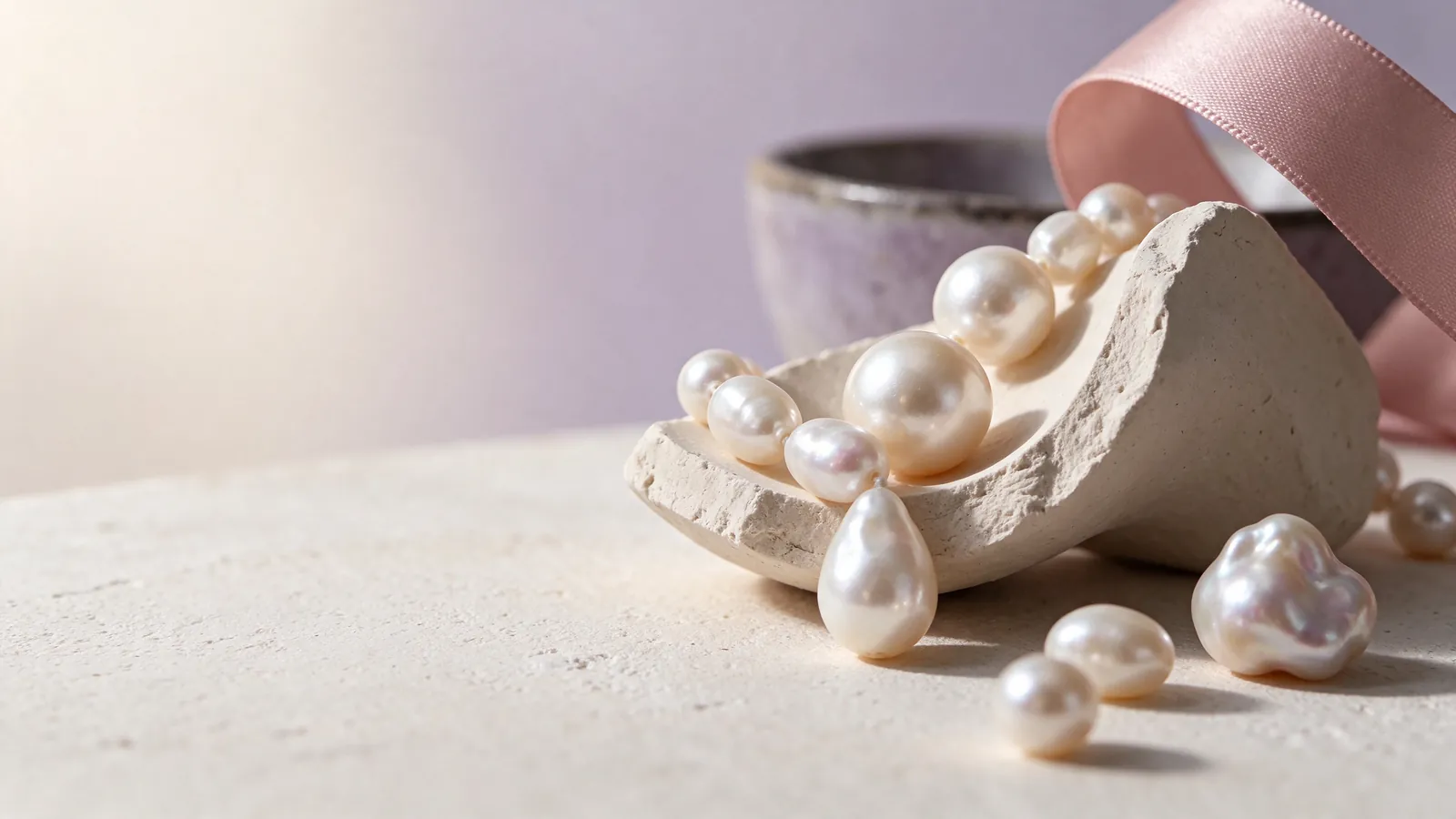
Assess the pearls separately from the charm outline
A moving charm presents its pearl from changing angles. In relatively neutral light, look at the clarity of reflections and how the pearls relate to one another. GIA describes seven pearl quality factors: size, shape, colour, lustre, surface quality, nacre quality and, for multi-pearl jewellery, matching. This framework is a reminder to consider more than the motif or one attractive colour, rather than treating a bright photograph as a complete quality description.
Separate the outline of a setting from the shape of its pearl. A circular frame need not contain a round pearl, and an irregular pearl can sit alongside an orderly chain. Neither shape nor colour alone establishes origin, natural-versus-cultured identity or the presence of a certificate. Where these details matter to your choice, read the description and documentation for the particular piece instead of drawing conclusions from a styling image.
Use front, back and side views for different questions
The front view explains the motif; the back and side views help you understand thickness, hanging direction and the position of a connection. During a fitting, let the charm settle naturally rather than repeatedly arranging it face-up. Decide whether you still like the appearance when it turns. Compare the visual weight of the charm and pearl line, but keep those aesthetic preferences separate from pearl identity or grading.
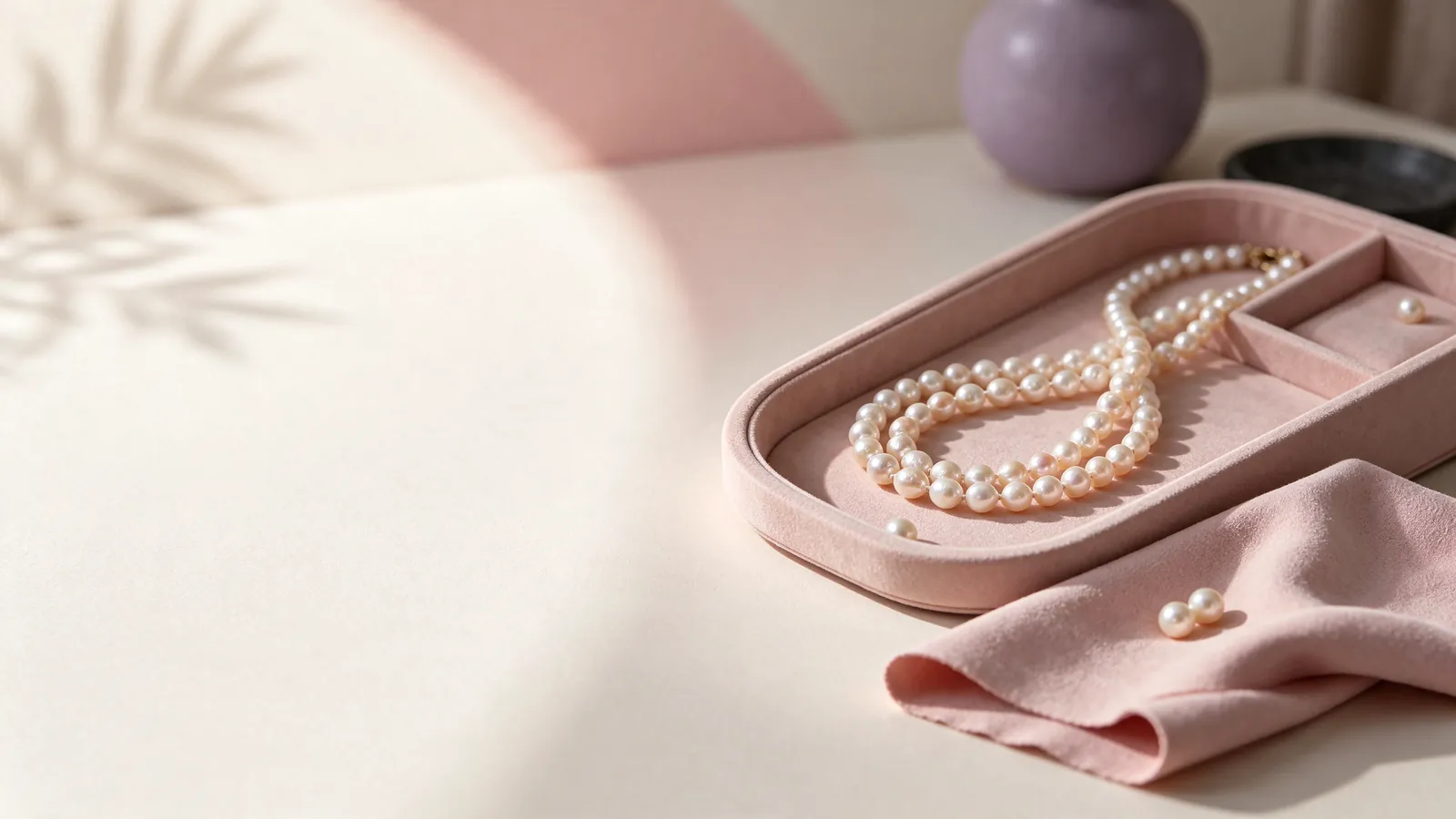
Plan for desk contact, cleaning and storage
GIA lists pearl at 2.5 on the Mohs hardness scale. That material fact is relevant to contact with a desk, watch or other jewellery, but is not a prediction that a particular knock will or will not damage a piece. Before lifting a bulky bag, exercising or reaching into a narrow opening, consider whether a dangling element could be trapped or pulled. Choose wearing occasions that suit the amount of wrist contact involved.
After wearing, use a very soft, clean cloth to wipe the pearls gently. Avoid acids, perfume, hair spray and excessive heat. GIA states that pearls should never be cleaned with ultrasonic or steam cleaners; the metal chain does not make that method suitable for the entire bracelet. If strung pearls are cleaned with water, the string must be completely dry before wearing. Treat pearl care and connection care as related but distinct tasks.
Store without pressing the charm into the pearl line
Untangle the bracelet before putting it away, allow the chain to rest naturally and avoid trapping the charm beneath the pearls. Soft separation from harder jewellery keeps pieces from being piled together. Lift the bracelet by its chain rather than tugging a caught charm. If the closure feels different or a connection stops moving normally, stop pulling and identify the obstruction before attempting to wear it again.
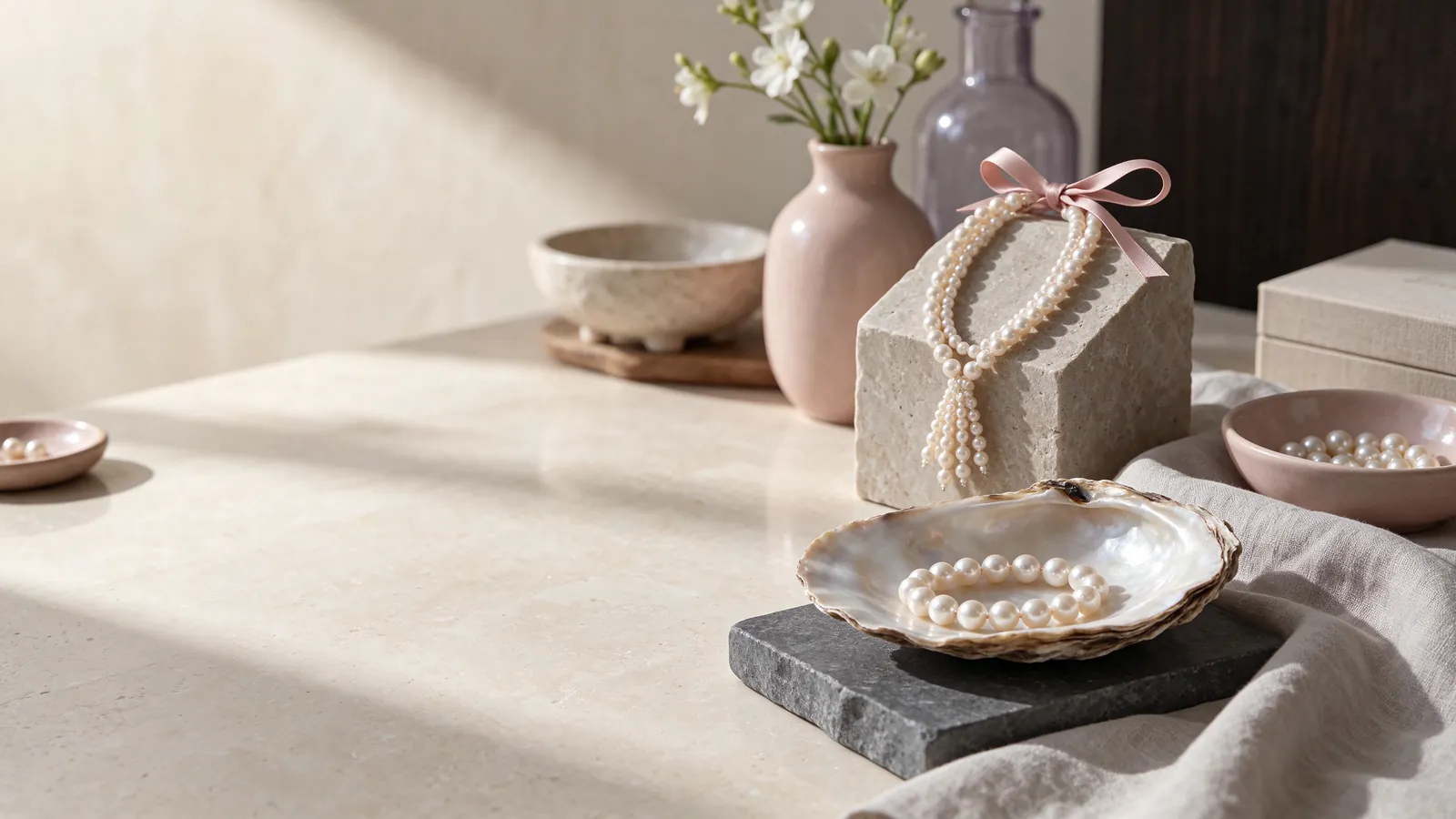
Turn your preferences into a practical selection brief
Record your wrist measurement, preferred looseness, frequent sleeve styles and typical hand movements before choosing a motif. Comparing a pearl bracelet by construction helps separate a dangling charm from decoration integrated along the chain or an uninterrupted pearl line. If movement is the attraction, focus on the hanging detail. If the symbol is the attraction, a less dangling arrangement may also deserve consideration.
For an existing bracelet, bring the piece or clear views of the whole chain, clasp, chain end and intended attachment point. Explain whether you want a removable detail, where you want it to rest and whether it will share a wrist with a watch. For a new design discussion, separate the appearance you like from the fastening you can comfortably operate. That makes comparisons between different constructions more meaningful.
Make the final check about fit, connection and appearance
Revisit the fit with your hand relaxed and bent, then check the charm's movement and your ability to use the fastening. Look at the bracelet while both standing and sitting, not only with your arm held straight. To ask Flint Jewellery about bracelet design considerations, contact us on WhatsApp at +85260106207 and share these wearing requirements so the conversation can focus on wrist space and connections rather than assuming a decorative charm is a universal accessory.
| Situation | Bracelet check | Charm check | Fitting movement | Selection focus |
|---|---|---|---|---|
| Frequent long sleeves | Does the cuff shift the chain? | Does the connection catch fabric? | Lower the cuff and bend the wrist | A position with less sleeve interference |
| Desk-based work | Fit when the hand rests | Which part touches the desk first? | Simulate using a mouse | Hanging direction around contact points |
| Adjustable length | Space at each fastening position | Overlap with the extension tail | Turn the palm both ways | Length and charm position together |
| Wearing a watch | Overlap with the watch strap | Movement towards the watch case | Raise and lower the arm | Separate wrists if contact persists |
| Using an existing bracelet | Chain end and attachment point | Entrance and closure type | Observe without pulling | Compatibility of the actual connection |
Pearl knowledge and authoritative references
GIA ranks pearl at 2.5 on the Mohs hardness scale. Consider contact between a moving pearl charm, a desk, a watch and other jewellery; the hardness figure is not an impact-resistance guarantee.
Read the reference for this factFrequently asked questions
Will a looser pearl bracelet with charms keep the decoration facing outwards?
Not necessarily. Looseness changes the space around the wrist, while the attachment position, charm shape and bracelet layout also affect where the detail settles. Turn and bend your wrist during a fitting instead of repeatedly arranging the charm in a front-facing position.
Can a pearl pendant be moved straight from a necklace onto a bracelet?
Passing onto a chain is not enough to establish suitability. A wrist introduces bending, desk contact and sleeve movement. Check the entrance, closure, back surface and intended direction of movement; do not bend a fixed ring open to attempt a fit.
Are several charms more practical than one for everyday wear?
That depends on your activities and clothing. Several details need checking for overlap, contact and tangling. A single detail is easier to follow as it moves. Compare their behaviour with a familiar cuff and ordinary hand movements rather than treating charm count as a measure of practicality.
Should a charm bracelet share a wrist with a watch?
Try the combination and observe whether the chain overlaps the strap or the charm moves towards the case. Check during desk use as well as when your arm hangs down. If contact repeatedly occurs, consider separate wrists or a less dangling design direction.
Does a metal chain make ultrasonic cleaning suitable for the bracelet?
No. The chain's cleaning needs cannot be applied to its pearls. GIA advises against ultrasonic and steam cleaning for pearls. Routine care uses a very soft clean cloth, with the pearl arrangement and its connections considered when choosing any further cleaning method.
Updated: