
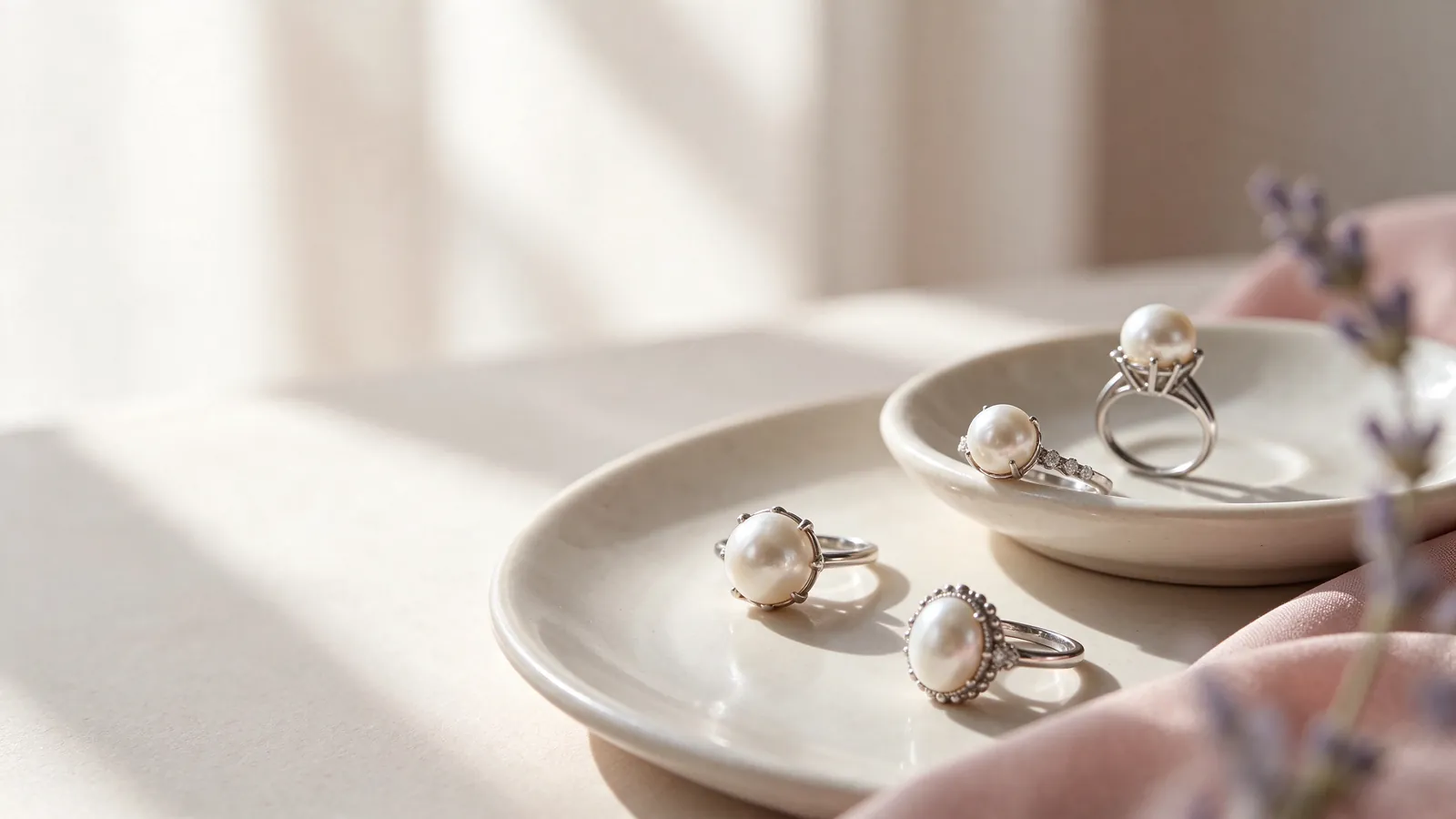
How does baroque pearl ring design affect the fit and balance of an irregular pearl ring?
Start with your hand at rest rather than with a rule about which finger shape suits which pearl. Notice where the widest part of the outline sits between your knuckles, then bring your fingers together. A lengthwise outline can follow the finger, while a broader outline makes a more deliberate focal point. Neither is automatically better. If you are exploring pearl rings Hong Kong, use the general ring guide to separate band fit from the space occupied by the pearl itself.
A band that passes over the knuckle is not necessarily stable at the base of the finger. Equally, choosing a tighter band simply to stop a prominent pearl turning may make movement uncomfortable. Try holding your phone, loosely closing your hand and relaxing it again. Note whether the ring repeatedly leans towards one side or presses against an adjacent finger. Discuss both the fit and the balance of the complete ring instead of treating a ring-size number as the entire decision.
When trying on an irregular pearl ring, what can pearl orientation tell you about baroque pearl ring design?
Compare how a tapered end looks towards the fingertip and towards the knuckle, where the setting allows that comparison. Take a side view as well as a face-on view. The orientation that produces the most dramatic photograph may not be the one that feels natural when your hand relaxes. Never twist a secured pearl to change its direction yourself.
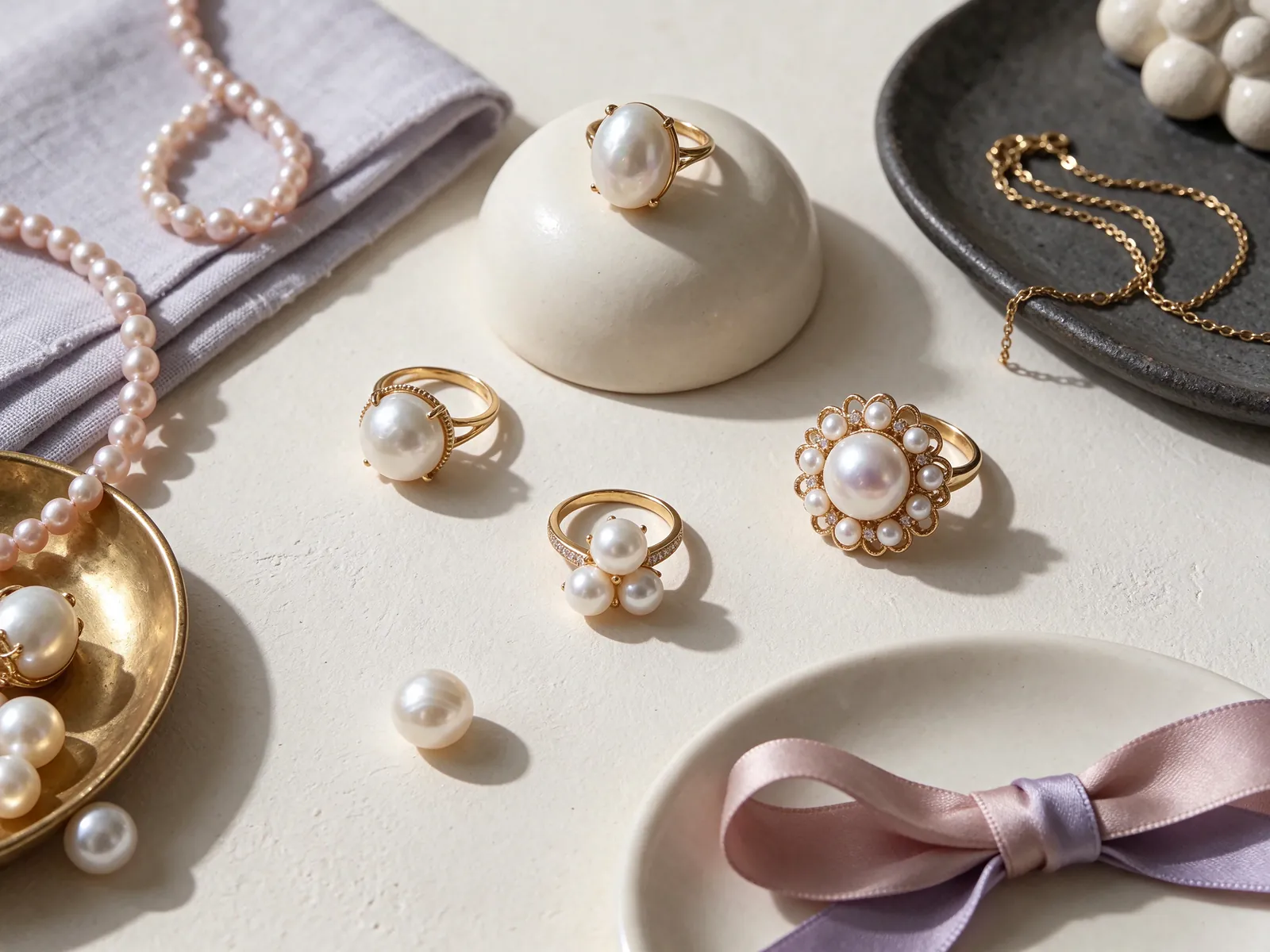
Describe the outline before making assumptions about identity
Baroque describes form. An uneven outline does not tell you the pearl's type, origin, cultured or natural identity, or whether it contains a bead. Begin with observable features: one end may be broader, a curve may turn to the side, or the outline may have an obvious projection. Learning about baroque pearls helps you name the visual qualities you enjoy without turning a shape term into an unsupported identity claim. It is also not a substitute for the terms Keshi or seed.
Shape is only part of the assessment. Rotate the pearl slowly in soft light and watch how reflections move across the surface. Look for the distinction between an intentional-looking contour and a surface feature you would prefer not to see in the wearing position. GIA discusses seven pearl quality factors: size, shape, colour, lustre, surface quality, nacre quality and matching in multi-pearl jewellery. That framework encourages a more rounded comparison than choosing solely because a silhouette is unusual or one photograph looks exceptionally bright.
Use a consistent background when comparing colour
Keep the lighting and background similar between candidates. A bright garment, dark tabletop or nearby screen can alter the reflections you notice. Compare the overall colour impression first and then the changing reflections. Do not use a pink or grey area in a photograph as proof of pearl type or treatment status.
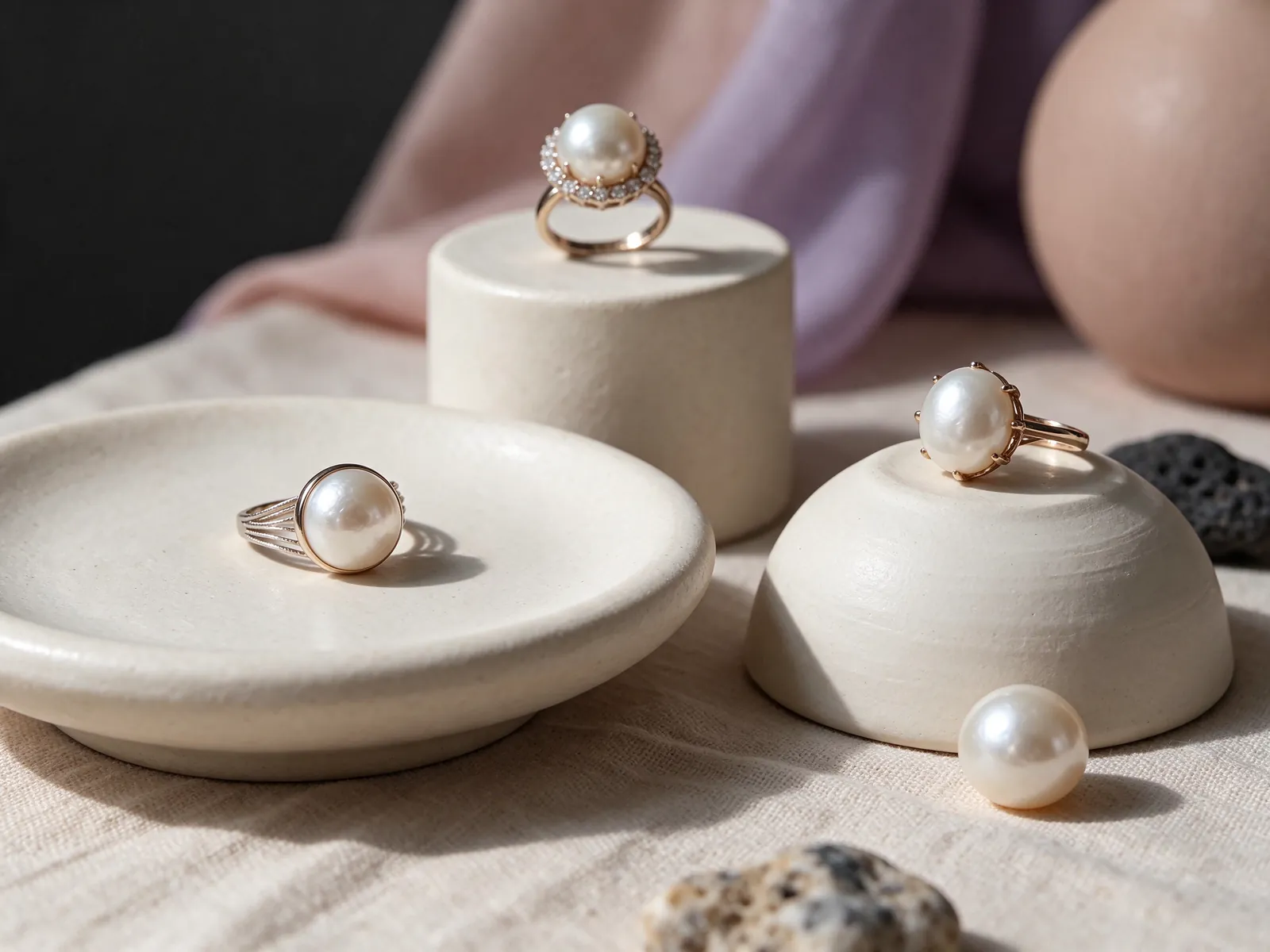
The side profile explains what a front photograph misses
View the ring from the side to understand where the pearl is thickest and how its outline relates to the setting. A pronounced profile may create a sculptural effect, but it also deserves attention when passing through a close-fitting sleeve or reaching into a bag. A lower-looking profile is not automatically more comfortable: a broad edge may still touch the next finger. Assess height, width and contact points together instead of assuming that one measurement predicts everyday wearability.
Ask how the setting supports the particular pearl and which exposed areas need care around hard objects. The metalwork may visually balance a heavier-looking end or leave a distinctive curve visible, but appearance alone does not explain the fastening method. If the ring feels differently once worn, describe the movement and the direction of the lean to a jewellery professional. Avoid trying to correct it by bending the setting or moving the pearl, since similar-looking rings may have different structures.
Try a sleeve without pulling it over the pearl
Bring a jacket or blouse you wear often and gently check the clearance at the cuff. Then mimic picking up a cup, writing and taking a card from a wallet. These small movements reveal where the pearl approaches hard surfaces. Do not deliberately catch or pull fabric against the ring as a stress test.
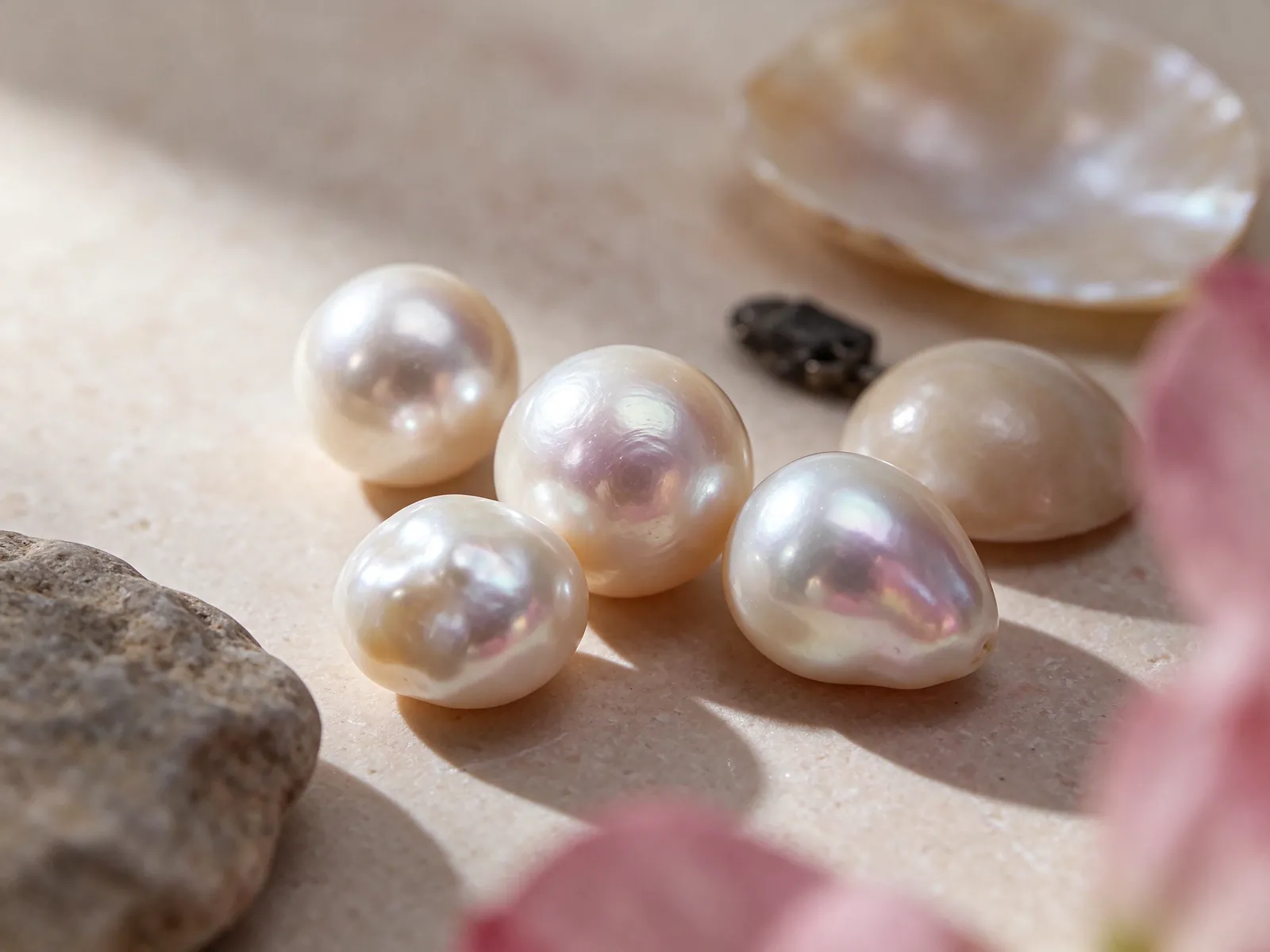
Let metal colour support the pearl rather than compete with it
An irregular pearl can be the strongest shape in an otherwise quiet outfit. A plain knit, clean shirt cuff or simple jacket gives its outline room to be read. If your sleeve already has embroidery or strong texture, reduce other visual detail on the same hand. You can still wear several pieces of jewellery, but distributing them between hands often gives the pearl a clearer role than surrounding it with equally prominent rings and a busy bracelet.
For an 18K gold pearl ring, compare the actual pearl against 18K 750 white gold, 18K 750 yellow gold and 18K 750 rose gold; platinum options are PT950 platinum and PT900 platinum. Compare metal colour as part of the complete ring, considering the setting proportions as well as the pearl. Look at the combination beside your usual watch and clothing. A warm or cool effect is a styling observation, not a rule that one metal colour must suit every pearl or every complexion.
Check contact before committing to a stacked look
Bring your fingers together while wearing any intended neighbouring ring. If its metal edge touches the pearl when you bend your hand, move that piece elsewhere rather than relying on appearance alone. A slim ring on the other hand can echo the metal colour while keeping hard edges away from the pearl.
Compare pearl categories without confusing them with shape
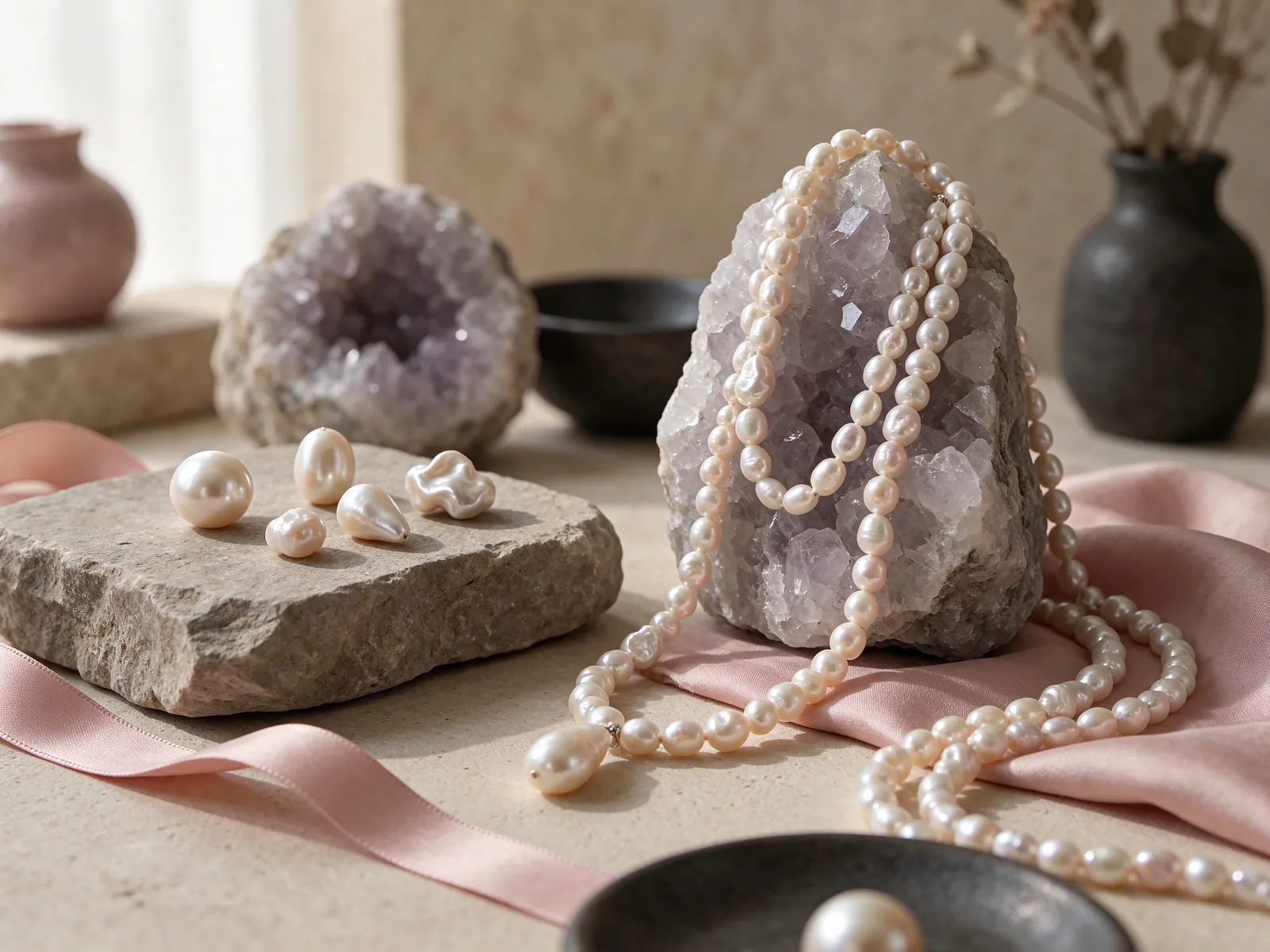
Ask yourself whether the appeal comes from an asymmetric outline, a colour impression or a particular side profile. These are different preferences and may lead to different reading. A freshwater pearl ring guide discusses a pearl category, whereas baroque is a shape description; the labels are not mutually exclusive choices on a shape chart. When comparing descriptions, identify what each term actually tells you before using it to narrow your search. A photograph cannot settle those identity questions.
If your main interest is the relationship between a pearl face and its setting, a mabé pearl ring is a useful separate topic to understand rather than treating every non-round appearance as baroque. If you are drawn to darker colour impressions, the Tahitian pearl ring guide addresses another set of questions. Use such comparisons to refine what you like visually, not to identify an unknown pearl by its silhouette or colour. Write down the features you want to see and the movements you need to keep comfortable.
Build a short comparison list around your own priorities
Choose a few useful criteria, such as the direction of the outline, clearance beside the next finger and the prominence of the side profile. Apply the same criteria to each candidate. This makes it easier to distinguish an attractive photograph from a ring shape you would genuinely enjoy wearing.
Protect exposed curves during ordinary hand activities
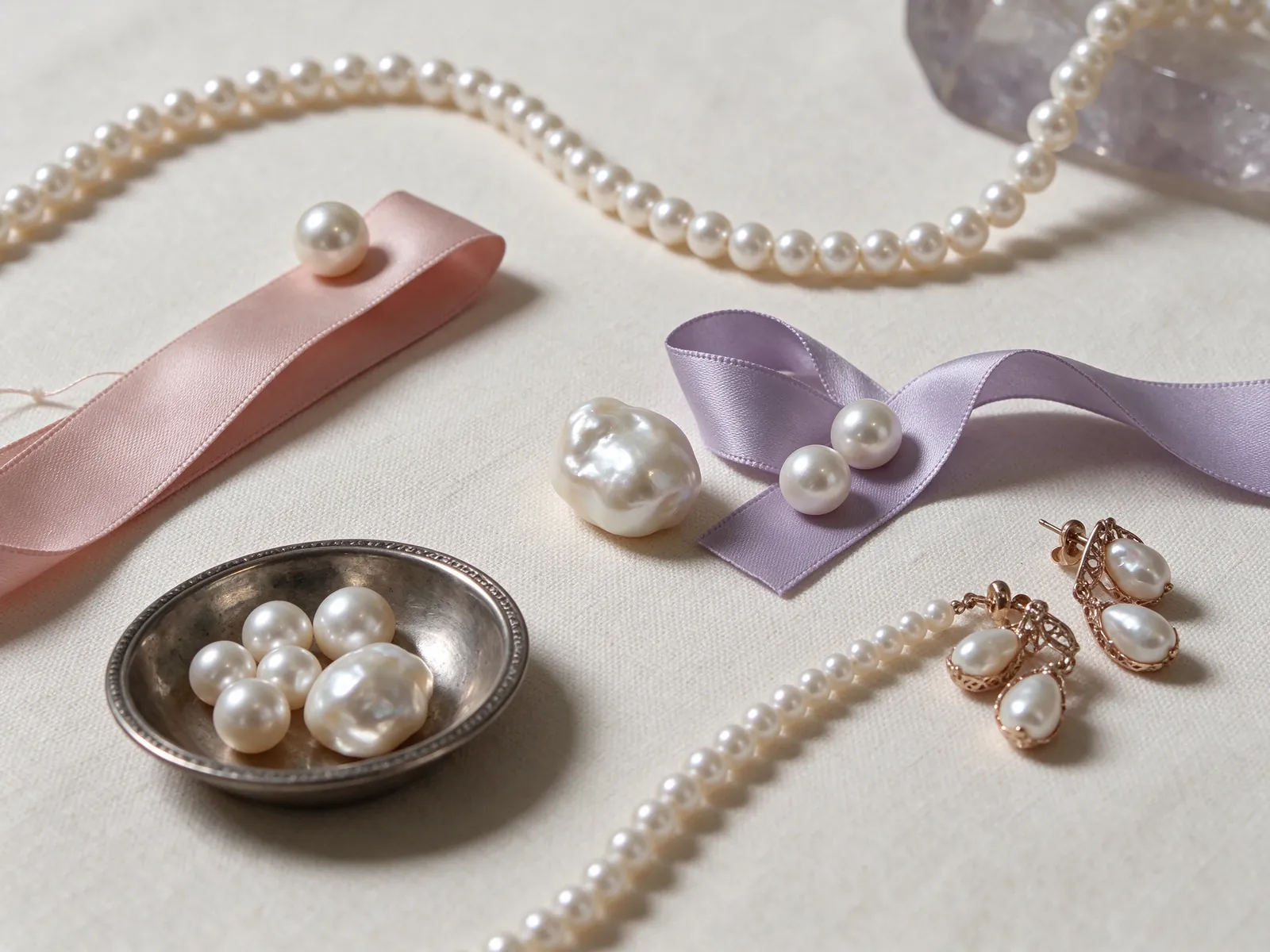
A ring brings its pearl close to desks, door handles, cups and other objects throughout the day. Remove it before household cleaning, lifting heavy items or activities involving repeated hard contact, and put it somewhere secure rather than beside a sink. GIA places pearl at 2.5 on the Mohs hardness scale. That is useful context for avoiding scratches, but it is not a rating of the impact resistance of a complete ring or a promise that a setting makes the pearl collision-proof.
After wearing, wipe the pearl gently with a very soft, clean cloth. Let the cloth follow the uneven surface rather than pressing hard into recesses. GIA advises against ultrasonic and steam cleaners and warns about acids, perfume, hair spray and excessive heat. Apply personal-care products before putting the ring on to reduce direct contact. Store it separately from harder jewellery that could rub against the surface. If the pearl or its attachment seems loose, stop wearing it and arrange a professional inspection.
Do not pick residue out of a recess with a sharp tool
A small hollow may be difficult to clean with a light wipe, but a needle, stiff brush or improvised metal tool can create a new problem. Avoid soaking the entire ring to treat an unknown mark. Explain where the residue is and what the ring contacted so that cleaning can be considered with its actual construction in mind.
Prepare a useful enquiry around wear, not just a reference image
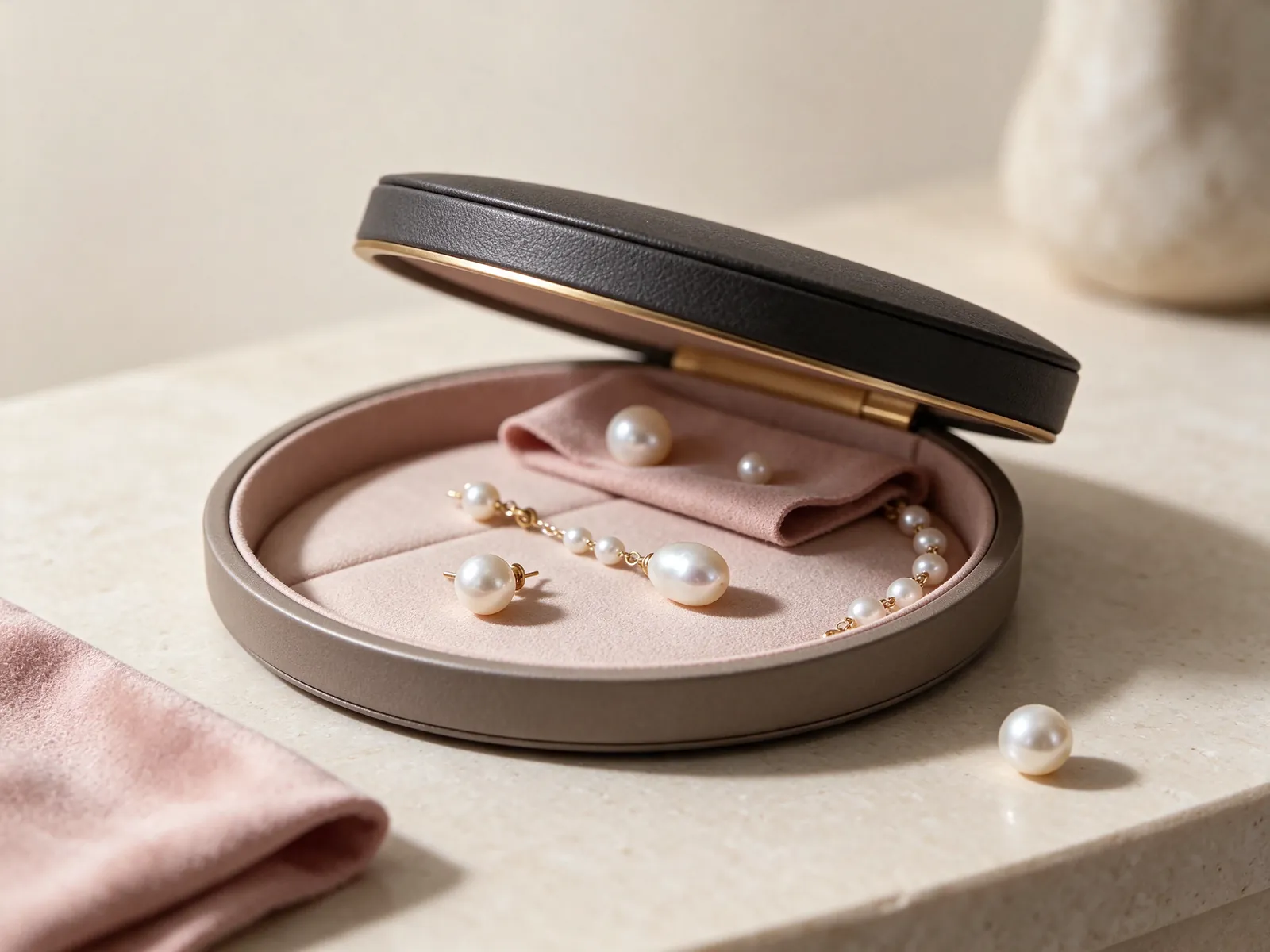
A favourite image is a starting point for style, not a complete specification. Tell the person advising you whether you type frequently, wear close cuffs or usually keep a watch on the same hand. Separate essential comfort needs from the visual features you would like to preserve. For example, you might enjoy an asymmetric face but need enough clearance to hold a pen naturally. A practical conversation can then begin with those priorities rather than assuming the most dramatic outline is the best choice.
For a candidate pearl, ask about its stated dimensions, shape description and any available identity documentation. For the ring, ask separately about band fit, setting structure and the intended wearing direction. Discuss budget alongside the actual pearl and metalwork rather than estimating it from the word baroque. When asking Flint Jewellery about pearl ring choices, include what you liked in the front and side views and what your usual sleeves are like. Design discussions are clearer when both visual preferences and daily movements are described.
Repeat the comfort check before making the final choice
Relax your hand, bend your fingers and check the cuff again before returning to the appearance of the pearl. If you keep needing your other hand to straighten the ring, mention it. A successful choice is not necessarily the most symmetrical or conspicuous one; it is a shape you understand and can accommodate in your routine.
| What to assess | Simple wearing check | Question to ask | Styling implication |
|---|---|---|---|
| Outline width | Relax and bring fingers together | Does the broad edge approach the next finger? | Keep nearby jewellery visually quiet |
| Orientation | Compare the direction of the tapered end | How does the setting determine the wearing direction? | Consider the line of the sleeve |
| Side profile | View from the side and check a cuff gently | Which exposed area needs care around objects? | Allow room beneath fitted sleeves |
| Lustre and surface | Rotate in consistent soft light | What is visible in the normal wearing position? | Do not choose colour from a single bright photograph |
| Band balance | Hold a phone and loosely close the hand | How can knuckle clearance and base fit be considered together? | Avoid adjacent metal touching the pearl |
Pearl knowledge and authoritative references
GIA identifies seven pearl quality factors: size, shape, colour, lustre, surface quality, nacre quality and matching in multi-pearl jewellery. Shape is therefore one part of assessing a baroque ring pearl, not the entire assessment.
Read the reference for this factFrequently asked questions
Does baroque mean the pearl is Keshi or bead-free?
No. Baroque describes an irregular form; it does not establish bead status or identify a pearl as Keshi or seed. Use information about the particular pearl for identity questions rather than inferring them from its outline.
Should I choose a tighter band if the pearl turns sideways?
Not automatically. Turning can involve the relationship between the band and the ring's overall balance. Describe what happens during ordinary movement and consider comfort at both the knuckle and the finger base rather than solving every issue with a smaller size.
Can I wear another ring beside the baroque pearl?
Check the combination while bringing your fingers together and bending them. If a metal edge touches the pearl, move the other ring to a different finger or hand. A visually balanced combination is not enough if the pieces repeatedly rub.
Does a dramatic side profile make a ring unsuitable for work?
It depends on your activities. Test the motions you use, such as writing, using a phone and passing a sleeve over the hand. Work involving tools or repeated hard contact calls for removing the ring rather than ignoring the exposed pearl.
Is an ultrasonic cleaner suitable for the irregular recesses?
No. GIA advises that pearls should never be cleaned using ultrasonic or steam cleaners. Use gentle routine wiping and seek professional advice for residue that cannot be removed safely with a very soft, clean cloth.
Updated: