
When choosing butterfly pearl earrings, how can you judge proportion and placement in butterfly-motif pearl earrings and pearl butterfly earrings?
Start with the complete outline rather than the smallest wing detail. A butterfly beside the pearl introduces width, while a motif positioned above it may draw the eye upwards. Decide whether you want the pearl's softly reflected light or the recognisable wing shape to attract attention first. That preference makes proportion easier to assess than a general request for something delicate.
Position against the ear is equally important. A motif can extend beyond the lower edge of an earlobe or overlap the ear's outline, depending on the piercing position. When exploring pearl earrings Hong Kong, compare overall dimensions with a wearing view rather than relying on an enlarged close-up. Detail that looks prominent on screen may be much quieter at conversational distance.
For butterfly pearl earrings, what can front and side views reveal about motif placement in butterfly-motif pearl earrings and pearl butterfly earrings?
Use the front view to identify how much of the pearl remains visible and whether the two outlines feel balanced. The side view shows how the wing, pearl and post sit at different depths. During a fitting, turn your head gently and check for forward tilt. A clear profile can answer questions that another decorative close-up leaves unresolved.
Read wing direction and the relationship between the two ears
Wings directed towards the face and wings opening outwards produce different compositions. The first can lead attention inwards; the second gives the earring a broader outline. Neither is a universal rule for a particular face shape. With your hair tucked back, look at the space between the wing tip, cheek and ear rather than choosing from a face-shape label alone.
Check whether the pair is mirrored or repeats the same orientation on both sides. An arrangement that looks symmetrical when laid flat may read differently on the ears. Locate the pearl in relation to each butterfly and imagine the pieces in their wearing positions. If there is a specified left and right arrangement, follow it rather than forcing the posts into another position.
When might a ribbon outline be a useful comparison?
Compare ribbon pearl earrings if you like curved decoration but do not need a recognisable butterfly. Ribbon folds create movement through bends and extensions; wings create it through a more identifiable outline. With a bow neckline, a quieter ear detail can avoid repeating the same broad shape near the face. This is a comparison of lines, not a requirement to match every motif.
Assess the pearl before judging the sparkle around it
Temporarily set the decorative detail aside and look at the pearl's reflections, colour and relationship with its partner. GIA describes seven pearl value factors: size, shape, colour, lustre, surface quality, nacre quality and matching. These provide a useful framework for questions, but a photograph does not reveal every factor. An attractive wing outline cannot establish the pearl's identity or quality.
Where a design includes gemstones, their small points of reflected light can compete with the pearl's broader glow. When comparing pearl and diamond earrings, distinguish the pearl's appearance from the surrounding sparkle. A bright photograph may obscure both the pearl surface and the wing boundary. A less intense lighting view can help you understand which element remains visually dominant.
How does an adjacent butterfly differ from a surrounding halo?
In halo pearl earrings, the decoration frames the pearl around its perimeter. A butterfly composition introduces a separate shape alongside it, making the open space between the elements more noticeable. For a pearl-led look, check whether the pearl's edge remains easy to recognise. For a motif-led look, check whether the wings still read clearly without magnifying the image.
Use a fitting to check depth, backing and everyday contact
A small frontal outline does not necessarily sit close to the ear. Raised wings and a projecting pearl can create depth, and the post position affects the wearing angle. Look from the side to see whether the earring leans forward. The backing should support the intended position without relying on uncomfortable pressure against the earlobe to make the front look level.
If you wear glasses or a mask, or usually leave your hair down, check where these meet the wing tips and backing. Move normally and gently return your hair to its usual position; do not tug strands across the earring as a strength test. Frequent contact may make an inward, simpler wing outline more practical than a wider one, even when both look equally attractive from the front.
Why are stability and comfort separate checks?
An earring that does not rotate can still press too firmly against the ear. Check that the backing is manageable to hold and remove, then notice any pressure during wear. Comfort also depends on the individual piercing and skin response; it cannot be promised from a metal name alone. Stop wearing a piece that causes discomfort rather than tightening the backing further.
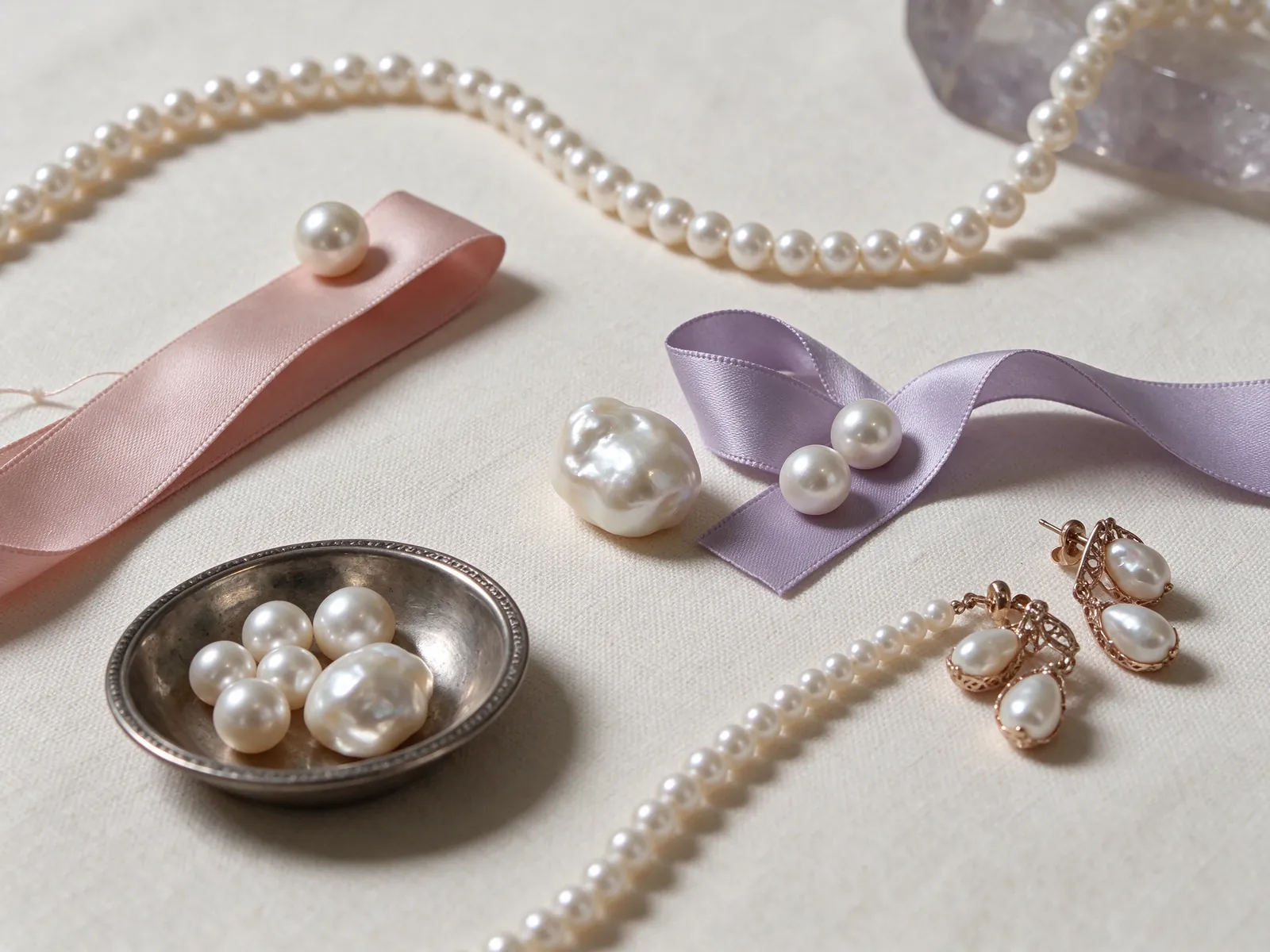
Let your neckline and hairstyle set the amount of decoration
A plain top gives a butterfly outline room to stand out. A patterned blouse, textured lace or a sculptural collar already introduces detail near the face, so a quieter earring can be enough. Short hair and an updo expose the entire outline; loose hair may reveal only part of it. Choose with the hairstyle you actually wear, not only the hairstyle in an occasion photograph.
For an outfit with botanical detail, floral pearl earrings offer a useful comparison. Petal arrangements tend to organise the decoration around a centre, whereas a butterfly directs attention along its wings. You need not repeat the garment's motif in your jewellery. Keeping either the clothing or the earring as the main decorative element can make the overall composition easier to read.
How can you compare motifs without choosing a sweeter look?
Compare the curves and point of heart-motif pearl earrings with the angles and open spaces of geometric pearl earrings. If you want a less romantic impression, a simpler butterfly edge and straight-cut clothing may help more than merely reducing size. Describing the lines you like gives a clearer selection direction than deciding that every butterfly must have the same mood.
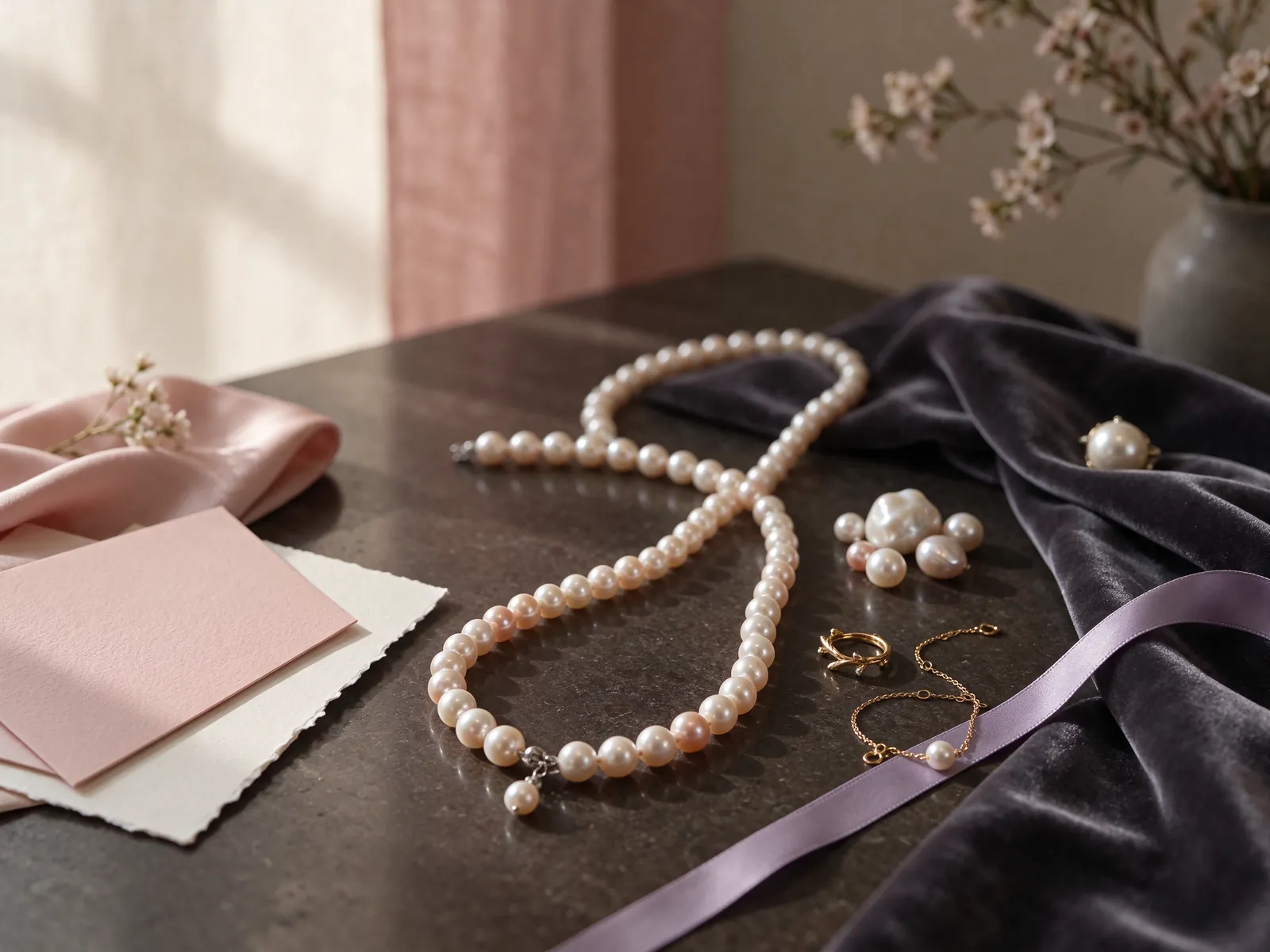
Choose a gift around the recipient's wearing habits
A favourite butterfly image can be a thoughtful starting point, but it does not tell you whether the recipient likes a close stud or an extended outline. Notice the earrings they wear regularly, their preferred metal colour and how often they expose their ears. A gift is more likely to fit their wardrobe when it follows those habits rather than the giver's preferred amount of decoration.
If the butterfly recalls a shared memory, explain that personal connection in a card. There is no need to present the jewellery as a source of protection, luck or change. For someone who values practicality, an easy-to-handle backing and clear care guidance may matter more than a symbolic interpretation. Keep the meaning personal and the wearing decisions concrete.
What makes a selection conversation more useful?
Bring an example of a usual neckline, describe the wing direction you prefer, and explain any tendency for existing earrings to rotate or catch hair. These observations are more helpful than asking only for a delicate design. When discussing selection with Flint Jewellery, you can also say whether you want the pearl or the motif to take visual priority. A cropped ear view can illustrate placement without showing a full face.
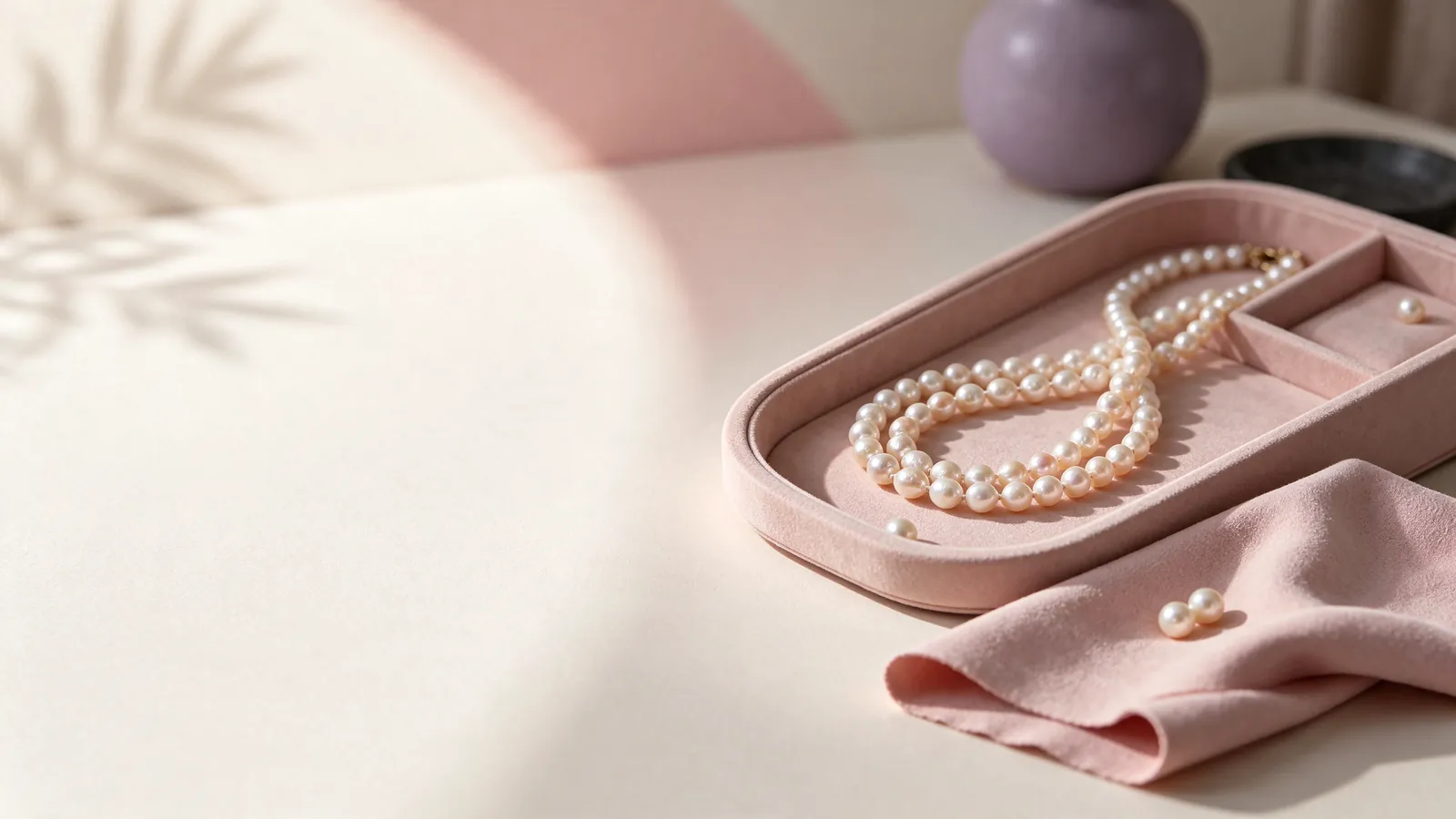
Protect the pearl when caring for fine wing details
Fine decoration may tempt you to clean into every recess, but the pearl requires gentle treatment. GIA places pearl at 2.5 on the Mohs hardness scale and says never to use ultrasonic or steam cleaners. Metal or gemstone decoration does not make a pearl-containing earring suitable for those methods. Consider the complete construction, including the pearl and its attachment, rather than cleaning only for the appearance of the wings.
After wearing, wipe gently with a very soft, clean cloth and store the two earrings separately so wing tips do not rub against pearl surfaces. Keep perfume, hair spray, acids and excessive heat away. Do not scrape trapped dirt with a sharp object. If a recess needs more attention, ask someone experienced with pearl jewellery about an appropriate method for that construction.
To bring together your preferred wing direction, pearl proportions and everyday wearing needs, contact Flint Jewellery on WhatsApp at +85260106207 and discuss the selection points that matter to you.
What if a wing bends or an attachment feels loose?
Stop wearing the earring and place it safely apart from the other piece. Do not bend the wing back, twist the pearl or add adhesive yourself. Front and side photographs, together with an explanation of any snagging incident, can help communicate the affected area. Cleaning cannot resolve a structural problem, and different attachment methods need different assessments.
| Feature | Front view | Profile or fitting | Selection direction |
|---|---|---|---|
| Wing proportion | Visibility of the pearl's edge | Depth of raised details | Decide whether pearl or motif leads |
| Wing direction | Inward, outward or upward extension | Space beside cheek and ear | Allow room for your usual hairstyle |
| Pair arrangement | Mirrored or repeated orientation | Balance when worn on both ears | Choose the visual rhythm you prefer |
| Backing and balance | Any visible tilt | Pressure and forward projection | Check stability separately from comfort |
| Wing-tip contact | Clarity of the outer boundary | Contact with hair, glasses or a mask | Consider a more inward outline if needed |
Pearl knowledge and authoritative references
GIA rates pearl at 2.5 on the Mohs hardness scale and advises against ultrasonic and steam cleaning; caring for butterfly decoration must also protect the accompanying pearl.
Read the reference for this factFrequently asked questions
Does the name mean the pearl itself is butterfly-shaped?
No. It describes the decorative combination of a butterfly motif and a pearl. The motif name does not establish the pearl's shape, type or origin; assess the pearl separately from the wing outline.
Should the butterflies face towards my cheeks?
There is no universal styling requirement. Check any designated left and right arrangement, then judge how the outline sits beside your face. Do not alter the posts to reverse a construction that has a specified wearing direction.
Will a larger butterfly show better through long hair?
Not necessarily. A wider wing may also meet more hair. Compare the visible outline with your usual hairstyle and check for contact; a clearer, more contained shape may work better than simply increasing its width.
Can I judge the pearl by how brightly the wing decoration sparkles?
No. Surrounding sparkle and pearl lustre are different visual features. Look at the pearl's reflections and colour separately, then assess the pair using appropriate pearl information. GIA's seven value factors offer a framework, not a shortcut from decorative brightness to pearl quality.
Can an ultrasonic cleaner reach dirt inside the wing detail?
Do not use ultrasonic or steam cleaning for an earring containing pearls. GIA explicitly advises against both for pearls. Use gentle routine wiping and seek construction-specific advice if dirt is difficult to reach.
Updated: