
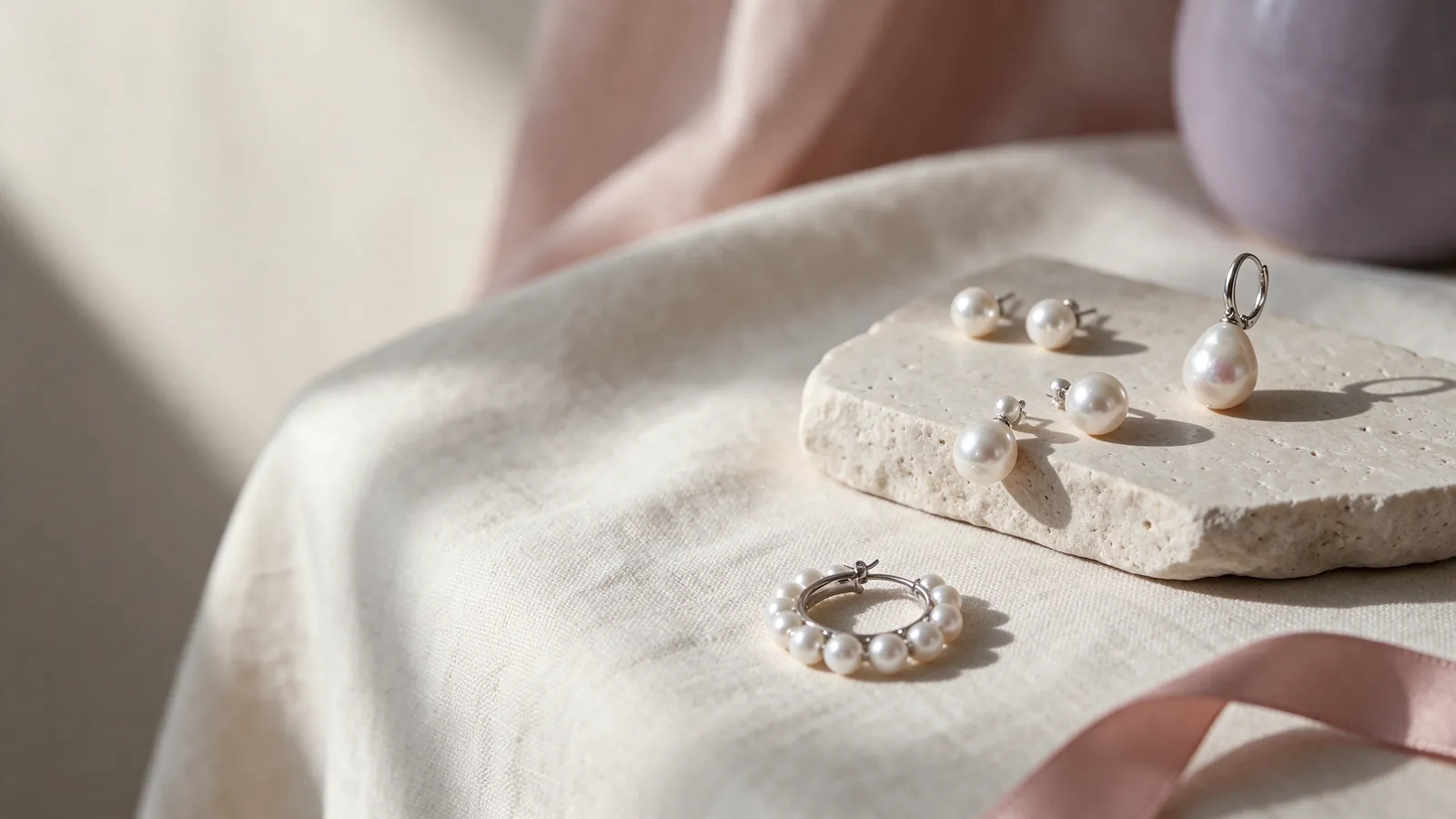
How do length and layered strands shape the styling of pearl fringe earrings, pearl tassel earrings and fringe pearl drop earrings?
A fringe silhouette depends on several lines working together, not simply on the size of a pearl. Begin with the outline from the ear to the lowest strand. A narrow attachment with a wider lower edge draws attention towards the ends; a more even width creates a continuous curtain of detail. If your search for pearl earrings Hong Kong has brought together studs, drops and elaborate designs, separate those silhouettes first. That makes it easier to identify whether you want movement, width or a compact focal point.
Pearl tassel earrings can look quite different beside an open neckline and a structured shirt collar, even when the overall drop is similar. With fringe pearl drop earrings, consider where the widest part sits beside your cheek, jaw and neck. Rather than expecting a particular length to flatter every face, look for a distinct outline that does not compete with the edge of your clothing.
When trying on pearl fringe earrings, what should you notice about neckline clearance and movement in pearl tassel earrings and fringe pearl drop earrings?
Check the earrings standing upright, then turn gently in both directions and sit as you normally would. A collar may sit closer to the fringe when you lean forward. Notice whether the ends fall freely after each movement or remain caught on fabric. Repeatedly having to move the strands by hand is a useful reason to compare a narrower, shorter or more concentrated outline; there is no fixed clearance that suits every wearer.
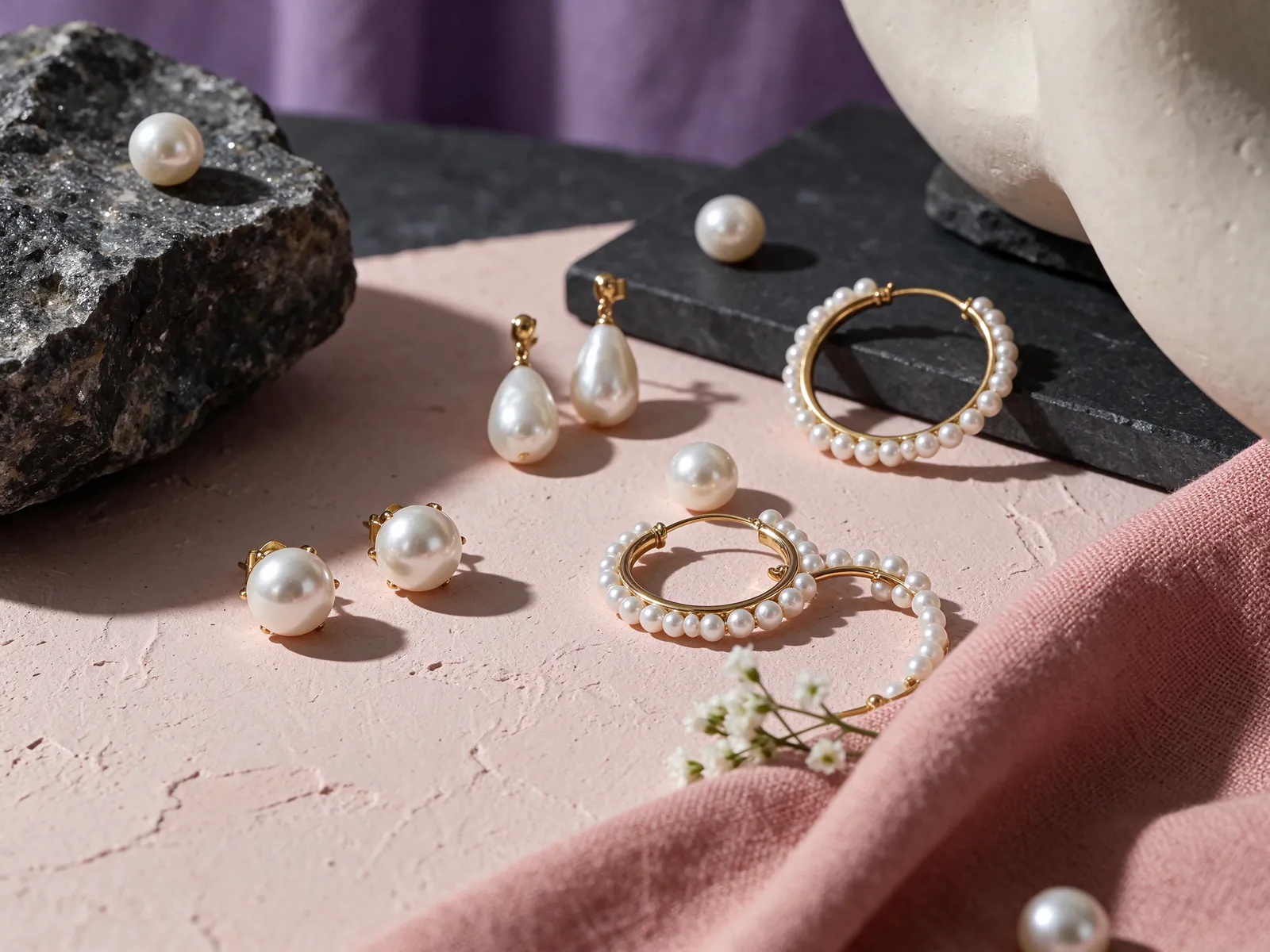
Read the construction before choosing the silhouette
Several strands of pearls create a repeating rhythm through the whole drop. A pearl-and-chain arrangement may instead hold the pearl as an upper focal point, with the fringe extending beneath it. Look for the shared attachment, the spaces between strands and the shape of the lower edge. When comparing multi-pearl earrings, remember that several pearls in a straight line do not automatically produce a fringe. Branching, layered lines and independent movement are separate design considerations.
Level ends make the lower boundary more defined, while staggered ends guide the eye through different lengths. Neither arrangement is inherently better. Consider whether you prefer an orderly curtain or a dispersed outline, then compare front and side views. Strands that look densely packed in a frontal photograph may reveal more space from the side.
Why small pearls and shape names should not be confused
Small describes size, while rice-shaped and baroque describe aspects of appearance. Keshi is not a catch-all name for small or irregular pearls, and these terms are not interchangeable. A photograph of fine pearl strands cannot establish pearl type or natural-versus-cultured identity. Read the stated pearl information separately from the description of the fringe, rather than treating a style name as a complete specification.
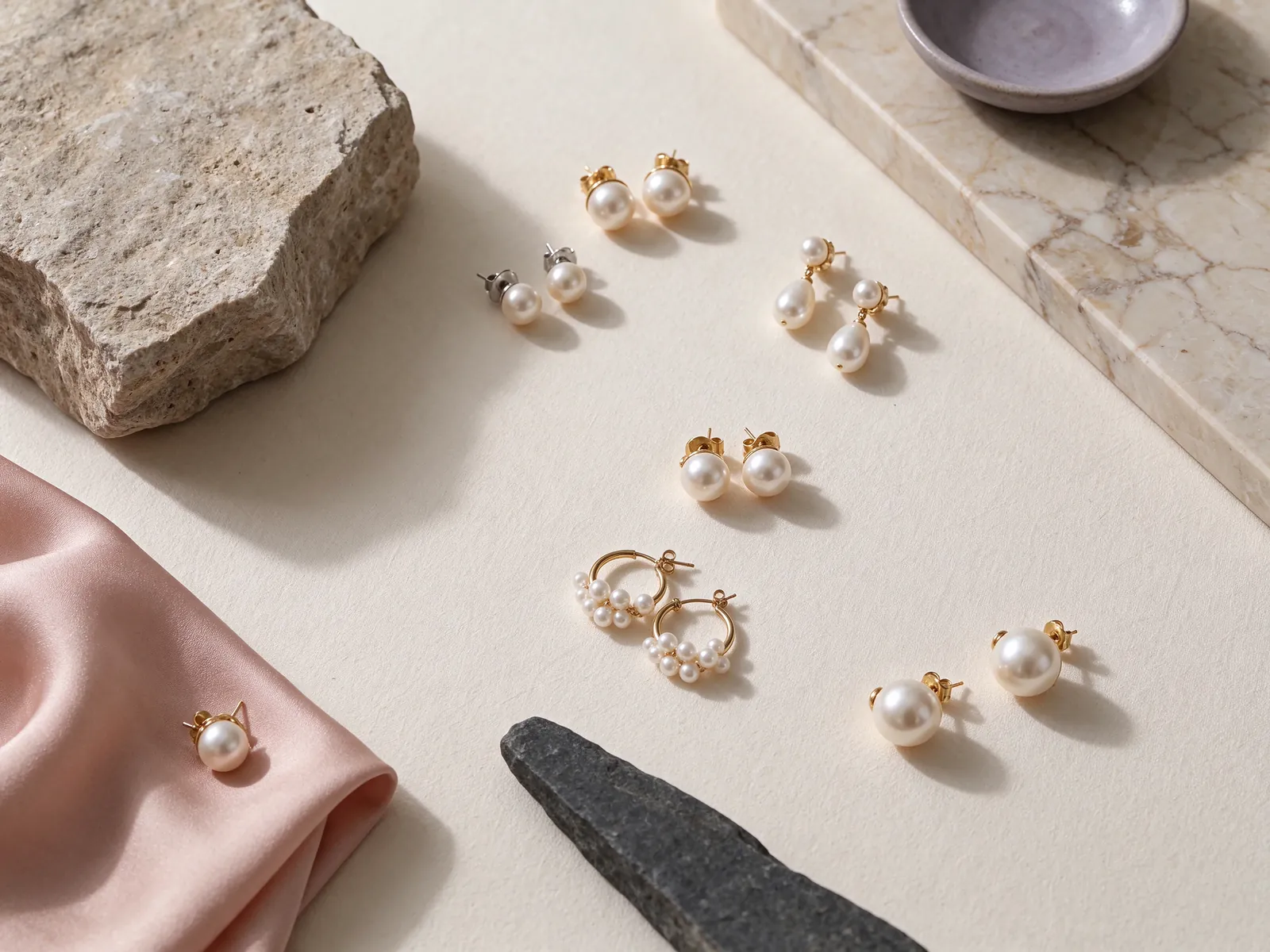
Make room for hair, collars and shoulder lines
Hair worn up reveals the attachment and the start of each strand; hair worn down may reveal only the lowest section. Try the earrings with your everyday hairstyle, not just with your hair temporarily tucked away. If fine strands repeatedly catch in your hair, compare a more contained outline or a simpler attachment rather than assuming extra length will solve the problem.
An open neckline leaves space around the drop, whereas a high collar brings fabric into the same area. A V-neck introduces a downward line; a rounded neckline creates a different boundary. There is no need to assign one earring length to each neckline. Instead, check whether the fringe and the garment can both be seen clearly. Elaborate embroidery or ruffles may make a simpler earring outline easier to read.
Use an ordinary outfit for a useful photo comparison
Take front and side photographs in similar light, wearing a top you genuinely use. Keep your chin in a natural position. The front view helps show whether hair conceals either side; the profile reveals the relationship with the jaw and collar. If the outline looks crowded after adjusting your hair, compare width and concentration before changing the size of individual pearls.
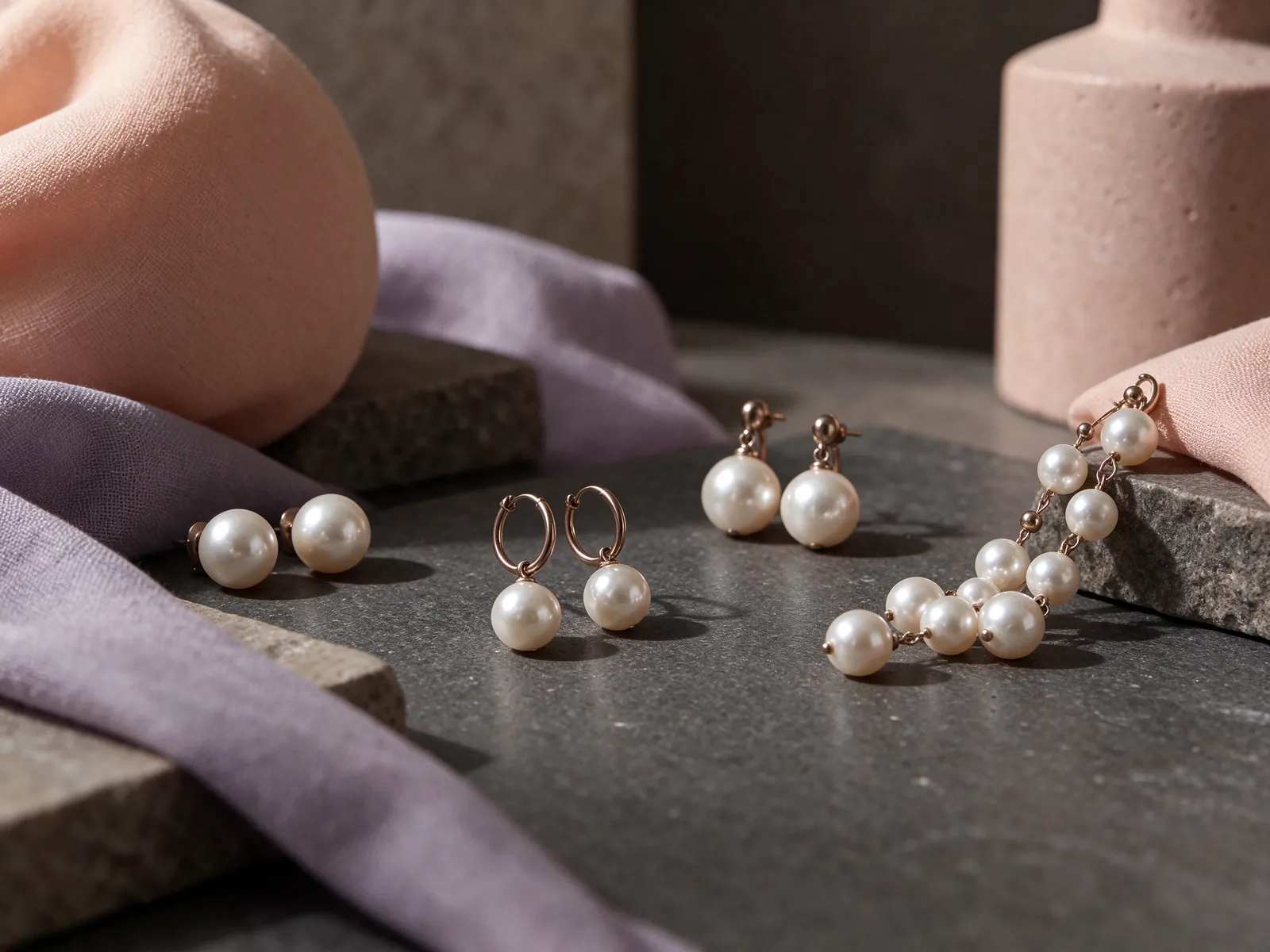
Choose an occasion's focal point, not a rule about length
For everyday jewellery, think about the objects that share space around your ears: a phone, headphones, scarf or jacket collar. For an evening outfit, you may prefer the earrings to carry the main decorative detail. Comparing pearl and diamond earrings can help you distinguish concentrated points of light from the moving lines of fringe. More decoration is not automatically more appropriate for a formal occasion; clarity within the whole outfit matters.
For bridal styling, bring the veil, hair accessories and shoulder line into the comparison. Fringe beside a lace collar may concentrate detail in one area, while an uncluttered neckline gives the strands a separate outline. If you want the emphasis nearer the ear rather than along the neck, compare the compact arrangement of floral pearl earrings. The aim is to choose where the outfit's attention should settle, not to assume a bride must wear a long drop.
Add a necklace only after checking the earrings alone
First assess the fringe without a necklace, then add the necklace you intend to wear. If their lower edges occupy a similar area, try a simpler necklace outline or a narrower fringe. Matching does not require every pearl shape to be identical; a shared sense of spacing or clean lines can create a coherent pairing without making both pieces compete for attention.
Test support and movement as well as appearance
Length is not a measurement of weight, and a delicate appearance does not establish comfort. During a try-on, check whether the earrings lean forward, whether the backs stay in position and whether both sides hang naturally. Walk and sit in your normal manner. Notice pulling or repeated interference with clothing rather than judging the fit only while standing still. Remove earrings that feel uncomfortable instead of treating persistent strain as part of the style.
Some arrangements place the fringe on the front body; others may use a separate component. Read the description of the individual design before assuming anything can be removed. Information about detachable pearl earring charms helps explain how a charm may interact with a post, back or main body, but detachability is not a shared feature of all fringe earrings. Ask for a demonstration of the intended wearing sequence rather than opening a connecting ring yourself.
Identify where repeated snagging begins
If a strand catches, stop moving and support the earring while gently releasing the hair or fabric. During a comparison, note whether contact starts at the attachment, the middle strands or the ends. That helps you choose a different construction for the specific problem. Taking earrings off before removing a high-neck top is also more manageable than freeing tangled strands afterwards.
Assess pearl quality across the whole arrangement
With many pearls in one design, examine the relationship between strands and between the two earrings as well as individual surfaces. Colour, lustre and the rhythm of the arrangement affect whether the fringe appears cohesive. Deliberately varied shapes can belong to a coherent design; complete uniformity is not the goal of every style. Look for an understandable pattern rather than assuming every difference is a fault.
GIA describes seven pearl value factors: size, shape, colour, lustre, surface quality, nacre quality and matching. Matching is particularly useful to consider alongside a multi-strand layout, but it does not replace the other factors. Begin with the pearls nearest the face and compare both sides, then look along the lower strands. Shape or colour alone cannot establish origin, natural-versus-cultured identity or the existence of a certificate.
Compare lustre without confusing it with chain reflections
Use similar lighting and backgrounds when comparing candidate designs. Look at reflections on the pearls separately from bright highlights on any chain details. Softly lit and strongly spotlighted photographs are not equivalent comparisons. Clear views of the pearls and attachments are more informative than an atmospheric image that conceals the construction; use the unclear areas to form specific questions for a try-on.
Keep the strands organised between wears
Lay each earring out gently so the fringe is not bundled into a knot or caught against another piece of jewellery. After wearing, wipe pearls with a very soft, clean cloth and keep the two earrings separated in storage. GIA advises never using ultrasonic or steam cleaners for pearls. A cleaning method must suit the pearls in the piece, not merely the appearance of its metal components.
Apply perfume and hair products before putting on the earrings, keeping those products away from the pearls. If pearls are strung and cleaning involves water, the string must dry completely before wearing. Keep an outfit photograph and note any recurring collar contact for your next comparison. If you want a drop on only one side, the styling of a single pearl earring offers another way to think about balance without adding more detail to both sides.
To discuss fringe proportions with Flint Jewellery, contact us on WhatsApp or call +85260106207. Share your usual neckline, hairstyle and the movement or fit details that matter to you.
Check attachments before putting the earrings away
Look for crossed strands, visibly distorted connections or a back that no longer sits as intended. Stop wearing the earrings if you notice a loose pearl, worn string or a damaged fastening, and seek an appropriate professional assessment. Avoid forceful bending or experimenting with cleaning chemicals near pearls. Organising the fringe before storage makes its condition easier to assess the next time you wear it.
| Feature | What to observe | Outfit context | Try-on action | Useful distinction |
|---|---|---|---|---|
| Full drop | Outline from ear to lowest strand | Open neckline or structured collar | Stand, then sit naturally | Free-hanging ends versus fabric contact |
| Fringe width | Narrow top or spreading lower edge | Hair up and hair down | Return hair to its usual position | Visible outline versus concealed strands |
| Layering | Level or staggered ends | Plain top or detailed dress | Compare front and profile | Defined boundary versus dispersed lines |
| Attachment | Relationship of body, charm and back | Changing the wearing arrangement | Follow the demonstrated sequence | Stated removable feature versus assumption |
| Pearl matching | Colour, lustre and arrangement | Multiple pearl strands | Compare both sides in similar light | Intentional variation versus an unclear pattern |
Pearl knowledge and authoritative references
GIA identifies seven pearl value factors: size, shape, colour, lustre, surface quality, nacre quality and matching. Matching is especially relevant when comparing the arrangement of several pearl strands.
Read the reference for this factFrequently asked questions
Can fringe earrings work with a high-neck blouse?
They can be considered, but try the actual blouse rather than relying on length alone. Sit and turn to see whether the fringe rests on the collar or catches its edge. A more contained outline may leave a clearer boundary than a wide fringe, depending on the garment.
Will a longer fringe be easier to see through loose hair?
Not necessarily. It may reveal only the ends while hiding the structure above. Check your normal hairstyle and compare the concentration of the strands. Visibility and repeated tangling are separate issues, so adding length is not always the useful adjustment.
Must the pearls in every strand look identical?
A design may intentionally use varied shapes or spacing. Look for consistency in the overall rhythm and the relationship between the two earrings. GIA includes matching among its value factors, but visual uniformity alone is not a complete assessment of pearl quality.
How should I try fringe with my wedding hair accessories?
Bring the planned veil or hair accessory and clothing with a similar neckline. Look at the combined outline and turn gently to check contact. Decide whether the emphasis should sit at the hair, near the ear or along the drop instead of judging each accessory in isolation.
Can I use a steam cleaner if the fringe contains metal chains?
No. GIA advises against steam and ultrasonic cleaning for pearls. Metal details do not remove the need to protect pearls in the same piece. Routine care uses a very soft, clean cloth, with attention to keeping the strands separated in storage.
Updated: