
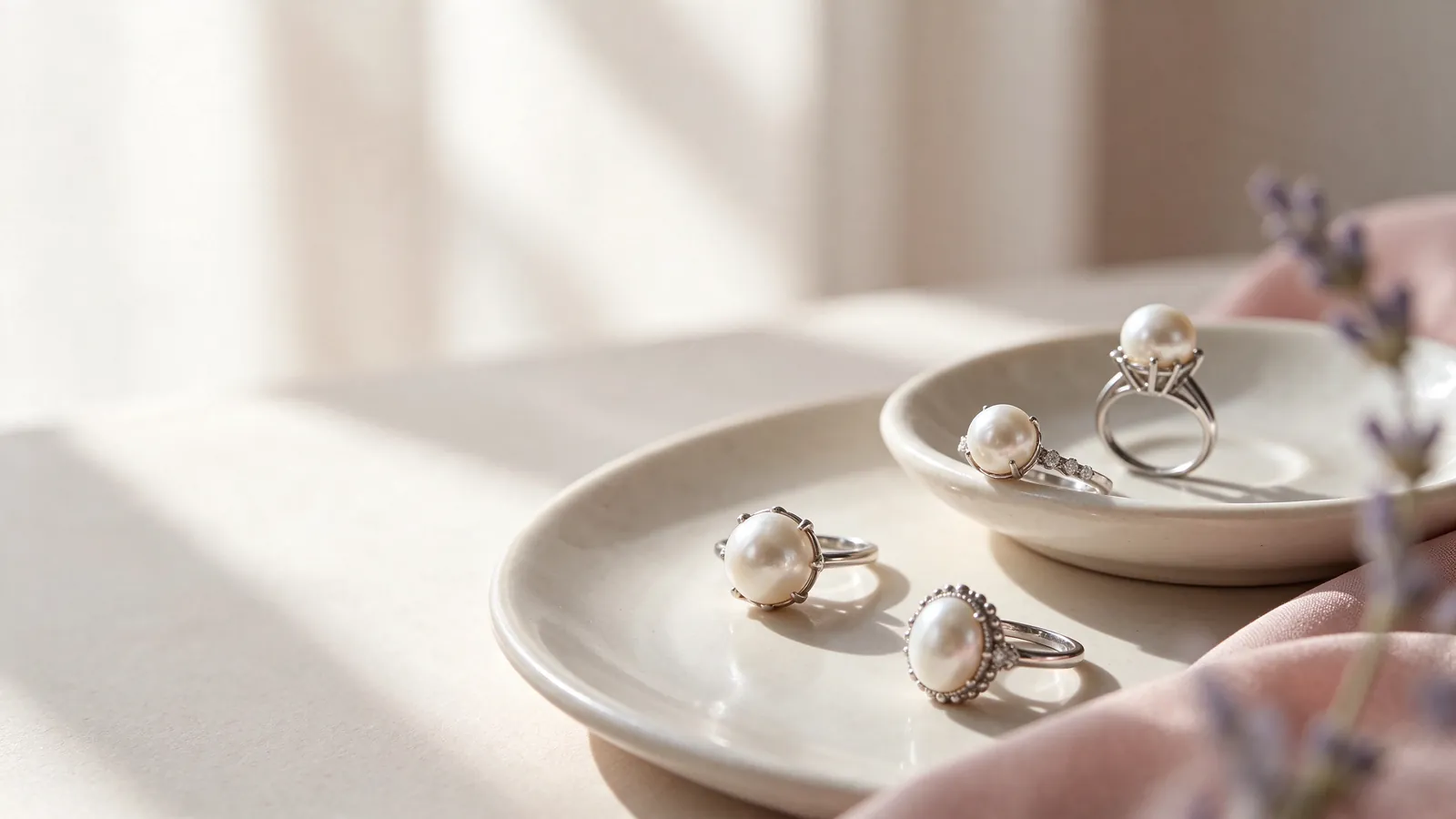
How does a pearl butterfly ring balance its motif, whether described as a butterfly pearl ring or an Akoya butterfly ring?
Begin with the space between the wings and the pearl rather than the butterfly outline alone. A central pearl can draw the eye into the middle of the ring face, while a pearl beside the butterfly creates a more directional arrangement. Look for overlap: does a wing obscure the pearl when your hand is relaxed, or does the pearl hide the detail that attracted you to the motif?
Next, move from the enlarged image to the scale of your own hand. Wide wings may look airy in a close photograph but occupy considerable space beside neighbouring fingers. View the ring from above and from the side, noting which part rises highest. The pearl rings Hong Kong guide provides a broader way to compare ring faces before narrowing your choice to a butterfly motif.
When trying on a pearl butterfly ring, how do fit and motif position work together in a butterfly pearl ring or an Akoya butterfly ring?
Let the ring settle without holding the butterfly upright with your other hand. Straighten and bend your fingers, then loosely close your hand. Notice whether the face turns, touches a joint or is pushed sideways by another finger. If the band feels suitable but the motif keeps leaning, consider the distribution of the design and the chosen finger rather than assuming a tighter fit will solve everything.
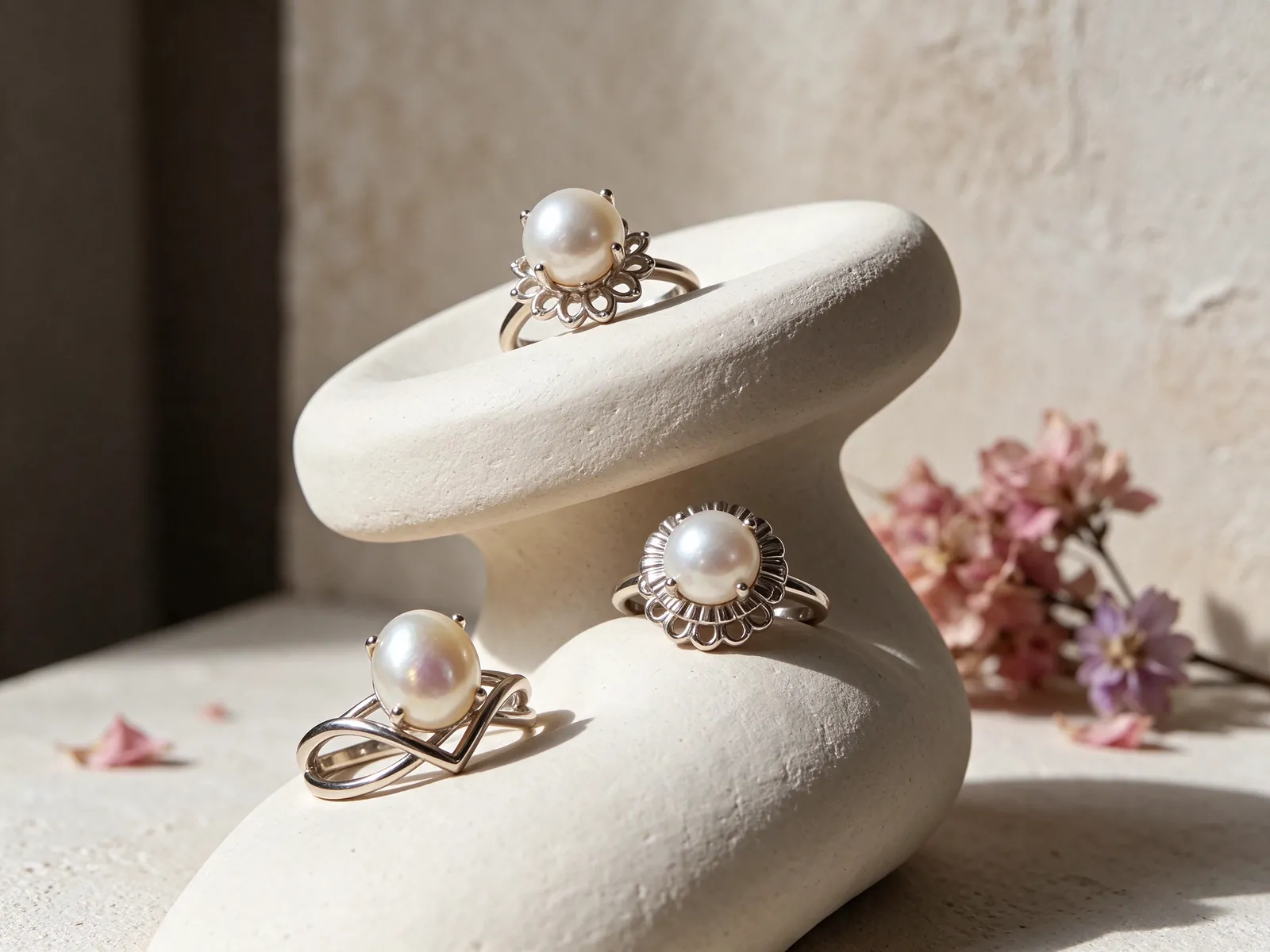
Choose the wing language that suits your wardrobe
Rounded wings, open outlines and sharply directed tips give quite different impressions. For a softer look, examine the continuity of the curves and how they echo the pearl. For a more graphic look, concentrate on the direction of the wings and the visible spaces between them. An open-looking motif is not reliable evidence of low weight; physical weight needs its own description or hands-on comparison.
Compare neighbouring design ideas to identify what you actually enjoy. A pearl flower ring offers a useful contrast when you like detail arranged around a centre. A crescent moon pearl ring focuses attention on a single curve, while a pearl tiara ring helps you consider upward-pointing accents. Choose the butterfly because its lines appeal to you, not because a motif is said to provide a guaranteed protective or emotional effect.
Try the motif in both directions
Look at the butterfly facing towards your fingertips, then towards your wrist. The change can reverse which element appears first along your hand. Compare the view with your arm resting naturally and while holding your usual bag. For an asymmetric face, trying both hands can reveal a difference that is less obvious in a display photograph.
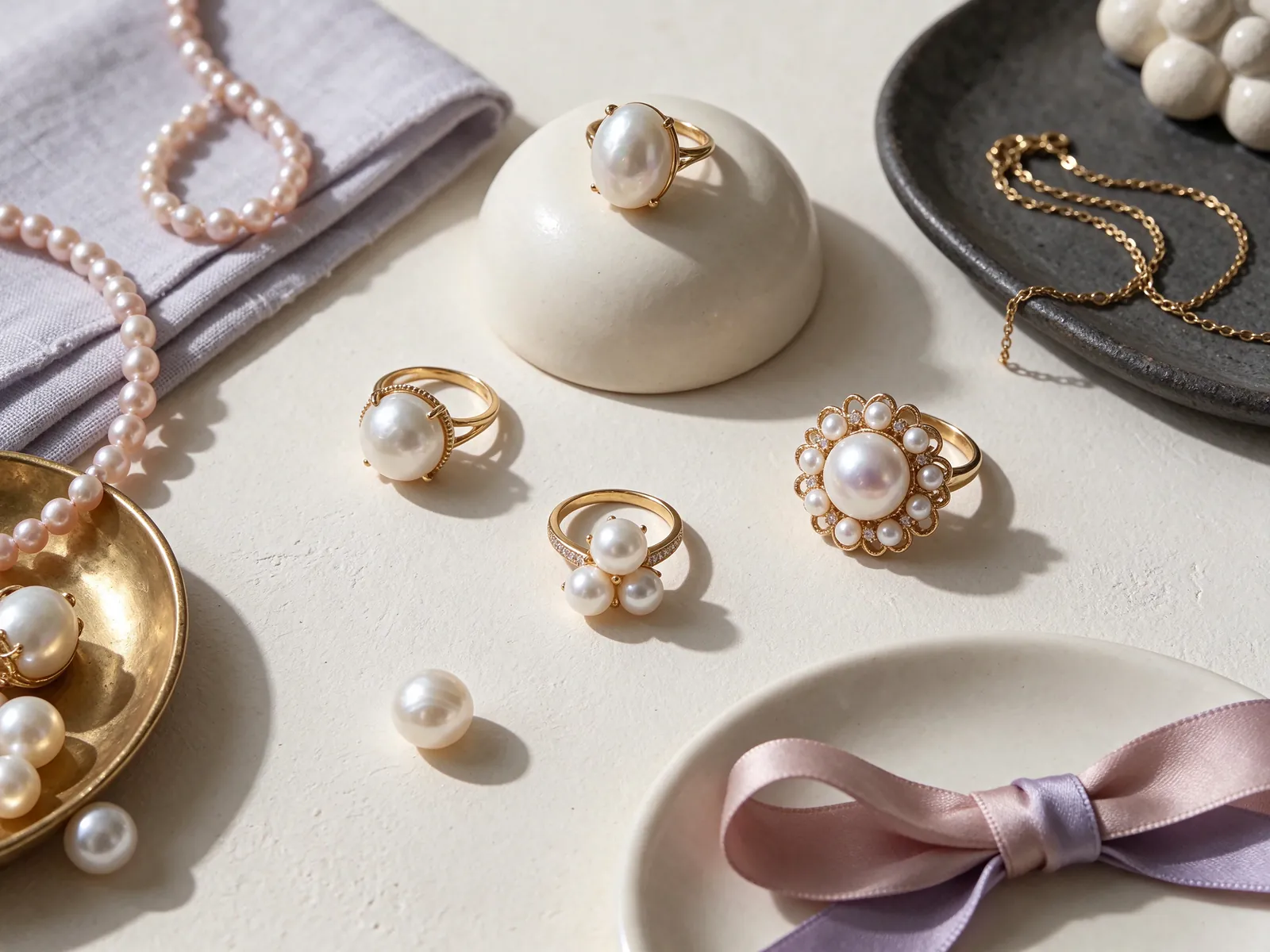
Separate pearl information from the butterfly description
An Akoya butterfly ring description combines a pearl term with a design term, but it does not provide every detail about an individual pearl. Read the pearl information separately from the construction of the ring. A white colour, round appearance or bright reflection in a photograph cannot establish a pearl's type, origin, natural-versus-cultured identity or treatment status. Information for another ring should not be transferred to the one you are considering.
GIA describes seven pearl value factors: size, shape, colour, lustre, surface quality, nacre quality and matching. In a butterfly arrangement, lustre helps you judge how clearly the pearl holds its place beside detailed wings, while shape and visible surface features deserve views from several angles. Matching is especially useful when a design contains several pearls; it need not become a forced score for a single-pearl ring.
Compare the pearl under ordinary lighting
Observe the ring in soft daylight and normal indoor light rather than relying only on a spotlight. Shift attention away from the reflective wings and back to the pearl's surface and colour. GIA distinguishes bodycolour, overtone and orient, and not every pearl displays all three. Understanding that distinction helps you read colour descriptions without expecting the same effect under every light.
Assess the band, wing tips and open construction together
A suitable band size does not settle every comfort question. Wings can extend sideways, the pearl setting can rise above the finger, and the underside of the band can feel different when you grip something. During a try-on, hold a pen, lightly hold a cup and relax your hand. Identify the actual point of contact if you feel pressure or scraping instead of assuming that discomfort will disappear with wear.
An open shape is a design feature, not permission to bend the ring yourself. Moving the ends can affect the pearl support, wings or other setting details. Ask whether the particular construction can be resized, where a change would be made and whether it would alter the direction of the face. An answer for a similar-looking ring does not establish what can be done to this one.
Bring the sleeves you actually wear into the decision
A shirt cuff or knit sleeve introduces a contact point that a bare-hand photograph misses. Move the cuff gently past the ring and note which wing tip meets the fabric; do not pull it deliberately to test strength. If your day involves repeated firm gripping, consider when you would remove the ring as part of a practical wearing routine.
Give the butterfly room in a layered look
For everyday dressing, start with the butterfly as the main detail on your hand and keep nearby jewellery visually quieter. Adding another raised ring can hide the wing outline or create contact between the two faces. Before deciding to stack, inspect the gap and gently bend your fingers. A pleasing arrangement in a still photograph is not enough if a wing repeatedly touches another ring during movement.
For a more dressed-up look, compare a statement pearl ring to decide how much visual presence you want. A pearl and diamond ring shifts the discussion towards the balance between the pearl and set stones; a pearl halo ring considers accents arranged around the pearl. These layouts differ from the directional lines of butterfly wings, so choose according to your outfit's detail rather than assuming extra sparkle is always better.
Check the whole outfit as well as the close-up
Step back from the mirror to see whether the pearl or the wing outline remains most visible. A patterned cuff may compete with small wing details, while a plain sleeve can make their shape easier to read. Then look closely again to decide whether other rings obscure details you value. The two views answer different styling questions.
Care for the pearl and the projecting details
GIA places pearl at 2.5 on the Mohs hardness scale. For a ring with projecting wings, that is a useful reminder to protect the pearl surface from rubbing against hard objects. It is not a prediction of the ring's lifespan or its resistance to every impact. Store the ring separately so that neighbouring metal edges or other gemstones do not press against the pearl.
After wearing, use a very soft, clean cloth and avoid exposure to perfume, hair spray, acids and excessive heat. GIA states that pearls should never be cleaned in ultrasonic or steam cleaners. A difficult gap between a wing and the pearl support does not change that advice. Do not scrape along the pearl with a sharp tool; ask about a cleaning method suited to the specific construction.
Stop pulling if a wing catches fabric
Release tension in the fabric before carefully separating it from the wing. Pulling hard concentrates force on a small detail. Once the ring is off, check for a changed outline or visible movement of the pearl. If something appears different, pause wear and seek an appropriate professional assessment rather than trying to straighten the wing by hand.
Turn your preferences into useful selection questions
Prepare a short list covering wing shape, intended finger, usual sleeves and activities, and the pearl information you want to understand. Natural-hand photographs and your experience with rings you already wear can help explain an unwanted contact point. When comparing options, change one main variable at a time, such as the left-to-right arrangement or the height of the face, so the reason for your preference stays clear.
For a gift, find out whether the wearer likes a broad face and which hand she normally uses for rings. A butterfly can connect with an interest in nature without assigning a fixed meaning to it. If you are really drawn to a moving detail rather than fixed wings, the pearl charm ring guide offers a useful design contrast, including different considerations around movement and clothing contact.
Describe an action rather than asking only for delicacy
Instead of saying only that you want something delicate, explain that you want to hold a pen without a wing pressing against the next finger, or wear a shirt without the cuff resting on the motif. Separate those practical needs from colour and outline preferences. Clear questions make it easier to distinguish an aesthetic choice from a construction issue. For help framing your questions about butterfly outlines, wearing direction and ring fit, contact Flint Jewellery on WhatsApp or call +85260106207.
| Area | What to compare | Try-on action | Styling implication |
|---|---|---|---|
| Wings and pearl | Visual centre and overlap | Rest the hand, then turn it slightly | Keep the main elements readable |
| Wing tips | Space beside neighbouring fingers | Relax and gently bend the fingers | Avoid contact with another raised ring |
| Face height | The highest wing or pearl support | Move your usual cuff gently past it | Consider shirts and knit sleeves |
| Band and opening | Stability and construction limits | Hold a pen without fixing the motif | Do not bend an opening yourself |
| Pearl surface | Lustre, colour and visible features | Compare soft daylight and indoor light | Consider the rest of your jewellery |
Pearl knowledge and authoritative references
GIA places pearl at 2.5 on the Mohs hardness scale. The figure supports careful handling of the pearl surface; it is not a durability guarantee for a complete butterfly ring.
Read the reference for this factFrequently asked questions
Should the butterfly face my fingertips or my wrist?
There is no universal direction. Compare both with your hand resting naturally and check how the wings meet your sleeve. With an asymmetric face, the direction can change which element is most visible and where contact occurs.
Does an Akoya butterfly ring name tell me the pearl's quality?
The name alone is not a complete pearl description. Read the individual pearl information, look at lustre and surface features, and understand any identity or documentation details separately from the butterfly motif.
Can I widen an open butterfly ring by bending its ends?
An opening does not establish adjustability. Moving the ends may affect the pearl support, wings and settings. Any resizing question needs assessment of that particular construction rather than a do-it-yourself adjustment.
Can I stack it with another raised ring?
Check the gap between the faces and gently bend your fingers. If a wing or the pearl repeatedly touches the other ring, wearing them separately avoids that contact and lets the butterfly outline remain visible.
Can an ultrasonic cleaner reach the gaps beside the wings?
That is not an appropriate reason to use one on a pearl ring. GIA says pearls should never be cleaned in ultrasonic or steam cleaners. Use gentle routine care and ask about cleaning difficult areas according to the construction.
Updated: