How can long pearl dangle earrings, including pearl chain earrings and other dangling pearl earrings, work with your neckline?
Begin with the top you expect to wear rather than an isolated jewellery photograph. Notice where the lowest point of each earring sits beside your jaw and above the collar. An open shirt leaves a different space from a standing collar or a thick knitted neckline. A clear vertical line when you are standing may overlap the fabric once you sit down, so assess both positions. The aim is to find a proportion you enjoy without repeatedly adjusting your clothes around the earrings.
Movement changes that first impression. As you speak or turn towards someone, the pearl and its connecting elements may swing away from their resting line. Check the side of the collar as well as the front. If close-fitting necklines are central to your wardrobe, compare pearl stud earrings as a different way of placing lustre beside the face. A longer silhouette is an option, not a reason to accept contact that distracts you throughout the day.
When trying long pearl dangle earrings, how do you check pearl chain earrings and other dangling pearl earrings for contact with hair or collars?
Keep your usual hairstyle for the first trial. Look straight ahead, turn gently in each direction, and look down at something in your hands. Watch for hair passing into a connection, a pearl brushing fabric, or a fastening becoming difficult to reach. Let the earring settle before separating caught strands; pulling the chain to free your hair puts force on the wrong part of the structure.
Separate the hanging motion from the connection and pearl shape
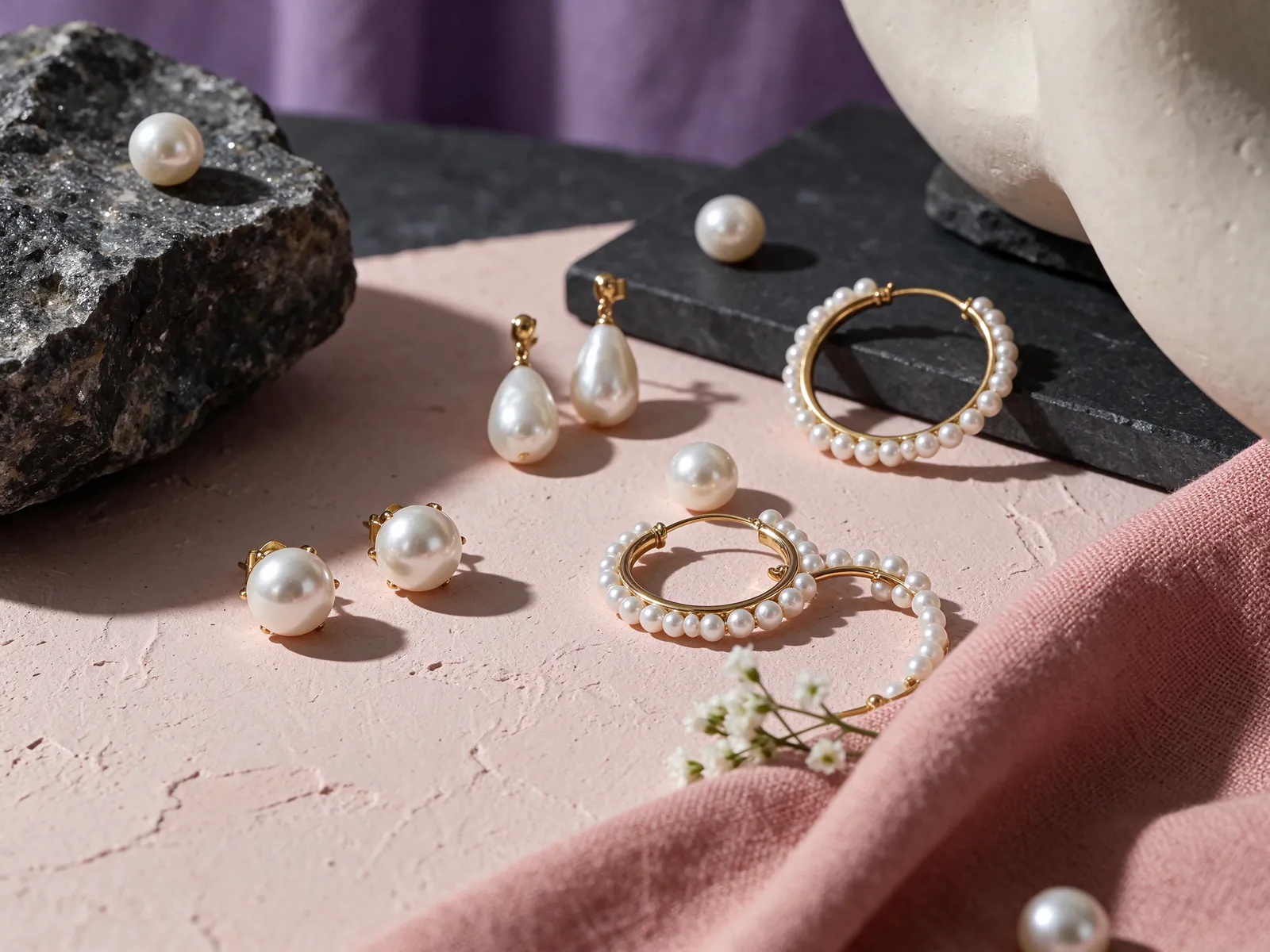
A dangle describes a hanging earring that moves; it does not require a teardrop-shaped pearl. A chain describes how elements connect. These are separate questions from whether you prefer a round, elongated or irregular pearl outline. A slim fixed curve is not automatically a chain, and a long appearance alone does not explain how the parts articulate. When considering pearl chain earrings, look for the actual links and connections rather than treating every narrow metal line as the same construction.
Comparing pearl drop earrings helps you distinguish a pearl placed close below the lobe from a design with a more extended connection, although names alone cannot establish dimensions. For another silhouette, pearl hoop earrings organise the visual weight around a circular outline rather than a single descending line. Describing your preference in terms of outline, resting point and movement is more useful than relying on a style name to communicate every detail.
Use close views to understand which parts can move
Study where the ear fitting meets the descending element and where that element meets the pearl. A close view can explain a connection, while a wearing demonstration shows its behaviour. Consider both a still view and a gentle head turn if available. Neither a photograph of a pearl nor its outline establishes its species, origin or natural-versus-cultured identity.
Read length measurements from a clearly defined starting point
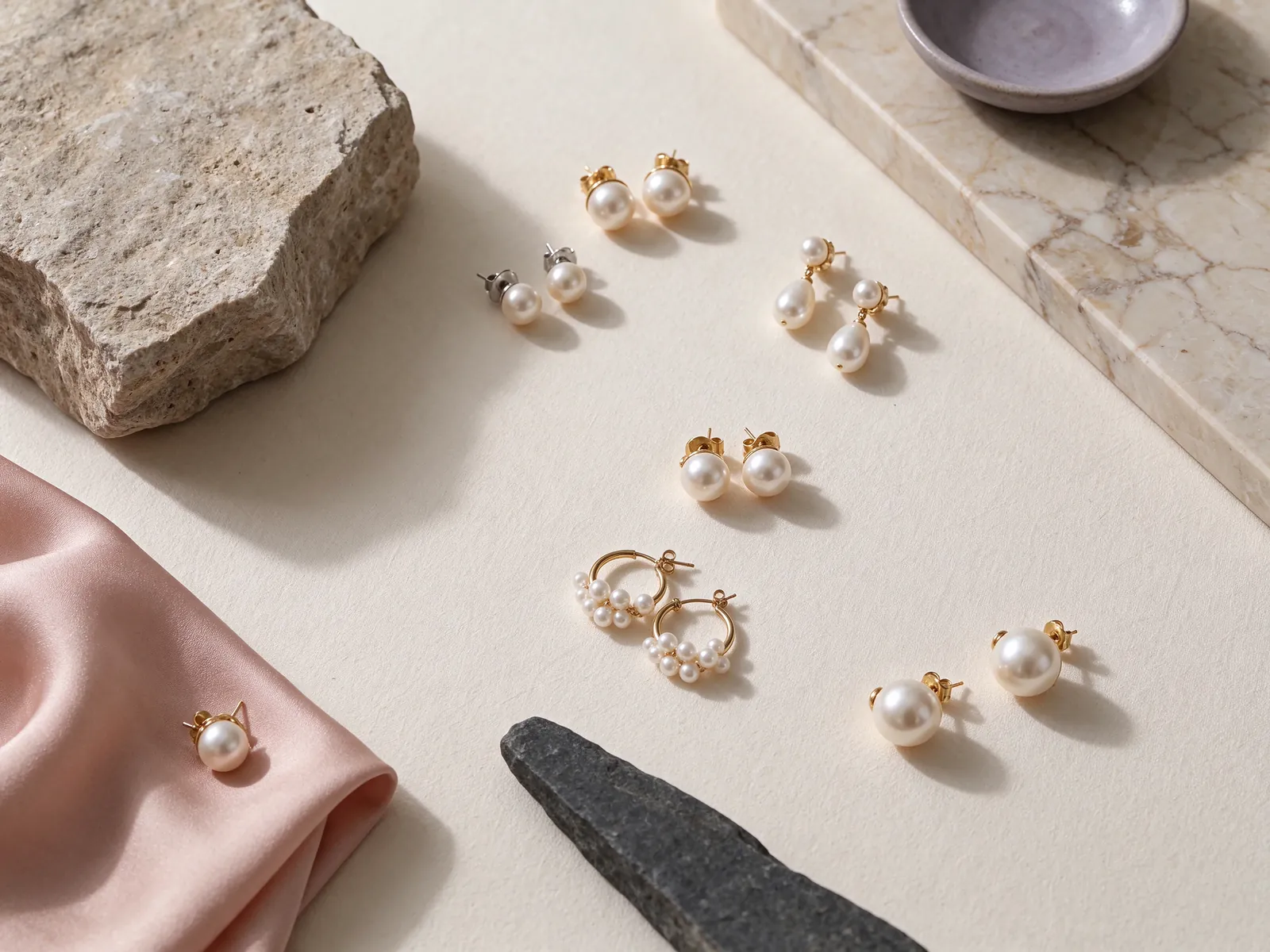
Ask what a stated length includes. A measurement of the connecting chain is not the same as the complete drop from the ear fitting to the lowest point. The pearl and the fitting can also affect where the earring finishes. Without a defined start and end, a length cannot tell you whether the design will sit near your jaw or collar. An existing pair that you enjoy wearing provides a practical comparison: note its actual resting position before considering a different silhouette.
For a visual comparison, keep your head in a natural position rather than stretching your neck to expose the earrings. A front view shows the relation to your face; a side view shows the space above the clothing. Compare with your hair up and down to decide whether you want the whole connection visible or occasional glimpses of the pearl beside the hair. Use photographs for proportions, not to calculate an unlisted pearl diameter, weight or quantity of metal.
Treat face-shape advice as a starting idea, not a rule
A long line gives a vertical direction beside the face, but hairstyle, neckline and the visual weight of the pearl also shape the result. If you want a clearer outline, reduce competing detail around the ear before choosing more length. Compare different resting points with the same outfit. Your preferred balance is a more useful decision than a rigid face-shape category.
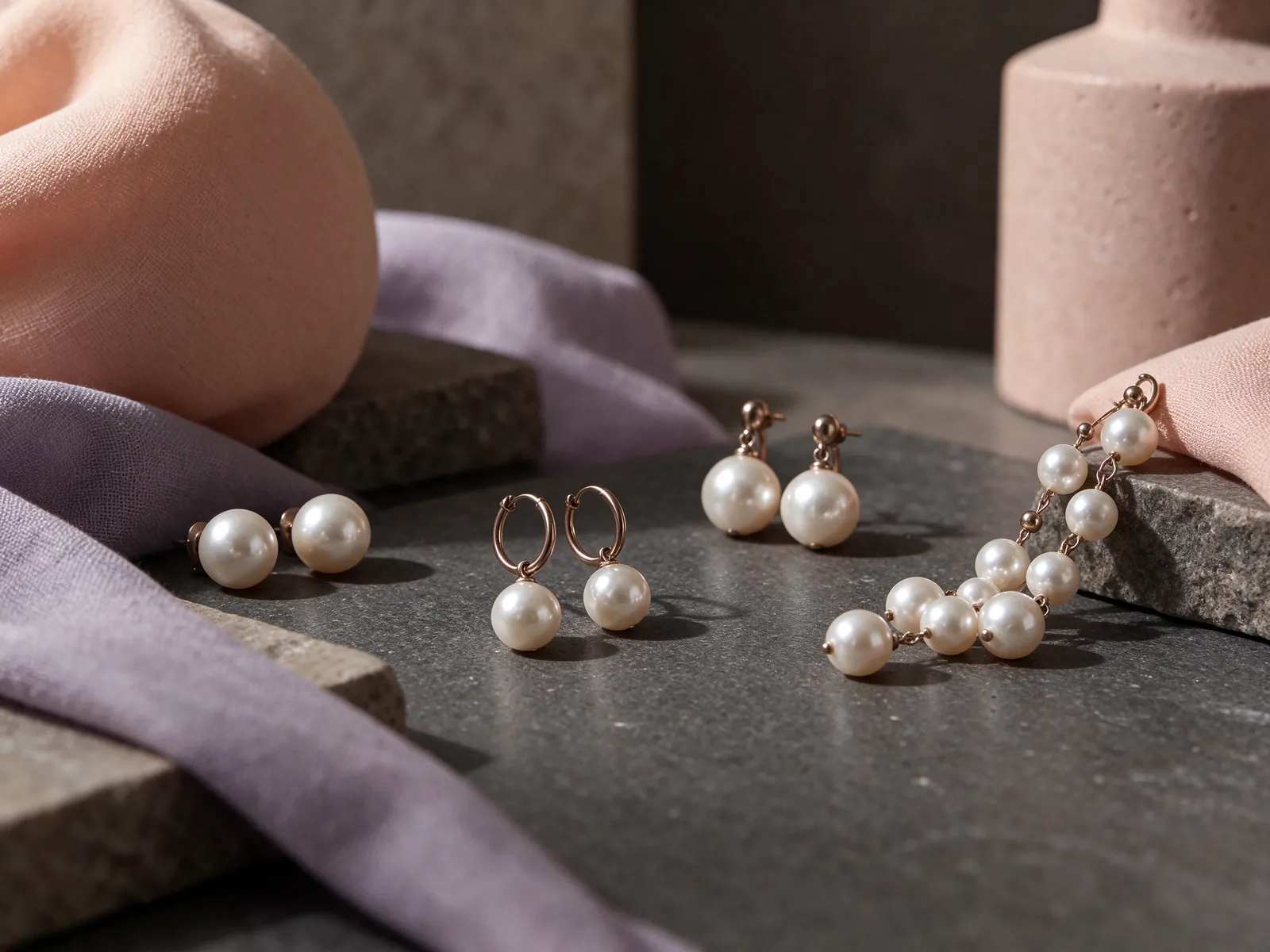
Assess the ear fitting and your comfort together
A visually delicate earring is not necessarily comfortable for every wearer. Notice any pulling at the lobe, a forward tilt or a change of direction after you move. Evaluate your own response as you speak and turn, rather than judging only the moment the earrings are put on. Pearl placement, connecting parts and the fitting all deserve attention. If wearing causes pain or irritation, stop; a hairstyle that hides discomfort is not a solution.
With pearl hook earrings, understand how the hook passes through the piercing and how any closure or retaining component operates. For someone without pierced ears, clip-on pearl earrings require a separate assessment of fit and pressure. Similar-looking dangling designs can have different putting-on and removal routines. Think about whether you can handle the fitting easily, particularly when hair or an outer layer of clothing sits close to the ear.
Hold the fitting, not the descending pearl, during removal
Support the part at the ear while operating the fastening. Do not use the pearl or chain as a handle to pull the earring free. Move hair gently away if it obscures the fitting, and check for an obviously loose or distorted connection. If something appears wrong, stop wearing the piece and arrange an appropriate inspection instead of bending it back by force.
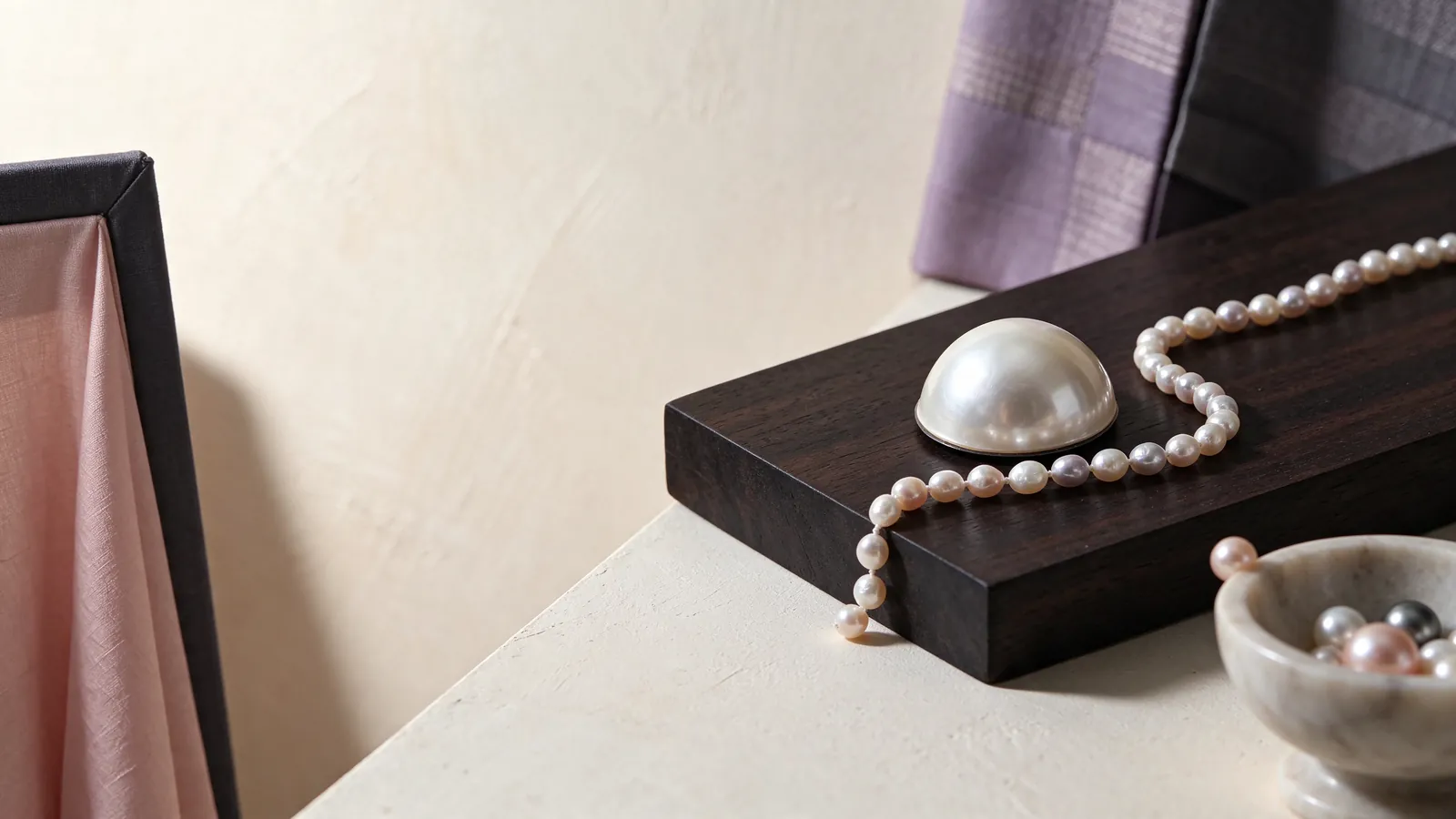
Plan the space around the ear for everyday and occasion dressing
An uncomplicated neckline can leave the descending line easy to read, while a bow, ruffle or embroidered collar may overlap it. If you also wear a necklace, decide whether your main focus should sit beside the face or on the chest. Long earrings and a short necklace do not need to follow a universal formula. Look at how much detail gathers near the neck and whether the earring silhouette remains the feature you intended.
For a wedding or evening event, try the earrings with the planned hairstyle and shoulder details rather than the dress neckline alone. An updo exposes more of the connection; loose hair may show the pearl intermittently. Include a wrap, veil or other fine fabric in the movement check, especially when sitting or leaning towards someone to speak. Occasion dressing should work with these ordinary movements, not require you to hold the earrings away from fabric all evening.
Arrange scarves and pull-over clothing before putting earrings on
Soft fabric can still catch at a connection. Remove the earrings before pulling clothing over your head or rearranging a scarf, then put them on after the neckline and hair are settled. Check the moving edge of a wrap as you turn. If you expect to adjust it frequently, consider a different resting point rather than depending on constant manual protection.
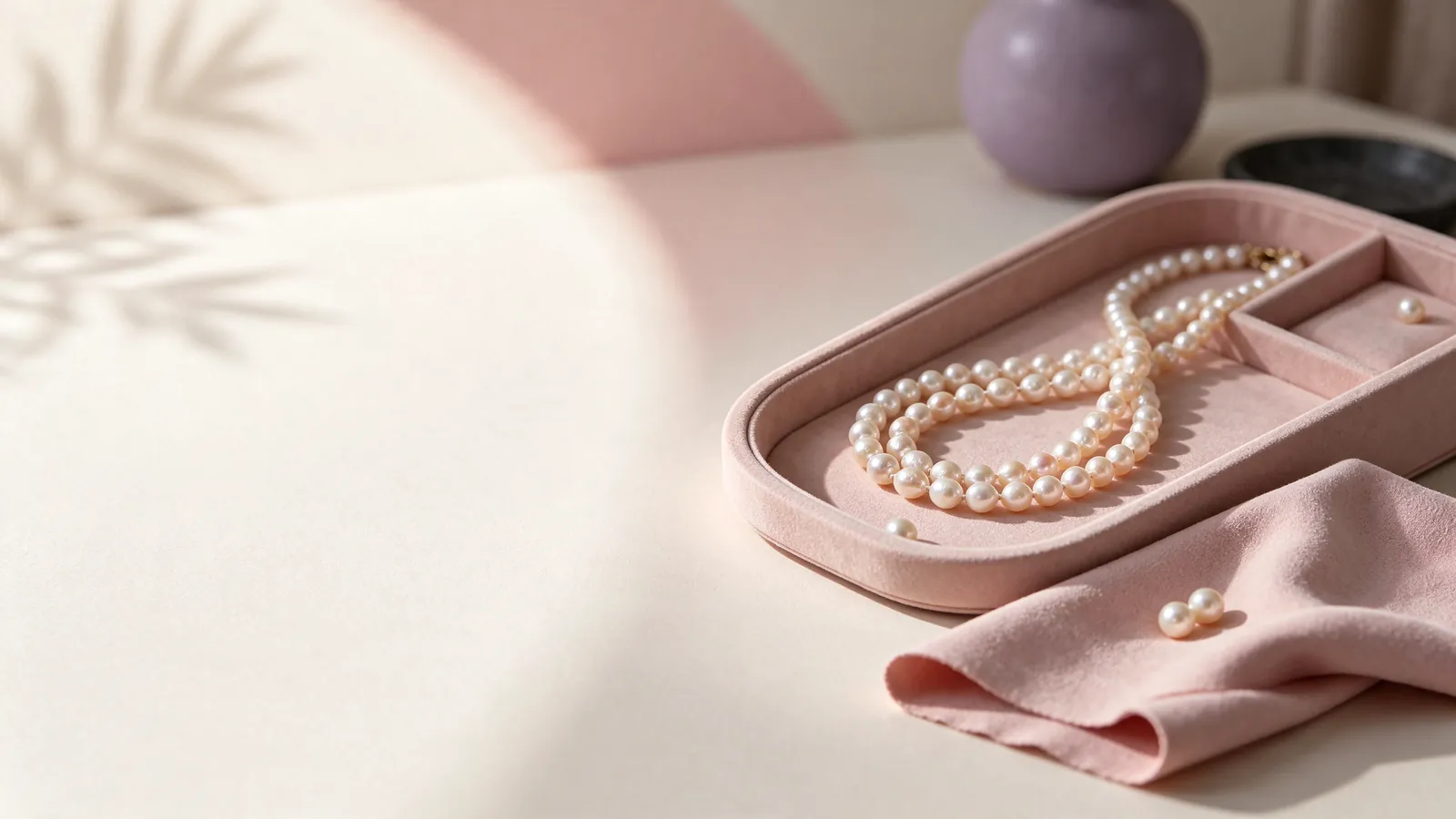
Look beyond the long outline to pearl quality and matching
GIA describes seven pearl value factors: size, shape, colour, lustre, surface quality, nacre quality and matching. A striking connection can draw attention away from the pearls, so bring both aspects into the comparison. Look at the pair under the same lighting, considering their colour and lustre before deciding whether the outline suits you. A larger size, a round shape or a particularly bright photograph cannot stand in for the complete set of quality considerations.
Matching also deserves a practical wearing check. Compare the pearls side by side, then notice their resting points and the orientation of the connections when worn. If one side appears tilted, check the fitting, hair and collar before deciding that the pearls themselves are poorly paired. Shape or colour alone does not establish origin, natural-versus-cultured identity or the existence of a certificate; those questions require information about the particular piece.
Compare both pearls under similar light and angles
Strong lighting and camera position can change how a pearl looks in a picture. Place the pair against the same background and turn them gently to observe reflections and surface appearance. A dangling earring changes the pearl's direction as it moves, so consider both the still view and that changing impression. Editorial styling pictures are useful for ideas, not for establishing the identity of a pearl.
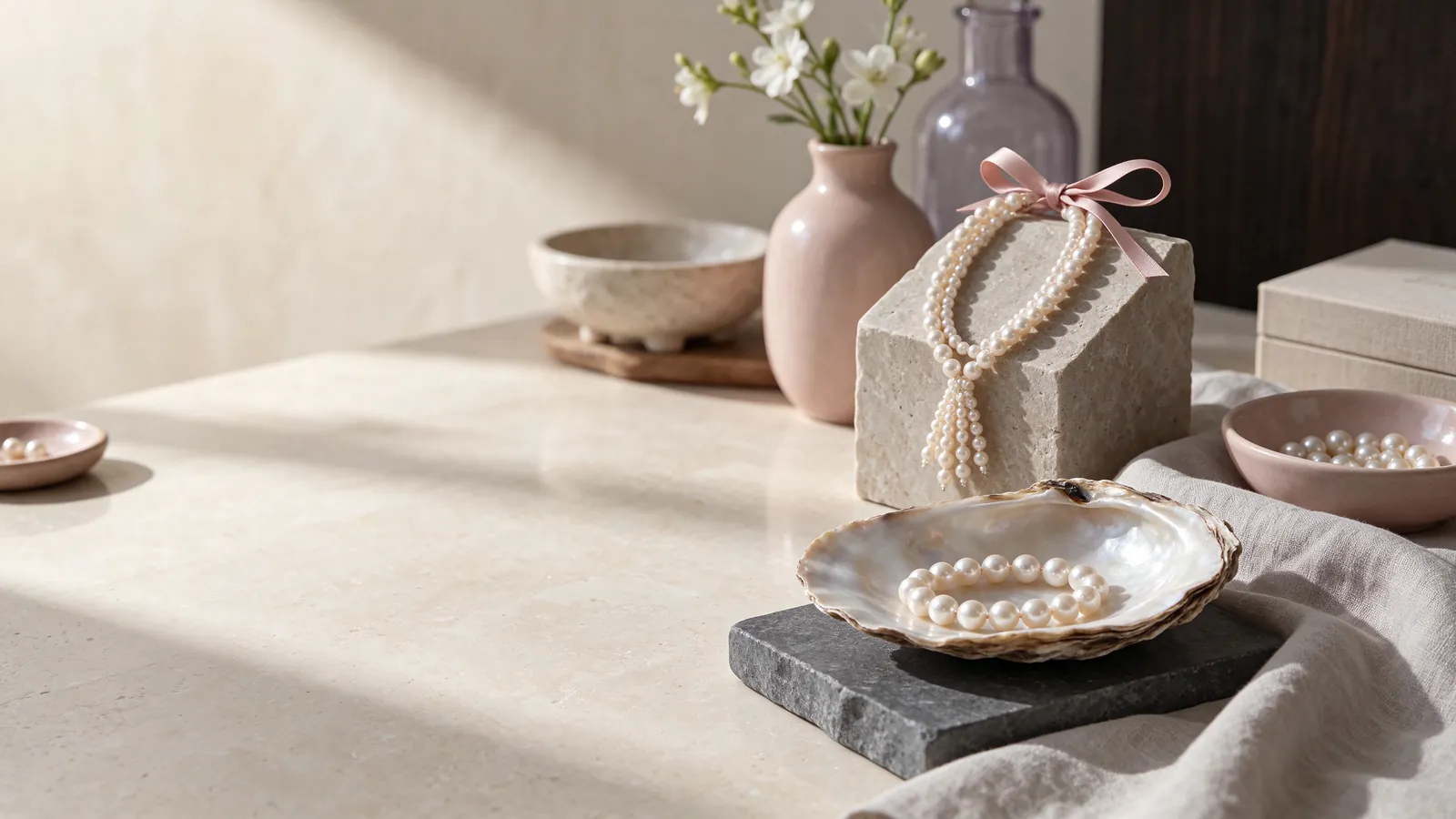
Protect the pearl surface and keep connecting elements untangled
GIA places pearl at 2.5 on the Mohs hardness scale and says pearls should never be cleaned in ultrasonic or steam cleaners. With a long design, cleaning should also avoid tension on connections. After wearing, use a very soft, clean cloth and support each part as you wipe gently. Do not pull a pearl to straighten the chain, or let the earrings rub against harder jewellery during storage.
Put earrings on after applying perfume and hair spray, and keep pearls away from acids and excessive heat. Store the two sides separately with connecting elements resting naturally, rather than wound into the opposite fastening. If you find a tangle, lay the earrings on a soft surface before identifying where the parts meet. Checking for trapped hair after use and checking the fastening before the next wear are useful habits for a design with moving elements.
For a gift, ask about daily habits as well as preferred length
Find out whether the recipient has pierced ears, which fittings they use comfortably and whether high collars or scarves are regular choices. Their preferred hairstyle also helps clarify whether they want an exposed line or a pearl glimpsed beside the hair. Bring those details to a styling discussion with Flint Jewellery, so the conversation covers practical handling and clearance as well as the first visual impression. Share your usual hairstyle and neckline with Flint Jewellery on WhatsApp at +85260106207 to discuss a practical earring styling direction.
| Comparison | What to observe | Decision to make |
|---|---|---|
| Resting point | Lowest point relative to jaw, shoulder and collar | Compare the complete drop, not chain length alone |
| Moving clearance | Hair and fabric during turns and downward glances | Choose space that works with your usual movements |
| Connection | Fixed curves, joining rings and articulated links | Distinguish construction from hanging motion |
| Personal comfort | Lobe pull, fitting position and tilt | Assess the actual fastening and your own response |
| Pearl pairing | Colour, lustre and outline in the same light | Consider the pearls and the worn orientation together |
Pearl knowledge and authoritative references
GIA gives pearl a Mohs hardness of 2.5 and advises against ultrasonic or steam cleaning. Gentle handling also helps avoid pulling the connections of a long earring.
Read the reference for this factFrequently asked questions
Does dangle mean that the pearl is teardrop-shaped?
No. Dangle describes hanging movement. The pearl outline and the connecting structure are separate choices, so a dangling design need not use a teardrop-shaped pearl.
Is chain length enough to compare how low earrings will hang?
No. Ask whether the measurement includes the fitting and pearl, and identify the starting and ending points. Compare the full resting position with your neckline rather than assuming the chain measurement is the complete drop.
Can I assess clearance with my hair tied up if I normally wear it loose?
A tied-up view helps reveal the structure, but also try your normal loose hairstyle. Turn and look down to see whether hair enters a connection or changes the earring's direction.
Why might a pair look level on a surface but uneven when worn?
The ear fittings, hair contact or clothing can change the worn angle. Compare the pearls separately under the same light, then check the fitting and clearance before attributing the difference to pearl matching.
What should I check before buying long earrings as a gift?
Ask about pierced ears, familiar fittings, hairstyle and frequently worn collars or scarves. These habits help determine practical clearance and handling needs, rather than selecting by appearance alone.
Updated: