
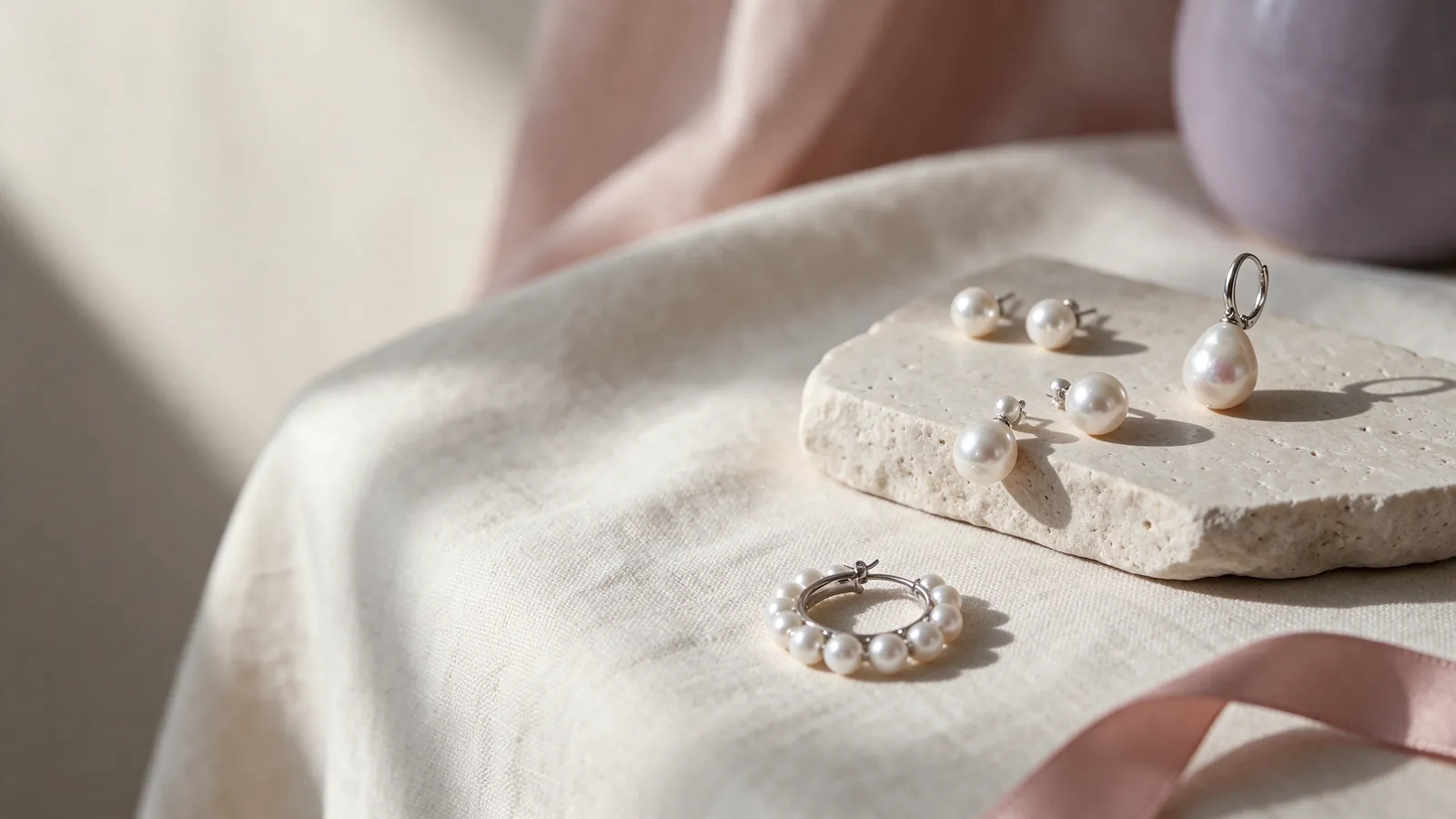
Compare the overall proportions of multi-pearl earrings, from double pearl earrings to pearl row earrings
Start by deciding whether you want a compact accent or a visible line beside the face. Double pearl earrings can read as a close pair, but separating the pearls or placing them vertically changes that impression. Pearl row earrings may be straight, angled or gently curved. When browsing pearl earrings Hong Kong, compare the complete outline before concentrating on individual details. A design that appears compact in a close photograph may extend noticeably beyond the earlobe when worn, so the surrounding space matters as much as the arrangement itself.
A row and a cluster direct attention differently. With a row, the eye follows a sequence; with a cluster, it may return towards a centre. If you prefer a radiating outline rather than a linear one, floral pearl earrings offer a more relevant comparison. Cover any decorative metalwork in a photograph for a moment and look at the shape formed by the pearls alone. This helps separate your preference for the arrangement from your response to sparkle, colour contrast or the styling of the photograph.
For multi-pearl earrings, how do double pearl earrings and pearl row earrings balance with your earlobe and hairstyle?
Try the arrangement with your hair in its usual position, not only tucked behind both ears. Notice how far the outer pearl reaches beyond the lobe and whether the lower end remains visible. A low piercing can change the resting angle. These observations are more useful than assigning one mandatory earring shape to a particular face shape.
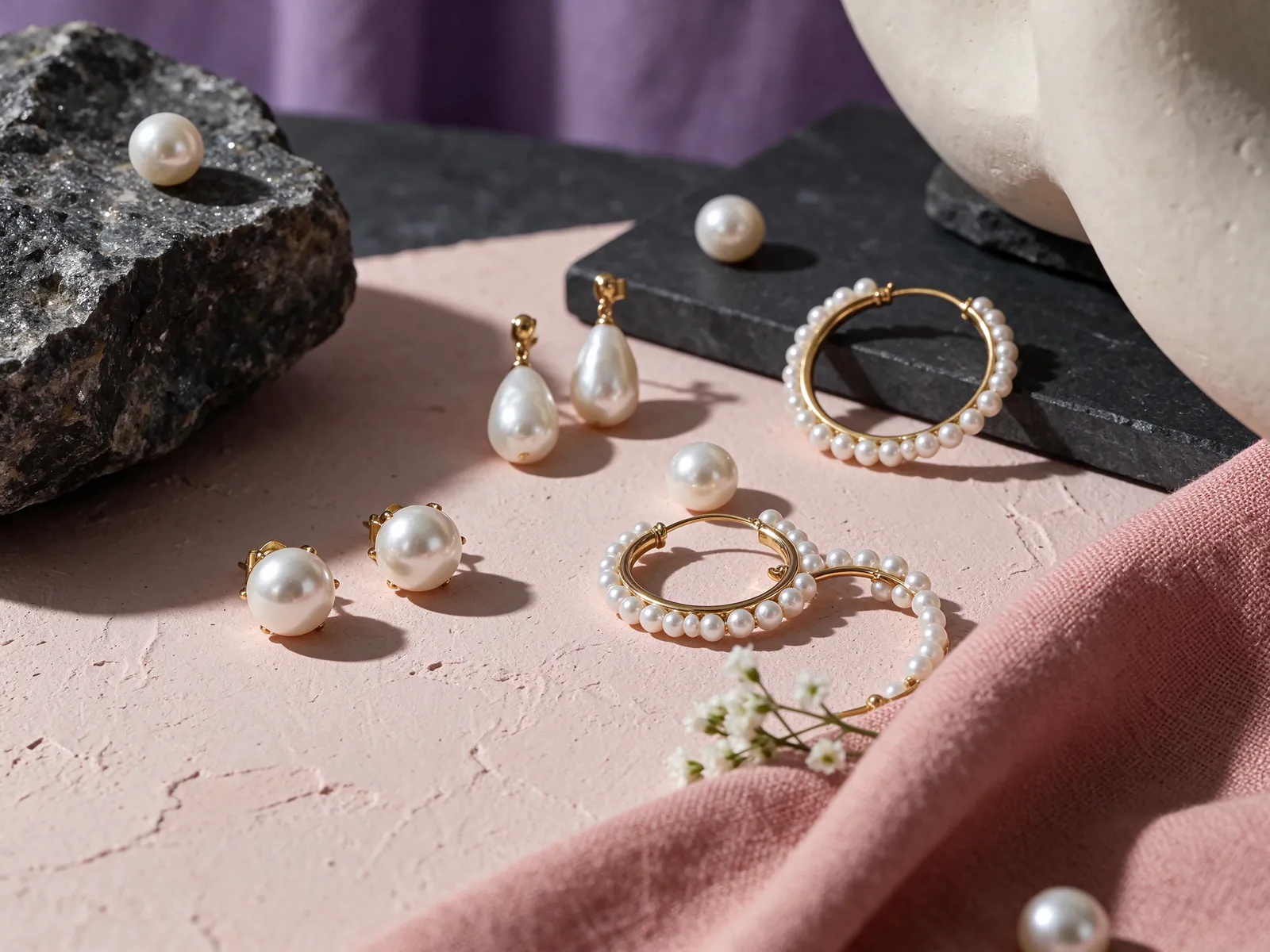
Use spacing and matching to understand the visual rhythm
Closely placed pearls can appear as one continuous shape, while open spaces let each pearl stand out. Neither spacing choice is automatically better. Against a plain blouse, small gaps may become part of the detail; beside a busy print, the outer silhouette may be more noticeable than the gaps. Compare designs against the same background and ask whether exposed connectors support the rhythm you like or interrupt it. The useful question is not simply how many pearls are present, but how clearly you can read their sequence.
GIA identifies seven pearl quality factors: size, shape, colour, lustre, surface quality, nacre quality and matching. Matching is particularly relevant when several pearls share an earring. Observe whether their apparent colour and reflections work together under the same light, and whether any graduated sizing follows an understandable order. When looking at halo pearl earrings, distinguish the reflections on the pearl from the sparkle around it. A bright surround and a well-coordinated pearl row create different effects, even if both catch the eye.
Decide whether variation is a feature you actually want
A deliberate progression from smaller to larger pearls can be appealing without being uniform. Look for a clear sequence or a corresponding idea on the opposite ear. If your preference is for even colour and size, describe those features directly; if you enjoy asymmetry, identify the particular difference you want to keep.
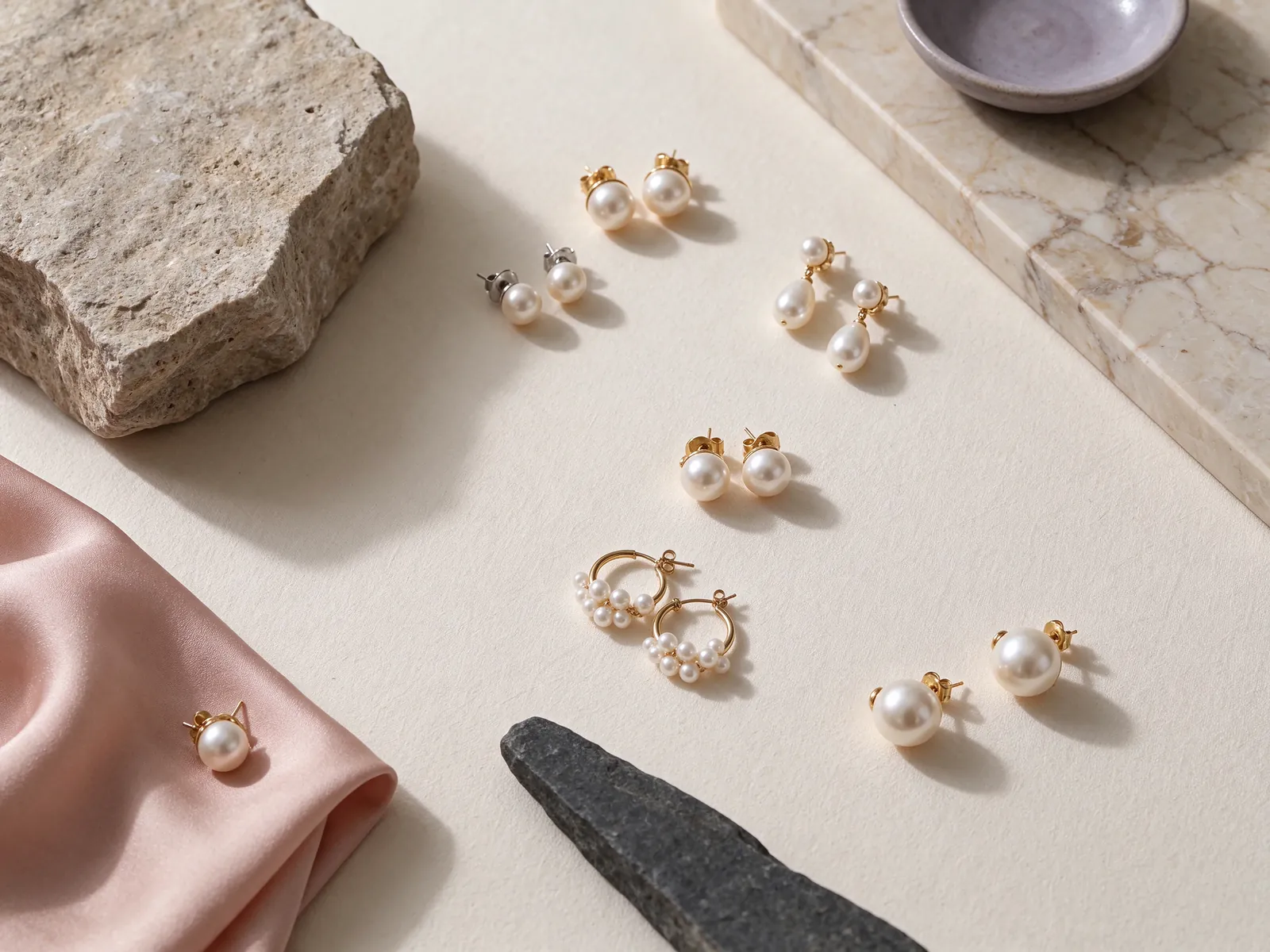
Check orientation, piercing position and the side view
A horizontal arrangement draws attention across the lobe, while a vertical arrangement carries it downwards. An angled row can do a little of both, but its final position depends on how the earring rests on your ear. During a fitting, release your hand and let the design settle naturally before judging the direction. Turn your head and check again. Holding an earring at a flattering angle does not show whether that angle will remain once the earring is supported by its actual fastening.
Your two ears need not look identical in every view, particularly with a side parting or different piercing positions. If you like a longer accent on one side and a quieter one on the other, single pearl earring styling can help you think through that balance. A pearl ear cuff instead shifts attention towards the upper ear. Treat these as different placement ideas rather than interchangeable versions of a pearl row. Decide where you want the focal point before considering a combination of several pieces.
Include your everyday glasses in the fitting
From the side, inspect the space between the glasses arm, the top of the earring and the fastening behind the lobe. Practise removing your glasses and moving hair behind the ear. An arrangement that looks clear from the front may be partly hidden or contacted during these ordinary movements.
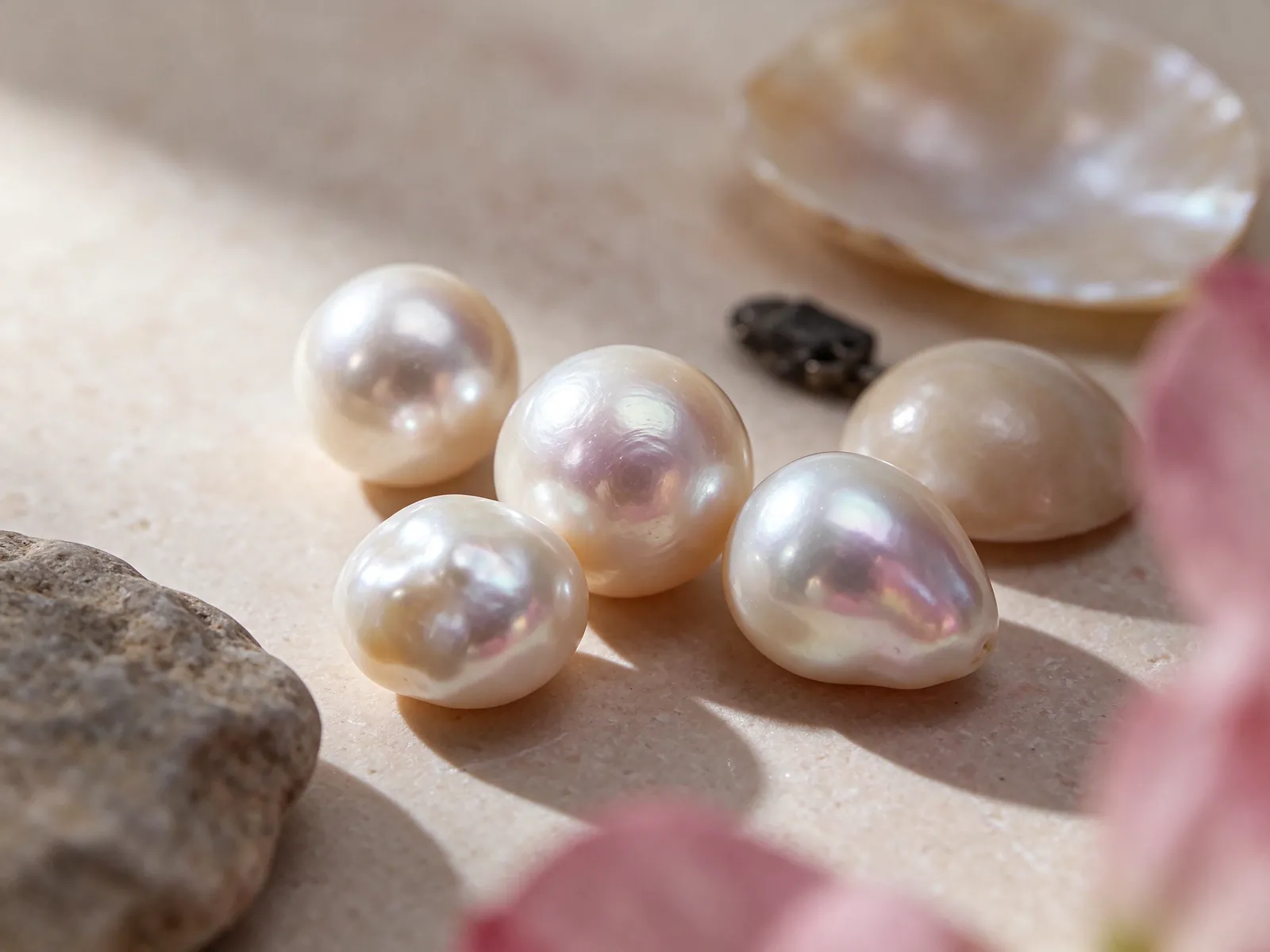
Let your neckline and hairstyle share the styling work
For office dressing, start with the neckline you wear most often. A shirt collar already provides structure near the face, so a compact paired outline may leave the separation you prefer. An open neckline can make a descending row easier to see. These are useful comparisons rather than rules about what everyone should wear. Look at the gap between the earring tip and the clothing edge, then decide whether another necklace needs to be a focal point or simply a supporting detail.
Hair changes what portion of a design is visible. A low ponytail may reveal the lobe while leaving hair close to the lower end; loose hair may hide the top pearls and expose only the final part of the row. Check whether that visible fragment still makes a pleasing shape. With striped clothing, a vertical row can echo the direction, while a diagonal arrangement creates contrast. Use a full-length mirror for the overall decision and a close view for details, rather than asking one close-up image to answer both questions.
For an evening change, reveal the outline before increasing scale
Try moving one side of your hair behind the ear and reducing competing details near the collar. You may find that a familiar arrangement becomes more defined once it is fully visible. Only then compare a longer outline or wider spacing, so you know whether you wanted a larger piece or simply a clearer view.
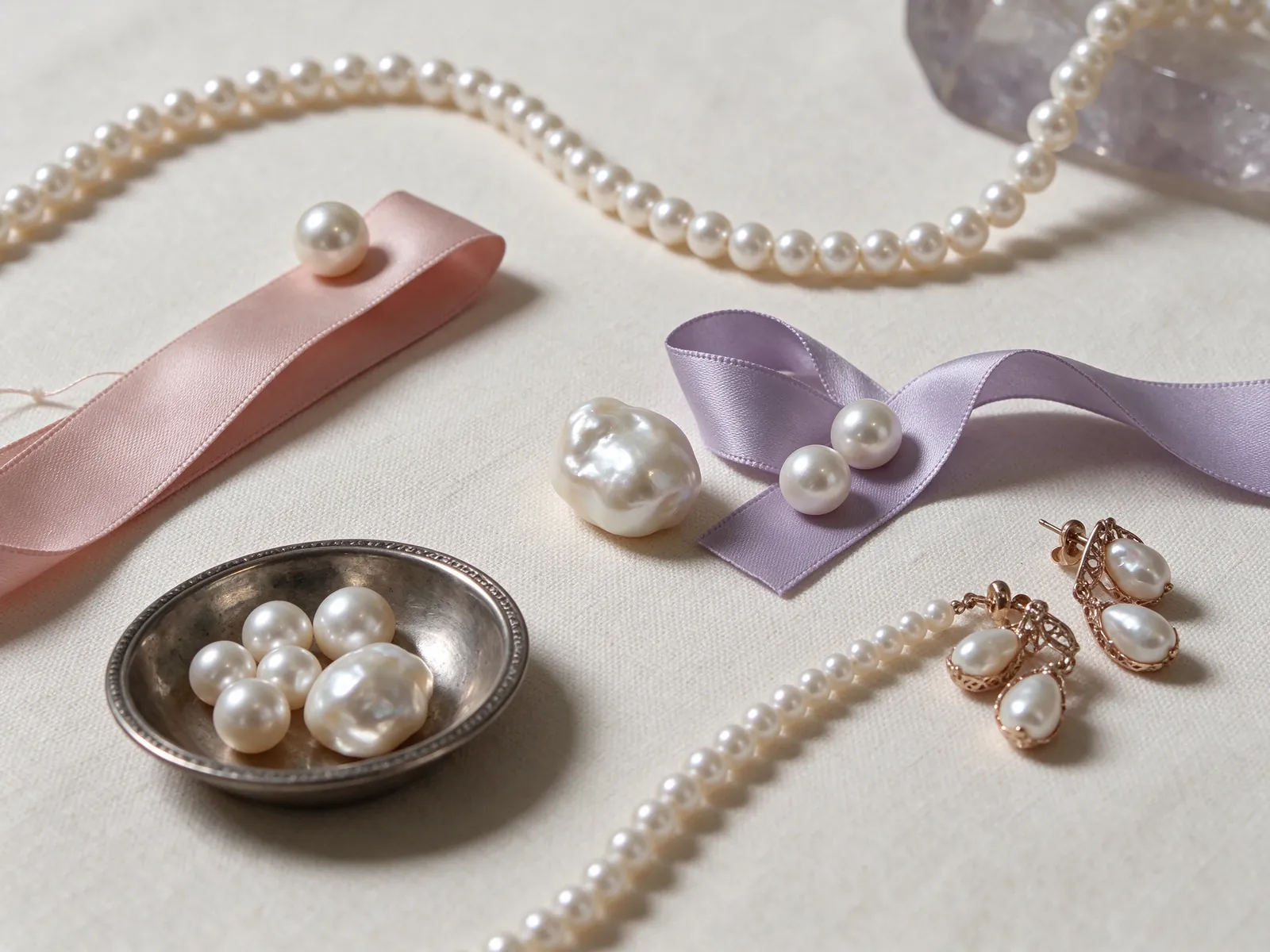
Separate a fixed row from the movement of a hanging design
Two earrings can look like similar pearl lines in a still photograph yet behave differently when worn. Ask which connections are fixed and which can move, then watch what happens when you turn your head and stop. A fixed outline emphasises its resting shape; an articulated arrangement also introduces changes in direction. The outline of pearl fringe earrings is a useful comparison when movement is your main interest. Do not assume that every multi-pearl arrangement is a fringe, or that adding pearls necessarily introduces more swing.
Consider contact with the clothes you actually use, particularly scarves, collars and outerwear. The relevant issue may be where the earring rests rather than its pearl count. The idea of detachable pearl earring charms offers another way to think about styling: identify the outline of the main part, the role of the hanging element and what remains when it is removed. If you are comparing this arrangement with a fixed row, focus on how often you would use each appearance rather than treating extra components as an automatic advantage.
Assess wearing feel without guessing from the number of pearls
The metal structure, fastening, balance and pearls all contribute to wearing feel. A larger count alone cannot establish comfort or weight. Notice forward tipping, pulling at the lobe or concentrated pressure behind it. Describe the specific location of discomfort, which is more informative than simply requesting a light design.
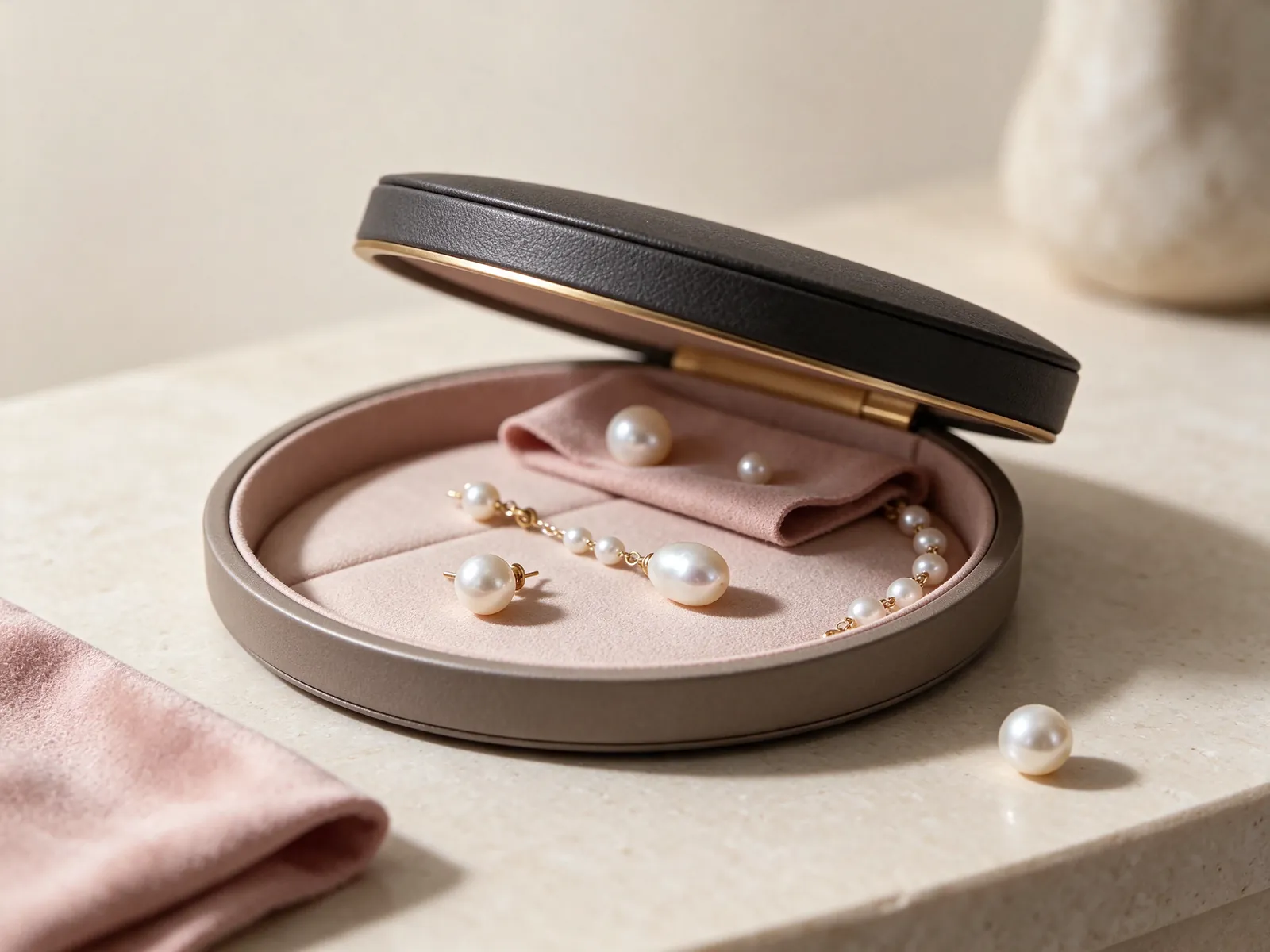
Compare pearl reflections and decorative accents separately
Look at all the pearls under the same lighting and from comparable angles. Very strong lighting can make the whole earring appear bright without making differences between pearls easy to assess. Softer everyday light can help reveal colour relationships and visible surface details. If one pearl is partly hidden by another or by metalwork, include a side view. A photograph is useful for discussing appearance, but its colour alone does not establish pearl type, geographical origin or natural-versus-cultured identity.
Visible connectors contribute to the design rhythm as well as holding it together. Consider their colour alongside the jewellery you normally wear, without feeling that every piece must match exactly. With pearl and diamond earrings, decide whether you want the pearls to form the principal line and the diamonds to punctuate it, or whether both should share the focus. Those choices affect where the eye pauses. Keep the preference for sparkle separate from the preference for a greater number of pearls.
Record preferences in observable terms
Use the same plain top when comparing outlines and note the direction, spacing, visible length and reflection you prefer. Descriptions such as a close pair, a lower end clear of the collar and coordinated colour are easier to communicate than a vague request for something more luxurious. They also make later design discussions more focused.
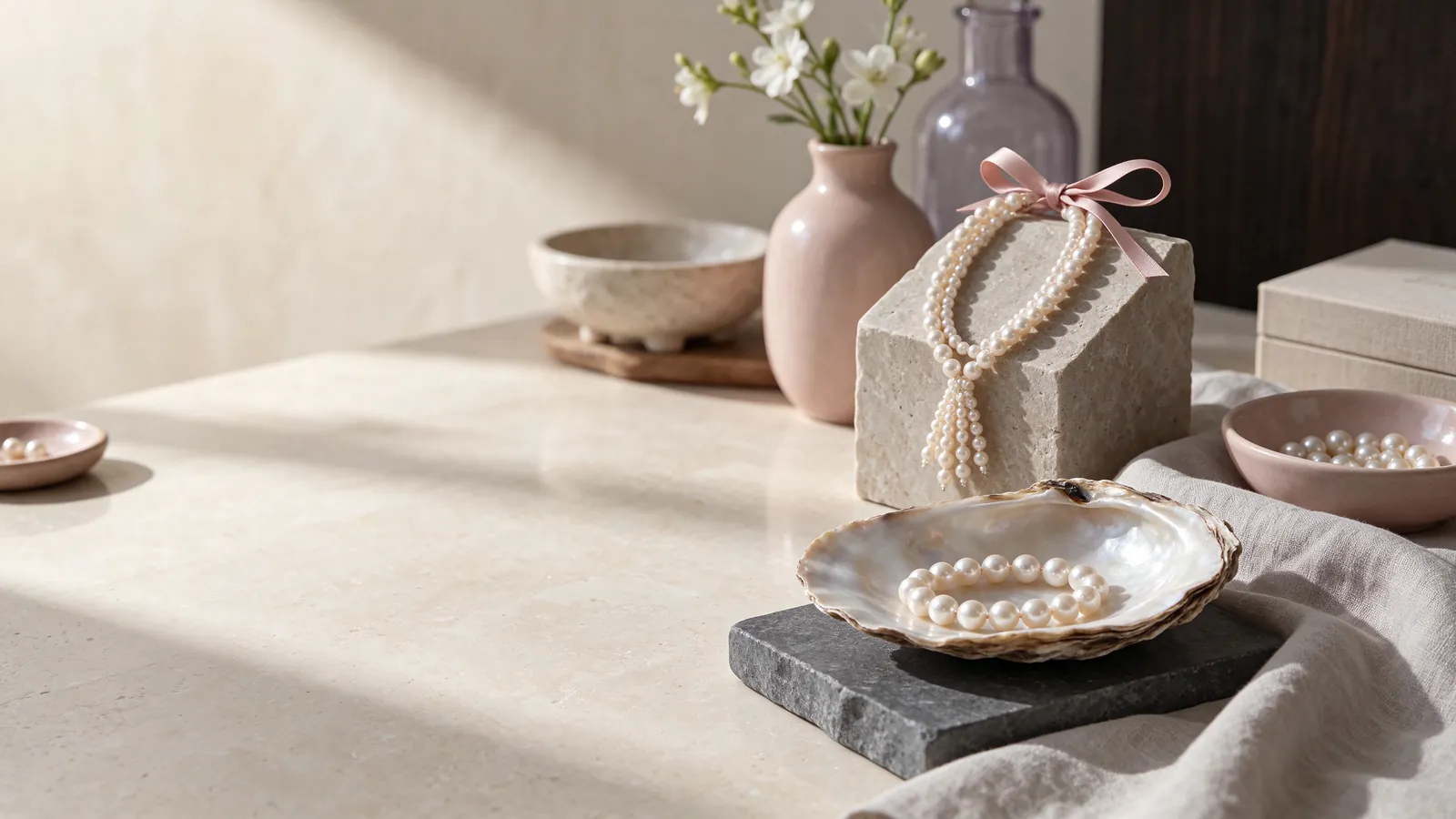
Finish the comparison with handling and gentle care
A final fitting should include ordinary actions: turning your head, moving hair behind an ear and putting on your usual jacket. Check whether the outline disappears, catches against clothing or changes position. Behind the ear, consider whether you can operate the fastening while holding an appropriate metal part rather than pulling the pearl row. When storing a pair, keep projecting metalwork from rubbing against the pearls of the opposite earring. Practical handling deserves a place in the buying decision, not only attention after the design has been chosen.
GIA places pearl at 2.5 on the Mohs hardness scale and advises against ultrasonic or steam cleaning. After wearing, use a very soft clean cloth for gentle wiping, rather than scraping between closely spaced pearls with a hard object. Apply perfume and hair spray before putting earrings on, and avoid acids and excessive heat. If the row suddenly changes direction or a connection seems loose, stop wearing it and seek advice about the structure instead of twisting it repeatedly to test it.
Bring three everyday details to a design conversation
Tell Flint Jewellery about your usual neckline, how you wear your hair and whether you want the outline concentrated on the lobe or extending below it. Add your glasses and movement preferences if relevant. A WhatsApp discussion of earring design preferences can then begin with a clear visual brief rather than pearl count alone.
| Arrangement feature | Visual effect to compare | Styling context | Fitting observation |
|---|---|---|---|
| Close paired pearls | A concentrated paired focal point | A neckline with existing structure | How far the outline extends beyond the lobe |
| Separated paired pearls | More visible space between the pearls | A plain top and exposed ear | Whether the gaps suit your preferred rhythm |
| Horizontal row | Attention carried across the lobe | Emphasis on the earlobe outline | The direction after the earring settles naturally |
| Vertical or angled row | Attention carried downwards or diagonally | An open neckline or hair tucked back | The lower end relative to hair and collar |
| Articulated pearl line | An outline that changes with movement | A preference for a moving accent | Resting position and clothing contact after turning |
Pearl knowledge and authoritative references
GIA identifies seven pearl quality factors: size, shape, colour, lustre, surface quality, nacre quality and matching. Matching is a particularly useful consideration when comparing several pearls in one earring arrangement.
Read the reference for this factFrequently asked questions
Do double pearl earrings require two piercings?
Pearl count does not establish piercing requirements. Two pearls may belong to one connected structure or to a different wearing combination. Check the actual number and position of posts or other fastening parts before deciding whether an arrangement suits your ears.
Does closer pearl spacing mean the earring will stay in place better?
Not necessarily. Spacing mainly changes the visible gaps, while the fastening, balance, structure and piercing position also affect how an earring rests. Release your hand during a fitting and observe its natural position rather than judging stability from spacing alone.
Must both pearl rows look completely identical?
If you prefer an even appearance, compare direction, apparent size and colour across the pair. Deliberate asymmetry can also be a styling choice. The useful distinction is whether the differences support the intended rhythm, rather than assuming identical outlines are the only attractive option.
Should I choose more pearls if my long hair hides the top of the earring?
First check the shape that remains visible and try revealing one ear. More pearls may not address the main cause of the obstruction. A different orientation, lower endpoint or way of wearing your hair may be more relevant than increasing the count.
Which preferences matter most when choosing multi-pearl earrings as a gift?
Begin with the recipient's piercing and fastening needs, usual hairstyle, glasses and preference for a compact pair or an extended row. These everyday details are more useful than assuming a greater pearl count makes a gift more suitable or more formal.
Updated: